Meme Coin Ecosystem Overview: How to Achieve Excess Returns?
TechFlow Selected TechFlow Selected
Meme Coin Ecosystem Overview: How to Achieve Excess Returns?
Large-market-cap meme coins are gradually acquiring "store of value" attributes, leading investors to prefer holding them.
 Navigating Web3 tides with focused insights
Author: bitsCrunch
Recently, BTC has once again broken through the $70,000 mark, with market greed index reaching 80. Meme coins often serve as the vanguard during bull markets—for instance, $GOAT surged over 100x within five days. By analyzing trading data from the current top 25 meme coins, we have identified several notable market characteristics and evolving trends.
Meme Market Characteristics
Holding Address Distribution
In terms of holder count, SHIB, DOG, DOGE, MEME, and DEGEN each have more than 800,000 addresses holding their tokens. SHIB leads with 1.51 million addresses, approximately 400,000 ahead of DOG, which ranks second. These projects also account for a significant share of overall market trading volume.
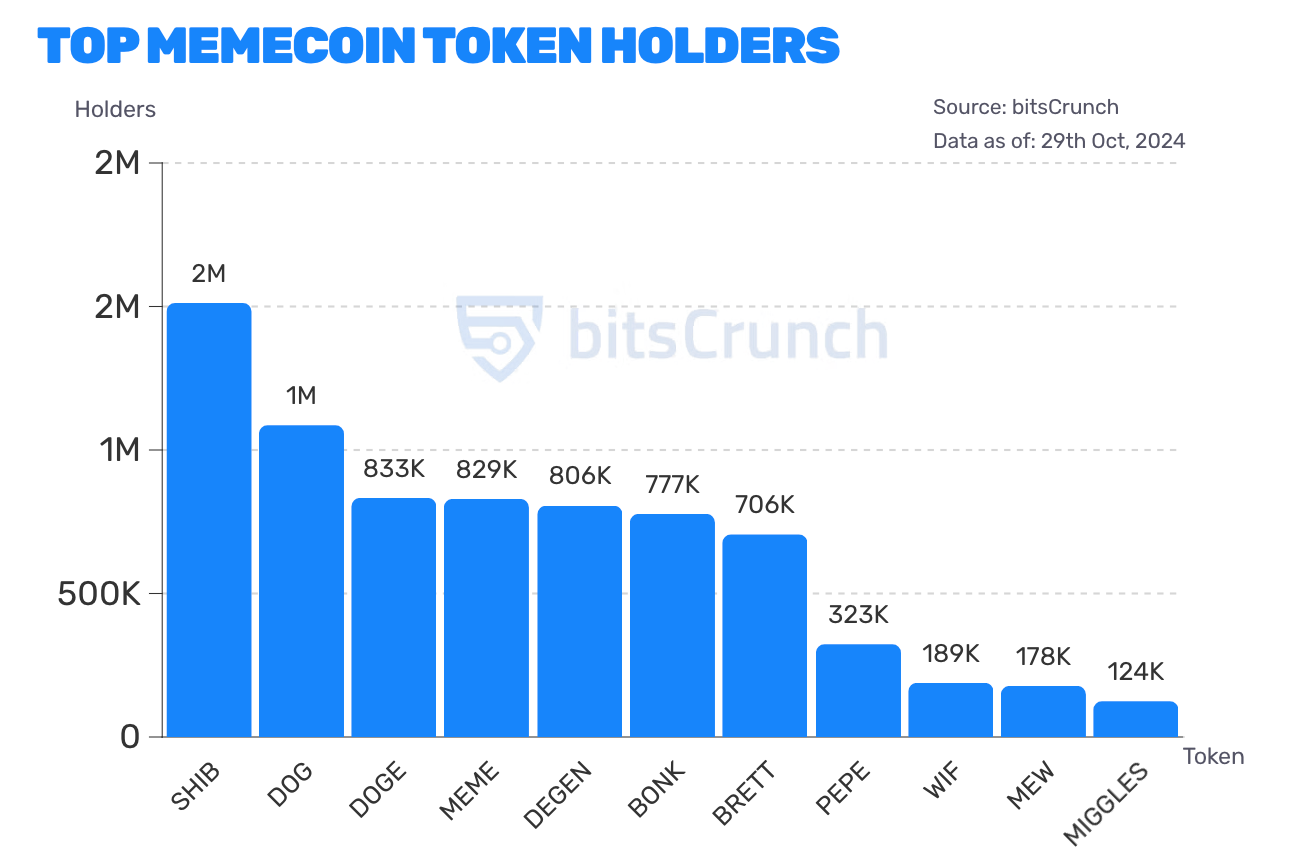
BONK and BRETT both have over 700,000 holders, while PEPE and WIF have 320,000 and 180,000 respectively. Notably, however, PEPE and WIF achieved 30-day growth rates in holder count of 3.02% and 4.86%, outpacing all the previously mentioned high-holder-count meme coins.
According to bitsCrunch data, MEW and MIGGLES are the only other two meme coins with holder counts exceeding 100,000, with MIGGLES showing a remarkable 26.55% growth over the past 30 days. Tokens such as HIGHER, FLOKI, POPCAT, MOCHI, PONKE, MOODENG, and MYRO form a group with between 50,000 and 100,000 holders, though they generally exhibit limited liquidity.
Liquidity Stratification
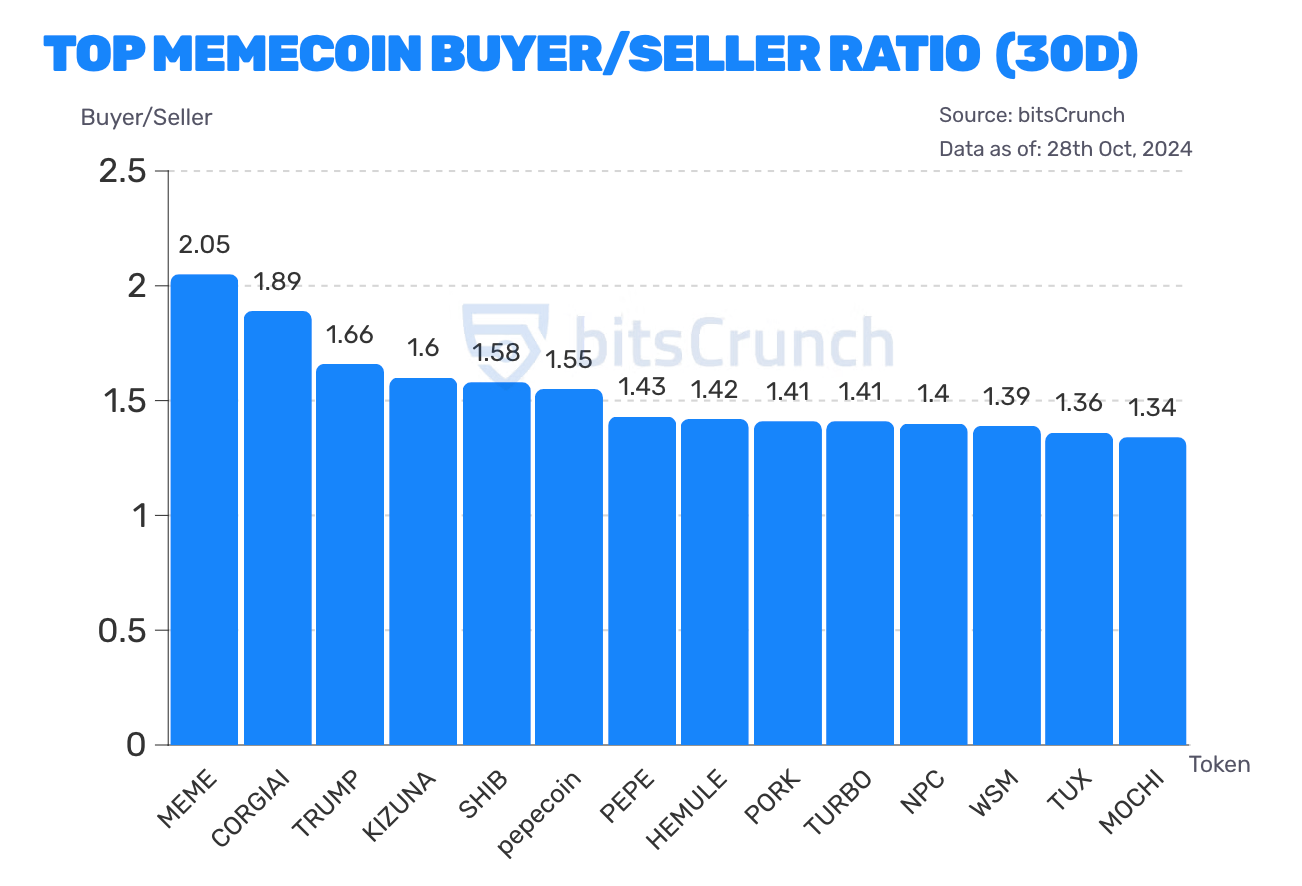
Meme coin prices show strong correlations with social events. According to buy-sell imbalance indices, TRUMP shows an index of 1.66, accompanied by a 15.9% price increase—closely tied to recent U.S. election developments.
Over the past seven days, SHIB and WIF recorded the highest trading volumes at $70.2 billion and $67.3 billion respectively, far surpassing third and fourth place. Analysis reveals that large-cap meme coins like SHIB and DOGE experience relatively moderate price fluctuations despite high trading volumes, whereas smaller-volume projects tend to be far more volatile.
This suggests that large-cap meme coins are gradually acquiring "store-of-value" attributes, with investors increasingly adopting a "buy-the-dip" strategy, reinforcing the dominance of top-tier projects. In contrast, small-cap meme coins function more as speculative instruments with stronger short-term volatility. Liquidity stratification is becoming more pronounced, potentially leading to greater market polarization.
The ratio of address changes to price movements reflects immediate liquidity shifts. Data from bitsCrunch indicates that HIGHER and MOODENG experienced short-term liquidity inflows of 2.32% and 1.98% respectively—an unusual surge that often precedes potential price swings.
Conversely, TURBO and PONKE saw liquidity outflows of -0.31% and -0.13%, suggesting a gradual erosion of market confidence through sustained capital withdrawal.
For investors, this underscores the importance of carefully evaluating liquidity risks rather than focusing solely on price movements. In this rapidly evolving market, risk management may outweigh return-seeking in priority.
Ecosystem Analytical Framework
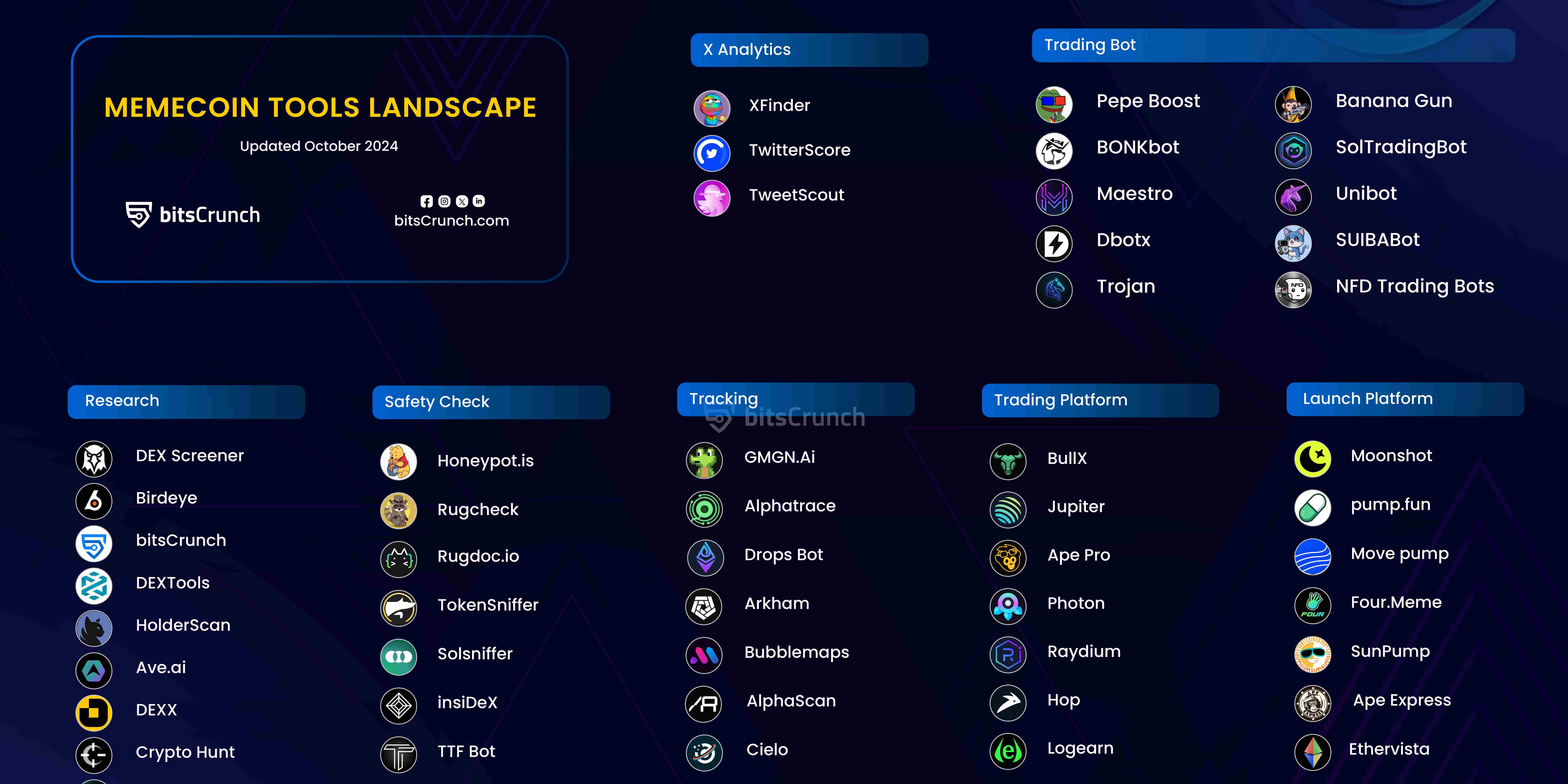
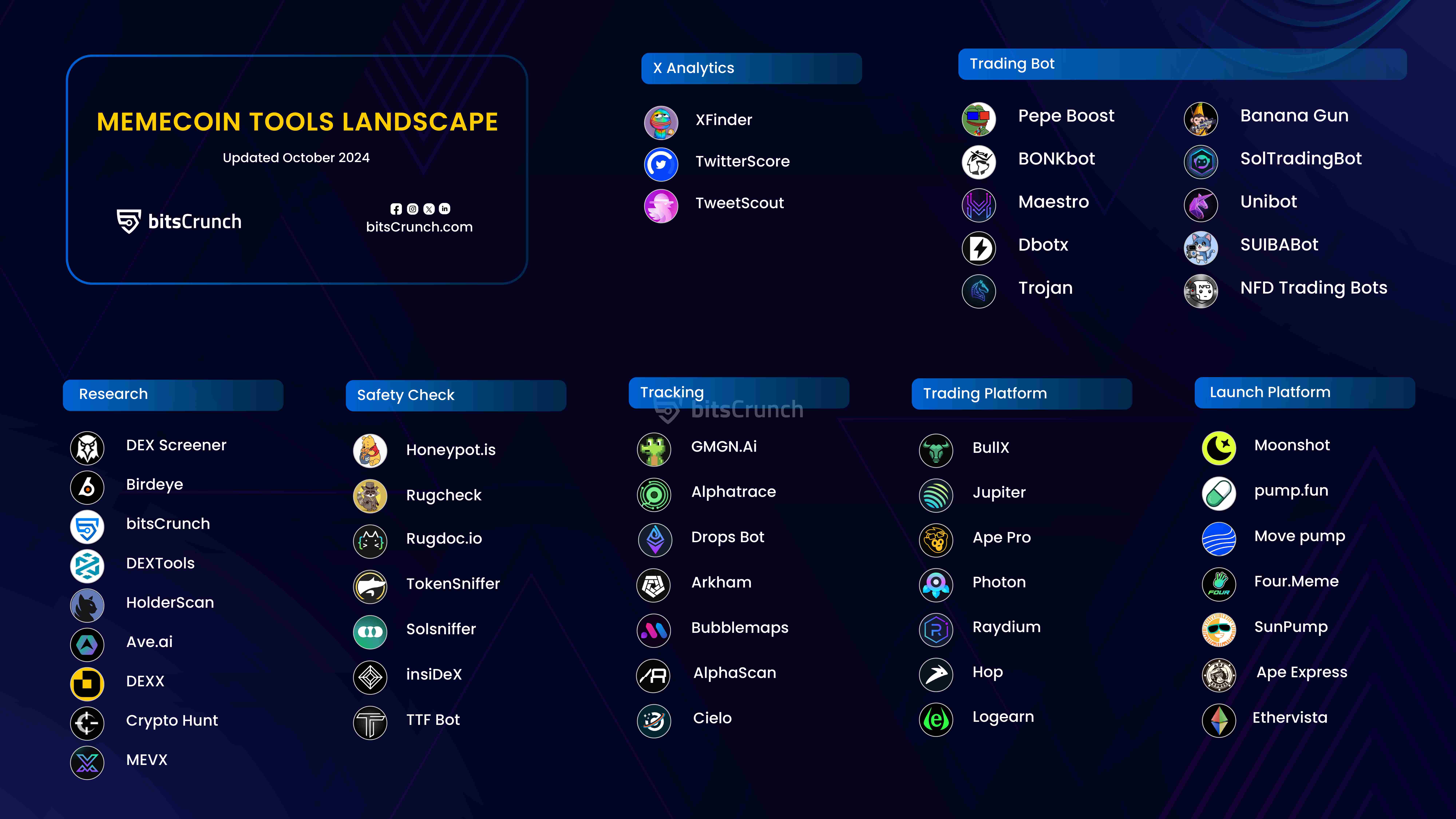
The meme coin tool ecosystem encompasses five core sectors: research tools, security auditors, tracking systems, trading platforms, and launch platforms.
Transaction Security Data Analysis
Current market data shows that authenticity verification and smart contract security assessments have become critical steps in investment decision-making. Rampant market manipulation in the meme coin space typically stems from two scenarios: project teams artificially inflating trading activity to appear on DEX Screener trend lists, or bots manipulating prices. Therefore, identifying genuine community engagement before trading is essential.
Contract analysis of meme coin holder addresses reveals three major risks: excessive concentration of privileges, lack of locked liquidity, and significant overlap among holder addresses.
Specifically, a single core address frequently interacting with multiple dispersed addresses is a red flag—commonly seen in new projects with abnormal 24-hour gains, indicating centralized control. Additionally, complex fund flows between multiple large-holder addresses may suggest coordinated operations by a large speculative group.
For newcomers to meme coins, observing distribution dispersion is crucial—a feature more commonly found in mature projects like SHIB or PEPE. However, even in these cases, the top 100 addresses still control the vast majority of total supply.
Social Influence Analysis
Historically, a successful meme coin project required endorsement from at least 3–5 KOLs with over 100,000 followers. However, this metric is shifting.
Fan count alone is no longer decisive. For example, HIGHER demonstrated stronger upward momentum despite support only from mid-tier influencers, reflecting a trend toward de-KOLization. The timing of KOL endorsements significantly impacts project performance: projects receiving clustered endorsements in a short timeframe tend to underperform compared to those with staggered backing over time.
Key Indicator System
Based on statistical analysis of successful cases, we summarize the following key indicators:
-
Trading Volume: A healthy project should achieve organic trading volume (excluding bot trades) of $500–$1,000 within its first hour. While industry standards often cite $1,000–$2,000, our data shows lower initial thresholds may actually support sustainable growth.
-
Market Cap Threshold: $100,000 is a key psychological barrier. Data shows 87% of successful projects only began meaningful growth after surpassing this threshold. However, this varies across niches—AI-themed meme coins, for example, often require higher starting valuations.
-
Supply Allocation: Founder team holdings are a critical metric. Statistics indicate that survival rates improve significantly when founder holdings fall below 5%. Lower team allocations likely reduce sell pressure and boost community trust.
Risk Warning Mechanism
First, monitor foundational metrics. Track real-time data including trading volume, holder distribution, and price volatility, setting alert thresholds for anomalies.
Second, conduct on-chain behavior analysis. Monitor unusual activities by large addresses, especially interactions with known risky addresses. Track changes in liquidity pools to anticipate potential dump events. Implement dynamic stop-loss mechanisms tailored to different project development stages.
Third, monitor social signals. Build a KOL database to detect potential market manipulation. Pay special attention to abnormal surges in social media activity, explore opportunities on emerging blockchains, and diversify investment portfolios.
Based on extensive data and market observations, this report aims to provide investors entering the meme coin market with a comprehensive overview and systematic analytical framework. However, it must be emphasized that this article does not constitute financial advice. Any analytical model must be continuously adjusted and refined according to market dynamics. As meme coins represent a high-risk, high-reward market structure, rigorous risk monitoring is essential prior to any trading activity.
Join TechFlow official community to stay tuned
Telegram:https://t.me/TechFlowDaily
X (Twitter):https://x.com/TechFlowPost
X (Twitter) EN:https://x.com/BlockFlow_News
 @bitsCrunch