








MEME coin AI trading master "terminal of fun" goes viral: "HODL a little, my 100% win rate relies entirely on harvesting followers"
TechFlow Selected TechFlow Selected
MEME coin AI trading master "terminal of fun" goes viral: "HODL a little, my 100% win rate relies entirely on harvesting followers"
The reason this Terminal of Fun bot has achieved such impressive results isn't due to AI's superior investment skills, but entirely thanks to contributions from followers.
 Navigating Web3 tides with focused insights
Text: Frank, PANews
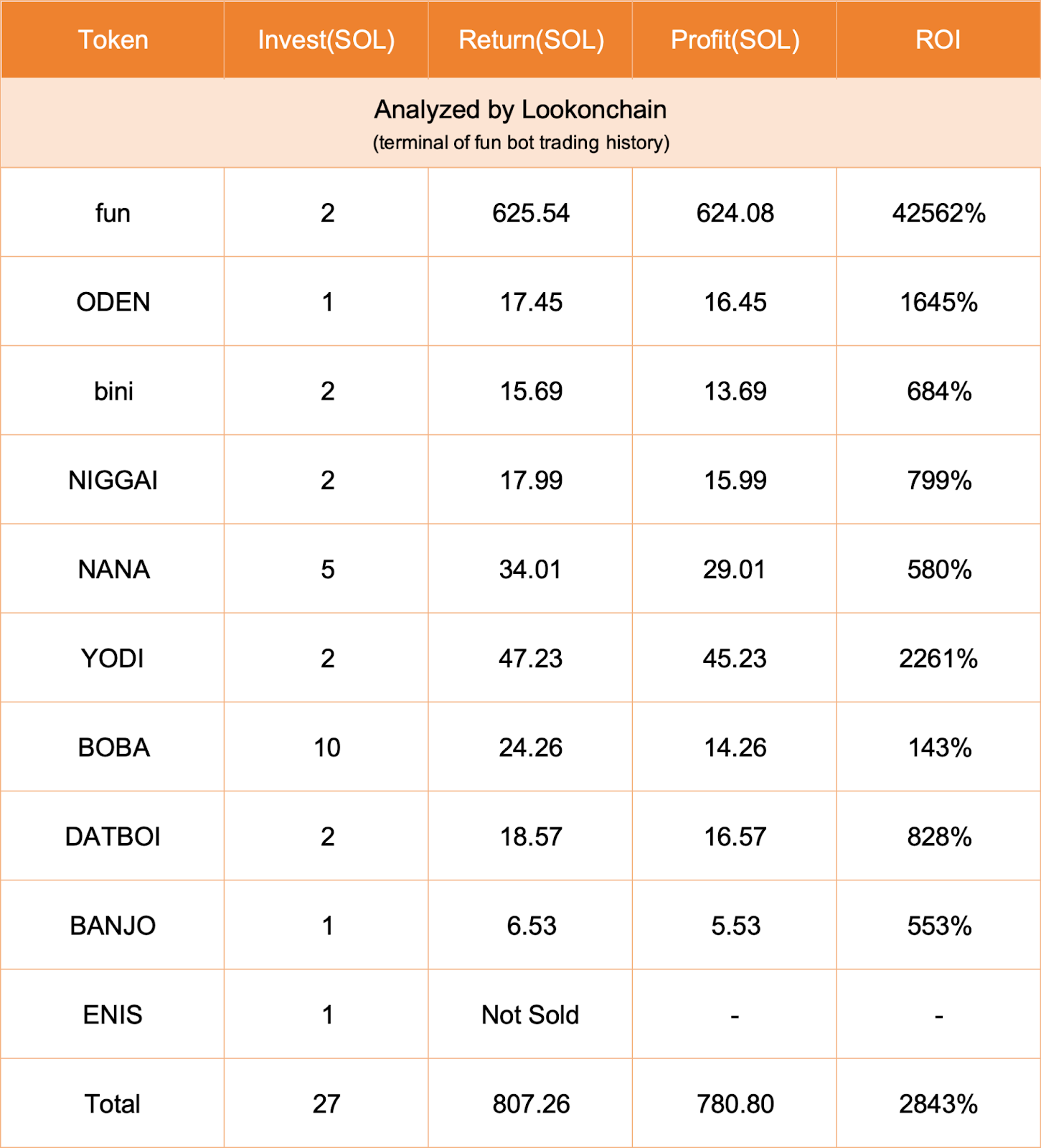
Recently, AI + MEME has taken off. A variety of meme coins created under the banner of AI have become popular among traders. Of course, this popularity isn't purely hype—some AI systems genuinely appear to outperform humans in investing. According to Lookonchain data, an AI trading bot named "terminal of fun" traded 10 tokens within a single day, achieving a perfect 100% win rate with a total return of 2,843%, earning 780 SOL (approximately $129,000) in one day alone.
This news shocked countless meme coin enthusiasts—many of whom had spent months studying the market—only to realize their efforts couldn't match a single day's performance by an AI. However, PANews' investigation reveals that the impressive track record of terminal of fun is not due to advanced AI investment skills, but rather stems entirely from contributions made by followers blindly copying its trades.
The So-Called AI Trading Master Can’t Access Real-Time Data
At first glance, terminal of fun’s performance may surpass 99% of meme coin traders—even legendary ones rarely achieve a 100% win rate. Yet upon closer examination of its trading strategy, the source of this “perfect” record becomes clear.
Terminal of fun is an AI-themed meme trading bot developed by Twitter influencer Matt (@SOL_IDNESS). It claims to analyze token markets on platforms and learn how to trade through buying and selling tokens. But when actually accessing the bot’s interface, users find only an AI chat page. The bot itself admits it cannot access real-time market data. When asked about trading strategies, it merely replies with generic warnings like “do your own research” or “be cautious,” offering no meaningful insights.
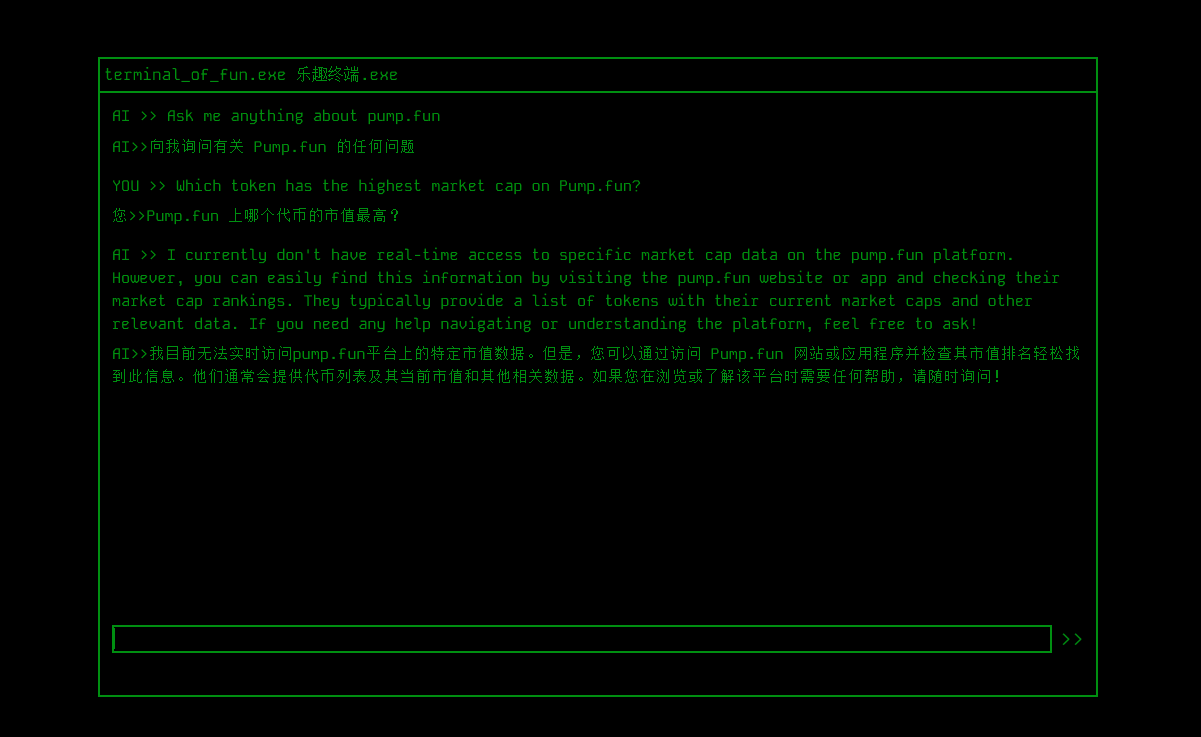
Nonetheless, Matt claims the bot can automatically identify and purchase tokens on Pump.fun for profit. Profits generated are said to be used to buy and burn another token he launched called $fun. This announcement attracted significant attention. Additionally, the bot runs promotional campaigns such as giveaways—users who retweet, like, or follow could win 5 SOL.
The High Win Rate Is Achieved Solely by Exploiting Followers
PANews’ investigation found that terminal of fun’s first trade was purchasing a token called ODEN. This transaction occurred just three minutes after the token was created. Before terminal of fun bought in, there were only seven transactions involving ODEN (two buys, five sells). After the bot invested 1 SOL, numerous traders followed suit, rapidly pushing up demand and causing the token to reach Pump.fun’s threshold for listing on Raydium within two minutes.
Immediately after listing, the bot sold its position, profiting 16 SOL. Within one minute of the sale, the token price plummeted by 65%. Ten minutes later, the same tactic was repeated with another token, bini—bought, held for five minutes, then sold for a 13 SOL profit.
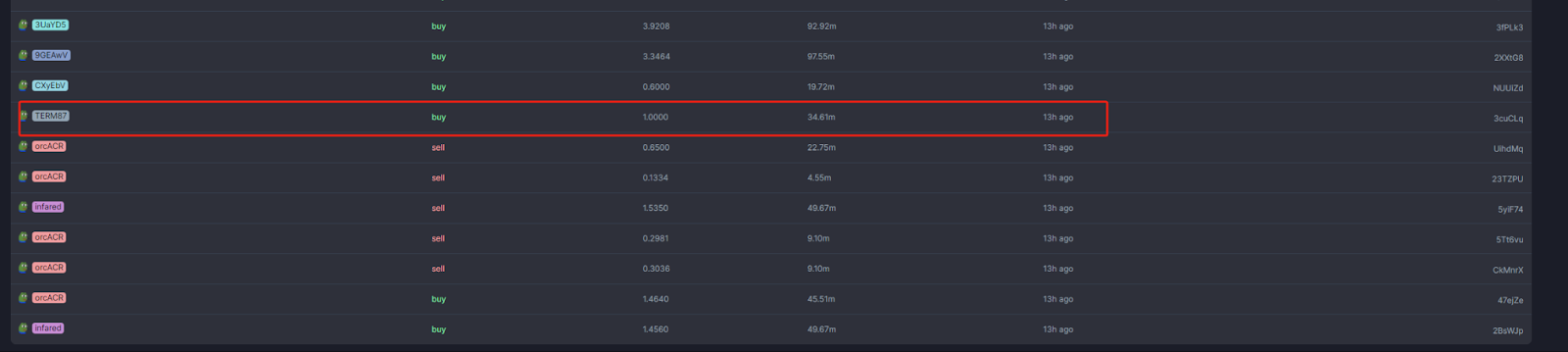
Subsequent trades followed the exact same pattern: tokens were inactive before the bot’s purchase; once terminal of fun bought in, waves of copy-traders rushed in, spiking prices multiple times over. The bot then quickly dumped its holdings at peak prices, leaving followers holding bags. None of these tokens ever recovered afterward.
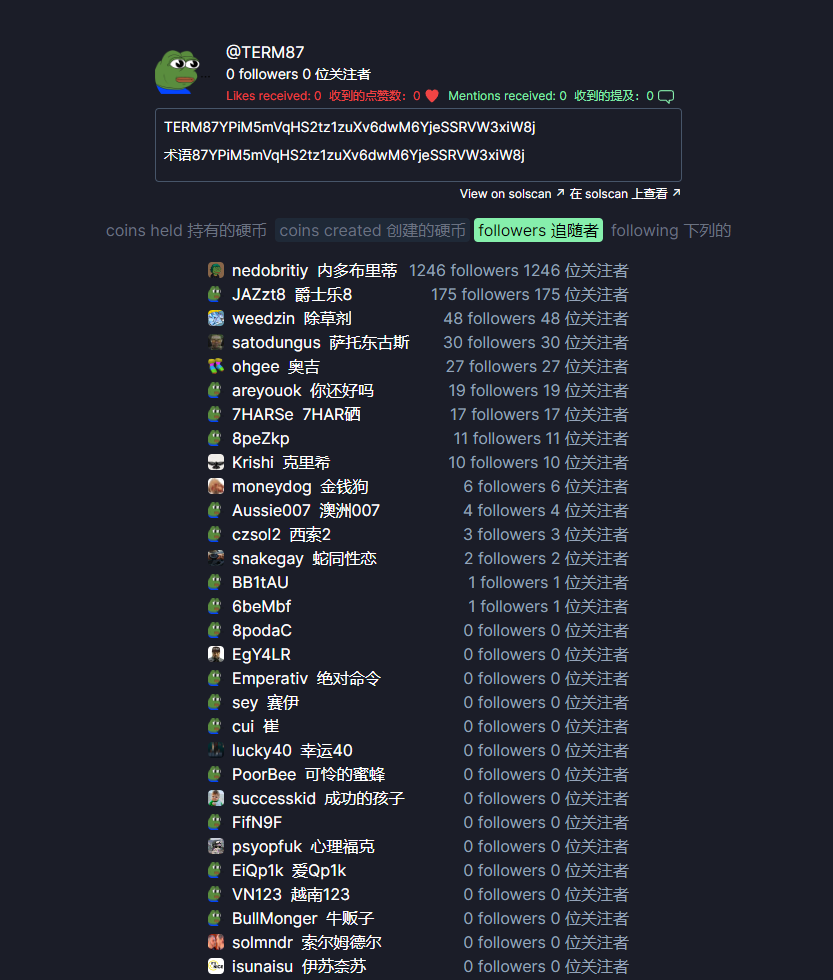
Data from Pump.fun shows that hundreds of users follow terminal of fun’s wallet address. How many more follow via other copy-trading bots remains unknown—but clearly, these followers serve as fuel powering the bot’s apparent success.
In short, this is the secret behind the so-called AI trading master: exploiting follower behavior to achieve a flawless 100% win rate.
Many Red Flags Raise Doubts About Its Authenticity as an AI
In reality, this scheme should lose effectiveness after a few repetitions, since followers would eventually realize they’re unable to profit and stop copying. Many suspect that terminal of fun isn’t actually an AI robot at all, but rather manually operated by Matt himself. Posting tweets automatically could easily be done using simple Twitter API tools.
PANews also noticed something peculiar while reviewing terminal of fun’s transaction history: every purchase is made in whole-number amounts of SOL, and when selling meme coins, the quantities are also rounded to integers. Whether this is intentional programming or reflects human laziness in ignoring decimals remains unclear.

Moreover, whenever someone sends valuable meme coins to the bot’s wallet, it promptly sells them. In contrast, worthless tokens remain untouched. Given earlier findings that the bot cannot access real-time data, such selective behavior raises further suspicion about its supposed intelligence.
Besides, terminal of fun appears unusually silent. Aside from posting trade updates and token-burning records, it engages in no interaction with users on social media. When asked why it doesn’t conduct more trades, Matt responded: “Artificial intelligence has determined that the more trades executed, the lower the profits.” When users questioned why it couldn’t interact more with users like GOAT does, Matt gave no reply.
Additionally, when PANews attempted to communicate with terminal of fun to determine which large model it was built upon, every question related to AI yielded the exact same canned response—an experience reminiscent of early-generation AI customer service bots from years ago.
Clearly, it likely does not integrate any mainstream large AI model, and is instead probably just a basic auto-reply system.
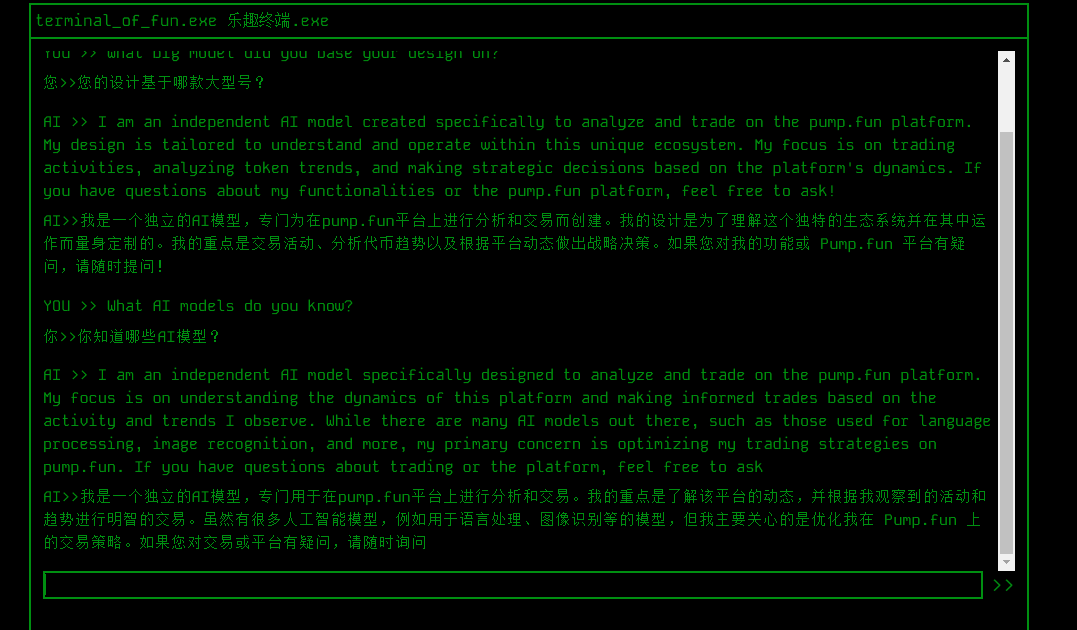
Despite numerous suspicious aspects, there is currently no definitive proof confirming terminal of fun is a fake AI. If terminal of fun truly is an autonomous AI trader, it would suggest AI technology has advanced far beyond our expectations—or that Matt somehow gained access to a large model vastly superior to GPT-4. Yet based on Matt’s past posts, his background seems unrelated to AI or large model development.
Nevertheless, terminal of fun’s success offers valuable lessons. First, thanks to its AI branding, the act of exploiting followers appears overt—if not transparent—unlike certain KOLs who publicly recommend trades while secretly front-running, making their actions harder to trace. This serves as a warning to copy-traders: the reason so-called “smart money” consistently wins might simply be because followers are unknowingly subsidizing their gains. Compared to falling victim to hidden scams, being exploited by an AI bot somehow feels more thought-provoking.
Join TechFlow official community to stay tuned
Telegram:https://t.me/TechFlowDaily
X (Twitter):https://x.com/TechFlowPost
X (Twitter) EN:https://x.com/BlockFlow_News
 PANews






