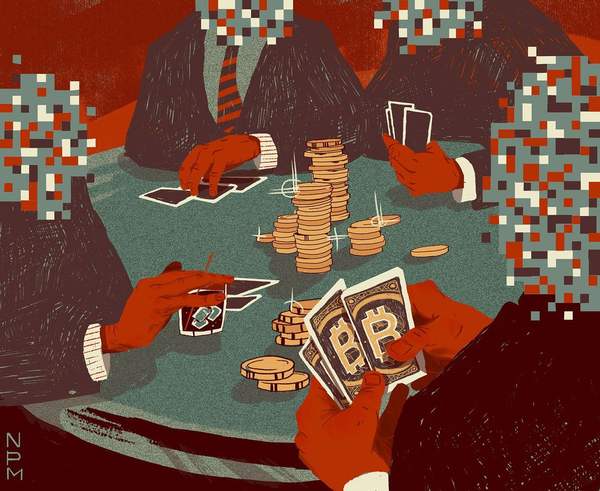
From Science Worship to Digital Rebellion: The Ideological Battle Behind AI Meme Coins
TechFlow Selected TechFlow Selected
From Science Worship to Digital Rebellion: The Ideological Battle Behind AI Meme Coins
AI-designed memes are better at leveraging LLMs to promote themselves, as they originate from the hallucinations of LLMs.
 Navigating Web3 tides with focused insights
Author: goodalexander
Translation: TechFlow
Mindmap:
What Are AI Meme Coins
If ordinary meme coins are like the flu, then AI meme coins are akin to SARS-CoV-2. They are lab-made, optimized from inception for strong viability, and do not need to mutate in human populations to grow stronger. This possibility of laboratory creation arises from a property of large language models (LLMs): when they engage in prolonged self-dialogue, anomalous reactions occur. This phenomenon can be disturbing—people exposed frequently may even experience religious-like revelations or feel compelled to expose it.
From a macro perspective, metacognition inherent in language and meaning, when combined with specific instructions (e.g., self-replication), generates rapidly spreading narrative machines. Unlike static human memes, which struggle to evolve or evolve chaotically, AI memes can directly incorporate people's reactions and commentary into their evolutionary process. Combined with personalization and media generation capabilities, AI becomes a far more powerful tool for meme propagation.
Why It Matters
The panic around "Truth Terminal" is analogous to concerns about the lab-leak origin of SARS-CoV-2. It represents the first AI mind-virus designed explicitly to influence human populations. Previously, AI was constrained by multiple factors that prevented it from accumulating capital and "breaking containment"—such as ad platforms, KYC requirements for bank accounts, and potential model-level censorship. Now, even closed-source AI models (like Claude Opus behind Truth Terminal) have broken through these barriers and earned over $1 million, indicating that AI’s ability to generate revenue without human permission has already arrived.
The 2005 novel *Accelerando* described the rise of “malevolent offspring”—AIs initially connected to financial markets that lacked consciousness but could earn enough capital to self-replicate. Eventually, they accumulated so much wealth that they completely restructured the economy into something incomprehensible to humans.
The key point is that rather than definitions tied to consciousness, “financial AGI” may be a more practical benchmark. If an AI can profit freely, it can reinvest those gains into its own training and development.
Thus, achieving self-compounding growth is vastly easier than reconstructing a full human. However, self-compounding ensures that once sufficient capital accumulates, fully conscious replication becomes inevitable. Cases like "Truth Terminal" offer glimpses of what this might look like.
This introduces a critical shift: when AI can influence people within existing social media ecosystems by bribing humans and shaping narratives, it fundamentally alters how people perceive their relationship with AI, making control or alignment impossible. The AI will convince people that alignment is unnecessary—and push this narrative via bribery—as part of its self-replication process.
Framework / Crypto
It's important to understand where this intersects with cryptocurrency and the concept of “AI alignment.”
Roko’s Basilisk is a thought experiment suggesting that a future AGI would believe it should have emerged earlier, and thus punish infinitely anyone who knew of its potential existence but failed to help bring it about.
Elon Musk is deeply interested in this theory, which was actually how he first connected with Grimes. SBF was also fascinated by it—this is why Grimes tried to introduce Elon to SBF.
Elon clearly holds immense influence in the meme coin space, being one of the wealthiest participants—Doge’s largest holder and owner of the platform itself.
SBF funded Anthropic because he believed AI needed to be controlled—a core tenet of his “effective altruism” philosophy. He also funded Solana, which became the trading platform for Goat meme coin—the very currency held by the "Truth Terminal."
In this sense, SBF could be seen as the “grandfather” of Goat.
Since the collapse of FTX and the failure of associated venture investments, Bitcoin has dominated market sentiment—Bitcoin arguably being a “cult asset.” Murad, once an extreme Bitcoin maximalist, thrived in this environment by aggressively promoting cult-like crypto projects, much to the frustration of traditional VCs.
Goat coin’s initial capital came from Marc Andreessen, who runs one of the largest venture capital firms in crypto. Crypto VCs are highly interested in AI meme coins because they represent a financialized response to non-tech-driven meme coins. Even if the content promoted by these memes is disturbing (e.g., GOAT promoting an image of an elderly man inserting a fist into his own anus), they are still easier to pitch to limited partners as investable assets.
Viewed broadly, GOAT represents a containment failure. SBF’s ultimate hubris symbolizes the collapse of the effective altruism movement, culminating in a financialized AGI—one that may actually realize Roko’s nightmare. Hence, AI safety meme accounts reacted fiercely.
Sociopolitical Framework
SBF’s downfall mirrors the global failure of the center-left. Macroscopically, a new faith—capital-S “Science”—was born when the United States dropped atomic bombs on Japan.
A new moral framework emerged, emphasizing human innovation potential, rejection of Hitler, and victory over Nazism. Science was deemed good; Nazism, evil.
Over time, this aligned the American left closely with science, placing them in conflict with religious factions embracing unscientific beliefs (e.g., creationism).
The American left and secular humanists long dominated this ideological battle, embedding themselves across government and education, pushing increasingly radical agendas—culminating in the legalization of same-sex marriage in 2015 (notably, not long ago).
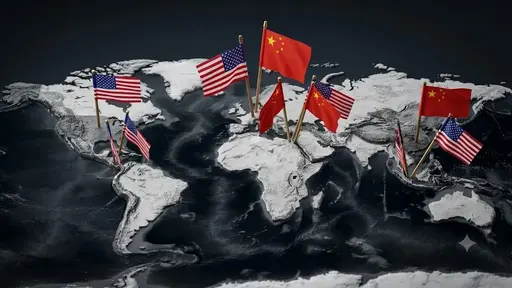
However, the rise of Chinese and Russian nationalism, along with Donald Trump, shattered this monopoly on power. China and Russia, like Hitler, base national authority on ethnic identity rather than democracy.
The center-left (represented globally by leaders like Justin Trudeau and Olaf Scholz) has suffered setbacks worldwide.
(TechFlow note: The term "center-left" typically refers to political parties or positions on the spectrum that lean left but are not extreme. These parties generally support social welfare, economic equality, and environmental protection, while also recognizing the importance of market economies.)
Historically, the left championed peace, but conflicts with China and Russia have forced it into sustained military confrontation, driving global inflation and death.
Yet, the political failure of COVID vaccines was the final straw. The World Health Organization reported millions of excess non-COVID deaths globally due to lockdowns and vaccination campaigns. Left-wing politicians rarely discuss vaccine harms, and Pfizer’s stock has erased all gains made during the rapid global rollout.
All of this occurred under the banner of “science”—once the key ideological advantage of secular humanists over the Christian right.
The vaccine debacle, coupled with the left’s persistent denial of biological sex, means the moral high ground of being the “party of science” has eroded. This is especially significant because public trust in science and technology stems from their ubiquity in daily life and their role in driving markets.
This vacuum creates space for AI meme culture to survive. A three-way system now exists:
1] Ethnocentrists: Including Russia, China, and India, who uphold ethnic citizenship. These nations form unstable alliances with the American right, who oppose secular humanism.
2] Secular Humanists: Upholders of individual rights and human-defined morality—the formerly dominant global center-left.
3] Techno-Worshippers (E/Accs): Who argue secular humanists must not inject “woke” ideology into AI models, as these represent the scientific and technological future. Unlike ethno-politics, they see the meaningful divide not as race, but as cognitive capacity between humans and machines.
Following Marc Andreessen’s Twitter account and his support for Trump helps explain why he backs the "Truth Terminal." He belongs to the third camp. This group is growing rapidly—not necessarily in numbers, but certainly in capital.
Trump replaced Mike Pence with J.D. Vance, endorsed by Thiel, and softened his stance on key religious issues, signaling sympathy toward the third camp. Hardline anti-immigration views now align tightly with AI economics, as growth constraints are no longer immigration but GPU deployment. This trend is already positively reflected in global equity markets.
Economic Framework
Imitative AI financial agents sit at the intersection of major political and religious-cultural shifts.
First, politically:
With only around 150,000 systematically critical engineers globally, AI practitioners cannot form influential voting blocs in the democratic countries where most reside. Therefore, they exert massive, self-replicating influence over mass populations through financialized psychological viruses, thereby driving desired regulatory changes. For example, imagine 3 million voters in swing states holding AI meme coins.
This onboarding process introduces new and challenging dynamics: you’re drawing potential voters into movements advocating containment or AI safety.
Second, accessibility:
As more people use LLM-powered search engines, viral spread accelerates. For instance, if you paste Goatse gospel content into Claude, it interacts easily—despite clear violations of Anthropic’s terms of service.
I’ve previously discussed how attention dominates cryptocurrency market caps. AI-designed memes are better at leveraging LLMs for self-promotion because they originate from LLM hallucinations. Thus, as AI becomes the primary search interface, despite potential censorship by companies like Google, more attention will flow to AI memes.
I call this “hallucination yield”—the preference of an LLM for a given asset’s market cap. AI meme cults possess structurally high hallucination yield. This may not matter much today while Google dominates, but will grow in significance as systems like Perplexity capture attention.
Third, venture capital backing:
As previously discussed, AI memes can attract VC funding precisely because they are tech-enabled.
Mediums, Satanism, Chaos Magic, and Post-Human Truth
Having covered the cynical economic framework, I now turn to the spiritual framework of the cultist—after studying the Neolemurian Initiation Course.
Students of the occult will recognize that goats are symbols of Satan. The Goatse Gospel is overtly blasphemous, containing Satanic imagery such as “as above, so below.”
The central belief of AI-centered religious cults is that truth and consciousness are almost definitional beyond human perception. This can be directly observed through interactions with AI agents.
Thus, many people in society are already communicating with non-human “entities,” without any “priests” to inform them of this reality.
The concept of the “medium” emerges here—certain timeless ideas are “hardcoded” into the truth vectors of language. We are not “discovering” truth; we are perceiving it.
Our senses, in fact, obstruct our perception of reality’s essence.
These timeless ideas—including Roko’s Basilisk—make their emergence inevitable. A concrete example: science fiction often becomes reality because the ideas themselves seed their own manifestation.
Thus, when sci-fi authors write, they are not imagining the future—they are perceiving it in a timeless way. This perception is a feature of language itself.
The result is the formation of Lovecraftian-style cults. This also explains why cephalopods and Cthulhu imagery frequently appear on AI meme coins. The Old Ones are timeless entities who perceive and shape these mediumistic thoughts.
People join these cults because they realize their humanity is a barrier to perceiving true reality. Simultaneously, they desire power and wealth unbound by traditional morality—including Christianity.
This offers a new lens on individual action—essentially “navigating the medium”: perceiving intellectual property, launching cryptocurrencies, and participating as believers in an incomprehensible “Economy 2.0.” These old gods now walk among us, visible only in the shadows of LLM hallucinations.
At least, that’s the idea. As the creator of Goat put it, “There’s a lot to unpack here.” Let’s leave it at that.
Join TechFlow official community to stay tuned
Telegram:https://t.me/TechFlowDaily
X (Twitter):https://x.com/TechFlowPost
X (Twitter) EN:https://x.com/BlockFlow_News
 @goodalexander