2024 ETF and Institutional Investor Landscape Analysis
TechFlow Selected TechFlow Selected
2024 ETF and Institutional Investor Landscape Analysis
Who is buying Bitcoin?
 Navigating Web3 tides with focused insights
Authors: Dingqian Wang, Chen Li
Corresponding Author: Youbi Investment Research Team
TL;DR
-
Bitcoin, whether as a reserve asset or part of innovative investments, has seen increasingly diversified holders since its inception—public companies, private firms, and even some government institutions have joined the ranks of Bitcoin holders. In January 2024, the U.S. approved spot Bitcoin ETFs, offering investors easier access, quickly making ETFs the largest holder group. As of October 8, 2024, global BTC ETFs held over 1.1 million BTC (approximately $68.73 billion), representing 5.26% of total supply; U.S. BTC ETFs held about 928,000 BTC (around $57.79 billion), accounting for 84.13% of all global BTC ETF holdings.
-
The SEC’s 13F filings reveal which U.S. institutions are buying BTC ETFs. Key findings include:
-
A wide range of professional institutions hold Bitcoin ETFs—including hedge funds, investment advisors, quant firms, banks, and even state government investment funds.
-
Bitcoin ETFs have attracted unprecedented interest from professional investors. Compared with institutional ownership of the 10 fastest-growing ETFs in history, BTC ETFs surpassed them all in both number of holders and assets under management (AUM) within just two quarters of launch.
-
Non-filers are disproportionately invested in spot BTC ETFs when compared to other assets. While major stocks and other ETFs see lower retail or non-filing participation, 76.8% of spot BTC ETF holders are retail investors or non-filers—significantly higher than other investment vehicles.
-
Although most Bitcoin ETF investment during Q1 and Q2 2024 still came from retail or non-filing investors, professional investor involvement may be increasing. Professionals often make small personal allocations before deploying capital on behalf of clients, allowing them to test the waters before public disclosure.
In Q1 2024, nearly 1,015 institutions held approximately $11.72 billion in spot Bitcoin ETFs, representing about 23.2% of the total U.S. BTC ETF market (including GBTC). The remaining 76.8% of holders remain unidentified (non-filers, such as those managing less than $100 million, or retail investors). For many institutions, BTC ETF holdings represent only a small fraction of their overall AUM.
Despite a 12% drop in Bitcoin prices during Q2 2024, institutional investors continued purchasing Bitcoin ETFs—1,100 institutions held $11 billion worth (a decrease in value from Q1's $11.73 billion, but reflecting actual增持 due to BTC’s >12% price decline). The number of institutions rose 8.37% from Q1 (1,015). With 6,794 total 13F filers in Q2 2024 holding over $48.66 trillion in assets, nearly 1 in 6 13F funds now holds spot Bitcoin ETFs.
As of October 8, 2024, governments worldwide hold approximately 529,365 BTC ($32.97 billion), or 2.52% of total supply. Forty-two public companies hold 363,827 BTC ($22.66 billion), or 1.73% of supply. Twelve private firms hold around 359,638 BTC ($22.40 billion), or 1.71% of total BTC.
Note: The podcast is AI-generated. At ~46 seconds, "$690B" should be "$69B".
01 Introduction
With a fixed supply of 21 million coins, Bitcoin’s holder base has grown increasingly diverse since inception—ranging from public companies and private enterprises to certain government bodies. In January 2024, the U.S. approved spot Bitcoin ETFs, providing a more accessible investment vehicle and rapidly turning ETFs into the largest holder category. As of October 8, 2024, global BTC ETFs collectively hold over 1.1 million BTC (approximately $68.73 billion), or 5.26% of total supply. U.S.-listed BTC ETFs hold about 928,000 BTC (around $57.79 billion), representing 84.13% of global BTC ETF holdings.
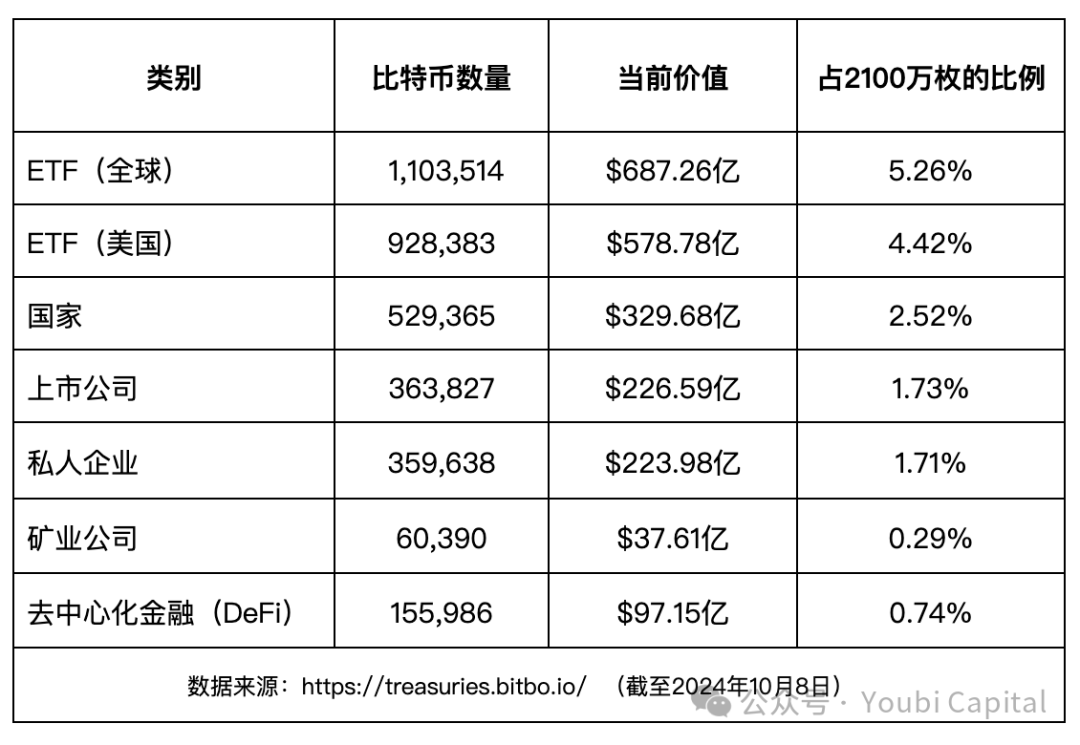
Table 1: ETF Holder Distribution
So who exactly is buying spot Bitcoin ETFs? The answer lies in SEC (U.S. Securities and Exchange Commission) Form 13F filings, which reveal insights into these investors’ activities.
02 What Is 13F?
SEC Form 13F is a quarterly report required by institutional investment managers with over $100 million in discretionary assets under management. These entities—including hedge funds and asset managers—must disclose their long positions in U.S.-traded equities, exchange-traded funds (ETFs), convertible bonds, and other securities. Filings are due within 45 days after each quarter-end. The primary purpose of 13F is to enhance market transparency, enabling investors and regulators to monitor large institutional positions.
1 Data Overview
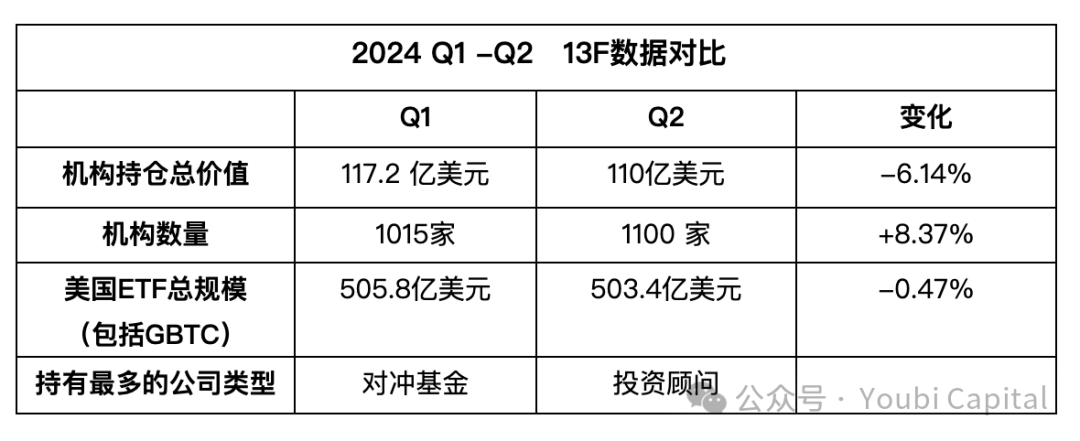
Table 2: Comparison of 13F Data, Q1–Q2 2024
13F Q1 2024
According to 13F reports filed with the SEC for Q1 2024, nearly 1,015 institutions held approximately $11.72 billion in spot Bitcoin ETFs. This accounts for about 23.2% of the total U.S. BTC ETF market (including GBTC), while the remaining 76.8% of holders remain undisclosed (non-filers—such as individuals or firms below the $100 million threshold, or retail investors).
In Q1 2024, 18 institutions held over $100 million in BTC-related assets, 106 held over $10 million, and 382 held over $1 million. For most institutions, BTC ETF holdings represent only a small portion of their overall portfolios.
Note: During Q1 2024 (through March 31), Grayscale’s GBTC saw outflows of ~$14.77 billion, while newly launched BTC ETFs from BlackRock, Fidelity, Bitwise, etc., recorded net inflows of ~$12.13 billion—totaling $26.9 billion in new capital. By the end of Q1 2024, total U.S. spot BTC ETF AUM (including GBTC, excluding non-U.S. ETFs) reached $50.58 billion.
If considering inflows solely into the new spot BTC ETFs (BlackRock, Fidelity, Bitwise, etc.), the share held by these 1,000+ institutions would be even higher, as many moved from GBTC to lower-fee ETFs like IBIT and FBTC.
The count of ~1,015 institutions excludes those reporting zero holdings. Some institutions show zero because they sold their positions after initial purchase.
13F Q2 2024
Despite a 12% decline in Bitcoin prices during Q2 2024, institutional investors continued buying Bitcoin ETFs. According to Bitwise, 1,100 institutions held $11 billion in ETFs (down in value from Q1’s $11.73 billion, but reflecting actual增持 given BTC’s >12% price drop). The number of institutions increased 8.37% from Q1 (1,015).
About two-thirds of institutional holders maintained or increased their positions in Q2, while 34% reduced or exited entirely. These institutions are primarily concentrated in hedge funds, asset management, quant firms, and banks. According to Sina Finance, there were 6,794 13F filers in Q2 2024, with total holdings exceeding $48.66 trillion—meaning nearly 1 in 6 13F funds now holds spot Bitcoin ETFs.
Note: In Q2 2024 (through June 30), Grayscale’s GBTC had outflows of ~$18.52 billion, while BlackRock, Fidelity, Bitwise, and others saw net inflows of ~$14.52 billion—totaling $33.04 billion in new capital. By the end of Q2, total U.S. spot BTC ETF AUM (including GBTC) stood at $50.34 billion (slightly down from Q1’s $50.58 billion, factoring in BTC’s 12% price drop—indicating net增持).
2 Investor Types
A wide range of professional institutions hold Bitcoin ETFs—including hedge funds, investment advisors, quant firms, banks, and even state government investment funds. Among disclosed filers, hedge funds and investment advisors are the largest groups. Investment advisory firms lead in numbers—over 700 held ~$3.8 billion in BTC ETFs in Q1. Hedge funds, though fewer in number (107), are more concentrated, holding ~$4.7 billion. In Q2, investment advisors surpassed hedge funds to become the largest holder group.
Bitcoin ETFs have attracted unprecedented interest from professional investors. Bloomberg ETF analyst Eric Balchunas noted that such broad institutional participation is remarkable for a new ETF. Historically, even the most successful ETF launches—like the gold ETF in 2004, which raised over $1 billion in five days—had only 95 professional firms investing by their first 13F filing. In contrast, Bitcoin ETFs achieved historic success in terms of investor breadth.
Balchunas also analyzed institutional ownership of the 10 fastest-growing new ETFs in history. After just two quarters, Bitcoin ETFs far exceeded all others in both number of holders and AUM.
The closest comparison might be Nasdaq-100 QQQs, but this is imperfect—the QQQ ETF launched in March 1999, yet Balchunas only found 13F data from Q1 2001 (nine quarters later). Even then, Bitcoin ETFs had three times as many institutional holders as QQQ did at a similar stage.
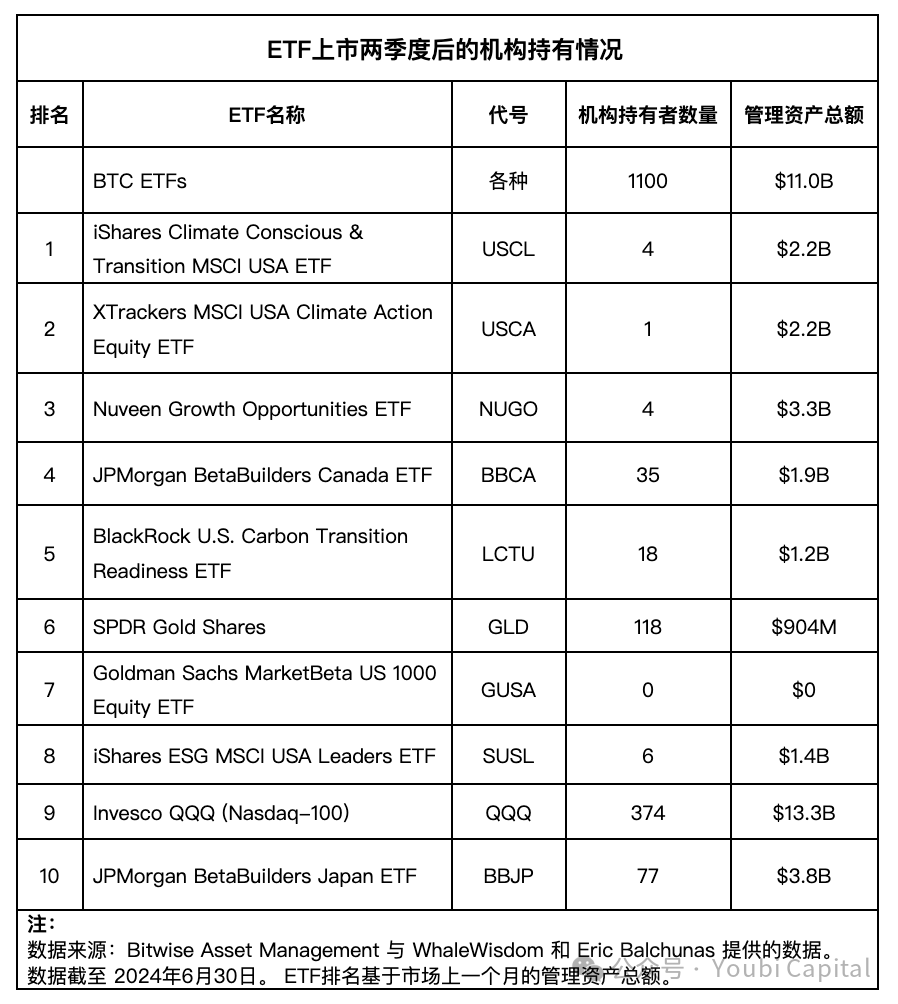
Table 3: Institutional Ownership Two Quarters Post-Launch
Compared to other investments, non-filers are disproportionately invested in spot BTC ETFs. According to NYDIG, non-filer ownership in major stocks is: AAPL 40.0%, NVDA 30.0%, MSFT 28.7%. For other ETFs: SPY 43.5%, QQQ 61.8%, GLD 62.5%, IAU 42.2%. In stark contrast, 76.8% of spot BTC ETF holders are retail or non-filers, significantly higher than any other asset class.
While most BTC ETF investment in Q1 and Q2 2024 still came from retail or non-filers, professional participation may be rising—as professionals often allocate personally before advising clients. Data shows the median investor in Q2 allocated only 0.47% of their portfolio to Bitcoin.
Bitwise, having guided professional investors into crypto over the past seven years, observes a consistent pattern: due diligence → personal allocation → broader client deployment.
Professional investor involvement is growing—reflected in rising institutional counts in Q2: Goldman Sachs did not appear in Q1 13F filings but reported $418 million in BTC ETFs in Q2. Similarly, Wisconsin Investment Board invested ~$163 million in Q1, followed by Michigan Retirement System purchasing $6.6 million in Q2.
03 Changes in 13F Holders
Nearly a thousand institutions were disclosed in 13F filings for Q1 and Q2 2024. Due to space constraints, this article focuses only on key holder changes. Full details for other institutions can be accessed via the SEC website link provided below.
1 Hedge Funds
Hedge funds were the largest holder category in Q1 2024, with 107 reporting spot Bitcoin ETF holdings totaling ~$470 million (~9.3% of total ETF volume). Although the largest group, these positions may serve hedging or trading strategies rather than pure long exposure—for example, as part of market-making or arbitrage. Additionally, hedge fund positions change rapidly, so current levels likely differ from reported figures. In Q2, hedge funds ranked second behind investment advisors.
Value Changes in Selected Hedge Fund Holdings (Q1–Q2 2024)
According to River data, 60% of the top 25 U.S. hedge funds hold Bitcoin ETFs. Most continued adding in Q2. Millennium Management significantly reduced its BTC ETF position but remains the largest holder.
Note: Some firms' holding values changed due to price fluctuations (BTC fell ~12% in Q2 vs Q1), not active rebalancing. For example, HBK Investments’ value shifted despite unchanged share count. Larger changes reflect active trades plus price moves. Schonfeld Strategic Advisors held 3,735,534 shares of FBTC in Q1 (worth ~$232M); in Q2, it held 3,901,786 shares (worth ~$205M)—an增持 of 166,252 shares, yet value dropped by ~$27M due to price decline.
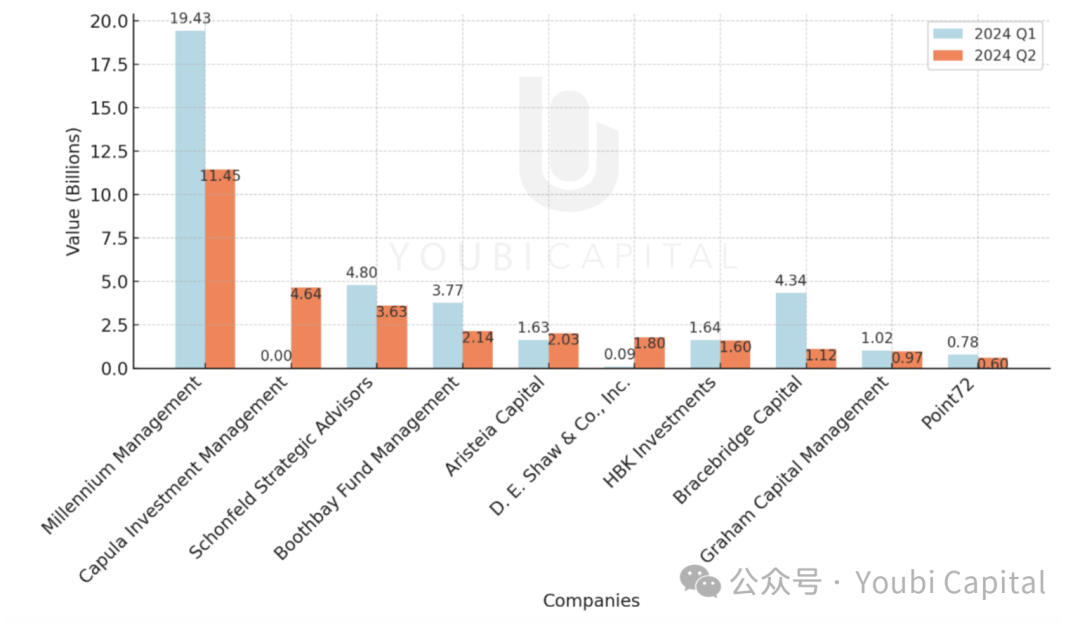
Figure 1: Value Changes in Selected Hedge Fund Holdings

Table 4: Value Changes in Selected Hedge Fund Holdings
1) Millennium Management (~$1.145 billion)
Millennium Management is a New York-based global multi-strategy hedge fund founded in 1989 by Israeli-American financier Israel Englander. It is one of the world’s largest hedge funds.
In Q1 2024, it held five Bitcoin ETFs valued at ~$1.94 billion (~3% of its AUM). In Q2, its BTC ETF holdings were valued at ~$1.145 billion.
2) Capula Investment Management ($464 million)
Europe’s fourth-largest hedge fund, Capula Investment Management, disclosed $464 million in BlackRock and Fidelity spot Bitcoin ETFs as of June 30.
3) Schonfeld Strategic Advisors (~$363 million)
Schonfeld Strategic Advisors is a global hedge fund founded in 1988 and headquartered in New York. Initially established by Steven Schonfeld as an equity-focused proprietary trading firm, it evolved into a multi-strategy hedge fund manager.
In Q1 2024, Schonfeld held a total of $479 million in BTC ETFs—$248 million in IBIT and $231.8 million in FBTC. In Q2, this decreased to $363 million.
4) Boothbay Fund Management ($214 million)
Boothbay Fund Management is a New York-based hedge fund founded in 2011 by Ari Glass.
In Q1 2024, it invested $377 million in spot Bitcoin ETFs. In Q2, its holdings were valued at $214 million.
5) Aristeia Capital ($203 million)
Aristeia Capital is a New York-based hedge fund founded in 1997 by Robert Henry Lynch and Anthony Michael Frascella.
In Q1 2024, it held $163 million in IBIT. In Q2, this increased to $203 million.
6) D. E. Shaw & Co., Inc. ($180 million)
D. E. Shaw & Co., Inc. is a globally leading hedge fund and investment management firm founded in 1988, known for its heavy reliance on mathematics, computer science, and quantitative analysis.
In Q1 2024, it held $8.987 million in spot Bitcoin ETFs. In Q2, this rose to $180 million.
7) HBK Investments ($160 million)
HBK Investments is a Dallas, Texas-based hedge fund founded in 1991.
In Q1 2024, it held $164 million in spot Bitcoin ETFs. In Q2, this was $160 million.
8) Bracebridge Capital ($112 million)
Bracebridge Capital is a Boston-based hedge fund founded in 1994 by Nancy Zimmerman and Gabrielle Sulzberger. Managing billions in assets, its clients include university endowments, foundations, family offices, and institutional investors.
In Q1 2024, it held ~$434 million in spot Bitcoin ETFs. In Q2, this dropped to $112 million.
9) Graham Capital Management ($97 million)
Graham Capital Management is a hedge fund focused on global macro and quantitative strategies, founded in 1994 and based in Rowayton, Connecticut. Founded by Kenneth G. Tropin, a veteran in the hedge fund industry.
In Q1 2024, it held $98.8 million in IBIT and $3.8 million in FBTC. In Q2, total holdings were $97 million.
10) Point72 ($60 million)
Point72, the $34 billion hedge fund led by billionaire and New York Mets owner Steven Cohen, held $77.58 million in spot Bitcoin ETFs at the end of Q1. In Q2, this decreased to $60 million.
2 Financial Services Firms
Financial services firms form the most diverse group, comprising the majority of filers. This includes investment advisors, wealth managers, and investment banks.
Value Changes in Selected Financial Services Firms (Q1–Q2 2024)
River data shows that 13 of the 25 largest Registered Investment Advisors (RIAs) have entered Bitcoin and are gradually increasing allocations. Many financial firms added new positions—Goldman Sachs did not disclose BTC ETF holdings in Q1, but its Q2 13F revealed $418 million in spot Bitcoin ETFs, making it the third-largest holder of IBIT, behind Millennium Management and Capula Investment Management.
For example, Horizon Kinetics held 14,974,187 shares of GBTC in Q1, valued at $946 million. In Q2, it held 14,917,448 shares, valued at $794 million—a 0.38% reduction in shares but a 16.07% drop in value, mostly due to market price movement, not significant selling.
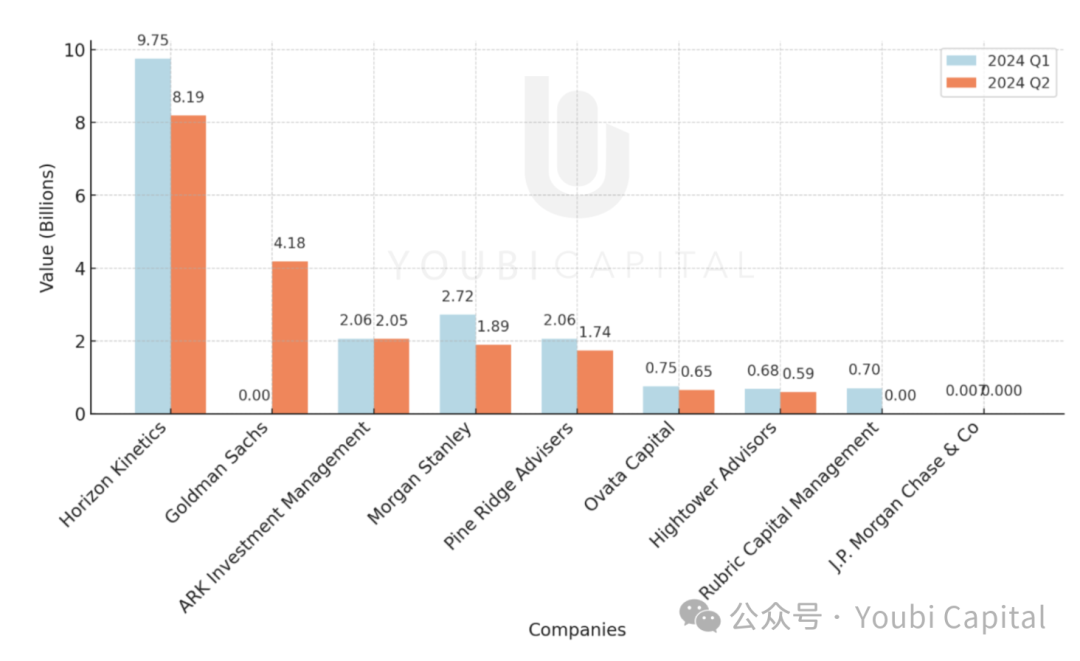
Figure 2: Value Changes in Selected Financial Services Firms
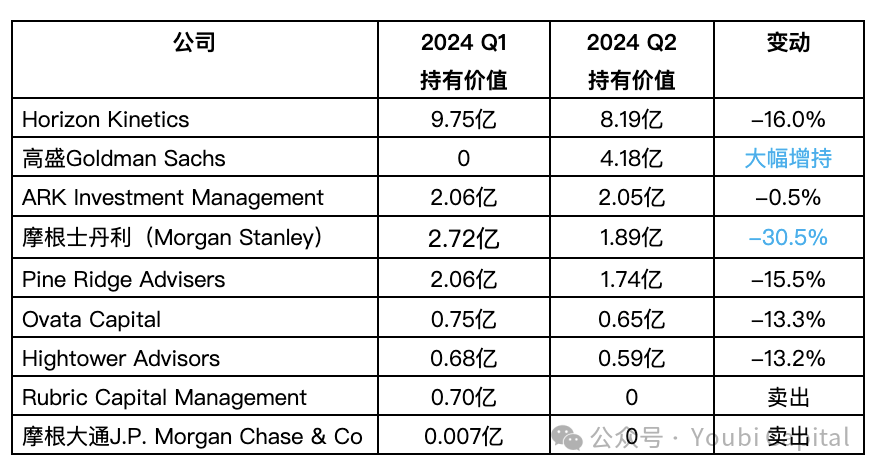
Table 5: Value Changes in Selected Financial Services Firms
1) Horizon Kinetics ($819 million)
Horizon Kinetics is an independent investment advisor founded in 1994 and based in New York. The firm focuses on long-term, contrarian, and fundamental value investing, seeking undervalued opportunities in inefficient markets. It manages approximately $7 billion in assets.
In Q1 2024, it held $946 million in Grayscale’s GBTC, making it the second-largest holder (after Susquehanna International Group). It also held $29.01 million in IBTC. Its GBTC stake represented 33% of its internet fund assets—indicating strong conviction in Bitcoin’s long-term outlook. In Q2, its total BTC ETF holdings were valued at $819 million.
2) Pine Ridge Advisers ($174 million)
Pine Ridge Advisers LLC is a New York-based financial advisory firm founded in 2018, managing ~$863 million in assets, primarily serving high-net-worth individuals and small businesses.
In Q1 2024, it held $205.8 million in spot Bitcoin ETFs. In Q2, this was $174 million.
3) ARK Investment Management ($205 million)
ARK Invest is a U.S. asset management firm founded in 2014 by Cathie Wood (“Miss Wood”). It invests in companies leveraging disruptive technologies—AI, genomics, robotics, fintech, blockchain, 3D printing, etc.
In Q1 2024, it held $206 million in ARK 21 Shares Bitcoin ETF—one of the first 11 spot BTC ETFs. In Q2, this was $205 million.
4) Morgan Stanley ($189 million)
Morgan Stanley is an international financial services firm founded in 1935 and headquartered in New York. It offers investment banking, wealth management, asset management, and securities trading.
In Q1 2024, it held $272 million in Bitcoin ETFs—all in Grayscale’s GBTC—making it the third-largest GBTC holder. In Q2, this decreased to $189 million.
5) Ovata Capital Management ($65 million)
Ovata Capital is a Hong Kong-based asset manager founded in 2017.
In Q1 2024, it held over $75 million in Bitcoin ETFs. In Q2, this was $65 million.
6) Hightower Advisors ($59 million)
Hightower Advisors provides wealth and investment advisory services, headquartered in Chicago, Illinois.
In Q1 2024, it held over $68.34 million in U.S. spot Bitcoin ETFs, despite managing $12.2 billion in total assets. In Q2, this decreased to $59 million.
7) Rubric Capital Management ($0)
Rubric Capital Management is a U.S.-based investment management firm founded in 2008.
In Q1 2024, it held over $69.71 million in BlackRock’s spot Bitcoin ETF. In Q2, it sold all holdings.
8) J.P. Morgan Chase & Co. ($0)
J.P. Morgan is a New York-based financial services giant founded in 2000, offering investment banking, commercial banking, asset management, and securities trading.
In Q1 2024, it held $731,000 in spot Bitcoin ETFs. In Q2, it sold all holdings.
3 State Government Funds, Banks, etc.
Banks hold relatively small amounts of BTC ETFs per 13F disclosures—e.g., Bank of America, U.S. Bancorp. Despite managing trillions in assets, their participation in BTC ETFs remains negligible—though this suggests significant future growth potential.
Holdings don’t necessarily mean these institutions offer BTC trading to clients. Some are custodians—e.g., BNY Mellon, U.S. Bank. Others hold small stakes—e.g., National Bank, BNP Paribas—possibly for testing purposes.
Some private banks now offer BTC trading services. In August 2024, Morgan Stanley advisors began offering spot Bitcoin ETFs (IBIT and FBTC) to clients. Wells Fargo may follow. Merrill, under Bank of America, now offers direct Bitcoin ETF investments.
On September 4, 2024, Zurich Cantonal Bank—the largest cantonal bank and fourth-largest bank in Switzerland—launched cryptocurrency services for retail and third-party banks.
Value Changes in State Government Funds and Selected Banks (Q1–Q2 2024)
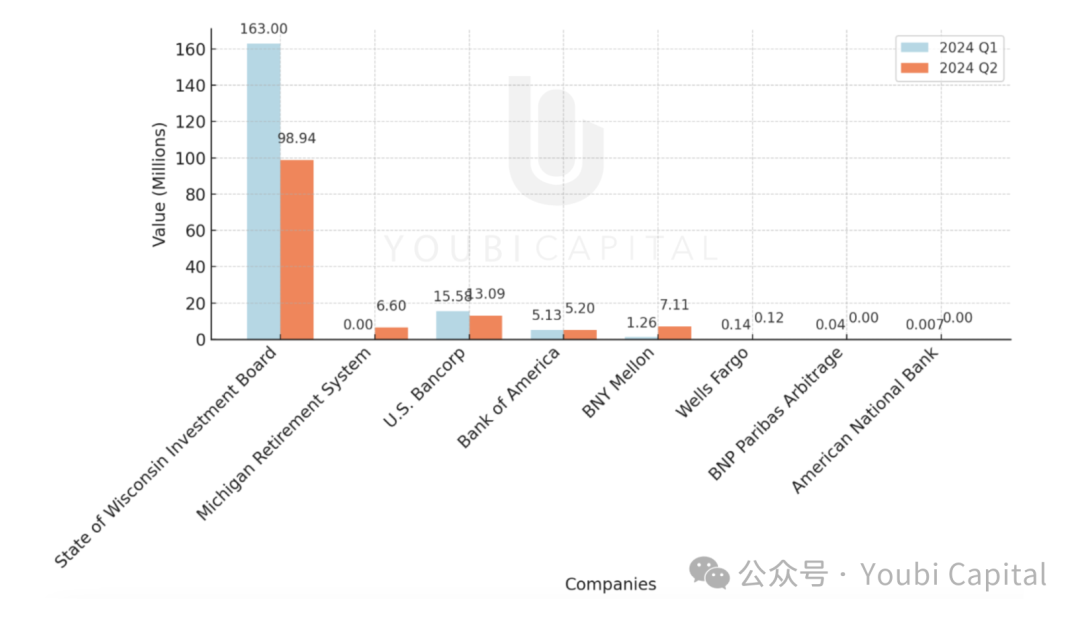
Figure 3: Value Changes in State Government Funds and Selected Banks
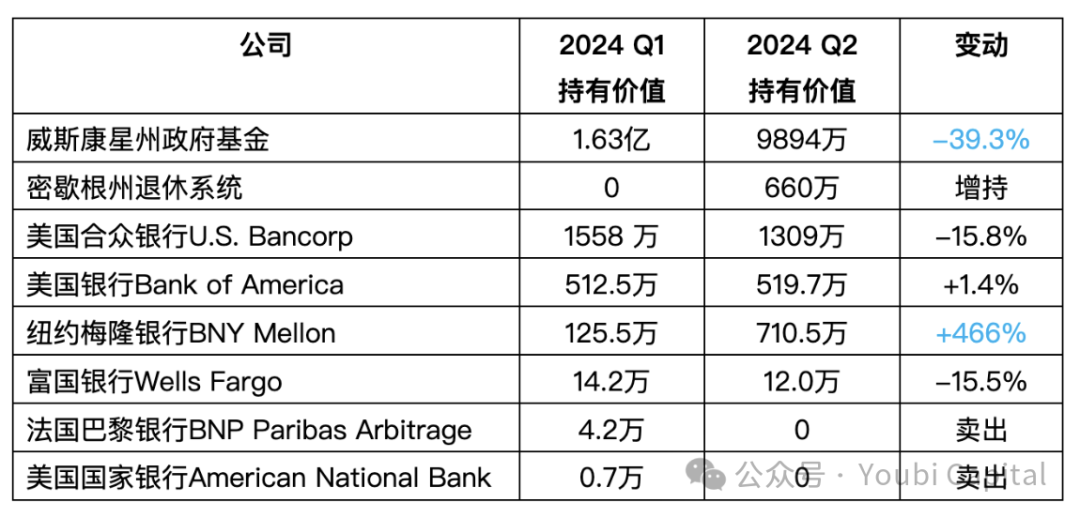
Table 6: Value Changes in State Government Funds and Selected Banks
1) State of Wisconsin Investment Board ($98.94 million)
The first U.S. state government fund to buy spot Bitcoin ETFs, founded in 1951. It manages over $156 billion in assets, overseeing Wisconsin’s retirement systems (e.g., WRS) and other state portfolios.
In Q1 2024, Wisconsin purchased ~$100 million in BlackRock’s iShares Bitcoin Trust (IBIT) and $64 million in Grayscale Bitcoin Trust (GBTC).
Total BTC ETF holdings: ~$163 million in Q1, ~$98.94 million in Q2. Additionally, it holds over 98,000 Coinbase shares (~$21.9M) and 115,000 Marathon Digital shares (~$2.3M).
2) Michigan Retirement System ($6.6 million)
Following Wisconsin’s Q1 investment, Michigan Retirement System bought $6.6 million in Bitcoin ETFs in Q2.
3) U.S. Bancorp DE ($13.09 million)
One of the largest U.S. commercial banks and one of the Big Five, with over 3,000 branches across the western and midwestern U.S. Parent company: U.S. Bancorp, Minneapolis.
Launched crypto custody in 2021 and previously invested in tokenization infrastructure firm Ownera. Three subsidiaries—U.S. Bancorp Fund Services, U.S. Bank N.A., and U.S. Bank Global Fund Services—participated in Valkyrie and Hashdex ETFs.
In Q1 2024, held ~$15.58 million in spot Bitcoin ETFs. In Q2: $13.09 million.
4) BNY Mellon ($7.105 million)
Formed in 2007 from the merger of The Bank of New York and Mellon Financial Corporation. Headquartered in NYC, it’s one of the world’s largest custodians and asset managers.
Long involved in crypto and digital assets, approved by NY regulators for crypto custody. Serves as ETF administrator, transfer agent, and cash custodian for ARK 21Shares, Bitwise, Grayscale, Invesco/Galaxy, BlackRock, Franklin Templeton. Also an authorized participant for Hashdex, able to buy shares directly.
13F shows ~$1.255 million in Q1, rising to $7.105 million in Q2.
5) Bank of America ($5.197 million)
In Q1 2024: $5.125 million in spot Bitcoin ETFs. In Q2: $5.197 million.
6) Wells Fargo & Co ($120,000)
Wells Fargo, the U.S.’s fourth-largest bank (~$1.88T in assets), held $142,000 in spot Bitcoin ETFs in Q1 2024. In Q2: $120,000.
7) BNP Paribas Arbitrage, SA ($0)
A subsidiary of BNP Paribas focused on arbitrage and market-neutral strategies. In Q1 2024, held ~1,000 shares of IBIT (~$42,000). Sold all in Q2.
8) American National Bank ($0)
AUM ~$637 million. Held 100 shares of ARKB (~$7,000) in Q1 2024. Sold all in Q2.
4 Other International Private Banks
Mox, a virtual bank subsidiary of Standard Chartered, announced in August 2024 the launch of crypto ETF services, becoming the first neobank to offer direct trading of spot Bitcoin and Ethereum ETFs. It plans to expand offerings, including direct crypto trading via licensed exchanges.
Julius Baer Group has offered digital asset services since 2020. Expanded crypto operations to Dubai in 2023.
Itaú Unibanco, Brazil’s largest private bank, launched crypto trading in December 2023.
BBVA Switzerland announced in November 2023 an expanded partnership with Metaco, a digital asset custodian and tokenization provider. BBVA Switzerland became the first eurozone bank to offer individual clients crypto custody and trading.
Santander International Private Banking, part of Spanish financial giant Banco Santander, began offering Bitcoin and Ethereum trading to high-net-worth clients in Switzerland in November 2023.
Banco Galicia, Argentina’s largest private bank, started offering Bitcoin and Ethereum trading in May 2022. High crypto adoption in Argentina is partly driven by persistent hyperinflation.
DBS Group, Southeast Asia’s largest bank, announced in May 2021 that its private banking arm would offer crypto trust services—allowing HNW clients to store BTC and ETH. DBS Private Bank called it Asia’s first bank-backed trust service.
Bordier & Cie, a Geneva-based private bank founded in 1884 and managed by five generations of the Bordier family, partnered with digital asset bank Sygnum in February 2021 to offer crypto trading.
Maerki Baumann, a Zurich-based Swiss private bank, launched crypto trading and custody in June 2020 after receiving FINMA approval. It was the second Swiss bank to accept crypto assets.
Banco Sella, an Italian bank, launched its own Bitcoin trading service in March 2020, enabling clients to buy, sell, and store BTC via its Hype platform.
5 Other Types (Quant, Market Makers, etc.)
Value Changes in Selected Other Institutions (Q1–Q2 2024)
Multicoin Capital Management held 1,321,808 shares of GBTC in Q1 2024, valued at $84 million. In Q2, it held the same number of shares, valued at $70 million—a 16.67% drop due to price movements.
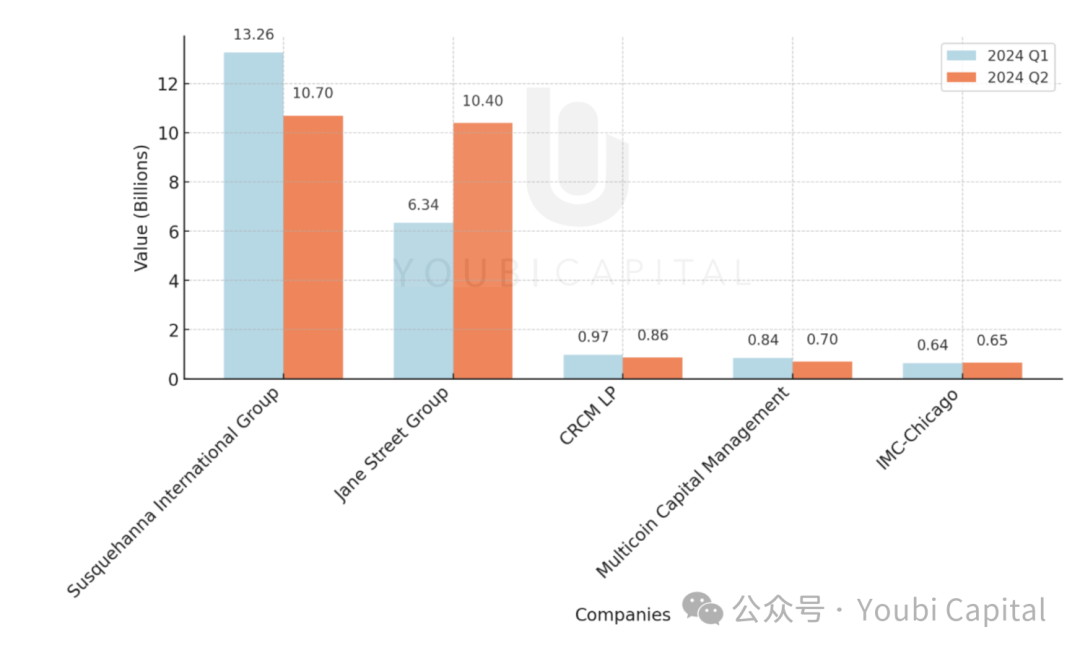
Figure 4: Value Changes in Selected Other Holders
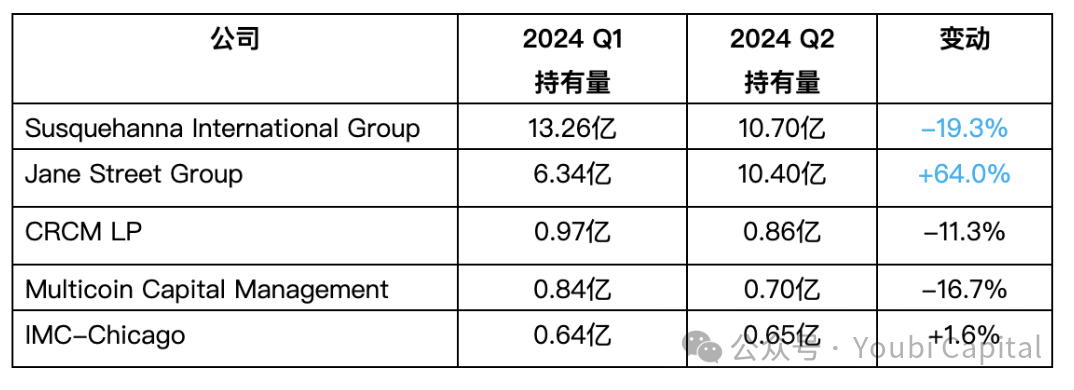
Table 7: Value Changes in Selected Other Holders
1) Susquehanna International Group (~$1.07 billion)
SIG (Sea Limited’s parent) is short for Susquehanna International Group, LLP—founded in 1987, headquartered in Bala Cynwyd, Pennsylvania. Primarily focused on quantitative trading and market making.
In Q1 2024, it held nine spot Bitcoin ETFs valued at ~$1.326 billion. Largest holding: Grayscale’s GBTC (17.27 million shares, ~$1.09 billion), making it the largest GBTC holder. Total firm AUM: ~$575.9 billion—BTC ETFs are a minor portion. In Q2: ~$1.07 billion.
2) Jane Street Group (~$1.04 billion)
Jane Street Group is a globally leading quantitative trading firm headquartered in New York, founded in 2000.
In Q1 2024: ~$634 million in spot Bitcoin ETFs. In Q2: ~$1.04 billion.
3) CRCM LP (~$86 million)
CRCM LP is a venture capital firm focused on early-stage startups. In Q1 2024: ~$96.67 million in spot Bitcoin ETFs. In Q2: ~$86 million.
4) Multicoin Capital Management (~$70 million)
Multicoin Capital Management is a blockchain and crypto-focused investment firm founded in 2017, based in Austin, Texas.
In Q1 2024: ~$83.5 million in spot Bitcoin ETFs. In Q2: ~$70 million.
5) IMC-Chicago (~$65 million)
IMC-Chicago is a quantitative trading firm specializing in algorithmic trading and market making. In Q1 2024: ~$64.14 million in spot Bitcoin ETFs. In Q2: ~$65 million.
6 Family Offices
The number of family offices bullish on crypto is rising. According to Citibank’s *2024 Global Family Office Survey*, the share of crypto-positive family offices doubled from 8% last year to 17% this year.
The report notes similar interest across all AUM sizes, with direct crypto investments and crypto-linked funds being top priorities. Large family offices show greater interest in tokenized real-world assets (RWA)—11% hold crypto exposure vs 3% for smaller ones.
The Asia-Pacific region leads in digital asset adoption—37% of family offices invest in or are interested in digital assets. Latin American family offices show the least interest—83% do not prioritize digital asset allocation.
...etc. Detailed holdings for each company can be queried on the SEC website as outlined in the final section.
04 Global BTC Holding Distribution
1 Global BTC ETF Fund Data
As of October 8, 2024, 28 Bitcoin ETFs hold over 1.1 million BTC, valued at ~$68.7 billion.
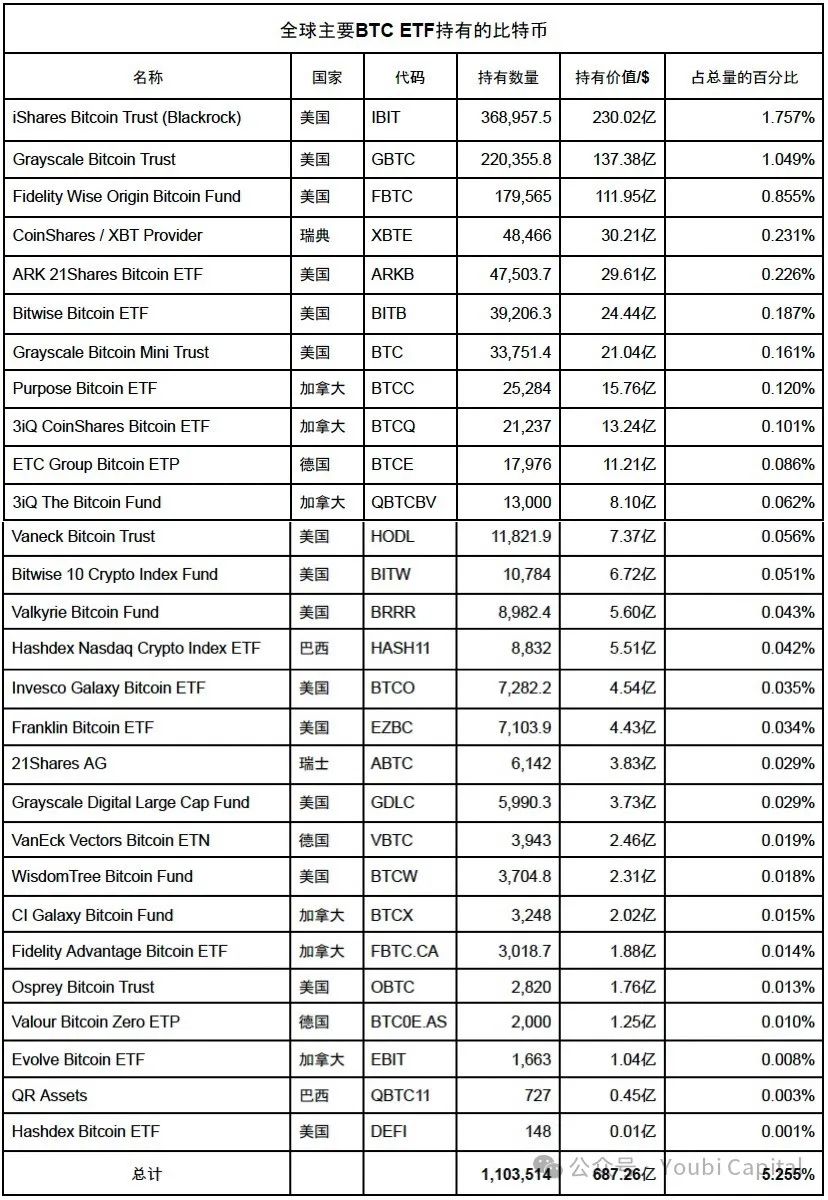
Table 8: Global BTC ETF Distribution
2 Global Corporate and Government BTC Holdings
According to bitcointreasuries.org, as of October 8, 2024, 42 public companies hold 363,827 BTC (1.73% of supply), valued at $22.66 billion—up nearly 214% from $7.2 billion a year ago.
Governments hold ~529,365 BTC (2.52% of supply), valued at $32.97 billion. Private firms hold ~359,638 BTC (1.7% of supply), valued at $22.40 billion.
Note: Public companies typically disclose Bitcoin holdings in annual (10-K) or quarterly (10-Q) reports, as these may impact financial statements. Disclosures include balance sheets, cash flow statements, and details on crypto holdings’ quantity and value.
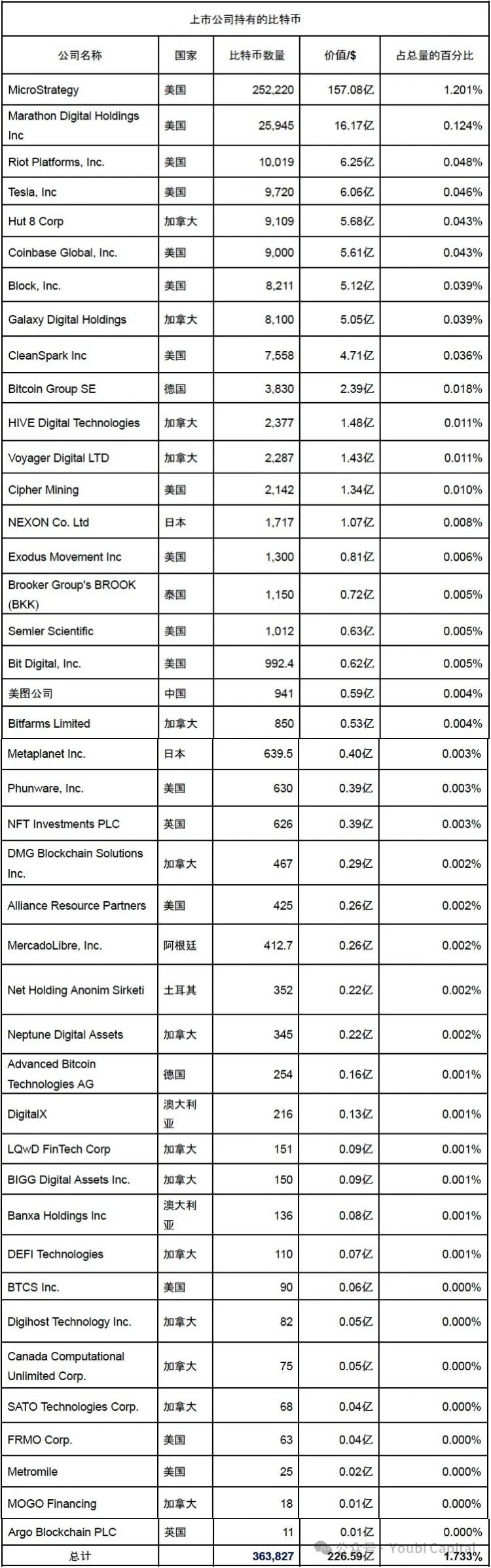
Table 9: Public Companies Holding BTC
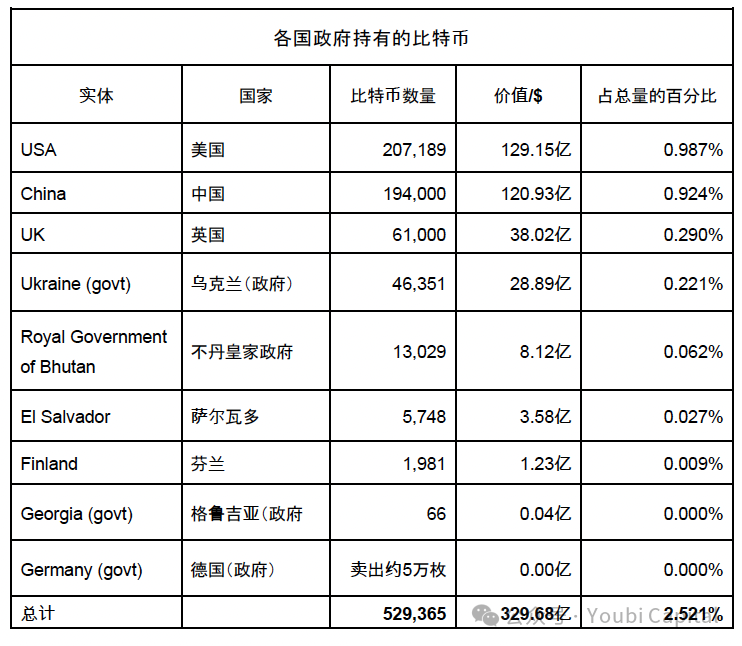
Table 10: Government BTC Holdings
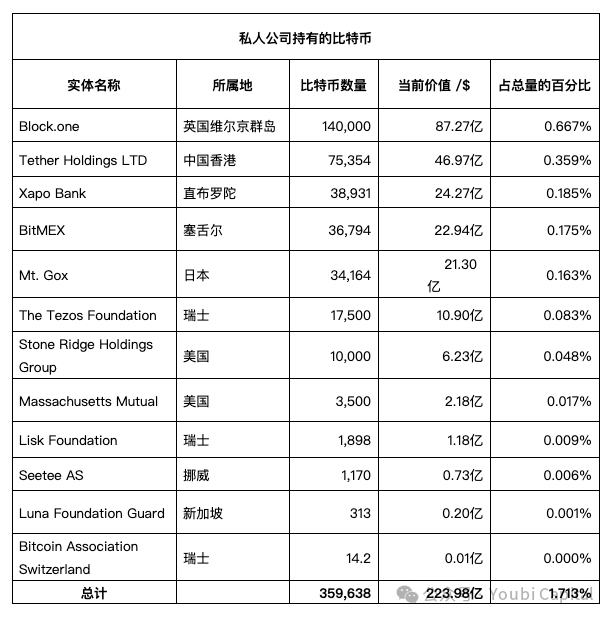
Table 11: Private Company BTC Holdings
05 How to Query 13F Filings for Companies
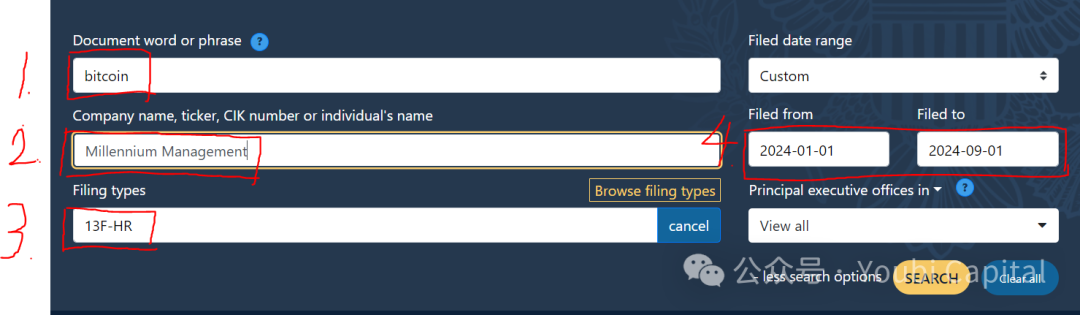
To check whether a company disclosed BTC ETF holdings in its 13F filing and the amount held, follow these steps:
1. Enter keyword: Bitcoin
2. Enter company name: e.g., Millennium Management
3. Select form type: 13F-HR
4. Select date range: 2024-01-01 to 2024-09-01
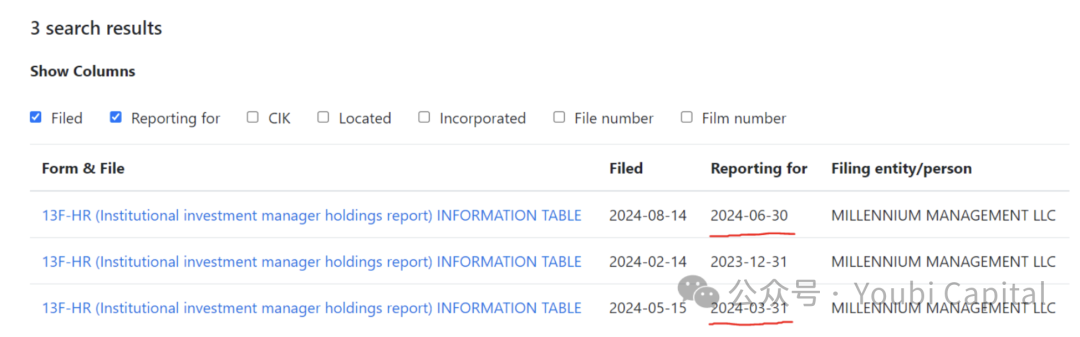
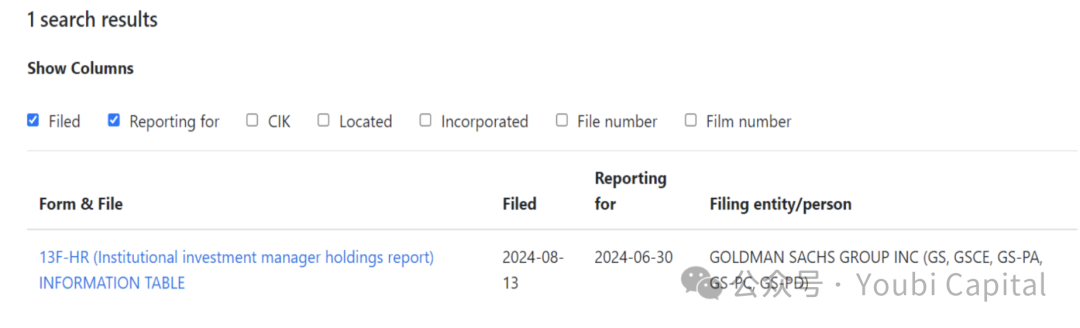
5. Click Search: Using Millennium Management’s Q2 13F as an example, three results appear. The one labeled "Reporting for 2024-06-30" is the Q2 2024 13F; "Reporting for 2024-03-31" is Q1.
6. Open the first document: The first entry containing "Bitcoin" indicates Millennium Management holds ARK’s BTC ETF, valued at ~$38 million.
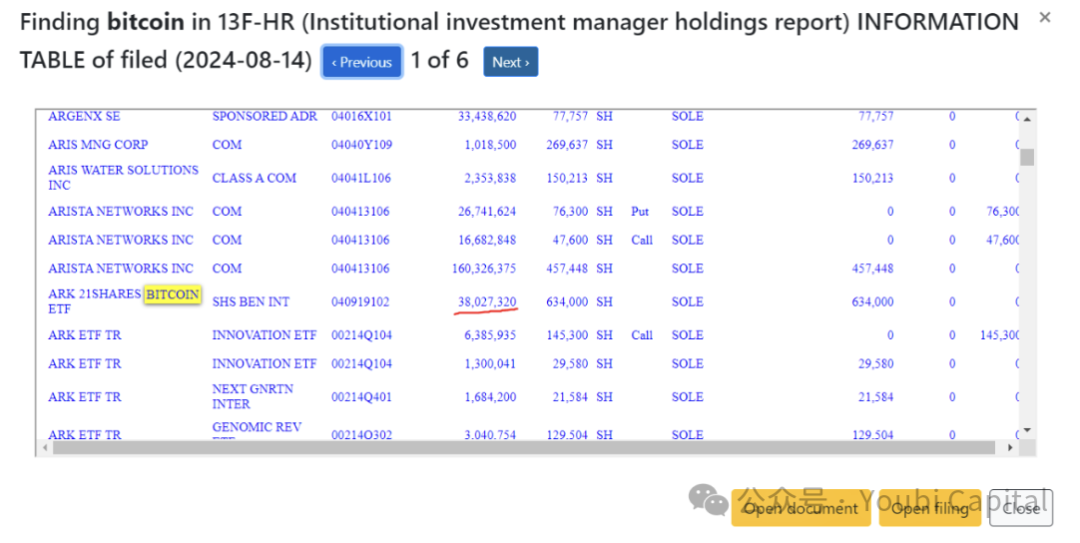
7. There are six "Bitcoin" entries in the file. Click "Next" to see holdings in ETFs issued by BITWISE, FIDELITY, etc. Overall, Millennium Management held ~$1.145 billion in BTC ETFs in Q2 2024.
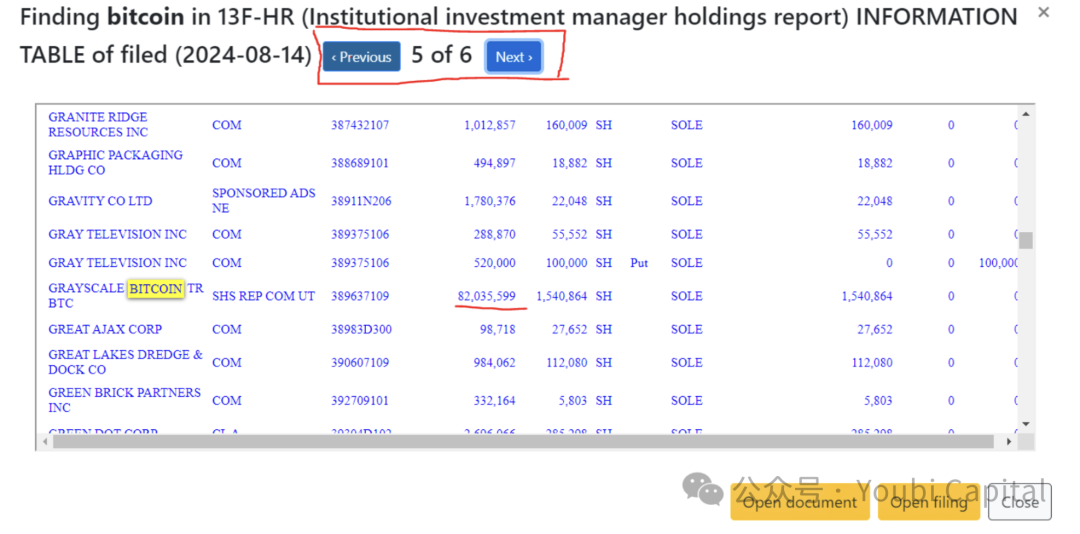
8. Similarly, you can check Q1 or other companies’ BTC ETF disclosures in 13F filings.
For example, Millennium Management held ~$1.942 billion in BTC ETFs in Q1 2024, decreasing to $1.145 billion in Q2—a ~41.1% reduction. Replacing the name with Goldman Sachs reveals no BTC ETF holdings in Q1 2024, but its Q2 13F (as of June 30) shows $418 million in spot Bitcoin ETFs.
Join TechFlow official community to stay tuned
Telegram:https://t.me/TechFlowDaily
X (Twitter):https://x.com/TechFlowPost
X (Twitter) EN:https://x.com/BlockFlow_News
 Youbi Capital