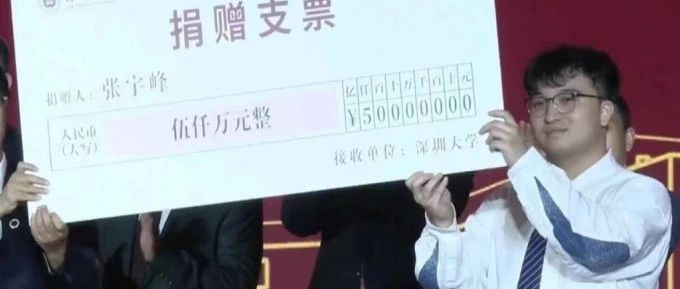
Zhang Yufeng, a Shenzhen University alumnus, has publicly exposed his fraud scheme, revealing over ten victims and fraudulent donations totaling 50 million yuan used for endorsement purposes.
TechFlow Selected TechFlow Selected
Zhang Yufeng, a Shenzhen University alumnus, has publicly exposed his fraud scheme, revealing over ten victims and fraudulent donations totaling 50 million yuan used for endorsement purposes.
To prevent more people from being scammed, Huang Yifeng, a senior alumnus of Shenzhen University and Zhang Yufeng's schoolfellow, decided to come forward and expose this "professional scammer" by name.
 Navigating Web3 tides with focused insights
By Colin Wu, Wu Shuo Blockchain
This article summarizes an interview conducted by Colin, editor of Wu Shuo Blockchain, with Huang Yifeng—a senior alumnus of Shenzhen University and classmate of Zhang Yufeng—on October 12.
Zhang Yufeng has been dubbed the "young Pony Ma" by media outlets, with several authoritative reports stating he donated 50 million RMB to Shenzhen University just one year after graduation. However, it was later exposed that much of his background was fabricated: he never made the donation, did not graduate normally, owes money on online lending platforms, and falsified employment at FTX, among other deceptions.
Even more shockingly, after gaining alumni trust through this fake donation, Zhang has recently been repeatedly soliciting money from close acquaintances under the guise of investing in cryptocurrency "projects." When repayment deadlines passed without return of funds, multiple victims filed police reports. To prevent further deception, Huang Yifeng, Zhang’s senior at Shenzhen University, decided to come forward and expose this "professional scammer" under his real name.
Huang said that Zhang claimed to have access to certain crypto investment opportunities that could double returns within months. After friends invested and their terms matured, Zhang began delaying repayments, offering absurd excuses such as being hospitalized in Hong Kong. After multiple victims reported him to authorities, Zhang’s parents—who run a printing factory in Dongguan—helped repay part of the debt. Zhang’s residence at Shenzhen Bay One received eviction warnings due to unpaid rent, and he even defaulted on a 6,000 RMB online loan.
Background Information:
2. Personal Introduction of Whistleblower Huang Yifeng
The following is a summary. For the full interview and additional details, please listen to the Wu Shuo Podcast:
Listen on Xiaoyuzhou FM: https://www.xiaoyuzhoufm.com/episode/670a8bc2db2cf82757b86a30
Listen on YouTube: https://youtu.be/PrEThWwCFRw
Summary of the Interview:
Huang Yifeng: Let me first introduce myself. I’m from the Class of 2017 at Shenzhen University, so I’m technically Zhang Yufeng’s senior (he enrolled in 2018). I met Zhang in 2021 when I was running a startup. By chance, he added me on WeChat, probably because of some entrepreneurship subsidy programs.
From 2021 to 2024, we kept in touch regularly. He frequently posted things on social media that seemed impressive—like receiving an offer from Sequoia, or photos with SBF, founder of FTX. He even claimed to be an LP for Sequoia, investing tens of millions. He said he bought a Ferrari. Starting in early 2022, he built up this image of someone extremely successful.
To be honest, I considered myself quite close to him. Combined with the story about donating 50 million to our alma mater, I felt comfortable giving him a significant amount of money without a contract—this was the general situation.
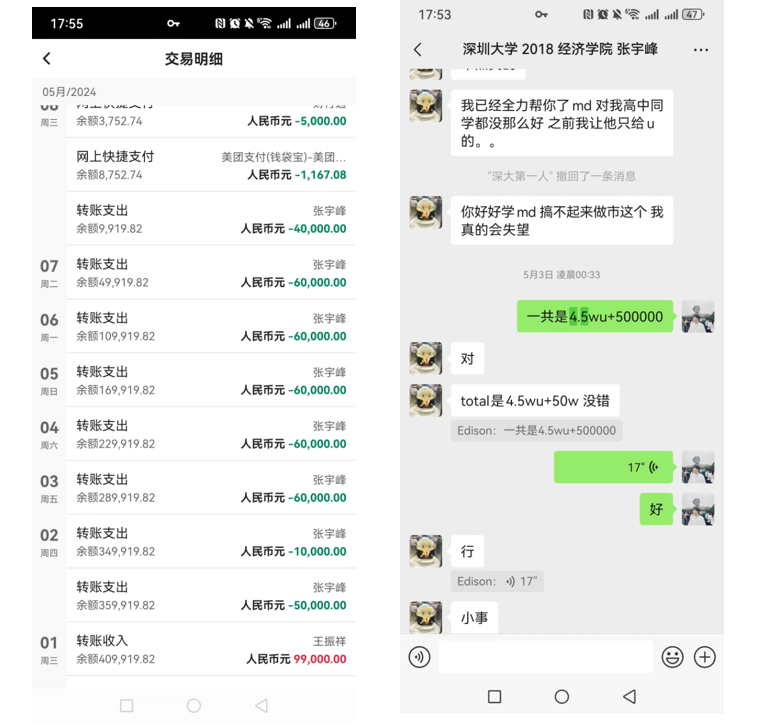
At the end of 2023, I officially entered the cryptocurrency industry and reached out to Zhang for advice, continuing discussions with him. Around May this year, he told me he had some investment "projects" with amazing returns, suggesting I give him 1 million RMB, which could multiply several times within a quarter—turning into several million—and then he would return the profit to me so I could improve my life or use it as seed capital for market-making.
I transferred him approximately 840,000 RMB in total around early May, during the Labor Day holiday period.
Colin: When did you start feeling suspicious and ask for your money back?
Huang Yifeng: Our original agreement was for him to return the funds within one quarter. At the beginning of May, we agreed he would repay me by July 25. He promised me the money wouldn’t lose value—if it did, he’d return the principal no matter what.
Colin: Why did you trust him so much that you didn’t even sign a contract?
Huang Yifeng: First, from 2022 to 2024, we were very close and communicated often. I never expected he’d only defraud people he knew well. Second, we’re both alumni of Shenzhen University. Third, the claim that he donated 50 million to the university seemed impossible to fabricate. Essentially, all the victims share these three reasons.
I’ve read Wu Shuo’s report honestly more than five times. When I sent the money in May, I re-read that article and others again carefully—but still chose to believe him. I thought, how could a scammer keep it up for so long, deceiving me since 2022? His information, identity, and background all appeared consistent. I saw all the negative rumors but simply didn’t believe them at the time.
Colin: When did you begin to doubt him?
Huang Yifeng: When he delayed returning the principal. Our initial deadline was July 25. He proactively suggested postponing it to August 20, citing poor market conditions. Then in mid-July, one of his childhood friends posted something on Twitter, and gradually many victims connected through this person—I finally learned the truth.
There are about ten known victims like me, with incidents starting from September 2023 and totaling over 3 million RMB. From what I know, most people have recovered most of their principal, but at least 200,000 RMB remains unrecovered because the individual is still pursuing it.
Some victims have already reported him to the police. There was a case involving about 1 million RMB owed to a university classmate, who filed a police report. Officers went directly to Zhang’s home, and his family repaid the 1 million. Some victims are his childhood friends—people he’s known since high school, with whom he traveled after graduation. His family indeed runs a printing factory in Dongguan.
Colin: How did Zhang Yufeng build his persona?
Huang Yifeng: He’s a professional con artist. From 2022 until now, he’s meticulously crafted this image of extreme wealth—such as showing fake Stanford admission letters or screenshots of his OKX account with tens of millions in USDT, which he often displayed to others.
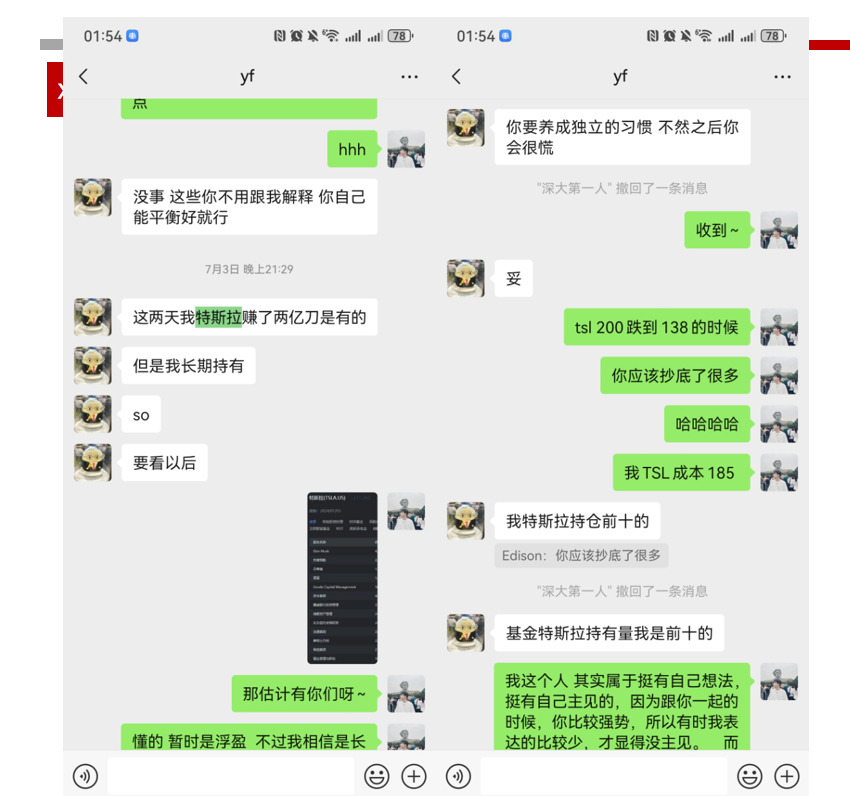
I’m convinced he suffers from delusions. He also claimed to have met Elon Musk and said he was among Tesla’s top ten shareholders.
I visited his apartment at Shenzhen Bay One. He initially told me he owned it, but later I found out he was renting—and eventually discovered he had fallen behind on rent and received official notices.
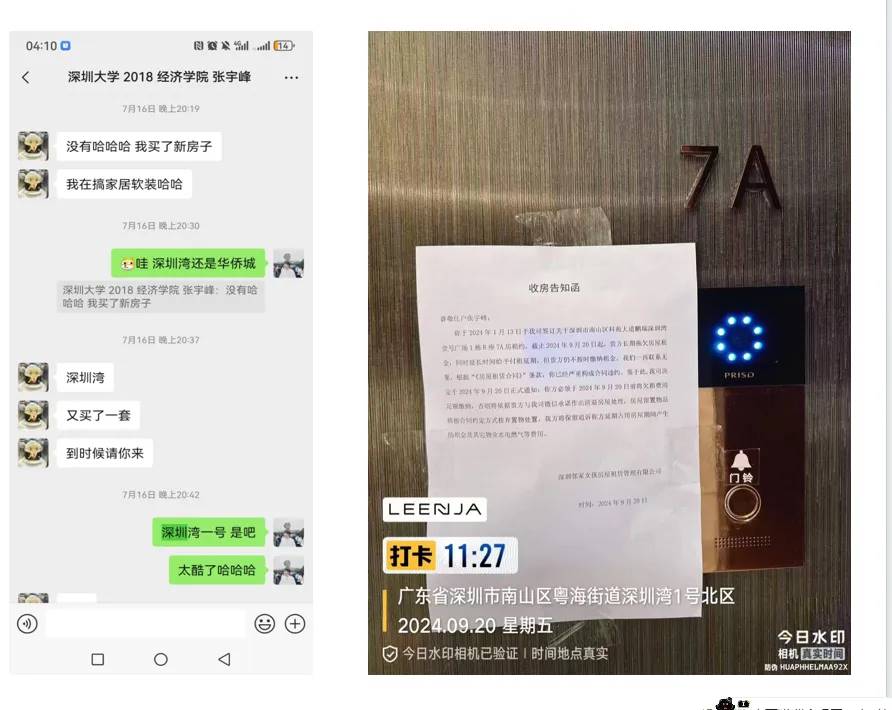
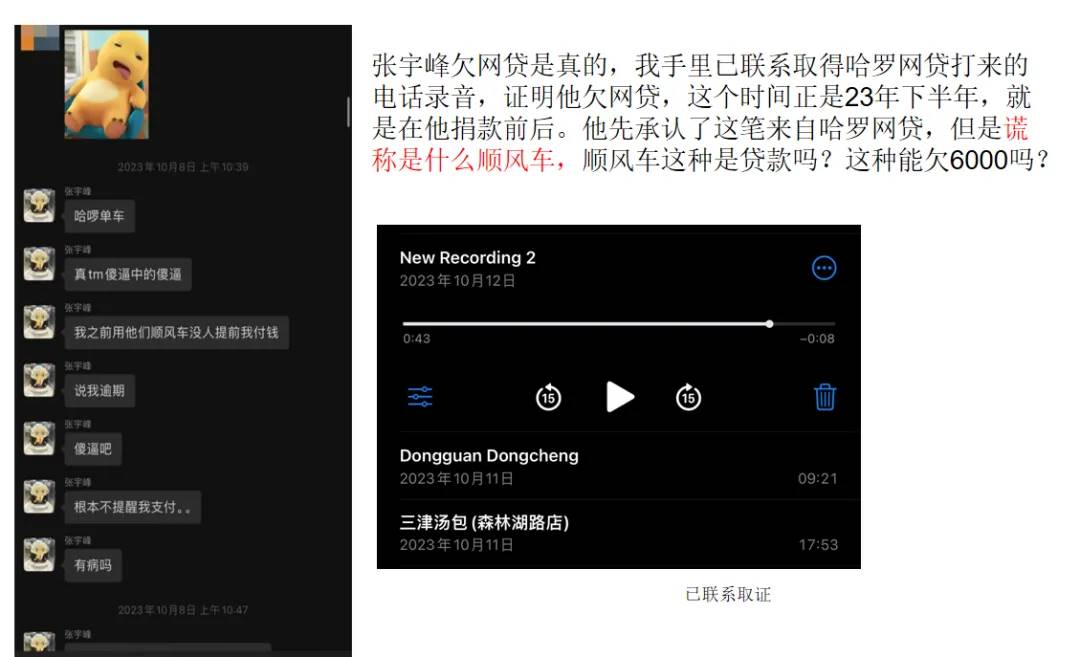
Around the time of the alleged donation in 2023, he was already in debt on online lending platforms—about 6,000 RMB. He listed a close friend as his emergency contact, and the lender called that friend.
I believe Shenzhen University was also deceived (via the false donation pledge). Before the incident, the dean of his college even invited Zhang to give talks on topics like “the path to financial freedom” and “how to land an offer at Sequoia.”
Colin: Why did you decide to speak out against him?
Huang Yifeng: If I hadn’t exposed him, more people would inevitably be scammed. There were many bizarre episodes—like him asking me to meet in Hong Kong or Singapore, then ghosting me. When he couldn’t repay, he claimed he had myocarditis and was hospitalized in Hong Kong, saying the medical exam cost 50,000 RMB and hospitalization 100,000 RMB, causing him to cancel his private jet booking and lose another 100,000 RMB deposit. Then he said his father was admitted to ICU with myocarditis, followed by his mother falling ill—endless excuses.
His ancestral hometown is Meizhou, but he’s originally from Dongguan. He only targets people close to him—his innermost circle. It’s truly outrageous. Some of his internships were purchased; others were likely entirely fabricated. Transfer records proving two paid internships still exist.
According to friends, at least two groups of people approached his parents demanding repayment. His father initially refused, believing that if his son could trick people into giving money, that was his skill—“just leave me alone.” That was his attitude. His mother, however, seems kinder and over the past year has gradually repaid portions of the debt.
Colin: In essence, this case isn’t complicated. Zhang Yufeng may suffer from delusions, ran out of money, and with no support from family, started borrowing from people around him using fabricated excuses.
Huang Yifeng: I agree. But there are deeply malicious aspects—especially targeting only those closest to him, which violates basic humanity. I often wonder how many more people he deceived through his Knowledge Planet subscription service. The podcast done by the Deribit employee on Xiaoyuzhou FM also misled many people.
Join TechFlow official community to stay tuned
Telegram:https://t.me/TechFlowDaily
X (Twitter):https://x.com/TechFlowPost
X (Twitter) EN:https://x.com/BlockFlow_News
 吴说区块链
吴说区块链