
Edge AI, the core technology narrative for 2025?
TechFlow Selected TechFlow Selected
Edge AI, the core technology narrative for 2025?
Edge AI is revolutionizing the field of artificial intelligence by shifting data processing from centralized cloud servers directly to local devices.
 Navigating Web3 tides with focused insights
Authors: Advait Jayant, Matthew Sheldon, Sungjung Kim, and Swastik Shrivastava
Translated by: BeWater
With Meta’s recent launch of lightweight Llama 1B and 3B parameter models optimized for on-device applications, and Apple Intelligence set to release its new product at the end of October, we believe edge AI and on-device AI will become the biggest topic in 2025.
Peri Labs and BeWater have collaborated to publish a comprehensive report of approximately 250 pages, covering:
-
The necessity of edge AI
-
Core innovations in the edge AI space
-
Why edge AI requires cryptography
-
Understanding core frameworks of edge AI
-
The current state of edge AI and cryptography
BeWater has translated this report into Chinese. Below is a condensed summary:
The Rise of Edge AI
Edge AI is revolutionizing artificial intelligence by shifting data processing from centralized cloud servers directly to local devices. This approach addresses limitations of traditional AI deployment—such as high latency, privacy concerns, and bandwidth constraints. By enabling real-time data processing on devices like smartphones, wearables, and IoT sensors, edge AI reduces response times and keeps sensitive data securely on the device itself.
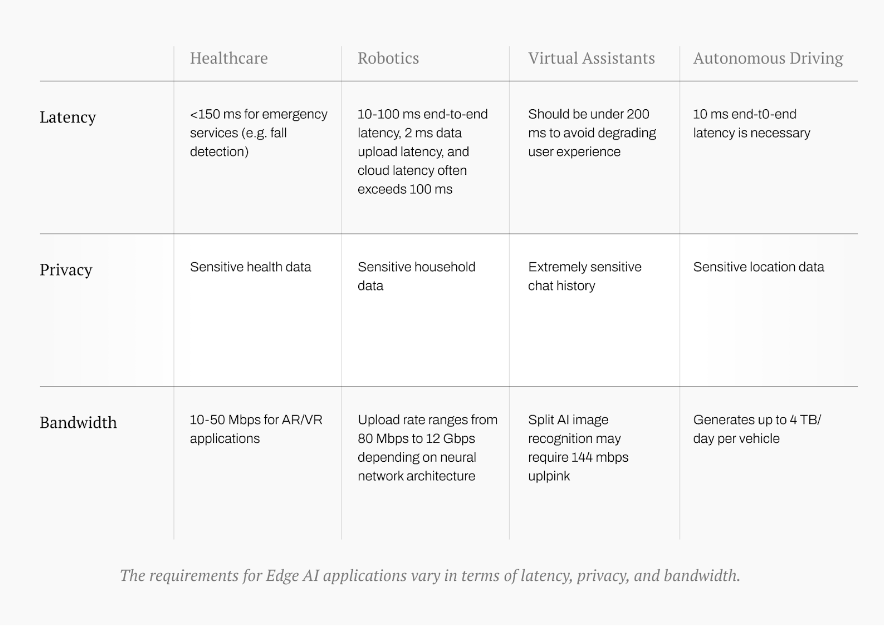
Advancements in both hardware and software have made it possible to run complex AI models on resource-constrained devices. Innovations such as specialized edge processors and model optimization techniques have made on-device computing more efficient without significantly compromising performance.
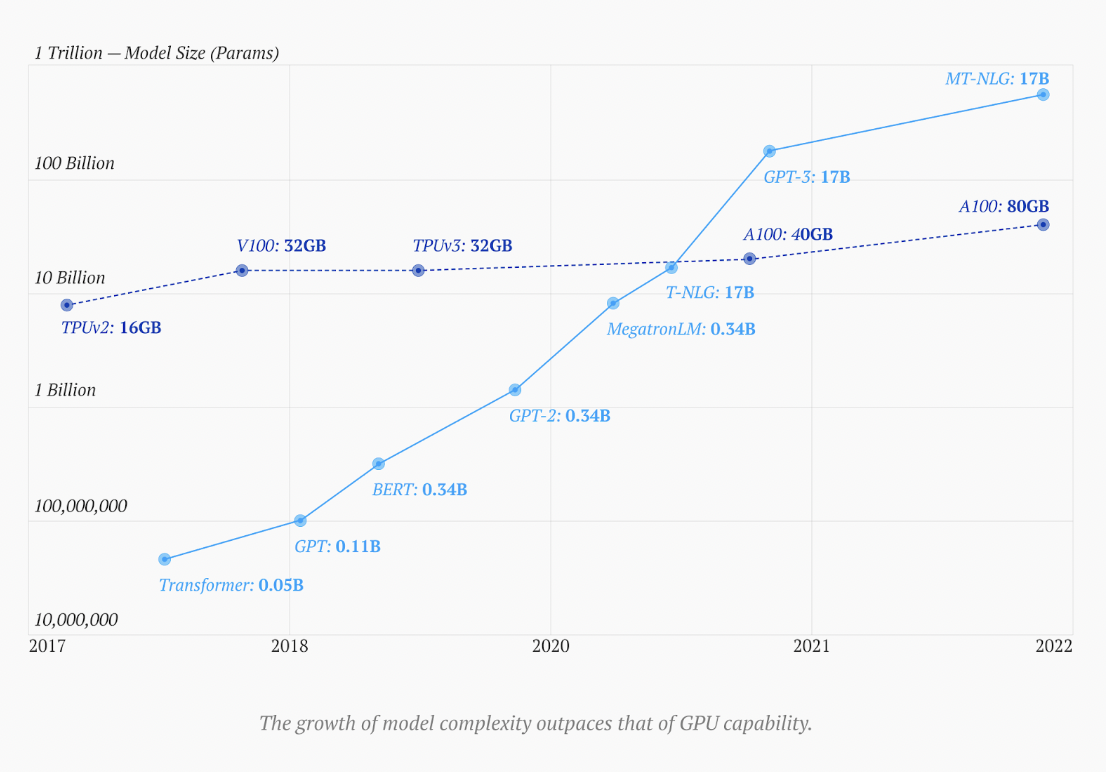
Key Point 1: The rapid growth of AI has outpaced Moore's Law.
Moore's Law states that the number of transistors on a microchip doubles roughly every two years. However, the growth rate of AI models has exceeded the pace of hardware improvements, leading to an ever-widening gap between computational demand and supply. This gap makes co-design of hardware and software essential.
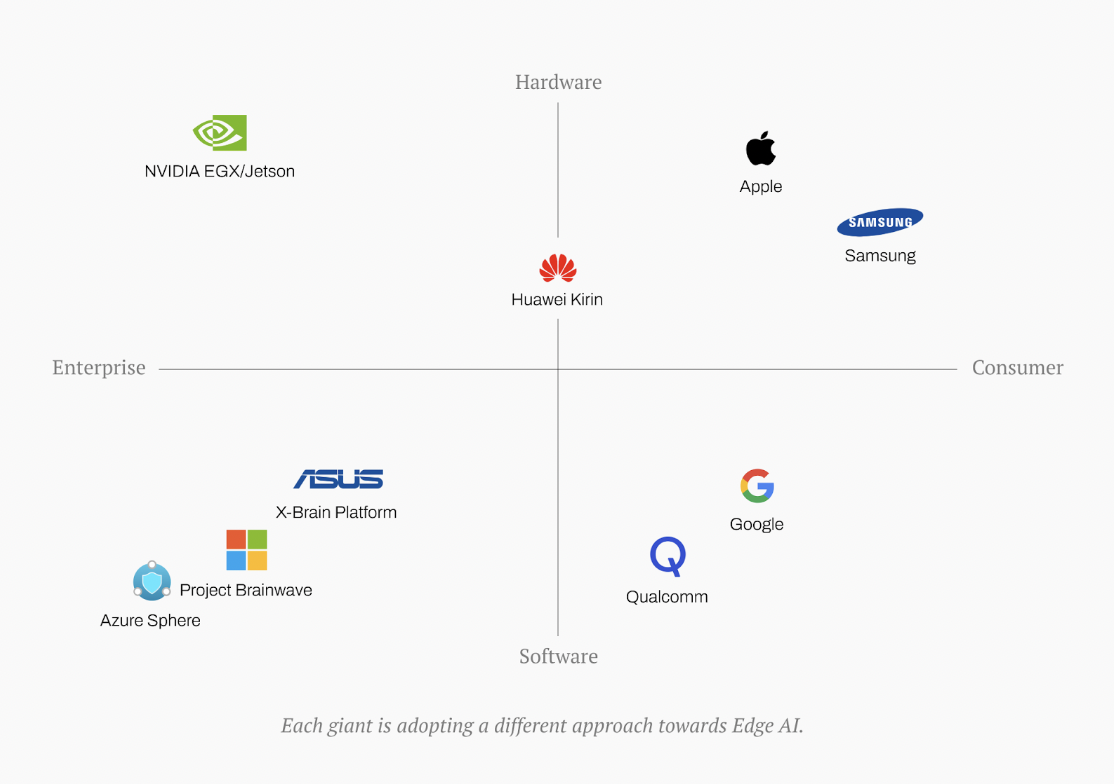
Key Point 2: Major industry players are increasing investments in edge AI with diverse strategies.
Leading tech giants are heavily investing in edge AI, recognizing its potential to transform fields such as healthcare, autonomous driving, robotics, and virtual assistants by delivering instant, personalized, and reliable AI experiences. For example, Meta recently released models optimized for edge devices, and Apple Intelligence is set to launch its edge AI technology at the end of October.
The Intersection of Edge AI and Cryptography
Key Point 3: Blockchain provides secure, decentralized trust mechanisms for edge AI networks.
Blockchain ensures data integrity and tamper resistance through its immutable ledger—a critical feature in decentralized networks composed of edge devices. By recording transactions and data exchanges on-chain, edge devices can securely authenticate and authorize operations without relying on centralized authorities.
Key Point 4: Cryptoeconomic incentive mechanisms promote resource sharing and capital expenditure.
Deploying and maintaining edge networks requires substantial resources. Cryptoeconomic models or token incentives can encourage individuals and organizations to contribute computing power, data, and other resources by offering token rewards, thereby supporting network development and operation.
Key Point 5: DeFi models enable efficient resource allocation.
By incorporating DeFi concepts such as staking, lending, and liquidity pools, edge AI networks can create markets for computing resources. Participants can stake tokens to provide compute capacity, lend excess resources, or contribute to shared pools in exchange for rewards. Smart contracts automatically execute these processes, ensuring fair and efficient distribution based on supply and demand, and enabling dynamic pricing within the network.
Key Point 6: Decentralization of trust.
In a decentralized network of edge devices, establishing trust without central oversight is a major challenge. In crypto networks, trust is achieved mathematically—this computational and mathematical foundation enables trustless interactions, a capability that AI currently lacks.
Future Outlook
Looking ahead, there remain abundant opportunities for innovation in edge AI. We will see edge AI becoming an indispensable part of daily life across numerous applications—such as hyper-personalized learning assistants, digital twins, autonomous vehicles, collective intelligence networks, and emotional AI companions. We are excited about the future!
Join TechFlow official community to stay tuned
Telegram:https://t.me/TechFlowDaily
X (Twitter):https://x.com/TechFlowPost
X (Twitter) EN:https://x.com/BlockFlow_News