A Friend's Account: Why I Believe Len Sassaman Could Be Satoshi Nakamoto?
TechFlow Selected TechFlow Selected
A Friend's Account: Why I Believe Len Sassaman Could Be Satoshi Nakamoto?
His death coincided with the disappearance of Satoshi Nakamoto, the world's most famous cypherpunk.
 Navigating Web3 tides with focused insights
Author: Justin Newton
Translation: Mary Liu, Bitpush News
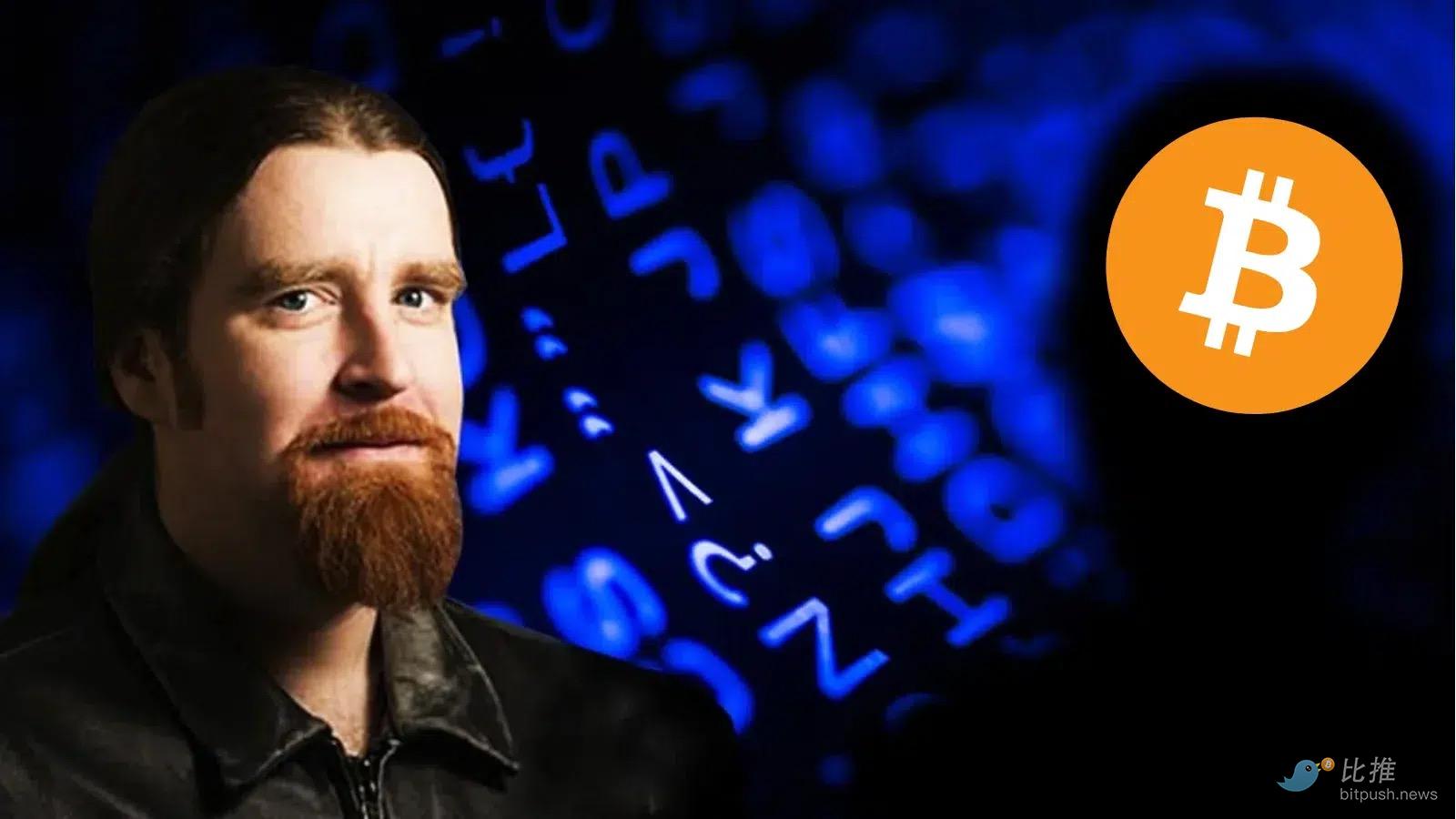
Len Sassaman could have become one of the most important cryptographers of his era—a true cypherpunk: brilliant, unconventional, and idealistic.
Throughout his life, Len dedicated himself to defending individual freedom through cryptography. He worked as a developer on PGP encryption and open-source privacy technologies, and served as an academic cryptographer researching peer-to-peer networks under the guidance of David Chaum, the inventor of blockchain.
But after a long struggle with depression and functional neurological disorder, Len died by suicide on July 3, 2011, at the age of just 31.
His death came shortly after the disappearance of the world’s most famous cypherpunk: Satoshi Nakamoto. Just two months before Len passed away, Satoshi sent his final message: "I've moved on to other things and probably won't be around in the future."
Main text:
A new HBO documentary released this Tuesday has reignited speculation that my late friend Len Sassaman might have been Satoshi Nakamoto, the anonymous creator of Bitcoin.
The filmmakers claim they once spoke face-to-face with someone they believe is Satoshi, making it unlikely that Len—who died in 2011—could have been that person. Nevertheless, others have detailed Len's technical capabilities, which make him a "logical" candidate for being Satoshi.
Regardless of how the HBO film defines things, I’d like to share what I know about Len, and why I also believe he might have been Satoshi.

Len Sassaman, circa 2006
When I first met Len Sassaman, he was wearing a wrinkled jacket and a tie. We were in the living room of Thomas Ruth, a history teacher at Hill School, a boarding school in Pottstown, Pennsylvania. Len was a junior, while I—an alumnus working in the data center industry—had returned from the San Francisco Bay Area to visit Mr. Ruth for an extended weekend.
Len sat on the couch; I took a chair beside him. My mentor, Thomas, was known for taking in kids who struggled to grow up or fit into society. Len was one such kid—he found it hard to maintain eye contact and consistently downplayed his own achievements.
Despite being only 16, Len already showed promise as a computer scientist. Thomas asked if I’d be willing to serve as a friend and guide in this field, helping Len find his footing and path in life. Thomas had helped me greatly, so I readily agreed. That first day, we spent about two and a half hours in his living room, drinking what amounted to hot Jolt Cola—fully sugared tea with twice the caffeine of regular tea.
Looking back on that conversation, I remember many of the things we discussed. In hindsight, Len’s thinking aligned closely with that of Satoshi Nakamoto.
One of my other mentors had pointed out to me how technology and history cyclically influence each other, and how great inventions can reshape society and the world. I shared this epiphany with Len: exceptional skill in technology can act as a lever—pull it hard enough, and you can move the world in the direction you want.
It was during this discussion that Len transformed from passive, shy, and withdrawn into passionate and deeply engaged.
Until then, he had lived in a world shaped by the popular kids; but upon seeing a path where he could help shape the future without needing to be in the spotlight, his posture changed dramatically—from slouching to leaning forward upright, his eyes opening wide and meeting mine directly instead of staying downcast.
At this point, my teacher sat in his chair with a knowing smile, occasionally getting up to make sure both Len and I had enough of that famously caffeinated drink to keep the conversation going.
For the next several hours, we talked about the importance of communication freedom, online anonymity, and democratizing information. Our conversation covered developing open-source software and standards, expressing our values through code, building software that could change the world, and anticipating some of its impacts.
Silicon Valley Years
Shortly after I moved to Los Angeles to work for internet service provider NetZero, Len relocated to San Francisco. I introduced him to friends in the North American Network Operators (NANOG) and Internet Engineering Task Force (IETF) communities, helping bring him into my circle and guiding him toward finding his own.
Over the next decade or so, we stayed relatively close. We'd go periods without contact, then I’d receive an email or text asking, “Do you have time for a call?”—with no context at all.
Some calls were quick check-ins—asking for career advice when considering job opportunities, or whether he should stay in a role that wasn’t fully engaging. These were usually brief, as he just needed validation from a trusted peer in the field about his thoughts or observations.
The longer calls resembled those early conversations on the couch at our mentor’s house. We spent hours discussing the value of open, permissionless innovation and the importance of networks that allow people to build freely, without asking permission.
We spent hours debating the trade-offs between allowing bad actors to do harm versus enabling good actors to act quickly without waiting for slow, conservative institutions to approve.
In the end, we agreed that the network itself should be entirely open, and controls should be built at other layers—either technically where possible, or legally only when absolutely necessary.
This principle lies at the heart of Bitcoin—and perhaps represents its most valuable and enduring feature.
Satoshi? Maybe.
Many people have offered logical arguments why Len couldn't have been Satoshi. But in my view, these individuals simply don’t understand who Len really was.
Here’s how I respond to their points:
“Len wasn’t wealthy before, and his family isn’t wealthy now.” — Len never saw working in tech as a way to get rich, but rather as a means to create the future we all wish to live in. This aligns perfectly with the fact that Satoshi has never profited from Bitcoin—the coins mined by Bitcoin’s creator remain untouched. I can 100% imagine Len destroying the private keys to his mining wallet, ensuring neither he nor anyone else could profit from his creation.
“Len was skeptical of Bitcoin and criticized it publicly on Twitter.” — Len often harshly criticized projects he was deeply involved in. A defining trait of his personality was believing his work wasn’t good enough—even when it was excellent. If he truly were Satoshi, publicly voicing such criticism would have been an effective way to maintain anonymity and distance.
A few additional points:
Len firmly believed in building open, permissionless networks to foster innovation. This very quality of Bitcoin initially attracted me, and I wouldn’t be surprised at all if Len had built such a system.
Len 100% believed in individual rights over authority. At the same time, he wasn’t the kind of libertarian drawn to the early Bitcoin community. I’m certain that if he were Satoshi, seeing his creation exploited by those seeking overnight wealth might have led him to abandon the project—and possibly worsened his depression.
To be clear: Len and I never discussed Bitcoin. And if he were Satoshi, I completely understand why he wouldn’t have wanted to talk to me—or any of our friends—about it. Ultimately, I don’t know for sure whether he was Satoshi. But given his skills and character, it wouldn’t surprise me at all.
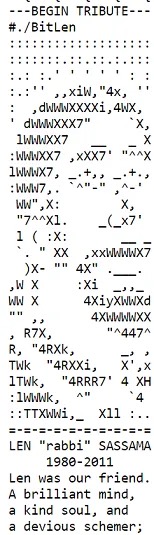
Either way, Len was a wonderful person who deserved far better than the world gave him. His memory shines brightly in my heart.
Thanks to Carl Jay Pardini, one of Len’s high school friends, for reviewing and verifying this article.
Join TechFlow official community to stay tuned
Telegram:https://t.me/TechFlowDaily
X (Twitter):https://x.com/TechFlowPost
X (Twitter) EN:https://x.com/BlockFlow_News
 CoinDesk