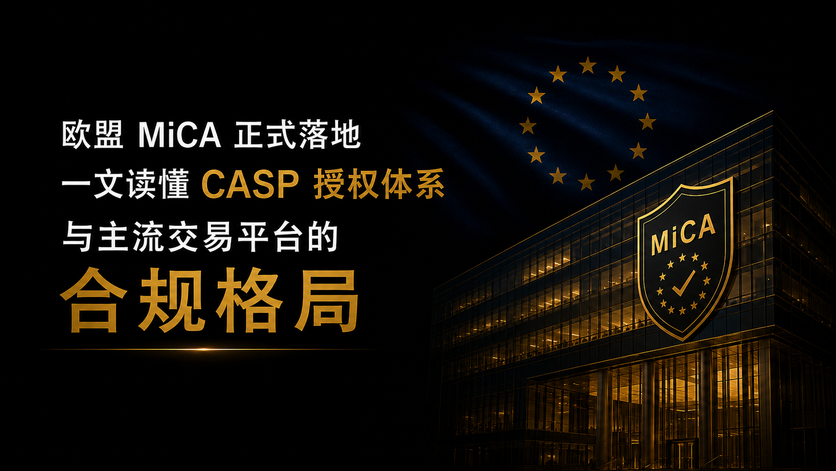
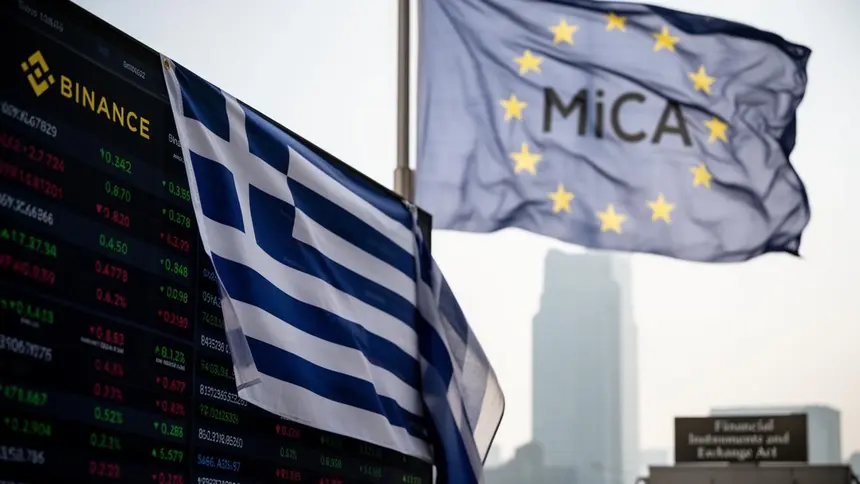
In-depth Understanding of the Impact of the EU's Markets in Crypto-Assets Regulation (MiCA) on the Market Landscape
TechFlow Selected TechFlow Selected
In-depth Understanding of the Impact of the EU's Markets in Crypto-Assets Regulation (MiCA) on the Market Landscape
This report aims to provide a comprehensive understanding of the MiCA regulation and its impacts.
 Navigating Web3 tides with focused insights
Author: insights4.vc
Translation: TechFlow
The crypto-asset market has experienced exponential growth over the past decade, leading to increased participation from both retail and institutional investors. However, this growth has also highlighted significant regulatory challenges, particularly within the European Union (EU), where fragmented regulation has resulted in legal uncertainty and inconsistency across member states. The lack of a unified framework hinders market development, creates barriers to entry, and raises concerns about consumer protection and market integrity.
Objectives of the Regulation
MiCA aims to address these challenges by:
Establishing a Single Regulatory Framework: Creating a comprehensive set of rules applicable across all EU member states and the European Economic Area (EEA).
Strengthening Consumer and Investor Protection: Implementing measures to protect investors and mitigate risks associated with crypto assets.
Ensuring Market Integrity and Financial Stability: Introducing oversight mechanisms to prevent market abuse and systemic risks.
Promoting Innovation and Competitiveness: Encouraging the development of crypto assets and blockchain technologies within a regulated environment that fosters trust and transparency.
Overview of MiCA
Scope and Applicability
MiCA applies to:
Crypto Asset Issuers: Entities offering crypto assets to the public or seeking to have them traded on trading platforms within the EU.
Crypto Asset Service Providers (CASPs): Companies providing services related to crypto assets, such as custody, trading, and operation of trading platforms.
Stablecoin Issuers: Entities issuing Asset-Referenced Tokens (ARTs) and E-Money Tokens (EMTs).
MiCA does not apply to:
Already Regulated Crypto Assets: Financial instruments covered under existing EU financial services legislation (e.g., MiFID II, EMD, PSD2).
Central Bank Digital Currencies (CBDCs): Digital currencies issued by central banks.
Key Definitions and Classifications
Crypto Assets
A crypto asset is defined as a digital representation of value or rights that can be transferred and stored electronically using distributed ledger technology (DLT) or similar technology.
Classification of Crypto Assets
Asset-Referenced Tokens (ARTs):
Tokens designed to maintain a stable value by referencing multiple fiat currencies, commodities, or crypto assets.
Example: Tokens pegged to a basket of currencies or commodities.
E-Money Tokens (EMTs):
Reference a single fiat currency.
Function similarly to e-money and are regulated under the E-Money Directive.
Example: A stablecoin pegged 1:1 to the euro.
Other Crypto Assets:
Include all crypto assets not classified as ARTs or EMTs.
Include utility tokens and certain payment tokens.
Example: Tokens granting access to services or products.
Overview of the Regulatory Framework
Requirements for Crypto Asset Issuers
Utility Tokens
Definition: Tokens intended to provide digital access to a good or service based on DLT and accepted only by the issuer.
Regulatory Requirements:
White Paper: Issuers must draft and publish a white paper containing detailed information about the project, rights and obligations, risks, and underlying technology.
Notification: The white paper must be submitted to the competent national authority before publication.
Exemptions:
If the token is provided free of charge.
If the offering is limited to fewer than 150 people per member state.
If the total consideration does not exceed €1 million within 12 months.
Asset-Referenced Tokens (ARTs): Definition and Regulatory Requirements
Definition: Tokens maintaining a stable value by referencing multiple assets.
Regulatory Requirements:
Authorization: Issuers must obtain authorization from the competent authority.
White Paper: Subject to stricter white paper requirements and must be approved by the competent authority.
Governance and Compliance: Enhanced obligations regarding governance, conflict-of-interest policies, and complaint handling.
Reserve Assets: Requirement to hold reserve assets backing the issued tokens, including rules on custody and investment.
E-Money Tokens (EMTs): Definition and Regulatory Requirements
Definition: Tokens referencing a single fiat currency.
Regulatory Requirements:
Authorization: Issuers must be authorized as credit institutions or e-money institutions.
Redemption Rights: Obligation to offer redemption at par value at any time.
Robustness Requirements: Capital requirements and safeguards comparable to those under the E-Money Directive.
Crypto Asset Service Providers (CASPs)
Obligations and Licensing
Scope of Services:
- Custody and administration of crypto assets.
- Operation of trading platforms.
- Exchange services between crypto assets and fiat currencies.
- Exchange services between different crypto assets.
- Executing orders on behalf of clients.
- Placing of crypto assets.
- Receiving and transmitting orders.
- Providing advice on crypto assets.
- Portfolio management of crypto assets.
Authorization Process for CASPs
Authorization Process:
Application: Submission of detailed information, including business plans, governance arrangements, and internal controls.
Capital Requirements: Minimum capital requirements ranging from €50,000 to €150,000 depending on the services offered.
Fit and Proper: Assessment of the suitability of management and major shareholders.
Passporting Rights: Once authorized, CASPs can use passporting rights to operate across the EU.
Operational Requirements for CASPs
Operational Requirements:
Organizational Structure: Sound governance framework, including clear organizational structure and effective operational procedures.
Client Asset Protection: Measures to safeguard client crypto assets, including asset segregation and security protocols.
Complaint Handling: Procedures to handle client complaints promptly and fairly.
Conflict of Interest Policies: Identification and management of potential conflicts of interest.
Outsourcing: Ensuring outsourcing arrangements do not impair the quality of internal controls or regulators’ ability to monitor compliance.
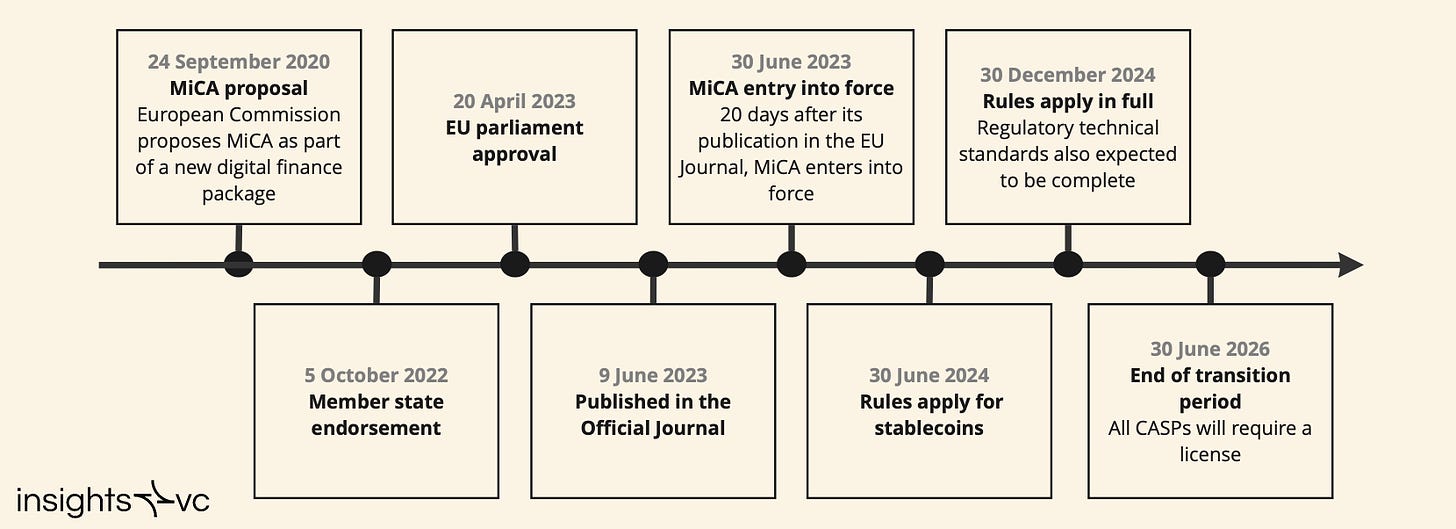
June 9, 2023: MiCA enters into force.
June 30, 2024: Rules related to stablecoins (ARTs and EMTs) become applicable.
December 30, 2024: Full application of MiCA to other crypto assets and CASPs.
Transitional Provisions:
Grandfathering Clause: CASPs already operating under national laws may continue until December 31, 2025, or until they obtain MiCA authorization, whichever comes first.
National Opt-Out: Member states may opt out of grandfathering, requiring earlier compliance.
Implications for Swiss Web3 Companies
Although Swiss companies are not located within the EU, they often interact with the European market. Understanding MiCA’s implications is crucial for Swiss Web3 companies to ensure continued market access and compliance.
Use Case 1: Issuing Utility Tokens
Scenario: A Swiss company establishes a foundation and issues utility tokens intended for use within its ecosystem, aiming to classify them as utility tokens under Swiss law.
Impact of MiCA:
Token Classification: Under MiCA, these tokens may be classified as crypto assets requiring a white paper unless exemptions apply.
White Paper Requirements:
Content: Must include comprehensive information about the issuer, project, rights attached to the token, risks, and underlying technology.
Notification: If the offering targets EU residents, the white paper must be notified to EU competent authorities.
Reverse Solicitation Limitations:
MiCA restricts reliance on reverse solicitation. Active marketing toward EU residents triggers compliance obligations.
Strategic Considerations:
Avoid Active Marketing: Limit marketing activities within the EU to avoid triggering MiCA requirements.
Establish EU Presence: Consider establishing a subsidiary within the EU to facilitate compliance.
Legal Advice: Engage EU legal counsel to navigate regulatory obligations.
Use Case 2: Providing Custody and Trading Services
Scenario: A Swiss company provides custody and trading services for digital assets targeting EU clients.
Impact of MiCA:
CASP Authorization:
The company must obtain authorization from a competent authority in an EU member state to provide services within the EU.
Establishing EU Presence:
Requires setting up a legal entity within the EU and following MiCA's authorization process.
Operational Requirements:
Implement robust governance, risk management, and compliance frameworks in line with MiCA.
Tax Considerations:
Substance Requirements: Ensure the EU entity has sufficient substance to meet regulatory and tax obligations.
Cross-Border Taxation: Address potential tax liabilities arising from cross-border operations.
Strategic Considerations:
Jurisdiction Selection: Choose an EU member state with a favorable regulatory environment (e.g., Liechtenstein, France, Germany).
Leverage Existing Frameworks: Utilize existing compliance structures to streamline the authorization process.
Engage Regulators Early: Early communication with regulators in the chosen jurisdiction can facilitate smoother authorization.
Strategic Considerations for Compliance
Addressing Reverse Solicitation Restrictions
Definition: Reverse solicitation refers to providing services initiated solely by the client without any solicitation or advertising by the service provider.
MiCA Restrictions:
Limits the ability to rely on reverse solicitation to circumvent regulatory requirements.
Active marketing or targeting EU clients triggers MiCA compliance obligations.
Recommendations:
Marketing Practices: Review and adjust marketing strategies to ensure compliance.
Documentation: Maintain clear records demonstrating that any services provided under reverse solicitation were indeed initiated by the client.
Establishing an EU Presence
Benefits:
Facilitates compliance with MiCA.
Enables access to the EU single market through passporting rights.
Considerations:
Jurisdiction Selection: Evaluate regulatory environments, costs, and readiness of local regulators.
Substance Requirements: Ensure the EU entity has real operational, managerial, and control functions within the jurisdiction.
Tax Implications: Address potential tax residency and cross-border tax issues.
Leveraging Regulatory Advantages of Specific EU Member States
Proactive Jurisdictions:
France: Early adoption of crypto regulations integrated into its financial regulatory framework.
Liechtenstein: Comprehensive legislation aligned with MiCA, including provisions for staking and NFTs.
Germany: Established framework for crypto assets, planning alignment with MiCA.
Advantages:
Regulatory Clarity: Clear guidelines and supportive regulators.
Faster Authorization: Potentially expedited authorization processes.
Recommendations:
Regulator Engagement: Initiate dialogue with regulators to understand expectations.
Local Partnerships: Consider collaborating with local firms experienced in navigating the regulatory landscape.
Tax Implications Analysis
Cross-Border Tax Considerations
Tax Residency: Determined by the location of management and control of the EU entity.
Permanent Establishment: Risk of creating a permanent establishment in the EU, leading to taxation of profits.
Transfer Pricing: Compliance with transfer pricing regulations for transactions between the Swiss company and the EU entity.
Economic Substance: Demonstrate genuine economic activity within the jurisdiction to satisfy tax authorities.
Function and Risk Allocation: Clearly define functions, assets, and risks between entities.
Documentation: Maintain robust documentation to support tax positions and meet compliance obligations.
Policy and Regulatory Dynamics
Enforcement Environment Across EU Member States
Divergent Enforcement:
Some regulators may adopt stricter enforcement approaches (e.g., BaFin in Germany).
Others may be less prepared, leading to inconsistent implementation.
Industry Response:
Companies may face uncertainty regarding regulatory expectations.
Importance of monitoring regulatory developments and adapting accordingly.
Relationship with Existing Regulations (e.g., MiFID II)
MiCA vs. MiFID II:
MiCA covers crypto assets not classified as financial instruments under MiFID II.
Recategorization: National laws may need adjustment to avoid overlap and ensure clarity.
Regulatory Scope:
Assessment required to determine whether activities fall under MiCA, MiFID II, or other regulations.
Recommendations:
Conduct comprehensive legal analysis to identify applicable regulations.
Stay updated on national law revisions aligning with MiCA.
International Coordination and Comparative Analysis
Global Regulatory Landscape:
UK: Developing its own framework with a nuanced approach.
US: Fragmented regulatory environment with ongoing policy debates.
Asia-Pacific: Leading in centralized intermediary regulation but varying approaches to decentralized systems.
Implications for Swiss Companies:
Cross-Border Compliance: Need to navigate multiple regulatory regimes in international operations.
Regulatory Arbitrage Risks: Awareness of differing standards and enforcement practices.
Recommendations:
Participate in policy discussions and industry groups to influence and stay informed on global trends.
Align internal policies with international best practices.
Cryptocurrency Regulations Outside the EU
United States
The U.S. cryptocurrency regulatory environment is complex and evolving, marked by frequent enforcement actions and ongoing legal debates. In 2022, the U.S. introduced a new framework enabling regulators like the Securities and Exchange Commission (SEC) and Commodity Futures Trading Commission (CFTC) to oversee the crypto sector. The SEC has been particularly active, filing lawsuits against major players such as Ripple, Coinbase, and Binance for alleged securities law violations. In 2023, a district court ruled that Ripple’s XRP sales to institutions constituted securities offerings, while exchange sales did not. Additionally, in November 2023, a court overturned the SEC’s rejection of Grayscale’s Bitcoin ETF, leading to the approval of spot Bitcoin and Ethereum ETFs in early 2024. Despite these developments, SEC Chair Gary Gensler emphasized that ETF approvals should not be seen as broader acceptance of crypto securities. Thus, the U.S. regulatory environment remains uncertain and challenging, requiring companies to follow federal and state laws and establish robust compliance programs with legal guidance.
China's Cryptocurrency Regulation
China has adopted strict measures, banning all cryptocurrency-related activities. The People’s Bank of China (PBOC) prohibits crypto businesses, declaring them illegal fundraising. Bitcoin mining was banned in 2021, and all cryptocurrency trading was declared illegal the same year. Companies must exit the Chinese market and relocate to more favorable jurisdictions, as any engagement with China poses significant legal risks.
Hong Kong's Cryptocurrency Regulation
Hong Kong is emerging as a key player in the crypto space, with a regulatory framework designed to encourage innovation while protecting investors. The Securities and Futures Commission (SFC) oversees licensing and compliance for virtual asset service providers, including centralized and decentralized exchanges. In 2023, Hong Kong launched a new licensing regime for crypto exchanges, implementing strict anti-money laundering (AML) and know-your-customer (KYC) requirements to ensure market transparency and security. The city has also embraced security token offerings (STOs) and listed crypto-related products such as Bitcoin and Ethereum ETFs. Furthermore, Hong Kong is exploring stablecoins and a potential digital Hong Kong dollar (e-HKD), positioning itself as a growing hub for digital assets in Asia.
Canada's Cryptocurrency Regulation
Canada offers a positive regulatory environment with clear guidelines. Cryptocurrencies are treated as commodities, and Canada was the first country to approve a Bitcoin ETF. All crypto companies are classified as money services businesses (MSBs) and must register with provincial regulators under the supervision of FINTRAC. Gains from crypto transactions are subject to capital gains tax. While Canada presents market opportunities for compliant firms, companies must adhere to stringent registration and reporting obligations.
United Kingdom's Cryptocurrency Regulation
The UK has established a comprehensive regulatory framework integrating crypto assets into its existing financial regulation. In 2022, the House of Commons recognized crypto assets as regulated financial instruments. The Financial Services and Markets Act 2023 further expanded regulatory coverage to all crypto assets. Trading crypto derivatives is prohibited, and investors must pay capital gains tax on crypto profits. Companies must comply with extensive regulatory requirements, including KYC and AML standards, aimed at enhancing market stability and investor confidence.
Japan's Cryptocurrency Regulation
Japan is known for its progressive stance, integrating cryptocurrencies into its financial system. Crypto assets are recognized as legal property, and all crypto exchanges must register with the Financial Services Agency (FSA). The Japan Virtual Currency Exchange Association (JVCEA) serves as a self-regulatory body. Trading profits are classified as miscellaneous income, significantly impacting investor tax treatment. Japan offers a transparent and business-friendly regulatory environment, although companies must invest in compliance infrastructure to meet rigorous standards.
Australia's Cryptocurrency Regulation
Australia provides a clear regulatory framework balancing innovation with consumer protection. Cryptocurrencies are classified as legal property and subject to capital gains tax. Crypto exchanges must register with AUSTRAC and comply with AML and counter-terrorism financing (CTF) obligations. In 2023, Australia announced plans to develop a new regulatory framework, expected to be finalized in 2024. Open to innovation and with potential plans for a central bank digital currency (CBDC), Australian companies must prepare for upcoming regulatory changes to ensure compliance and maintain competitiveness.
Singapore's Cryptocurrency Regulation
Singapore is a crypto-friendly jurisdiction with a robust regulatory framework. The Monetary Authority of Singapore (MAS) regulates exchanges under the Payment Services Act (PSA) and introduced a stablecoin issuer framework in 2023. Singapore does not impose capital gains tax, making it attractive for long-term investors. Its clear regulations and favorable tax policies make it an ideal market, though businesses must navigate advertising restrictions and secure necessary approvals for stablecoin issuance.
South Korea's Cryptocurrency Regulation
South Korea enforces strict rules to protect users and ensure financial integrity. Crypto exchanges must register with the Korean Financial Intelligence Unit (KFIU), and privacy coins were banned in 2021. The 2023 Virtual Asset User Protection Act designated the Financial Services Commission (FSC) as the primary regulator. Companies face stringent requirements and must partner with local banks for real-name verification to ensure compliance and user safety.
India's Cryptocurrency Regulation
India maintains a cautious approach toward cryptocurrency, characterized by ongoing debate and interim measures. Cryptocurrencies are neither fully legalized nor banned. A 30% tax applies to crypto investments, and a 1% tax deduction at source (TDS) applies to transactions. The 2022 Finance Act defined virtual digital assets as property and established tax obligations on related income. Regulatory uncertainty poses operational risks, such as increased compliance costs, and high taxes may affect profitability, prompting companies to reassess their market strategies.
Brazil's Cryptocurrency Regulation
Brazil is moving toward integrating cryptocurrencies into its financial system. In 2023, Brazil enacted a law legalizing the use of crypto as a payment method, with the Central Bank designated as the regulator. Legalizing crypto payments opens new opportunities for companies, which must comply with Central Bank regulations to ensure compliance and effectively leverage this emerging market.
Conclusion
Opportunities and Challenges Under MiCA
MiCA presents both opportunities and challenges for Swiss and European Web3 companies:
Opportunities:
Market Access: A unified framework facilitates access to the entire EU market, enabling easier cross-border operations.
Investor Confidence: Enhanced regulatory oversight may boost investor trust and attract greater capital inflows.
Innovation Environment: Clear rules can encourage innovation within defined boundaries, driving industry growth.
Challenges:
Compliance Burden: Meeting regulatory requirements demands significant resources, potentially straining smaller firms.
Regulatory Uncertainty: Divergent enforcement and preparedness across member states may lead to uneven market conditions.
Competition: Heightened compliance requirements may raise entry barriers, intensifying competition among existing players.
Outlook for European Web3 Companies
Web3 companies must adopt strategic approaches to navigate the evolving regulatory landscape:
Proactive Compliance: Early preparation and engagement with regulators can facilitate smoother transitions.
Collaboration: Partnering with industry groups and legal experts can help shape policy and share best practices.
Adaptability: Maintaining flexibility allows timely adjustments to business models and strategies in response to regulatory changes.
This report aims to provide a comprehensive understanding of the MiCA regulation and its implications. Companies are advised to seek professional legal counsel tailored to their specific circumstances to ensure full compliance with all regulatory obligations.
Join TechFlow official community to stay tuned
Telegram:https://t.me/TechFlowDaily
X (Twitter):https://x.com/TechFlowPost
X (Twitter) EN:https://x.com/BlockFlow_News
 @insights4vc