








Discord Roles, MEME, and Thursday Purge: Decoding Monad's Community Building Art
TechFlow Selected TechFlow Selected
Discord Roles, MEME, and Thursday Purge: Decoding Monad's Community Building Art
Monad's community-building focus is on cultivating a vibrant, trendy brand image and fostering a culture by encouraging members to engage in humorous, meme-based activities on social media.
 Navigating Web3 tides with focused insights
Author: Declan Kim, DeSpread
Disclaimer: The content of this report reflects the views of the respective authors and is for informational purposes only. It does not constitute advice to buy or sell tokens or use protocols. Nothing in this report constitutes investment advice, nor should it be construed as such.
1. Introduction
The importance of community in the blockchain industry has been repeatedly emphasized. While communities are often seen as a key factor determining a project's success or failure, there are few examples where the community genuinely contributes to the project, builds strong bonds among members, and receives proper recognition and appreciation from the team.
In today’s market environment, where new projects launch constantly, capturing limited market participants’ attention and converting them into community members is a challenging first step. Even when a community reaches a certain size, due to the market’s investment-driven nature, community activity often declines rapidly if a project’s token price drops. This scenario has frequently occurred throughout the relatively short history of the blockchain industry.
These challenges in building a meaningful community have become increasingly severe. Recently, however, one project has attracted unprecedented community engagement and significant market attention even before launching its testnet. That project is Monad, a high-performance Layer 1 blockchain compatible with the Ethereum Virtual Machine (EVM). In this article, we will explore the two pillars driving Monad: its technology and its community, with a particular focus on how Monad is introducing a new paradigm for communities in the blockchain industry.
2. What is Monad?

Source: Monad
Keone, co-founder and CEO of Monad, previously worked at Jump Trading, a renowned proprietary trading and cryptocurrency firm, focusing on high-frequency trading (HFT). During his eight years in traditional finance, Keone observed that most blockchains, including Ethereum, struggled to handle the scale required by traditional financial systems—such as processing 2 to 4 million transactions daily and over $1 trillion in nominal trading volume. These experiences led him to recognize that limited blockchain scalability was a major barrier to broader adoption. To bridge the gap between traditional finance and decentralized finance (DeFi), Keone set out to build a network capable of handling transactions at the scale of traditional finance through significantly improved scalability. This vision laid the foundation for Monad.
As mentioned earlier, Monad’s primary goal is to enhance scalability by accelerating transaction processing and reducing costs. While several new Layer 1 projects like Solana, Aptos, and Sei have launched with a focus on scalability, Monad stands out by offering full compatibility with the Ethereum Virtual Machine (EVM). This ensures complete support for Ethereum developers and decentralized applications (dApps), effectively positioning Monad as a “faster, cheaper Ethereum” and distinguishing it from both Ethereum and other Layer 1 solutions.
3. Monad: Fast and Cheap Ethereum
First, let’s delve into the technical aspects that have made Monad so noteworthy. Two key features stand out: 1) portability through full EVM compatibility; and 2) scalability enabled by Monad’s unique consensus and execution architecture.
3.1. Portability: Fully Absorbing Ethereum
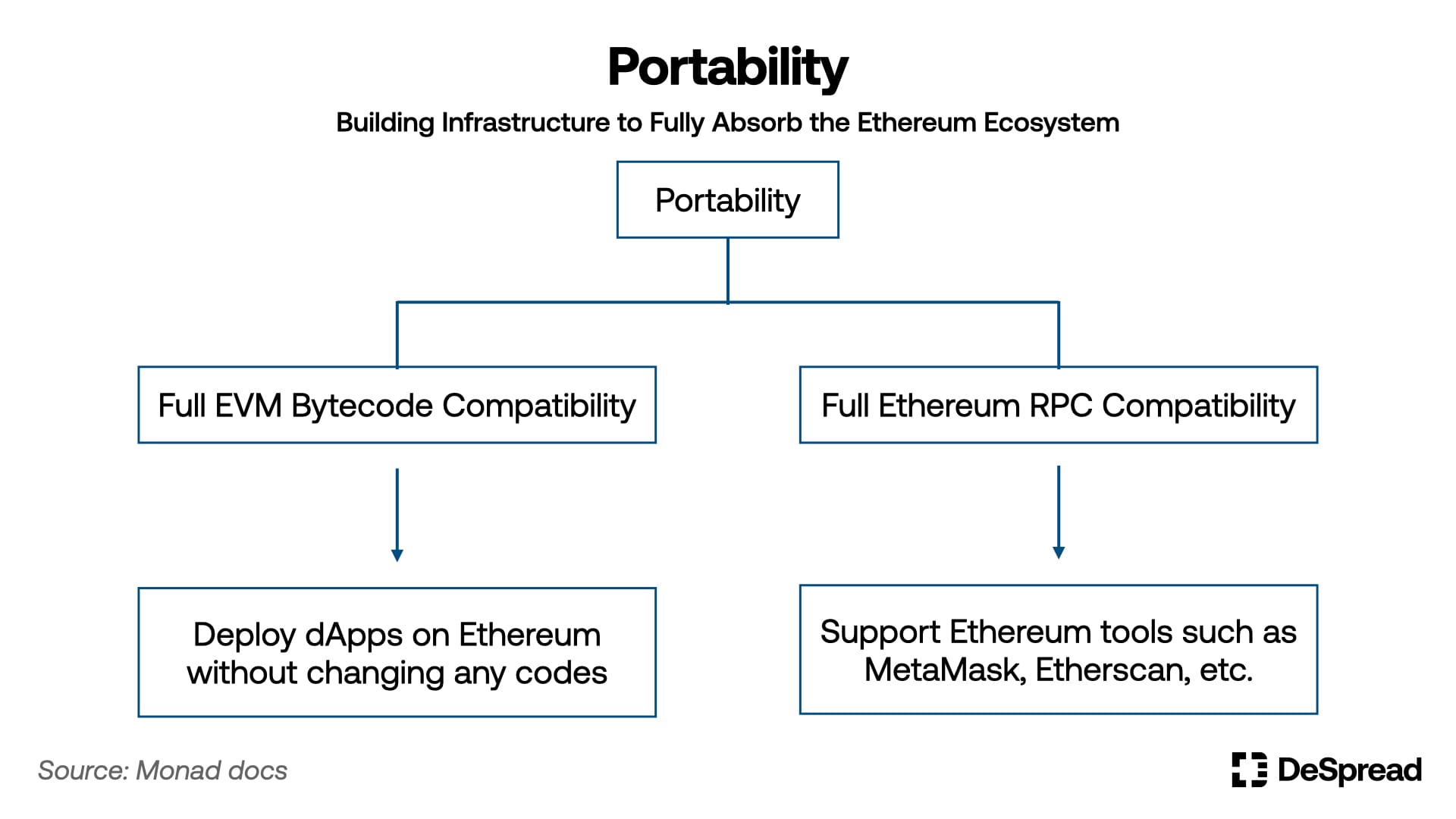
Portability refers to the ability to migrate Ethereum dApp smart contracts to Monad without modifying any code. This feature allows Monad to fully integrate into the Ethereum ecosystem—the network with the largest pool of capital and users in the blockchain industry. Monad achieves this portability through two key components:
1) Full EVM bytecode compatibility and 2) Full Ethereum RPC compatibility.
3.1.1. Full EVM Bytecode Compatibility
Bytecode is the format used by the Ethereum Virtual Machine (EVM) to store and execute contracts on the Ethereum network. Smart contracts written in Solidity must be compiled into bytecode before being processed by the EVM.
Monad’s EVM bytecode compatibility ensures that any contract deployed on Ethereum can seamlessly migrate to Monad without modification. This compatibility enables Monad to accommodate approximately 1,100 dApps currently operating on Ethereum. By enabling easy migration, Monad greatly addresses a common challenge faced by new blockchain ecosystems—namely, attracting popular dApps and their user bases—thereby strengthening its competitive position in the market.
3.1.2. Full Ethereum RPC Compatibility
Ethereum RPC (Remote Procedure Call) is a protocol used to communicate with Ethereum nodes, allowing access to data and transaction submission via the JSON-RPC standard. Full EVM bytecode compatibility allows Monad to directly migrate dApps from Ethereum, while RPC compatibility ensures that various tools interacting with Ethereum nodes—such as MetaMask, Etherscan, Dune, and Hardhat—can operate seamlessly within the Monad ecosystem.
3.2. Scalability: Achieving 10,000 TPS
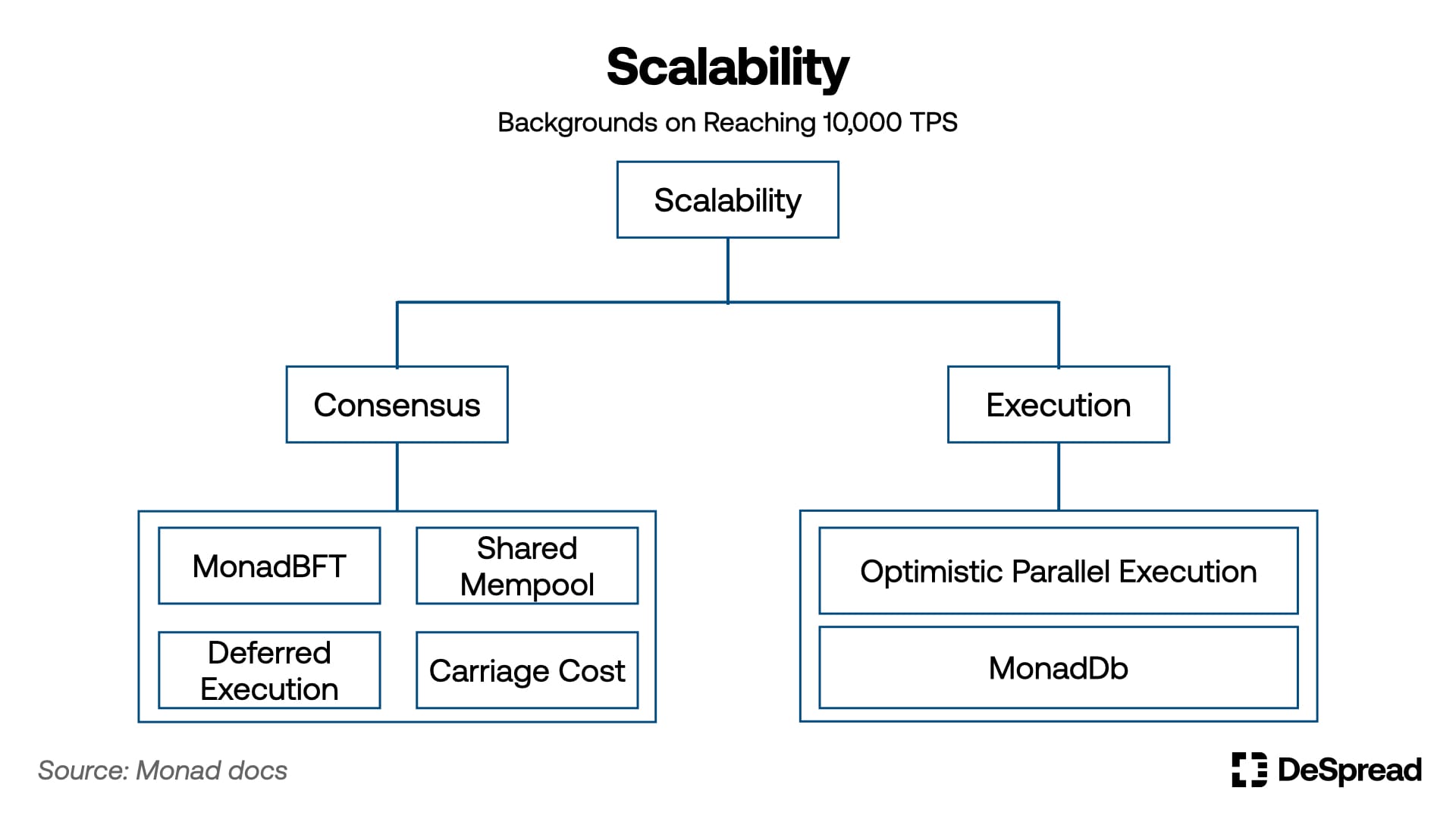
Scalability refers to a network’s ability to facilitate fast transaction processing and maintain low transaction costs. Transactions per second (TPS) is one of the key metrics for evaluating network scalability. On March 14, Monad announced via its official Twitter account that its development network had reached 10,000 TPS. This milestone indicates that Monad has successfully created an environment capable of processing 1 billion transactions per day.
Monad’s high scalability stems from its unique consensus and execution mechanisms. In this section, we will examine the core components of Monad’s consensus and execution mechanisms, which are key to achieving this exceptional performance level.
3.2.1. Consensus
Monad’s consensus mechanism consists of four key components:
-
MonadBFT: This is Monad’s unique consensus algorithm, which uses a pipelined approach to process multiple rounds (not single-round) of block proposal, voting, and finalization.
-
Shared Mempool: To validate the hash (unique identifier) of proposed blocks under MonadBFT, each node shares its mempool (the storage area for pending transactions).
-
Delayed Execution: Unlike Ethereum’s consensus structure, Monad separates consensus from execution, allowing nodes to first agree on transaction order before proceeding to execution.
-
Transport Costs and Reserve Balances: This system addresses potential issues arising from insufficient gas fees causing transaction failures. When users submit transactions, they prepay transport fees, which are refunded upon successful execution. Reserve balances refer to dedicated balances each node sets aside to cover transaction fees.
Monad’s innovative MonadBFT algorithm decouples block consensus from execution, specifically designed to improve scalability by enabling faster transaction processing and lower costs. Each of these four components is carefully engineered to complement and support the others, addressing potential scalability challenges—for example, the shared mempool alleviates problems related to only those nodes receiving block hashes, while the transport cost and reserve balance system resolves potential gas fee shortages caused by delayed execution.
3.2.2. Execution
Monad’s unique execution mechanism revolves around two key elements:
-
Optimistic Parallel Execution: This model assumes all operations are valid, allowing transactions in the next block to be processed in parallel before consensus on the previous block is finalized. If errors are detected during validation, specific transactions are re-executed. Ultimately, all transaction results are linearly ordered, similar to Ethereum.
-
MonadDb: This custom-built database stores state information and supports asynchronous input/output operations. This functionality allows the system to begin processing the next transaction without waiting for the final result of the previous one.
Monad’s approach to scalability goes beyond just parallel execution. Recognizing that one of the biggest bottlenecks in EVM scalability is state access, Monad developed its own database, MonadDb, to address this issue. No matter how many threads are used for parallel processing, the benefits are severely diminished if state data in the database cannot be accessed simultaneously.
4. Community: The Alpha and Omega of the Project
Recent surges in Monad’s popularity stem not only from its fast transaction processing but also from the crucial role played by its community. Although the importance of community in the blockchain industry has long been emphasized, few projects have succeeded in mobilizing community members as effectively as Monad—especially prior to launching its testnet. Monad stands as a rare example where community participation is recognized and actively practiced, with the project’s official social media accounts and foundation core members regularly highlighting community involvement. In this chapter, we will explore the structural uniqueness, core values, and growth background of the Monad community.
4.1. Design Direction of the Monad Community
The Monad community is open to all, but not all members are treated equally. Among its main platforms—Twitter, Telegram, and Discord—Twitter serves as the external branding channel, while Discord and Telegram differentiate access and activity levels based on member contributions and duration of participation.
In the early stages of community development, Monad faced challenges in encouraging active member engagement. As a result, Monad introduced a tiered system that grants members different levels of access based on their contributions. Keone and Kevin elaborated on the rationale behind this structure during an interview on the "Good Game Podcast." When Monad’s Discord server launched in October 2022, all participants were given the “Pinoneer” role to encourage active participation. However, contrary to expectations, many who received the role remained inactive. This experience taught Keone and Kevin two important lessons: first, role assignment criteria needed to be stricter; second, encouraging broader community activities beyond simple, repetitive tasks was essential.
In 2023, the announcement of Monad’s first funding round—$19 million led by Dragonfly Capital—marked a pivotal moment in shaping the current community structure. At the time, participation in Monad’s Discord server was limited, but demand surged after the news broke, prompting Monad to open its Discord server to the public. Instead, it began using private Telegram chat groups to distinguish between existing and new community members.
Next, we will examine the structure and characteristics of the Monad community on Discord and Telegram.
4.2. Structure of the Monad Community
4.2.1. Discord
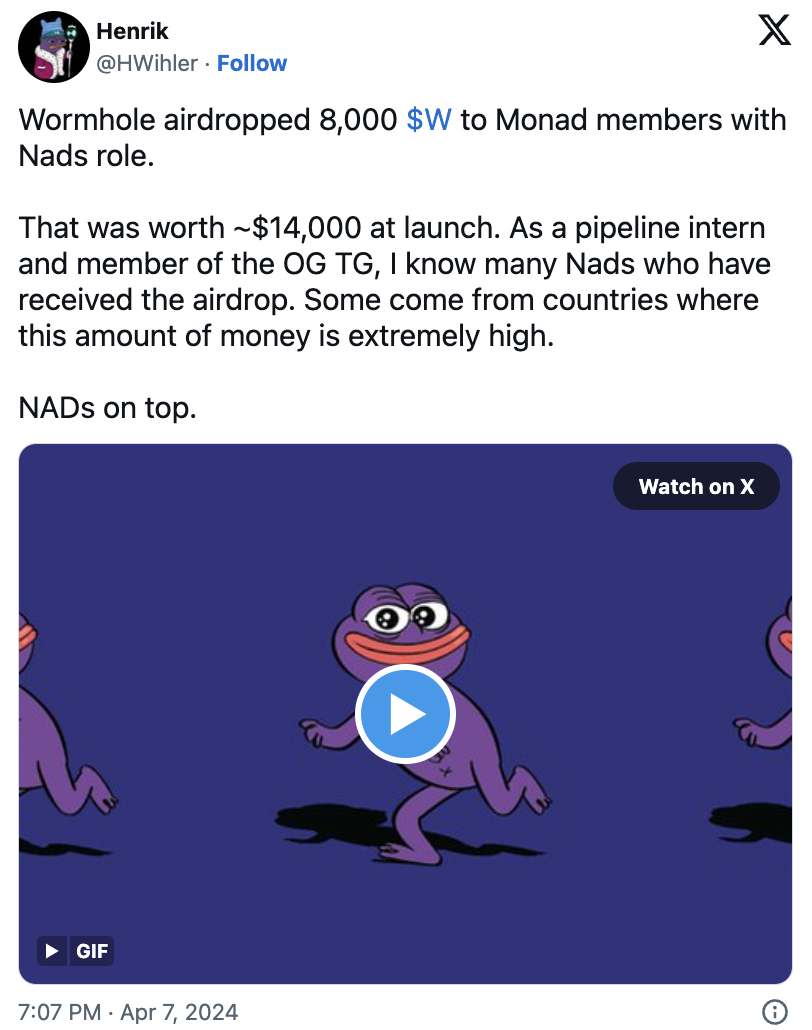
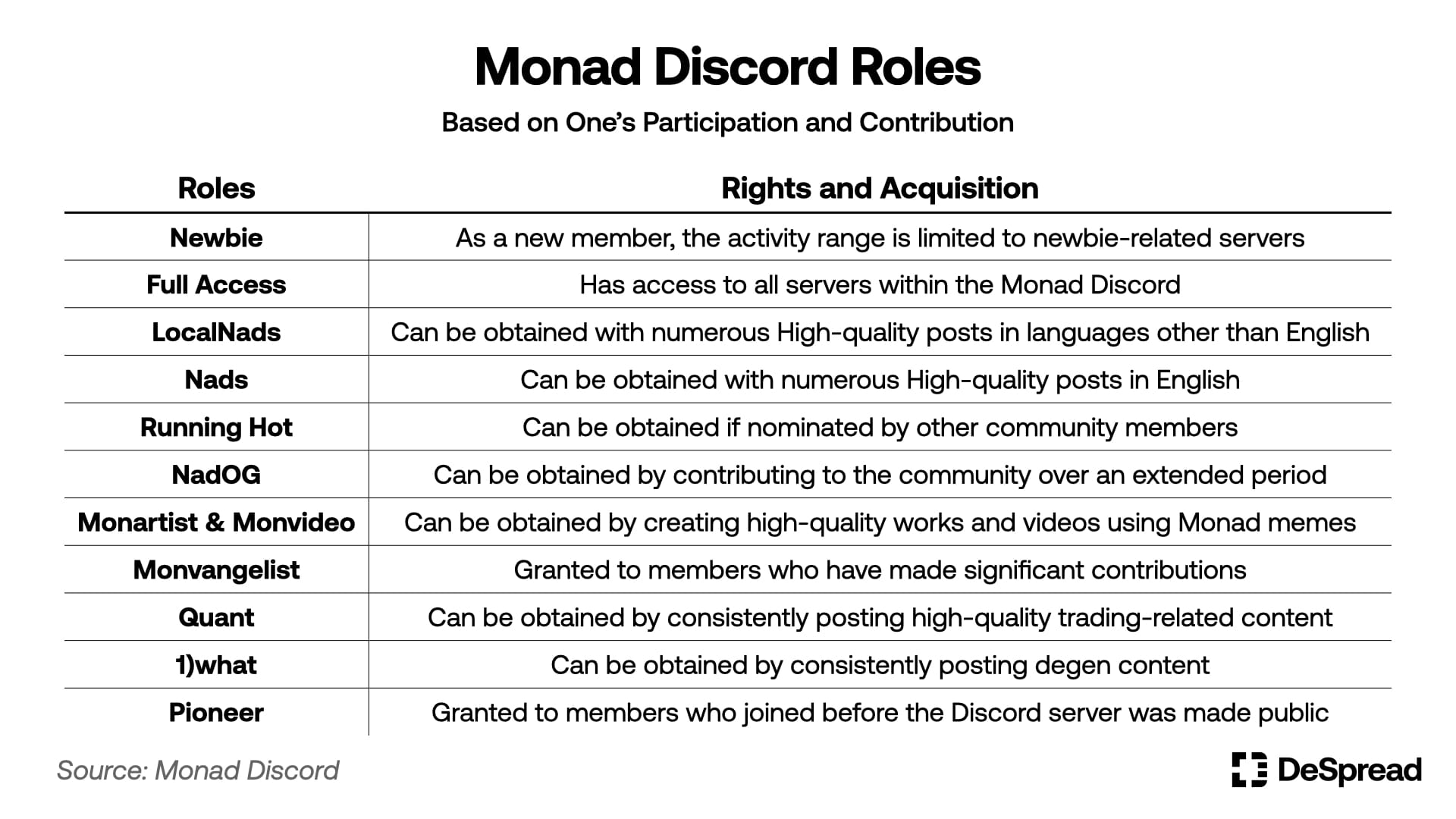
Within the Monad Discord community, members’ access to content and scope of activities are determined by their assigned roles. This structure incentivizes community members to participate in various activities to obtain higher-privilege roles. Anticipation of future rewards, particularly following the token generation event (TGE), further fuels this motivation. Although the Monad Foundation has not officially announced role-based rewards, news that Wormhole, a Monad partner, conducted an airdrop based on member tiers has led participants to expect Monad may adopt a similar approach in the future.
Activities within the Monad Discord community—such as chatting, daily tasks, and creating Monad-themed memes—have persisted for a considerable time, helping the project build a distinct identity. Meme characters such as Molandak, Moyaki, and Chog, now synonymous with Monad, were spontaneously created by community members. The Monad Foundation embraced these characters and integrated them into various branding initiatives, including forming guilds and producing merchandise.
Below is an overview of currently defined roles, along with their associated permissions and acquisition methods:
4.2.2. Telegram Community
While Monad’s Discord provides an open community space for everyone, Telegram offers a more private environment for long-term contributors who have made significant contributions to Monad. Currently, three active chat groups exist: OG Chat, House of Molandak, and House of Moyaki (formerly Purgeatory).
Members gain access to Monad’s Telegram chat groups by actively participating in online and offline community events, including engaging with the community on Twitter and Discord, attending various Monad meetups, and making substantial contributions to Monad’s branding efforts. Only users demonstrating such commitment receive invitation links to the House of Molandak or House of Moyaki from privileged members or directly from Monad Foundation members.
Members of the House of Molandak and House of Moyaki chat groups are expected to actively engage in ongoing community activities, including weekly tasks assigned to each group. Members who excel in these tasks (approximately 10 per chat group) get the opportunity each week to join the OG Chat. However, even within the OG Chat, members must continue participating in weekly tasks and remain active.
To prevent entry into private chat groups from becoming the ultimate goal, Monad implemented a “Thursday Purge Day” system across these three Telegram chat groups. Every Thursday, 25 to 50 members with extremely low engagement are removed, reinforcing active participation and ensuring only the most dedicated members remain, thereby effectively cultivating a culture of sustained and enthusiastic engagement.
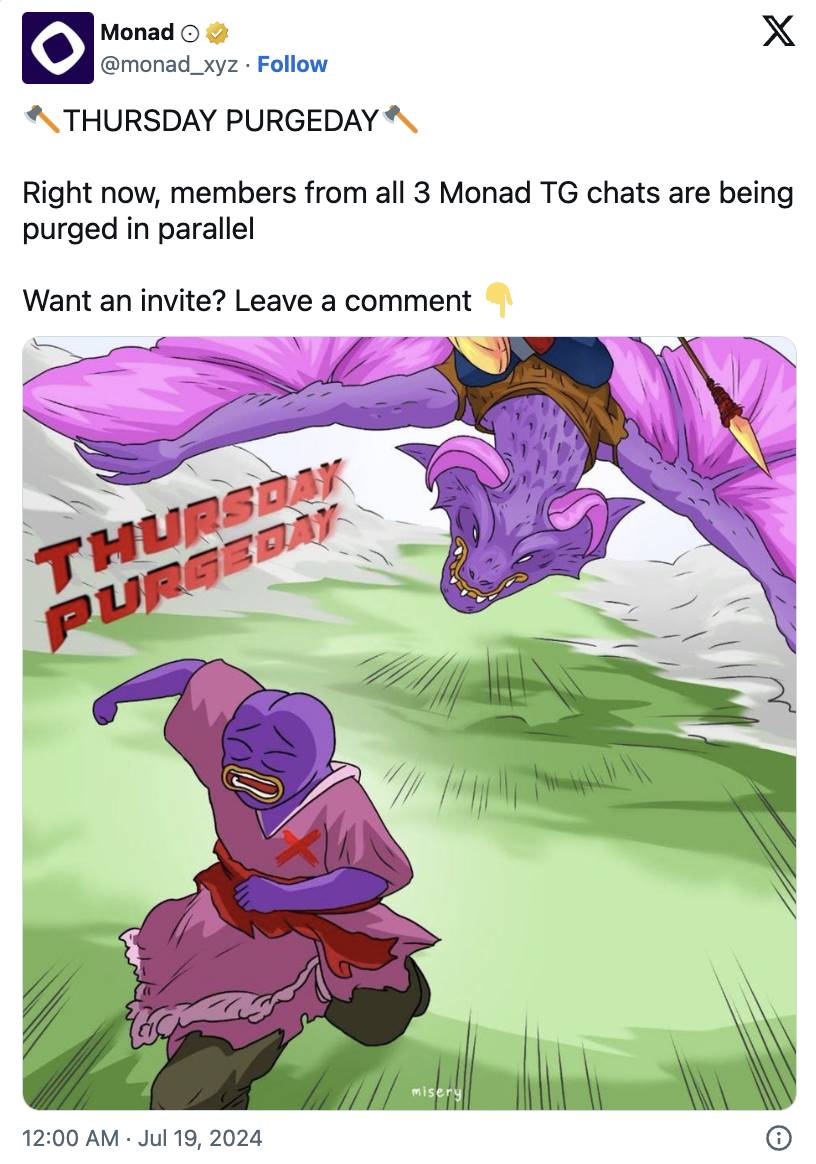
Recently, Monad’s private chat groups announced the suspension of weekly tasks—a decision reflecting the Monad Foundation’s understanding of fatigue and dissatisfaction felt by community members due to the pressure of continuous participation. The Foundation now encourages members to contribute at their own pace and discretion. Nevertheless, “Purge Day” continues, meaning the pressure to stay active and engaged has not completely disappeared.
4.3. Background of Monad Community Development
After examining the history and characteristics of various channels within the Monad community, we now turn to the strategies that have propelled Monad to become one of the most renowned communities in the industry.
4.3.1. Rejecting the Playbook
The term “playbook” refers to a standard set of strategies or rules commonly adopted within a specific industry to achieve certain goals—in essence, a guiding principle. In the blockchain industry, marketing and community building have traditionally followed established playbooks. This typically includes promoting project advantages via social media posts and using onboarding platforms like Galxe Quest or Layer3 to attract users and followers through simple tasks such as likes, retweets, and Q&A.
These methods have proven effective in boosting early-stage project metrics such as follower count, total value locked (TVL), and daily active users (DAU). However, Monad chose a different path, believing that these superficial metrics do not represent ideal marketing or community development strategies. Therefore, Monad adopted a novel approach that diverges from industry norms.
From the outset, Monad’s primary goal in community building was not merely increasing numbers. Instead, it focused on fostering a vibrant, trendy brand image by encouraging community members to engage in humorous, meme-based activities on social media—cultivating a culture where people seeing these posts feel a genuine, voluntary desire to join the community.
Kevin is central to Monad’s unique strategy, leading Monad’s development efforts. Widely known on Twitter as “Intern,” Kevin introduced a fresh perspective to Web3 marketing. In his article titled “10 Rules of Crypto Marketing and Community: A Systematic Design,” he outlines these innovative methods.
[Kevin’s 10 Rules of Crypto Marketing]
1. Stop posting ads;
2. Compete with influencers and entertaining content on Twitter, not with other protocols;
3. Marketing and community strategy should follow a systematic approach;
4. Invest heavily in community;
5. Post top-tier community content and interact with it through main and founder accounts;
6. Association > Knowledge;
7. Don’t blindly copy-paste others’ strategies;
8. Quality > Quantity;
9. Do things that don’t scale;
10. Communities are made of real people who have real lives and other things to do;
Rules 2 and 6 especially align closely with the core principles of attention economics—an influential trend in advertising during the social media era. Attention economics treats human attention as a scarce resource directly tied to corporate value, making it a critical economic framework.
Nike emphasizes concepts like freedom, boundlessness, and vitality rather than the technical advantages of sneakers; Red Bull highlights adventure and extreme sports instead of caffeine content in energy drinks. Rather than prioritizing technical advantages or investment scale, Monad effectively communicated its brand image through social media, capturing the interest of Web3 users.
4.3.2. Embracing Web3 Native Culture
Rejecting traditional Web3 marketing strategies, Monad chose to embrace Web3-native culture, particularly through the use of memes. In the early stages of establishing its community identity, Monad adopted a purple version of the frog Pepe—one of the most iconic memes in the Web3 space. Styled in Monad’s signature purple, this character was widely shared as Telegram stickers and Twitter memes, eventually making purple synonymous with Monad’s image. As the community grew, members began creating their own memes, giving rise to characters like Molandak, Moyaki, and Chog, which became representative memes of Monad.
Under Kevin’s leadership, Monad’s marketing strategy focuses on humorously conveying the project’s image through memes rather than emphasizing technical advantages. This approach not only fueled explosive growth in the Monad community but also introduced a new trend in the Web3 industry: the “intern” account model. Intern accounts operate separately from official accounts on social media, spreading market updates, project news, and brand messaging in a light-hearted, humorous way through memes.
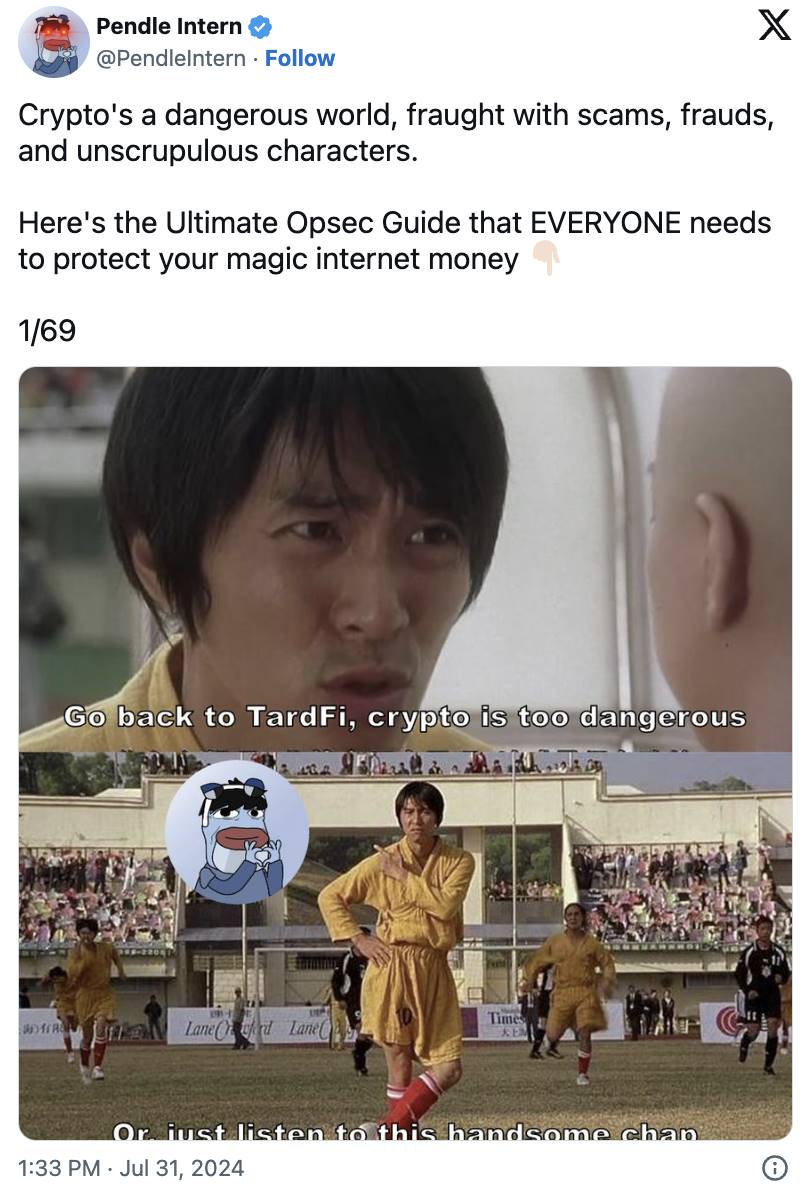
Monad took a proactive approach by recruiting KOLs with significant influence on social media to take on key roles in its marketing, ecosystem, and development divisions. Influential figures such as Kevin, Threadguy, Tunez, and Bill joined the Monad team, managing community engagement on social media, enhancing brand promotion through memes, and collaborating with other projects to expand the ecosystem.
Beyond integrating these KOLs, Monad is committed to embedding the values of “Monad-ness” throughout the entire organization—from the foundation to the community. To achieve this, Monad has appointed long-time, highly active community members as country-specific community managers and even recruited them onto the team. This strategy helps maintain a consistent brand image, fosters deeper connections between the community and the project, and ensures that the spirit of Monad is shared and upheld at every level.
4.3.3. Building a Genuine Community
Bill, Monad’s community lead, believes the concept of “community” is often misunderstood within the industry. He argues that a true community must be more than just an audience following project updates, users engaging with products, or contributors adding code and branding. A genuine community, he says, is defined by the interconnections among its members—a space where people actively interact, exchange ideas, and collaboratively create new value, such as “memes.” This principle guides the development of the Monad community.
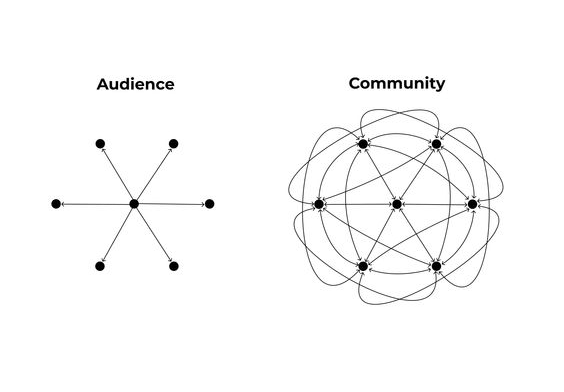
Meaning of Interconnectedness, Source: X
Today, most memes representing Monad are created by the community, not the foundation. A large number of community-made Monad memes continue to be shared and used across various social media platforms such as Discord and Twitter. To strengthen unity with the community, the foundation actively participates in creative initiatives, including the weekly “Monday Meme” contest, where the foundation highlights winning memes and their creators through its official account.
Beyond meme creation, the Monad community has expanded its creative efforts into video production, physical merchandise, and even releasing a mixtape on SoundCloud—all rooted in Monad’s memes. Such diverse activities enable even community members without blockchain or development expertise to participate and enjoy themselves.
Examples of spontaneous and active participation within the Monad community include gatherings organized entirely by community members in different countries. Meetups have already taken place in multiple countries including Japan, China, and Thailand, with the Seoul meetup held on July 18 in South Korea achieving notable success.
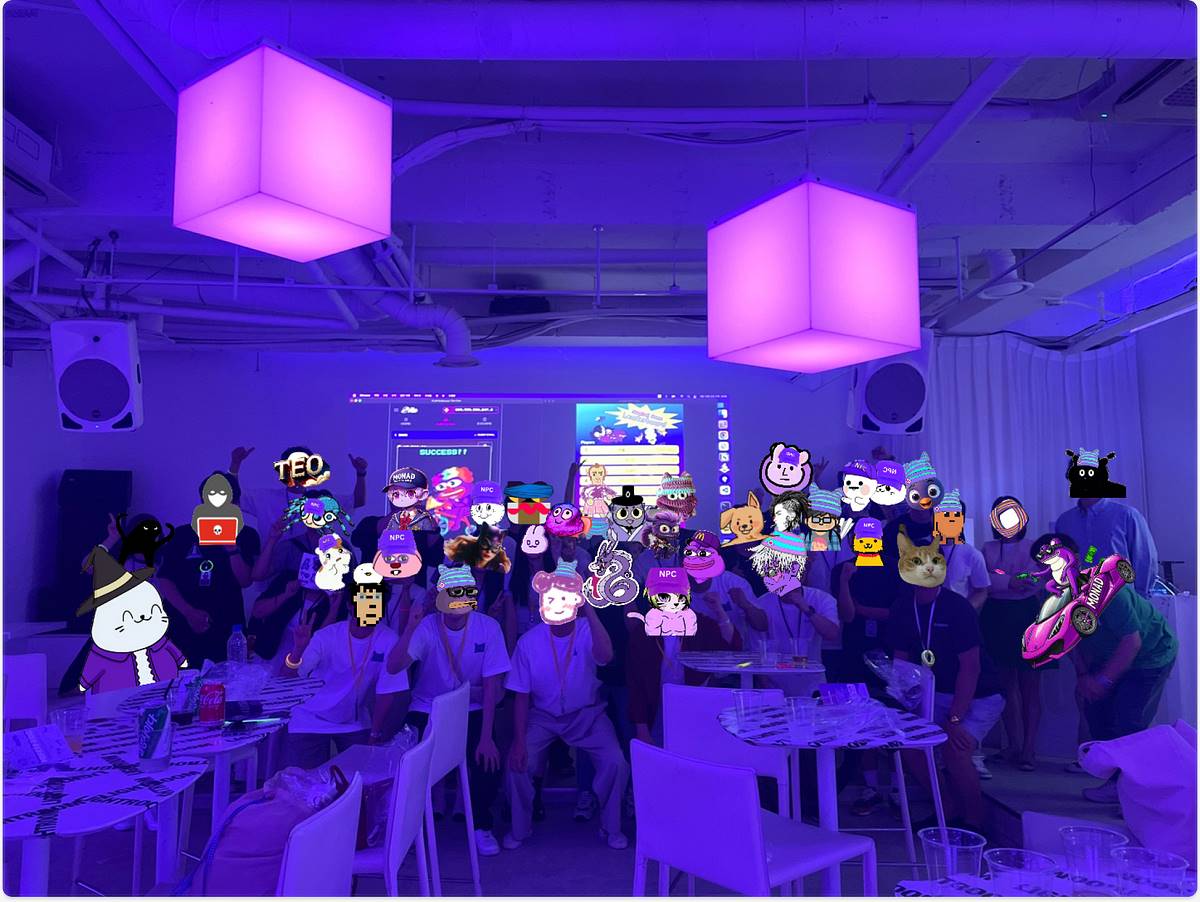
Monad Seoul Meetup, July 18, Source: Monad Korea Official Blog
5. Conclusion
5.1. Future Challenges
The level of community engagement and volume of content produced by Monad community members is unprecedented. However, this high level of engagement also brings increasing pressure and workload for members.
The Monad community structure differentiates members based on their contributions and status within the community, reflected in Discord channel roles and access to private Telegram chat groups. Although the Foundation has not formally announced it, most participants speculate that Monad may offer differentiated rewards to community members based on these systems when the mainnet launches.
To earn more roles and gain access to additional groups, community members must complete a series of tasks—including daily and weekly assignments set by Monad—as well as regular social media activities. Throughout this process, participants are expected to demonstrate creativity and embody the essence of “Monad-ness.” Even after entering competitive Telegram chat groups, members must maintain high activity levels under the “Purgeday” system. This growing workload and pressure grow proportionally with the community’s expansion, leading some former members to criticize the community for excessive demands and unclear promotion and removal criteria.
Moreover, since many projects struggle to retain users and capital after airdrops, the importance of long-term retention is increasingly evident. For the Monad team, maintaining current community engagement post-reward distribution may require a delicate balance between alleviating user fatigue and promoting community growth.
5.2. Monad, Sounding the Industry Alarm
Monad has become one of the most watched projects in the crypto industry, thanks to its technological advantages—perfect EVM compatibility and scalability achieved through its unique consensus and execution architecture—as well as its innovative community-building approach.
The project has introduced unprecedented systems such as private Telegram chat groups, promotion and demotion systems, and community-driven meme creation tasks, earning widespread attention. While these strategies increase pressure on community members and have drawn criticism for encouraging less meaningful activities, there is no denying that Monad has highlighted the critical importance of community in the blockchain industry and provided a new reference model for other projects.
As the market watches closely, key questions remain: After mainnet launch, can the Monad community sustain its vitality and engagement? How will rewards for community members be structured? Will the fully EVM-compatible Monad ecosystem effectively absorb Ethereum’s ecosystem and capital? The answers to these questions will be crucial in determining Monad’s long-term impact and success in the blockchain landscape.
Join TechFlow official community to stay tuned
Telegram:https://t.me/TechFlowDaily
X (Twitter):https://x.com/TechFlowPost
X (Twitter) EN:https://x.com/BlockFlow_News
 @DeSpreadTeam






