DePIN Special Report: Over 370 Tokens Launched, Helium Users Surpass 110,000 Milestone
TechFlow Selected TechFlow Selected
DePIN Special Report: Over 370 Tokens Launched, Helium Users Surpass 110,000 Milestone
Among more than 370 DePIN tokens, 75% focus on virtual services (such as AI and computing), while the remaining 25% provide physical services (such as wireless, energy, and sensors).
 Navigating Web3 tides with focused insights
Author: OurNetwork
Translation: TechFlow
DePIN
Helium | Glow | Livepeer | IoTeX | TADA

DePIN Accelerates Growth, Over 370 Tokens Launched
-
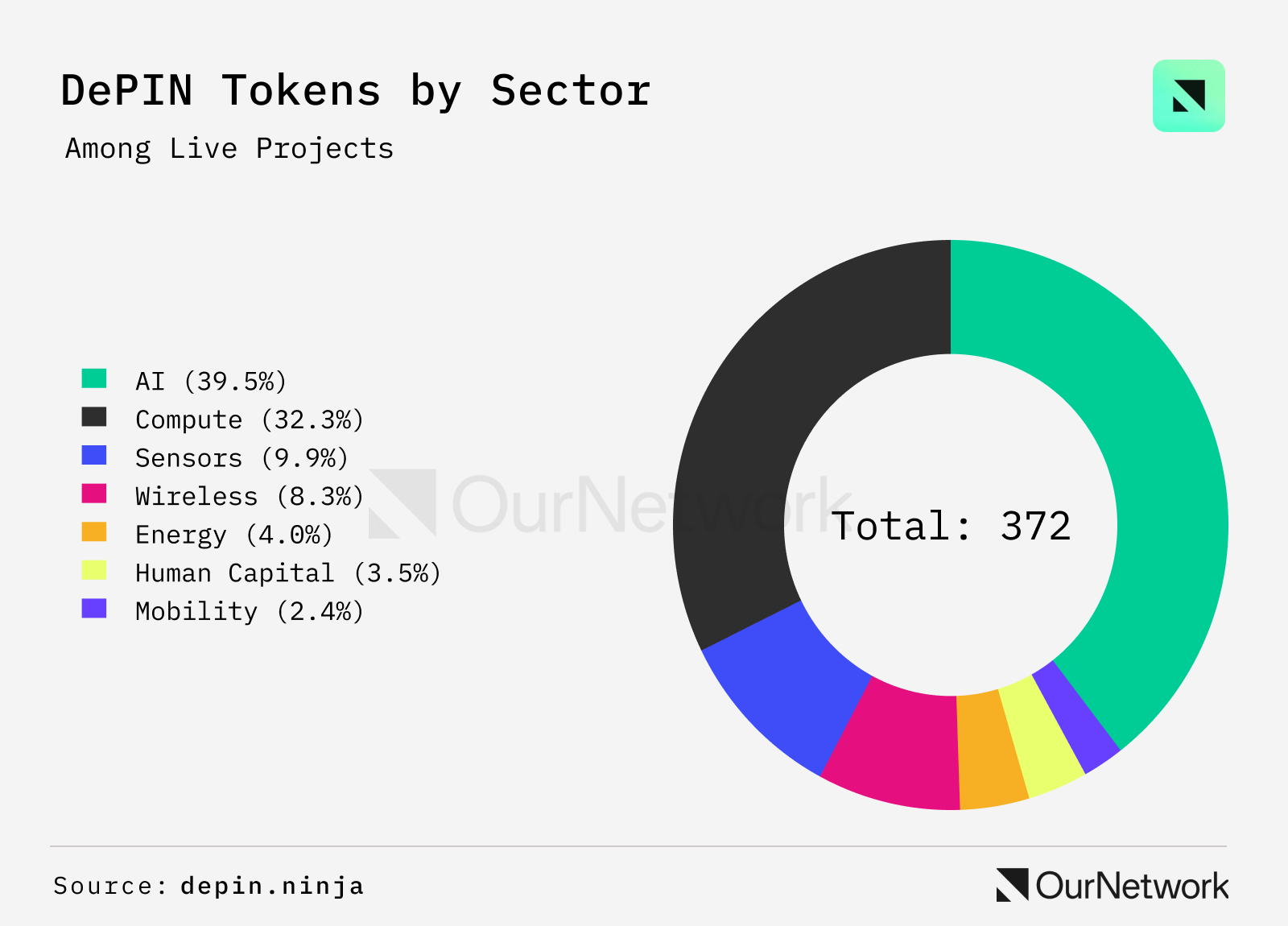
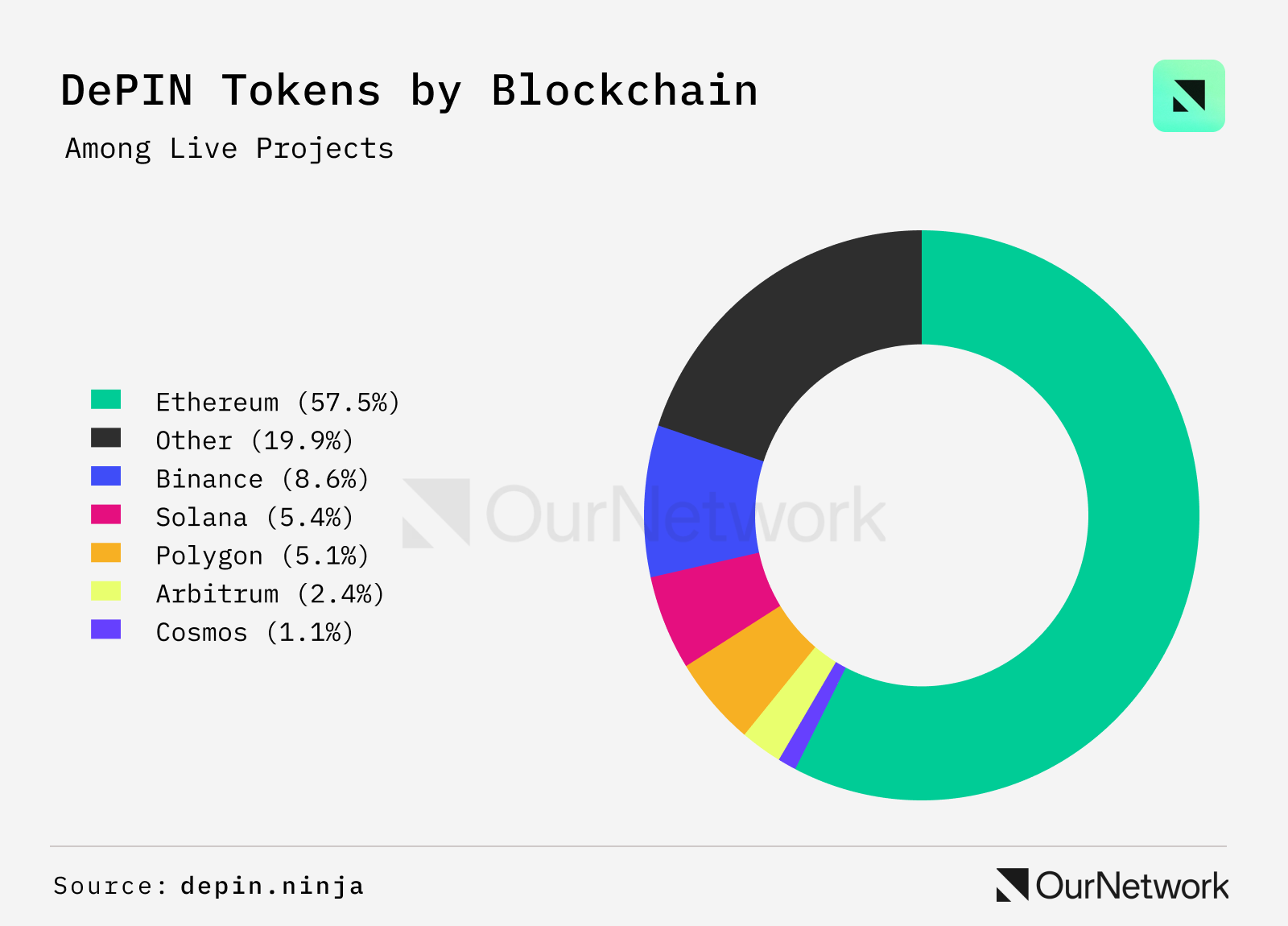
DePIN, or Decentralized Physical Infrastructure Networks, is one of the fastest-growing sectors in crypto, aiming to disrupt capital-intensive industries such as cloud computing, telecommunications, and renewable energy. Among over 370 DePIN tokens, 75% focus on virtual services (such as AI and computing), while the remaining 25% provide physical services (like wireless, energy, and sensors); 75% of DePIN tokens are issued on EVM chains, with most of the rest on Solana, Cosmos, or their own native L1s.
-
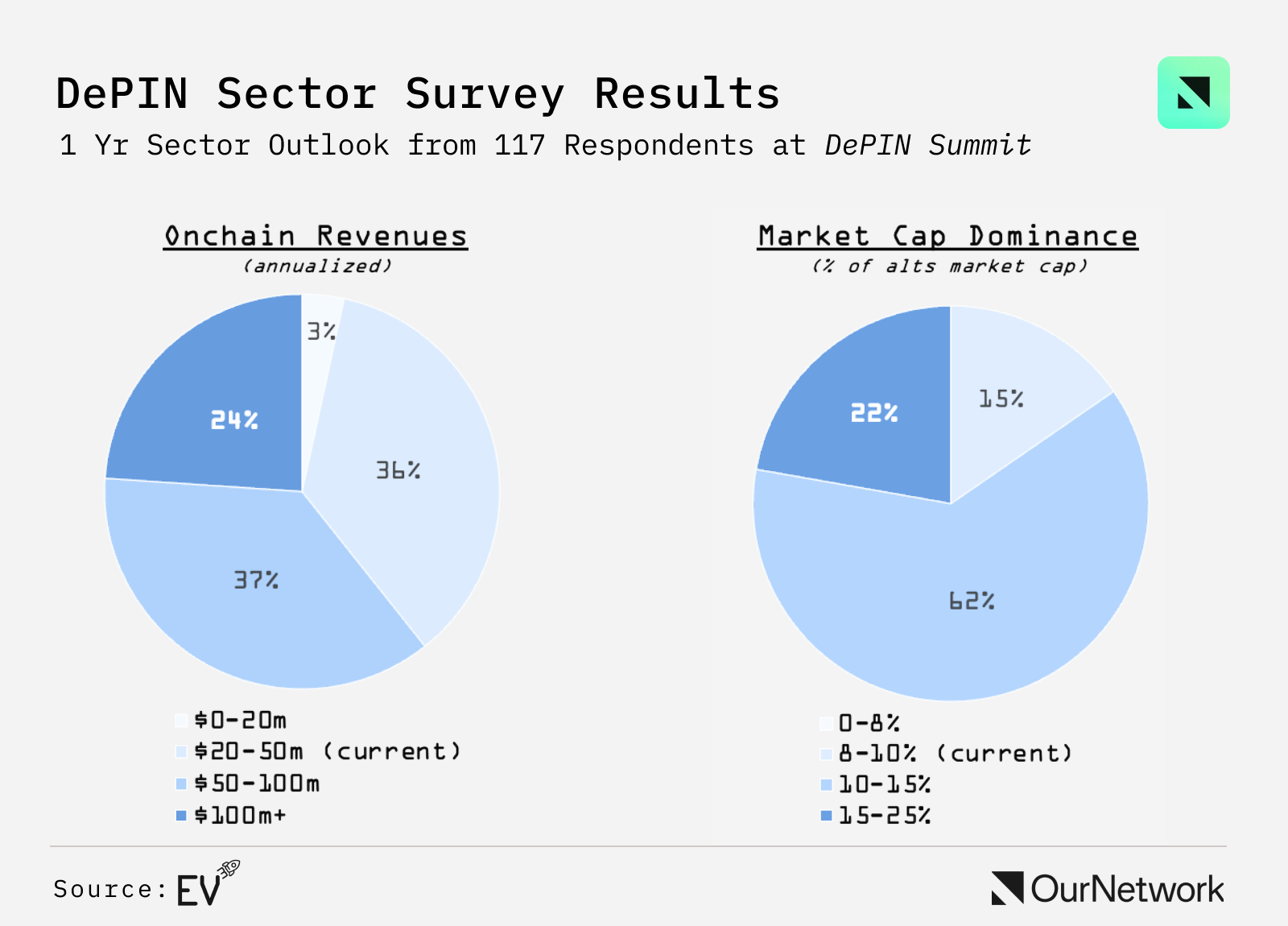
At the annual DePIN Summit held in New York in August, venture firm EV3 surveyed 117 DePIN founders and investors about their expectations for the next twelve months—most anticipate that DePIN’s on-chain revenue will grow from $20 million to $50–100 million in annual recurring revenue (ARR) or more, while DePIN’s market cap share among all altcoins is expected to rise from 8–10% to 10–15%.
EV3 Ventures
-
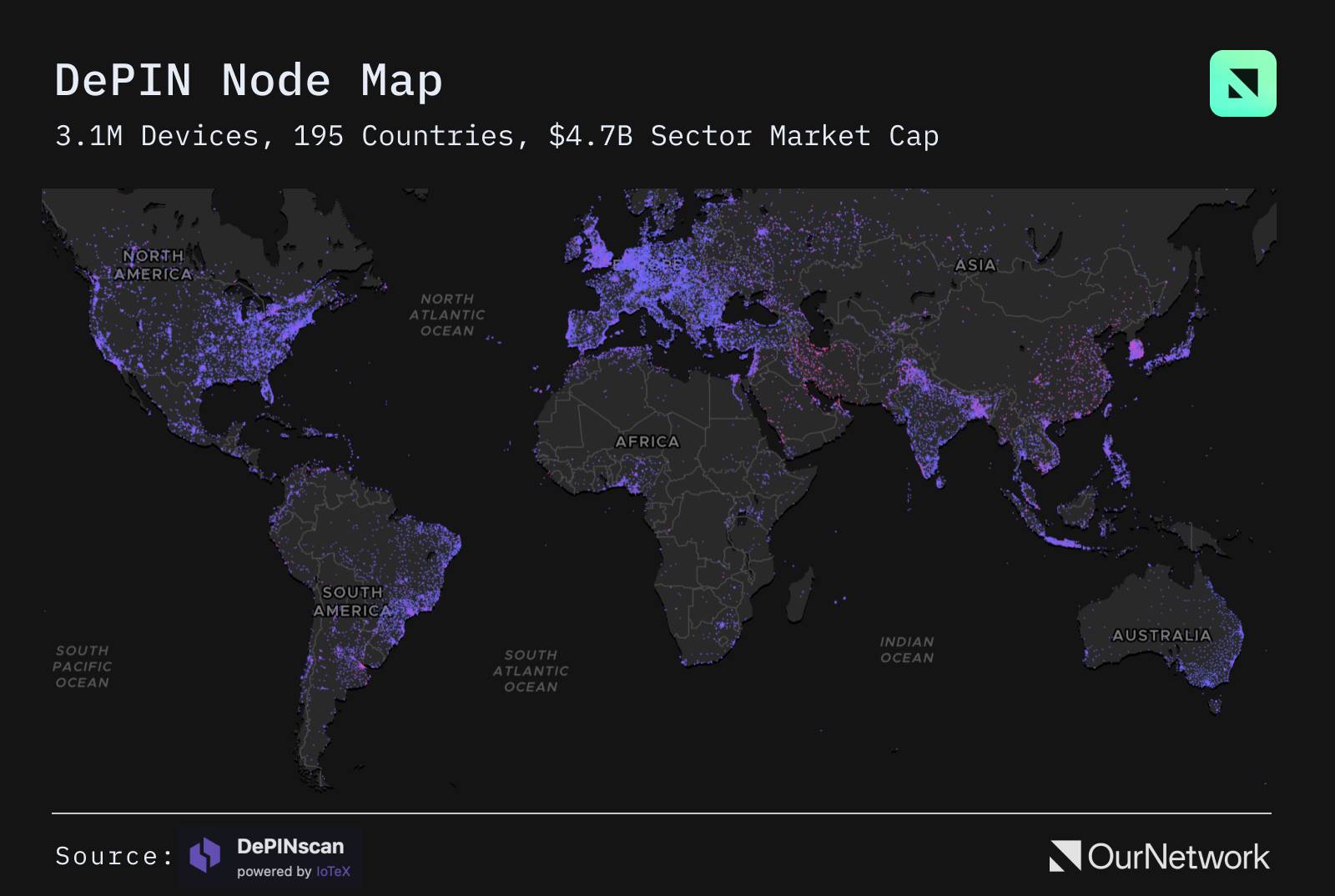
DePINScan tracks over 3 million active DePIN nodes globally. Large-scale networks are increasingly building on high-throughput blockchains: among the ten DePINs with over 100,000 active nodes, seven are built within the Solana ecosystem (Helium, Natix, Hivemapper, Grass, Dawn, Uprock, and Roam).
-
Transaction Highlight: On September 3, a user bridged XNET (the token of a namesake decentralized mobile network) from Polygon to Solana, the last day to do so at a 1:1 conversion ratio. Starting September 4, bridging was only available at a 1:10 ratio, a 90% reduction. XNET also reduced its maximum supply cap from 24 billion to 2.4 billion, meaning a current fully diluted valuation (FDV) of $450 million, while offloading over 150GB of traffic daily from telecom partners.

Helium
Helium Mobile Reaches 114,000 Mobile Users
-
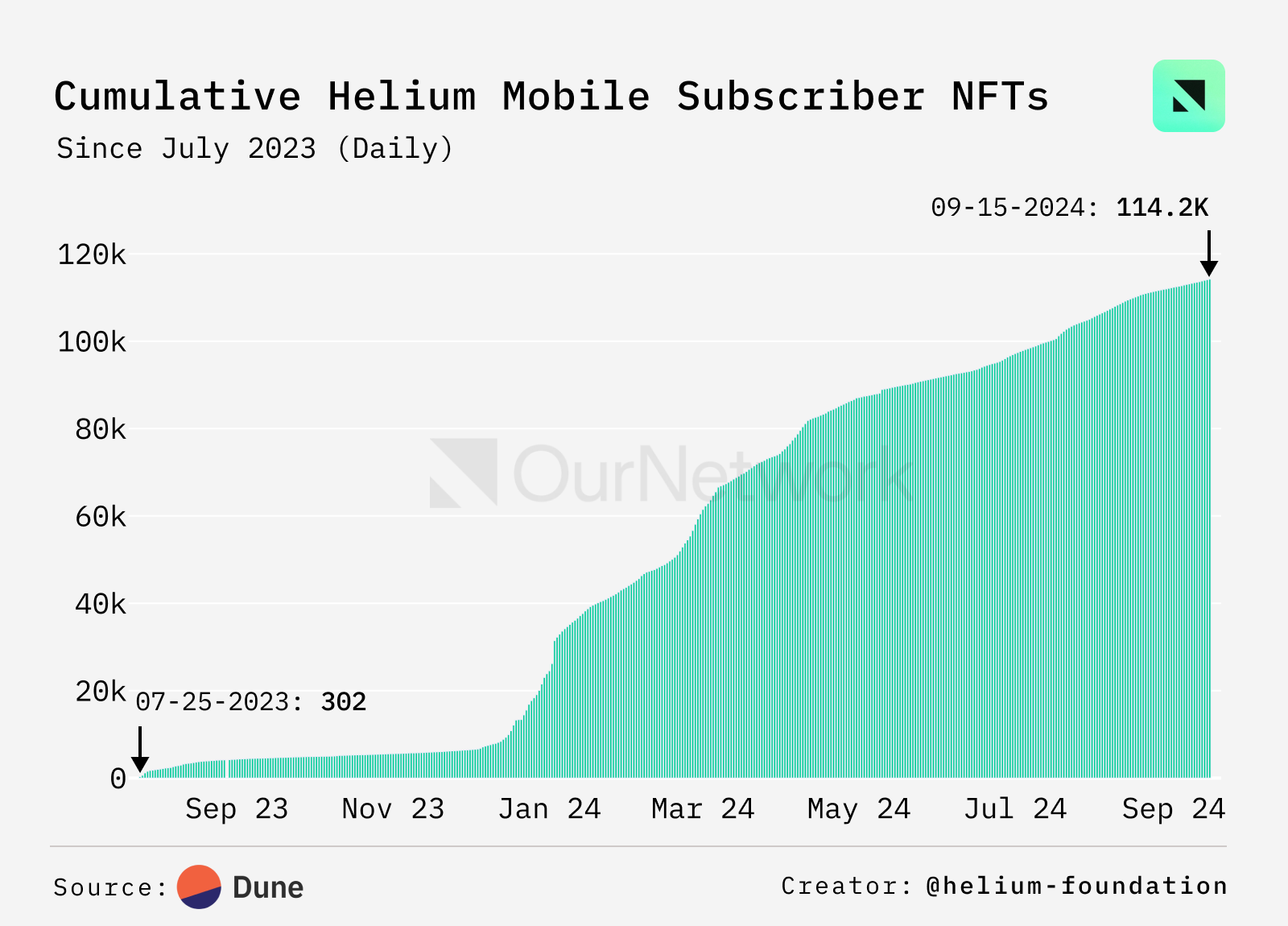
Helium Mobile is a blockchain-based wireless service that allows users to create and manage their own mobile networks and earn tokens. The service operates on the Helium network, relying on community-owned hotspots for coverage to generate tokens, aiming to offer an affordable alternative to traditional mobile providers. This decentralized mobile service reached 114,000 users in September—the highest number since Helium Mobile launched in December 2023.
Dune Analytics - @helium-foundation
-
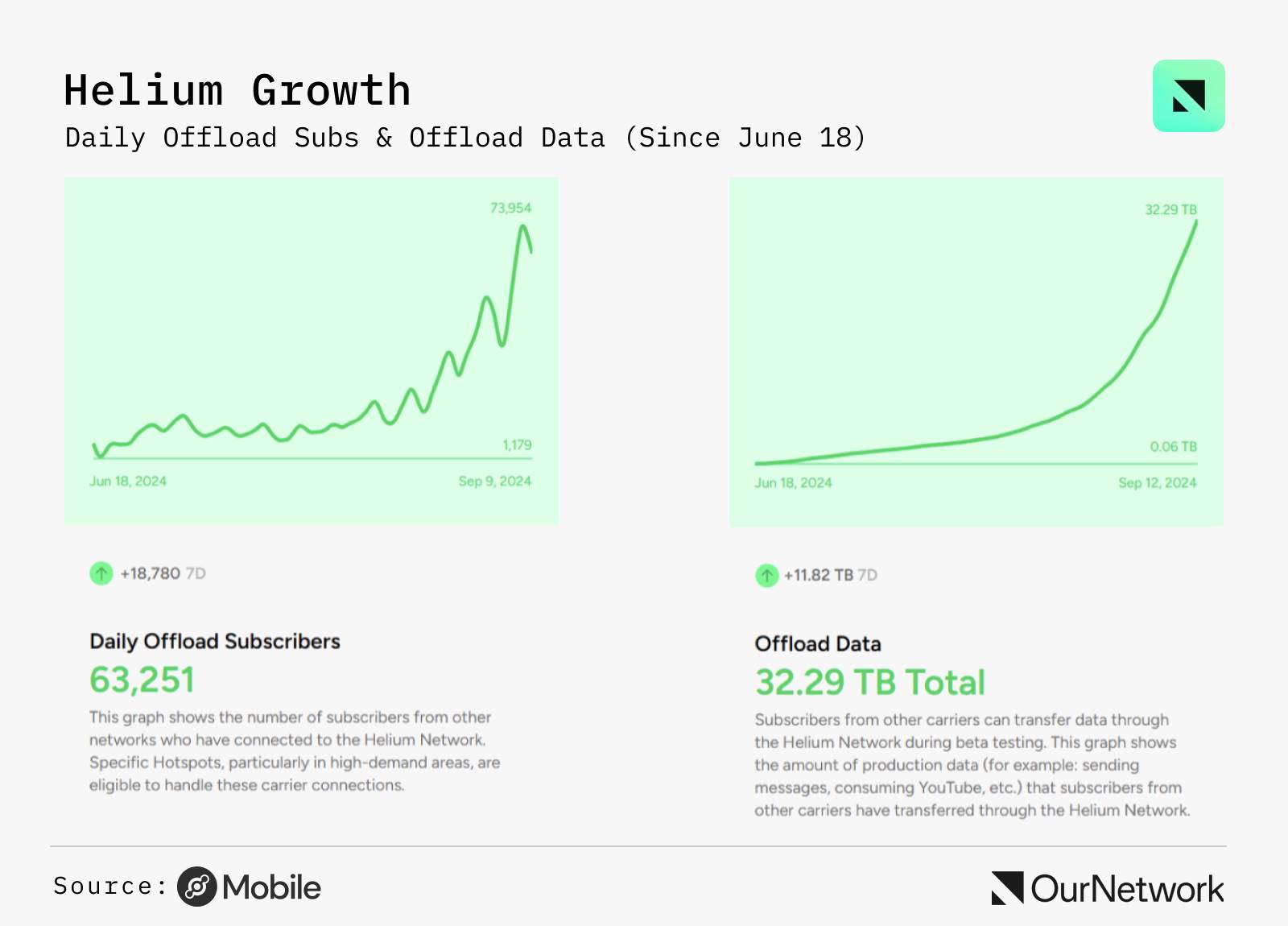
These charts illustrate Helium's growth, with daily offload users rising from 1,179 in June to 73,954 in September, averaging a weekly increase of 18,780. Offloaded data surged from 0.06 TB to 32.29 TB, showing users increasingly rely on Helium for heavy data usage during peak periods.
-
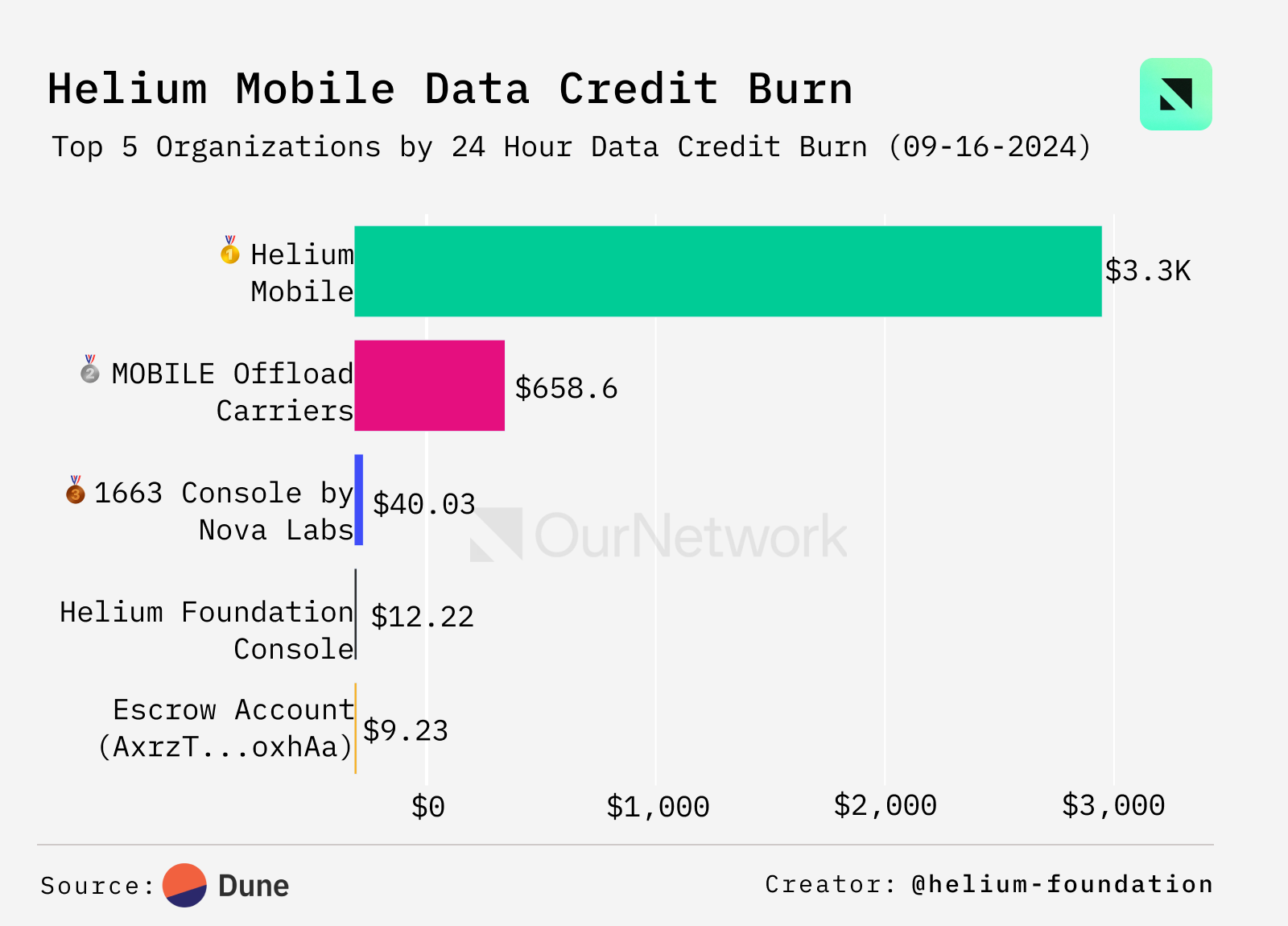
Data Credits (DCs) are required to use network services like data transmission. Organizations obtain DCs by burning HNT (Helium’s native token) to provide user connectivity. Helium Mobile is the top consumer, having burned $2,939 worth of HNT in the past 24 hours, with the current burn rate supporting 56.39 days of balance.
Glow
Glow’s Revenue Now Exceeds Helium, Akash, and Geodnet
-
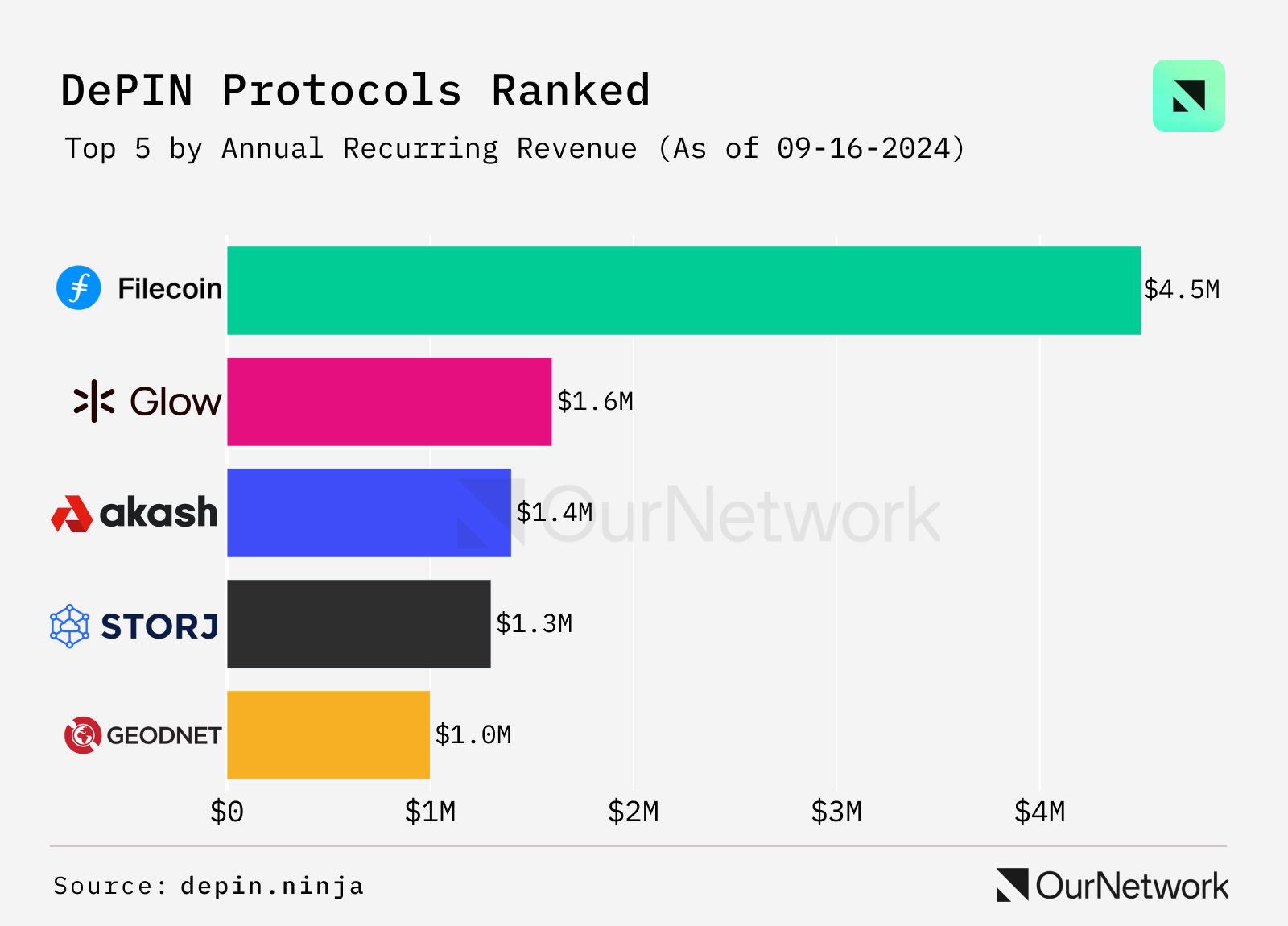
Glow is a decentralized infrastructure network (DePIN) designed to promote solar energy by incentivizing individuals to participate in solar farms. The project has achieved $1.6 million in annual recurring revenue (ARR), trailing only established DePIN pioneer Filecoin.
-
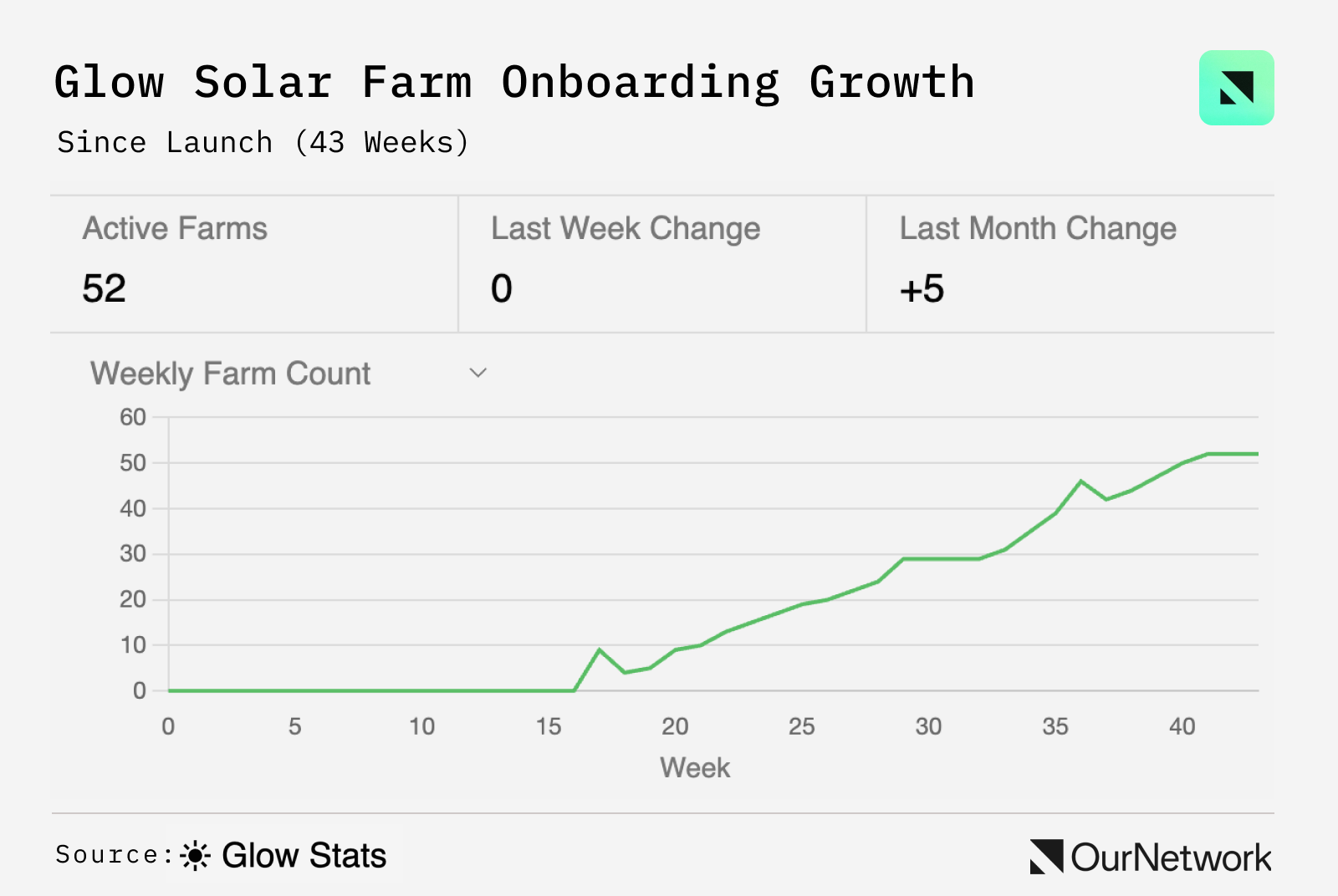
Glow has now onboarded over 50 solar farms during its controlled launch phase.
-
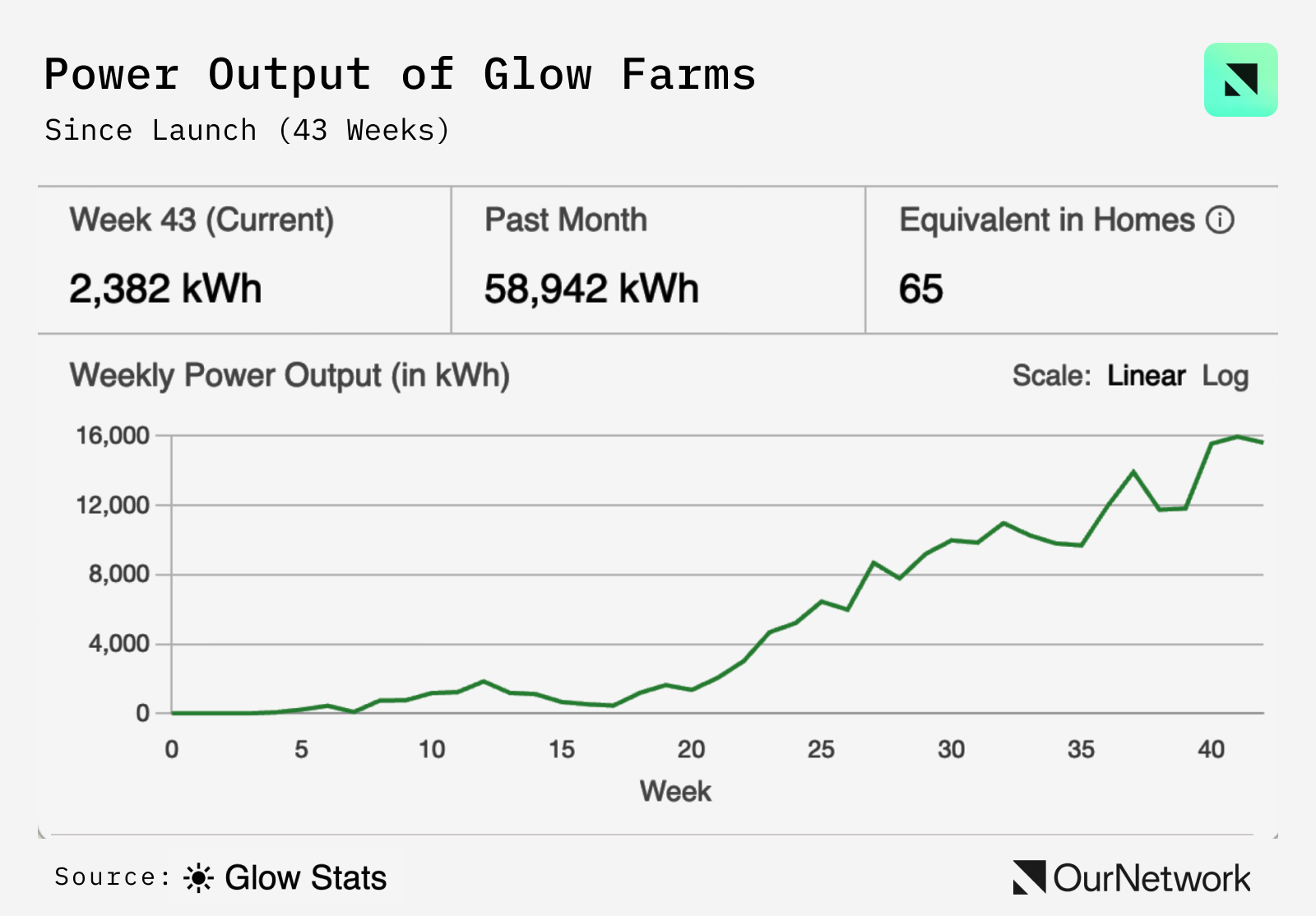
Glow now produces over 15,000 kWh of electricity on average per month.
-
Transaction Highlight: Glow continues attracting institutional investment; in August, its first commercial farm equipped with 200 solar panels made a protocol payment of $130,000, as recorded on Ethereum.
Livepeer
Livepeer | Website | Dashboard
Livepeer AI Node Operators See Over 1000% Growth in Network Fees Due to Increased AI Compute Demand
-
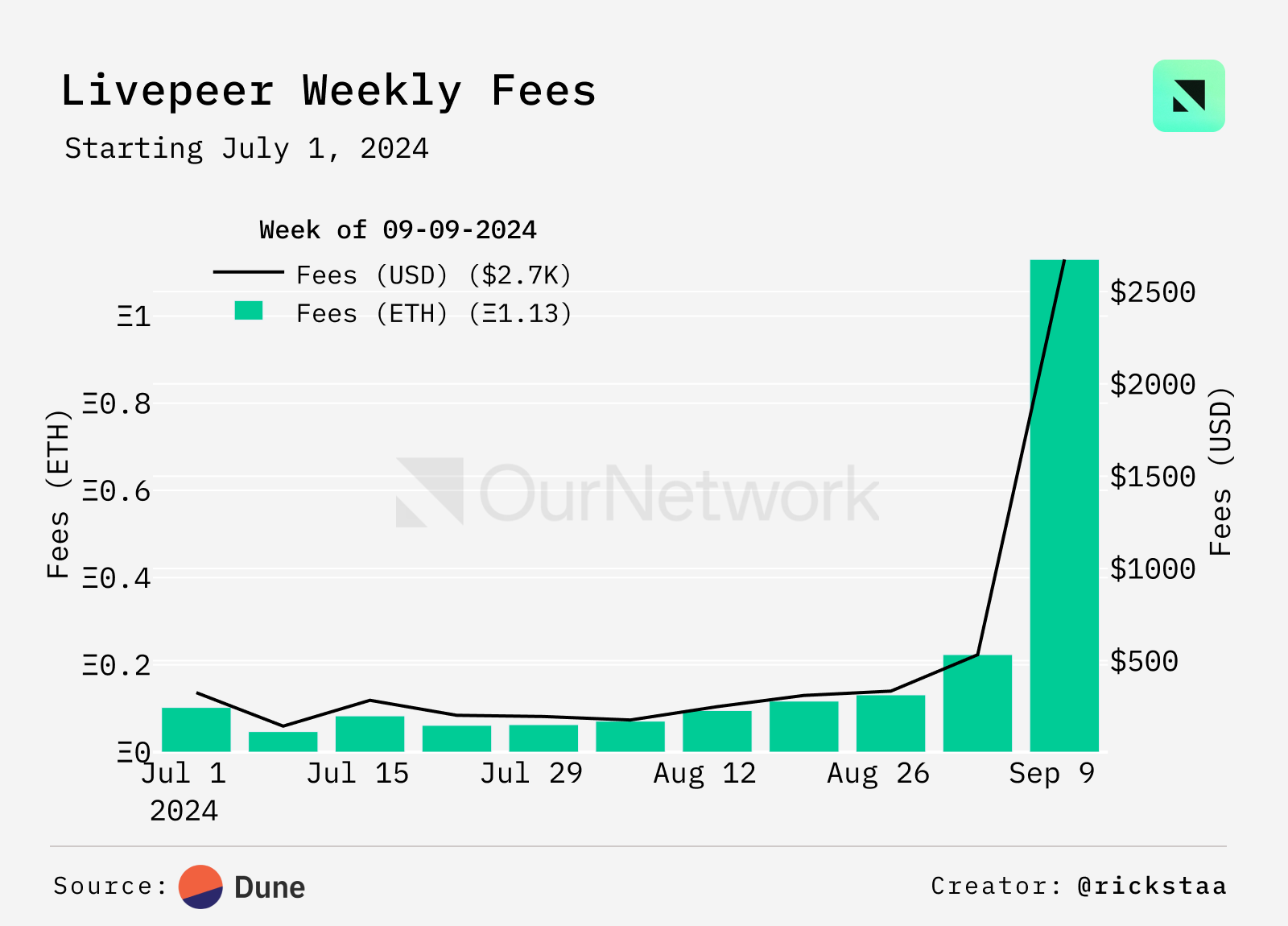
Livepeer is a video infrastructure platform for live and on-demand streaming. By leveraging its extensive GPU network, it launched AI video compute capabilities called Livepeer AI, positioning itself as a key infrastructure player in AI-driven video applications. As a result, fees paid to Livepeer AI node operators have surged in recent months. From July 1 to September 16, fees paid in Ethereum (ETH) increased by 1005% (over 10x), reflecting growing demand for AI compute on the network.
-
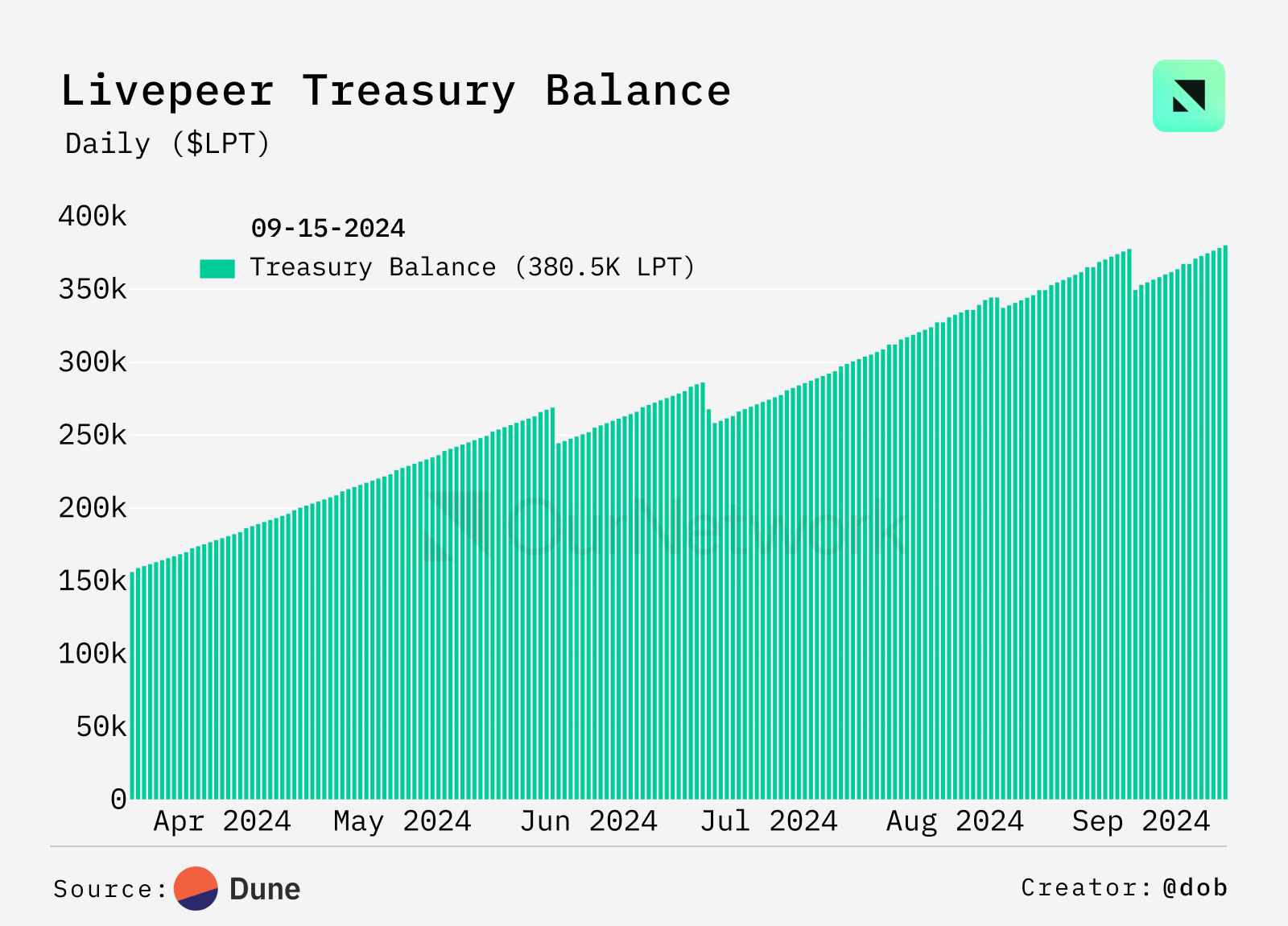
Despite significant investments in growth and infrastructure initiatives (grants, hackathons, hiring), the treasury’s LPT balance has steadily grown to a record high of 382,232 LPT tokens, enabling the community to fund future public goods and support network expansion.
-
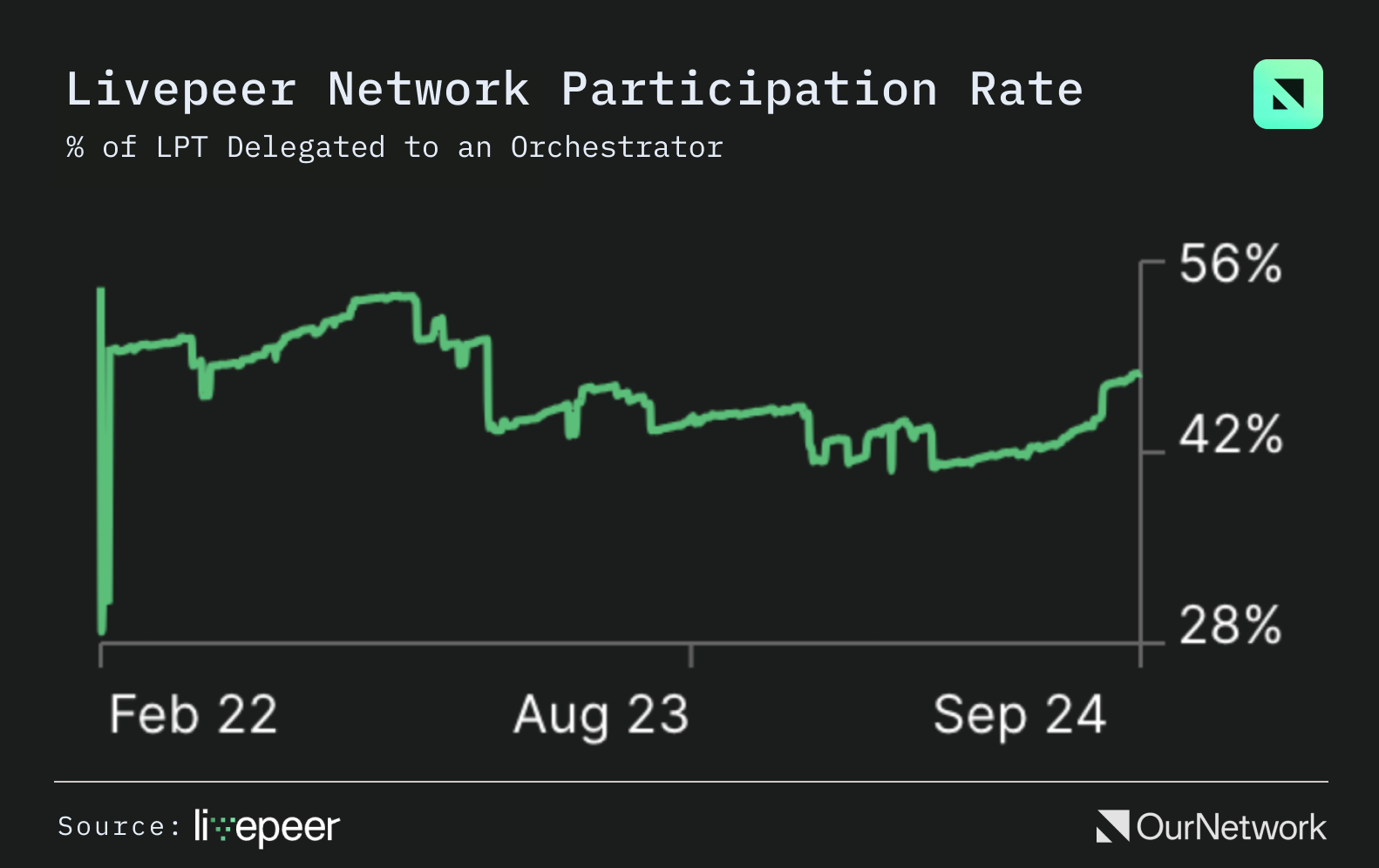
Network participation has steadily increased—from 41.1% in March to 47.8% in September—driven by corresponding incentives such as inflation (increasing token supply to reward participation), aimed at encouraging broader user engagement. Once participation exceeds 50%, the inflation rate will begin to decrease.
-
Transaction Highlight: This transaction shows a prize payout from Flipguard Gateway to winners of its AI competition. As more gateways like Flipguard adopt Livepeer for AI tasks instead of traditional transcoding, we’re witnessing the rise of AI agents seamlessly requesting inference services and completing micro-payments efficiently. This is a strong example of how decentralized infrastructure drives innovation and unlocks new possibilities for AI-powered applications.
IoTeX
Aaron Basi | Website | Dashboard
IoTeX Reaches 330,000 Global Users
-
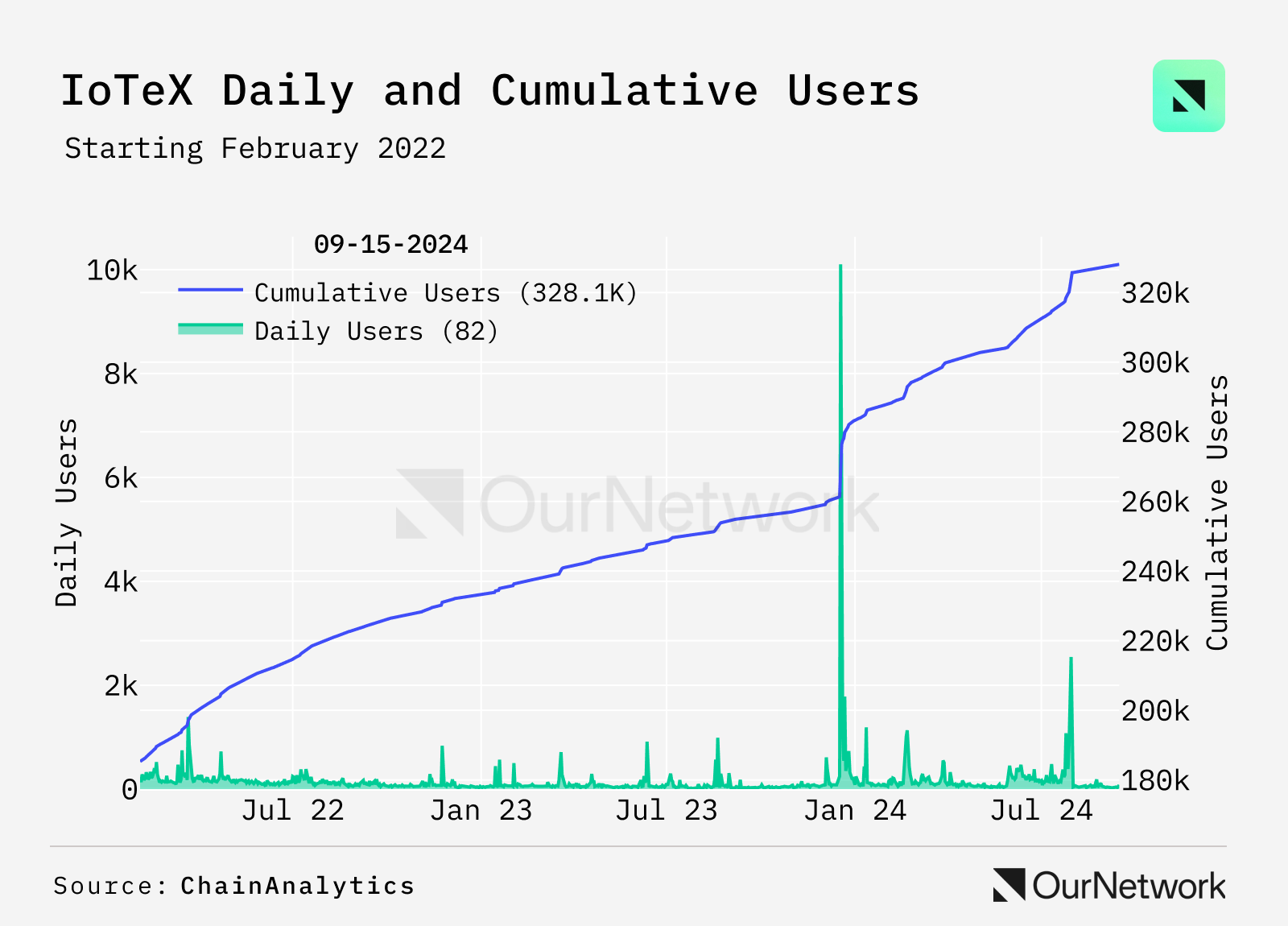
IoTeX offers a full suite of tools for building fully decentralized, composable, and interoperable DePIN projects. The platform provides flexible internal DePIN Infrastructure Modules (DIMs) and public services, along with third-party modules from providers like Filecoin, Risc0, NearDA, and Espresso. IoTeX has registered over 330,000 global users across 120 countries.
-
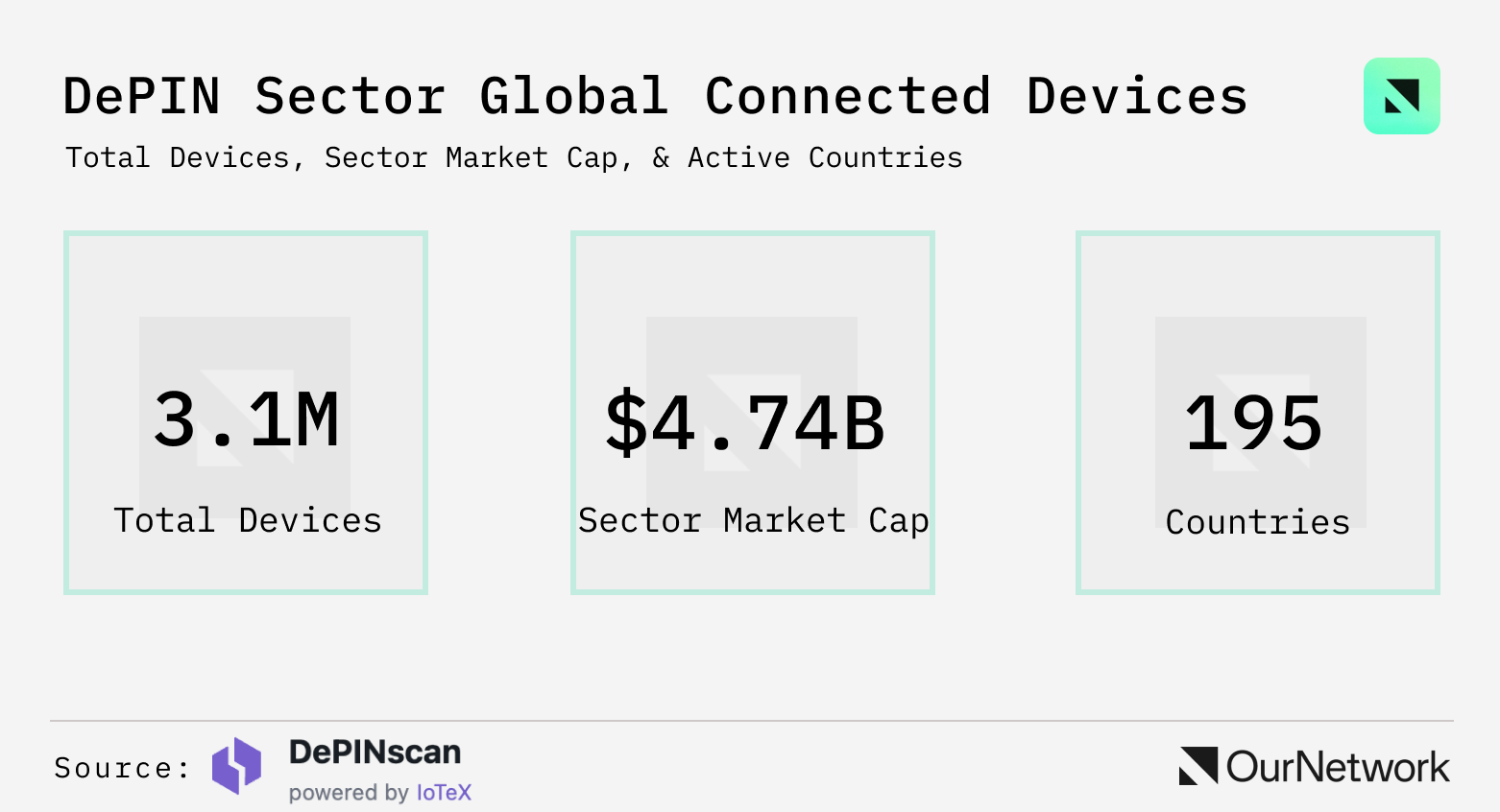
DePINscan, a community map browser and dashboard built by IoTeX, processes all device data through IoTeX’s off-chain computing middleware. The number of connected devices has more than tripled, rising from 1,160,495 on June 8 to 3,100,212 today.
-
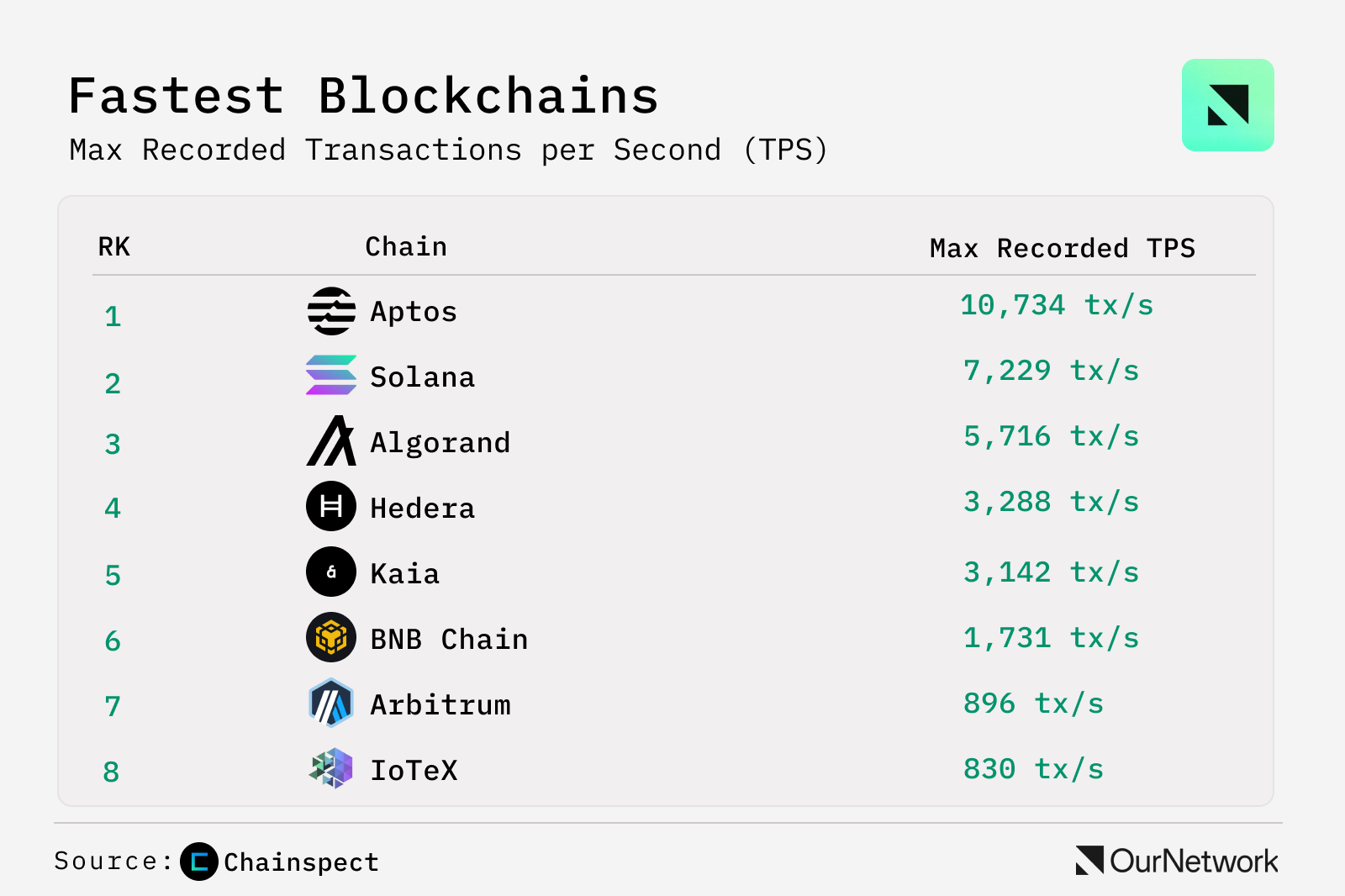
IoTeX now ranks as the eighth-fastest blockchain network globally, achieving a peak throughput of 830 transactions per second (TPS).
-
Transaction Highlight: This transaction adds 40,000 $WIFI tokens (worth over $7,000) into a liquidity mining contract, distributing rewards to users providing liquidity on mimo (IoTeX’s DePIN-focused decentralized exchange). This equates to a 163% annual percentage rate (APR). Through collaborations with DePIN projects like WiFi Map, IoTeX boosts trading volume for DePIN tokens while increasing activity on the IoTeX network. Other DePIN projects such as Geodnet, ATOR, and Drop Wireless offer similar APRs.
TADA
MVL’s TADA Attracts Over 100,000 Drivers
-
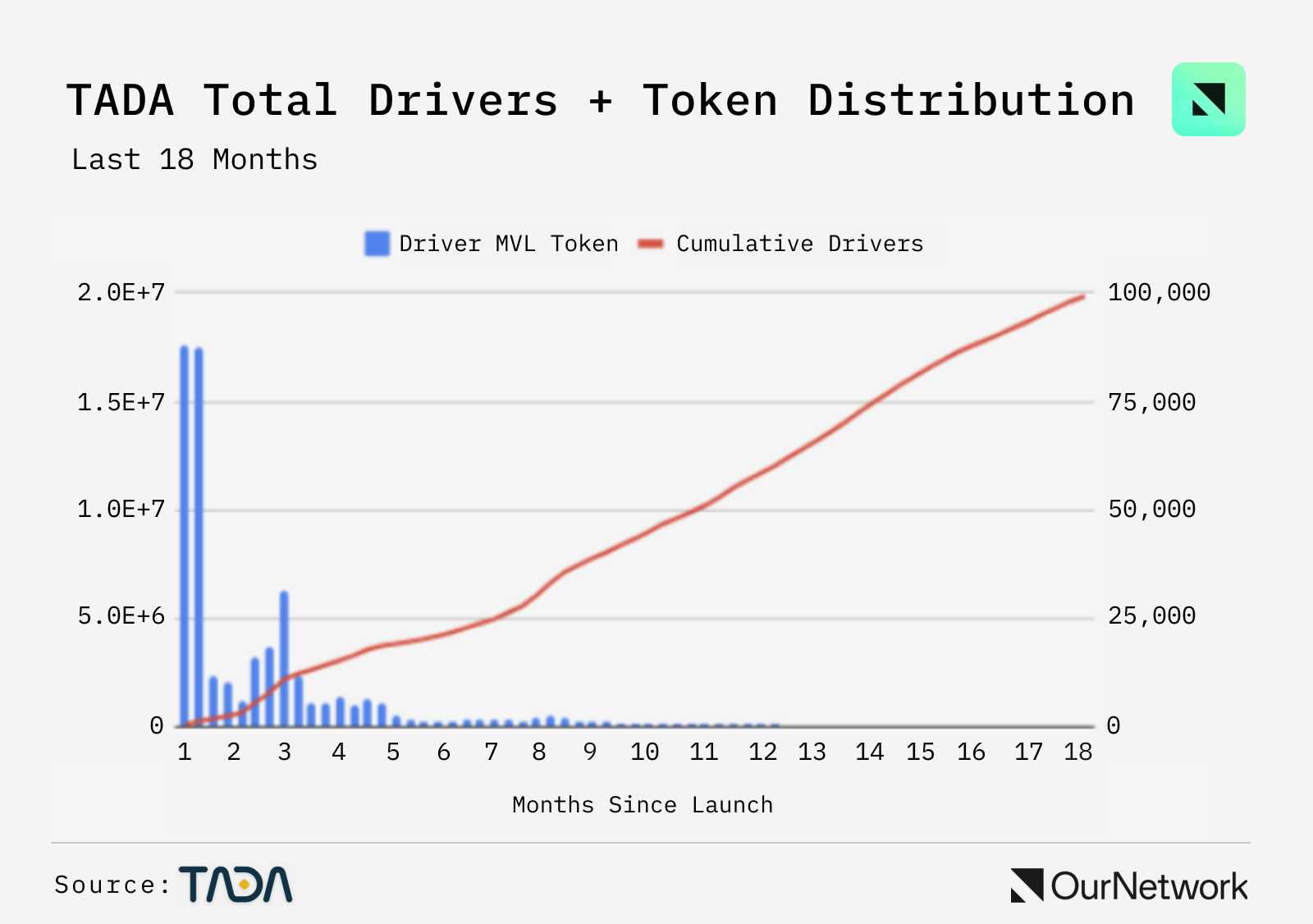
TADA is a ride-hailing app primarily operating in Southeast Asia. The chart below illustrates how MVL (TADA’s parent company) used token incentives for early TADA drivers to solve cold-start challenges and build network effects. Over approximately 18 months, despite limited passenger rides, the project successfully established and maintained a stable driver network.
Tada (internal)
-
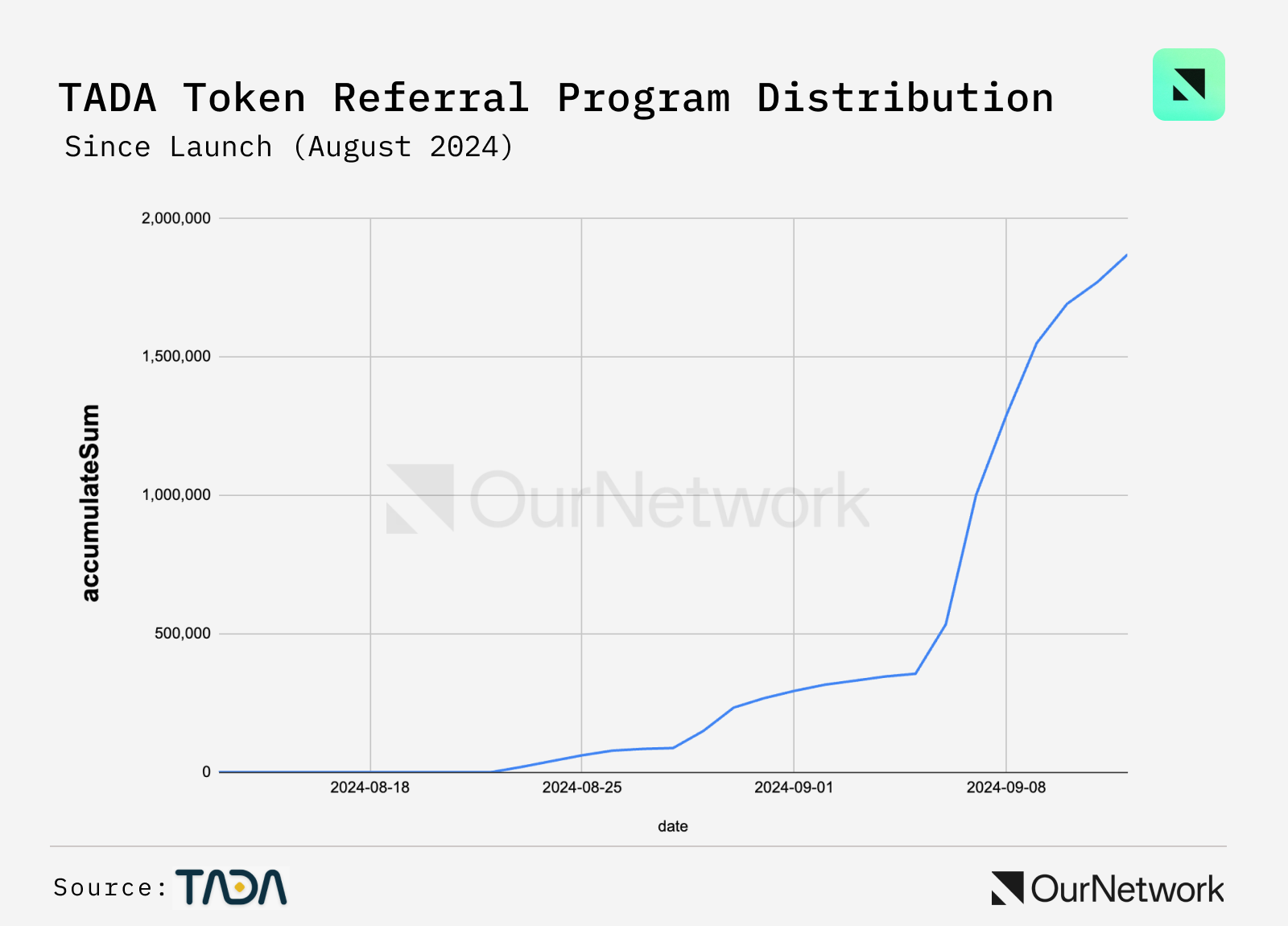
TADA mini, integrated with the TADA network, is an application allowing users to seamlessly book rides directly via Telegram without needing a separate app or complex verification processes. The token-based referral program applied to TADA Mini further demonstrates the effectiveness of tokenomics in network bootstrapping.
Tada (internal)
Join TechFlow official community to stay tuned
Telegram:https://t.me/TechFlowDaily
X (Twitter):https://x.com/TechFlowPost
X (Twitter) EN:https://x.com/BlockFlow_News
 @ournetwork__