Conversation with Initia Co-founder: Influenced by Apple's design philosophy, simplifying users' on-chain experience
TechFlow Selected TechFlow Selected
Conversation with Initia Co-founder: Influenced by Apple's design philosophy, simplifying users' on-chain experience
Stan explained Initia's design philosophy, emphasizing that their initial concept was built with user fluidity across different applications in mind.
 Navigating Web3 tides with focused insights
Curated & Translated by: TechFlow
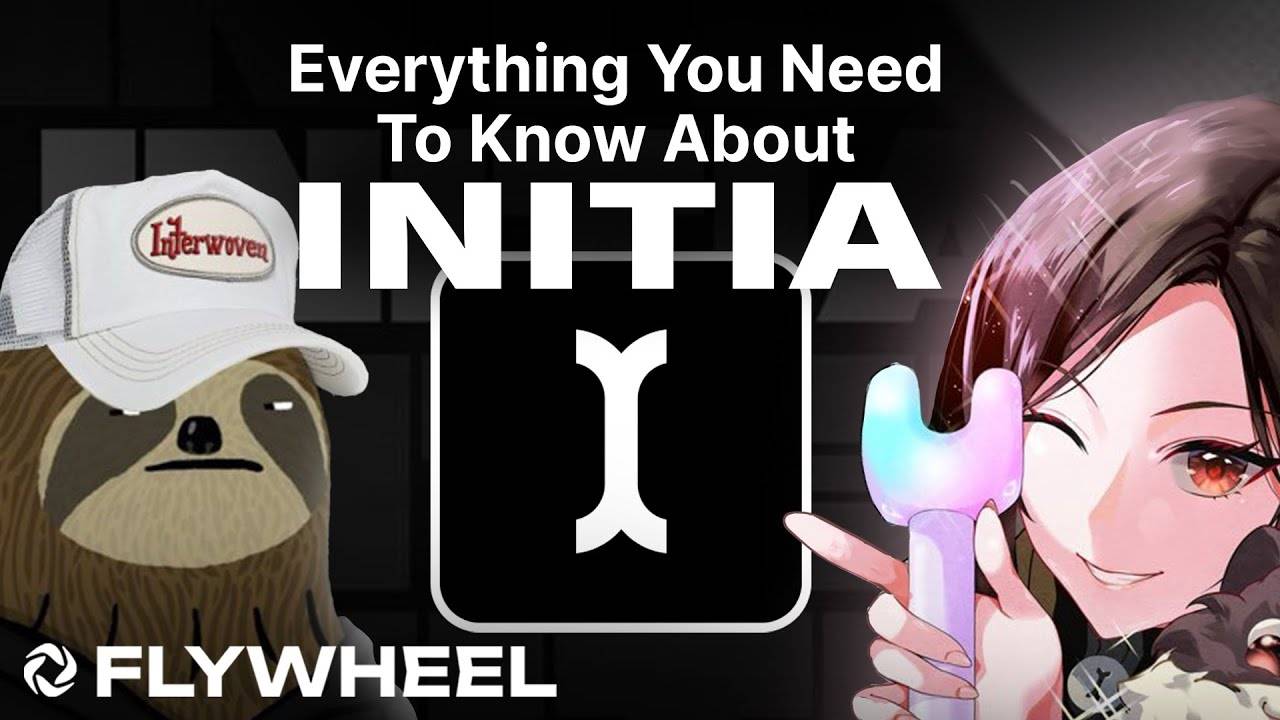
Guests: Stan Liu, Co-founder of Initia; Ezaan Mangalji (Zon), Co-founder of Initia
Hosts: DeFi Dave, On-chain Manager at dinero_xyz; Kiet Fong, from thecoreloop
Podcast Source: Flywheel DeFi
Original Title: Everything You Need To Know About Initia w/ Zon & Stan - Flywheel #120
Release Date: September 11, 2024
Background
-
In this episode, hosts Dave and Capital K welcome Zon and Stan, co-founders of Initia, to discuss their innovative work in the multi-chain and modular blockchain space. Zon expresses his long-standing support for the show and mentions meeting Dave at various conferences.
Personal Backgrounds
-
Zon shares his background as a developer from Vancouver, Canada, with degrees in computer science and business. During the pandemic, he completed his studies from home while becoming deeply involved in DeFi projects and developing a strong interest in app chain theory. He previously worked as a smart contract developer at Terra, contributing to multiple ecosystem projects. However, following Terra’s collapse, he and Stan decided to start anew, ultimately founding Initia.
-
Stan recounts his journey, originating from China and Korea, earning a mathematics degree in the U.S. After graduation, he entered quantitative trading and served as a market maker in crypto markets. During this time, he developed an interest in DeFi and connected with Do Kwon through a university peer, eventually joining Terra as an engineering researcher.
Initia's Vision
Founding Context
-
Zon reflects on Initia’s origin story. After the FTX collapse, they realized continuing with their prior project was unwise. While Zon re-evaluated the Ethereum ecosystem, Stan briefly returned to quant finance but quickly found traditional finance no longer appealing.
Observations and Insights
-
The two observed Cosmos’ evolution—while experienced in building on Cosmos, they recognized Ethereum offered a superior DeFi experience. Zon notes that despite the flexibility of the Cosmos SDK, building a Cosmos chain remains complex due to challenges like running a Layer 1, managing validator sets, and handling IBC relaying.
Towards a Multi-Chain Solution
-
In contrast, Ethereum rollups began gaining traction, even though they weren’t originally designed for scaling. Zon argues that as more interoperability solutions and decentralized layers emerge, liquidity fragmentation and choice overload will only worsen. They believe blockchain scaling should embrace a multi-chain approach. Leveraging their expertise in both Cosmos and Ethereum, they set out to build a full-stack Layer 1+Layer 2 system to address these pain points and realize an ideal multi-chain ecosystem.
Building a Permissionless Interwoven Ecosystem
Design Philosophy
-
Stan explains Initia’s design philosophy, emphasizing early focus on user liquidity across applications. While heavy Ethereum users can easily move assets on the mainnet, using Layer 2 solutions introduces complexity.
User Experience Challenges
-
Cross-chain operations may not be too difficult for seasoned DeFi users, but are far more challenging for those unfamiliar with the ecosystem. Stan points out many users don’t know where specific bridges are located and must use tools like DefiLlama to find information. Though seemingly minor, bridge processes are highly challenging—especially when dealing with different token standards and bridging methods (e.g., Optimistic Bridge or CCTP), which can confuse users.
Foundation of the Solution
-
These UX pain points motivated them to build Initia’s ecosystem to simplify cross-chain interactions and enhance overall user experience. Their goal is to provide a permissionless interwoven ecosystem where users can seamlessly interact across different DeFi applications.
Initia Inspired by Apple’s Design
Design Philosophy
-
Zon discusses how Apple’s design principles influenced Initia. He compares Ethereum rollups to Android—providing infrastructure but leaving users overwhelmed with choices around service providers, bridges, and oracles. In contrast, Initia takes a more opinionated approach, clearly defining the system’s direction.
System Architecture
-
Within Initia’s Layer 1 and Layer 2 framework, many components are baked into the system. For example, bridging relies solely on IBC and Layer 0, while data availability (DA) is handled by Celestia. They’ve built a native oracle system that feeds data to all Layer 2s, ensuring consistent UX across chains and simplifying user interaction.
Economic Mechanisms
-
Stan further elaborates on the economic mechanisms considered during ecosystem design. By tightly linking Layer 1 and Layer 2 applications, they aim to eliminate debates over whether Layer 2 harms Layer 1. All apps should evolve in alignment with Layer 1, creating value for users and the broader ecosystem.
Reflection and Improvement
-
Kiet agrees, noting Initia has improved upon fundamental systems by incorporating strengths from existing technologies, giving it a competitive edge. He looks forward to diving deeper into Initia’s design and implementation.
The Three Core Pillars of Initia
Architecture Layer
Zon introduces Initia’s architecture layer, highlighting three core pillars: architecture, product, and economics.
-
Layer 1: Initia’s Layer 1 is a Cosmos SDK-based chain using the Move VM. Key features include:
-
An orchestration layer that manages security rewards, interoperability, and routing for all Layer 2s.
-
Enshrined Liquidity: A built-in DEX where users can directly stake XLP tokens with validators, securing the network and providing liquidity.
-
Functioning as a multi-chain router, enabling token swaps between different rollups.
-
Interwoven Stack
-
Optimistic Rollup Framework: Initia’s interwoven stack is a complete Optimistic Rollup solution featuring optimistic bridging, fraud proofs, rollback, and challenge mechanisms—functionally similar to Optimism’s Bedrock, but built on the Cosmos SDK.
Layer 2 Stack
-
Full-Featured Cosmos SDK Base Chains: Each Layer 2 is an independent Cosmos SDK chain, allowing customization of transaction ordering, fee types, and processing logic.
-
VM Agnosticism: Supports EVM, Move VM, and WASM VM, letting developers choose the best smart contract environment for their app.
-
Data Availability: Each Layer 2 defaults to publishing DA data to Celestia and submitting proofs to Initia’s Layer 1.
Settlement Layer
-
Zon further explains that Initia’s Layer 1 serves as the settlement layer, processing all fund withdrawals via optimistic bridges. Initia also implements state sync functionality, enabling forked chain instances to be created by reading data from Celestia during fraud proof challenges.
Enshrined Liquidity, initUSDC Pool, and Fees
Kiet asks how Initia’s enshrined liquidity functions as both a router and a bridge.
-
Stan explains that transferring USDC between different Initia chains doesn’t require cumbersome steps:
-
USDC on Minisia A and Minisia B are identical and native, avoiding liquidity fragmentation.
-
All token transfers must go through Layer 1 (L1), ensuring consistent USDC standards across Minisias.
-
User Experience
Kiet clarifies the user flow after acquiring USDC:
-
User enters the Initia ecosystem via L1 and acquires USDC using a DEX.
-
User moves USDC from L1 to desired Layer 2 (e.g., Minisia A).
-
After trading, user wants to return—transfers USDC from Minisia A back to Minisia B via L1.
-
Throughout, the process is abstracted—users simply select moving from one L2 to another; the system handles token transfers automatically.
Fee Structure
-
Regarding fees within the USDC pool, Zon states:
-
Initia plans low fees to attract users to its USDC pool.
-
A portion of trading fees will be redistributed to stakers to incentivize participation.
-
Main revenue comes from staking rewards similar to traditional Layer 1s.
-
-
This design ensures Initia’s liquidity pools remain competitive and become the preferred choice for users.
Rollback Mechanism and Fraud Proofs
Understanding Fraud Proofs
-
Zon explains how the Optimistic Rollup rollback and fraud proof mechanism works:
-
Fraud Proofs: In Optimistic Rollups, all operations are assumed valid and sequencers honest. If a sequencer submits malicious transactions (e.g., frontrunning or balance manipulation), a 7-day challenge window opens when users attempt to withdraw funds to Layer 1 (L1).
-
During this window, any honest participant can submit a fraud proof to expose the sequencer’s malice and block the withdrawal.
-
Role of the Rollback Mechanism
-
Rollback: If a fraud proof is successfully submitted during the challenge period, the chain must roll back to a secure state. The rollback acts as a final safety net, restoring system integrity after malicious activity.
-
Zon emphasizes that fraud proofs and rollbacks are complementary: fraud proofs detect and prevent attacks, while rollbacks ensure recovery. This enhances the security and reliability of Optimistic Rollups.
Instant Cross-Chain with MinitiaSwap
Concept of MinitiaSwap
-
Zon introduces MinitiaSwap, designed to solve the time delay in cross-chain transfers. He stresses that traditional bridging often takes 7 days, conflicting with the vision of an interconnected world. MinitiaSwap enables instant bridging between Optimistic Rollup tokens, accepting limited potential losses for speed.
Bridging Mechanism
-
Stan further explains the bridging process:
-
Optimistic Bridging: When users transfer tokens from L1 to L2, they use an optimistic bridge. Tokens on L1 are locked, and new tokens are minted on L2.
-
Withdrawal Process: Normally, withdrawals require a 7-day wait. During this period, if a fraud proof is submitted, the state rolls back.
-
Instant Bridging: To eliminate the 7-day wait, MinitiaSwap combines two solutions: native Cosmos IBC and optimistic bridging. Users bridge via optimistic bridge to L2, then quickly return to L1 via IBC.
Token Handling
-
After transferring via optimistic bridge, users receive a wrapped version of the original token (e.g., wrapped USDC).
-
To enable efficient liquidity, MinitiaSwap creates trading pairs allowing exchange between different token versions.
Liquidity Management
-
Stan adds that MinitiaSwap imposes time or volume limits to keep LP losses manageable:
-
Limited amount of USDC can be swapped within a given timeframe.
-
If many users try to swap back to native USDC, the exchange rate drops.
-
Users willing to wait 7 days may get better rates.
-
-
Kiet thanks them for the explanation, noting that although technically different, tokens are treated as equivalent in the pool since both undergo the same 7-day withdrawal process.
-
Stan adds that liquidity providers play a key role, enabling fast swaps while keeping losses predictable.
Building on L1 vs. L2
-
Dave raises the possibility of building on L1, asking if Zon expects teams to build there. Zon responds that while smart contracts can be deployed on L1, they encourage independent development on L2s, offering benefits such as:
-
Optimized Experience: Building on L2 improves UX and avoids congestion.
-
System Scalability: Pushing execution to separate L2s effectively scales the system.
-
Thoughts on SVM
-
Dave notes support for EVM, Move, and Wasm but not SVM, asking why. Zon shares his view:
-
Market Demand: They’ll consider SVM if demand grows.
-
Solana Appeal: Developers typically choose SVM due to affinity for Solana’s ecosystem, not because SVM is the next-gen smart contract framework.
-
Integration with Cosmos SDK
-
Zon further explains the importance of building multiple VMs with seamless Cosmos SDK integration:
-
Past Issues: Earlier implementations like Ethermint faced problems—bridging ERC20 and Cosmos-native tokens was clunky, hurting UX.
-
Seamless Interaction: When building new VMs, they ensure smooth token conversion. For example, an ERC20 token sent via IBC becomes a native Cosmos token; sending it to a Move L2 converts it to a Move-compatible asset; similarly, a Move token sent to a Cosmos chain becomes a Cosmosm20 token.
-
Attracting and Incubating App Chains
-
Dave is curious about current app chains and incubation processes. Zon shares their philosophy on incubating projects:
-
Avoiding Duplication: Zon notes past L1 launches often claimed dozens of projects (e.g., 50), but many were just Uniswap V2 forks or small hackathon demos with no lasting impact. This approach failed.
-
Supporting Native Projects: Importing and “normalizing” existing ecosystem projects often leads to “self-cannibalization” of local ecosystems. For example, projects like PancakeSwap and SushiSwap brought users and TVL but didn’t help native projects succeed. Thus, supporting homegrown app projects is crucial.
-
Finding Unique Projects: Their goal is to identify teams building novel, unique, and interesting projects, providing support including marketing, financial incentives, and product development.
Example Projects
-
Zon highlights some incubated projects:
-
Blackwing: Enables perpetual trading of any token on any chain, simplifying cross-chain trading complexity.
-
Milky Way: The first LST project based on Tia and Celestia, building a restaking hub to enhance economic security.
-
Civitia: A chain-based "Monopoly"-style game where players buy land and engage in strategic cooperation or competition.
-
Kamigotchi: An adorable idle RPG game, now live on testnet.
-
Contro: Developed a “Gradual Limit Order Book” mechanism to solve frontrunning in prediction markets. By slowing down time in the market, correct bets are rewarded fairly.
-
Innovation in Prediction Markets
-
Zon details how Contro works, emphasizing its slow-motion order book that prevents frontrunning. This allows multiple users to bet simultaneously and share profits without being exploited by fast traders.
Collaborative Interwoven Projects and Users
-
Kiet asks whether initial projects are permissionless. Stan explains that indeed they are, allowing users to freely build on L1:
-
Freedom to Build: Users can create their own L2s on L1 with high customizability.
-
Supporting Interesting Projects: They aim to attract projects that can serve as ecosystem pillars—not simple copies like Uniswap V2 forks. For example, early Arbitrum thrived due to unique projects like GMX.
-
Support and Resource Allocation
-
Zon adds that while they support all projects on Initia, during Genesis they aim to attract novel, exciting ones to give users compelling reasons to join at mainnet launch. Their goal: Marketing and resource support—helping these projects grow through marketing and other resources.
User Acquisition Strategy
-
On attracting users, Zon says:
-
Individual Support & Overall Strategy: They work closely with each app chain to help attract users and increase TVL.
-
Network Effects: Each new app chain brings network effects, driving user and asset flow. Through this interwoven ecosystem, users collaborate rather than compete.
-
Ecosystem Collaboration
-
Zon emphasizes what makes Initia’s ecosystem unique—projects genuinely care about each other and collectively drive growth. Unlike past isolated competition, Initia’s projects cooperate closely to strengthen the whole.
Origin of the Term "Interwoven"
-
Dave asks about the name “interwoven.” Zon explains it perfectly captures their tech stack and ecosystem:
-
Technical Connectivity: Every new chain launched is connected to others—via Layer 0, IBC, CCPP, or Oracle data—making it easy for users to access from any chain.
-
Ecosystem Collaboration: Zon stresses that every project in the ecosystem tends to collaborate, driving collective growth—a true “interwoven” environment.
-
Possibility of Permissions
-
On setting permissions for specific apps to ensure chain security, Stan answers:
-
Semi-Permissioned or Fully Permissioned: Using Cosmos SDK, users can implement semi- or fully permissioned setups. For example, Osmosis restricts arbitrary app deployment to maintain consistency.
-
Custom Rules: As operators of Initia, they can control which tokens are allowed to bridge—permitting only certain ones (like USDC or native tokens) and rejecting others (e.g., Ethereum or Solana).
-
Project Progress and Funding
-
Zon mentions there are currently 12 projects building on the interwoven stack, mostly native teams, having raised over $13.5 million collectively. Zon sees this as evidence of market fit and demand:
-
Ecosystem Potential: Despite modest funding for Initia itself, these successful fundraises reflect ecosystem appeal. Compared to ecosystems raising hundreds of millions, Initia’s capital levels are impressive.
-
Community Alignment and Long-Term Success
-
Zon says the community remains highly aligned. He notes that many high-valuation, low-liquidity infrastructure projects performed well at launch last year but quickly declined.
-
Zon emphasizes they want to do the opposite, adopting strategies such as:
-
Community Involvement: Enabling community members to participate in projects at prices close to institutional investors, fostering shared growth.
-
Wealth Effect: Creating wealth as the ecosystem grows, benefiting all participants in the long run.
-
Keys to Long-Term Success
-
Dave stresses the importance of creating a wealth effect, seeing it as essential for any ecosystem’s long-term success. He observes:
-
Shared Success: True success means all stakeholders profit together—not a few early insiders dumping tokens and collapsing the ecosystem.
-
Durable Vision: Successful projects need long-term planning and genuine belief in their mission. Zon believes high-valuation launches are tempting but risky.
-
Opposing Short-Termism
-
Zon expresses frustration with short-term behavior—some projects launch with massive funds and incentives but lose value quickly due to poor management. He hopes to avoid this by committing to long-term development.
-
Zon says they’re willing to compete in “hard mode,” pursuing long-term success over quick returns.
Initia’s Integrated Product Suite
Product Architecture
-
Kiet references Zon’s earlier discussion on architecture, product, and economics, saying he wants to dive deep into economics but would first like to discuss products.
-
Zon introduces Initia’s integrated product suite, especially their block explorer and other tools, calling it a “godsend,” particularly when working with Cosmos.
Key Product Features
Zon lists several key product features of Initia:
-
Init App: A “super app” where users can perform all Initia-related actions, including liquidity management and exploring all available smart contracts.
-
Wallet Widget: Allows users to connect any EVM wallet, Cosmos wallet, or in-app wallet directly to any smart contract—even across different VMs. This flexibility lets users use preferred wallets (e.g., Rabby) seamlessly.
-
Bridge Widget: Aggregates liquidity between all smart contracts and external chains, simplifying UX. Users don’t need to switch between frontends—just bridge easily through one interface.
-
Block Explorer: Zon mentions their recent acquisition of Seller Tone, the best block explorer in Cosmos, supporting multiple explorers (e.g., Say, Scan, Osmosis). It offers powerful features: contract interaction, code verification, transaction and balance lookup.
User Experience
-
Zon emphasizes Initia’s goal of simplifying UX as much as possible. For instance, the bridge widget not only enables bridging but also token swapping, leveraging liquidity to optimize transactions.
-
Kiet agrees, praising Initia’s comprehensive product suite, highly beneficial for both developers and end users. He notes Initia’s documentation also reflects attention to both audiences.
VIP Program: Rewarding Participation and Loyalty
Importance of Community Engagement
-
Stan introduces Initia’s VIP Program (Vested Interest Program), designed to deepen community engagement and support. He notes that in Web3, many things are highly financialized, which actually helps build communities. They aim to put this mechanism directly into users’ hands.
Structure of the VIP Program
The VIP program centers on rewarding users who actively use the Initia ecosystem:
-
Token Allocation: A portion of Initia’s L1 token supply is allocated to users of different apps. For example, active users on a specific platform (e.g., a lending protocol) earn rewards based on KPIs set by Initia operators.
-
Reward Format: Rewards are issued as “es in it” or “escrow in it”—non-transferable and non-sellable initially. Users unlock them linearly over 26 weeks by staying active.
-
KPIs and Incentives: Rewards are tied to user activity on platforms. Active users unlock more tokens, incentivizing sustained participation and ecosystem growth.
Eliminating Middlemen
-
Stan stresses the program eliminates intermediaries common in traditional grant programs, ensuring rewards reach end users directly—not absorbed by teams or treasuries. App developers benefit too, as they attract users and generate economic value.
Aligned Incentives
-
Zon adds that the VIP program considers contributions from app developers. Apps can earn a cut of rewards (e.g., 5% or 10%), aligning incentives with users. This ensures all parties benefit, promoting healthy ecosystem growth.
Token Distribution and Governance
-
For token distribution, Initia has 26 cycles, with rewards allocated based on two factors:
-
Init Balance on Layer 2: Encourages users to explore new use cases.
-
Governance Voting: Every two weeks, Init holders vote on reward allocations, ensuring effective governance.
-
This mechanism incentivizes continued participation and awareness of ecosystem developments.
Uniqueness of the Economic System
-
Kiet summarizes the VIP program’s two main reward pools: **Balance Pool** and **Weight Pool**. The Balance Pool distributes rewards based on Init balances across apps, while the Weight Pool uses governance voting. This avoids unfairness in traditional PoS systems where only large stakers are rewarded, ensuring broader user participation.
Innovation and User Experience
-
Dave notes users often seek fresh, fun experiences when trying new apps. Initia, by offering diverse apps and seamless UX, encourages greater user engagement.
-
Zon emphasizes Initia isn’t rebuilding everything from scratch, but integrating proven technologies (e.g., Cosmos SDK, IBC) to streamline app development.
Meme and Communication Strategy
-
Dave shares curiosity about Initia’s meme strategy on social media, especially collaborations with figures like Hersh. Stan says memes aren’t just for humor—they keep team-community interaction lively. Regular fun content keeps users engaged and refreshed.
Importance of Community Interaction
-
Stan stresses that community and marketing are vital in crypto. Beyond great products, capturing user attention is a daily priority. They aim to interact with the community, gather feedback, and improve products—to achieve shared success.
Guest Recommendations
-
Before wrapping up, Dave asks whom they’d like to invite. Stan mentions accounts active on social media but less known—like “alignment bros”—whose insights are often valuable. Zon hopes to feature builders currently working on projects, and exceptional builders like DCF God, who excel in both Web2 and Web3.
Join TechFlow official community to stay tuned
Telegram:https://t.me/TechFlowDaily
X (Twitter):https://x.com/TechFlowPost
X (Twitter) EN:https://x.com/BlockFlow_News
 深潮TechFlow