








From Game Companions to a Web3 Gaming Revolution: How Balance, the Gaming Platform Backed by a16z with $30 Million, Is Betting Big on the Future
TechFlow Selected TechFlow Selected
From Game Companions to a Web3 Gaming Revolution: How Balance, the Gaming Platform Backed by a16z with $30 Million, Is Betting Big on the Future
Balance has launched a gaming chain based on a Layer 2 ZK Rollup, offering instant transactions, scalability, and zero transaction fees, leveraging AI technology to lower the barrier for game development.
 Navigating Web3 tides with focused insights
Author: Lawrence
In the world of gaming, play-together services have evolved far beyond simple "companionship." They are now becoming comprehensive solutions that meet diverse player needs—especially in multiplayer online games such as MOBA, FPS, and MMORPG titles. Whether for social connection, skill improvement, or pure entertainment, play-together services have carved out significant value.

Social Needs
What exactly is a play-together service? For lonely gamers, it's like encountering a bright-eyed stranger on a quiet street. You log in, team up, and with just one message, you're pulled into action—rescued from isolation. Gaming isn't just about passing time; it’s about forming bonds and building communities. Some players don’t care about winning—they want to be remembered. In this context, a play companion becomes their ticket to fame within the gaming world.
Skill Improvement Needs
Moreover, play-together isn't merely about company—it can also function as coaching. Competitive games are full of intricate strategies that newcomers often struggle to grasp. A skilled companion can teach tactics, refine gameplay, and gradually unveil the hidden mechanics until you’re no longer a novice but a rising star. This is particularly crucial in competitive titles like *League of Legends* and *DOTA 2*, where companions help players overcome performance plateaus and reach higher ranks.
Enhanced Engagement and Retention
From the perspective of game developers and operators, play-together services go beyond basic interaction—they are secret weapons for boosting engagement and retention. Want players to stay? Not a chance they’ll leave! Through companionship, players gain not only the thrill of victory but also emotional connections, fighting side by side like brothers-in-arms. Who would walk away from that? Especially in team-based, cooperation-heavy games, a play companion fills the role of your destined teammate, eliminating the loneliness of solo play. Churn? That becomes nonexistent!
Economic and Commercial Demand
And then there's the economy. The play-together industry is no longer just casual side hustle—it has become a livelihood for many: a battlefield and a business. Platforms earn steady profits through commissions and service fees, while professional companions profit handsomely through skill and reputation. Even more significantly, the ecosystem keeps expanding—from virtual goods to pay-to-win systems—the presence of play companions drives up in-game spending, making them an indispensable part of the game economy.
Play-Together in Web3: The Future Has Arrived
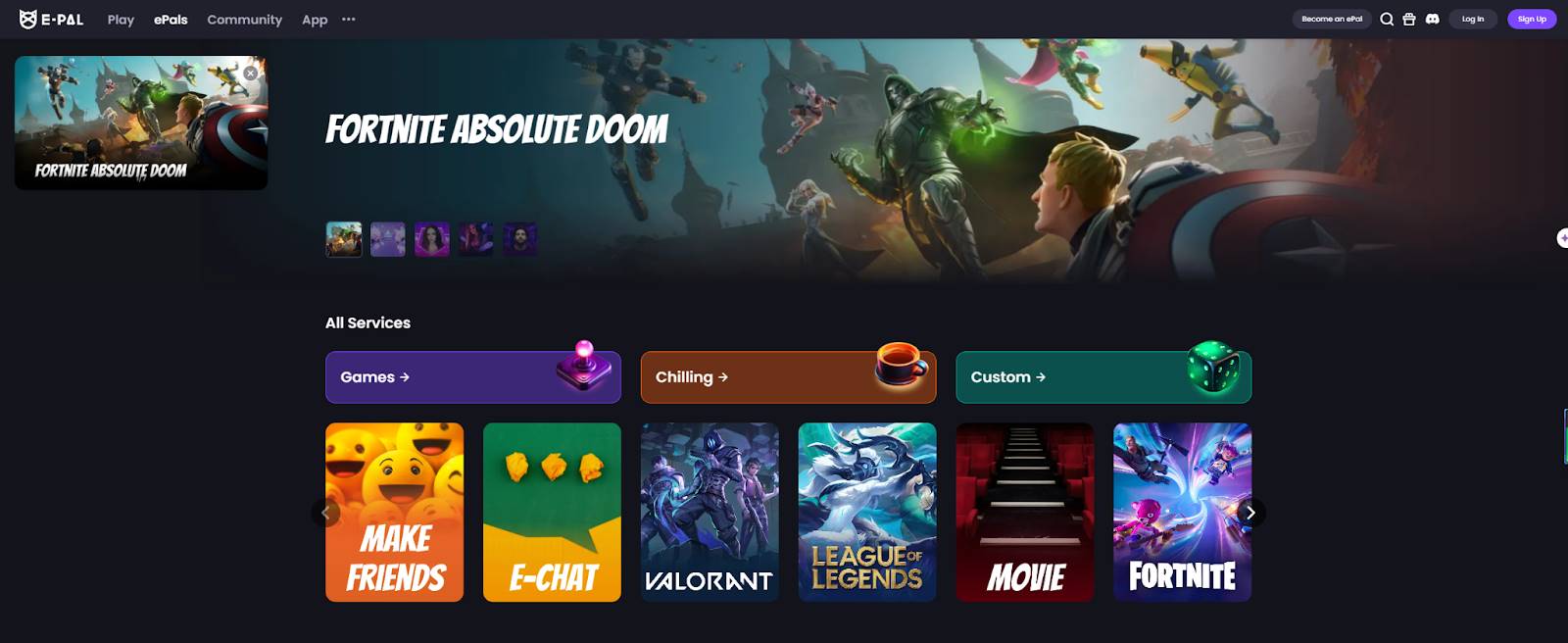
E-PAL is a global online play-together platform dedicated to providing gaming companionship services. Users can find companions on the platform who enhance their gaming experience or offer social support based on skills and game types. Beyond mainstream titles like *League of Legends*, *Apex Legends*, and *Valorant*, E-PAL also offers broader social features including chat, coaching, and community events.
The value of play-together services has already been proven in the Web2 era, evident in the rise of platforms such as E-PAL, PlayV, and Bixin.
Market research indicates that global play-together services are transitioning from niche to mainstream, projected to reach a multi-billion-dollar scale by 2025.
Demand is especially strong in esports, social gaming, and live-stream interactions.
Now, amid the wave of Web3 gaming and decentralized social networks, play-together services hold even greater potential.
-
Deeper Interactive Experiences: Web3 games emphasize decentralization and user ownership. Companions can enhance player experiences through in-game and social interactions. For example, in Web3 games, companions can help new players quickly understand decentralized mechanisms such as NFT trading and virtual asset management. In social games, they foster stronger player interactions and community ties—aligning perfectly with Web3’s open social principles.
-
Deep Integration with Token Economies: Web3 games often incorporate token-based economies that reward participation. Play-together services can integrate directly into these models—players earn tokens by offering companionship, while users pay with tokens to receive services. This creates new income streams and stimulates economic activity within the Web3 ecosystem.
-
Decentralized Identity and Trust Mechanisms: Web3 social and gaming spaces prioritize decentralized identity management. Blockchain-based verification enables companions to build credible reputations. Historical performance and user feedback can be transparently recorded on-chain, reducing trust issues common in traditional play-together markets and enabling safer transactions.
Through these mechanisms, play-together services transcend mere entertainment—they become powerful engines driving Web3 game adoption and unlocking new economic opportunities and enriched user experiences. Today, we turn our focus to Balance, a Web3 integrated gaming platform emerging from the E-PAL ecosystem.
About Balance
Balanced was created by the E-PAL team as a pivotal step toward building a Web3 gaming ecosystem—a blockchain-focused Web3 platform. Leveraging a pool of 2.4 million Web2 users, Balance aims to revolutionize the gaming industry through blockchain and AI technologies.
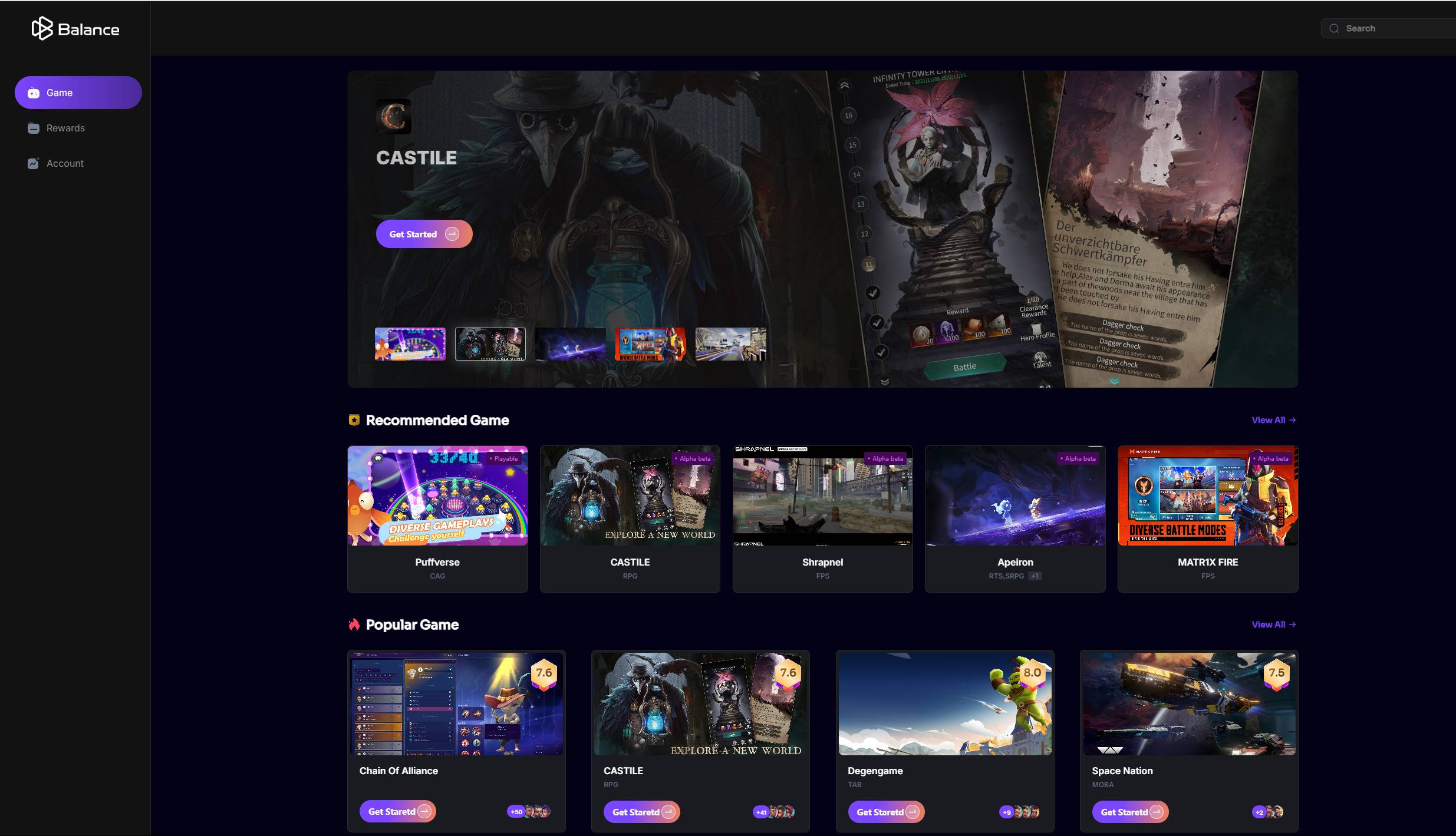
Balanced’s core mission is to build an open, inclusive, and fair gaming ecosystem. By integrating the advantages of artificial intelligence and blockchain technology, developers can more easily create and promote their games, while players enjoy increasingly diverse and personalized experiences. This synergy ultimately accelerates growth and innovation across the entire Web3 gaming sector.
Balanced’s technical framework enables cross-chain interoperability, allowing seamless connectivity between game developers and players across different blockchain networks, forming a unified Web3 gaming ecosystem. It provides developers with game distribution and promotion services, enabling cross-chain publishing. For players, it delivers one-stop gaming services including game access, purchases, asset trading, social interaction, airdrops, and friendship-building.
Game Access
Balanced will aggregate all leading Web3 games and simplify registration and login across multiple blockchain networks via Balance Passport—a unified identity for every user. This allows effortless access, rating, and voting on games, helping developers better understand user preferences and improve quality. We will also promote select high-quality games to accelerate user acquisition for developers.
Game Purchases
Games integrated into the Balanced platform will accept EKP as a payment option for in-game or marketplace transactions. Users can directly use EKP on the platform to purchase games or in-game items—not limited to Web3 games. Thanks to prior successful collaborations with Web2 game studios, players can also use EKP to buy virtual products in popular Web2 titles such as *League of Legends*, *Overwatch 2*, *PUBG*, and *Counter-Strike: Global Offensive*, including skins and other digital goods.
Asset Trading
Balanced will establish a decentralized marketplace to streamline NFT asset trading within games. Using cross-chain interoperability protocols, the platform enables free exchange of game assets across different blockchain networks without network limitations. All assets in the marketplace will be priced in EKP, enhancing centralized liquidity for all game assets and generating economic benefits for the Balanced ecosystem.
Virtual Socialization
With Balance Passport, each player receives a unique identity combining personal information, gaming data, assets, achievement badges, and social media profiles. Balanced leverages AI technology to create virtual characters within its ecosystem for social interaction, helping players build networks, deepen engagement, and elevate fun and replayability.
Team Background
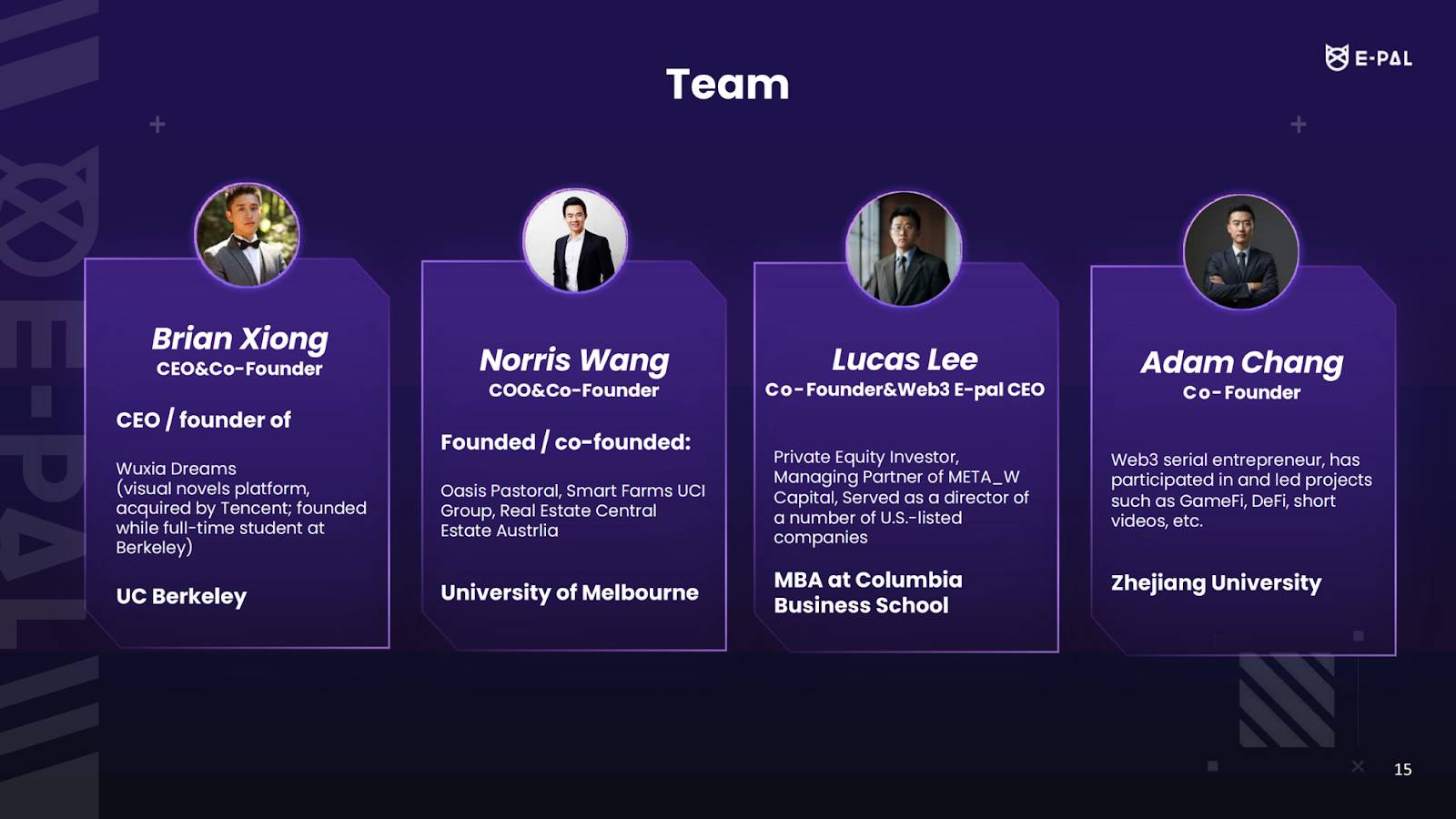
According to official information, all four co-founders of E-PAL possess deep experience in Web2 or Web3 entrepreneurship. The CEO previously founded the visual novel platform "Wuxia Dream," which was later acquired by Tencent, after which he continued pursuing entrepreneurial ventures. The COO is a co-founder of Oasis Pastoral. The other two co-founders bring extensive expertise in capital management and operations at U.S.-listed companies, as well as in Web3 domains such as DeFi and GameFi. This team has not only laid solid foundations in traditional internet sectors but is also making strides at the forefront of Web3 innovation.
Investment Background
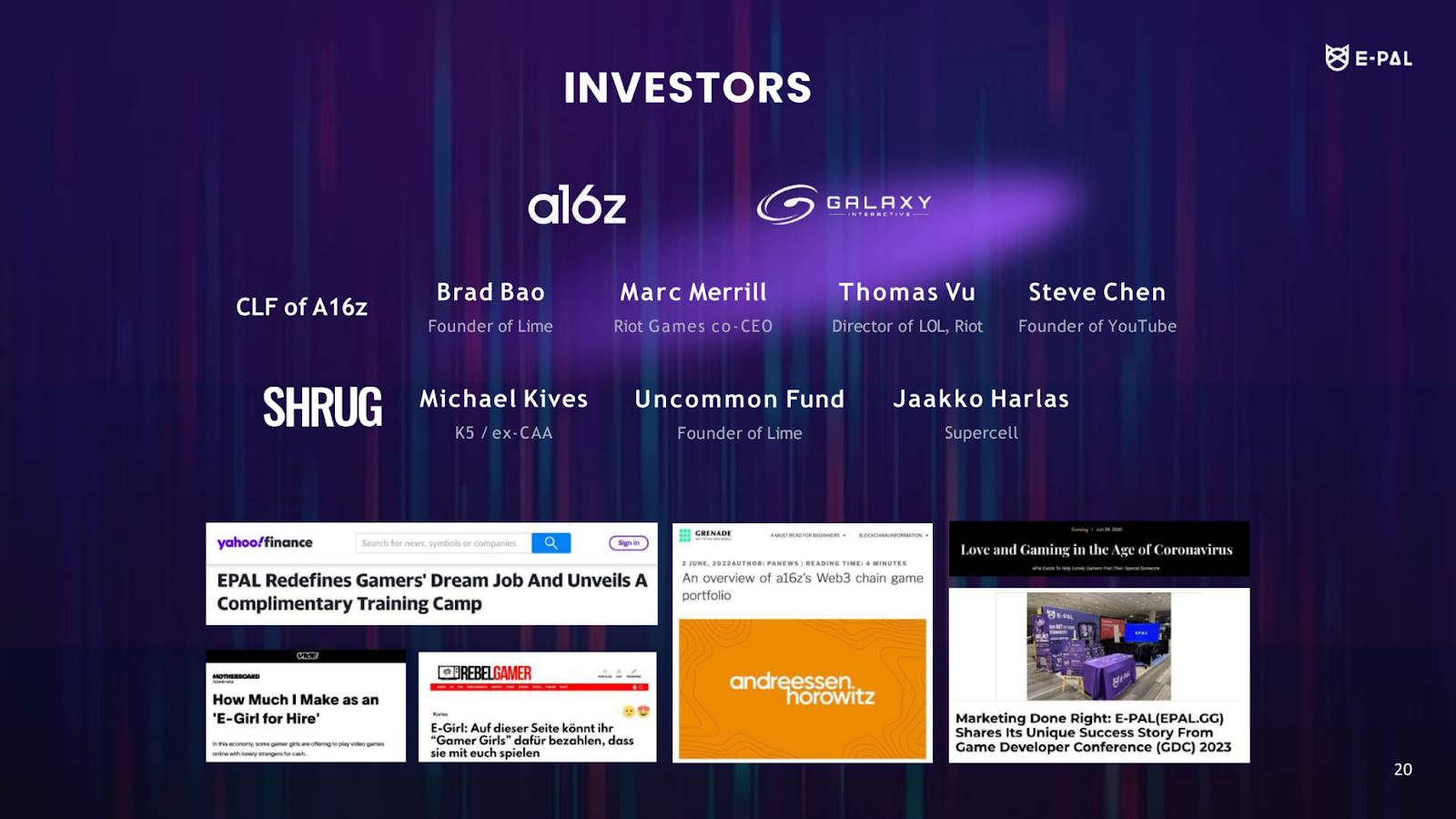
On September 5, E-PAL successfully closed two funding rounds led by Andreessen Horowitz (a16z) and Galaxy Interactive. The round attracted numerous prominent investors including Animoca Brands, K5, CLF Partners, MBK Capital, New Heights Fund, AMBER, MarbleX, Sky Mantra, Tuna, Aptos Labs, IOBC, Leland, Halcyon Capital, Uphonest, Taisu Ventures, Gate Labs, DWF Ventures, BING, WAGMI, as well as YouTube co-founder Steve Chen, Riot Games CEO Marc Merrill, and *League of Legends* director Thomas Vu. The total funding reached $30 million—an amount reflecting strong investor confidence in E-PAL’s future and providing substantial financial backing for its expansion into Web3.
Roadmap
-
March 2020: E-PAL launched its 1.0 website.
-
September 2020: Completed a $3 million seed round led by Andreessen Horowitz (a16z).
-
July 2021: Closed Series A funding led by Galaxy Interactive, with participation from a16z.
-
December 2022: Began exploring Web3 technologies.
-
March 2023: Established a Web3 team and began developing Balance zkEVM.
-
March 2024: Launched Balance zkEVM testnet and began development of the Balance platform.
-
May 2024: Released Balance Platform 1.0, compatible with all EVM networks, enabling users to manage game assets.
-
May 2024: Released Balance Platform 1.1, introducing bounty tasks—users earn daily reward points redeemable for EPT tokens.
-
May 2024: Started selling and minting Balance IDs.
-
June 2024: Conducted a funding round with key opinion leaders (KOLs).
-
June 2024: Launched sales of Balance nodes.
-
June 2024: Introduced Balance Passport, offering unified identity authentication.
-
July 2024: Released the Balance Wallet Chrome extension for easy access to the Web3 world.
-
July 2024: Launched the open marketplace on the Balance platform for one-stop game asset trading.
-
August 2024: Balance zkEVM mainnet went live, simplifying blockchain game development.
-
September 2024: Partnered with over 500 games.
-
October 2024: Integrated AI functions into the Balance platform, enabling users to create AI-powered game companions.
-
November 2024: Introduced AI components into Balance zkEVM, allowing developers to generate smart contract code directly from documentation.
-
December 2024: Expanded platform compatibility to include Solana, Avalanche, and Clayton networks.
Balanced zkEVM
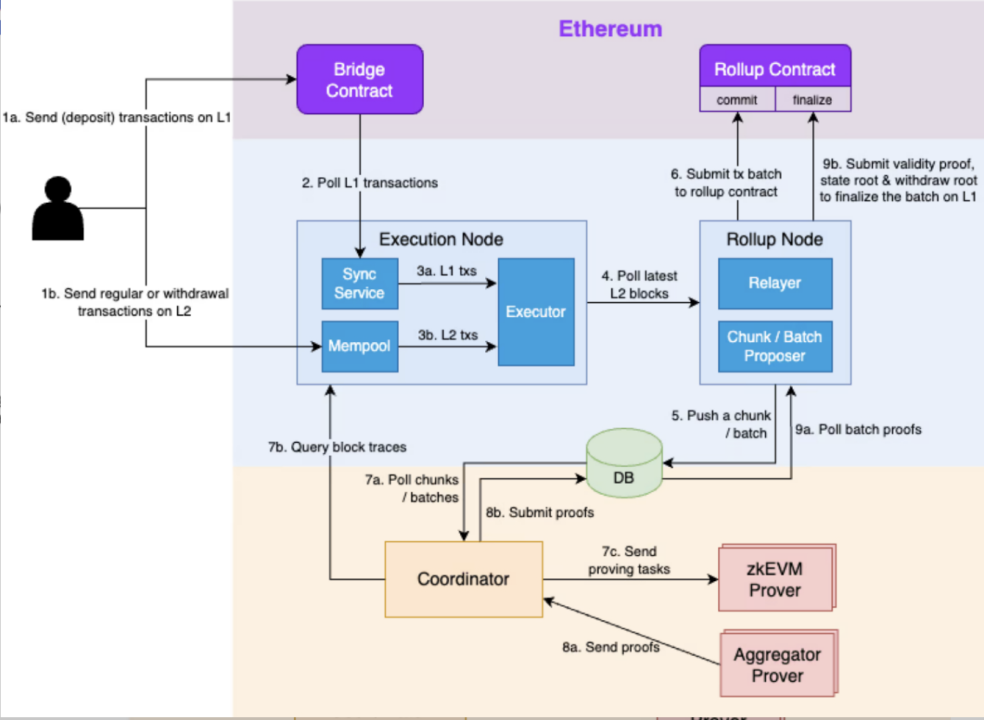
Balanced zkEVM is a game-focused Layer 2 zk-rollup chain compatible with the Ethereum Virtual Machine (EVM). It offers a scaling solution featuring instant transactions, massive scalability, and zero gas fees. As an EVM variant, Balanced zkEVM uses smart contracts to allow game developers to introduce customized digital ownership and Web3 mechanics into their games.
A key benefit for developers is that Balanced zkEVM supports the same programming language (Solidity) and development frameworks as Ethereum, making it easier to build gaming applications on a more secure and convenient Layer 2 solution.
Furthermore, we've integrated AI technology into the zkEVM public chain, training AI models on existing smart contract source codes from major EVM chains—including ERC20, ERC721, ERC1155, Marketplaces, Staking, and Proxy contracts. Our AI model has been trained on over 200,000 lines of smart contract-related code and can now automatically generate smart contract code for Tokens, NFTs, DEXs, Marketplaces, Staking, Airdrops, leveraged assets, and more—along with automated deployment and SDK interface generation. This means game developers need only write simple rule documents to complete smart contract coding and automatic deployment, without needing to understand complex logic or learn how to write contracts. This dramatically lowers the barrier for Web2 developers entering Web3 and provides strong momentum for traditional game companies to seamlessly transition into the Web3 space.
EPT Token
EPT is the sole governance token for both the Balanced platform and Balanced zkEVM. It rewards network activities within the ecosystem such as trading, providing liquidity, and building applications. EPT establishes an incentive mechanism connecting traders, creators, and marketplaces, ensuring all participants benefit from network growth.
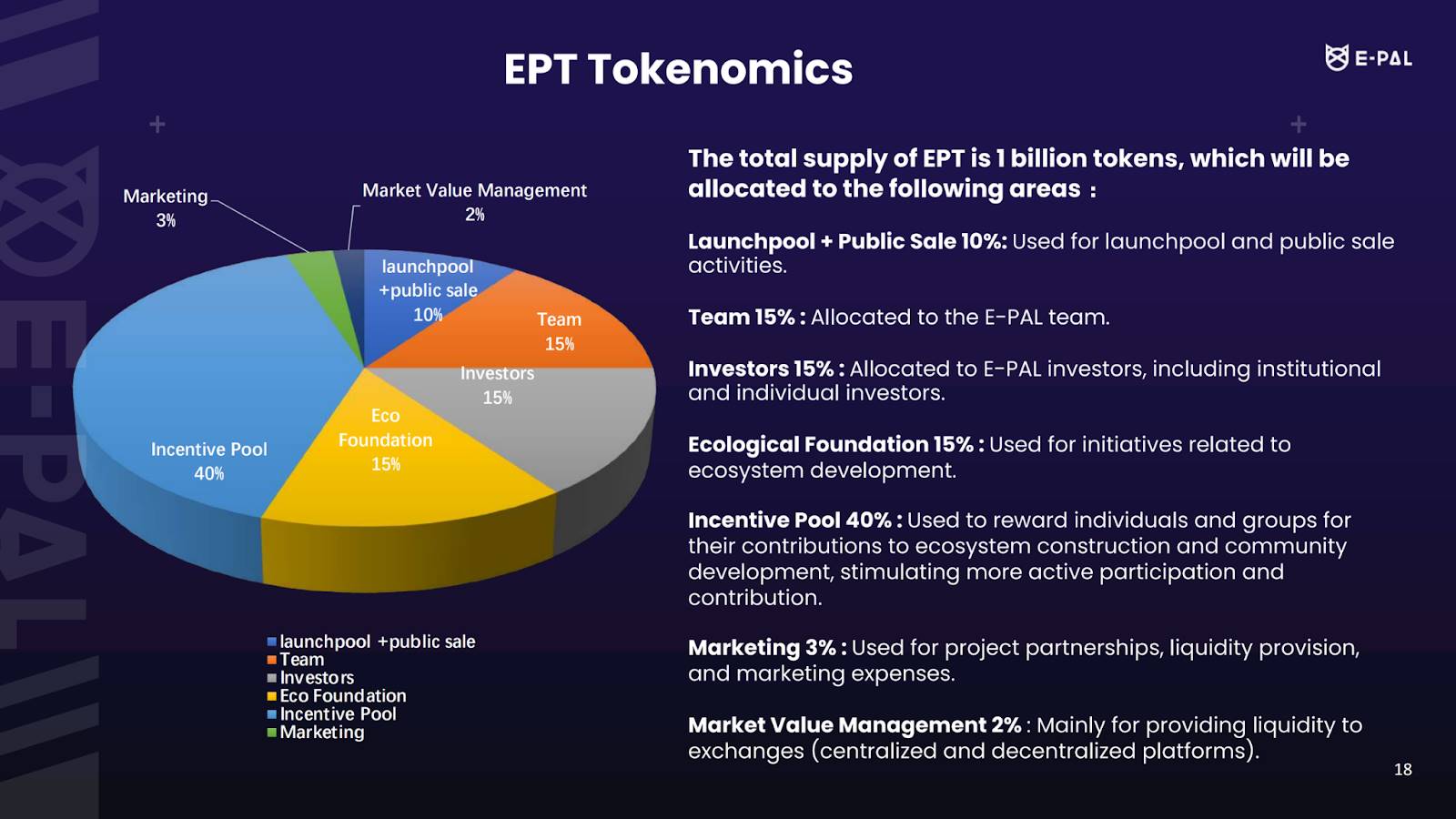
EPT Token Distribution
Total supply of EPT tokens is 1 billion, distributed as follows:
-
Launchpool & Public Sale: 10%
-
Team: 15%
-
Investors: 15%, including institutional and individual investors.
-
Ecology Foundation: 15%, allocated for ecosystem-building initiatives.
-
Rewards Pool: 40%, used to reward individuals and groups contributing to ecological and community development, encouraging active participation.
-
Marketing: 3%, for project partnerships, liquidity provision, and marketing expenses.
-
Market Making: 2%, primarily for providing liquidity on CEXs and DEXs.
Use Cases for EPT:
-
Application Setup Fees: Game developers using Balanced zkEVM must pay setup fees, payable directly in EPT. Alternatively, Balanced can automatically convert purchased currencies (ETH, USDT, etc.) into EPT on the open market. Users do not need to hold EPT to transact via Balanced zkEVM.
-
Staking: EPT holders can stake tokens to earn returns. A portion of fees paid by developers for app development is locked in a "reward staking pool" managed by the foundation. EPT tokens in the pool are distributed monthly to stakers at a fixed rate.
-
Proof-of-Stake and Governance: EPT holders can participate in decentralized governance by voting on proposals related to the Balanced ecosystem. Proposals may include allocation of token reserves, developer grants, fee adjustments for app building, changes to daily rewards, and token distribution. The Balanced Foundation will continuously expand proposal categories based on community growth. The goal is to enhance EPT utility and decentralization through user voting. The Foundation can initiate beneficial projects and facilitate proposal processes, with all token holders voting. Individuals wishing to submit proposals must first own a certain amount of EPT, subject to review before entering the voting process. The exact required amount will be determined later.
-
Network Security Maintenance: EPT is used to cover operational and maintenance costs for network nodes. Additionally, Balanced issues EPT as rewards to incentivize node participants to maintain network security and confirm blocks.
-
Payment and Transaction Medium: EPT serves as the primary medium for payments and gas fees on the Balanced platform, playing a vital role in value transfer. Users can use EPT to purchase games, services, and rewards on the platform.
-
Priority Access: For games in Alpha or Beta testing phases, early access requires holding a certain amount of EPT as a credential.
-
Social and Incentive Mechanisms: EPT also fuels social engagement and incentives, motivating users to contribute to community building, content creation, and social interaction—driving project growth and user involvement.
How to Participate?
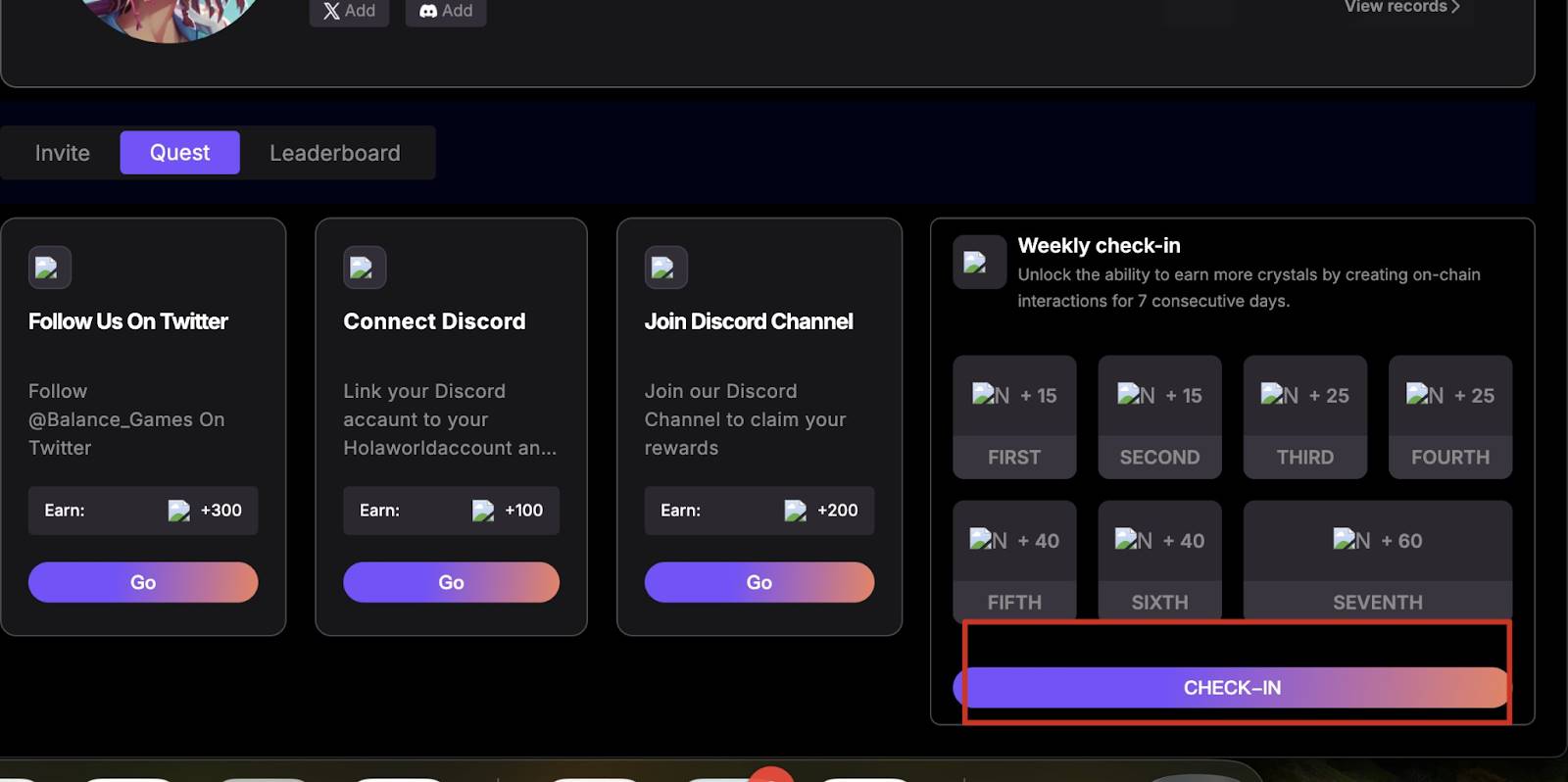
Balanced is currently going all-in with an exciting whitelist campaign:
Event Period: September 2 – September 16
-
Visit the Website: Head straight to the Balanced official site, connect your wallet, and enter the gaming arena.
-
Complete Tasks: Finish various missions on the platform to earn points and join the Pioneer Points Challenge.
-
Invite Friends: Bring your friends along—invite them to participate and climb the leaderboard to secure whitelist eligibility.
Note:
You can qualify for the NFT whitelist (WL) through three methods:
-
Top 100 on Leaderboard: The top 100 users with the highest task completion scores will directly receive WL status.
-
Top 100 Referrers: The top 100 users with the most successful referrals will also earn WL spots.
-
Points Achievers: Among users who reach 1,000+ points, 200 lucky winners will be randomly selected for WL access.
(Note: You may participate in all three activities, but each winner can claim only one reward.)
The Pioneer Badge NFT acts as a VIP pass within the Balanced ecosystem. Owning it gives you a strategic advantage—early access to rare assets and a voice in platform decisions. Right now, demand for this NFT is surging like a beachhead assault, with everyone rushing to get ahead. Minting is expected in early October, limited to just 2,000 units. The profit potential is unknown, but one thing is clear—miss this opportunity by even a second, and you’ll watch others cash in.
Conclusion
In summary, Balanced is far more than a simple Web3 user experience upgrade—it’s an impending ecosystem revolution.
Born in Los Angeles, originating from Epal—the largest play-together platform in North America—the team enjoys backing from elite VCs like a16z and Galaxy, and endorsements from figures such as YouTube co-founder Steve Chen and Riot Games CEO Marc Merrill. Once synonymous with play-together culture, Epal boasted 4.2 million active users and 450,000 companions, thriving in the Web2 era.
But the story doesn’t end there. To embrace the Web3 wave, Epal has evolved into Balanced. This isn’t just a rebrand—it’s a bold bet on the future. No longer satisfied with being a play-together platform, Balanced aims to become foundational infrastructure for Web3 user experiences. Smart contracts, digital currency, decentralized social interactions—Balanced seeks to make interactions freer, more engaging, and even profitable.
Gone are the days of one-dimensional gameplay. With NFTs, virtual assets, and on-chain incentives, every user becomes a builder and a force behind this ecological transformation. Play-together? It’s long surpassed one-way service—it’s now a multidimensional social experience, granting users greater control and shared revenue opportunities.
What lies ahead? The road is long, the winds shifting—no one knows the final outcome. But one thing is certain: the grand show of Balanced has only just begun.
Join TechFlow official community to stay tuned
Telegram:https://t.me/TechFlowDaily
X (Twitter):https://x.com/TechFlowPost
X (Twitter) EN:https://x.com/BlockFlow_News












