AI and Bitcoin: Who Is Draining the Power Grid Faster?
TechFlow Selected TechFlow Selected
AI and Bitcoin: Who Is Draining the Power Grid Faster?
Both industries have driven unprecedented electricity demand.
 Navigating Web3 tides with focused insights
Source: bitcoinist
Compiled by: Blockchain Knight
The energy competition between artificial intelligence (AI) and BTC mining is intensifying. As technology companies advance AI, they are simultaneously competing with BTC miners for energy resources. This rivalry is reshaping energy consumption in the United States, as both industries drive unprecedented electricity demand.
AI data centers are leading the race in energy consumption. It's projected that these power-hungry projects will consume between 85 and 134 terawatt-hours (TWh) annually by 2027.
This is roughly equivalent to the annual energy usage of Norway or Sweden, illustrating the massive amount of electricity required to run complex AI models like ChatGPT.
Each of these models runs on large server clusters; if ChatGPT were used for every Google search, it's estimated that more than 500,000 servers would be needed, consuming approximately 29.2 TWh per year.
BTC mining is estimated to consume 120 TWh of energy annually. Last year, BTC mining consumed 0.4% of global electricity—an enormous figure.
Analysts predict that by 2027, AI’s energy demands will surpass those of BTC mining, with 20% of new power capacity redirected toward AI.
As both AI and BTC mining grow, they are increasingly competing for the same energy resources.
Tech giants such as Amazon and Microsoft are actively securing energy assets—resources that until recently were primarily controlled by crypto miners.
The competition has become fierce. For some mining operators, leasing or selling power infrastructure offers a cash opportunity, while for others, the risk of losing power supply has become a reality.
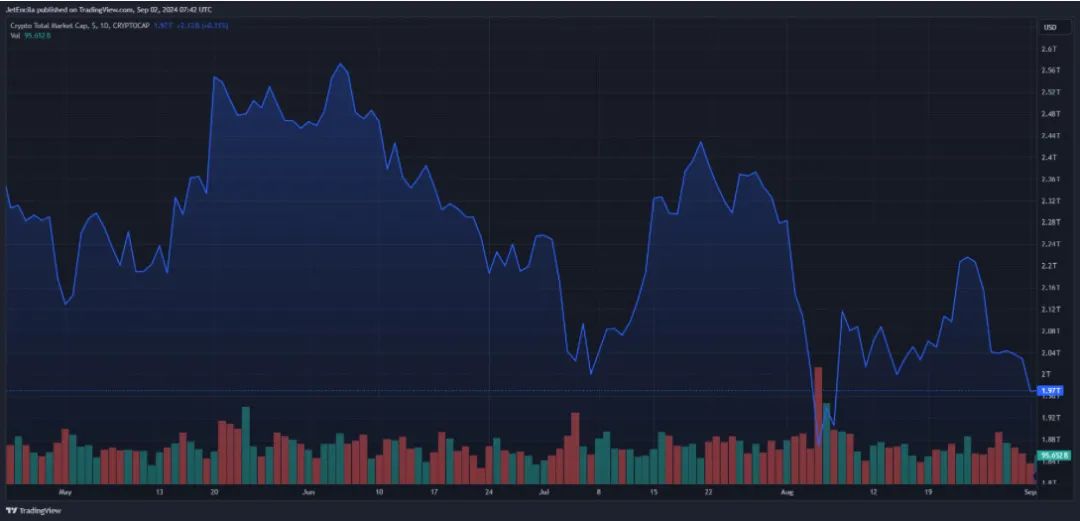
The scramble for energy has grown so intense that data centers are expected to consume 9% of total U.S. electricity by the end of this decade—more than double current levels.
Notably, crypto asset mining relies more heavily on renewable energy. Approximately 70% of its energy consumption comes from green sources, whereas AI data centers predominantly rely on fossil fuels.
Thus, there is a divergence in sustainability perspectives between the two technologies. As AI demand continues to rise, tech companies will need to weigh their carbon footprints against alternative energy sources, including nuclear power.
The future of energy consumption in the tech industry is extremely difficult to predict. As AI continuously pushes boundaries, its energy needs will correspondingly increase. Unless energy efficiency begins to significantly outpace growth, the environmental consequences could be dire.
According to the International Energy Agency (IEA), combined energy consumption from AI and BTC mining is set to surge to 1,050 TWh by 2026—equivalent to the electricity usage of an entire country.
But as with most high-stakes energy races, one question remains: Can AI and BTC mining coexist without consuming all of Earth’s resources?
The answer depends on these industries’ ability to innovate and adapt to the wave of sustainable energy solutions. As they compete for power, the future of both technology and the environment hangs in the balance.
Join TechFlow official community to stay tuned
Telegram:https://t.me/TechFlowDaily
X (Twitter):https://x.com/TechFlowPost
X (Twitter) EN:https://x.com/BlockFlow_News
 @bitcoinist