








How to explore the Sui DeFi ecosystem?
TechFlow Selected TechFlow Selected
How to explore the Sui DeFi ecosystem?
Learn about the Sui DeFi ecosystem and the unique features Sui offers to DeFi applications and users.
 Navigating Web3 tides with focused insights
Whether you're looking to swap tokens, explore the NFT world, or simply lend assets to earn rewards, Sui's DeFi ecosystem has something for you. Thanks to Sui's native features, these apps can tackle common DeFi challenges—such as liquidity issues via DeepBook.
🌟 DeepBook: https://www.deepbook.tech
A healthy DeFi ecosystem consists of several key application types, including lending protocols, decentralized exchanges (DEXs), and NFT markets. Leveraging Sui’s powerful native capabilities, the security of the Move programming language, and the ingenuity of the Sui developer community, Sui DeFi delivers a unique Web3 experience for users.
After getting started with Sui and understanding the role of staking in DeFi, it’s time to dive into the Sui DeFi ecosystem.
DeFi on Sui
In other DeFi ecosystems, users often encounter friction points—especially when new to Web3. For example, to allow an app to access your assets, you must submit separate approval transactions, which are both cumbersome and require gas fees. On Sui, thanks to its object-oriented architecture, no approval transactions are needed, making DeFi activities smoother and more user-friendly.
Gas fees and transaction speed are critical factors in DeFi. On Sui, gas fees are not only low but also stable, ensuring predictability even during periods of high demand, thanks to Sui’s gas pricing mechanism that locks rates at each epoch. Additionally, Sui’s consensus protocol Mysticeti finalizes transactions in under one second, giving Sui DeFi among the lowest latencies in Web3.
How to Participate in DeFi
New DeFi users may find the initial steps of interacting with applications slightly unfamiliar. Fortunately, the process across most DeFi apps is relatively similar. The first step is connecting your Sui wallet. Usually, there will be a “Connect Wallet” button located at the center or top right of the webpage. When connecting, multiple wallet options appear, and you might even see the option to log in using social accounts like Google via zkLogin. After selecting your wallet app and a specific account, you’re ready to start interacting with the app.
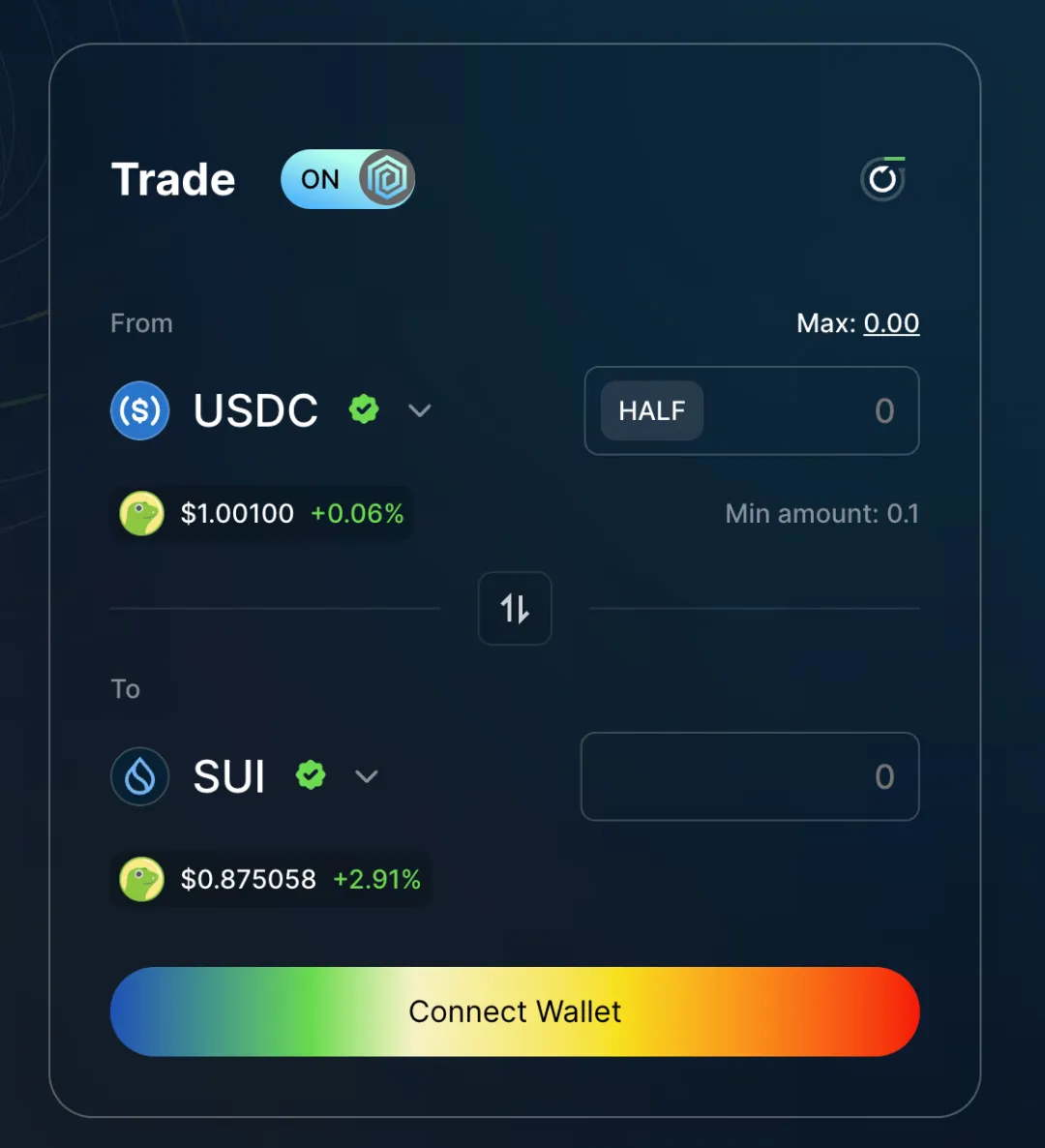
Turbos allows users to connect their wallets directly from the trading interface.
If you have multiple accounts, switching methods vary by app and wallet. Some apps offer seamless switching, while others require disconnecting, switching accounts, then reconnecting. You may also need to disconnect from the wallet itself.
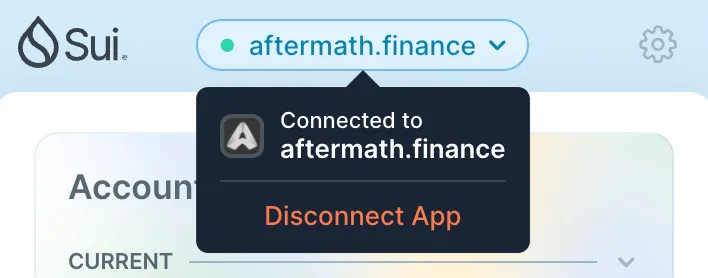
In the Sui Wallet, you can see which app it is connected to at the top center of the window.
Next, it’s important to understand some key considerations. For instance, when swapping tokens, be aware of potential slippage and gas fees. Slippage refers to the difference between expected and actual execution prices, while gas fees are the cost of processing the transaction. If you’re considering borrowing assets, you’ll typically need to supply collateral first. Understanding these basic concepts helps you navigate DeFi with greater confidence. Still, no matter which path you choose, doing your own research and consulting trusted advisors is always wise.
Sui DeFi Ecosystem
Lending Protocols
Lending protocols allow users to lend digital assets in exchange for the ability to borrow others, offering a low-friction, accessible alternative to traditional finance.
These protocols are powered by smart contracts, providing fair and transparent financial tools accessible globally.
Here are popular lending protocols on Sui:
-
Bucket
-
Navi
-
Scallop
-
SuiLend
Decentralized Exchanges (DEXs)
DEXs enable users to trade assets directly with each other in a secure and feature-rich manner. Through smart contracts, DEXs facilitate complex peer-to-peer trades autonomously.
Here are popular DEXs and DEX aggregators on Sui:
-
7k
-
Aftermath
-
Cetus
-
FlowX
-
Hop
-
Turbos
Derivatives Exchanges
Derivatives exchanges provide ways to trade derivatives such as options, futures, and perpetual contracts. These platforms enable traders to hedge risk and use leverage for sophisticated trading strategies.
Here are popular derivatives exchanges on Sui:
-
BlueFin
-
Kyria
-
Typus
-
Sudo
Yield Aggregators
Yield aggregators help users optimize potential returns by automatically reallocating assets across various yield-generating protocols. These tools offer a simple and effective way to maximize opportunities available within Sui’s DeFi ecosystem.
Here are popular yield aggregators on Sui:
-
Alpha Fi
-
Kai
-
Strater
NFT Markets
NFT markets are platforms where users can buy, sell, and trade NFTs. These markets offer a wide range of digital assets—from art and collectibles to NFTs representing real-world assets and infrastructure—enabling builders, creators, and collectors to trade powerful, unique NFTs on Sui.
Here are popular NFT markets on Sui:
-
Hyperspace
-
TradePort
Liquid Staking
Liquid staking protocols allow users to receive an asset that grows proportionally with SUI staking rewards while maintaining liquidity and transferability. These platforms and assets form the foundation of an efficient DeFi ecosystem.
Here are popular liquid staking protocols on Sui and their corresponding liquid staking tokens:
-
Aftermath (afSUI)
-
Haedal (haSUI)
-
Volo (vSUI)
Exploring the DeFi World
Sui’s DeFi ecosystem stands out by delivering a robust and user-friendly experience. Low and stable gas fees, ultra-fast transaction speeds, and the elimination of traditional friction make Sui DeFi especially appealing to newcomers.
Now that you know how to get involved in DeFi on Sui, it’s time to explore and discover the part that excites you most!
Join TechFlow official community to stay tuned
Telegram:https://t.me/TechFlowDaily
X (Twitter):https://x.com/TechFlowPost
X (Twitter) EN:https://x.com/BlockFlow_News
 Sui Network






