








OSL CFO Hu Zhenbang: Securities firms and family offices rushing in, licensed exchanges迎来 "historic moment"
TechFlow Selected TechFlow Selected
OSL CFO Hu Zhenbang: Securities firms and family offices rushing in, licensed exchanges迎来 "historic moment"
Licensed exchanges represented by OSL have become the "lifeline" for various businesses in Hong Kong's virtual asset market.
 Navigating Web3 tides with focused insights
On June 1, the transitional period for Hong Kong's virtual asset trading platform licensing regime officially ended. Only two compliant, licensed digital asset exchanges now operate in Hong Kong—one being OSL—marking the beginning of a new era for Hong Kong’s virtual asset market.
In recent months, local traditional securities firms have successively entered the virtual asset trading space. Meanwhile, an increasing number of investors, financial institutions, listed companies, and family offices are actively considering allocating virtual assets through Hong Kong’s regulated channels.
Behind this trend, whether it’s brokers already or soon-to-be offering virtual asset trading services, or financial institutions, listed companies, and family offices rushing into the market, achieving the "last mile" of service delivery fundamentally depends on licensed exchanges to provide transaction execution, custody, and security safeguards.
For both Hong Kong and the global virtual asset market, the "historic moment" for licensed exchanges has only just begun.
Broker + Exchange: Enabling Mass Adoption of Virtual Assets in Traditional Finance
As one of the few brokers currently open to retail investors in Hong Kong for virtual asset trading, local retail brokers primarily rely on a two-tier “broker + exchange” operational model. This involves brokers first opening an omnibus account with a licensed exchange, then executing virtual asset trades on behalf of individual clients based on their instructions.
Hu Zhenbang, CFO of OSL Group, believes that under Hong Kong’s current regulatory framework, this “broker + exchange” model not only leads the world in compliant virtual asset trading but also opens a viable path toward the “mass adoption” of virtual assets within traditional finance:
First, brokers have long-standing expertise in traditional finance, with extensive distribution networks and mature customer service systems. These allow them to directly reach tens of millions of existing traditional investors, effectively promoting virtual assets as a new investment class and helping interested clients gain comprehensive and in-depth understanding of virtual asset trading.
In this process, brokers can closely collaborate with other market participants to deliver end-to-end investor education, significantly lowering barriers for new users while greatly reducing their perceived risks and concerns about virtual asset investments. Different brokers can also leverage professional investment advisory teams to offer personalized investment advice and strategies, meeting diverse investor needs and further stimulating participation in virtual asset trading.
Second, licensed exchanges like OSL handle critical back-end functions such as virtual asset custody, trade matching, and clearing and settlement. With regulatory-compliant security measures and professional technical teams, they ensure the safety of investors’ assets and build a robust security defense.
Take OSL as an example—much of its accumulated operating costs dedicated to meeting SFC compliance requirements are specifically allocated to investor protection:
● Conducting rigorous reviews of all transfer transactions through complex procedures to prevent criminals from using investors’ legitimate assets for illicit activities;
● Establishing strict token listing review rules, including due diligence on project teams, liquidity, technical security, and regulatory status, completely eliminating fraudulent projects;
● Implementing stringent controls over private key management, cold wallet maintenance, and backup protocols to prevent hackers from stealing investor assets;
● Additionally, OSL purchases third-party insurance for custodied client assets, providing multiple layers of protection.
This collaborative model combining “expertise + security” fully leverages brokers’ strengths in customer service and market outreach, while relying on licensed platforms’ expertise in compliance, technology, and risk control. Together, they create a secure and complementary ecosystem for virtual asset trading.
Licensed Exchanges Enter a “Historic Moment”
It’s not just brokers and individual investors. Against the backdrop of U.S. political shifts—including former President Trump’s dramatic policy reversals—and the successive approvals of spot Bitcoin and Ethereum ETFs in the U.S., listed companies and family offices have also accelerated their entry into the virtual asset space.
Even traditional financial institutions such as banks and fund managers are now studying and establishing related operations, partnering with licensed exchanges to offer clients more diversified investment options.
Hu Zhenbang revealed at the Firenow event that since June 1, business at Hong Kong’s licensed exchanges has seen significant growth—particularly from traditional financial players such as listed companies and fund managers who are now allocating virtual assets via licensed exchanges to meet compliance and audit requirements.
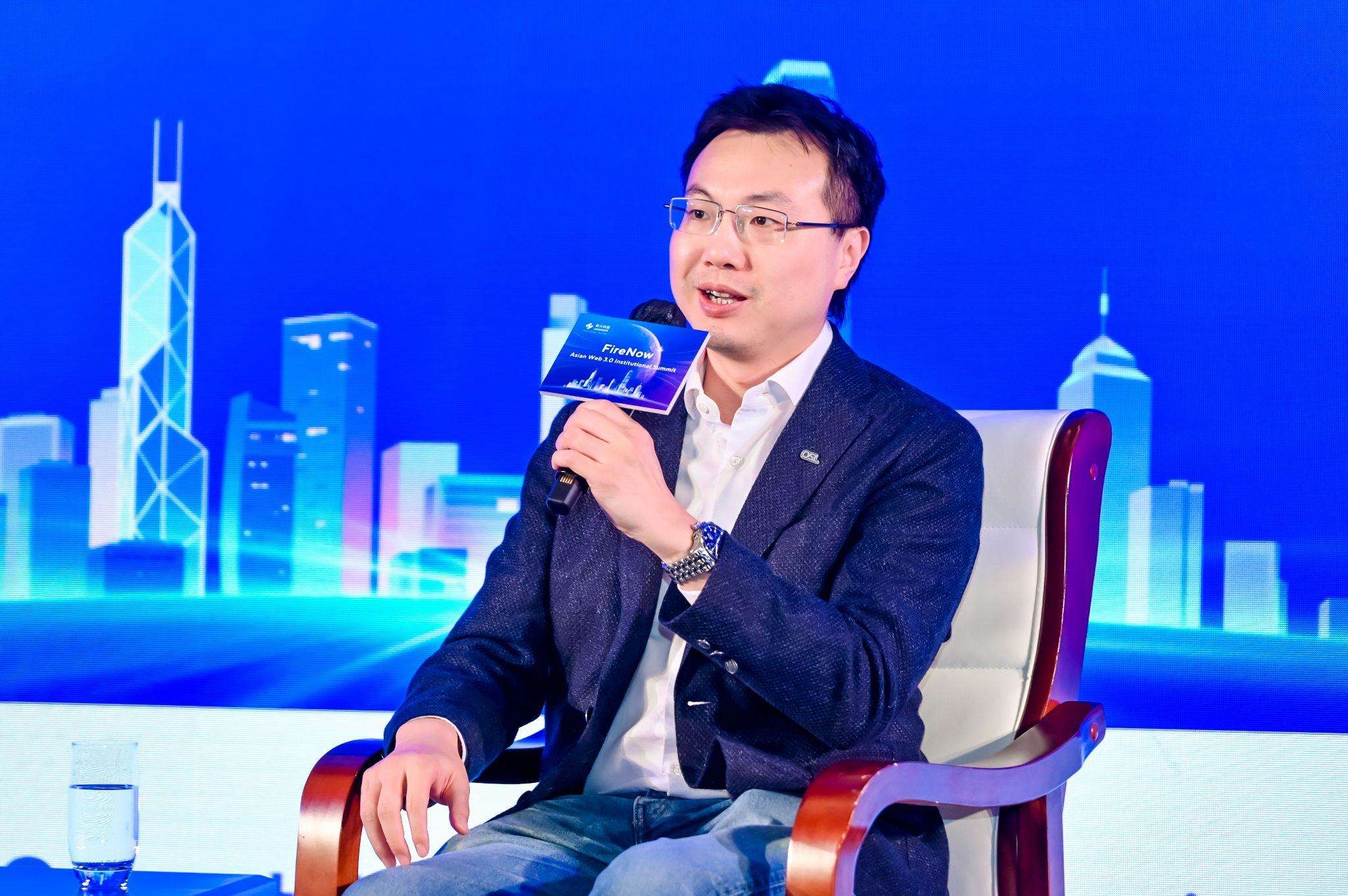
In other words, as Hong Kong’s virtual asset market heats up, the role of licensed exchanges has become increasingly prominent. They stand at the forefront of this new era, holding the “lifeline” of various business activities in Hong Kong’s virtual asset market:
Whether incorporating the six virtual asset ETFs launched on April 30 into investment portfolios, or directly trading and custoding Bitcoin, Ethereum, and other virtual assets, none of this is possible without the support and operations provided by licensed exchanges like OSL.
These exchanges, backed by strict compliance standards and advanced technological infrastructure, provide institutions and investors with a secure, transparent, and efficient trading environment capable of meeting growing market demand.
Conclusion
Looking ahead, as Hong Kong’s virtual asset ETF offerings expand, more traditional brokers roll out virtual asset trading services, and financial institutions and family offices accelerate their allocation to Bitcoin and other assets, licensed exchanges will remain at the forefront—leading Hong Kong’s virtual asset market into a more mature and prosperous phase and contributing uniquely to the development of the global virtual asset industry.
The future is here. For licensed exchanges, the “historic moment” has only just begun.
Join TechFlow official community to stay tuned
Telegram:https://t.me/TechFlowDaily
X (Twitter):https://x.com/TechFlowPost
X (Twitter) EN:https://x.com/BlockFlow_News
 @osldotcom






