Exclusive Interview with OYL Founder: What Makes the Bitcoin Wallet Behind the Collaboration with Hayes on the Inscription Series Stand Out?
TechFlow Selected TechFlow Selected
Exclusive Interview with OYL Founder: What Makes the Bitcoin Wallet Behind the Collaboration with Hayes on the Inscription Series Stand Out?
Listen to Alec Taggart tell the story behind the creation of the OYL wallet and the inscription series Airhead.
 Navigating Web3 tides with focused insights
Text: Weilin, PANews
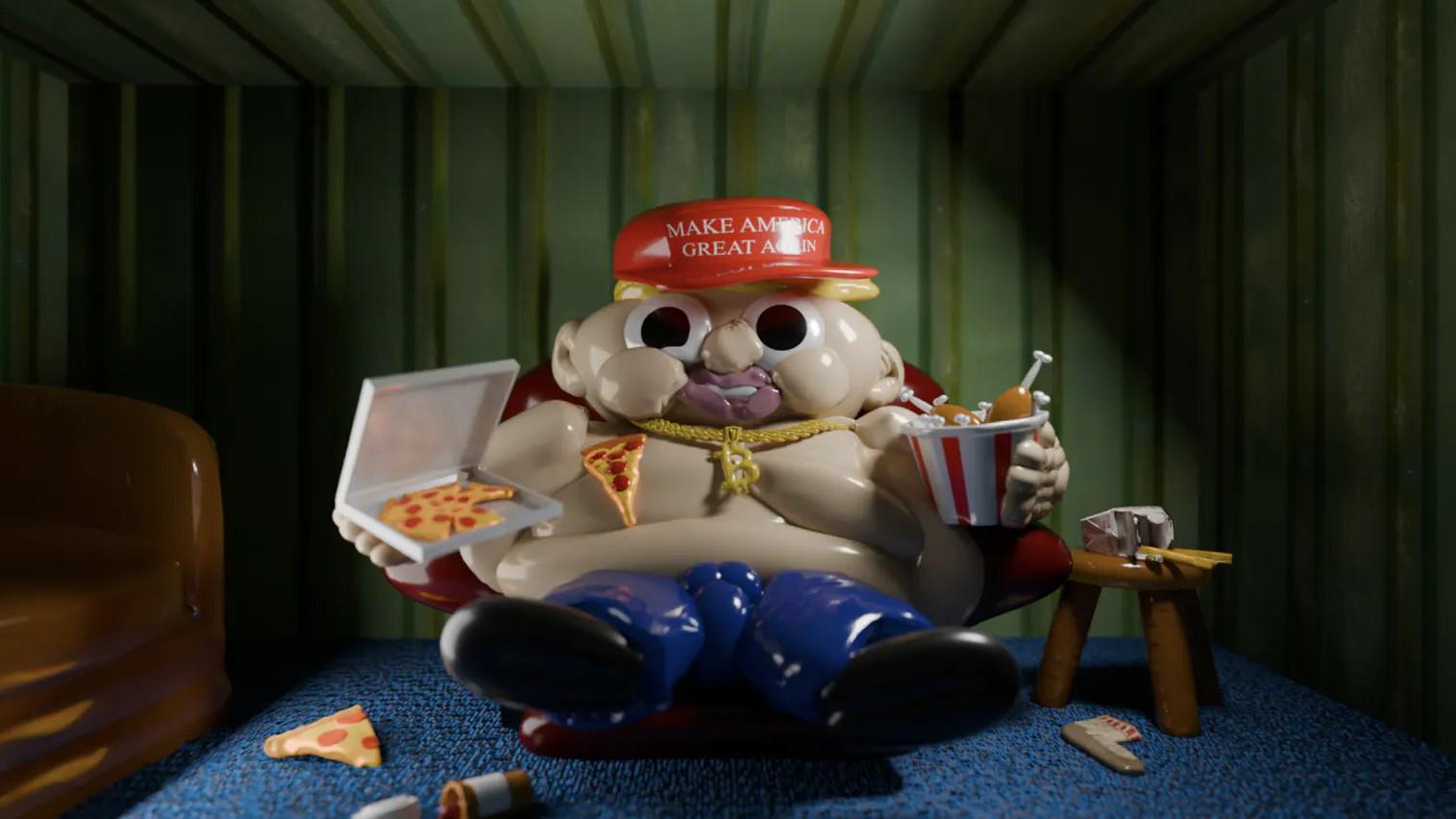
At the beginning of August, Arthur Hayes, co-founder of BitMEX, announced the launch of his first NFT collection on Ordinals called Airhead. According to the announcement, the series was created in collaboration with OYL Wallet, which is an investment project under Hayes’ family office, Maelstrom.
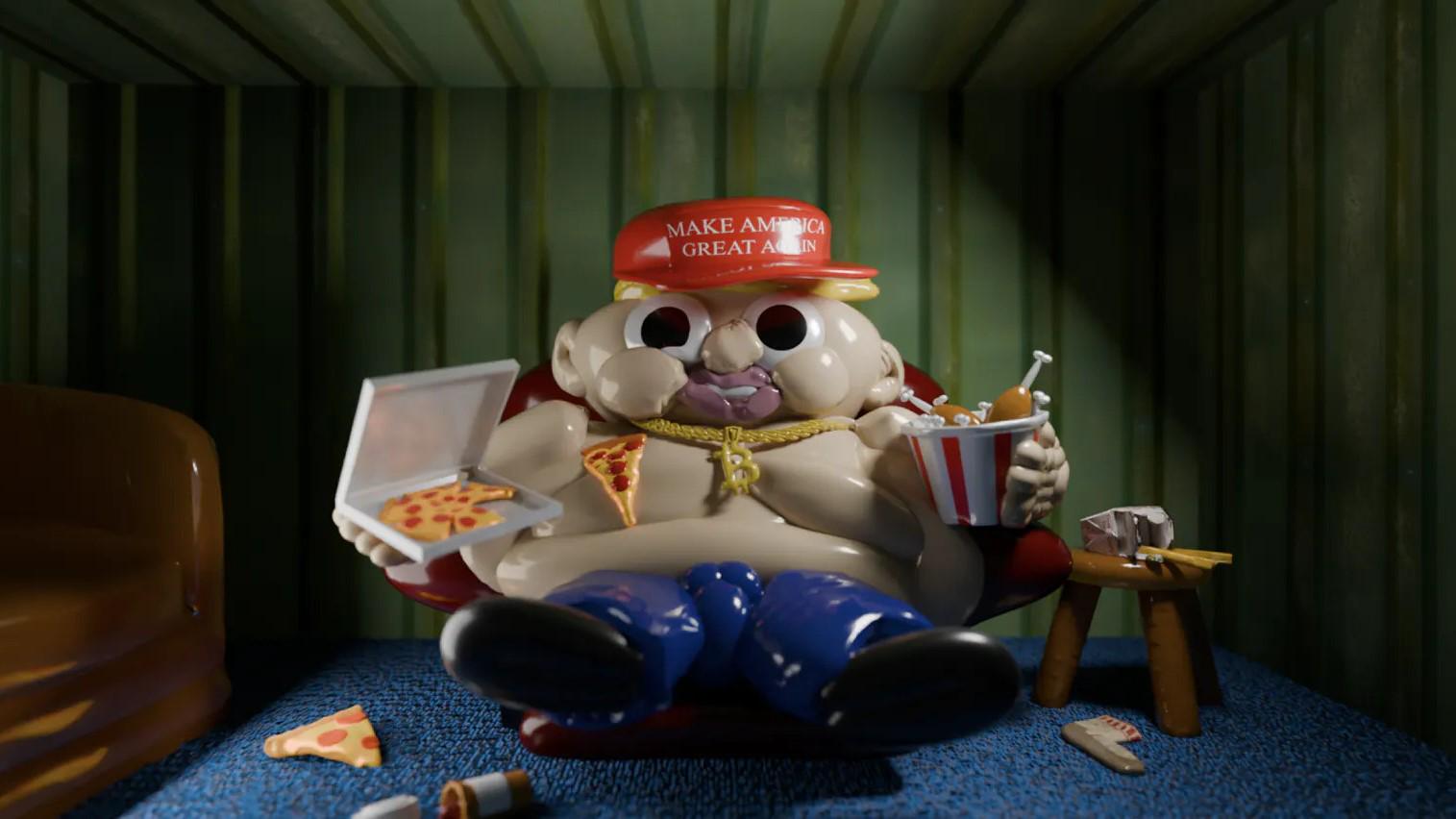
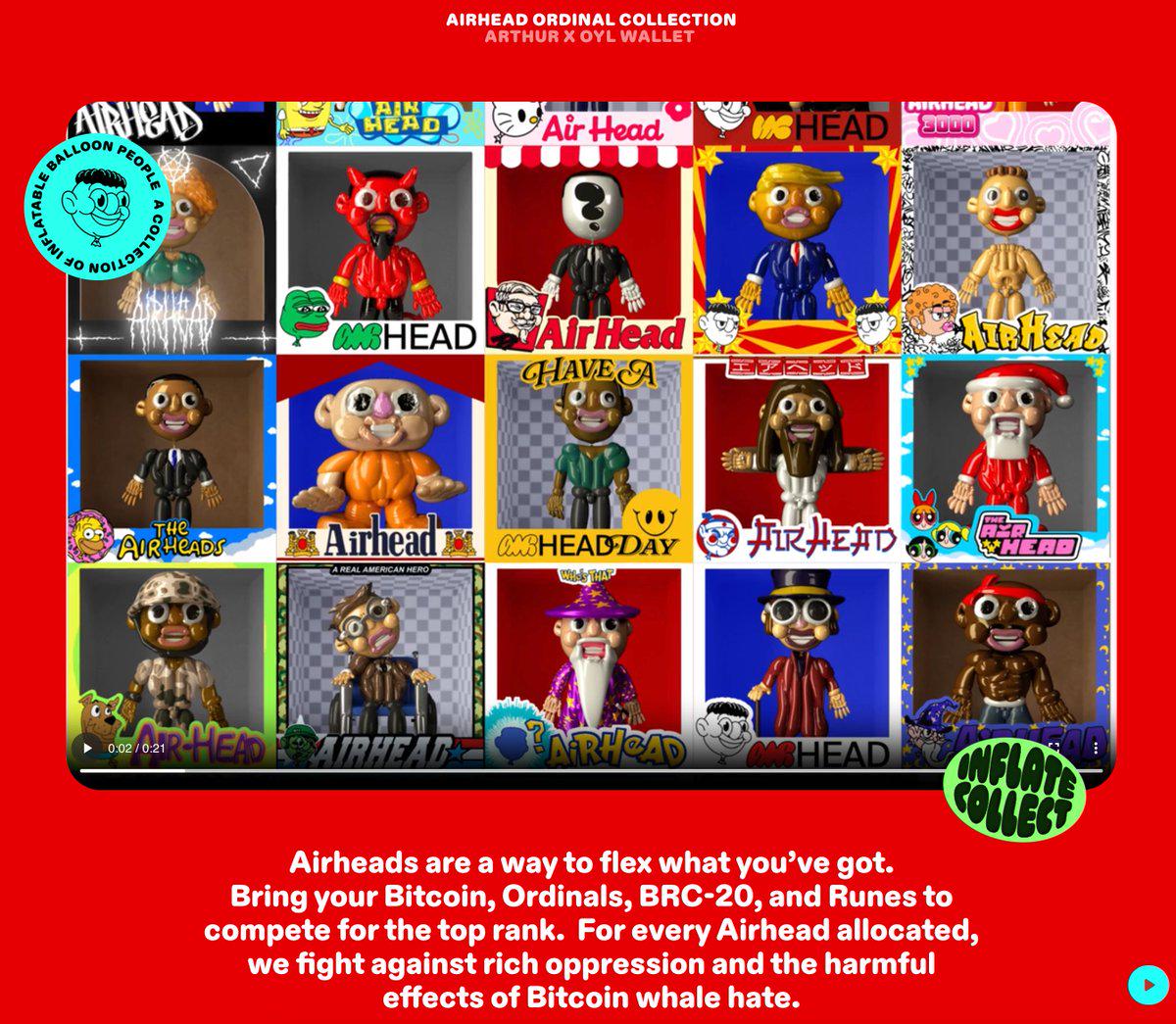
In a blog post, Hayes wrote: "Each Airhead is an inflatable balloon-like character generated using recursive art to visually represent the size and value of a user's digital portfolio at the time of minting. There are 10,000 Airheads available, ranked sequentially and differentiated by tier to reflect asset weightings on a leaderboard—an engaging and competitive way to showcase wealth."
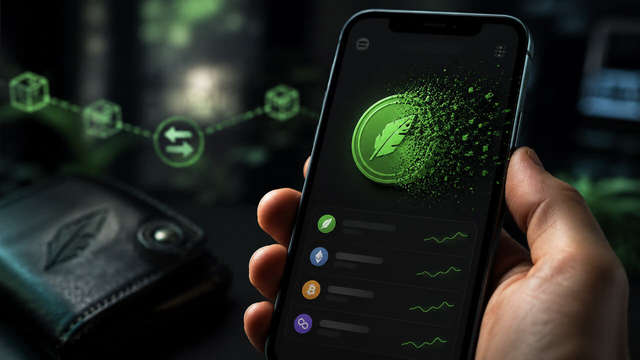
OYL raised $3 million in a Pre-Seed round earlier this year, led by venture firm Arca, with participation from Arthur Hayes, Web3.com Ventures, and Domo, creator of BRC-20. OYL’s core products include the OYL Wallet and Protorunes, a meta-protocol designed to add programmability to Runes. In addition to the collaborative inscription project, Alec Taggart, CEO and co-founder of OYL, introduced two key features of the OYL Wallet: an aggregator and transaction behavior visualization.
Recently, PANews conducted an exclusive interview with Alec Taggart, CEO and co-founder of OYL, discussing the story behind the creation of OYL Wallet and Airhead. Below is the edited transcript.
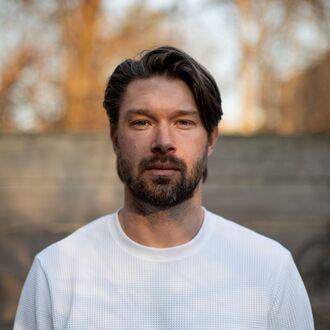
PANews: As a founder, what inspired you to enter the crypto space? What projects have you led before, and how did those experiences influence the founding of OYL?
Alec Taggart: My career began providing management consulting for financial services companies—banks, asset managers, and payment institutions. Around late 2016, I joined my company’s blockchain innovation division, where we advised large enterprises and banks on how to use and think about this technology, while also helping early-stage startups develop strategies. It became clear that whether in traditional finance or cryptocurrency, many entrepreneurs building fintech applications truly wanted to build on blockchain’s permissionless infrastructure. However, they were constrained by banking infrastructure, regulatory environments, and compliance frameworks.
Later, I left and joined BitDao, the DAO established by Bybit Exchange, where I worked on numerous partnerships, incubation projects, and investments across DeFi and Web3, primarily within the Ethereum ecosystem. BitDao later evolved into the Mantle L2 ecosystem fund. Around early 2023, when Ordinals really took off, I hadn’t paid much attention to Bitcoin previously due to stagnation in its programmability and tooling for different assets. Most infrastructure and applications were being built on other ecosystems like Ethereum. But when I saw what was happening with Ordinals, it marked a turning point—now there were native Bitcoin assets issued directly on Bitcoin. That prompted us to revisit the vast amount of infrastructure built on Ethereum, leading us to found OYL with the mission of rebuilding that infrastructure for Bitcoin, tailored for new assets, new asset classes, and adapted to Bitcoin’s unique architecture including Ordinals, BRC-20, Runes, and the UTXO model.
PANews: OYL was founded in August 2023. What motivated you to start OYL? How large is your team, and do you have any stories to share about assembling it?
Alec Taggart: The OYL team might be the most interesting part. Every significant startup has a strong team that builds together and gets through tough times. Our team has been on a journey of about eight years now. Our CTO, Ray Pulver, previously served as CTO at Framework Ventures, where he and I developed insurance products. Another co-founder, Cole Jorissen, worked at Dharma and OpenSea and previously led design and product development for me at Windranger.
So when Ordinals emerged in early 2022, I flew to New York to meet Cole and told him: “Hey, this is going to be huge. We need to drop everything and go all-in.” Together, we brainstormed a series of ideas. Cole and I have since incubated and helped over 20 crypto ventures grow from zero to one, guiding their planning and product development.
We explored many different concepts. Once things became clearer, I reached out to Ray to tell him what we were working on. He was immediately intrigued. He said, “That’s fascinating.” I actually attended the first Ordinals meetup at ETH Denver in February, where only about 20 people showed up. I remember greeting many friends and telling them I had become a Bitcoin Maxi—everyone asked me what I was doing. On the flight back to New York, I contacted Ray again. He agreed to join us and brought three developers along. That formed our initial team iteration.
One of the best developers I’d collaborated with at fintech firms also reached out that same week, saying, “Hey, I’m bored at work. Do you have anything I can jump into?” So he joined too. Essentially, our early core team consisted of people I had worked with across various companies and ventures.
Fast forward to today, we’re developing two main products. Our core offering is Sandshrew, an infrastructure business. Sandshrew is a Bitcoin RPC product similar to Alchemy on Ethereum, providing all the useful Bitcoin data needed to build any application—including Rune, BRC-20, and Ordinals data. We also have an indexing product called Metashrew. Metashrew allows users to build custom meta-protocols and indexes to transform token states. Built atop these tools are two consumer-facing products: the OYL Wallet and Protorunes, a meta-protocol we developed on our own infrastructure. Protorunes enables burning Runes assets into programmable meta-protocols or sub-protocols, giving them native programmability at Layer 1 when combined with the Runes asset class. Behind these products, we have four developers focused on data indexing and another four working on the wallet.
PANews: OYL Wallet aims to connect inscriptions, Runes, and the broader Bitcoin ecosystem, enabling asset conversion. What is its core technology? What is its market positioning and goal?
Alec Taggart: The OYL Wallet can actually be seen as an expression of our foundational tool-building capabilities. Our goal is to provide the best data and optimal tools for exploring the discoverability of the Bitcoin system, all while keeping things as simple as possible.
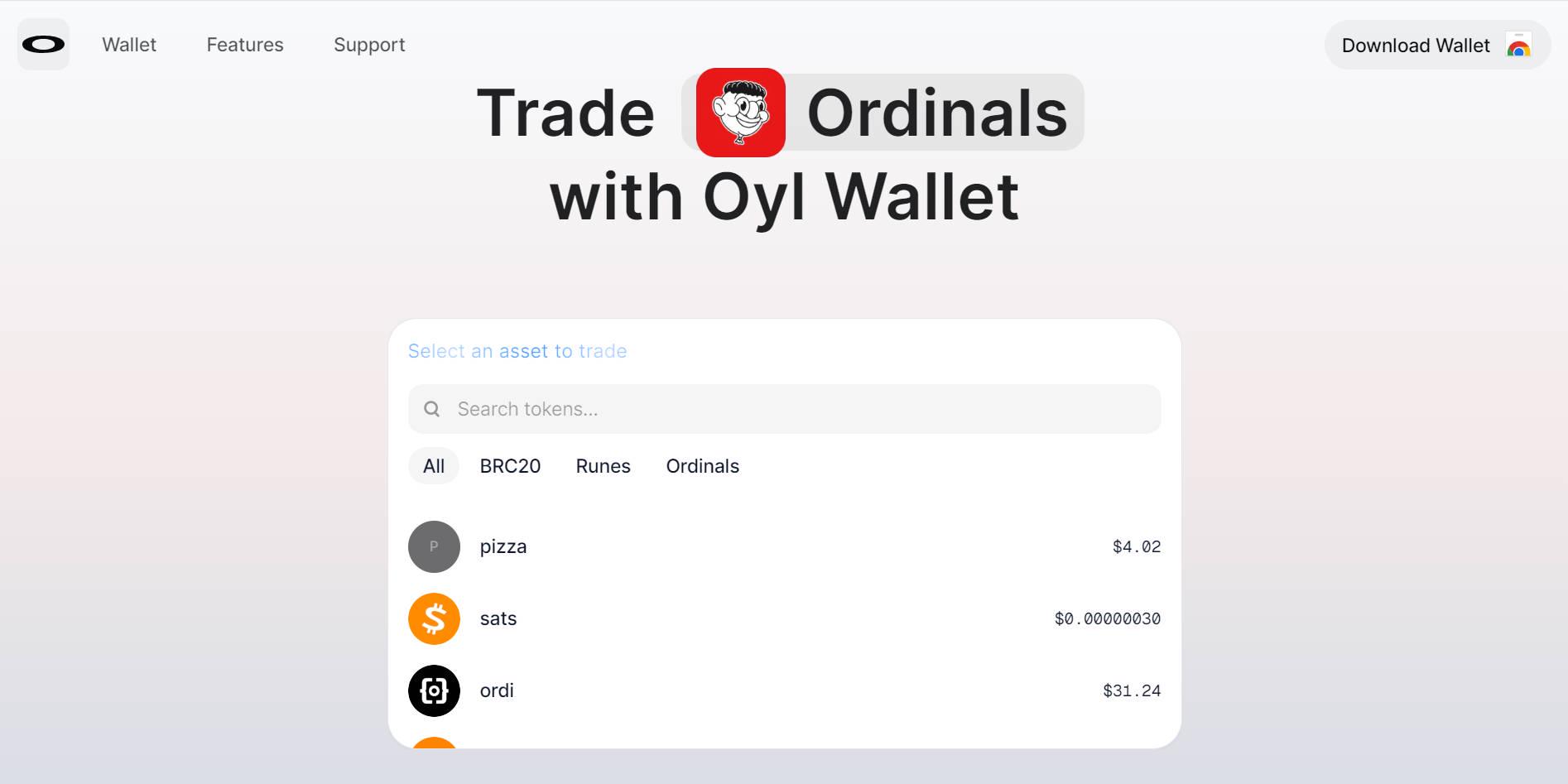
One of our most exciting features is the Aggregator. With this tool, users can directly purchase Runes and cross-market BRC-20 tokens within the wallet. We pull partially signed Bitcoin transactions from multiple markets and bundle them via the Aggregator, abstracting away complex transaction signing, inscription handling, and fee displays. Users can buy assets from different markets with one click. This is a highly advanced, non-custodial, trust-minimized product that lets users directly acquire these assets on Bitcoin—a feature we’re extremely excited about. As more swap products emerge for BRC-20, Runes, and other assets, we’ll integrate them into the Aggregator. Additionally, we offer excellent transaction fee estimation and simulation features.
One issue with Bitcoin is that many activities—such as trading, swapping, sending—lack a block explorer like Etherscan that clearly shows what users are doing. Typically, only raw Bitcoin transactions and UTXO splits are displayed. Thanks to our robust transaction simulation and backend indexing, we can consolidate these actions and present them clearly to users. When receiving an Ordinal, for example, users can see previous asset conversions. This provides a very clear visualization of asset ownership and interaction history. These are our two most important aspects.
Thirdly, we’re launching an Ordinals collection called Airhead in collaboration with Arthur Hayes. The entire whitelist and minting experience happens within the wallet. You download the wallet and qualify for the whitelist. Based on the assets held in your wallet address (BRC-20s, Runes, Ordinals, BTC), a leaderboard ranks participants. The top 10,000 users on the leaderboard earn whitelist spots. During minting, the Airhead collection consists of 10,000 balloon-shaped characters with 10 inflation levels. Those highest on the leaderboard receive the most inflated balloon avatars, while lower-ranked users get slimmer versions. This leverages dynamic features on Bitcoin such as recursion, integrating multiple layers into a single experience. It’s particularly interesting because it’s not just an NFT drop—it’s a product in itself. For us, it demonstrates how to build seamless experiences within the wallet, making the hardest-to-trade assets easy to manage and delivering a truly trustworthy and enjoyable experience in one place.
PANews: What was the original motivation behind the Airhead inscription project? What makes it most interesting?
Alec Taggart: Arthur Hayes was one of our earliest investors—his fund Maelstrom was among our first backers about a year ago. One thing he wanted to do was create an Ordinals collection. He had never participated in an NFT project before, but now with possibilities emerging on Bitcoin, he wanted to do something uniquely bold and eccentric—true to his personality. This is his first such project. Over the past year, we’ve collaborated closely with him to create a series that genuinely reflects his character—something entirely new and different. The artwork is rigorously crafted, resembling the style of Jeff Koons—if you’re familiar, his balloon animal sculptures look almost glass-like.
Another motivation was differentiation: as a wallet, there are already many others in the market. How do we stand out? When launching our wallet, how can we make the onboarding experience engaging, showcase our functionality, and turn it into a fun game where users compete for whitelist access? They transfer assets in, experience the wallet’s features firsthand, observe how transfers affect balances, and truly feel the power of OYL’s full suite of capabilities.
PANews: Do you have any early stories to share between Arthur Hayes and your team? How has Hayes’ involvement impacted OYL?
Alec Taggart: When Ordinals first appeared, Arthur instructed his team to seek out strong investment opportunities. This was about a year ago, very early in the cycle. We were their sole and first investment in the Ordinals space. He was especially interested in user experience, aligning closely with our philosophy from other ecosystems. He calls himself an evolutionary Bitcoin Maxi, which resonates well with our team culture.
His support has been invaluable, thanks to his macro-level understanding of the industry. Having founded BitMEX—a successful enterprise—and being a major business leader, he provided tremendous guidance as we entered the market. Especially now, as we develop this Ordinals series, he ensures our goals align with the wallet’s vision—creating something innovative while meeting consumer-centric design needs. From this perspective, he’s offered excellent advice, helping us think more clearly and strategically.
PANews: Recently, OYL introduced the editable runes protocol Protorunes. What are its innovations? Could you explain the concept and goals behind Protorunes?
Alec Taggart: First, Protorunes became possible thanks to our indexing product, Metashrew. Metashrew is an open-source framework allowing the construction of fully transparent, open meta-protocols and indexes, architected onto a WASM virtual machine. Additionally, in our backend product Sandshrew, we’ve built a powerful closed-source orchestration layer that enables hosting. Anyone building an index, meta-protocol, or specific data source using this framework can stream data directly through our unified RPC and API endpoints. Any developer building a meta-protocol can now innovate atop BRC-20, Runes, UTXO, and inscription models, significantly expanding experimental capacity. Direct API access to this data is crucial for building wallets, DeFi apps, or swap platforms. To demonstrate the strength of this toolkit, we created Protorunes.
Built on this foundation, Protorunes enables enhanced functionality for Runes assets, which currently have limited operability. Runes can be inscribed or issued, tracked during transfers, and traded via partially signed Bitcoin transactions—similar to BRC-20—but lack the programmability users expect. Protorunes allows a Runes asset (residing in a UTXO) to be layered with a RunesStone message atop the Runes protocol. We introduce the concept of Protoburn: users can burn a Runes asset into a UTXO, where it remains compatible with Runes’ transfer mechanics and full functionality. Then, the asset becomes usable within a sub-protocol under the Protorunes framework. Remarkably, this enables fully decentralized, deterministic, and transparent programs aligned with the WASM VM architecture—all traceable on-chain. This dramatically expands what can be built: DeFi applications, exchange products, lending, stablecoins, synthetic assets, derivatives, games—everything previously seen in other ecosystems can now be constructed using the Runes asset class. This empowers the Runes community and developers with entirely new capabilities and possibilities.
PANews: BRC20 and Runes have been around for some time. BRC20 created a wealth effect and attracted significant attention to BTC-based derivative markets. However, despite expectations, the maturing Runes protocol hasn’t generated anticipated market momentum. How do you view the fluctuating热度and market cycles? With declining interest, many have turned pessimistic—how do you respond to such negative views?
Alec Taggart: I think there are several reasons. First, BRC-20 emerged earlier, creating a mini-bull run where everyone rushed to inscribe assets and build infrastructure around them. Exchanges started listing them. I’d say BRC-20 initially had a more global impact, especially drawing strong interest from Asia. Runes was then Casey’s response—a fungible token protocol with a different design rooted in the UTXO model, avoiding complexities of inscription transfers and multi-transfer handling. There was massive momentum to launch it at the halving, generating intense hype on day one. Prior to Runes, there were projects like Runestone and RSIC that resembled Ordinals. On launch day, excitement peaked. I think it overheated slightly. Then, market-wide sentiment remained bearish as people awaited potential price movements post-halving. I believe activity has simply followed a typical market trajectory. Looking back at Bitcoin’s four previous halvings, prices usually begin rising 3–6 months after the event.
Many expected Runes to solve everything, but it didn’t offer significantly more programmability than BRC-20. Now we’re entering the next phase: many teams are adding programmability to BRC-20, building modules supporting EVM smart contracts and indexers. We’re advancing Protorunes, and following our announcement, other meta-protocols have emerged. OP_CAT isn’t fully mature yet either. I think people are simply waiting for the right moment—when they can do more with Runes, when discoverability improves, and when UX becomes compelling enough to attract builders and gamers who want to experiment on Bitcoin.
PANews: Currently, BTC ecosystem wallets include OKX, Ordinals Wallet, Unisat, Xverse Wallet, and others. How do you view the current wallet landscape? As a newcomer, what is your strategy?
Alec Taggart: There are many excellent wallets. Looking across the field, many early wallets originated from the Stacks ecosystem and later added Ordinals functionality—like Xverse and Leather. Xverse may be one of the most versatile wallets, supporting many asset types and connecting to various dApps, much like traditional wallets users are accustomed to. OKX clearly has a strong market presence with its exchange; many users in Asia rely on this wallet. Then there’s Unisat—they’ve built their own marketplace, are developing fractional Bitcoin, and remain highly focused on BRC-20. For us, the core differentiation lies in our focus on Runes and Protorunes.
Moreover, our infrastructure and indexing products are designed for adoption by other wallets, offering superior data for consuming indexes and interacting with new protocols, enhancing overall utility. We hope all wallets eventually adopt our framework to expand the market. We’re building these tools not just for ourselves, but for wallets and developers broadly. Our differentiation includes exceptional user experience within the wallet—abstracting complex data and offering outstanding discoverability. Everything you do is fully trust-minimized and non-custodial, handled directly in the wallet with clean abstractions around it.
Ultimately, we aim to position OYL Wallet as a high-quality solution with an incredible, delightful user experience—not only excelling within the Bitcoin space but also standing out as novel and superior across the entire wallet ecosystem.
PANews: From your perspective, what are the new opportunities in the BTC ecosystem? What trends are worth watching?
Alec Taggart: Building on your earlier question about market dynamics, if you look at Ethereum’s growth path—back in 2018, Ethereum could do very little. Mostly, it was used for ICOs, issuing ERC-20 or utility tokens, with few functional decentralized applications (dApps). At the time, it was just a promise of a brighter future, but issuance drove innovation. Then came Maker, Synthetix, Uniswap—DeFi applications began emerging. Stablecoins and synthetic assets followed, then yield farming and liquidity mining incentivized participation.
All of these developments were necessary to spark widespread innovation and sustain interest. Similarly, we need powerful tools and visualization features to demonstrate how these systems work and display data meaningfully, so others can track progress. We also need more instruments like stablecoins or wrapped BTC to boost liquidity. More yield opportunities on Bitcoin are essential, along with basic functionalities around swapping, lending, and earning yields—the next steps everyone is eagerly anticipating. As teams work across different layers to deliver these capabilities, abundant opportunities will emerge.
PANews: In this context, what are OYL’s future plans? Will you issue a token or launch your own economic model?
Alec Taggart: OYL will eventually launch its own token. With the Airhead series, we’ve introduced the concept of Whale Pass. Think of Whale Pass as the founding sequence set for whales within the OYL ecosystem. The first benefit of purchasing an OYL Pass is receiving an Airhead—this serves both as prepayment for minting and grants ownership of an Airhead. Additionally, each pass carries a virtual balance that increases with every block. This mechanism gives us a way to continue building interesting utilities around it. Our plan is to ensure all builders of these primitives collaborate, integrating them into the wallet and unlocking numerous possibilities.
Protorunes is another cornerstone of our roadmap—not only helping establish standards but also building protocols atop them. This will touch every part of our ecosystem. Through our wallet and indexing tools, Protorunes will be a key component in generating deeper liquidity directly at Layer 1, tightly integrated with our business and intrinsically linked to our future token.
For us, the key is leveraging the wallet, infrastructure, and indexing to build sufficient tools and surface area—creating opportunities where developers and consumers recognize the reality of what’s possible, enabling more experimentation and long-tail innovation on Bitcoin.
Beyond that, these tools are future-proof. When innovations like OP_CAT emerge at Bitcoin’s Layer 1 or even Layer 2, they’ll give people more tools to experiment and build, positioning OYL and the OYL Wallet as the premier platform for discovery and access within this evolving ecosystem.
Join TechFlow official community to stay tuned
Telegram:https://t.me/TechFlowDaily
X (Twitter):https://x.com/TechFlowPost
X (Twitter) EN:https://x.com/BlockFlow_News
 PANews