How do crypto elites securely allocate their digital assets?
TechFlow Selected TechFlow Selected
How do crypto elites securely allocate their digital assets?
Hong Kong Trust Establishment Guide
 Navigating Web3 tides with focused insights
Authors: Liu Honglin, Bai Qin, ManQin Law Firm
With the development of globalization and the opening of international financial markets, an increasing number of high-net-worth individuals and entrepreneurs from mainland China are choosing to establish trusts in Hong Kong to achieve objectives such as asset protection, wealth succession, and tax planning. In practice, citizens of mainland China must consider not only the legal structure of the trust but also foreign exchange controls, tax implications, and asset management methods. Selecting the right trustee and trust company is crucial when establishing a trust, as this directly affects the validity and security of the trust.
This article provides a detailed overview of the procedures for mainland Chinese citizens establishing trusts in Hong Kong, the advantages and disadvantages of Hong Kong trusts, key considerations during implementation, establishment costs for various types of trusts, and the regulatory framework and licensing requirements for Hong Kong trust companies.
Advantages and Disadvantages of Hong Kong Trusts
Can citizens of mainland China establish trusts in Hong Kong? Why use a trust structure to invest in virtual assets?
Hong Kong, as one of the world's leading financial centers, attracts numerous high-net-worth individuals and entrepreneurs seeking to set up trusts. This is due not only to Hong Kong’s well-developed legal system and favorable tax policies but also to its unique geographical location and economic environment, making it an ideal jurisdiction for trust establishment. For mainland Chinese citizens, setting up a trust in Hong Kong is not only feasible but also offers significant advantages and opportunities.
First, a trust provides strong asset protection, and Hong Kong’s robust legal safeguards represent one of the greatest advantages of establishing a trust there. Hong Kong has a mature trust legal framework that ensures the legality of trust arrangements and defines the responsibilities of trustees. By establishing a trust, investors can separate their assets from other personal holdings, protecting them from claims in legal disputes or debt proceedings—an especially important safeguard in the context of virtual asset investments, where the legal landscape remains complex.
Second, privacy protection is another major advantage of Hong Kong trusts. For investors who value financial confidentiality, a trust offers an ideal solution. Beneficiary information remains confidential, helping prevent unnecessary disclosure and safeguarding personal privacy and asset security. This is particularly valuable in virtual asset investments, where transactions are highly anonymous yet often attract scrutiny from regulators and law enforcement.
Tax efficiency is also a key factor contributing to Hong Kong’s appeal. Unlike many other jurisdictions, Hong Kong does not impose capital gains tax or inheritance tax, offering substantial tax advantages for the growth and transfer of trust assets. For high-net-worth individuals, establishing a trust in Hong Kong can significantly reduce tax liabilities and optimize tax planning strategies.
As an international financial hub, Hong Kong offers broad investment opportunities and efficient financial services. Trust assets can be flexibly invested in global markets, benefiting from the convenience and professional services of Hong Kong’s financial sector. This helps preserve and grow trust assets while providing trustees with greater investment choices and management tools. Investors can appoint professional trustees or asset management firms to manage investments, ensuring professional strategy execution. Additionally, trust deeds can be customized according to specific investor needs, allowing flexible adjustments in investment direction and management approach to meet personalized wealth management goals.
Finally, using a trust to allocate virtual assets and other holdings enables effective wealth succession and long-term planning. Trusts allow clear designation of beneficiaries and distribution rules, ensuring assets are passed on to the next generation or designated recipients according to the settlor’s wishes. Provisions in the trust deed may include conditional distributions, periodic payouts, and other mechanisms, offering greater flexibility and assurance in wealth transmission.
However, establishing a trust in Hong Kong also presents certain challenges and drawbacks.
First, although Hong Kong’s legal environment is favorable, setting up and managing a trust requires strict compliance with regulatory requirements. Trust companies must adhere to Hong Kong laws and regulations, which may increase compliance costs and administrative complexity.
Second, the cost of establishing and maintaining a trust in Hong Kong is relatively high compared to other offshore financial centers. While Hong Kong offers a strong legal and financial infrastructure, associated fees are correspondingly higher, making it more suitable for high-net-worth individuals. For smaller trust portfolios, management costs may constitute a disproportionately large share, potentially affecting overall efficiency.
In addition, when mainland Chinese citizens contribute funds to a Hong Kong trust, they must comply with mainland China’s foreign exchange control regulations. Cross-border fund transfers require formal foreign exchange registration procedures, which may add operational complexity and time delays. Therefore, in practice, settlers must prepare thoroughly to ensure a smooth process for both fund transfer and trust establishment.
Overall, using a trust structure in Hong Kong to hold virtual assets or other investments offers not only asset protection, professional management, and tax benefits but also enhanced privacy and structured wealth succession. This makes trusts an ideal tool for high-net-worth investors engaged in complex investments and long-term wealth planning.
Types of Hong Kong Trusts and Associated Costs
The main types of trusts in Hong Kong include private trusts, commercial trusts, and charitable trusts, each suited to different user groups.
-
Private Trusts: Typically used for family wealth management and succession, suitable for high-net-worth families and individuals. Through a private trust, assets can be effectively protected and transferred across generations. These trusts generally offer high flexibility, similar to discretionary trusts, allowing the trustee to distribute assets based on family needs. Initial setup costs range from approximately HKD 20,000 to HKD 50,000, with annual management fees between HKD 50,000 and HKD 100,000. The establishment process usually takes 1 to 3 months.
-
Commercial Trusts: Used for business purposes, such as real estate investment trusts (REITs), suitable for corporate and institutional investors. These trusts typically offer moderate flexibility, resembling unit trusts, and can be adjusted according to market conditions and investment strategies. Initial setup costs range from approximately HKD 50,000 to HKD 100,000, with annual management fees between HKD 100,000 and HKD 200,000. The establishment process typically takes 3 to 6 months.
-
Charitable Trusts: Focused on philanthropy, with beneficiaries required to be charitable organizations or causes, suitable for individuals and corporations aiming to fulfill long-term public welfare goals through donations. Charitable trusts are often structured similarly to special-purpose trusts and can be customized to specific social objectives. Initial setup costs range from approximately HKD 30,000 to HKD 70,000, with annual management fees between HKD 50,000 and HKD 150,000. The establishment process usually takes 1 to 3 months.
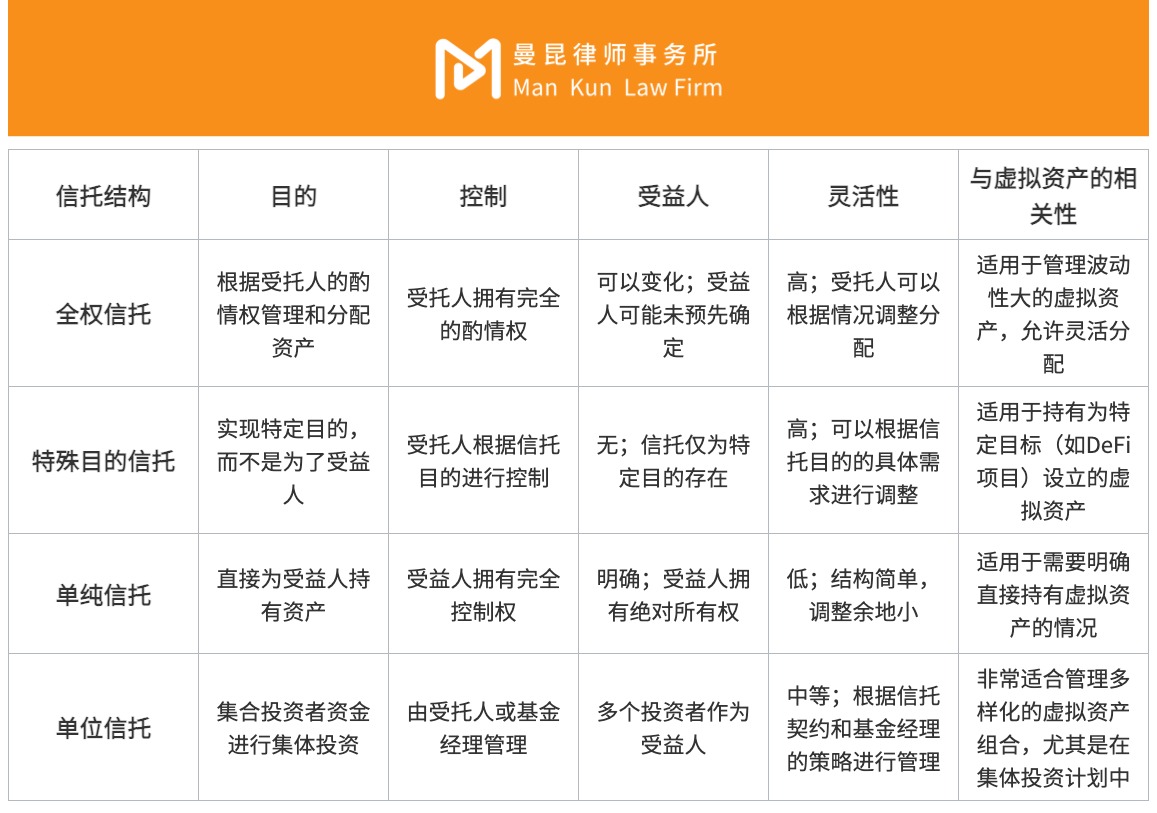
If you're considering which trust structure best suits your needs, refer to the table below comparing key features of typical trust structures:
Which Hong Kong Service Providers Can Help Establish a Trust?
In Hong Kong, institutions that can assist with trust establishment include:
-
Trust Companies: Specialized institutions engaged in trust management and administration, regulated by the Hong Kong Monetary Authority (HKMA) and required to be licensed under the Trustee Companies Ordinance.
-
Lawyers and Law Firms: Legal professionals who assist in drafting trust deeds, provide legal advice, and ensure compliance with relevant laws. They are regulated by the Law Society of Hong Kong but do not require a specific trust license to offer these services.
-
Accountants and Tax Advisors: Professionals who provide guidance on tax implications and financial planning related to trusts. They are regulated by the Hong Kong Institute of Certified Public Accountants and must comply with accounting and tax regulations, though no specific trust license is required.
-
Financial Planners and Wealth Managers: Provide consulting services on trust structures and investment strategies. While no specific trust license is required, those offering investment advice are typically regulated by the Securities and Futures Commission (SFC) or other relevant financial regulators.
-
Banking Institutions: Banks offering trust services must comply with specific regulatory requirements, including those set by the HKMA. Trust services are typically provided through wealth management or private banking divisions.
Steps to Establish a Trust in Hong Kong
Establishing a trust in Hong Kong involves a series of steps, each requiring careful planning and execution. Below are the detailed procedures:
Consult Professional Advisors
Before initiating the trust setup process, it is advisable to consult experienced legal, tax, and financial advisors. They can provide comprehensive guidance on legal requirements and tax implications, ensuring the trust arrangement is both lawful and effective. Their input helps design an appropriate trust structure and navigate potential legal and tax risks in complex regulatory environments.
Define the Trust Purpose
Clearly defining the purpose of the trust is essential. Whether for asset protection, wealth succession, or tax planning, a well-defined objective enables the creation of an optimal trust structure and terms. For example, a trust might be established to protect family assets from internal disputes or to secure long-term financial support for children’s education and future living expenses. Clear objectives help precisely define the rights and obligations of all parties within the trust deed.
Select the Trust Structure and Trustee
Based on specific needs, choose the appropriate type of trust—private, commercial, or charitable. Each type has distinct advantages and applications, so selecting the right one is critical. Equally important is choosing an experienced and reputable trustee. The trustee may be an individual, a trust company, or a professional institution, playing a central role in managing and administering the trust to ensure proper handling of trust assets.
Draft the Trust Deed
Once the trust structure and trustee are determined, a lawyer will draft the trust deed according to the settlor’s requirements. This document specifies in detail the trust’s purpose, beneficiaries, trust property, and the duties and powers of the trustee. As the core legal document of the trust, the deed must be thorough, legally sound, and aligned with the settlor’s intentions. Throughout the drafting process, the lawyer will maintain close communication to ensure all details are properly addressed.
Complete Foreign Exchange Registration and Fund Transfer
For mainland Chinese citizens, transferring funds to Hong Kong for trust establishment requires completing foreign exchange registration procedures. This ensures compliance with mainland China’s foreign exchange control regulations. Funds should be transferred via legitimate channels such as bank wire transfers, with all documentation retained for audit purposes. Procedures may include submitting foreign exchange registration forms and providing proof of fund sources, ensuring transparency and legality throughout the transfer process.
Open a Trust Account and Inject Funds
Opening a trust account at a Hong Kong bank is a crucial step. This account will receive and manage the trust assets. After the account is opened, funds are transferred into it, formally completing the trust establishment. Choosing the right bank and ensuring it understands the trust’s specific requirements are vital to receiving optimal service and support.
Registration and Ongoing Management
Depending on the nature of the trust, certain types may require formal registration in Hong Kong. The trustee must manage the trust assets in accordance with the trust deed and regularly report financial status and management activities to beneficiaries. Registration may involve submitting applications to relevant government departments and providing copies of the trust deed. After registration, the trustee must conduct regular financial audits to ensure transparency and regulatory compliance in asset management.
In summary, establishing a trust in Hong Kong is a complex and systematic process that must follow strict legal procedures. Careful planning and execution at every stage not only ensure the trust’s legality and effectiveness but also help achieve wealth management objectives. With guidance from professional advisors and effective management, investors can fully leverage the advantages of Hong Kong trusts to realize goals of asset protection and intergenerational wealth succession.
ManQin Law Firm Summary
Hong Kong, with its well-established legal system, favorable tax regime, status as a global financial center, and strong privacy protections, is an ideal jurisdiction for trust establishment. However, one must also be mindful of compliance requirements, setup costs, and the complexities involved in cross-border fund transfers.
For mainland Chinese citizens, establishing a trust in Hong Kong involves multiple steps—including consulting professional advisors, selecting a trustee, drafting the trust deed, funding the trust, and ongoing management. Ensuring all actions are compliant and selecting competent trustees and advisors are essential to achieving the intended goals of the trust. For further questions or detailed guidance, always consult qualified professionals.
Join TechFlow official community to stay tuned
Telegram:https://t.me/TechFlowDaily
X (Twitter):https://x.com/TechFlowPost
X (Twitter) EN:https://x.com/BlockFlow_News