








Interview with Tether CEO: Tether Explores Entry into AI, Audit Remains High Priority
TechFlow Selected TechFlow Selected
Interview with Tether CEO: Tether Explores Entry into AI, Audit Remains High Priority
Tether's most pressing concern is embracing the decentralized crypto ethos—power should reside with the many, not the few.
 Navigating Web3 tides with focused insights
Author: JOEL KHALILI
Translation: TechFlow
Under its new CEO Paolo Ardoino, the crypto firm is making bold investments to break into the artificial intelligence market dominated by the world’s largest tech companies.
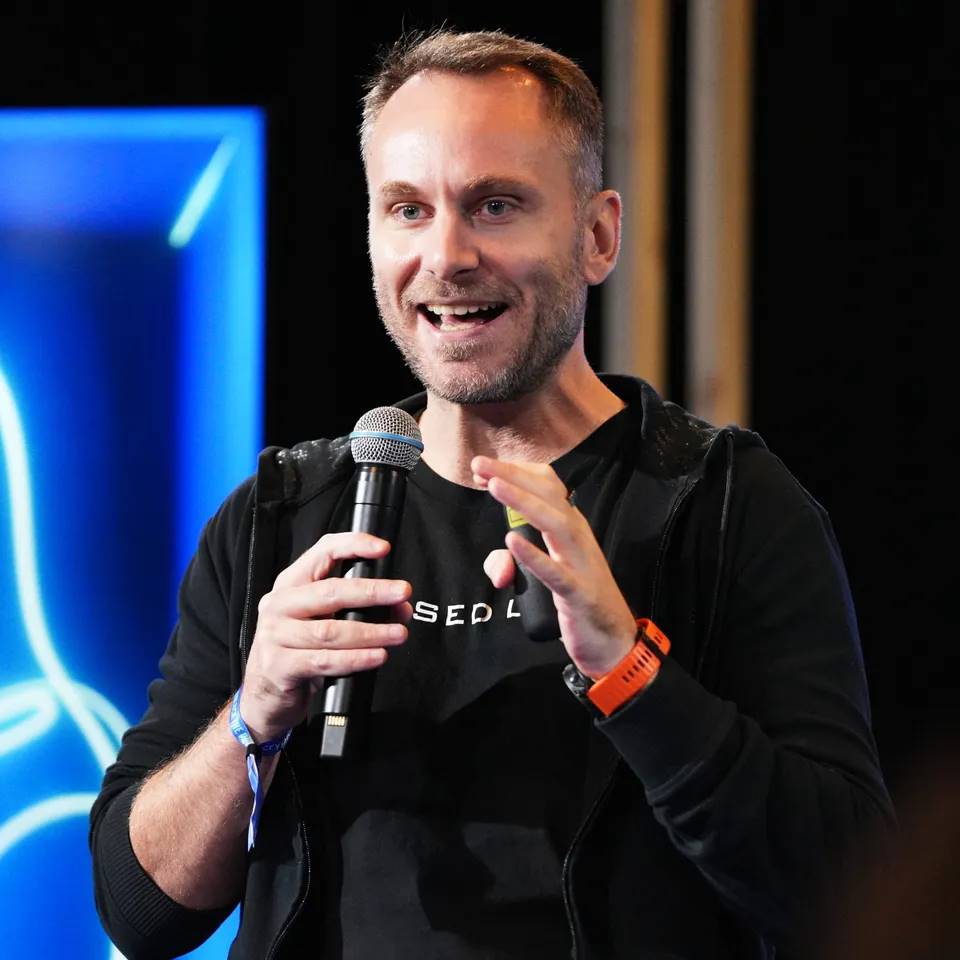
Paolo Ardoino, CEO of Tether Holdings, at the Paris Blockchain Week summit in April 2024. Photo: NATHAN LAINE/BLOOMBERG; GETTY IMAGES
Paolo Ardoino, the new chief executive, faces a difficult but enviable challenge: how best to deploy billions of dollars. Recently, Tether has found itself flush with cash and is pushing into unfamiliar territory—AI. Ardoino's ambitious plan? To take on Microsoft, Google, and Amazon.
Registered in the British Virgin Islands, Tether is one of the world’s largest cryptocurrency firms. Most of its revenue comes from its stablecoin USDT, which is pegged to the dollar through a reserve of cash and other assets.
The model is relatively simple: Tether takes U.S. dollars in exchange for tokens that customers can freely trade in crypto markets. It keeps some dollars as cash, invests most in interest-bearing securities, and lends out a portion. If customers want to redeem their USDT tokens for equivalent dollars, Tether draws from its reserves—but in the meantime, it earns income from the assets it holds.
Tether’s reserves are primarily composed of short-term U.S. Treasury bonds, and its income is tied to prevailing interest rates. This means that as central banks raise rates due to inflation, the company's profitability increases. Tether recently reported $5.2 billion in profit during the first half of 2024, with total reserves reaching $118.5 billion.
Under Ardoino—who stepped up from chief technology officer after six years to become CEO in December last year—Tether is now looking for ways to deploy this idle capital. Part of it, Ardoino says, goes toward building a buffer for USDT reserves, while the rest flows into the company’s new venture arm, Tether Evo. The firm has already taken a controlling stake in neural implant startup Blackrock Neurotech, and invested in data center operator Northern Data Group, whose infrastructure trains AI models.
Tether has also courted controversy. In 2021, it reached a $41 million settlement with U.S. regulators who accused it of making misleading claims about the composition of its reserves. In 2023, it was alleged that Tether used fraudulent methods to obtain banking services in its early history. Additionally, both the United Nations and blockchain analytics firms have claimed that USDT has become a tool for money laundering, terrorist financing, and other illicit activities—though Tether disputes this characterization.
Ardoino says the company is often misunderstood. He emphasizes that Tether’s most urgent mission is to extend the decentralized ethos of crypto—the idea that power should lie with the many, not the few—into artificial intelligence and other emerging technologies. “It will be very important to have a player independent from traditional incumbents,” he says.
Ardoino spoke with WIRED earlier this month via phone. The following interview has been edited for clarity and brevity.
WIRED: This year, Tether has pushed to diversify its business model into venture investing. What’s the rationale behind that?
Ardoino: Thanks to rising interest rates, Tether has become extremely profitable over the past two years. When Tether launched, reserve yields were 0.2 percent—now they’re around 5.5 percent. Of course, this situation may be time-limited—we’ve heard talk of rate cuts—but even if inflation settles at 3 or 4 percent, it’s hard to see us going back to 0.2 percent.
Over the past 24 months, Tether has accumulated approximately $11.9 billion in profit. We could have distributed all of that to shareholders and made everyone happy. Instead, part of it has been added to our reserves to further back the stablecoin, and the remainder has essentially been retained within our investment division.
What’s your venture investment thesis? It seems you’re moving well beyond crypto.
Ardoino: We come from Bitcoin—we’re Bitcoiners at heart. Maybe we aren’t perfect human beings, but we try to carry Bitcoin’s ideals—financial freedom, free speech, open access to technology—into every investment we make.
The concept of decentralization can be applied across different fields, like artificial intelligence. We’ve already seen AI become highly politicized. We believe it will be crucial to have a player independent from traditional giants like Amazon, Microsoft, and Google.
The same applies to another key technology: brain-computer interfaces (BCI). This will become increasingly important in the future. It will be vital to build BCIs that respect individual privacy—ensuring data stays local and isn’t collected by the same companies that run social media platforms.
We’re not a traditional venture capital firm. We don’t just throw money at startups hoping to find a unicorn that gives us a 100x return. Sure, that would be nice, but it must align with our vision. Interdependence, resilience, and disintermediation—these concepts matter deeply to us.
How much capital will Tether allocate to venture investing?
Ardoino: We will always prioritize the stablecoin business because risk management is critical. Right now, we have a solid buffer in our reserves, and if USDT continues to grow, we’ll scale proportionally.
But nearly everything else—I’d say more than 90 percent of the profits Tether earns—we aim to reinvest in things that matter to us and our community. We don’t need to pay out large dividends.
Some venture firms have done poorly assessing the character of crypto founders, some of whom (like Sam Bankman-Fried) were later convicted of fraud. How do you ensure Tether doesn’t make the same mistakes?
Ardoino: The only way to protect your invested capital is to scrutinize every detail and conduct the deepest possible due diligence. Not every investment will be perfect, but we commit our heart and mind to achieving the best outcomes.
We work directly with management teams; we step in to help when improvements are needed. Otherwise, we’re prepared to replace leadership. Technology itself isn’t flawed—if a company underperforms, it’s usually because of management issues. We take our investments seriously because we care deeply.
What’s your view on the recent allegations against Northern Data? It’s one of your portfolio companies, accused of securities fraud.
That will be assessed by the courts. We’ve worked with Northern Data for quite some time. The company has tremendous potential—it can offer an independent alternative to the three dominant players in the data center space. I won’t comment on allegations made by a few disgruntled former employees. Northern Data has responded strongly to these claims, and we stand by our investment.
Let’s discuss the current regulatory environment. Tether arguably operates like a bank: it takes deposits, holds them as cash and securities, or lends them out. Why shouldn’t Tether be regulated like a bank?
Banks lend out 90 percent of their balance sheet, meaning they only have 10 percent in collateral. Tether currently has a collateral ratio of 105 percent. I think comparing Tether to banks is unfair. It’s like saying: “A car engine and an airplane engine both use combustion, so we should regulate cars and planes the same way.”
Reports suggest Tether hasn’t sought a license to operate in the EU under the Markets in Crypto-Assets (MiCA) regime. Is Tether planning to exit the European market?
We are formally developing our strategy for the European market. MiCA imposes daily issuance and trading volume limits on non-euro stablecoins like USDT. [Its goal is to prevent dollar-denominated stablecoins from displacing the euro as the primary medium of exchange within the EU.] I agree with that—it doesn’t hurt anyone.
But another restriction concerns reserve requirements. Under MiCA, for a stablecoin like USDT, up to 60 percent of reserves must be held as cash deposits. So if you have a stablecoin with €10 billion in reserves, you need to deposit €6 billion in a bank. That bank can then lend out up to 90 percent of that amount, leaving only €600 million on hand. Imagine customers request redemptions for €2 billion worth of stablecoins, but the bank only has €600 million available. Suddenly, both the bank and the stablecoin face collapse. I don’t consider that safe. In practice, this creates additional systemic risk in Europe rather than reducing it.
The ongoing lack of a full audit of Tether’s reserves has fueled speculation that USDT isn’t, or at least hasn’t historically been, fully backed one-to-one. Why hasn’t Tether fulfilled its promise to provide a comprehensive audit?
An audit remains a high priority. When it comes to stablecoins, Senator Warren told the Big Four accounting firms they should proceed cautiously when taking on new crypto clients, especially after FTX. [In March 2023, Senator Warren called for a regulatory body to “stop sham audits of crypto firms.”] FTX didn’t help matters. They were media darlings—and then ruined everything.
Have the Big Four explicitly rejected Tether? Did Tether apply and get turned down?
We’ve had discussions with some of them.
What reasons did they give?
Essentially, they said it’s not the right time. If you’re one of the Big Four, you have thousands of banking clients. If you take on a stablecoin client, they might not be happy. This is my speculation, but Tether has created a digital dollar that allows people to hold checking and savings accounts—so stablecoins could be seen as a threat to traditional banking.
It’s not just Tether—Circle, the issuer of USDC, also lacks a full audit. It has an attestation. This has long been misunderstood and misrepresented in mainstream media. If other stablecoins are so pristine, why don’t they have audits? Even what’s considered the most heavily regulated stablecoin [USDC] lacks a full audit. This is an industry-wide issue.
[Circle is a client of Deloitte, one of the Big Four, which checks monthly the accuracy of statements regarding USDC’s reserve size and composition, but has not issued a full audit report since 2021.]
To be clear: Has Tether ever issued USDT tokens without dollar reserves backing them?
Tether has always been backed. In 2022, a short-lived attack on Tether attempted to trigger a bank run, and we processed over $20 billion in redemptions within 20 days. I think Tether deserves some credit.
At the very least, by 2024, it should be acknowledged that initial assessments of Tether’s credibility may not have been entirely accurate. We don’t need medals, but as we strive to shape the future of finance, a little less hostility would be appreciated.
Join TechFlow official community to stay tuned
Telegram:https://t.me/TechFlowDaily
X (Twitter):https://x.com/TechFlowPost
X (Twitter) EN:https://x.com/BlockFlow_News
 @WIRED


