Will Solana, the Ethereum killer, finally succeed this time?
TechFlow Selected TechFlow Selected
Will Solana, the Ethereum killer, finally succeed this time?
If Ethereum opened the public blockchain market through innovations like smart contracts, Solana is反而 more similar to traditional Web2 companies.
 Navigating Web3 tides with focused insights
Author: Huohuo
In 2024, Solana, the so-called "Ethereum killer," is surging forward with unstoppable momentum. During the week of July 22, Solana's mainnet weekly total fees surpassed those of its rival Ethereum for the first time, generating approximately $25 million in revenue compared to Ethereum’s $21 million. On July 28, daily fees exceeded $5.5 million, hitting a three-month high. Moreover, following the broad market crash on Black Monday, as markets regained composure, Solana's price surged over 35% within less than 48 hours—outpacing Bitcoin’s gains.
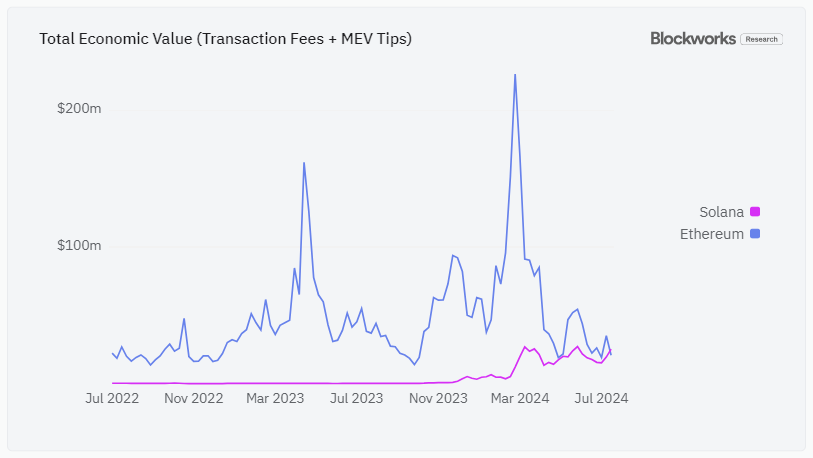
Source: Blockworks Research
After experiencing dramatic ups and downs over the past two years, Solana and its ecosystem have once again become focal points in the crypto market. This resurgence appears poised to potentially overshadow Ethereum. However, many previous projects dubbed “Ethereum killers” ultimately failed in their challenges. Will Solana succeed where others did not? Today, let’s revisit Solana’s origin and rise, review the latest developments across its ecosystem, and perhaps uncover some telling clues…
The Birth of Solana
Solana was born from its founder’s reflections on the blockchain trilemma. Bitcoin emerged in 2009, and in 2013, Solana’s founder Anatoly Yakovenko became an early adopter of Bitcoin, beginning to focus on the blockchain’s impossible triangle—high gas fees and extremely slow network speeds at the time.
Motivated by these limitations, Anatoly set out to build a faster blockchain infrastructure. One late night while working overtime, he realized that the passage of time itself could serve as a data structure, enabling ordered transactions and events on a blockchain. He immediately jotted down the initial code for what would become Solana—an idea that later became the key innovation allowing it to operate at lightning speed, giving it a significant edge over Bitcoin and Ethereum.
In 2016, Anatoly left Qualcomm, where he had worked for 13 years. In 2017, he teamed up with two former Qualcomm colleagues to found Solana—marking the official birth of the project!
Interestingly, Solana wasn’t always called Solana. It began as a prototype blockchain named Silk, which was renamed Solana in March 2017. The name “Solana” comes from Solana Beach, the California coastal town north of San Diego where the co-founders lived and surfed during their time working together.

From 2017 to 2020, Anatoly led the gradual refinement of Solana’s technical architecture, significantly improving transaction throughput and network performance, attracting growing attention and interest within the community.
Yet, in its early days, the team faced numerous developmental hurdles. With unremarkable backgrounds and launching during a bear market, the project wasn’t initially seen as promising. After releasing its whitepaper in January 2018, fundraising proved difficult amid concerns about technical security. Before being listed on Binance LaunchPad, only Binance Labs and Coinbase Ventures invested, totaling likely under $1 million.
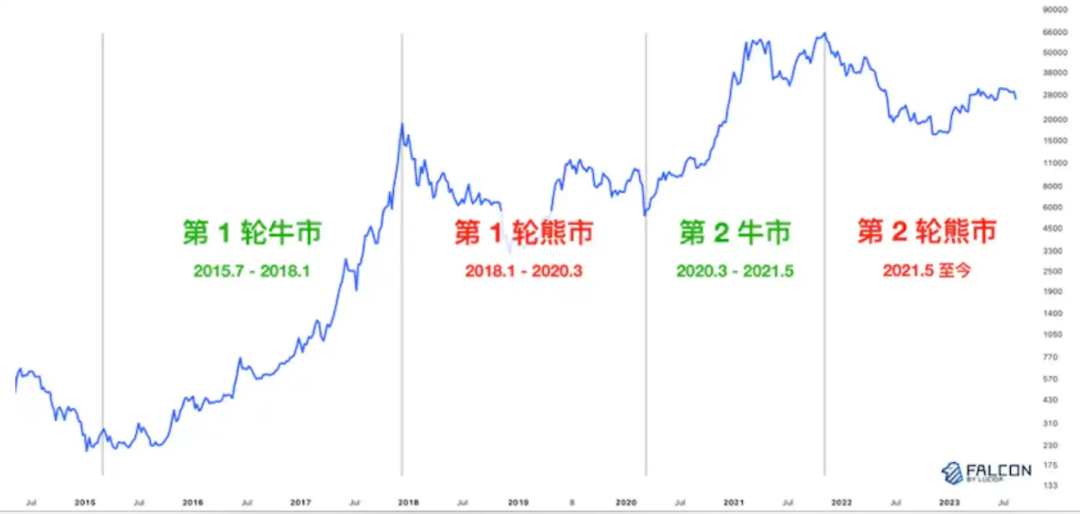
Starting in 2019, as market conditions improved, Solana began attracting tens or even hundreds of millions in investment. The team also conducted internal testing and technical validation, focusing on preparing for the mainnet launch.
During this phase, they actively engaged with developer communities and blockchain enthusiasts to gather feedback and improve both technology and ecosystem design. Thus, in July 2020, Solana’s mainnet officially launched. Thanks to its fast transactions and low fees—addressing Ethereum’s shortcomings—it quickly earned the nickname “Ethereum killer.”
Thriving Through the Bear Market
From its mainnet launch in 2020 through 2022, Solana experienced rapid growth, becoming one of the most popular projects in the crypto world—and catching the eye of then-prominent figure SBF. At the time, FTX was among the largest centralized exchanges globally. SBF, FTX’s founder, publicly stated: “I believe Solana can surpass Ethereum and become the next Bitcoin.”
FTX played a pivotal role in boosting Solana’s early rise. A major catalyst came in July 2020 when FTX chose Solana as the preferred blockchain to build Serum, its decentralized exchange (DEX). Additionally, FTX helped raise around $300 million for Solana to incentivize developers and grow its ecosystem. Not only did FTX invest directly in Solana, but it also backed numerous projects built on top of it—drawing massive user interest, particularly fueling rapid expansion in DeFi and NFT ecosystems.
From summer 2020 to the end of 2021, DeFi reached new highs. SOL’s price skyrocketed from $0.51 to $259.90 in just over a year—a staggering 510x increase. Although SOL originated as a conceptual idea during the 2017 bull run, it didn’t launch until the 2020 bull cycle. This delayed entry meant early investors entered relatively late, having endured a period of skepticism—which ironically helped filter out valuation bubbles, reinforcing its long-term value proposition.
This marked Solana’s first explosive growth cycle. Leveraging its own strengths alongside favorable market cycles, support from influential figures and enterprises created a powerful Matthew effect, enabling Solana to successfully complete its journey from zero to one.
However, Solana’s rapid ascent came with challenges. Decentralization purists criticized its tokenomics as predatory, citing high validator requirements and disproportionate venture capital allocations, arguing that these factors disadvantaged retail investors. Moreover, between 2021 and 2022, Solana suffered multiple network outages that severely damaged its reputation, undermining its promise of “high performance” and drawing consistent criticism from the community.
But compared to the blow dealt by FTX’s collapse, these issues paled in significance. As DeFi faced its first major downturn in 2022, the implosion of FTX in November directly crippled Solana. Following FTX’s downfall, vast amounts of held SOL were liquidated, triggering asset devaluation, capital outflows, and massive sell pressure. SOL plunged nearly 75% within days, bottoming out around $10, while total value locked (TVL) dropped to approximately $200 million and remained depressed.
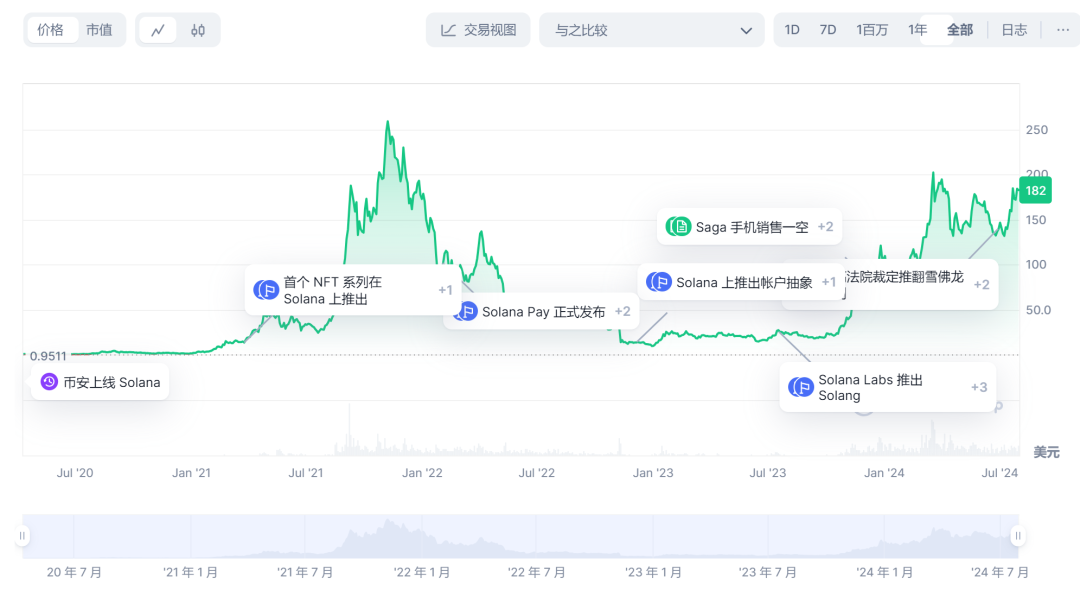
Source: Coinmarketcap
This crisis lasted about a year. During this time, Solana-based applications suffered capital flight and repeated hacker attacks, including the draining of over 8,000 Phantom wallets and losses of up to $116 million on CEX Mango. Meanwhile, much of 2022–2023 saw the broader crypto industry reeling, with external market advantages fading.
Rather than merely surviving, the bear market became a unique opportunity for Solana. Especially as the community actively worked to address two core challenges: network instability and decentralization. A series of upgrades greatly enhanced network stability and opened new development frontiers.
In December 2023, airdrops from Solana ecosystem projects reignited hope. TVL began recovering, rising from around $300 million to nearly $1 billion today within two months.
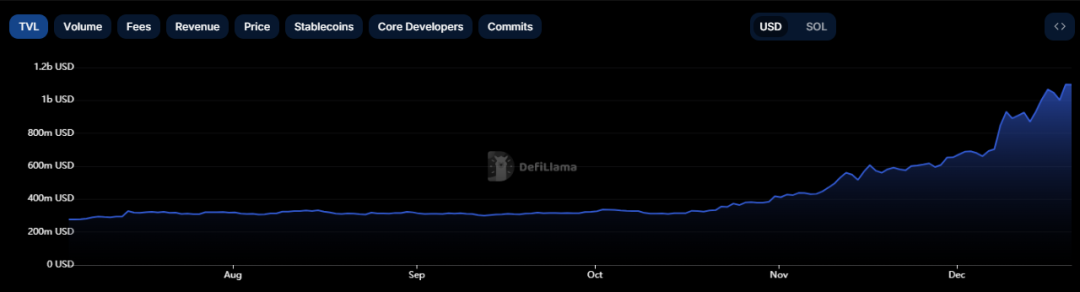
Source: DeFillama
Rumors circulated that Solana’s revival wasn't purely organic retail-driven; rather, Wall Street interests aiming to revive FTX may have fueled Solana’s rebound, given that Solana was FTX’s largest asset holding. Boosting Solana could help increase FTX’s valuation and facilitate its restructuring. While the veracity of this claim remains unconfirmed, it offers context for Solana’s late-2023 recovery.
Current Development Status
Regardless, the Solana community enters this year with renewed optimism. With continuous improvements in performance, Solana has solidified its position as a pillar of the crypto landscape, expanding capabilities and witnessing explosive growth across its application ecosystem.
According to public data, as of April 28, 2024, Solana has developed a comprehensive ecosystem spanning eight core areas: DeFi, tools, infrastructure, NFTs, gaming, wallets, DApps, and developer platforms. These cover nearly 15 subcategories such as DEXs, derivatives, analytics, lending, synthetic assets, stablecoins—and this number continues to grow weekly. Building on existing foundations, new sectors like DePIN and AI are now being actively explored.
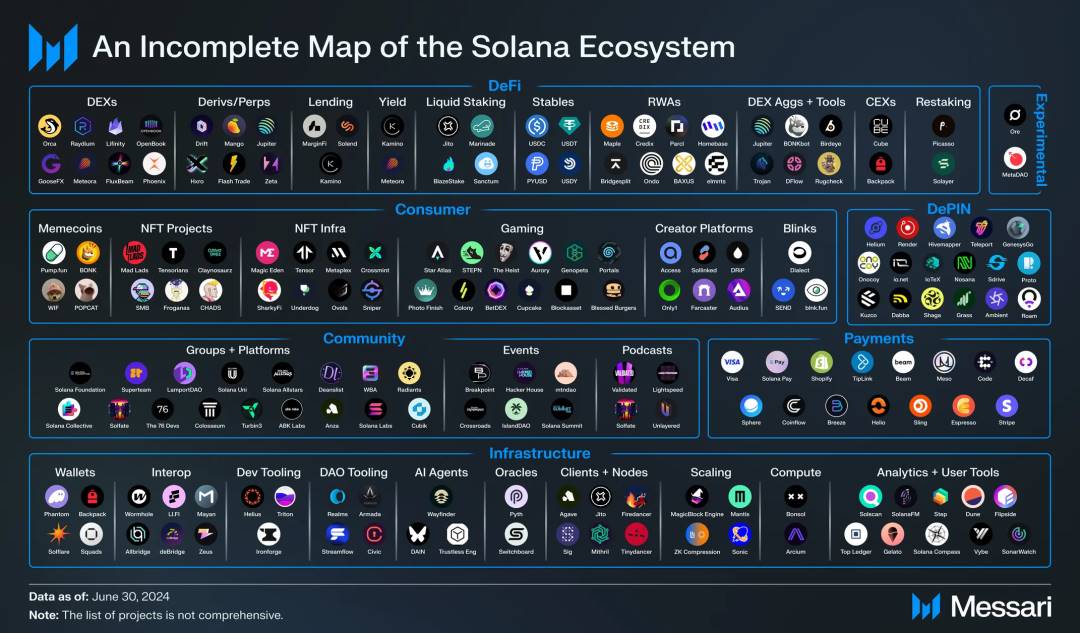
Among L0/L1/L2 blockchains, Solana stands second only to Ethereum. Across virtually every sector—except ZK and L2—Solana has achieved strong results. Its performance advantages allow it to support functionalities impractical on Ethereum.
Next, we’ll explore several rapidly growing sectors within the Solana ecosystem:
1) Memecoins
Memecoins have been a major market force this year. As discussed in our previous article “Memecoin: Is Base Ready to Challenge Solana’s Throne?”, major memecoin rallies—including Pepe, BRC20, and those on Solana—have driven recent market waves.
The rise of memecoins brought significant traffic to Solana. From “dogwifhat” to “Bonk” to “Slerf,” Solana-based memecoins sparked unprecedented hype and excitement. Fueled by insider funding surges from anticipated airdrops such as Jito, Jupiter, Kamino, Parcl, and Tensor, memecoin market cap hit $1 billion within a week. According to syndica, a node service provider, up to 92% of trades on Raydium, a DEX on Solana, were previously memecoin-related.
While Q2 saw most tokens decline amid broader market sluggishness, Solana’s memecoins became a hot spot. Low transaction costs combined with Pump.fun dramatically lowered the barrier to launching tokens, turning Solana into the most active on-chain casino. Memecoins on Solana have outperformed those on Ethereum. Indeed, memecoin activity has been a key factor making Solana the darling of this cycle.
2) DeFi
Solana currently ranks as the fourth-largest DeFi ecosystem, with total TVL around $5 billion, covering diverse subsectors including DEXs, derivatives, oracles, insurance, prediction markets, stablecoins, IDO platforms, trading and liquidity, yield and aggregators, synthetic assets, and lending protocols.
DEX trading volume continues to grow. Jupiter serves as Solana’s key liquidity aggregator, offering the widest range of tokens and optimal routing between any token pair. Kamino, a lending and yield protocol, has become the largest DeFi protocol on Solana. By Q2, approximately 63% of SOL supply was staked. Marinade is Solana’s first native liquid staking solution, while Jito leads as the top staking protocol. Sanctum LST notably gained market share in Q2.
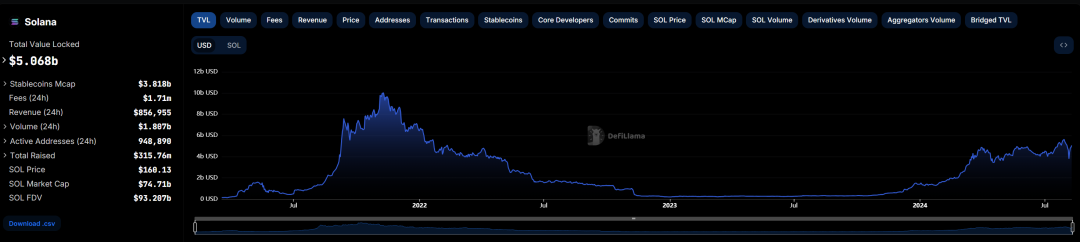
Source: DeFillama (as of August 9, 2024)
3) Web3 Gaming
With a 400-millisecond block time and near-instant confirmation speeds, Solana is ideal for game developers. Developers can build games using JavaScript and Canvas, Flutter, or leverage Solana’s Game SDKs for UnitySDK and UnrealSDK engines.
Stepn, a leading play-to-earn game on Solana, announced a $30 million airdrop in April this year.
Additionally, Solana’s version of *The Hunger Games* (based on the popular book and film series) quickly amassed over 100,000 Twitter followers in Q1 and garnered more than 2 million page views in its first 24 hours—crashing its website due to overwhelming demand.
4) Payment Infrastructure
A recent research report from Alliance Bernstein highlights that Solana has become the most popular stablecoin transfer network, especially for cross-border payments.
In March alone, Solana processed around $1.4 trillion in stablecoin transfers. According to Artemis, Solana dominated 43% of the stablecoin transfer value market—far exceeding Ethereum.
PayFi is clearly here. Compared to traditional payment methods, Helio Solana Pay plugin on Shopify saved Solana Labs over $1 million in Chapter2 sales fees. Now it’s even more versatile: users can pay with their preferred token, instantly swapped via Jupiter into the merchant’s chosen currency.
As of Q2 2024, Solana-native payment infrastructure includes Stripe crypto payments and the Solana Pay Shopify plugin. Notably, the Solana Pay Shopify plugin has already saved Solana Labs over $1 million in fees and supports USDC payments on Solana, Ethereum, and Polygon.
Other developments include Decaf’s on/off-ramp launch, Code’s availability on Google Play, Phantom integrating Meso for onramping, Brazilian digital bank Nubank supporting Solana, and XPOS integrating with Solana.
5) DePIN
Thanks to low transaction costs, high throughput, and scalability, Solana is highly suitable for DePIN (Decentralized Physical Infrastructure Networks). It is becoming a hub for DePIN applications, hosting projects like iot.net (cloud computing), Helium (wireless), Hivemapper (mapping), Render (decentralized computing), Teleport (communications), and GenesysGo (storage).
Beyond software, Solana has ventured into hardware. Its first Web3 phone, Saga, sold out instantly upon release in May 2023 in the U.S. On January 17, 2024, Solana Mobile announced its second smartphone, SAGA CHAPTER 2. The new device will feature a built-in crypto wallet, custom Android software, and a dedicated crypto app store. Priced lower than the original Saga, pre-orders require a $450 deposit. Shipments are expected in the first half of 2025.
Beyond these, Solana has achieved notable milestones in several other categories:
RWA: Maple Finance
NFT: Magiceden
Hardware & Meme: Sage & Bonk
Ordinals: Nos-20 (Neon)
Wallets: Backpack / Atomic Wallet / Exodus / Phantom Wallet
Summary
Overall, Solana’s journey can be summed up in one phrase: advancing through adversity. According to CoinGecko data, Solana has been named CoinGecko’s Most Popular Blockchain of 2024, reflecting its growing influence in the industry.
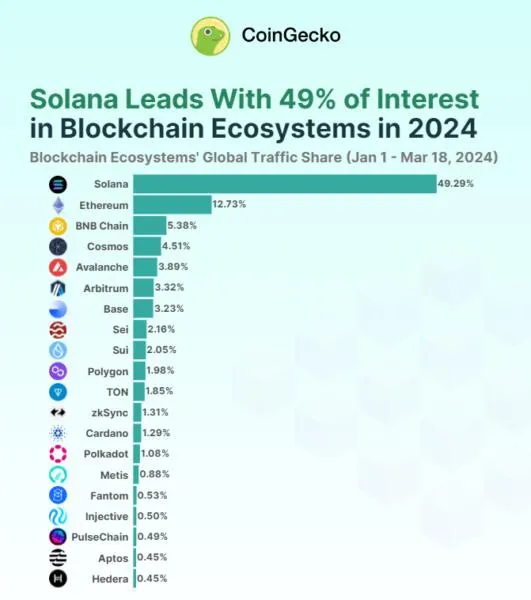
Looking back, Anatoly introduced a novel consensus mechanism—Proof of History (PoH)—inspired by telecom industry principles, effectively addressing blockchain congestion. After launch, strategic partnerships and influencer endorsements rapidly ignited market sentiment, helping the public chain attract developers and users at scale. At the same time, core technology and user experience kept pace. Despite market volatility and pressures from institutional involvement, token utility dynamics, and sell-offs, Solana leveraged technical upgrades to enhance stability.
If Ethereum opened the public chain market through innovations like smart contracts, Solana resembles traditional Web2 giants like Google or Microsoft—entering via DApps to capture users.
Anatoly stated that for Solana to achieve dominance, the breakthrough will come from hosting the next major application on its blockchain: “I think if we truly see a breakthrough with 100 million users on Solana, that would be a fantastic milestone. I don’t know exactly what form that experience will take. But to me, if something equivalent to Facebook or NFTs is built on Solana, I believe that’s how we win.” He also expressed hopes that within the next 7–10 years, a wave of consumer-facing Web3 applications will emerge—possibly payment apps or DePIN/Helium-like networks.
Of course, criticisms remain. Much of Solana’s current ecosystem revolves around memes, which tend to have short lifecycles and leave the network vulnerable when hype fades. Past network outages have also shaken confidence in its technical approach. Innovation exists alongside challenges. Where will Solana go from here? Only time will tell.
Join TechFlow official community to stay tuned
Telegram:https://t.me/TechFlowDaily
X (Twitter):https://x.com/TechFlowPost
X (Twitter) EN:https://x.com/BlockFlow_News
 白话区块链
白话区块链