









Funds flowing in? Crypto market rebounds
TechFlow Selected TechFlow Selected
Funds flowing in? Crypto market rebounds
A large number of leveraged long positions have been liquidated, and trading volume has surged significantly, which may indicate that the phase of rapid market decline has come to an end.
 Navigating Web3 tides with focused insights
By 1912212.eth, Foresight News
The crypto market has been turbulent, especially over the past week, with many investors feeling the brutal volatility. BTC has declined sharply for three consecutive days since August 2, plunging from $65,000 to $57,000. At around 2 PM yesterday, after continuous downward pressure, BTC finally broke below the $50,000 mark, dropping as low as $49,000, sending market sentiment into despair. According to Alternative.me data, the Fear & Greed Index fell below 20, hitting its lowest level since August 2022 (extreme fear). BTC then oscillated near $50,000 for several hours before steadily climbing from around $52,000 at 9 PM that evening, surging past $53,000, $54,000, and $55,000. This morning at 8 AM, it even rebounded to $56,000, where it continued to fluctuate. Thus, BTC ended its four-day losing streak in daily candles, stabilizing prices and turning from red to green.
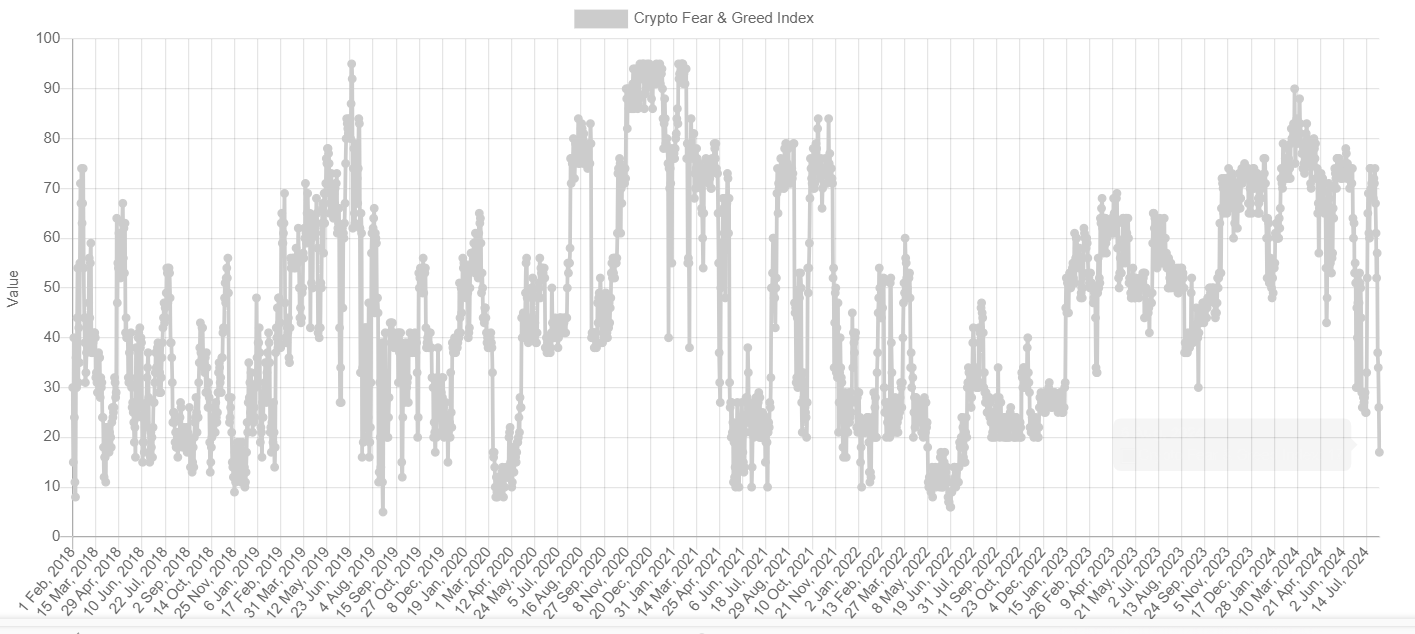
ETH also recovered from $2,111 to around $2,500, ending a seven-day losing streak on the daily chart. Altcoins broadly rebounded as well, with TAO surging over 33% in 24 hours and ARKM and AAVE each gaining more than 20%. In derivatives markets, CoinGlass data shows that $173 million in positions were liquidated in the past 12 hours, including over $60 million in longs and over $100 million in shorts.
After macro conditions deteriorated a few days ago, they quickly spilled over into the crypto market. Amid widespread panic and distress, a recovery emerged—what factors contributed?
Stabilization in U.S. and Japanese Equities Restores Some Capital Market Confidence
In Japan, the yen's exchange rate against the dollar rose 8% within a month, directly impacting yen carry trades. Many investors had borrowed yen at ultra-low interest rates to invest in higher-yielding assets. On July 31, the Bank of Japan raised interest rates for the first time since ending its negative rate policy in March this year, making arbitrage harder and forcing many traders to unwind positions, triggering severe market volatility. Yesterday, the Nikkei plunged 9%, and the Topix index triggered circuit breakers twice, rapidly spreading panic.
Japan responded swiftly. Finance Minister Shunichi Suzuki expressed strong concern about the stock market decline on the same day and reiterated the next day that he would do everything possible to manage the economy and fiscal policy, working closely with the Bank of Japan while calmly assessing the current situation.
On the morning of August 6 local time, the Nikkei opened sharply higher, rising over 3,200 points—surpassing the previous intraday record gain of 2,677.54 points set in October 1990—and achieving the largest point gain in history. Due to the extreme surge, Osaka Securities Exchange halted trading for 10 minutes starting at 8:45 AM local time.
In the U.S., after suffering heavy losses yesterday, equity futures extended gains today, with Nasdaq futures up 2%, S&P 500 futures up 1.5%, and Dow Jones futures up 1%.
The stabilization of U.S. and Japanese stock markets has positively influenced global capital markets, helping the crypto market avoid further deterioration.
Capital Inflows After Massive Leveraged Liquidations
Over the past 24 hours, total liquidations across the network reached $631 million, including $376 million in longs and $255 million in shorts. Whenever open interest hits recent highs, BTC prices tend to sharply pull back. After BTC recently broke above $70,000, derivatives open interest surged dramatically.
Following this violent shakeout, total Bitcoin futures open interest has dropped to $25.8 billion—a decline of over 30%—and funding rates have turned deeply negative. A large number of leveraged long positions were wiped out, while trading volume spiked, possibly signaling the end of a rapid downward phase.
Jump Trading, which recently sold off significant holdings, held 96% of its portfolio in stablecoins by noon yesterday. Later that afternoon, Jump transferred 26 million USDT to Binance, bringing its total deposits over the past 24 hours to $70 million.
Another address suspected to belong to Justin Sun deposited 210 million USDT into HTX over the past two days and withdrew nearly 15,000 ETH since last night, worth approximately $36 million.
Notably, during yesterday’s market crash, the OTC premium for USDT rose to 3.22%, quoted at 7.37 RMB, indicating some capital was entering the market to buy the dip.
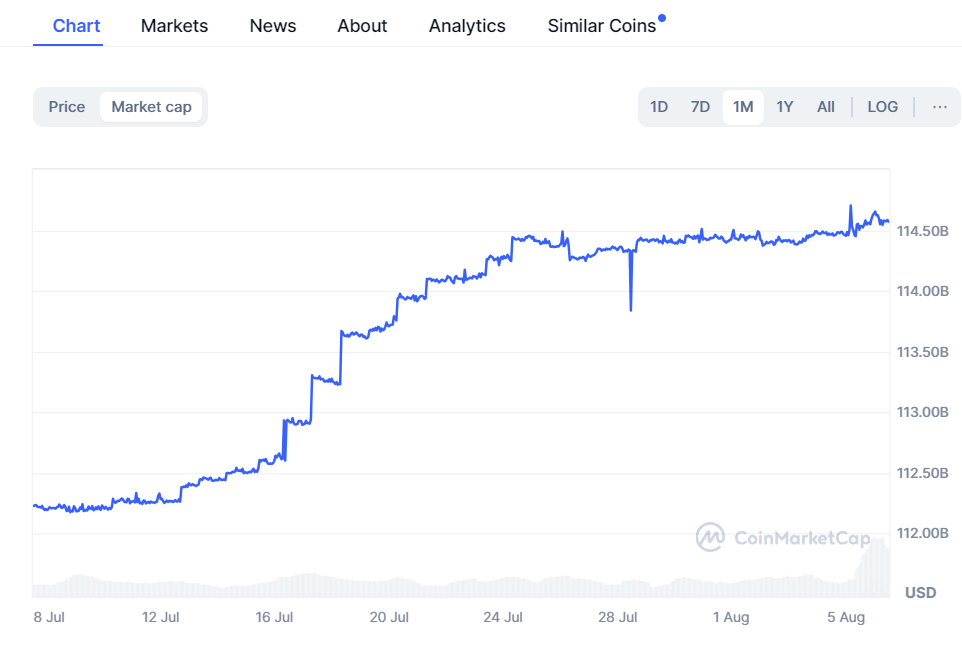
Regarding stablecoin metrics, USDT’s market cap increased by around $300 million over the past seven days—not a large amount, but still showing steady growth.
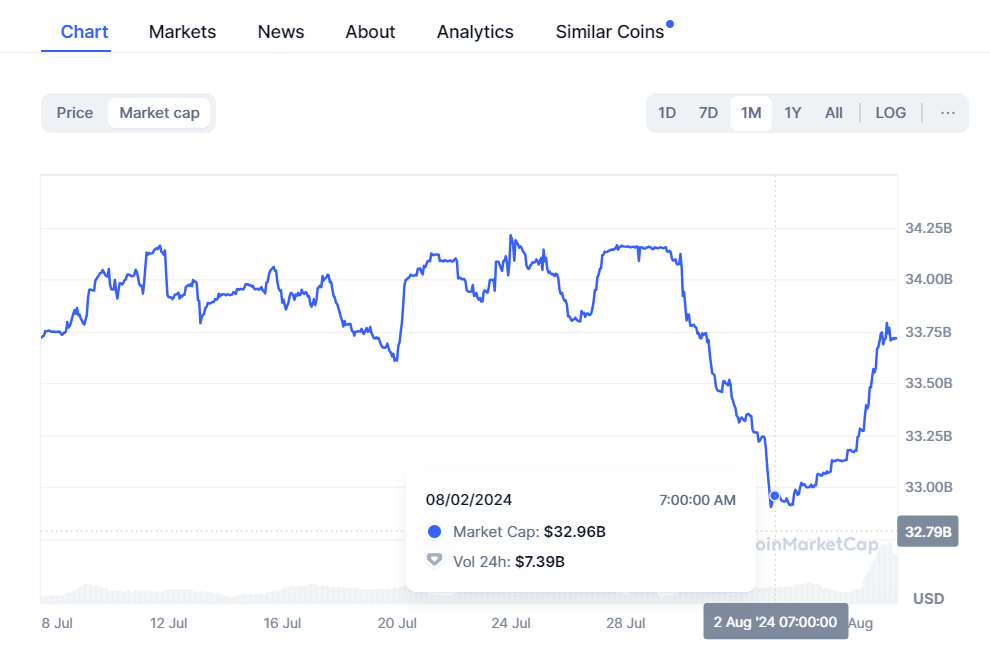
USDC, representing U.S. capital, rebounded from $32.9 billion to a peak of $33.8 billion in market cap—nearly a $1 billion increase in just a few days.
Outlook
Arthur Hayes, Co-Founder of BitMEX: Financial Markets May Face Second Shock as Excessive Leverage Emerges
Arthur Hayes, co-founder of BitMEX, tweeted that the first wave of shocks in financial markets has passed, and now we await the emergence of issues related to excessive leverage in traditional finance. He expects the second wave of shocks to begin soon and suggested that if a rescue is needed, the market may require further adjustments before this Friday. The current respite is only temporary, and market volatility will persist.
Trader Eugene: Concerned About Deep Recession, Advises Prioritizing Capital Preservation
Trader Eugene Ng Ah Sio shared his long-term market views on social media, highlighting:
1. When there is significant uncertainty and weakness in the market, I usually refrain from aggressively going long;
2. I previously bought altcoins but set risk limits; once BTC fell below $60,000, I stopped buying. I won’t be purchasing these altcoins again in the foreseeable future;
3. This downturn results from a combination of U.S. election uncertainty and unwinding of yen carry trades. However, my biggest concern is a deep recession, which typically triggers a severe bear market in equities. Cryptocurrencies have never experienced such an environment—we’re uncertain how they’ll perform. But if the current PA (price action) is any indication, people mimicking too quickly could lose substantial capital;
4. Despite the sharp declines in recent weeks, I still observe considerable complacency in the market. Longs who entered near highs view this as a black swan event and expect a V-shaped recovery once things settle. That’s possible—but the longer we remain in this state, the more uneasy these participants become;
5. As always, I recommend prioritizing capital preservation under such circumstances. But since early August, market participants have essentially been playing on legendary difficulty mode.
Summary
Although the market has stabilized for now, full confidence restoration will require improved macro conditions and clarity on the extent of future Fed rate cuts. Within crypto itself, lacking fresh narratives or compelling new stories, the emergence of genuinely useful and breakout projects could attract more capital inflows.
Join TechFlow official community to stay tuned
Telegram:https://t.me/TechFlowDaily
X (Twitter):https://x.com/TechFlowPost
X (Twitter) EN:https://x.com/BlockFlow_News
 Foresight News











