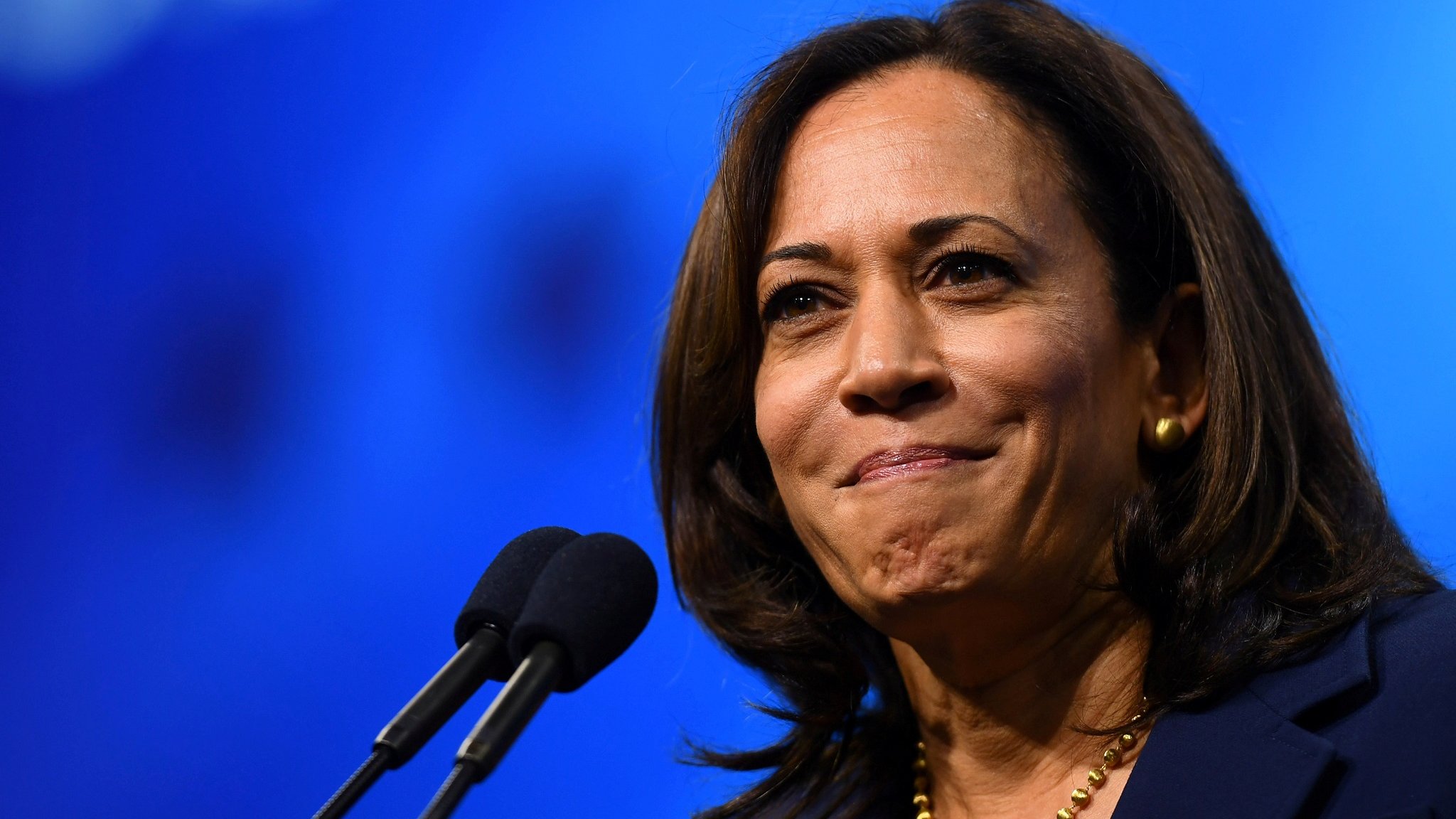
After Indian men dominated Silicon Valley, are Indian-American women poised to shake up U.S. politics?
TechFlow Selected TechFlow Selected
After Indian men dominated Silicon Valley, are Indian-American women poised to shake up U.S. politics?
Although Harris is often described by foreign media as a prominent "Black politician," she has repeatedly emphasized her Indian heritage.
 Navigating Web3 tides with focused insights
By Mary Liu, BitpushNews
With less than 100 days until the U.S. presidential election, as political parties roll out new developments in their campaigns, one group is stepping onto the American political stage in an unprecedented way: Indian-American women.
First is Kamala Harris, U.S. Vice President and Democratic presidential nominee. Her mother was an Indian-American, and her father Jamaican-American. While Harris is frequently described by international media as a prominent "Black politician," she has repeatedly emphasized her Indian heritage.
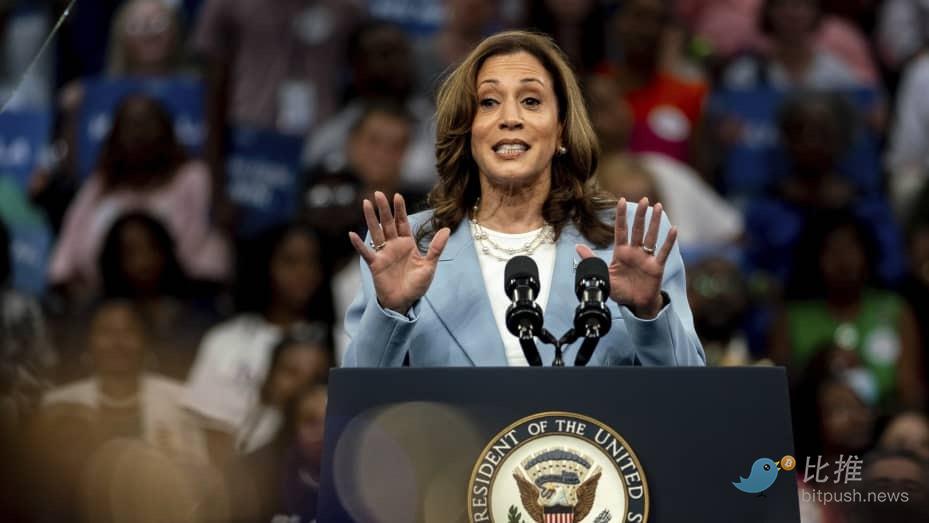
Usha Vance, wife of JD Vance—the Republican vice-presidential candidate and running mate of Donald Trump—is also of Indian descent. Her parents are Indian immigrants and devout Hindus. Usha could soon become the "Second Lady of the United States." Her predecessor—Karen Pence, wife of former Vice President Mike Pence—was a white Christian woman.
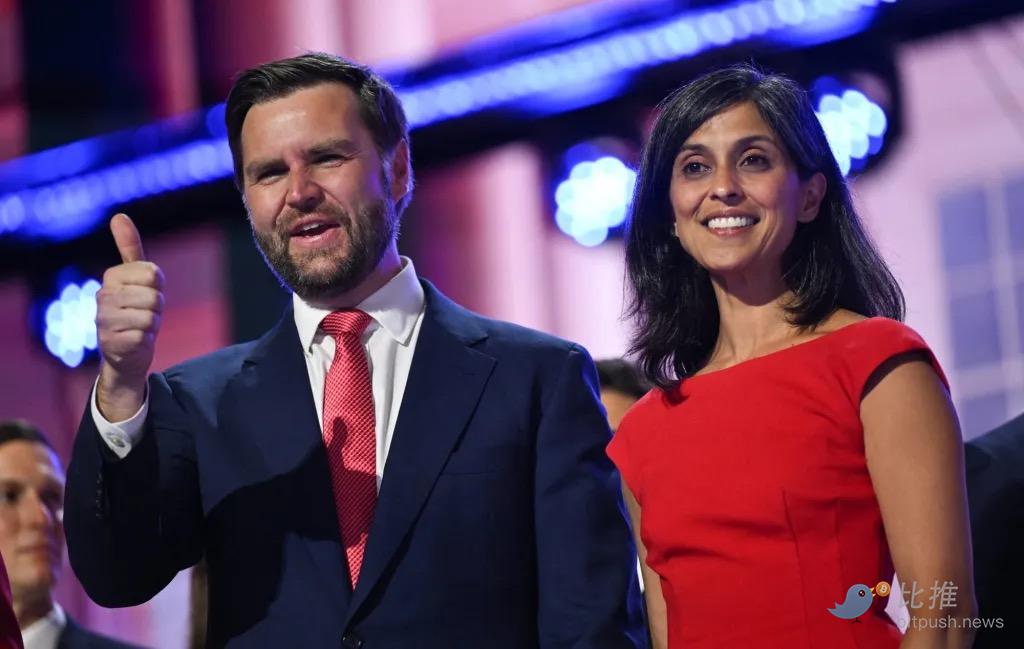
Nikki Haley, former U.S. ambassador to the United Nations and a candidate in the 2024 Republican presidential primaries, is another Indian-American. On March 3, 2024, she won the Washington, D.C. primary, becoming the first woman in history to win a Republican presidential primary. The 52-year-old Haley later dropped out of the race and officially endorsed Trump on the second day of the Republican National Convention.
From Silicon Valley to Capitol Hill: A Flourishing Presence
Indian-Americans are often seen as exemplars of the "American Dream," transforming Silicon Valley from an obscure region into a global technology hub.
Indian-origin executives dominate Silicon Valley leadership roles, including Sundar Pichai (CEO of Google and Alphabet), Satya Nadella (CEO of Microsoft), Arvind Krishna (CEO of IBM), Shantanu Narayen (CEO of Adobe Systems), Nikesh Arora (CEO of Palo Alto Networks), and Jay Chaudhry (CEO of Zscaler).
A study by the Harvard Business Review previously found that 40% of Silicon Valley CEOs or founders come from South Asia or India.
Beyond business and high-tech industries, Indian-Americans are also gaining influence in politics.
According to data from AAPI Data, a nonprofit organization tracking Asian American, Native Hawaiian, and Pacific Islander communities, Indian-Americans make up only 0.6% of eligible voters in the United States.
Yet, their representation in Congress is nearly double that proportion. Currently, five Indian-American members serve in the House of Representatives—Jayapal, Ro Khanna, Raja Krishnamoorthi, Ami Bera, and Shri Thanedar—collectively known as the "Samosa Caucus" (named after a popular Indian snack). This number could rise to six if Suhas Subramanyam wins Virginia’s 10th congressional district seat this fall.
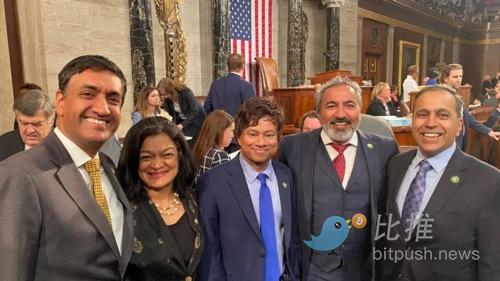
Data shows approximately 40 Indian-Americans hold state legislative seats, two serve as governors, and many more work in Congress and the White House.
The Rise of a Minority Group: A Historical Perspective
According to Pew Research, while Indian immigrants form the second-largest immigrant group in the U.S., they are relatively recent arrivals. In 2000, the Indian-American population was about 2 million; by 2019, it had grown to 4.6 million.
After World War II, the civil rights movement for African Americans and shifting Cold War dynamics prompted U.S. leaders to end discriminatory quotas and pass the Immigration and Nationality Act of 1965 (Hart-Celler Act). This law opened U.S. borders to Asia, Latin America, and other regions, favoring skilled and educated workers—leading to a large influx of Indian and other Asian immigrants.
Karthick Ramakrishnan, founder of AAPI Data and professor of public policy at UC Riverside, said: "It's an extraordinary story—this group wasn't even allowed citizenship until 1946, nor eligibility for entry until 1965."
Indian immigrants have several inherent advantages in pursuing the American Dream: familiarity with democratic voting systems, fluency in English, and strong community cohesion.
Moreover, as described in the 2016 book *The Other One Percent: Indians in America*, those who migrate to the U.S. are largely shaped by "invisible but rigid caste and class hierarchies" in India. Individuals from the highest social classes and castes (particularly Brahmins) gain access to top-tier education and elite jobs, preparing them for white-collar careers in America—meaning many were already upper-middle class in India.
Indian-Americans indeed lead in income levels: U.S. Census data shows their median household income is nearly $142,000—almost twice the national average—and nearly half hold master’s degrees or higher.
Thus, in the context of digitalization, globalization, and free markets, Indian-Americans will continue to thrive across multiple domains—as long as visa policies permit.
The Awakening of Feminism in America: Benefits for Minority Groups
Following Biden’s withdrawal and Harris taking the reins, the 2024 U.S. election may witness another historic moment: the election of a female president.
Harris has framed her campaign around issues particularly important to women—gun violence, reproductive rights, healthcare, and child poverty. Her campaign anthem is Beyoncé’s “Freedom,” and in campaign videos, Harris declares: “Freedom to make decisions about our own bodies!”
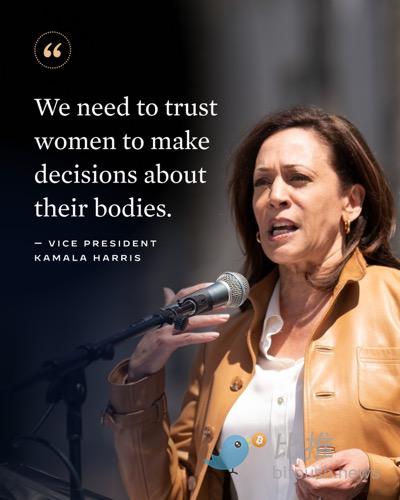
The dual identity of being both female and a member of a minority group appears to give Harris broad appeal among voters. After securing the Democratic nomination, over 40,000 Black women from across the U.S. joined a Zoom call to support her, raising $1.5 million for her campaign within three hours.
This awakening of female consciousness did not happen overnight—the country’s values have shifted dramatically compared to eight years ago.
Eight years ago, Hillary Clinton lost the presidential election to Trump, sparking widespread discontent among Democratic women voters. According to the Wall Street Journal, on the day after Trump’s inauguration, millions of women marched in protest in Washington and other major U.S. cities. Clinton’s defeat inspired many women to run for office, resulting in a record number of female candidates winning congressional seats.
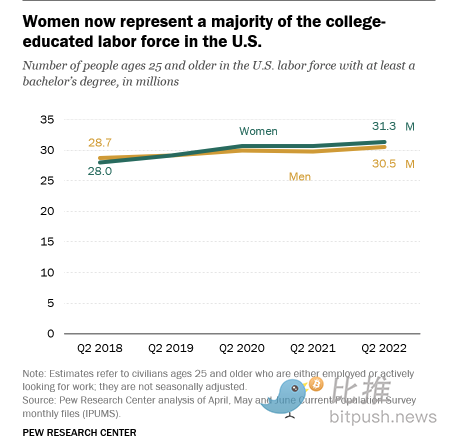
Pew Research data shows that in recent years, for the first time in U.S. labor market history, college-educated women outnumber men, making up over half (50.7%). Then came the global #MeToo movement in 2017, which indirectly contributed to the Supreme Court overturning federal abortion rights in 2022. The #MeToo wave has further mobilized women to advocate for gender equality.
Amy Palmer, a U.S. pop culture expert, told CNN: "As women, we’ve been told we can have it all, but biology hasn’t caught up. JD Vance called childless women 'miserable cat ladies' and disparaged working mothers as bad parents. He alienated a crucial demographic that will be outraged by such absurd rhetoric."
In the U.S., the presidency has long carried deeply masculine connotations—symbolizing power and authority traditionally associated with men. Over more than two centuries of democracy, the U.S. has elected only one Black president and never a female president. Yet, the rise of Indian-American women like Harris and Nikki Haley is challenging this entrenched tradition.
A 2023 Pew Research report found that 42% of women believe it would be significant to see a woman elected president within their lifetime. In the same survey, 39% of respondents—both male and female—believed a female president would be better at finding compromises, and 37% thought women would foster a more respectful political environment. However, over half said gender makes no difference.
Harris is not only asserting herself as a woman but also embracing her Indian roots, boldly challenging male dominance in American politics and redefining leadership through a lens of femininity and diversity. Haley, as former governor of South Carolina and U.S. ambassador to the UN, also demonstrates significant influence. The rise of these Indian-American women signals an expanding landscape of gender and racial diversity in American politics.
Yet, will American voters embrace this historic transformation in gender and racial dynamics? The answer will come in November.
Join TechFlow official community to stay tuned
Telegram:https://t.me/TechFlowDaily
X (Twitter):https://x.com/TechFlowPost
X (Twitter) EN:https://x.com/BlockFlow_News
 比推 BitpushNews