NFT Market by the Numbers: Total Trading Volume Down 50% Since April, Solana Royalties Remain Strong
TechFlow Selected TechFlow Selected
NFT Market by the Numbers: Total Trading Volume Down 50% Since April, Solana Royalties Remain Strong
Since April 2024, NFT trading volume has dropped by 50%.
 Navigating Web3 tides with focused insights
Author: OurNetwork
Compiled by: TechFlow

NFT Markets
OpenSea, Blur, Rarible, Hyperspace

NFT Trading Volume Drops 50% Since April 2024
-
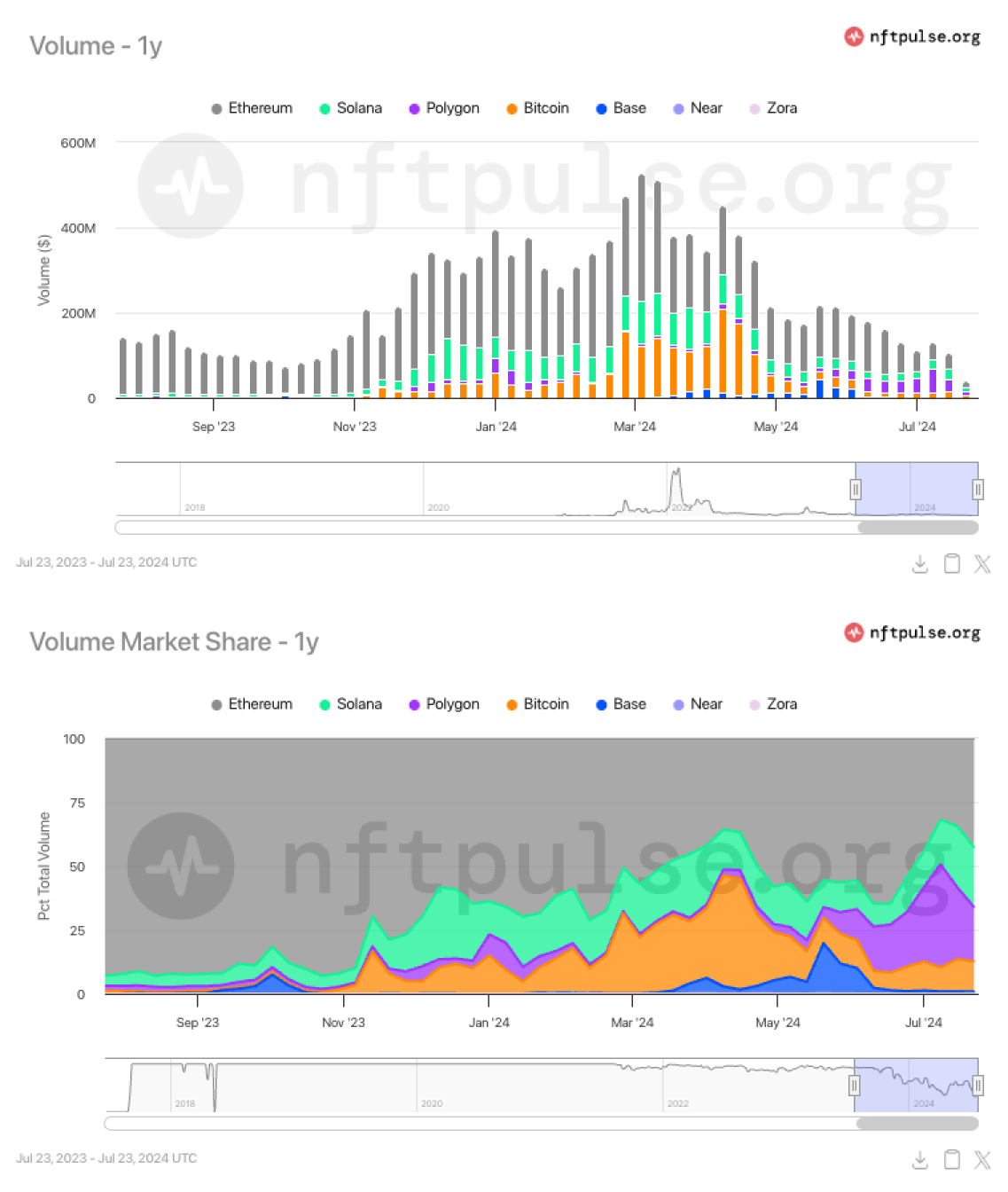
Since April 2024, NFT trading volume has dropped from $300 million weekly to under $150 million, a decline of 50%. Over the past 30 days, daily volume has remained around $15 million. As of July 24, Ethereum led with $5.8 million in daily volume (45% market share), followed by Solana at $3.3 million (26%) and Polygon at $2.3 million (18%).
-
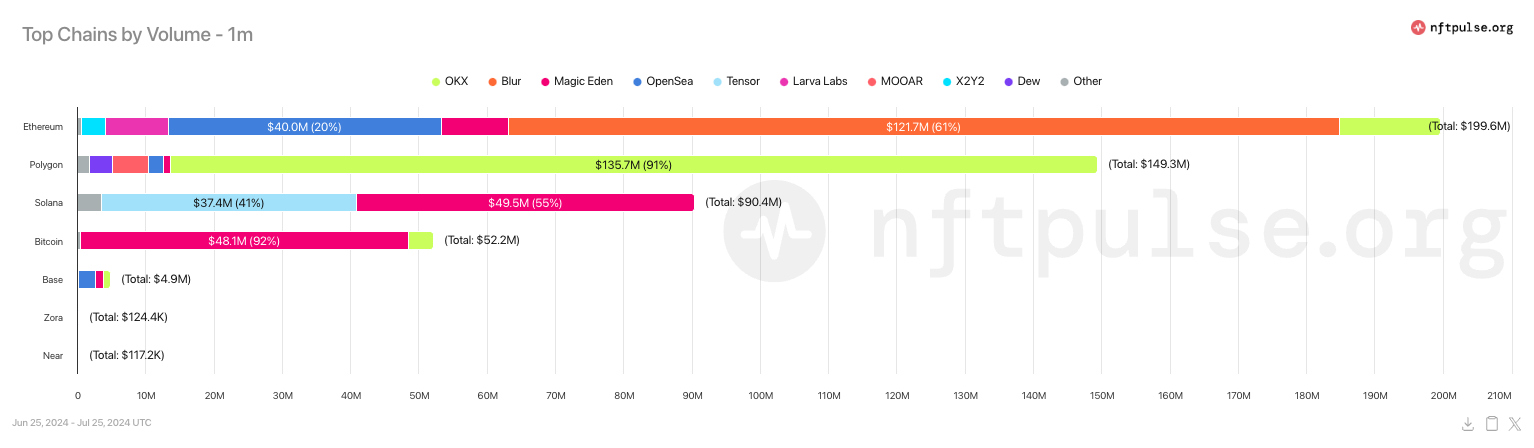
On each chain, 1 or 2 platforms typically dominate trading. Over the past 30 days, Blur captured 60% of Ethereum's volume. On Polygon, OKX facilitated 91% of trades; on Solana, Magic Eden accounted for 55% and Tensor 41%. In the Bitcoin market, Magic Eden handled over 90% of trading volume.
-
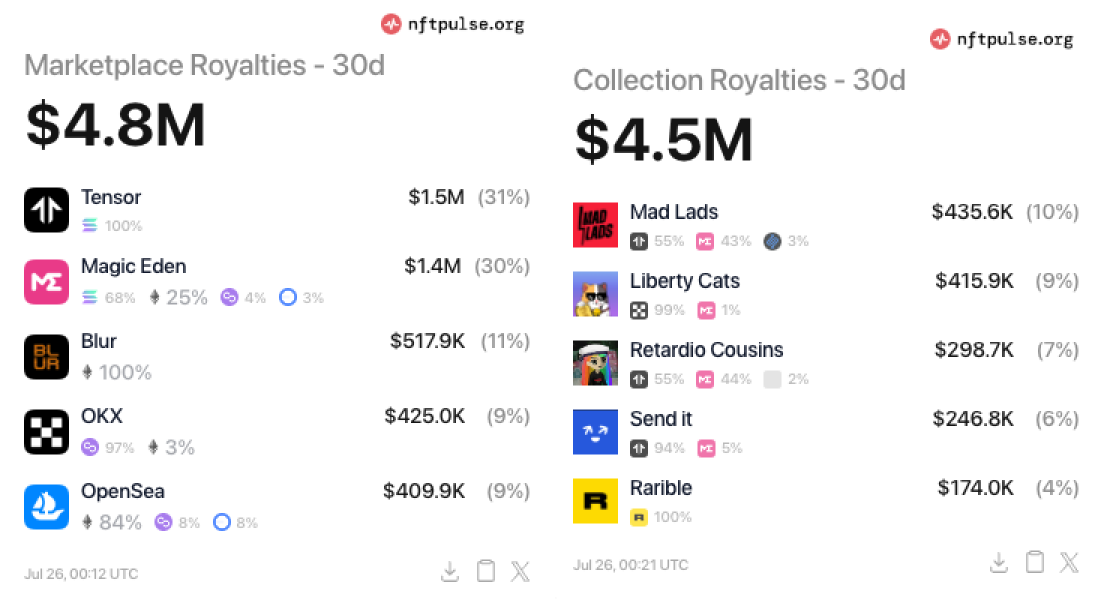
Royalties remain strong, with Solana leading. Over the past 30 days, platforms paid creators a total of $4.8 million in royalties, with Tensor accounting for 31% and Magic Eden 30%. Top collections by royalty contributions include Mad Lads and Liberty Cats, each contributing approximately 10% of the total.

① Blur
Evgeni Averkin | Website | Dashboard
Whale Games: 40-70% of Blur’s Volume Dominance Relies on 5-20% of Traders, Leading to 38% TVL Drop as Incentives Dry Up
-
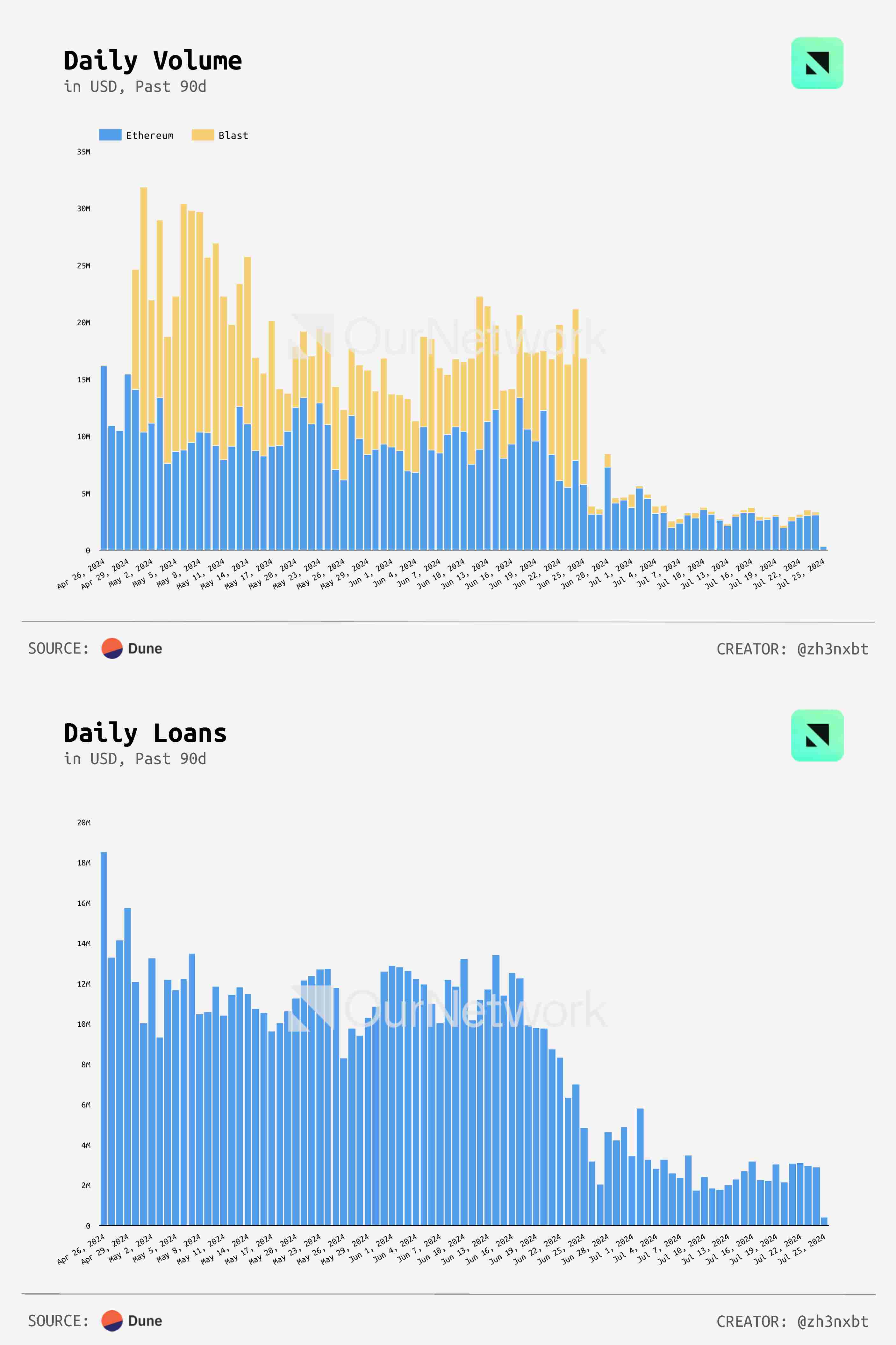
As the leading NFT marketplace, Blur experienced a significant downturn following the end of its Q3 rewards on June 26. Daily trading volume plummeted from $13.3 million (Blast) and $7.9 million (Ethereum) on June 24 to just $755,000 and $3.1 million on June 26. Borrowed amounts also dropped from $7 million to $3.2 million. Although rewards were limited to Blast, the exit of yield farmers from one blockchain had spillover effects across other blockchains on the same platform, highlighting the volatility of incentive-driven crypto ecosystems.
-
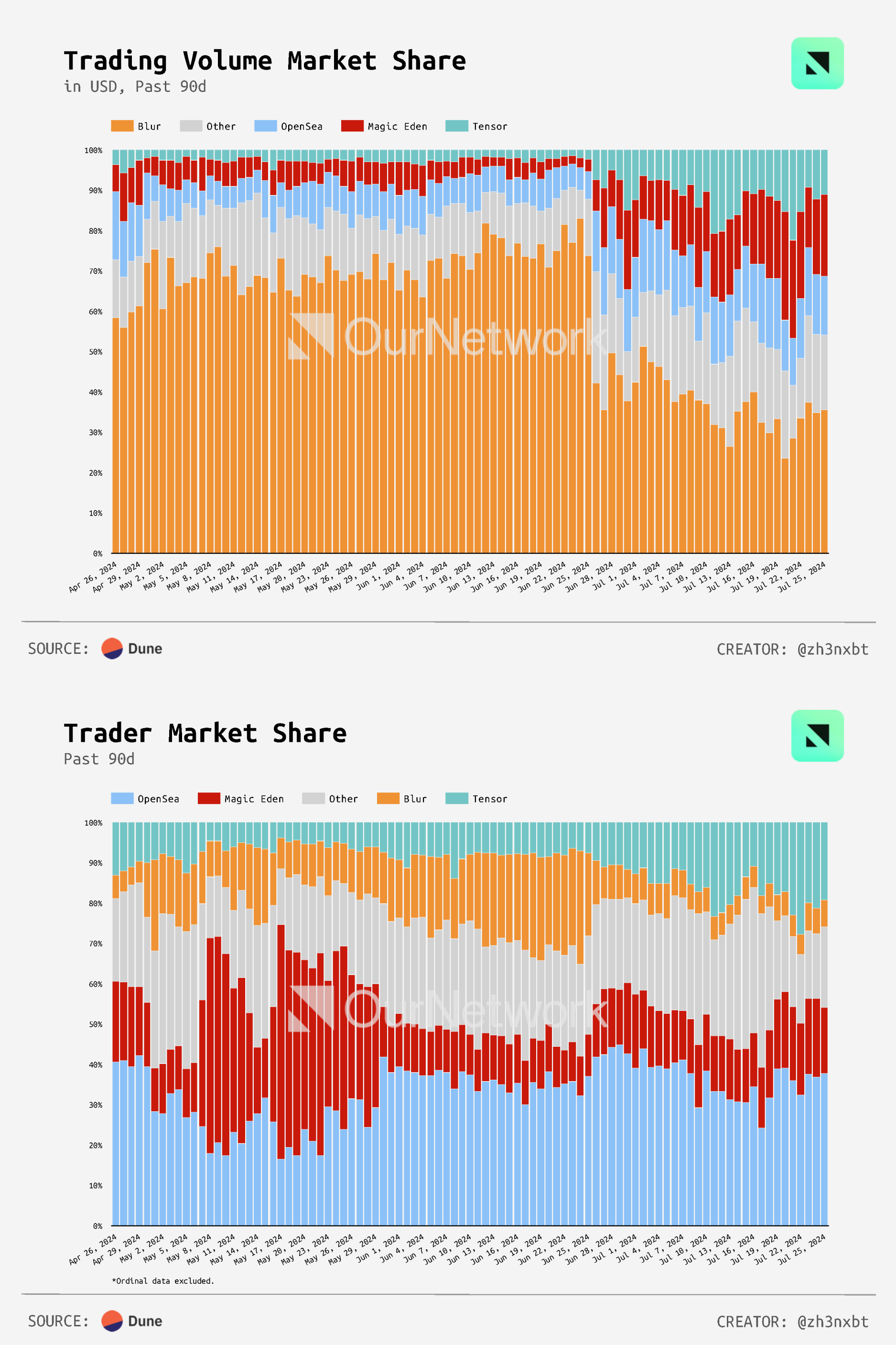
Blur’s volume dominance masks its small base of retail traders. Despite capturing 40–70% of trading volume from May to July 2024, its share of unique traders remained between 5–20%. This contrasts sharply with OpenSea (25–35% volume, 30–40% traders), revealing Blur’s vulnerability to whale behavior—volume could collapse rapidly if large players exit.
-
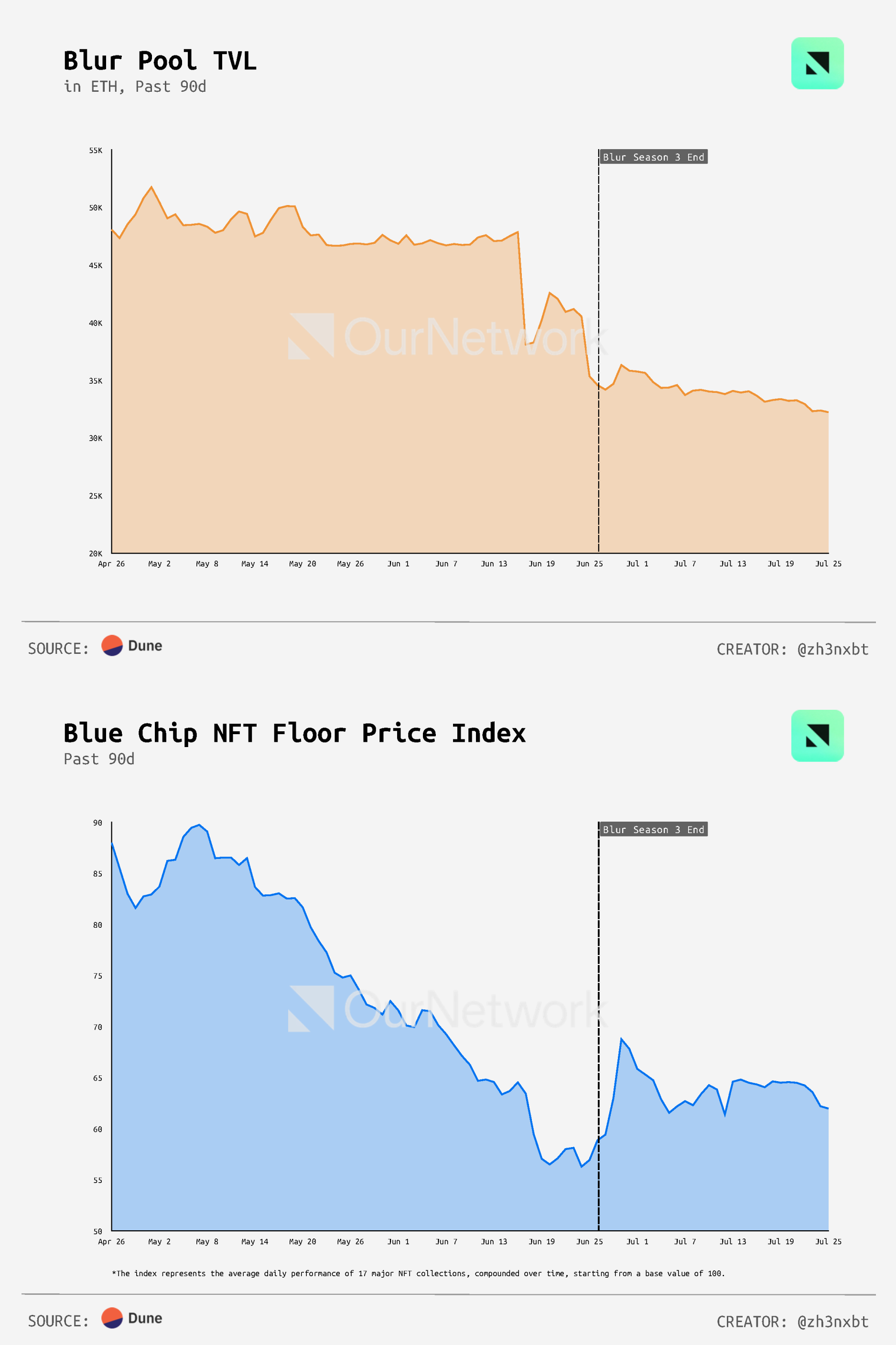
The exodus of yield farmers from Blur also triggered a sharp drop in TVL, falling from a peak of 52,000 ETH to 32,000 ETH (-38%). This impacted market sentiment and thinned liquidity, causing the blue-chip NFT floor price index to fall 38% from peak to trough. However, prices stabilized post-exit (up 10% from lows), suggesting potential return to bullish organic trading.
-
Trade-Level Alpha: On June 17, just before the end of Blur’s Q3 season, cbb.eth executed a massive withdrawal of 5,550 ETH from the Blur Pool, representing over 10% of the protocol’s TVL at the time. This was the largest transaction within 90 days, underscoring Blur’s reliance on whale activity. Such actions can rapidly shift bid-ask spreads, reduce liquidity depth, impact market stability and trader confidence, and cause volatility in prices and trading activity—as observed throughout June and July.
② OpenSea
Brandyn Hamilton | Website | Dashboard
OpenSea Attracts Over 250,000 L2 Users in Q2 2024, Surpassing Ethereum for the First Time
-
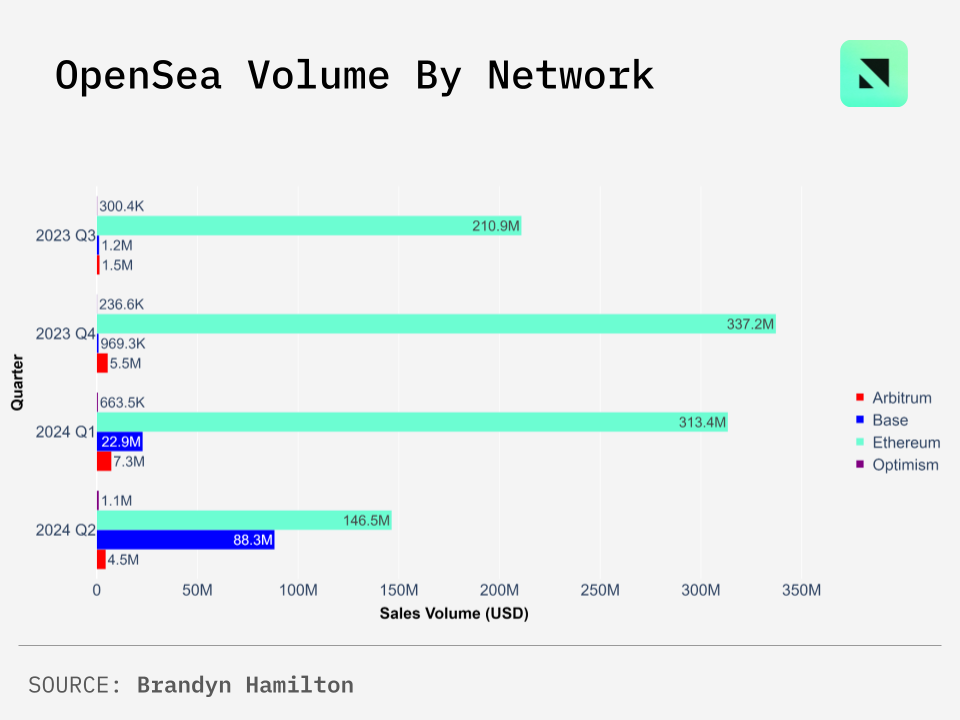
Crypto enthusiasts and casual observers alike are likely familiar with OpenSea, the leading NFT marketplace. However, over recent months, there has been a notable shift in user migration from Ethereum Layer 1 (L1) to Layer 2 (L2) networks. In Q2 2024, L2 blockchains—Optimism, Arbitrum, and Base—accounted for 39% of OpenSea’s total sales volume, up from just 8.9% in Q1. Base alone contributed the majority of L2 volume, reaching $88.3 million.
-
Looking at the top 5 NFT collections on L1 and L2, Q2 volume was dominated by Base, with Higher Swatches leading at $27.7 million in volume. However, L1 maintained higher average sale prices per NFT, with BoredApeYachtClub averaging $52,850 per sale.

-
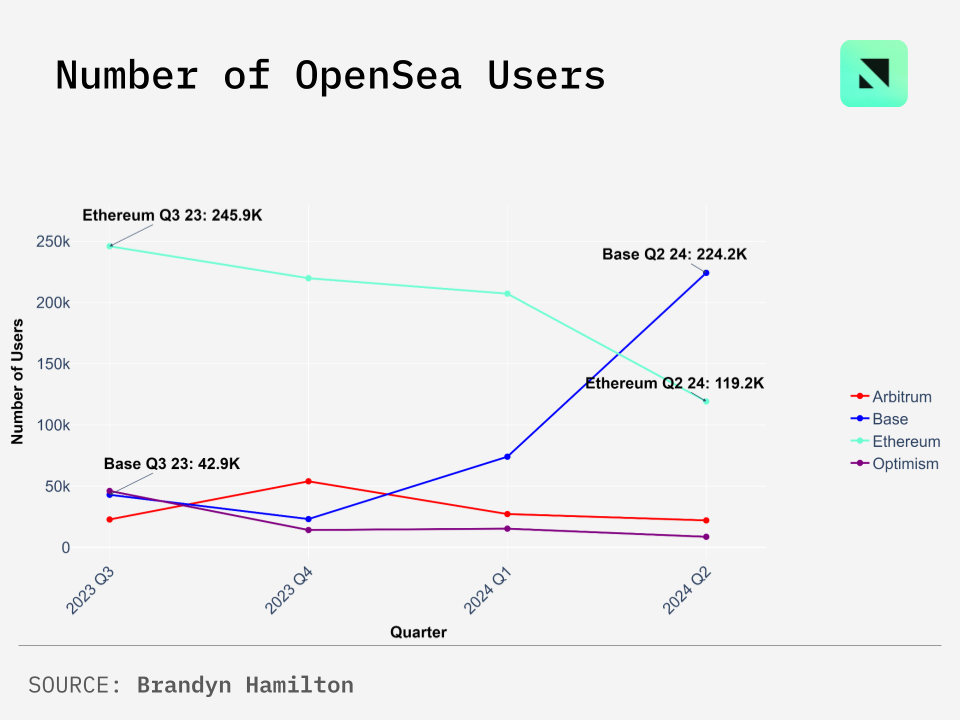
User numbers on L2s also saw significant growth. In Q2, Base surpassed Ethereum in user count, adding over 100,000 new users. The key question now is whether Base can sustain this momentum, especially following the launch of its Onchain Summer 2.0 campaign in June. Despite being newer than other L2s, Base leads in both user growth and transaction volume.
-
Trade-Level Alpha: One of the top collections on Optimism during Q2 2024 was 3DNS, the first on-chain domain registrar compatible with both web2 and web3. Domains powered by 3DNS can be used not only to set email and website records but also to send and receive cryptocurrency. The highest recorded sale so far was watch.box, sold via offer on May 6, 2024, for 23.59 ETH ($73,644). Given that this collection has existed for less than a year, these represent some of the earliest web3-enabled DNS domain sales, marking a genuine historical milestone.
③ Rarible
sealaunch | Website | Dashboard
Over the Past 6 Months, 170,000 Unique Wallets Have Minted Over 500,000 NFTs Through Rarible Drops
-
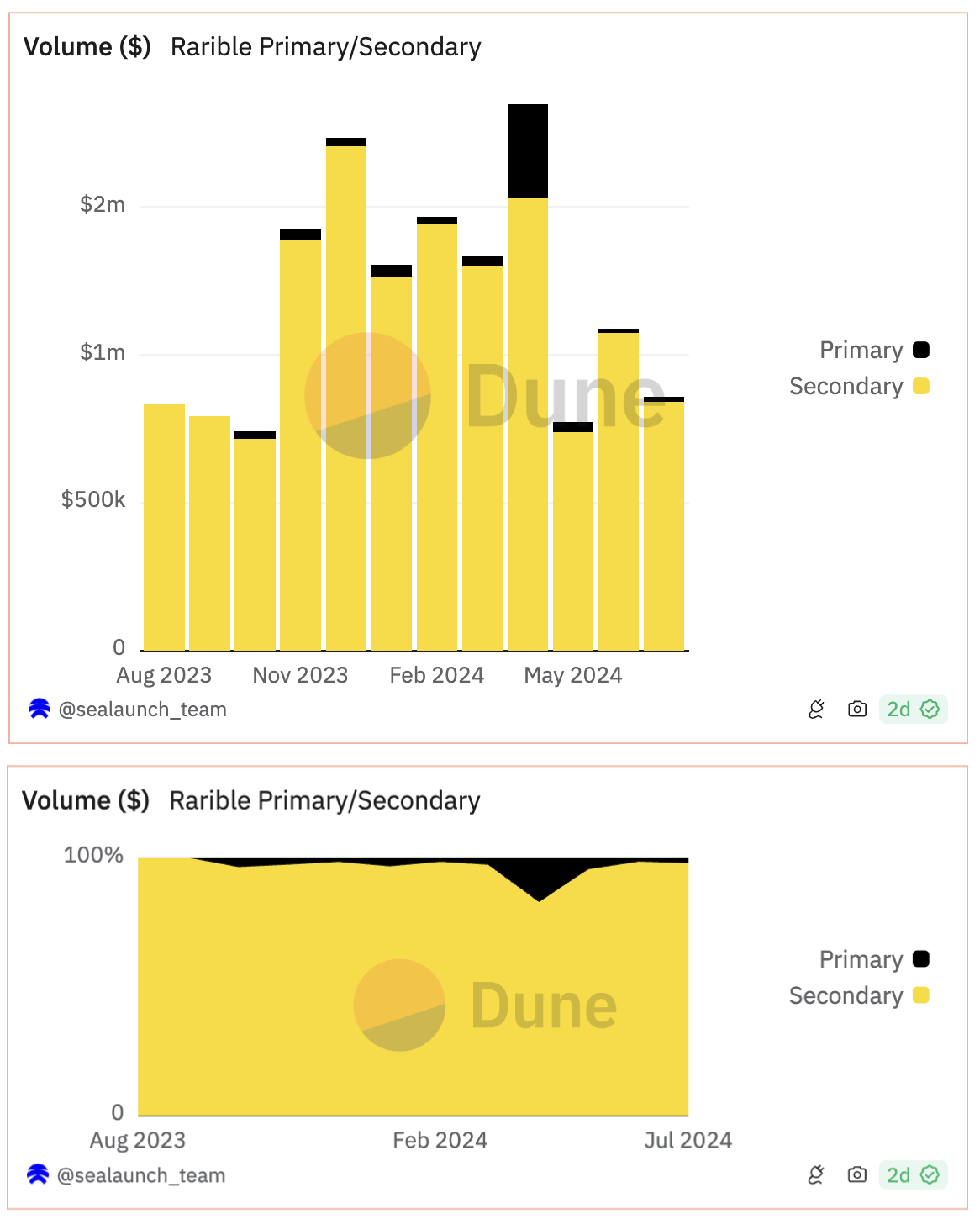
Rarible’s product suite has expanded beyond the Rarible Marketplace (secondary NFT market) to include: RaribleX (NFT marketplace-as-a-service), NFT infrastructure via Rarible API, and Rarible Drops (multi-chain NFT launch platform). In terms of sales volume, Rarible GMV still occurs primarily on the Rarible Marketplace (secondary market), accounting for approximately 90% of total volume.
Dune Analytics - @sealaunch_team
-
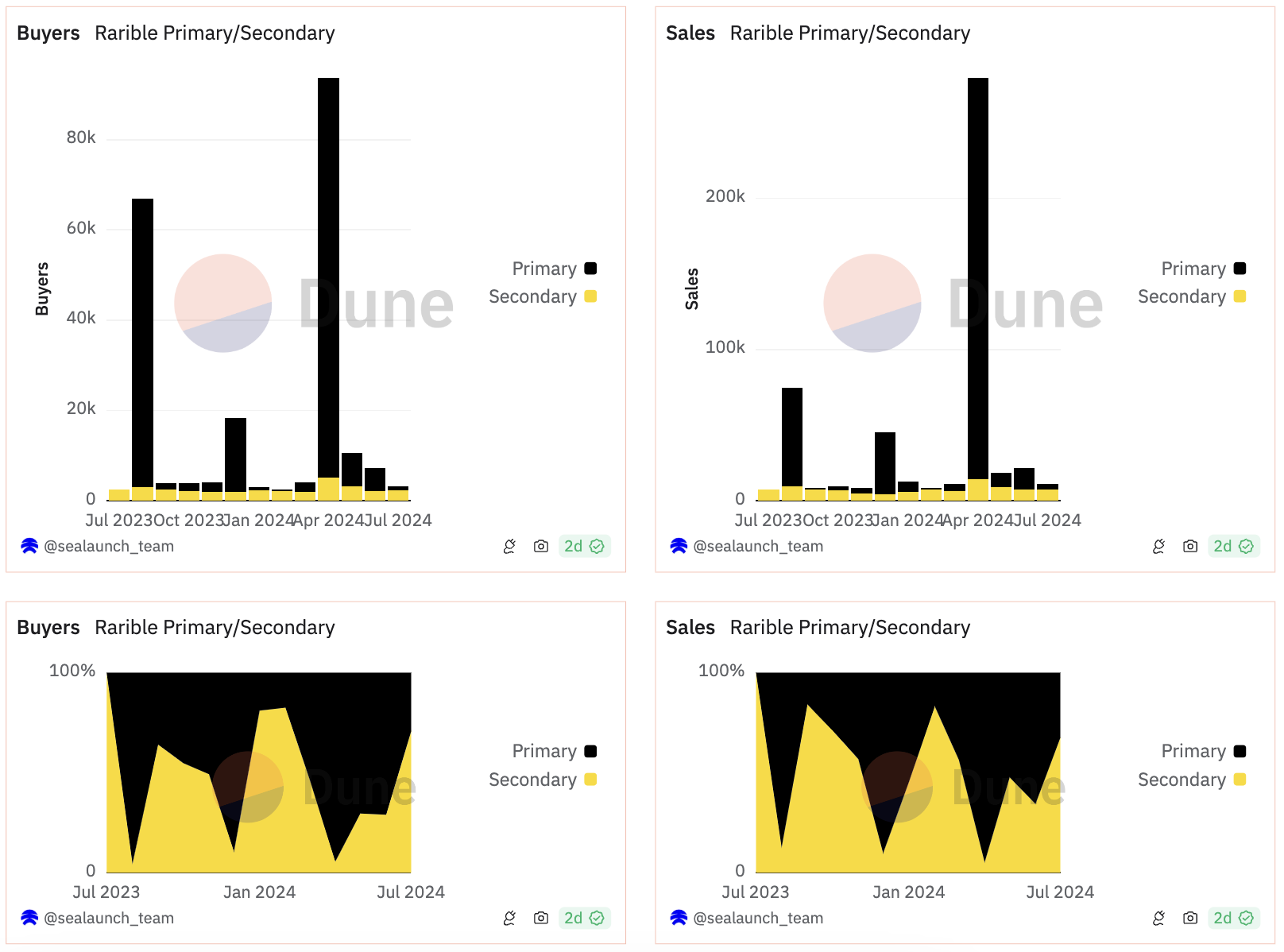
On the other hand, Rarible Drops (primary market) enables creators to launch multi-chain NFTs using Rarible, successfully attracting a large number of NFT minter wallets, representing over 80% of total users and transactions.
Dune Analytics - @sealaunch_team
-
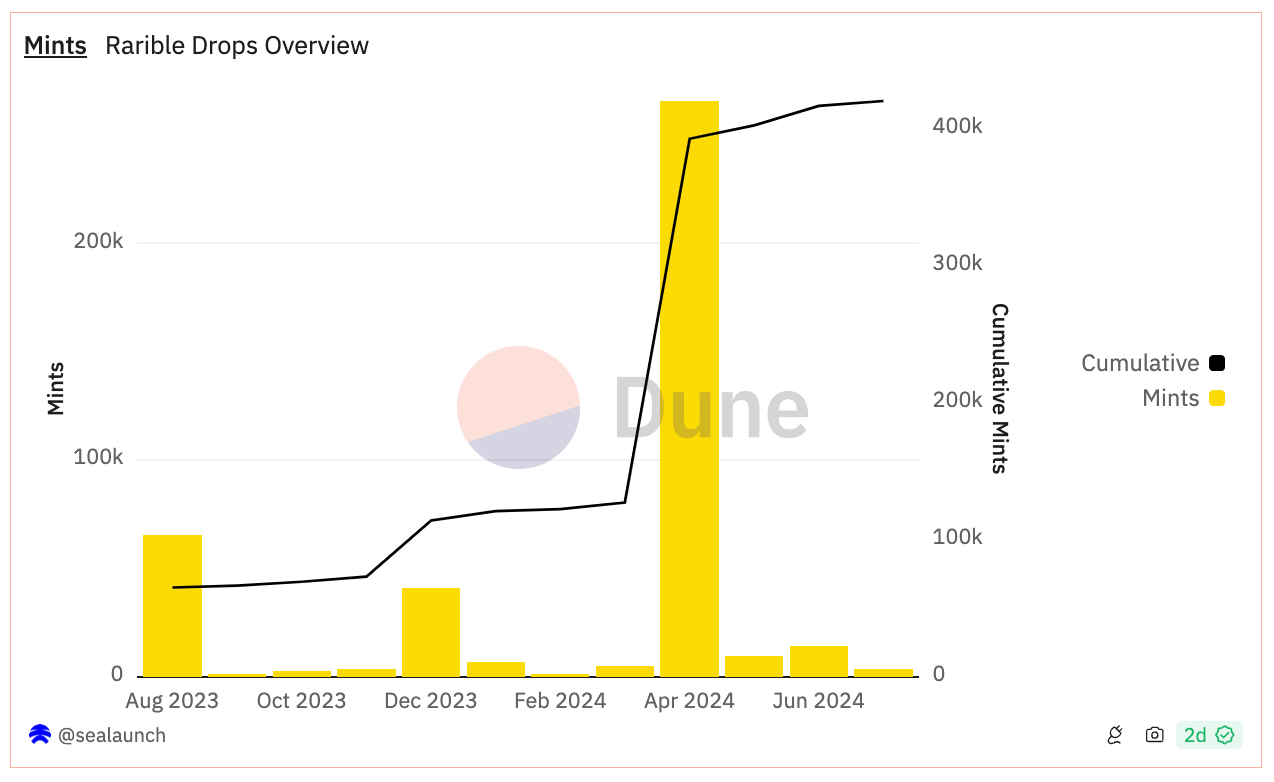
Over the past six months, Rarible Drops has facilitated over 500,000 mints involving more than 170,000 unique collectors across different chains (Ethereum, Polygon, Celo, Rari, and Base), generating over $290,000 in mint revenue. One of the most successful launches was “Anticipation (of a future event),” which triggered a surge in mints on April 24, resulting in over 190,000 mints and participation from more than 48,000 users.
④ Hyperspace
Ali Taslimi | Website | Dashboard
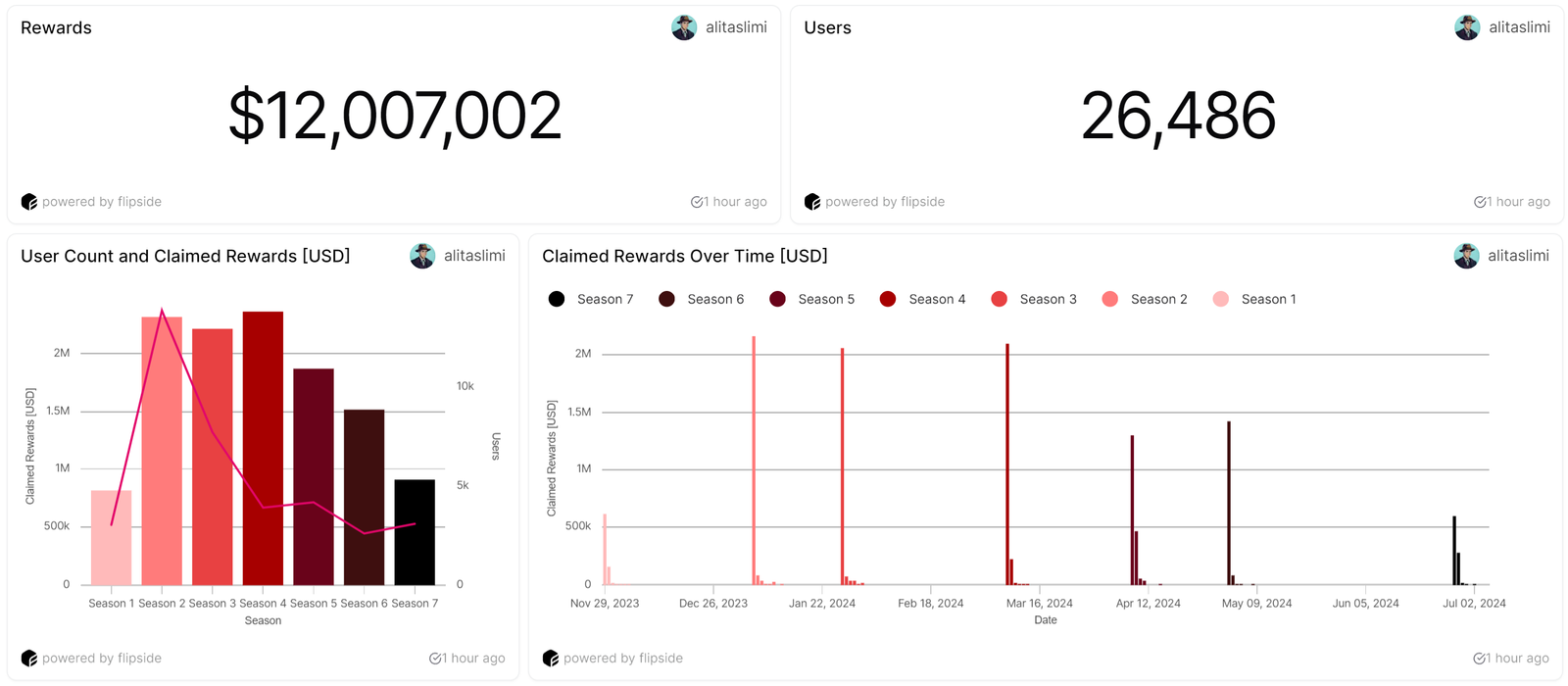
Hyperspace Users on Avalanche Received $12 Million in Rewards While the Market Generated Only $6 Million in Revenue
-
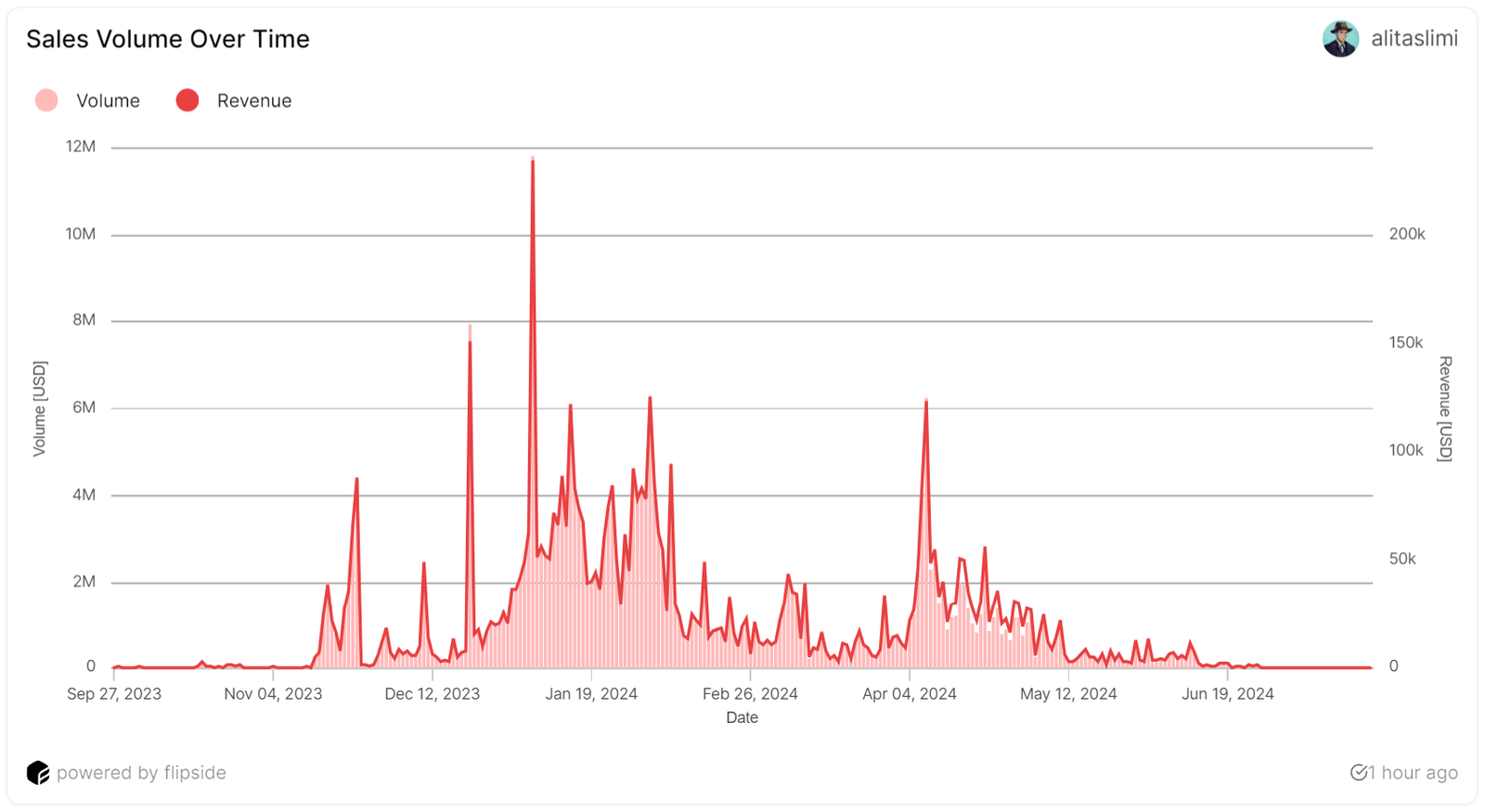
Hyperspace’s activity dropped sharply—from processing millions in trading volume to nearly just $10,000 per day—following its announcement in June to end its rewards program. This pattern mirrors many NFT markets that have seen significant declines in activity after ending incentives. While promises of airdrops or rewards may initially attract users, they appear ineffective at fostering loyalty or sustained engagement.
-
Market users received a total of $12 million in rewards over seven seasons. Although the market generated about $6 million in revenue, reports indicate that a significant portion of the reward funding came from Ava Labs, raising questions about long-term sustainability.
-
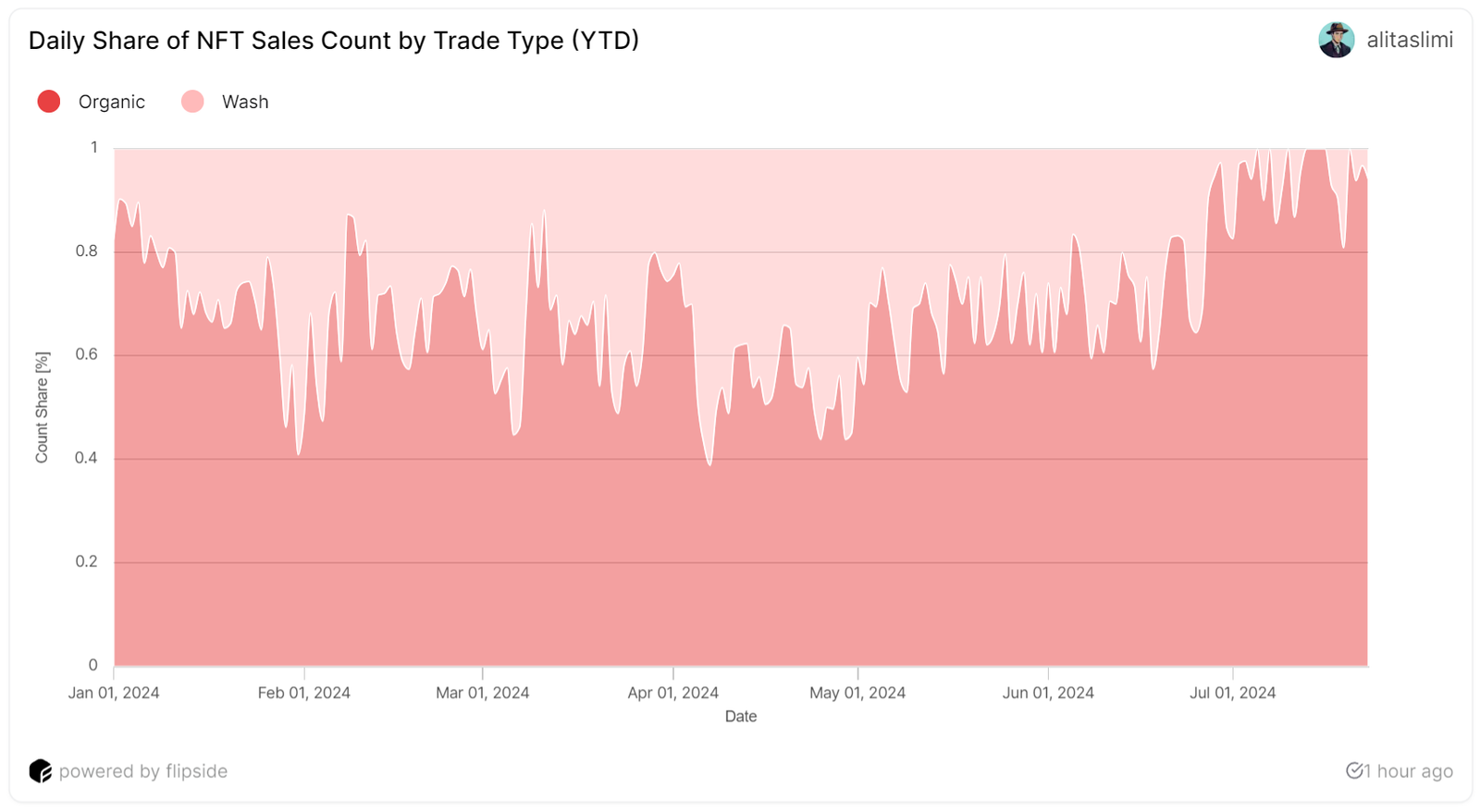
Since early 2024, a significant portion of NFT sales have involved wash trading, negatively impacting the effectiveness of the rewards program. These incentives may have encouraged farming-like behavior, possibly another reason for the program’s termination.
Join TechFlow official community to stay tuned
Telegram:https://t.me/TechFlowDaily
X (Twitter):https://x.com/TechFlowPost
X (Twitter) EN:https://x.com/BlockFlow_News
 @ournetwork__