Howard Marks on Investing Amid Election Uncertainty: Giving up certainty can keep you out of trouble, and I strongly recommend you do so
TechFlow Selected TechFlow Selected
Howard Marks on Investing Amid Election Uncertainty: Giving up certainty can keep you out of trouble, and I strongly recommend you do so
"Uncertainty is the friend of the long-term value investor." – Buffett
 Navigating Web3 tides with focused insights
By Smart Investor
According to Xinhua News Agency, U.S. President Joe Biden announced on July 21 local time that he is withdrawing from the 2024 presidential election. After announcing his withdrawal, Biden stated he would fully support Vice President Kamala Harris in securing the Democratic Party's nomination.
Since the debate with current President Biden—and especially after the assassination attempt at a rally—calls for former President Donald Trump’s return to the White House have been rising steadily… Predictions from overseas investment institutions have swung dramatically.
Some point out that Trump won’t forget companies that restricted his social media accounts as he was leaving office. Others argue he may cut government programs, which could hurt clean energy. Some institutions even suggest that greater political polarization benefits capital markets.
We all remember how Trump’s unexpected first victory was seen by markets as the end of days—risk premiums spiked and stocks briefly collapsed—but within hours, sentiment reversed and the “Trump Bull Market” began.
Fast forward eight years. Though the surprise factor would be much lower this time, investors will still likely ride an emotional rollercoaster if Trump wins again.
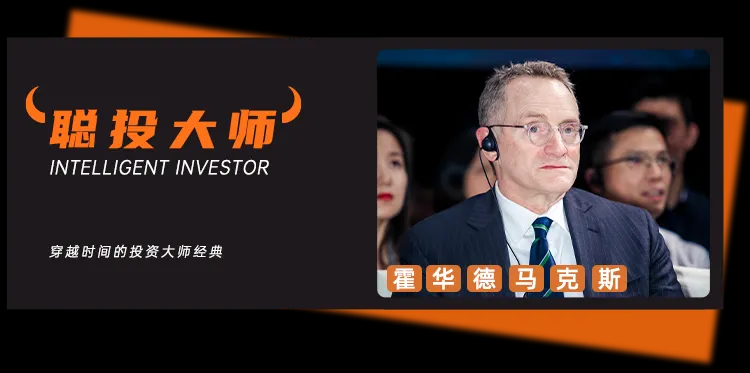
In Howard Marks’ latest investment memo dated July 17, inspired by an article on elections, he focuses on why predictions so often fail in three domains: politics, economics, and capital markets.
The common thread among these three areas is that they are heavily influenced by psychological swings, irrationality, and randomness—making certainty impossible.
Marks also brings up a point he’s never written about before: the spurious connection between money and intelligence.
“When people become wealthy, others assume it means they’re smart; when investors succeed, people tend to believe their intellect extends insightfully into other fields—even successful investors themselves feel this way.”
But he argues, “an investor’s success may result from a string of lucky breaks or favorable conditions rather than any special talent. They may or may not be intelligent, but on topics beyond investing, successful investors generally don’t know more than most people.”
The period leading up to the November election is bound to be long and turbulent.
Perhaps we should follow the example of Dr. John Templeton, who deliberately delayed reading the Wall Street Journal by a few days. Or while preparing contingency plans and acting cautiously, we might repeat to ourselves what Buffett once said: “Uncertainty is the friend of the long-term value buyer.”
The Folly of Certainty
Howard Marks / Essay
My memos are usually inspired by a variety of sources, and this one was sparked by an article in The New York Times on Tuesday, July 9.
What caught my attention was a phrase in a subheading: “She has no doubt.”
The speaker referenced in the article was Ron Klain, former chief of staff to President Biden. The topic was whether President Biden should continue his re-election campaign. The “she” in the subheading refers to Jen O’Malley Dillon, Biden’s campaign manager.
The article quotes her saying just days before the June 27 debate between Biden and former President Trump: “Biden will win. Full stop.”
This memo isn’t about whether Biden should stay in or drop out, or whether he’d win if he did stay—it’s about the fact that no one should be 100% certain about anything.
Given the uncertainty around Biden’s candidacy, this will be another “short” memo from me.
This topic reminded me of an experience I once had listening to a highly respected professional express absolute certainty.
A well-regarded foreign affairs expert told us, “There’s a 100% chance the Israelis will take out Iran’s nuclear capability by year-end.” He sounded like a true insider, and I had no reason to question him.
I recall this was in 2015 or 2016. To give him credit, he didn’t specify which year.
As I pointed out in my September 2009 memo, “The Illusion of Knowledge,” macro forecasters cannot possibly account for all the variables known to affect the future, let alone random influences about which we know little or nothing.
For this reason, as I’ve written before, investors and others affected by the vagaries of the macro future should avoid words like will, won’t, must, can’t, always, and never.
Politics
Recall the lead-up to the 2016 presidential election, when nearly everyone was certain of two things:
(a) Hillary Clinton would win;
(b) If Donald Trump somehow won due to a freak twist of fate, the stock market would collapse.
Even the least confident scholars gave Clinton an 80% chance of winning, with various forecasts going higher from there.
Yet Trump won, and the stock market rose over 30% in the following 14 months.
Most forecasters responded by tweaking their models and promising to do better next time.
My conclusion: If this doesn’t convince you that (a) we don’t know what will happen, and (b) we don’t know how markets will react to what actually does happen, then I don’t know what will.
Now, fast-forward to today. Even before the widely watched presidential debate three weeks ago, none of the people I know expressed high confidence about the upcoming election outcome.
Ms. O’Malley Dillon, mentioned at the start of this piece, might now soften her stance on Biden’s inevitability, explaining that the debate shocked her.
But that’s precisely the point! We don’t know what will happen.
Randomness exists!
When events unfold as expected, people say they knew it all along. When outcomes diverge from expectations, they claim the prediction would’ve held if not for unforeseen circumstances.
But in either case, surprises are possible—and predictions can be wrong.
The difference is that in the latter case, the surprise occurred; in the former, it didn’t—but that doesn’t negate its possibility.
Macroeconomics
In 2021, the Federal Reserve believed the inflation then underway would prove “transitory”—temporary, non-entrenched, and self-correcting.
I believe that, over a sufficiently long horizon, the Fed might ultimately be proven right.
Inflation could fade on its own within three or four years, provided that:
(a) pandemic relief funds driving surging consumer spending run out;
(b) global supply chains normalize. (Though here’s a caveat: unless economic growth slows, inflation expectations/psychology could build during those few years, requiring stronger policy action).
However, since the Fed’s view wasn’t validated in 2021, continuing to wait became untenable. The Fed was forced to launch one of the fastest rate-hiking campaigns in history, with far-reaching consequences.
By mid-2022, the Fed’s aggressive hikes made a recession almost inevitable. A sharp rise in interest rates logically shocks the economy.
History clearly shows that major central bank tightening rarely results in a “soft landing,” but more often leads to economic contraction.
Yet, in fact, no recession occurred.
Instead, by late 2022, the consensus shifted to:
(a) inflation is easing, giving the Fed room to begin cutting rates;
(b) rate cuts will help the economy avoid recession or ensure any downturn is mild and brief.
This optimism ignited a stock market rally by the end of 2022 that continues to this day.
Yet the anticipated 2023 rate cuts that were supposed to fuel the rebound never materialized. In December 2023, the Fed’s “dot plot”—representing officials’ views—suggested three rate cuts in 2024. Optimists immediately doubled down, expecting six cuts.
Now halfway through 2024, inflation remains stubbornly high, and not a single cut has happened. Yet the market consensus expects the first cut in September, and stocks keep hitting new highs on this sentiment.
Current optimists might say: “We were right—just look at the gains!” But on the actual issue of rate cuts, they were completely wrong.
To me, this simply reminds us again: we don’t know what will happen, nor how markets will react to it.
One of my favorite economists, Conrad DeQuadros of Brean Capital, offers a telling anecdote about economists:
I use the Philadelphia Fed’s Anxious Index (the probability of real GDP declining next quarter) as a signal for when recessions end.
When over 50% of economists surveyed predict a decline in real GDP next quarter, the recession has already ended or is near its end.
In other words, the only thing we can be sure of is that economists shouldn’t express certainty at all.
Capital Markets
Few people correctly predicted in October 2022 that the Fed wouldn’t cut rates over the next 20 months. If that prediction caused them to exit the market, they missed a 50% gain in the S&P 500.
Meanwhile, optimistic rate-cut forecasters were entirely wrong about interest rates—but many of them probably made a lot of money anyway.
So it goes: market behavior is hard to judge correctly. I won’t waste time listing all the errors of so-called market experts.
Instead, I want to focus on why so many market forecasts fail.
Economic and corporate trends may tend toward predictability because their trajectories... I should say... reflect mechanistic forces.
In these domains, one might say “if we start from A, we’ll reach B” with some confidence—or at least, there’s a decent chance of being right if trends remain unimpeded and extrapolations valid.
But market movements are more volatile than economic or corporate developments. Why? Because psychology and emotion play crucial roles—and are inherently unpredictable. To illustrate market volatility, let’s refer again to data from economist Conrad:
40-Year Standard Deviation of Annual Percentage Changes
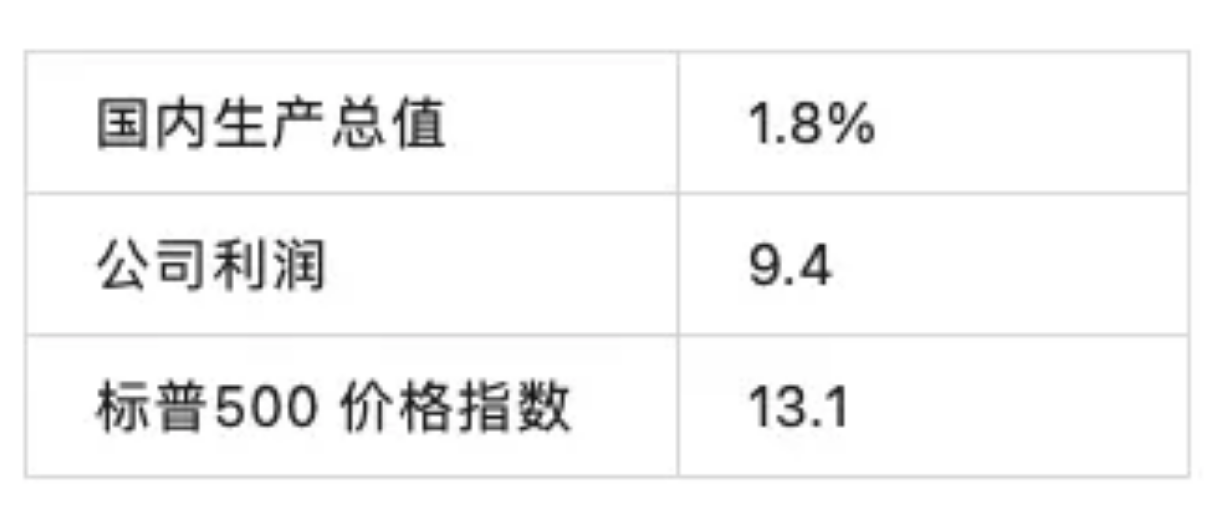
Why do stock prices fluctuate far more than the underlying economies and companies? Why is market behavior so hard to predict, often disconnected from economic events and fundamentals?
Financial “science”—economics and finance—assumes every market participant is homo economicus: rational actors maximizing personal economic benefit. But the key role of psychology and emotion often invalidates this assumption.
Investor emotions swing wildly, overwhelming short-term fundamental influences.
As a result, correct market forecasts are relatively rare—and those that are right for the right reasons are rarer still.
Extension
Today, experts and scholars are making all kinds of predictions about the upcoming presidential election. Many of their conclusions seem logical, even persuasive.
Some say Biden should withdraw; others say he shouldn’t. Some believe he will step aside; others think he won’t. Some argue he’ll win if he stays; others are convinced he’ll lose.
Clearly, intelligence, education, access to data, and analytical ability aren’t enough to ensure accurate predictions. Many of these commentators possess all these traits—yet obviously, they can’t all be right.
I often quote the famous economist John Kenneth Galbraith: “There are two types of forecasters: those who don’t know, and those who don’t know they don’t know.” I love that line.
Another quote comes from his book *A Short History of Financial Euphoria*. Describing the causes of “speculative euphoria and programmatic collapse,” he cites two factors “rarely noticed in our time or past times”: one is “the extreme brevity of financial memory.”
I’ve mentioned this point many times in past memos.
But I don’t recall ever writing about his second factor, which Galbraith calls “the spurious association between money and intelligence.”
When people get rich, others assume it means they’re smart; when investors succeed, people often believe their brilliance extends to other domains. Moreover, successful investors often believe in their own wisdom and voice opinions on matters unrelated to investing.
But investor success may stem from a series of lucky breaks or favorable conditions—not any special talent. They may or may not be intelligent, but on topics outside investing, successful investors generally know no more than the average person.
Nonetheless, many freely offer opinions that are often highly valued by the public. That’s the spurious part.
We see some of them now confidently opining on issues related to the election.
We all know people described as “always wrong, never in doubt.”
It reminds me of another favorite Mark Twain quote (possibly apocryphal): “It’s not what you don’t know that gets you into trouble. It’s what you know for sure that just ain’t so.”
Back in mid-2020, when the pandemic seemed under control, I slowed down my memo-writing, moving from weekly posts in March and April to just two pieces in May—both unrelated to the pandemic, titled *Uncertainty* and *Uncertainty II*—where I devoted significant space to the theme of intellectual humility.
These are among my favorite topics, yet they drew little response. Let me quote a passage from *Uncertainty*, hoping it gives you reason to revisit them:
Here is part of the original content that first drew my attention to the subject of humility:
According to the author, intellectual humility is the opposite of arrogance or conceit. In plain terms, it resembles open-mindedness. Intellectually humble people can hold firm beliefs, yet remain willing to admit error and be proven wrong on various matters (Alison Jones, Duke Today, March 17, 2017).
…Simply put, humility means saying “I’m not sure,” “the other side might be right,” or even “I might be wrong.” I believe this is an essential trait for investors; I clearly prefer associating with people who possess it…
You won’t get into much trouble if you start your statements with phrases like “I don’t know, but…” or “I might be wrong, but…”.
If we acknowledge uncertainty, we’ll conduct due diligence before investing, double-check our conclusions, and act cautiously. In good times, we’ll settle for suboptimal returns, making catastrophic “blow-ups” or collapses less likely.
In contrast, those utterly certain may skip these steps, and when wrong—as Mark Twain implies—the results can be disastrous…
…As Voltaire summarized 250 years ago: Doubt is uncomfortable, but certainty is absurd.
In summary, in fields influenced by psychological swings, irrationality, and randomness, there is no certainty. Politics and economics are two such domains, and investing is a third. In these areas, no one can reliably predict the future, yet many overestimate their abilities and try anyway.
Abandoning certainty can keep you out of trouble. I strongly recommend doing so.
Postscript
Last summer’s Grand Slam tennis tournaments inspired my memo *Fewer Losers, or More Winners?*. Likewise, Saturday’s Wimbledon women’s final provides a footnote to this memo.
Barbora Krejčíková defeated Jasmine Paolini to win the women’s tennis championship.
Before the final, Krejčíková’s odds were 125 to 1. In other words, bettors were certain she wouldn’t win. Maybe they were right to doubt her potential—but they shouldn’t have been so confident in their prediction.
On the subject of unpredictability, I must mention the recent assassination attempt at a Trump rally—an event that could have led to far graver and wider consequences.
Even though the incident has passed and President Trump escaped serious injury, no one can definitively say how it will affect the election (though currently it appears to help Trump’s prospects) or the markets.
Thus, if anything, it reinforces my bottom line: prediction is largely a loser’s game.
Join TechFlow official community to stay tuned
Telegram:https://t.me/TechFlowDaily
X (Twitter):https://x.com/TechFlowPost
X (Twitter) EN:https://x.com/BlockFlow_News