KOL Testimonial: How to Become a Crypto KOL?
TechFlow Selected TechFlow Selected
KOL Testimonial: How to Become a Crypto KOL?
"Besides my salary, I have at least five other sources of income."
 Navigating Web3 tides with focused insights
Author: Ignas
Translation: Luffy, Foreisght News
I never intended to become a KOL; the term "KOL" sounds a bit tacky.
There's widespread negativity toward influencers and the entire influencer economy. I understand why—crypto is full of scammers who sell and dump on their followers, ultimately harming them.
But not all KOLs are frauds. Money isn't my motivation for posting on Twitter—I initially started posting simply because I was bored during the 2022 bear market.
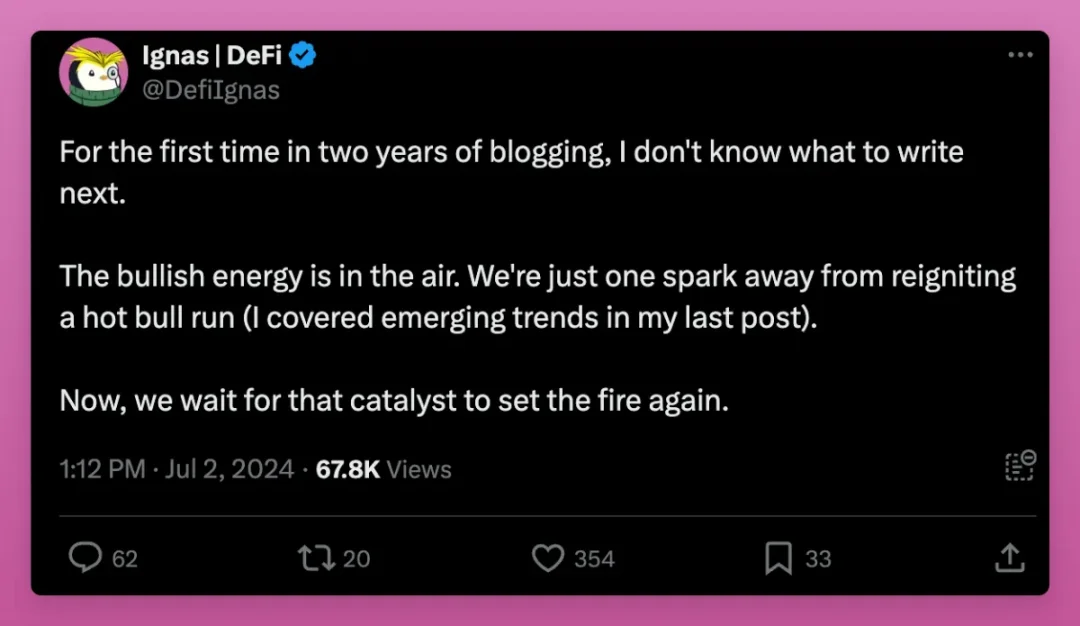
Now, I'm bored again, so I asked on Twitter what I should write about next. The most popular suggestion was to share insights on becoming a KOL, growing an audience, and revealing some secrets behind crypto KOLs and marketing. Since I’ve already reached 100k followers on Twitter, I figured this would be a good opportunity to share something different.
In this article, I’ll briefly share my story, offer advice on growing your audience, discuss popular monetization models (including pricing), and more.

First, do you really want to become a KOL?
At the end of 2021, when the market crashed, I was working at a Korean CEX. Suddenly, the crypto market went eerily quiet.
For months, I went to the office just to scroll through Twitter—there wasn’t much going on. Worse, my boss was trying to sell the CEX, so there wasn’t any real work to do in the office.
This was my second bear market, so I knew a new bull run was coming.
The 2020–2021 bull run began with DeFi, but few understood how it worked. Most people traded on CEXs and didn’t know how to use MetaMask. When DeFi Summer hit, those who grasped the basics reaped massive rewards. I was farming YFI early on Curve, where APY一度 reached a crazy 10,000%. What a time…
My plan was to keep researching to spot the next big opportunity early.
I originally wrote on Twitter to document personal notes as proof that I truly understood the topic. That’s why my Twitter handle is “DeFi Research.”
Tip: If you think you fully understand a concept, try writing it down. You’ll find explaining your thoughts clearly on paper is far harder than imagining them in your head.
But I was still bored. So I spent a week writing a deep research piece on the roadmaps of 25 DeFi protocols to uncover common trends.
I was worried it might flop. After investing so much time into one post, you really hope it succeeds.
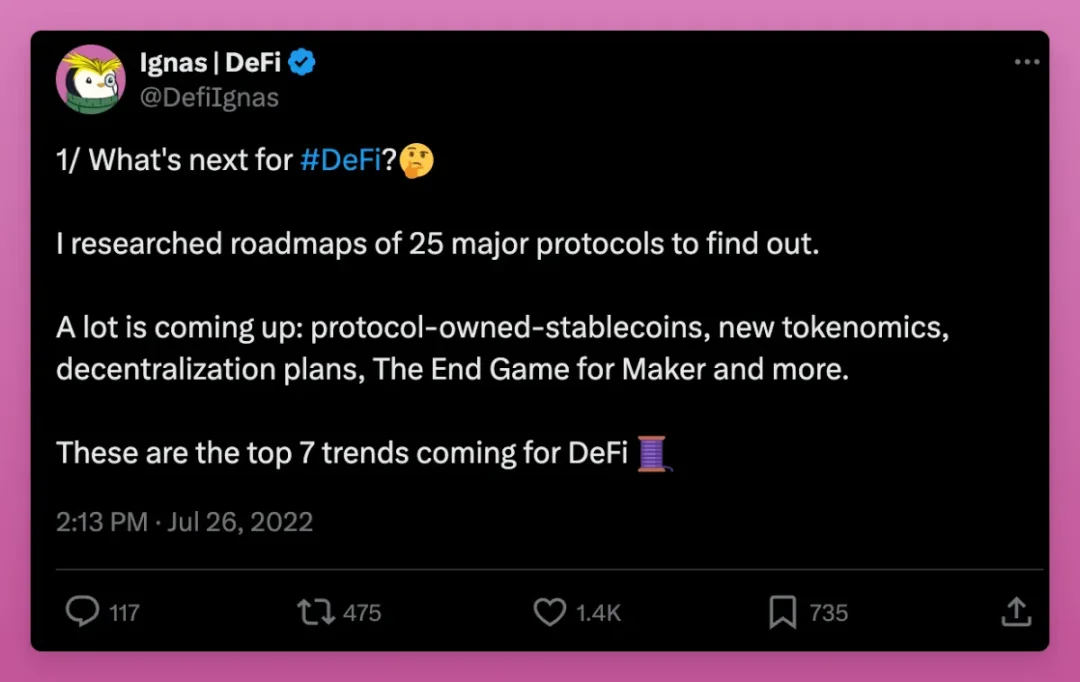
Luckily, it went viral. Big names like DeFi Edge, Miles Deutscher, and DeFi Dad engaged with it—it remains one of my top 5 most-liked posts (with 244k views).
I only had 300 followers at the time. But then, my follower count grew rapidly over several days. Thanks to that single post, I jumped from 300 to around 3,000 followers—an incredible 10x increase!
Tip: Content quality matters on Twitter. While viral posts can be luck-based, sustained growth requires insightful, unique content—which takes time and effort. Some posts will fail, but successful ones attract high-quality followers.
I continued learning and sharing weekly about tokenomics, stablecoins, SBTs, and soon reached 10,000 followers.
Tip: Consistency is key. Once you gain momentum, you must keep going. Otherwise, the Twitter algorithm will “forget” you, and your posts won’t appear in others’ feeds.
The first milestone was achieved—the first 10,000 followers are the hardest. After that, you can expand into broader topics. Next, I’ll dive into more tips for audience growth.
Why you should write on Twitter (even if you don’t want to be a KOL)
Two other reasons pushed me to start writing on Twitter: my girlfriend and Naval Ravikant. Naval completely reshaped my understanding of “success.” In his famous thread “How to Get Rich (without getting lucky),” he shared his own journey.
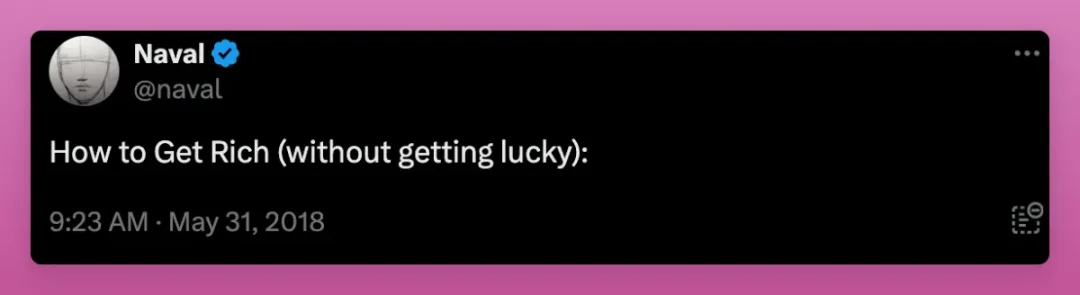
The thread is great, but the book goes deeper. You can read it here.
Interestingly, I experimented by writing a (viral) post about how I made money in crypto, which earned me thousands of new followers.
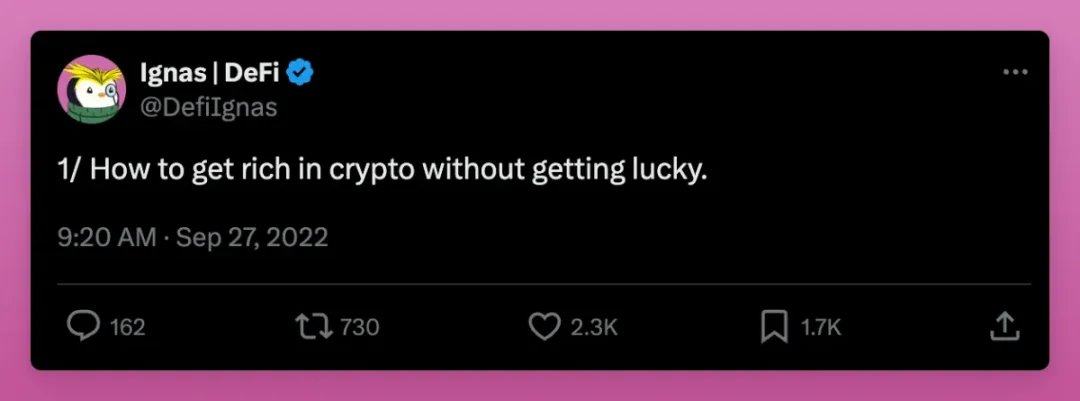
In short, Naval teaches people to pursue wealth—not just being rich. By equipping yourself with specialized knowledge and leveraging the internet, you can build wealth, vastly expanding your career possibilities.
This specific knowledge is highly creative and acquired through curiosity and passion. You can apply it via coding or media: “You can create software and media that work for you while you sleep.”
But the following part was the real surprise for me:
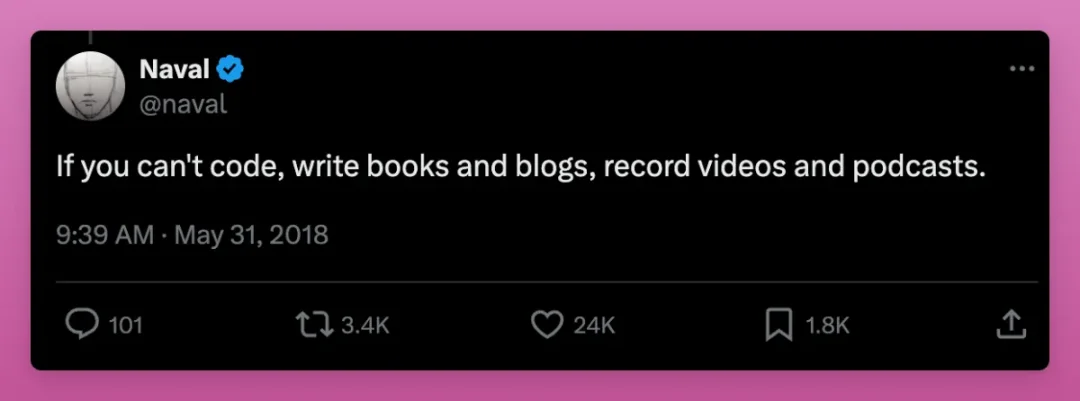
“If you can’t code, write books and blogs, make videos and podcasts.” This eventually allows you to combine “specific knowledge with leverage, and you’ll get what you deserve.”
In the attention economy, having an audience is an advantage.
Our attention is limited, while information is infinite. With so much content competing for attention, your attention becomes more valuable—and harder to capture.
For crypto projects, capturing your attention can mean the difference between success and failure—often outweighing technical merits.
Isn’t this all just an attention game? Valuations are largely driven by attention—crypto is still 99% speculation.
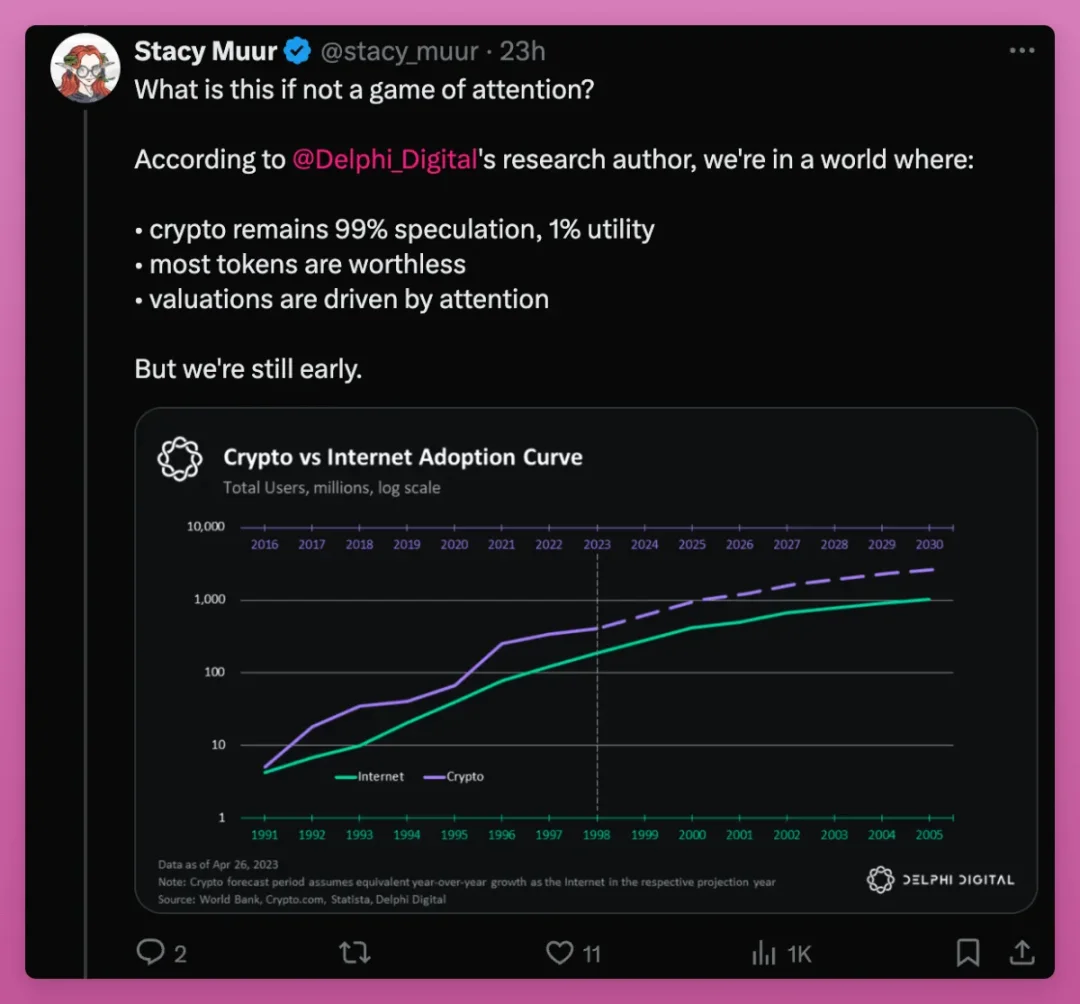
Stacy interprets Delphi Digital’s report: attention is everything
That’s why I support Polkadot’s influencer marketing strategy. I believe it’s the most effective way to reach native Web3 users. Polkadot’s problem is poor execution.
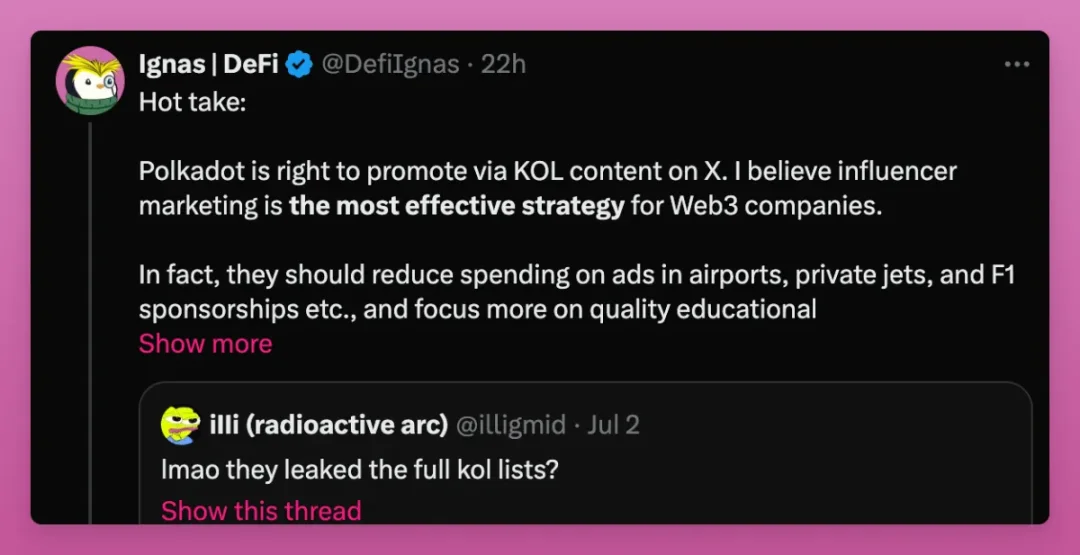
Since crypto is largely driven by narratives and sentiment, companies want to collaborate with influential figures.
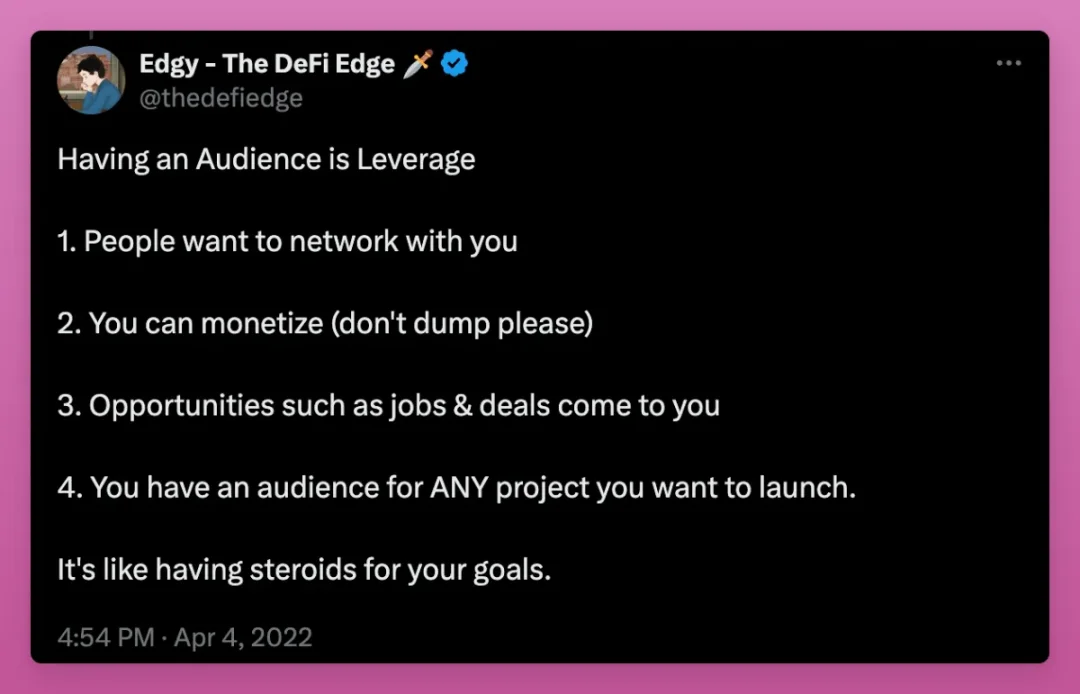
As Edgy said, this leverage makes it easier for individuals to land jobs and deals, reducing reliance on a single income source.
In short, Naval’s book explained everything for me:
-
I was bored yet curious about crypto, so I started researching, which helped me build specific knowledge.
-
Since I can’t code, I chose writing to grow my audience and influence.
-
As my audience grew, I unlocked multiple revenue streams.
-
To me, crypto feels like a game. (When I was a teen, I played Lineage II. Leveling up there is like gaining Twitter followers. Crypto money is like Adena in the game, and being a KOL is like becoming a hero in Lineage—expanding your influence.)
Tip: What are you genuinely curious about? Long-term, you need curiosity to stay motivated.
Monetization Models
Before I share tips on gaining followers, I want to cover a major reason for becoming a KOL: making money.
This is the biggest struggle for many KOLs—monetization is harder than attracting an audience.
A few months after I started writing, I quit my 9-to-5 job. It was the best feeling ever.
I went to a café, opened a Notion doc, and listed every popular monetization model used by KOLs. My initial idea was to scout for VCs while learning about great crypto protocols. Long story short, I ended up launching a blog, doing referrals, becoming an Instadapp ambassador, and starting my KOL marketing agency, Pink Brains.
Beyond salary, I now have at least five income sources (including airdrops).
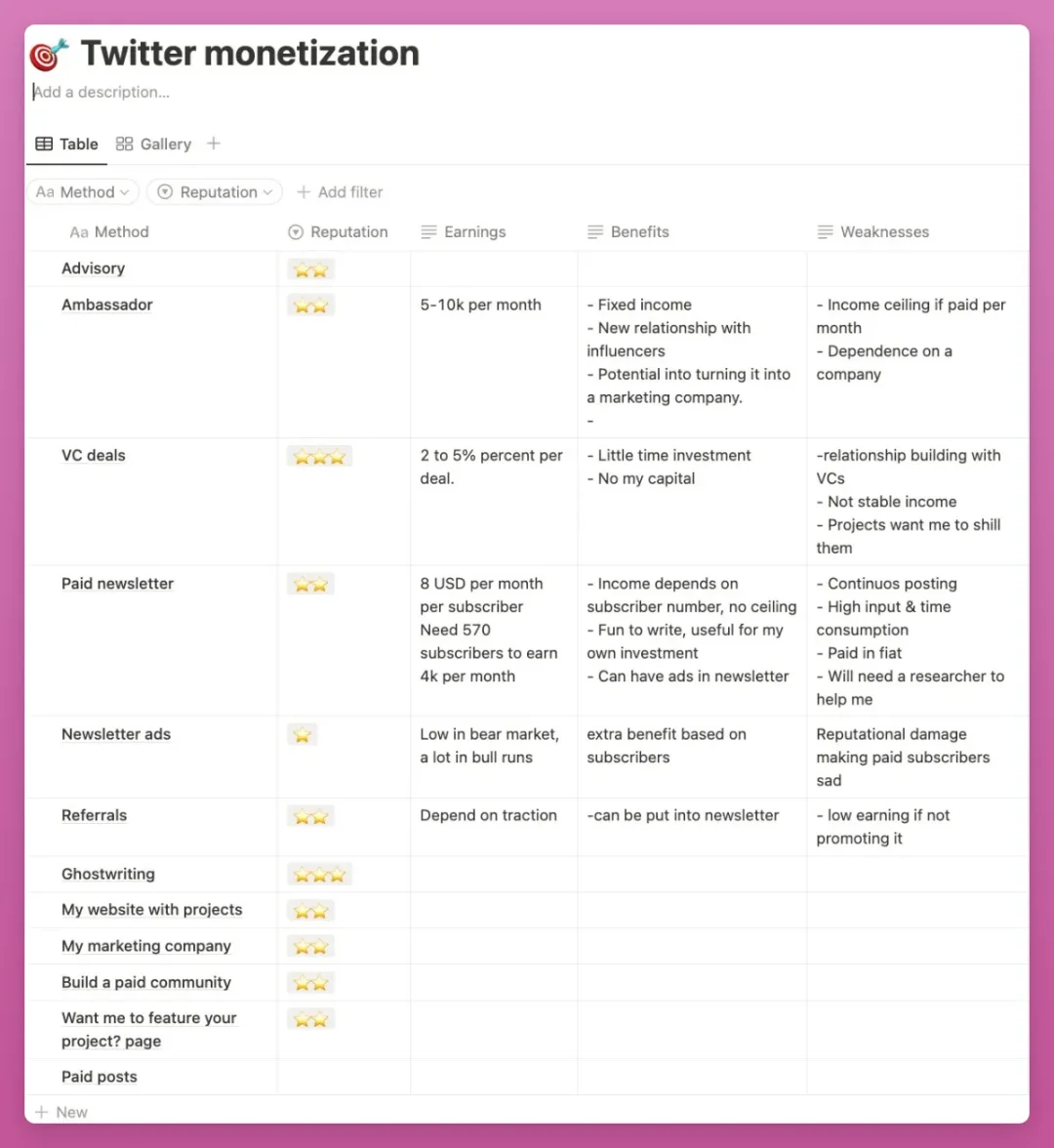
Note: This Notion table was created by me and hasn’t been updated in a year. It’s incomplete and has typos.
So here are the most popular monetization models for crypto KOLs:
Paid Posts: Seems simple, but risks damaging your reputation.
-
One bad partnership with a shady project can ruin your credibility. Ensure the project is legitimate. Accounts with fewer than 10k followers rarely attract mainstream projects, while larger accounts get overwhelmed, making due diligence time-consuming.
-
Pricing varies based on private negotiation, KOL reputation, influence, and awareness of market rates. For KOLs under 20k followers, posts typically start at $500. For those with hundreds of thousands, prices range from $3,000 to $5,000. Mainstream projects pose lower reputational risk, so they often pay less.
-
Rates also fluctuate with market cycles—rising during bullish turns and falling during bearish shifts.
Blog Sponsorships:
-
Dedicated sections within blog posts. Prices range from hundreds to thousands of dollars, depending on subscriber count. A 150-word sponsored section typically costs over $1,000.
-
Featured blog posts: A well-known KOL I know charges $15,000 for a dedicated post—though most blog posts command far less.
-
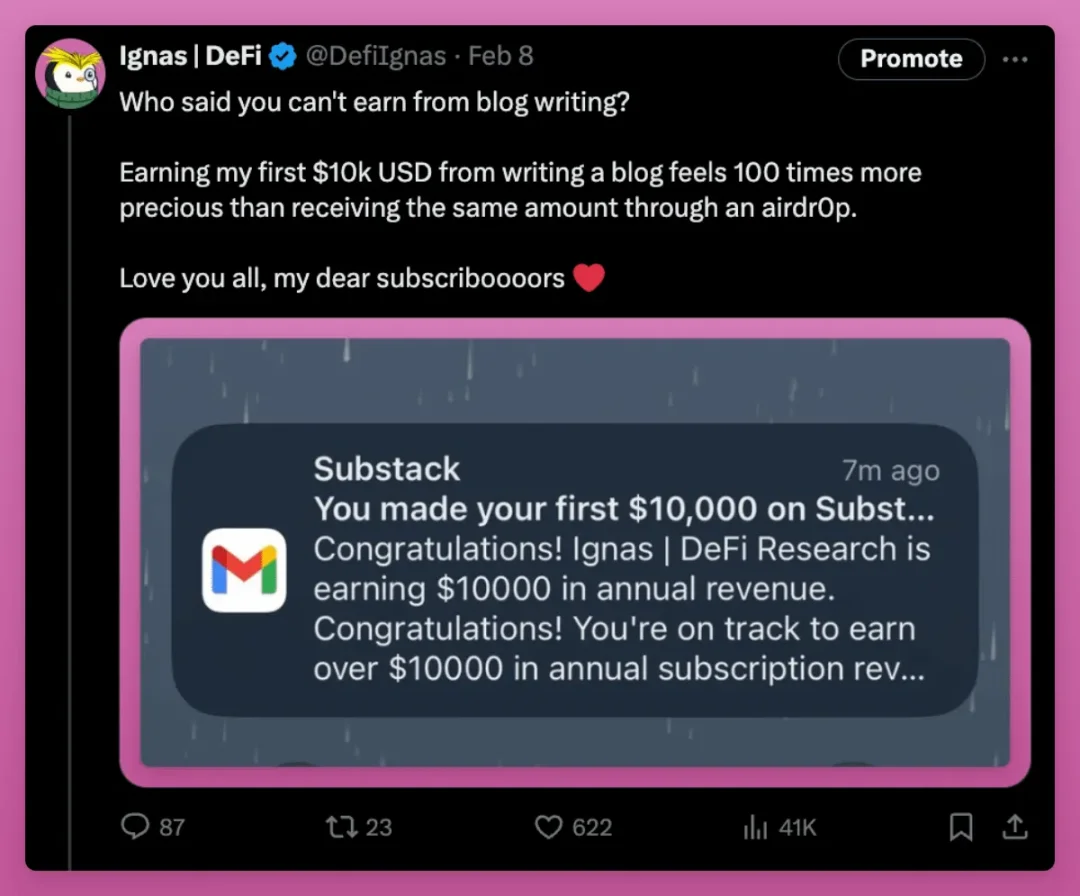
Paid subscriptions: Unpopular because they limit growth. You can earn more through the above two methods. For example, I make $13,000 pre-tax annually from paid subscriptions.
KOL Private Investments:
-
Private rounds are increasingly popular among KOLs. Projects love this model because KOLs voluntarily contribute to building the project without being paid for content.
-
Investment amounts per KOL typically range from $1,000 to $20,000.
-
Terms like vesting periods and valuations are often better than those offered to most VCs.
-
Requires posting about the project—usually a few tweets per month.
-
High profit potential. Previously seen as nearly risk-free due to low valuations and short unlock periods. Now it’s different, as tokens with low liquidity and high FDV face continuous selling pressure.
Advisor / Ambassador Roles:
-
Both require a minimum monthly posting volume and are long-term commitments. Compensation is usually paid in project tokens, unlike one-off paid posts on Twitter, which use stablecoins. Payments vary but commonly range from $5,000 to $10,000 per month—or even $15,000.
Referrals:
-
I prefer referral models that offer special benefits. Airdrops fit well. Another common model is CEXs rewarding referrers with a cut of fees from new users. This income is unstable.
Dumping tokens to fans
-
Buying tokens and then recommending them to your followers. This is very common—even among the “most respected” KOLs on Twitter.
There are even more ways for KOLs to monetize—like becoming a DAO representative. Your earning ceiling depends on your creativity.
Finding a monetization model takes time. It took me nine months and over 40k Twitter followers before landing my first blog sponsor. I decided against paid posts (only did one for Pancakeswap V3) and instead founded a KOL agency.
Ironically, I earned more from paid posts than from my agency—with less effort. But I care more about growing Pink Brains than maximizing short-term income.
How to Grow Your Audience
This topic could fill an entire blog post. You can find many related threads on Twitter, like Edgy’s thread. To keep it simple, here are my personal tips:
1. Start with a niche, then gradually expand.
-
Begin with a hot niche or even a single protocol, then establish authority. Write guides, share updates, engage with core communities, and offer insights.
-
Ensure you’re genuinely passionate, not just treating it like a job.
-
As you grow, expand your scope: one hot protocol → similar protocols → DeFi → crypto → beyond
2. Find your edge:
-
You might excel at on-chain trading, meme creation, or hunting airdrops. Ideally, combine skills to become irreplaceable.
-
For example, CC2 Ventures shares airdrop guides and personally farms them.
3. Provide value first, monetize later.
-
First, give your audience something valuable without expecting anything back. Write guides, share insights, and connect with like-minded people.
-
Monetization requires patience. If you monetize too early with paid posts, it may hinder long-term growth.
-
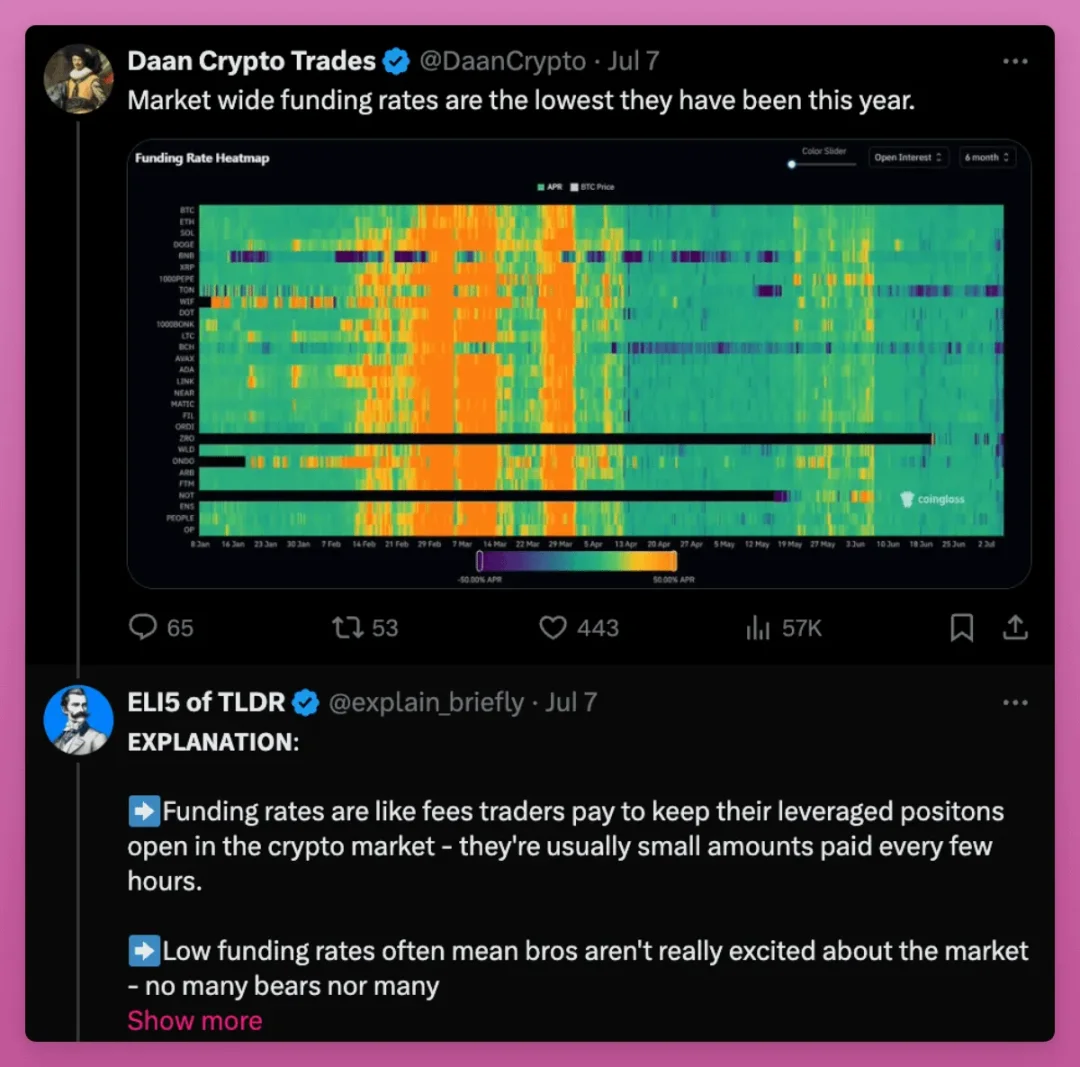
For example, ELI5 of TLDR grew to 13k followers by commenting on popular threads.
4. Avoid hashtags; use tickers instead. Too many hashtags make your posts look spammy.
5. Choose a compelling profile picture and stick with it. NFT avatars (like Pudgy Penguins) can attract community members and boost followers—but NFTs are expensive.
6. Experiment with new content: yesterday’s success may be tomorrow’s failure. Stay ahead by constantly reinventing yourself as crypto trends evolve.
-
I’ve seen influencers lose relevance because they failed to evolve.
-
Be unique to stand out. Draw inspiration from your favorite writers, but don’t copy their content.
-
Mix lightweight posts (like this one) with deep dives. Lightweight content drives views; long-form content attracts followers.
5. Tag a few experts on the topic at the end of your post. But don’t repeatedly tag the same person—it becomes annoying.
6. Don’t post meaningless spam. Insightful shitposts are a high art—they require wit and expertise.
7. Use tools like Typefully to help craft posts: fix grammar, brainstorm with AI, and track data.
-
Review analytics to see what resonates with your audience, then refine your strategy.
8. Reply to comments, join discussions, and thank your followers. Community building is a two-way street.
9. Try other platforms: start with Farcaster, DeBank, or Lens to build an audience without heavy competition. Once established, bring them to Twitter.
10. Don’t look for easy shortcuts—there aren’t any.
-
Avoid engagement pods (likes, RTs, comments). These distort your engagement metrics. After the activity ends, the algorithm shows your future posts to the same reward-seeking users. If they disengage, your reach shrinks. Prioritize small, focused communities.
-
Don’t chase vanity metrics—focus on quality. Attract “valuable followers” with top-tier content.
Ultimately, it comes down to unique insights, strong writing, and consistent effort. It took me two years to reach 100k followers.
Unfortunately, growing an audience is harder than ever. Few newcomers enter crypto Twitter, so the same group keeps posting and reading.
Twitter’s “For You” feed reduces the need to directly follow accounts.
I recommend following Alex to understand algorithm changes and adapt for audience growth.
How to Pitch Others on Twitter
An unexpected side effect of being a KOL is improved sales ability. It’s not just about audience size.
I receive dozens of DMs daily, but can only reply to a few. Unfortunately, I can’t respond to every message—it’s too time-consuming, and most DMs are meaningless.
Most KOLs do the same. The top reason for ignoring messages? No mutual follow: if I don’t follow anyone who follows you, you’re filtered out.
That’s why—even if you’re not a KOL, but a developer, researcher, company employee, or BD—you should grow followers if you plan to connect with people on Twitter.
I get tons of pitches daily—they’ve taught me what works. Here are some tips:
-
Keep it short—long messages get skipped.
-
Introduce yourself, state your request, and highlight your value.
-
Never include links in your first message—especially Calendly!
-
Be persistent but polite.
-
No reply? Your pitch probably wasn’t relevant—don’t take it personally.
-
Nothing is worse than a Calendly link in the first message!
In short, this is just my path—yours will be different.
Join TechFlow official community to stay tuned
Telegram:https://t.me/TechFlowDaily
X (Twitter):https://x.com/TechFlowPost
X (Twitter) EN:https://x.com/BlockFlow_News
 Ignas | DeFi Research