








Bitget Research: Japan | Pioneer of the Cryptocurrency Market
TechFlow Selected TechFlow Selected
Bitget Research: Japan | Pioneer of the Cryptocurrency Market
Japan is one of the earliest countries to understand, pay attention to, and encourage the development of cryptocurrencies. Cryptocurrencies currently enjoy a leading global adoption rate in Japan and are increasingly becoming an important alternative investment option for Japanese users.
 Navigating Web3 tides with focused insights
Executive Summary
- Japan was one of the earliest markets to explore cryptocurrencies. Currently, around 350,000 people participate in daily crypto trading in this region;
- Regulatory environment: The Japanese government recognized early on the importance of regulating cryptocurrencies and has gradually introduced relevant policies. Japan's crypto policy emphasizes industry guidance and encourages sector development;
- On-chain preferences: Japanese users are familiar with NFT trading and DEX transactions, actively participating in on-chain task platforms and metaverse gaming projects;
- Trading preferences: Japanese users favor spot trading, primarily focusing on major cryptocurrencies and local Japanese project tokens, showing strong interest in investing in established older projects;
- CeFi exchange preferences: Unlike most regions, Japanese users have a high demand for localized centralized exchanges; For DEXs, they mainly use leading decentralized exchanges across various public chains such as Uniswap and PancakeSwap; The most commonly used wallets are MetaMask, Bitget Wallet, Phantom, Trust Wallet, and Coinbase Wallet;
- Finally, based on the above analysis, the Bitget Research Institute has made five predictions regarding the future trends of Japan’s cryptocurrency market.
Introduction
Japan is a country rich in history and cultural heritage, renowned for its unique blend of traditional culture and modern innovation. It enjoys global recognition in technological advancement and finance, with a stable financial system and cutting-edge fintech that position it prominently in the global economy. Japan is also among the first countries to understand, pay attention to, and encourage the development of cryptocurrencies. In the crypto space, Japan stands as a pillar of the global market.
Cryptocurrency adoption in Japan currently ranks among the highest globally. Additionally, Japan has been progressively establishing a regulatory framework for the crypto industry, emphasizing policy-driven guidance and encouraging sectoral growth. As a result, cryptocurrencies are increasingly becoming an important alternative investment option for Japanese users.
This report provides a comprehensive overview of Japan’s cryptocurrency market through in-depth research, helping Japanese users identify their ecosystem positioning and connect with like-minded communities, while also assisting Web3 project teams and crypto institutions in better understanding and expanding into the Japanese market.
I. Market Overview
1. Regional Overview
In terms of overall crypto volume and adoption, Japan ranks among the global leaders. According to Chainalysis’ 2023 Adoption Index, Japan ranks 18th globally—comparable to the UK and Canada—and ahead of major Western European nations such as France, Germany, and the Netherlands.
Looking at sub-index rankings within Japan’s Adoption Index, the region exhibits the characteristics of “similar levels of CeFi and DeFi adoption globally, but significantly lower P2P transaction activity compared to the global average.”
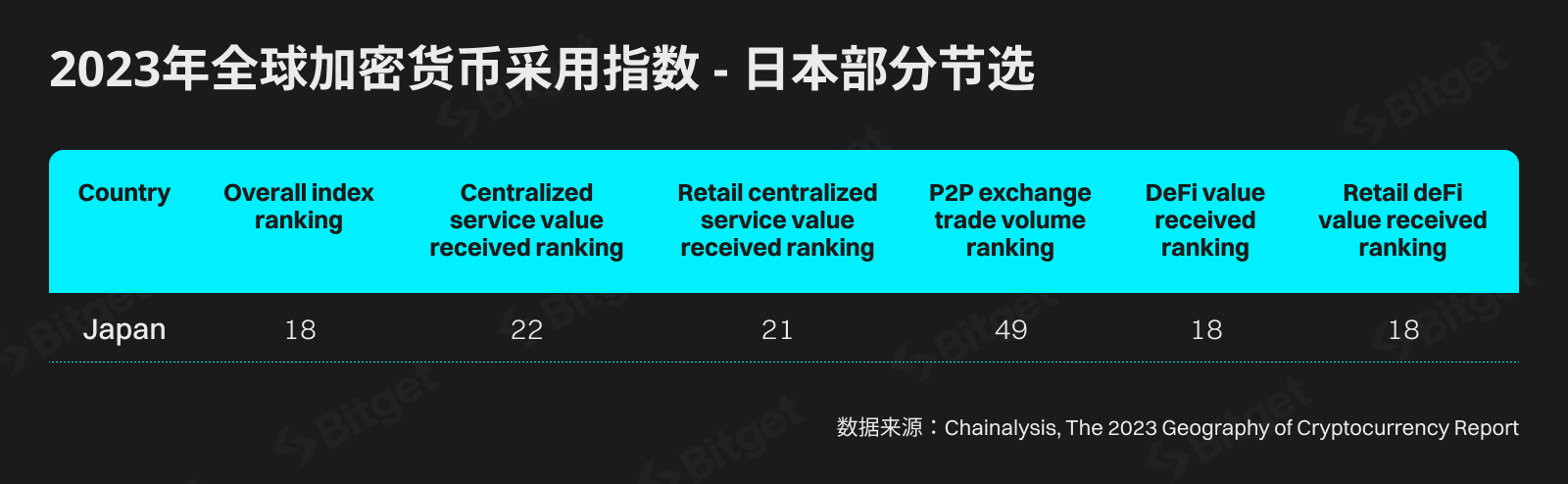
Japan’s cryptocurrency market shows two distinct features: “balanced averages” and “specific interests.”
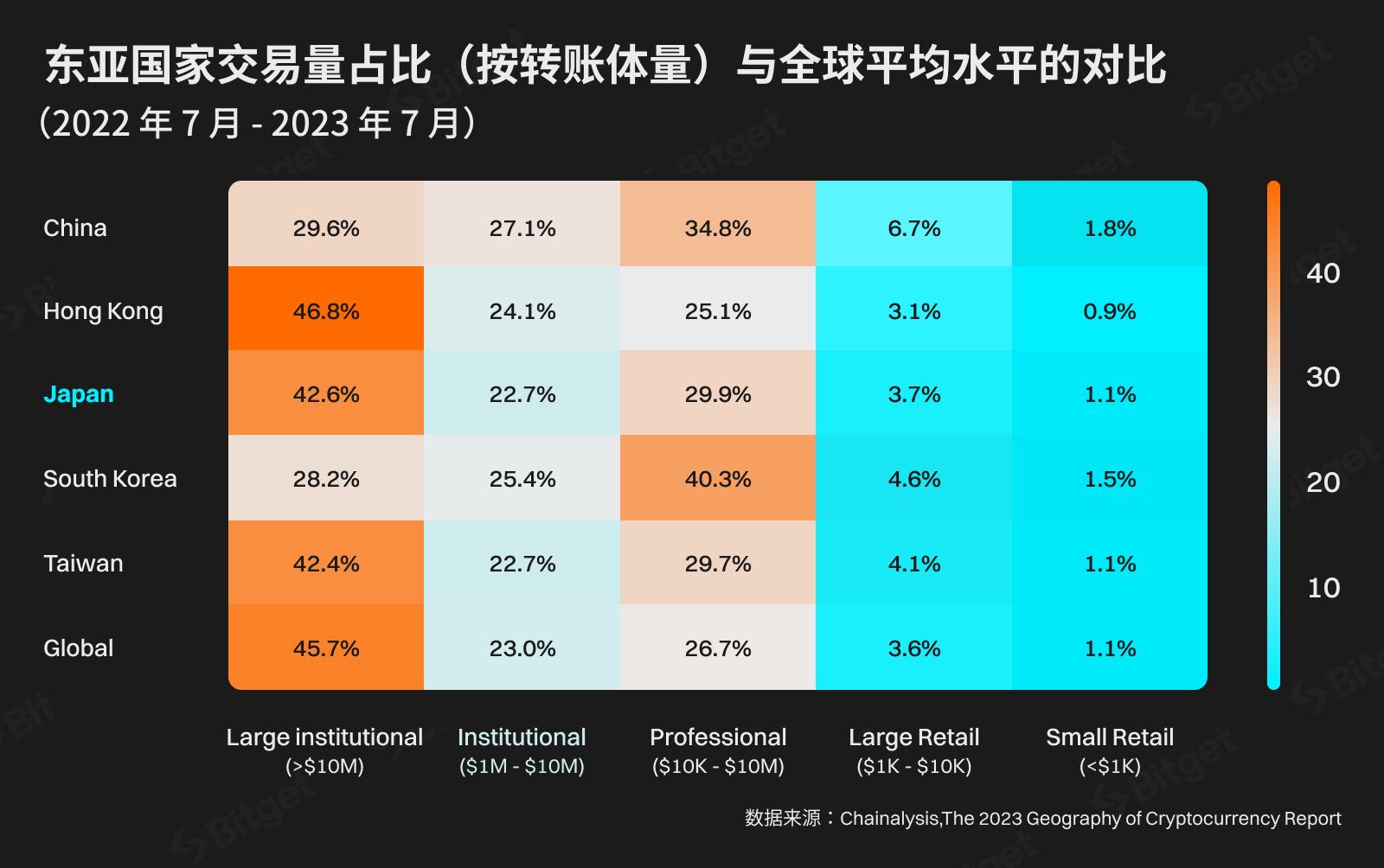
“Balanced averages” refers to how Japan’s key metrics are closest to global averages among East Asian countries. As shown in the following two charts, data on crypto transfer volumes and platform usage types in Japan closely align with global averages, whereas other East Asian countries show significant divergence.
“Specific interests” refers to the fact that while many traders chase trending assets like Solana memes, AI, and DePIN, Japanese users maintain relatively high enthusiasm for first-generation meme coins like SHIB and early blue-chip tokens such as XRP and ADA.
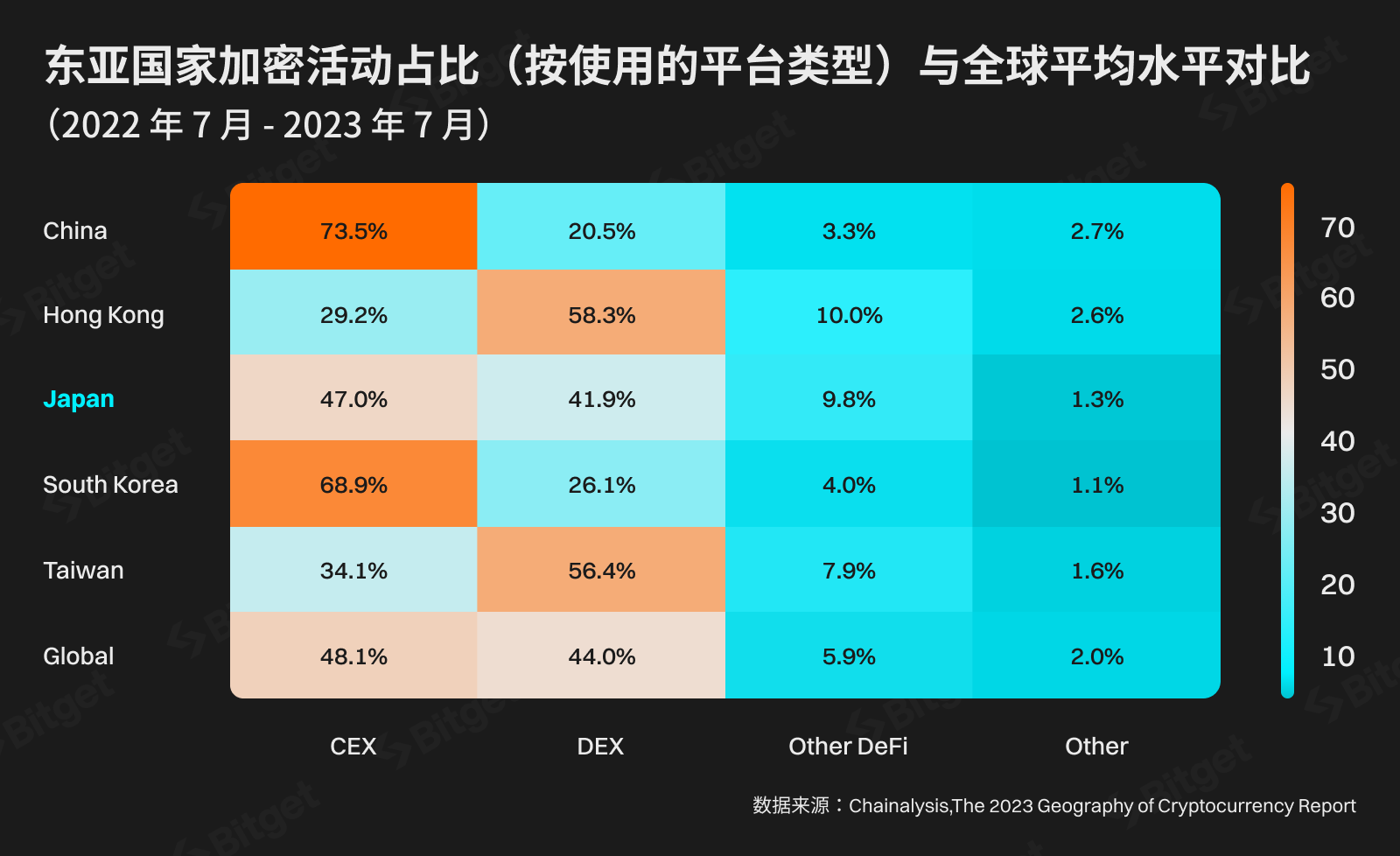
Additionally, Japan hosts dominant domestic exchanges such as Bitbank, Bitflyer, and Coincheck, which together occupy about half of the local CEX market share. Middle-aged and older traders show a stronger preference for using these domestic platforms.
2. Cryptocurrency Regulation and Cultural Influences
2.1 Japan’s Crypto Regulation
Japan’s early regulatory stance
As early as 2014, Japan experienced one of the industry’s most severe setbacks—the collapse of Mt. Gox, once a major global Bitcoin exchange, due to a hacker attack. This incident resulted in retail investors losing up to 850,000 bitcoins.
In 2018, Japan’s domestic exchange CoinCheck was also hacked, resulting in user losses of $534 million in digital assets. CoinCheck later announced compensation for affected users. These events highlighted the necessity of enacting laws to protect investor funds, maintain market stability, and ensure regulated crypto assets. Since then, the Japanese government has actively developed regulatory frameworks for virtual assets.
Japan’s current regulatory stance
- Recently, the Japanese government has introduced clear regulations to enable safe and orderly innovation in the crypto sector, including:
- In 2017, Japan amended the Payment Services Act, bringing cryptocurrency exchanges under regulatory oversight through a licensing system administered by the Financial Services Agency (FSA).
- Since 2021, Japan’s crypto industry has been addressing the Travel Rule. At that time, the Financial Services Agency (FSA) required Virtual Asset Service Providers (VASPs) to implement the Travel Rule.
- In April 2022, the Japan Virtual Currency Exchange Association (JVCEA) introduced the Travel Rule into its self-regulatory code for VASPs.
- In October 2022, the Japanese government approved a cabinet resolution to revise existing laws in line with FATF (Financial Action Task Force) guidelines to combat money laundering via cryptocurrencies.
- In June 2023, Japanese lawmakers confirmed plans to impose stricter anti-money laundering (AML) rules on the digital currency industry.
Overall, due to incidents such as the Mt. Gox hack and the CoinCheck theft, the Japanese government recognized early the importance of regulating cryptocurrencies and has since introduced relevant policies. With recent regulatory developments, Japan’s crypto oversight has become clearer and more stringent. Japan’s crypto policy focuses on guiding the industry and encouraging its growth.
2.2 Cultural Influences in Japan
Japanese culture is deeply rooted in its history. These cultural traits shape everyday life and profoundly influence art, education, and business practices. In the crypto industry, these influences manifest in several ways:
- Emphasis on education: Education holds immense value in Japanese society, with both families and schools holding high expectations for students. This contributes to a highly educated population, meaning Japanese crypto traders are generally well-educated individuals.
- Emphasis on innovation: Japan leads globally in technology and innovation, and this spirit extends into the Web3 space—for example, through innovative localized gaming projects;
- Emphasis on art: Japan boasts a rich tradition in art and literature, with a thriving anime and IP industry. Artists like Takashi Murakami leverage blockchain to enable derivative creations and copyright protection, contributing to a strong NFT user base in Japan.
3. Market Size
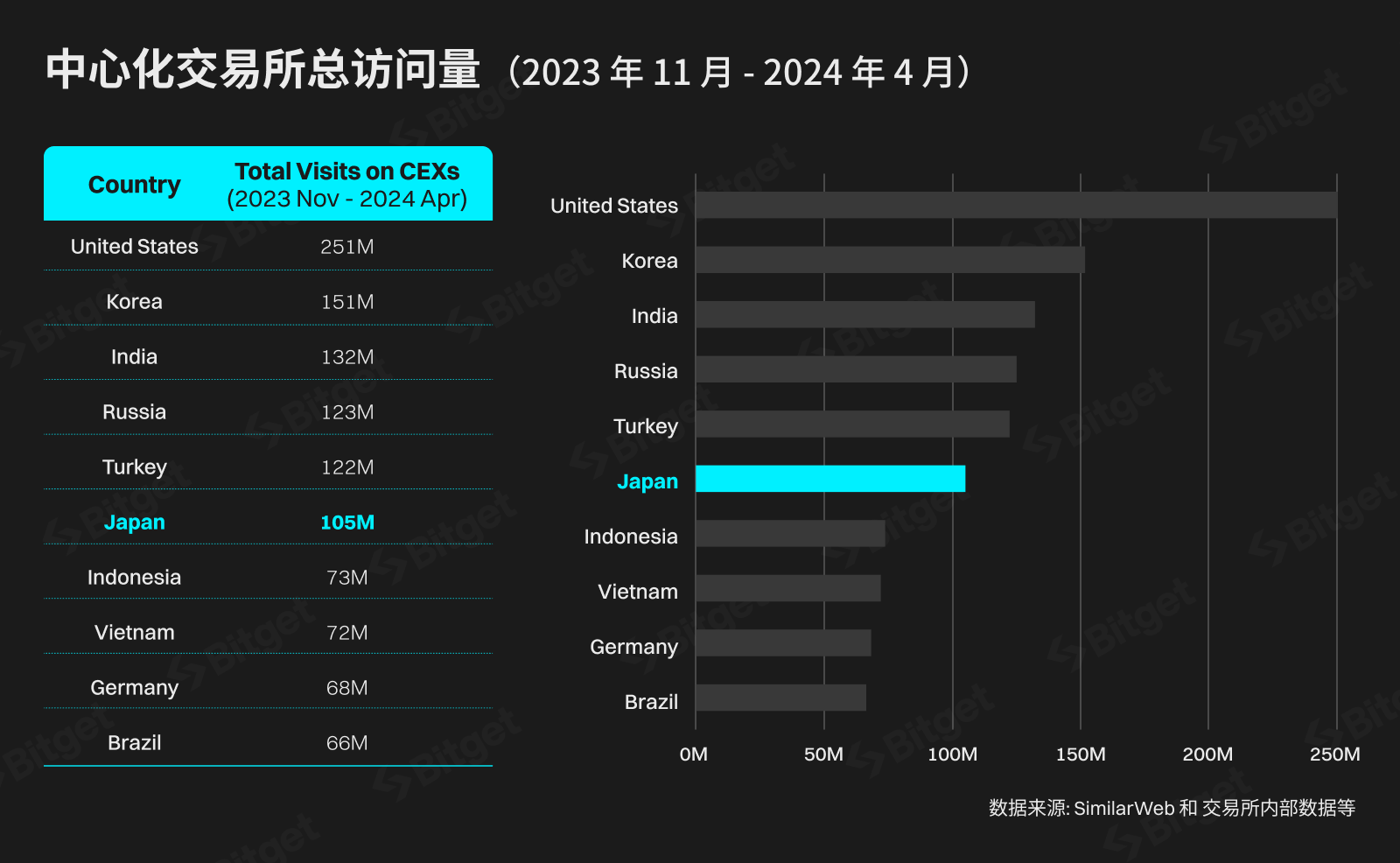
Based on total CEX traffic over the past six months, Japan’s market size falls between Turkey and Indonesia, approximately two-thirds the size of South Korea’s.
It is estimated that between 310,000 and 360,000 Japanese users traded daily on CEXs in April this year.
II. Characteristics of Local Crypto Users
1. User Trading Habits
1.1 General Profile of Japanese Crypto Users
Image: Word cloud of Japanese cryptocurrency user habits
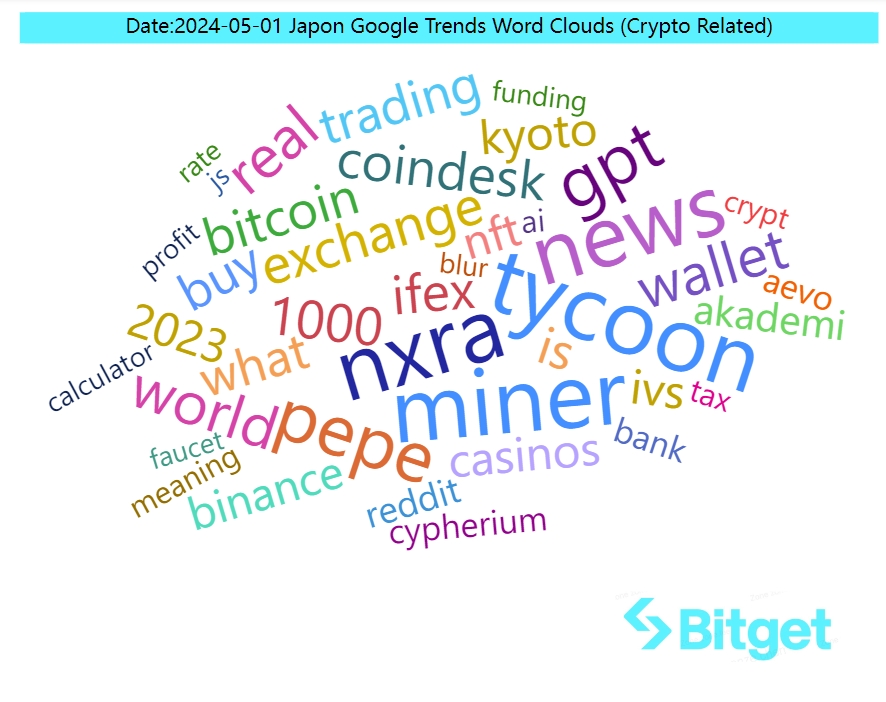
Source: Google Trends
Japanese users maintain an open attitude toward crypto trading and project interactions, exhibiting the following general characteristics:
- Japanese users demonstrate very high acceptance of cryptocurrencies, representing a significant share globally;
- They pursue trending asset sectors, reflected in keywords like “Pepe,” “AI,” and “GPT” appearing in the word cloud;
- They focus on interacting with on-chain assets, particularly in the NFT space, showing interest in “Wallet,” “NFT,” and “Blur.”
1.2 Trading and Interaction Habits of Japanese Users
In trading, Japanese users prefer spot trading, focusing on major cryptocurrencies (BTC, ETH, XRP, SOL, DOGE) and local Japanese project tokens. This behavior stems from two main factors: 1) Legal restrictions in Japan limit domestic exchanges to only listing tokens approved by the Financial Services Agency, and derivative trading is capped at 2x leverage. Consequently, some Japanese users seeking contract or altcoin trading turn to overseas exchanges; 2) Japanese users generally have limited English proficiency and may lag in discovering new projects. Instead, they prefer purchasing long-established first-generation meme coins (e.g., SHIB, DOGE), aiming to profit from sustained price increases. Moreover, Japanese users tend to be long-term holders, largely because capital gains from crypto investments are taxable, with rates reaching up to 45%. This incentivizes a focus on long-term returns rather than short-term profits.
In application interaction, Japan’s strong foundation in traditional gaming has fostered numerous localized blockchain gaming projects. These projects often tokenize in-game items and assets into NFTs and tokens, making Japanese users quite familiar with DEX trading, NFT transfers, and on-chain contract interactions.
Regarding payments and fund deposits/withdrawals, most users deposit fiat via domestic exchanges. However, some also use P2P, third-party services, or card purchases. Japan offers a relatively favorable crypto payment environment, with physical stores in areas like Roppongi and Ginza accepting BTC and ETH payments.
2. Popular Sectors and Projects
(1) Popular Projects & Sectors
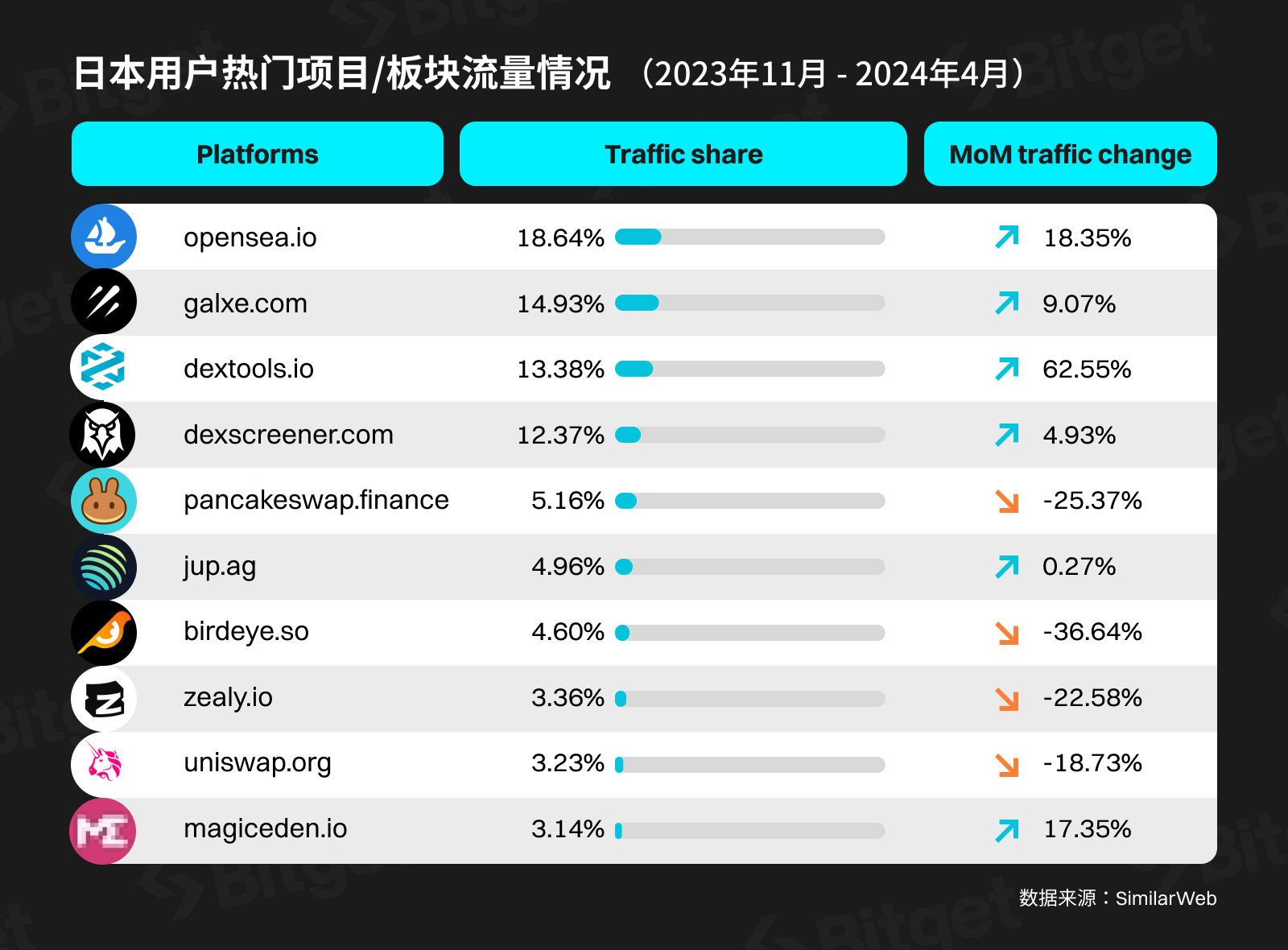 Japanese users show high engagement in NFT trading, on-chain task platforms, on-chain trading, and Web3 gaming. Two of the top ten most visited platforms are NFT marketplaces (OpenSea, MagicEden), indicating strong user interest in NFTs. On-chain task platforms and DEX price-tracking sites rank next, reflecting Japanese users’ active participation in airdrop campaigns and on-chain asset trading.
Additionally, certain local projects are highly favored by investors. For example, Cardano (ADA), considered an “Ethereum of Japan,” gained traction after founder Charles Hoskinson held multiple lectures and events in Japan promoting its technology and vision. JasmyCoin (JASMY), an IoT platform founded by former Sony employee Kazumasa Sato, has promoted an “AI + IoT” narrative and surged nearly 3x in Q2 this year, attracting significant traffic in Japan. Other locally led projects such as Astar (ASTR) and Oasys (OAS) also enjoy high visibility and trading demand domestically.
Notably, Japan’s local projects lack native DeFi or Layer2 infrastructure. Instead, they extend Web2 businesses—such as converting Web2 games into Web3 models, tokenizing Web2 IPs, or integrating IoT. Thus, these projects may not appear fully crypto-native, yet they are at the forefront of applying blockchain technology to real-world use cases.
(2) Top Crypto Topics Among Japanese Users Over the Past Three Months
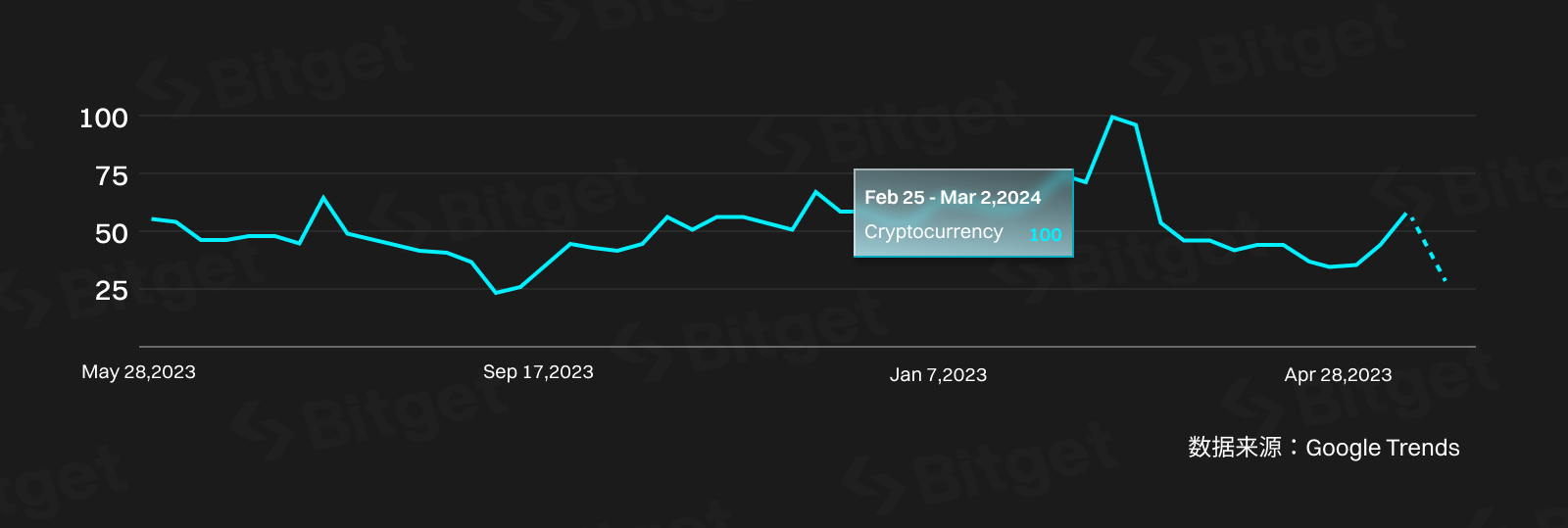
From search trend data on “Cryptocurrency”-related terms in Japan: late February to early March marked the peak period of public interest over the past year, coinciding with BTC’s rapid price surge and new highs.
Interestingly, the global search peak—including in the US, UK, and UAE—occurred between March 3 and 9. Japan’s peak appeared earlier, suggesting Japanese users may be more sensitive to BTC price movements.
Over the past year, popular search terms among Japanese users include:
- SHIB, DOGE, Solana, XRP, ADA
Over the past three months (Feb 28 - May 28), trending searches in Japan included:
- PEPE, QUBIC, AEVO, NOT
Thus:
(1) Japanese users show high interest in first-generation meme coins such as DOGE and SHIB, possibly reflecting a cultural affinity for dog-themed memes like Shiba and Akita dogs. Internal exchange data indicates BABYDOGE is also among the most traded meme coins by Japanese users; newer viral memes like BOME and SLERF did not appear in trending searches.
(2) Japanese users remain enthusiastic about early blue-chip tokens like XRP and ADA, neither of which appeared on top search lists in most other countries over the past year. Additionally, SBI Group, a major Japanese financial institution, partnering with Ripple has sustained XRP’s enduring popularity in Japan.
These two points further confirm Japan’s “specific interests” in crypto trading.
3. Local Communities and Social Media
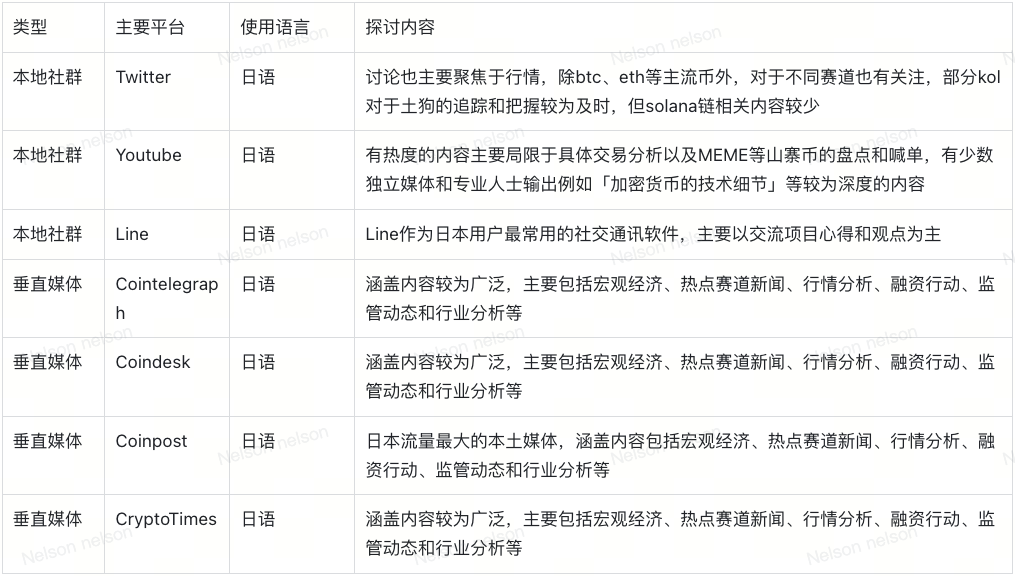
The primary platforms for local Japanese crypto communities are Twitter, YouTube, Line, and Telegram. Content is predominantly in Japanese, with some English content, but Japanese dominates overwhelmingly. Compared to other countries, Japan favors vertical media: Coindesk and Cointelegraph operate dedicated Japanese-language websites with separate domains and full Japanese content. Among them, Coinpost leads in traffic with around 2.5 million monthly visits, followed by Cointelegraph with approximately 1.5 million monthly visits.
Content coverage varies across channels, ranging from macroeconomic analysis, trending sector news, market commentary, fundraising updates, regulatory developments, industry insights, specific trade analyses, meme coin reviews and calls, to deeper technical discussions on blockchain fundamentals.
III. Competitive Landscape and Platform Advantages
1. Centralized Exchanges (CEX)
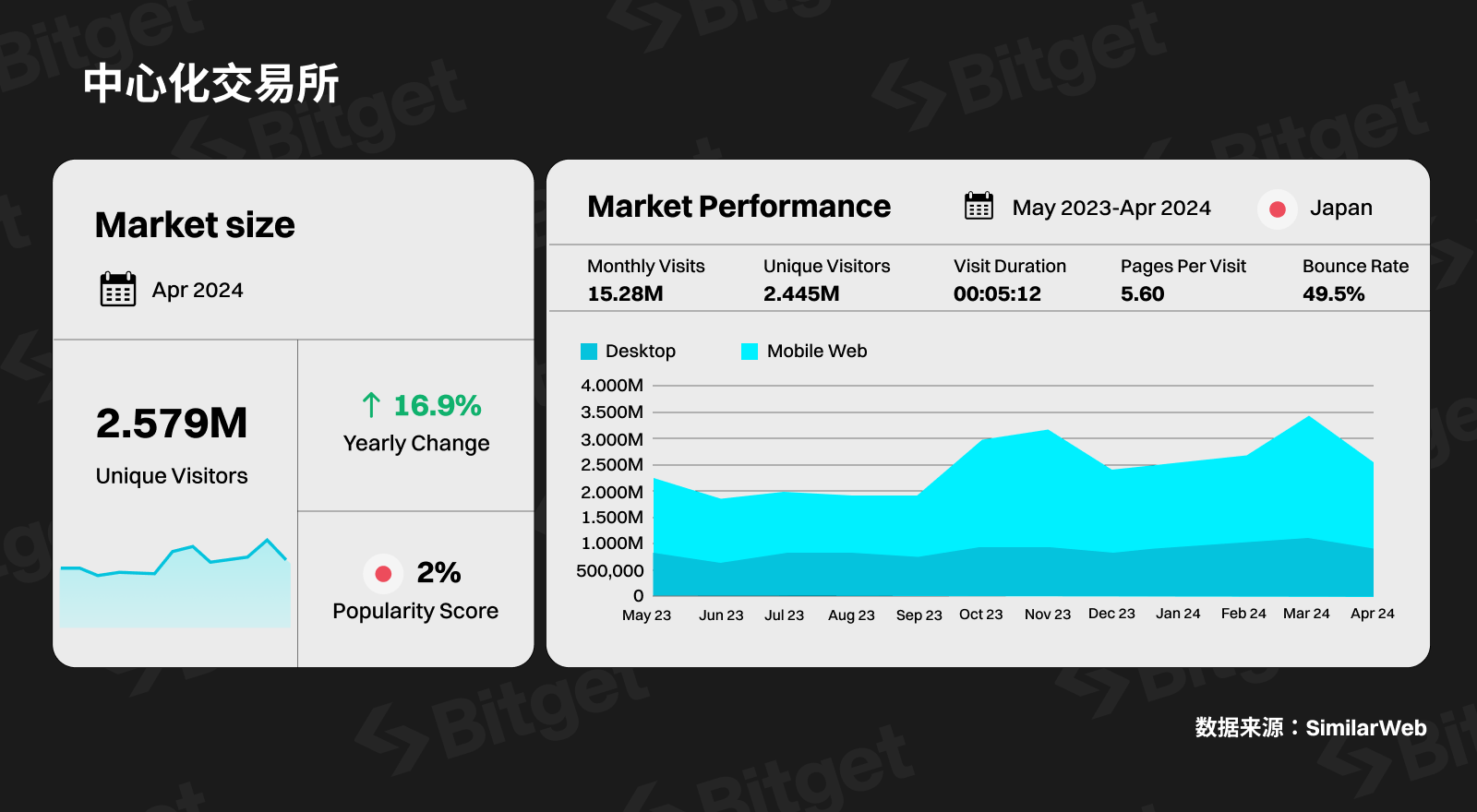
Over the past year, Japanese user traffic to CEXs has steadily increased, reaching 2.58 million UVs in April 2024—an approximately 17% year-on-year increase.
Coinbase and Kraken exited the Japanese market in Q1 2023, creating greater opportunities for domestic and other global exchanges. Japan has several strong local exchanges such as Bitbank, bitFlyer, and Coincheck, which collectively capture over 42% of CEX traffic share—a stark contrast to data from most European and Southeast Asian countries. These three domestic exchanges were established as early as 2014, predating many prominent international exchanges, giving them deep-rooted advantages in the local market.
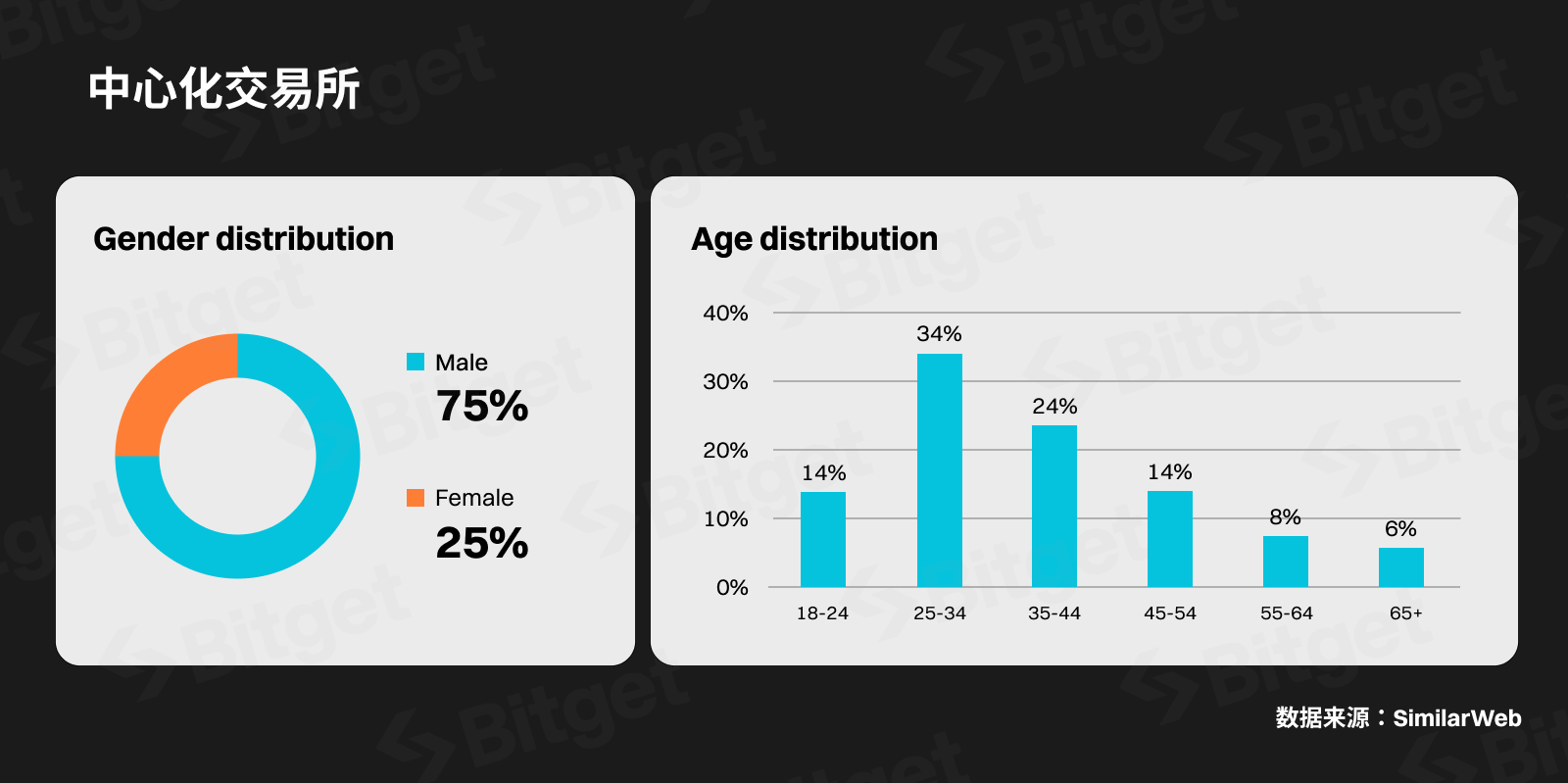
In terms of user demographics: Japanese CEX users are roughly 3:1 male-to-female. Age distribution shows nearly equal numbers of users aged 18–34 and those over 35. Interestingly, younger users (18–34) prefer international exchanges, while those over 35 lean toward domestic Japanese exchanges.
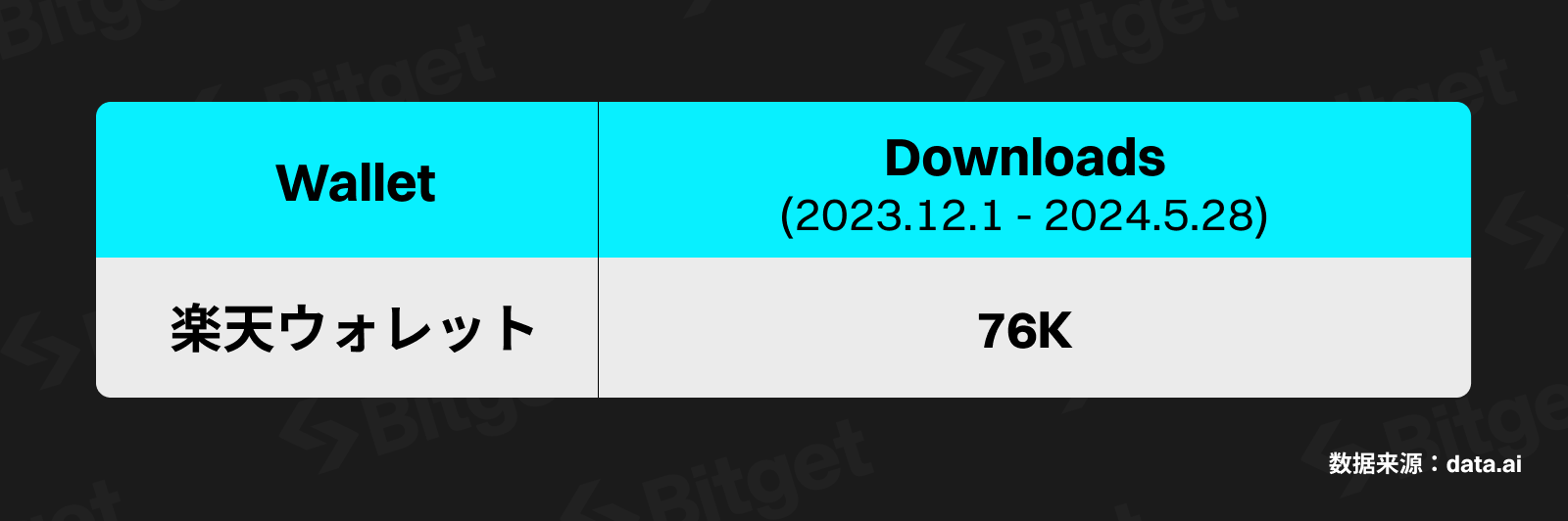
Beyond these local exchanges, Rakuten Wallet is also popular. Functioning as a CEX backed by the Rakuten Group, it supports JPY-crypto trading and allows conversion of JPY into Rakuten Cash (R-Cash). This integration enables seamless use of crypto investments for daily spending, enhancing convenience for users.
2. Decentralized Exchanges (DEX)
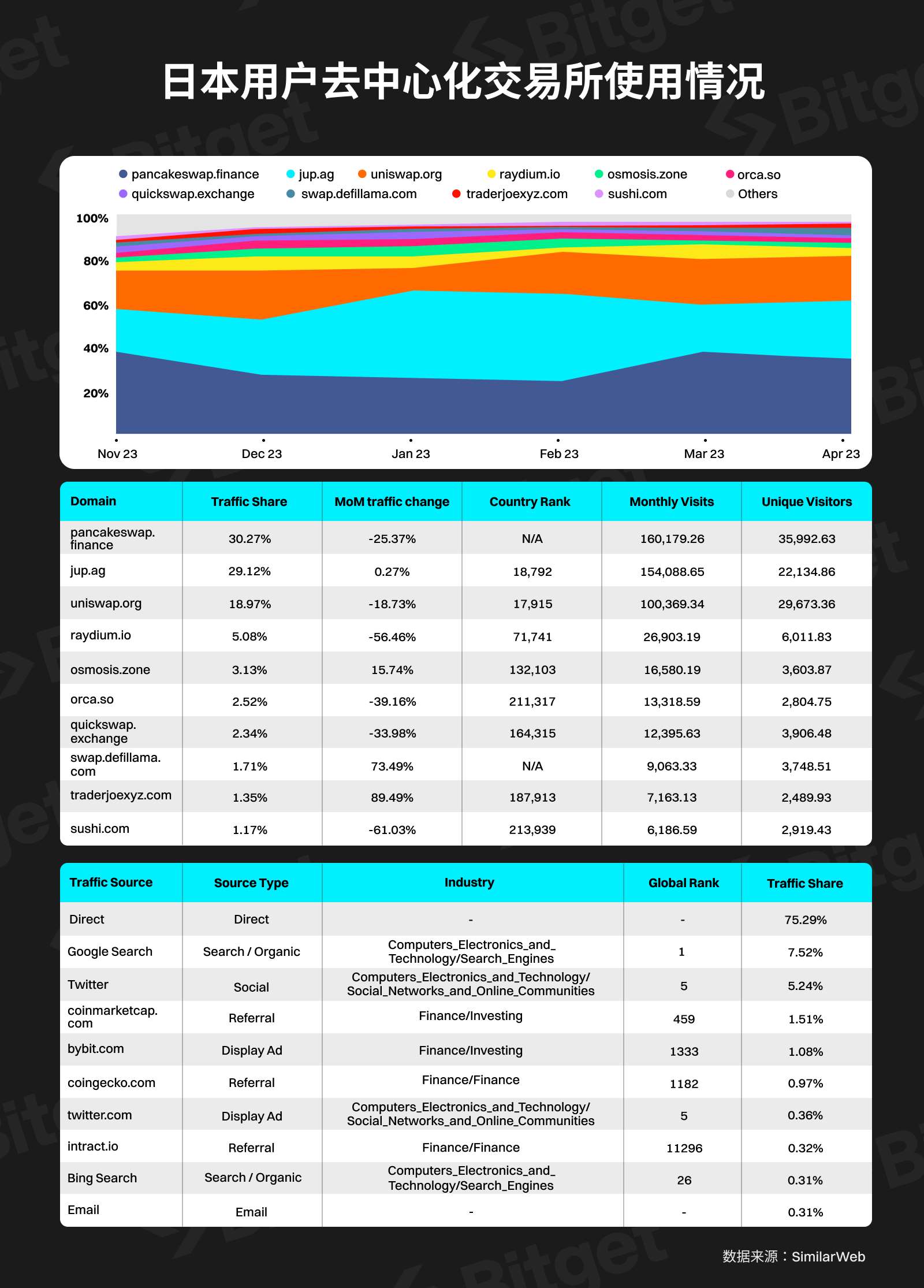
The top three DEXs accessed by Japanese users differ significantly from other regions: PancakeSwap > Jupiter > Uniswap. Japan is one of the few regions where Uniswap does not rank first—even trailing behind PancakeSwap—reflecting relatively lower Japanese user interest in ETH and Base chain trading compared to Solana and BSC.
Most users access these DEXs directly, with some arriving via Google search or social media links. This suggests Japanese users prioritize brand recognition when using DEXs, developing loyalty once usage habits form. While Twitter drives some traffic, its contribution remains limited.
3. Wallets
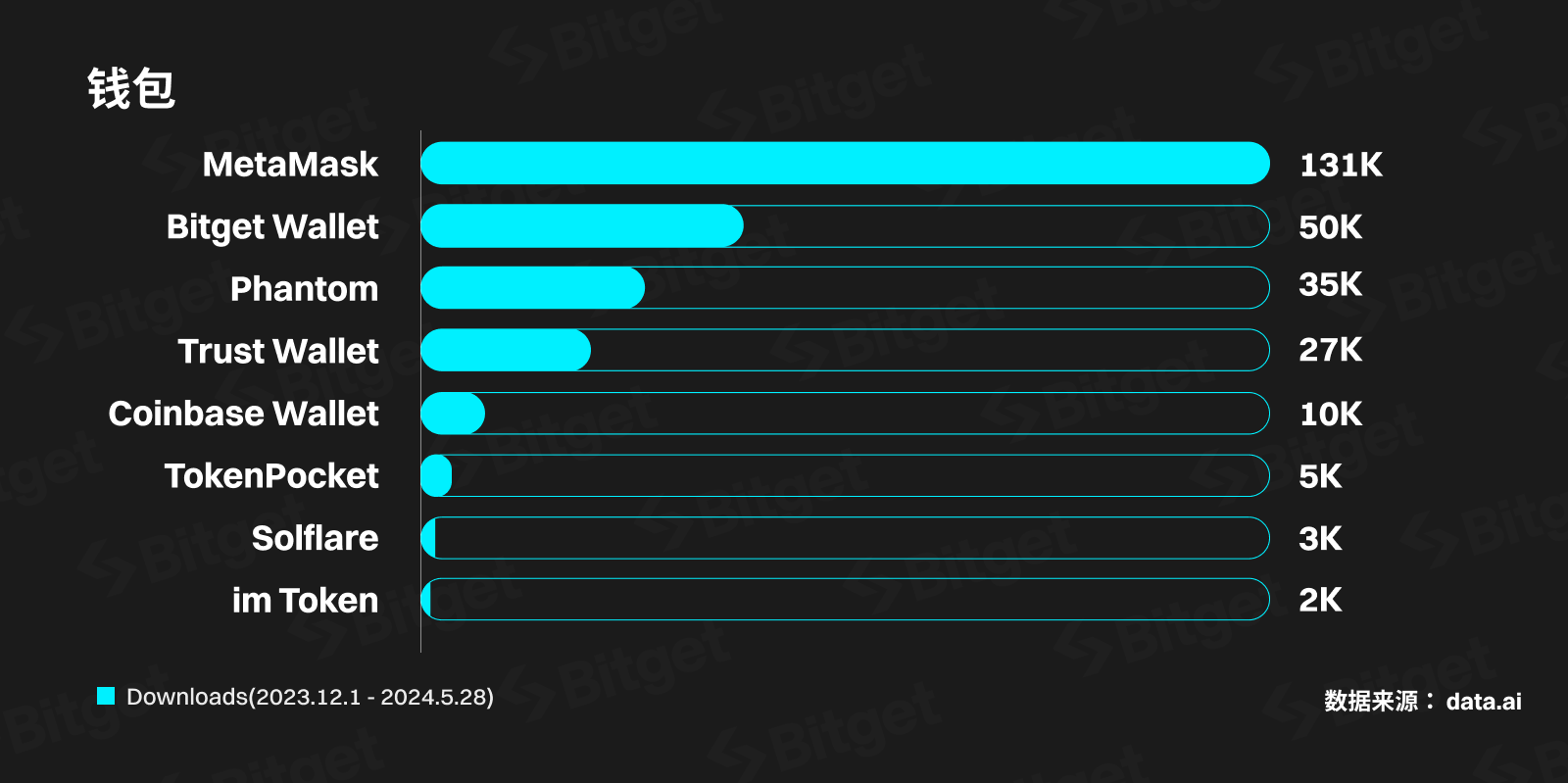
(Note: Some well-known wallets like Binance and OKX share apps with their centralized exchanges, so their standalone wallet traffic cannot be isolated and thus are not listed above.)
In wallet usage, MetaMask, Bitget Wallet, Phantom, Trust Wallet, and Coinbase Wallet are the top five in Japan.
MetaMask, one of the earliest Ethereum ecosystem wallets, enjoys a strong first-mover advantage. Most EVM-compatible chains prioritize supporting it, making it popular not only in Japan but globally.
Bitget Wallet rose to second place in downloads in Japan, just behind MetaMask, thanks to rapid iteration driven by sharp market insights. Supporting over 100 public chains, Bitget Wallet offers innovative liquidity aggregation algorithms for smoother swaps. Recent enhancements in tracking on-chain movements and smart market recommendations now include Solana, improving users’ awareness of Solana activities and helping them quickly capture alpha during hot meme seasons. Its NFT marketplace is the first to allow NFT purchases using any cryptocurrency. This deep user insight and responsive support propelled Bitget Wallet to second place in download rankings in Japan.
Recently, due to the boom in the Solana ecosystem, Phantom—the most popular native wallet on Solana—has climbed to third place. Having accumulated strong partnerships during the previous cycle, Phantom now benefits from a vast traffic matrix formed with quality ecosystem projects during Solana’s resurgence. Phantom’s user base has grown rapidly, and rumors of a potential token airdrop have spread across social media. Fueled by Solana’s strong recovery, meme-driven wealth opportunities, and anticipated airdrops, Phantom has become highly popular in Japan.
Trust Wallet, launched in 2017, benefits from early entry and a simple, user-friendly design that resonates with Japanese users, earning it widespread favor.
Coinbase Wallet ranks fifth. Although Coinbase announced its exit from the Japanese market in January 2023, rendering the exchange inaccessible, Coinbase Wallet remains functional. Backed by Coinbase’s reputation for security and authority, it continues to be a preferred choice for many Japanese users.
Conclusion
Renowned for its unique blend of traditional culture and modern innovation, Japan embraces new technologies faster than most nations. As one of the earliest countries to recognize, support, and promote cryptocurrency development, Japan holds a pivotal role in the global crypto landscape. This report examines Japan’s crypto market from three main perspectives: “Market Overview,” “User Characteristics,” and “Competitive Landscape and Platform Strengths.”
In terms of overall market status, Japan ranks 18th globally in cryptocurrency adoption and volume. The number of daily active users on centralized exchanges is approximately 350,000, comparable to Turkey’s market size.
From regulatory and cultural standpoints, incidents like the Mt. Gox hack prompted Japan to recognize early the need for crypto regulation, leading to progressive policy development. Culturally, Japan’s emphasis on education, innovation, and art translates into a highly educated user base with strong interest in blockchain gaming and NFTs.
Japanese users are generally familiar with crypto trading and on-chain project interactions, characterized by the following:
- Preference for spot trading, mainly involving major cryptocurrencies and local Japanese project tokens;
- High interest in first-generation meme coins like DOGE and SHIB, and continued enthusiasm for early blue-chip tokens such as XRP and ADA;
- High engagement in NFT trading, on-chain task platforms, on-chain trading, and Web3 gaming;
Regarding competitive dynamics and platform strengths, local exchanges hold over 42% of the market share—significantly higher than in Western Europe and Southeast Asia. DEX usage patterns show minor variation, with user habits concentrated on leading DEXs on major chains like Solana, BSC, and Ethereum. In wallets, MetaMask, Bitget Wallet, Phantom, Trust Wallet, and Coinbase Wallet dominate as the top five choices among Japanese users.
Finally, based on comprehensive research by the Bitget Research Institute, we forecast the following potential developments in Japan’s market for the second half of 2024:
- With global compliance measures and the launch of U.S. crypto ETFs, more institutional and retail investors in Japan will enter the crypto market;
- Cryptocurrency adoption in Japan will continue rising, maintaining its position within the global top 20. Daily active users participating in crypto trading are expected to grow from 350,000 in 2024 to around 500,000 by year-end;
- Japanese users will remain enthusiastic about local projects such as blockchain games, with increasing participation in NFTs and on-chain task platforms;
- One or two Japanese blockchain gaming projects may receive significant capital backing, emerging as major global crypto projects;
- Wallets offering trading aggregation and NFT marketplace functions will gain greater favor among Japanese users.
Join TechFlow official community to stay tuned
Telegram:https://t.me/TechFlowDaily
X (Twitter):https://x.com/TechFlowPost
X (Twitter) EN:https://x.com/BlockFlow_News












