Interview with Movement Labs Co-Founder: The Huge Potential of Move Language, and How to Differentiate in a Saturated L2 Market?
TechFlow Selected TechFlow Selected
Interview with Movement Labs Co-Founder: The Huge Potential of Move Language, and How to Differentiate in a Saturated L2 Market?
July is a significant month for Movement, as they will launch their first high-throughput Ethereum Rollup testnet.
 Navigating Web3 tides with focused insights
Compiled & Translated: TechFlow
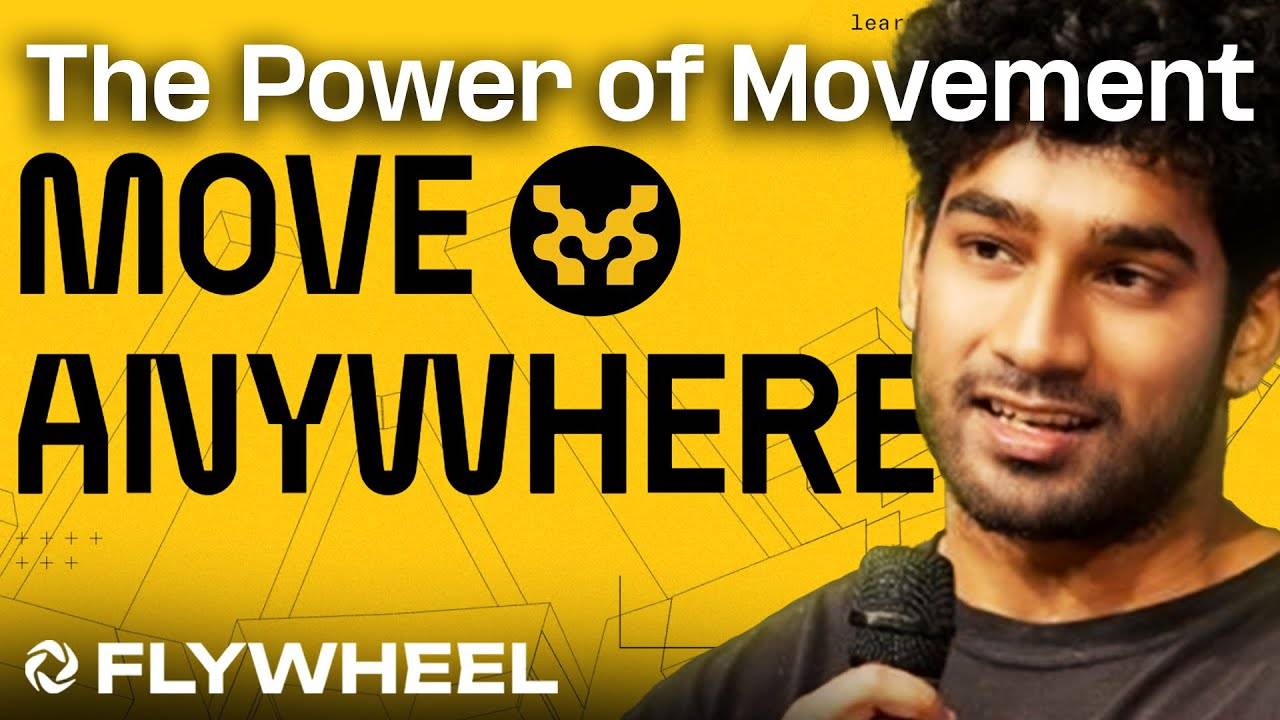
Host: DeFi Dave, Head of North America at @redactedcartel
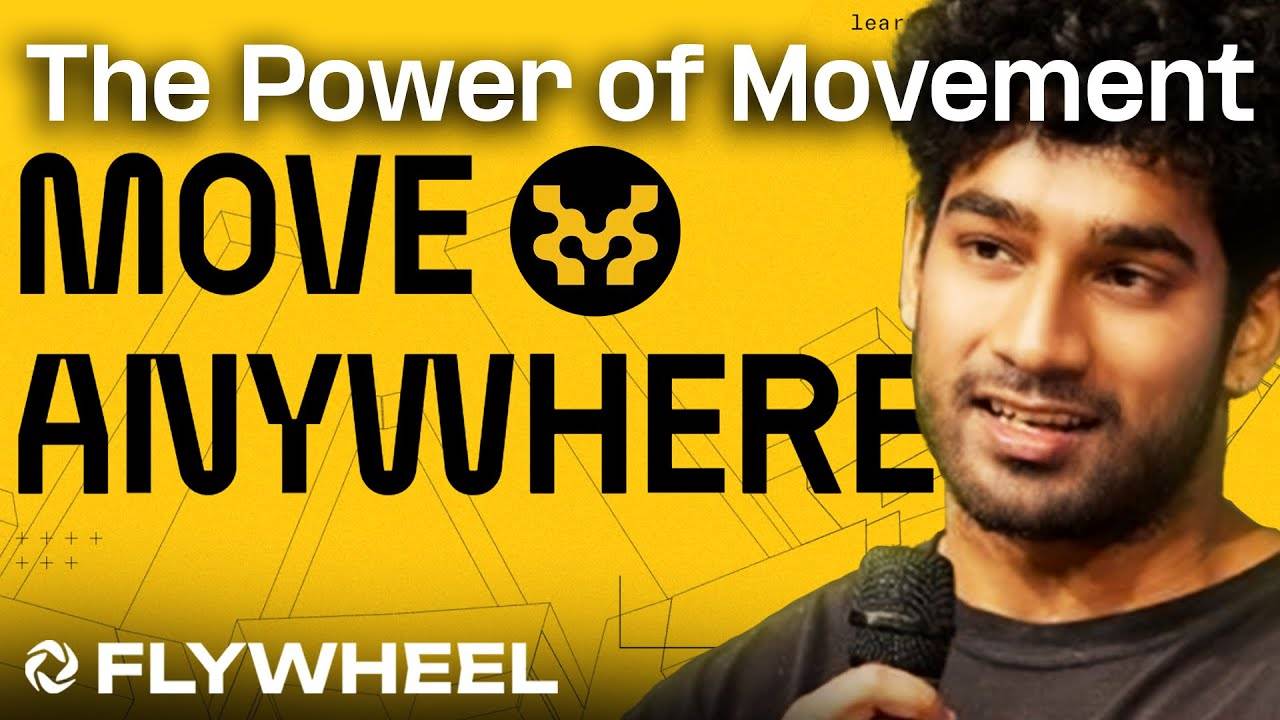
Guest: Rushi Manche, Co-founder of Movement Labs
Podcast Source: Flywheel DeFi
Original Title: The Power of Movement w/ Rushi - Flywheel #111
Release Date: July 4, 2024
Key Takeaways
-
This episode features Rushi Manche, co-founder of Movement, in an in-depth conversation with host DeFi Dave about the power and unique advantages of Movement in the crypto space.
-
Rushi shared his journey from a programming beginner to a Move language expert. He emphasized the importance of security in DeFi and the need for high-throughput virtual machines, detailing how his project Movement leverages innovative incentive mechanisms and security measures to advance blockchain adoption.
-
This article summarizes the key points of the discussion, including Rushi’s background, the discovery process of the Move language, its security benefits, the future direction of the Movement project (including wealth opportunities), and critiques and potential improvements regarding fundraising and airdrops.
Introduction & Background
-
Dave opened by introducing the topic, stating that this episode would deeply explore Movement's applications and how its unique Move language could disrupt the internet economy. Dave was particularly impressed by Rushi’s analogy comparing Movement VM’s language upgrade to upgrading car parts.
-
Rushi noted that while current market adoption is only around 5%, Movement has distinct advantages. It not only maintains compatibility with existing technologies but was developed by Facebook with the goal of making crypto accessible to mainstream users.
-
Rushi emphasized that security and low fees are key factors in attracting users. Their technology delivers both speed and security, ensuring users don’t have to worry about hacks when transacting on-chain.
Rushi’s Background & Discovery of Move
-
Rushi began coding at age 14 and initially worked at UnitedHealth Group, migrating cloud infrastructure. His career started in distributed systems and databases, and he got into cryptocurrency during university. Four years ago, he was drawn to Cosmos' vision and began learning Rust and Solidity, laying the foundation for his entry into crypto.
-
On discovering the Move language, Rushi explained that he learned about Facebook developing its own blockchain during university, which sparked his interest. He dove deep into studying Move and eventually decided to build his career in this field.
-
Rushi also mentioned that July is a pivotal month for Movement—they will launch their first high-throughput Ethereum Rollup testnet, along with exciting new applications such as a fully on-chain sports prediction market and top-tier DeFi apps.
Difference Between Aptos Move and Sui Move
-
Rushi first learned about Facebook’s blockchain project through a New York Times article. He was excited because while Cosmos had only five users and Ethereum a few hundred at the time, Facebook had billions—offering massive potential for crypto adoption. He began studying Move intensively, using resources like the Move Book.
-
Host DeFi Dave added that Facebook’s 2019 announcement came during a crypto bear market, yet it served as major validation for the industry. Although regulatory hurdles prevented Facebook’s project from succeeding, its influence remained profound.
-
Rushi further explained the differences between Aptos and Sui. Though both originated from Facebook’s blockchain initiative, they differ significantly in technical implementation and goals.
-
Rushi stressed that Move was created to introduce a new virtual machine (VM) on a novel consensus mechanism—not just an improvement over the existing EVM (Ethereum Virtual Machine).
-
Rushi also shared his team’s decision-making process between Avalanche and Cosmos. Ultimately, they chose Avalanche as an early supporter and began their entrepreneurial journey during college. Despite limited resources at Vanderbilt University, they persisted in building their project.
Move’s Security Focus & EVM’s Limitations
-
Rushi said his team began their Move project in November 2022, collaborating with Avalanche to integrate Move into Avalanche’s consensus layer. Their goal was to bring Move to EVM environments, as EVM has inherent design flaws in scalability and security.
-
Host DeFi Dave noted that while EVM dominates crypto, it wasn’t designed for mass adoption. Rushi added that EVM was originally a temporary solution, never built for large-scale use. In contrast, Move and other Rust-based VMs (like SVM) are engineered for high throughput.
-
Rushi highlighted Move’s main advantage: security. Unlike EVM, Move performs formal verification before executing smart contracts, ensuring code safety. If developers introduce bugs, Move detects and blocks execution beforehand. Rushi likened Move to a firewall that identifies and prevents security vulnerabilities pre-execution.
-
Defi Dave added that despite EVM becoming safer over time, it still has many exploitable vulnerabilities. He noted that Sui Move prioritizes throughput, while Aptos Move emphasizes security.
-
Rushi responded that despite ongoing improvements, EVM’s architectural flaws make it difficult to eliminate security issues entirely. He pointed out that 92% of EVM protocols—including major DeFi platforms—are vulnerable to hacking.
-
Rushi explained that Aptos Move and Sui Move are actually entirely different languages, causing confusion and fragmentation among developers. Aptos closely follows the original Facebook DM project’s Move language, while Sui evolved it over six months, adopting semantics and consensus closer to Solana. Thus, Aptos Move is more secure, while Sui Move offers higher speed and compilation efficiency.
Movement as an Ethereum L2 Solution
-
Rushi introduced Movement—the first Ethereum Layer 2 solution based on the Move language. They chose an L2 over a standalone L1 because Ethereum offers strong stability and liquidity, making it easier to attract liquidity providers (LPs). Using Ethereum as the base asset allows users to enjoy Move’s benefits without leaving the Ethereum ecosystem.
-
Rushi explained how they support both Aptos Move and Sui Move. They built an RPC translation layer that compiles both versions into the same bytecode for compatibility. Additionally, they developed Fractal, an EVM interpreter enabling developers to deploy EVM smart contracts on Movement.
-
Host Defi Dave mentioned Ethereum’s powerful network effects as a value store and widely used asset. Rushi agreed, noting Ethereum’s strong programmability and security make it ideal for L2 development.
Go-to-Market Strategy & Building the Movement Ecosystem
-
Host Defi Dave raised the possibility of Ton serving as an Ethereum L2.
-
Rushi outlined two possible paths: deploying the Ton VM on Ethereum to leverage its liquidity (but with poor developer experience), or deploying EVM on Ton to preserve Ton’s features with better dev tools.
-
Rushi emphasized that Movement’s key selling point is security. In today’s environment, deploying EVM apps is slow and expensive due to costly audits. Movement aims to provide a secure environment where developers can deploy quickly without fear of hacks.
-
Rushi also said Movement wants to be the best platform for user experience—offering high throughput and security so developers can go from 0 to 1 fast. Plus, EVM compatibility means existing apps can easily migrate to Movement.
-
Host Defi Dave noted they’ve launched an incentivized testnet, attracting many top app developers.
-
Rushi detailed how the incentivized testnet works: developers deploy apps on testnet and earn rewards. This draws more developers and helps uncover and fix potential bugs.
Applications on Movement (Wealth Opportunities Included)
-
Rushi highlighted Movement’s two main advantages: security and user experience. Today’s crypto development is slow because of expensive audits. Movement provides a secure environment so developers can deploy fast without hack risks. Combined with high throughput and great UX, it enables rapid app creation from scratch.
-
Rushi detailed the incentivized testnet mechanism: developers deploy apps and earn rewards. This attracts talent and helps identify and fix issues early.
-
Rushi mentioned several key apps launching on Movement:
-
Meridian: A lending market similar to Aave, focused on Move-based staking and restaking. They’re also building a DEX and stablecoin.
-
Echelon: A lending market offering secure borrowing. Users can deposit Ethereum assets and earn yield without worrying about hacks.
-
Bracket: A fully on-chain prediction market focused on sports. Users can predict outcomes with leverage, increasing liquidity and appeal. A key feature is creating custom brackets (e.g., for March Madness) fully on-chain, enhancing transparency.
-
Partnerships & Consumer Apps on Move
-
Rushi said Bracket built its own oracle but supports others too. Their oracle is fully open-source and randomized, improving system transparency and reliability.
-
Rushi emphasized that Movement’s high-throughput VM and superior UX enable unique applications. For example, users can bet with Ethereum assets on Movement with better UX and security.
-
Rushi noted many teams want their own chains (“app chains”) to boost valuation. Movement provides a stack allowing teams to customize rollups for high-throughput blockspace.
-
Rushi used an analogy to explain EVM bottlenecks: today’s EVM is like a luxury car with an old engine. Movement focuses on upgrading that “engine” with a more efficient VM.
-
Rushi mentioned collaborations with multiple teams on customized chains. For example, a Bitcoin L2 team solved transaction congestion. Another team, Link, is building a chain with 300 mini-games.
-
Rushi mentioned Henry, a consumer cashback app similar to Honey. Henry attracted consumer teams via a custom chain and partnered with major retailers. For example, buying Crocs online earns Henry points, redeemable in future airdrops.
-
Rushi ended with an exciting project: Up Network. They’re launching a "Movement Phone"—a mobile-first Android device—to be released in the coming weeks.
Product Differentiation in a Saturated Market
-
Host Defi Dave recalled a recent interview with Jay discussing how to advance the internet economy. Dave remembered past debates about institutional investors entering crypto and concluded it's better to focus on growing the existing internet economy than wait for institutions.
-
Dave believes Move VM is the perfect tool to enhance the internet economy through diverse applications. He cited apps like Honey, which, once live with real users, could draw more people into crypto.
-
Rushi added that Move VM can enable social trading—similar to a group investment platform. He illustrated this with examples of trading directly within platforms like Telegram, letting users trade seamlessly without downloading new apps.
-
Rushi believes that although many fast chains exist, most won’t succeed. Solana is one of the few remaining. He stressed that UX differentiation is critical—many new blockchains fail to meaningfully improve UX, limiting their impact.
Building New Products & User Experiences
-
Rushi said their team is committed to staying aligned with Ethereum, viewing Move VM as their core technology. Though market adoption is currently low, they believe in its long-term potential.
-
Rushi emphasized their goal isn’t just to attract existing crypto users, but also skeptical mainstream users—like his mom or uncle. They focus on security and low fees, which are Move VM’s strengths. While security isn’t as flashy as privacy, it’s crucial, especially when money is involved.
-
Dave observed that while many new blockchains and L2s exist, they lack clear product differentiation, making it hard for users to distinguish them. Rushi agreed, noting poor market sentiment stems from projects raising big funds without truly engaging communities.
-
Rushi further explained their mission: launching fundamentally new products and experiences. They’ve already built large communities in Africa and Southeast Asia and plan to drive engagement through innovative DeFi mechanics.
-
Dave mentioned a project called “Fair Share,” praising its innovative consensus approach, like proof-of-liquidity. They successfully activated their testnet via NFTs, attracting early adopters akin to religious believers.
Challenges & Opportunities in Fundraising and Airdrops
-
Rushi noted that many projects incentivize early developers and users to grow communities but sometimes set unrealistic expectations. Some airdrops attracted massive liquidity but delivered poor returns, leading to user dissatisfaction. The key, he said, is avoiding overpromising and using tiered reward distribution.
-
Rushi said they plan to allocate a portion of rewards to apps rather than having the foundation distribute everything. This lets apps better identify and reward active users, since they understand user behavior better than any central foundation.
-
Rushi highlighted the importance of the “surprise” factor in airdrops. Uniswap’s airdrop succeeded because users weren’t expecting it—this unexpected reward boosted loyalty and engagement.
-
They also discussed pros and cons of “points” systems. While transparent, points can encourage excessive activity driven by reward expectations. If market conditions turn bad, unmet expectations lead to disappointment.
-
Rushi noted traditional points systems and on-chain KPIs each have trade-offs. Points are simple but foster entitlement. On-chain KPIs favor surprise rewards, letting contributors and apps distribute rewards organically, reducing entitlement. For example, devs earn rewards by building on-chain, not through lengthy grant applications.
-
Rushi emphasized that airdrops must avoid setting high expectations. Many projects attract liquidity via airdrops but deliver poor returns, causing backlash. He suggested letting apps distribute rewards to better recognize active users, improving fairness and transparency.
-
Rushi criticized traditional fundraising, calling it inefficient. Many projects spend months applying but receive only small amounts, insufficient for sustainable growth. He recommended focusing on connecting teams with investors and markets to build viable business models instead of relying solely on fundraising.
-
Rushi believes future successful projects need innovative reward mechanisms—like delegating allocation to apps, involving the community—to enhance fairness and transparency. He also stressed the need for unique UX and fundamentally new products to attract and retain users.
Creating Wealth in Crypto: Effective Incentive Mechanisms
-
Rushi noted various ecosystems use different grant strategies—Optimism’s long-term funding, Arbitrum DAO’s discretionary grants, etc. He finds traditional grant processes slow and ineffective, often requiring months and interviews for minimal funding, which doesn’t meaningfully advance projects.
-
Rushi advocates direct one-on-one collaboration with teams, offering market access and fundraising support instead of simple cash grants. This better helps teams build sustainable businesses rather than depend on short-term funding. He also noted many ecosystems attract “grant farmers” who deploy identical apps across chains without building real ecosystems.
-
Rushi stressed that the community should lead incentive distribution—not foundations deciding which projects are valuable. Market and user validation should determine value, not centralized committees. Grants should fund public goods, not business models.
-
Looking ahead, Rushi wants to build a secure Ethereum ecosystem where trust in blockchains matches trust in AWS or websites. He emphasized improving user experience and system security as top priorities.
-
Finally, Rushi hoped to see more social and consumer apps emerge on blockchain—not just infrastructure upgrades.
Join TechFlow official community to stay tuned
Telegram:https://t.me/TechFlowDaily
X (Twitter):https://x.com/TechFlowPost
X (Twitter) EN:https://x.com/BlockFlow_News
 深潮TechFlow