









Greythorn June Market Report: Long-term outlook for crypto assets remains positive as new capital enters the market
TechFlow Selected TechFlow Selected
Greythorn June Market Report: Long-term outlook for crypto assets remains positive as new capital enters the market
The easing of inflation and strong employment figures indicate a healthy economy, while cautious consumer spending and declining goods expenditure could be early signs of an economic slowdown.
 Navigating Web3 tides with focused insights
Author: Greythorn

Introduction
Welcome to Greythorn Asset Management’s June 2024 Monthly Market Update. We are pleased to share with you our insights and analysis of the market trends we are observing. Our mission is to invest in breakthrough technologies and asset classes that aim to create significant value and positively impact industries.
At Greythorn, we provide monthly updates on the cryptocurrency market, including detailed analysis of market dynamics, regulatory developments, and macroeconomic factors affecting digital currencies.
To learn more about Greythorn, we invite you to visit our website.
Market Analysis
BTC Patterns and Market Liquidity
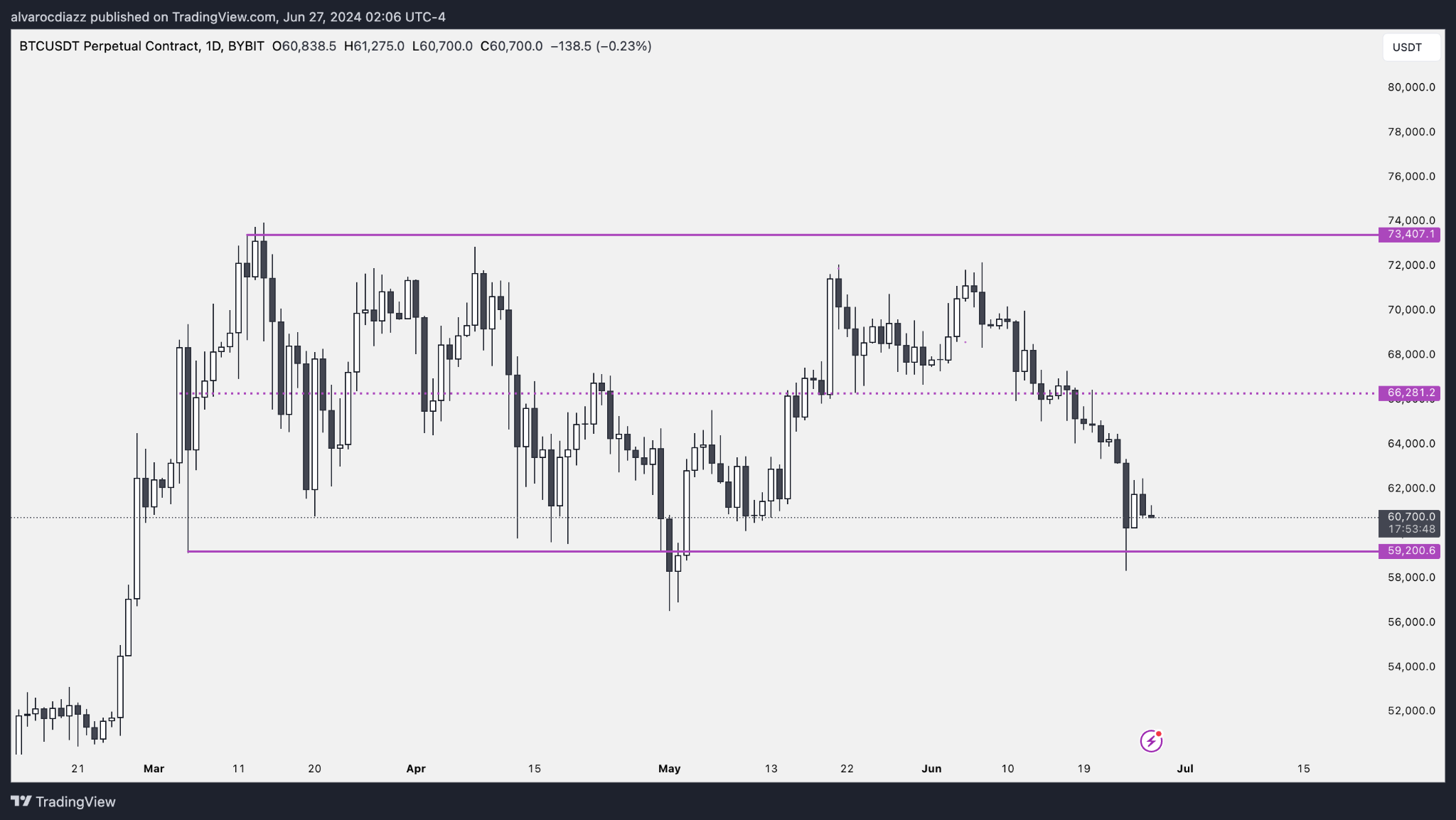
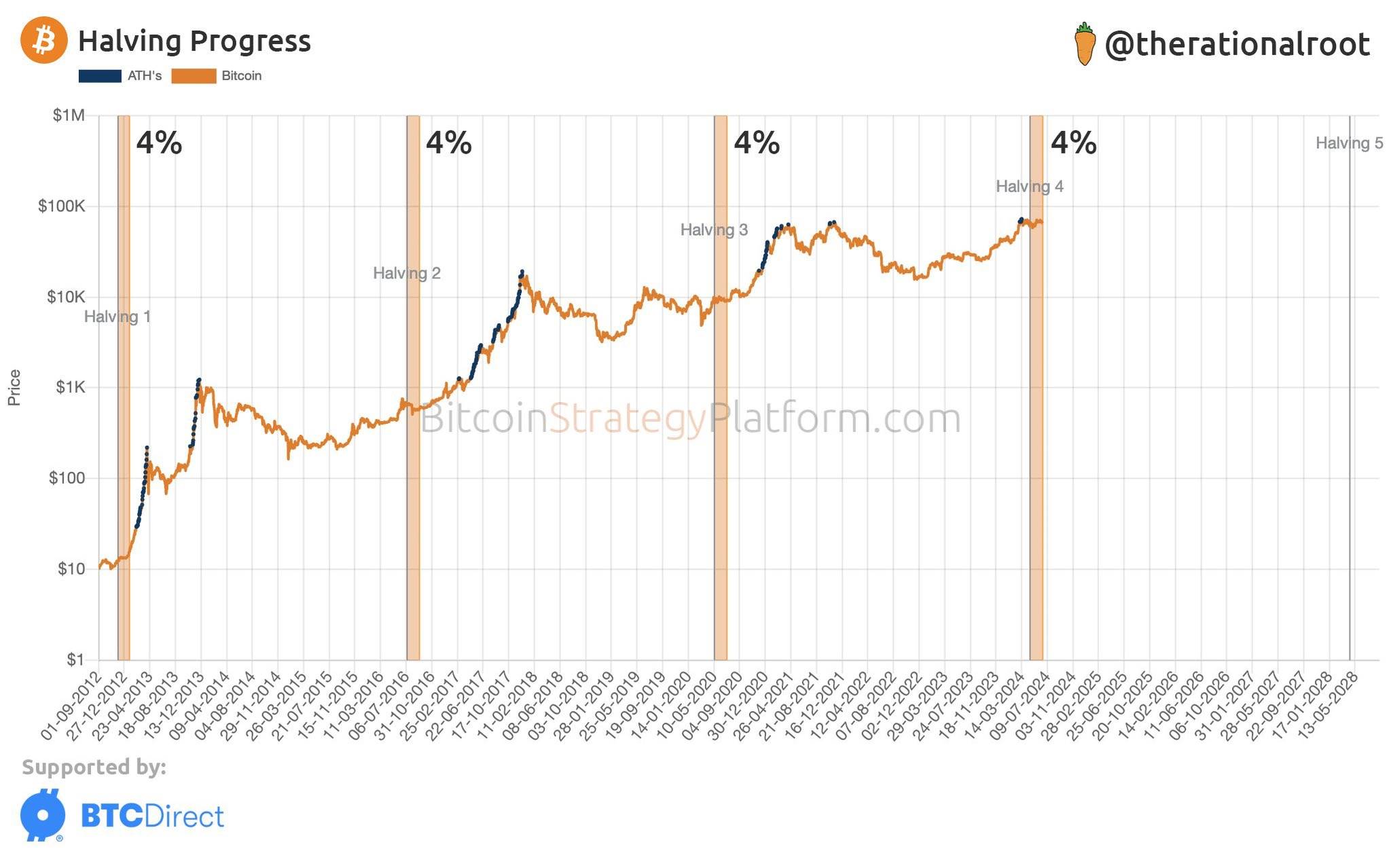
BTC is currently trading within a relatively tight range, with selling pressure potentially coming from some miners selling BTC to cover operational costs post-halving. This pattern could suggest a mild upward trend toward September, similar to the pattern seen after the 2020 halving. However, the current macro environment differs, with U.S. interest rates at 5.25% compared to 0% in 2020, which may reduce liquidity injections to avoid market instability.
Source: TradingView
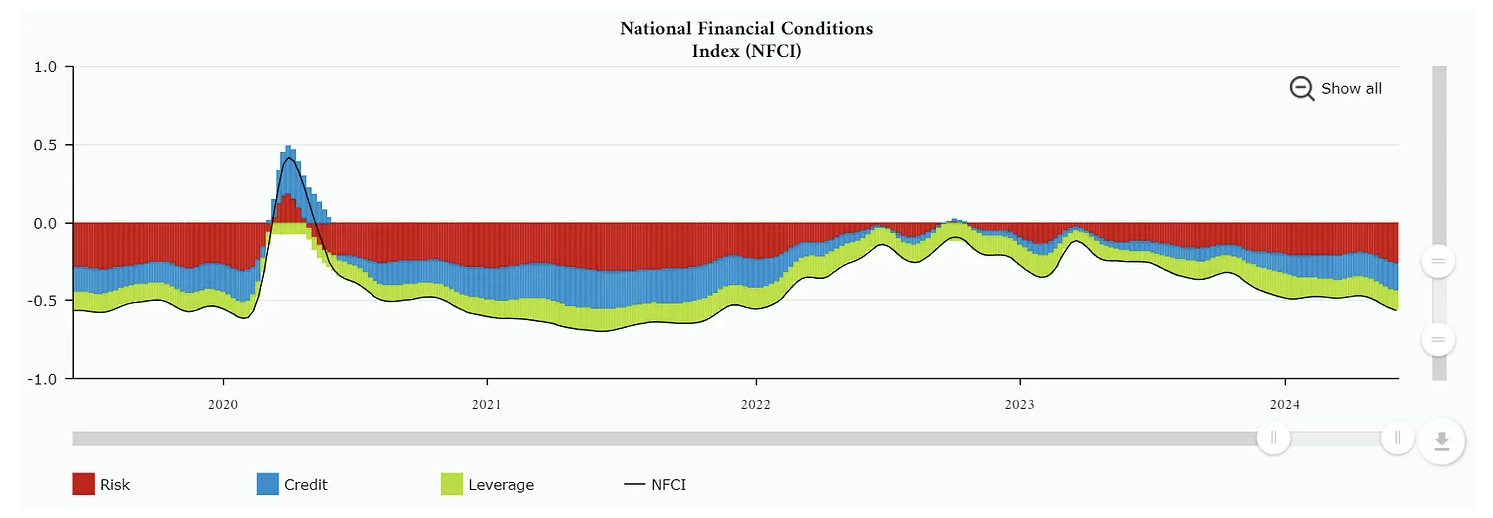
The Chicago Federal Reserve's Financial Conditions Index indicates that liquidity is much looser now than during the last halving, suggesting that BTC's sensitivity to market inflows will continue to play an important role. ETFs outside the U.S. market and smoother onboarding channels are expected to attract new capital into the market, supporting BTC and other crypto assets.
Source: Chicago Fed
ETH ETFs and ETH Supply
Jeff Dorman, Chief Investment Officer at Arca, recently highlighted the potential impact of ETH ETFs on supply. Unlike BTC, which may have more potential capital inflow, ETH's supply could turn negative during periods of high demand because transaction fees are burned. Therefore, less new demand is required to maintain or increase ETH's price.
Despite underperforming earlier this year, ETH has caught up with BTC in terms of year-to-date price movement, though it still needs to make up for its poor performance in 2023. Given that the U.S. government does not hold large amounts of ETH for liquidation, we don’t need to worry about miner sell-offs post-halving, and the launch of spot ETFs in the U.S. is drawing closer—an event that seems increasingly likely to occur at some point. Additionally, the SEC has closed its investigation into Ethereum 2.0, confirming it does not intend to classify ETH as a security. This is positive news for businesses and developers building on Ethereum, although risks related to ETH staking or exchanges remain. Nonetheless, ETH continues to follow BTC’s downturn, reflecting the current market sentiment.
Stablecoins for Cross-Border Trade
Two major Russian metal producers have started using stablecoins and other cryptocurrencies to settle cross-border trade with Chinese customers and suppliers. The shift to stablecoins offers faster and cheaper settlement, even for companies that can access traditional cross-border payment methods. Moreover, Russian and Chinese firms may be preparing contingency plans in case they are cut off from the traditional financial system.
This move could attract increased scrutiny from U.S. regulators on the stablecoin market, possibly leading to a more proactive regulatory approach. The stablecoin market is significant, settling an increasing share of global trade, yet the U.S. has hesitated to formalize their issuance.
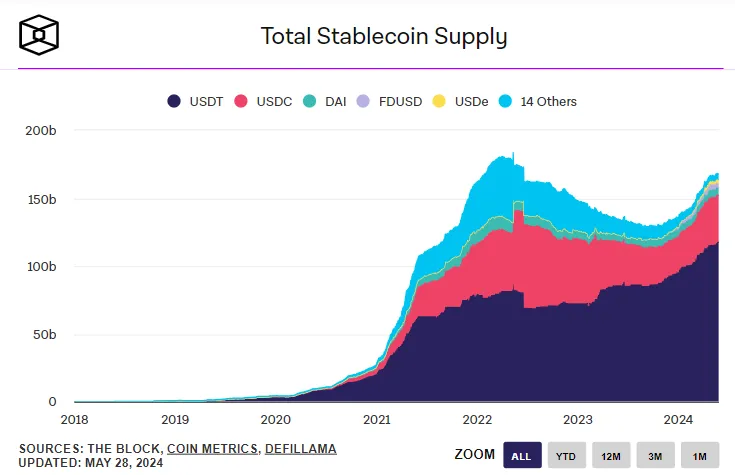
The total supply of USD-backed stablecoins has grown nearly 25% this year to $167 billion—exceeding Ukraine’s GDP and double that of Luxembourg.
Source: The Block Data
The success of stablecoin-based payment flows could influence discussions around a common BRICS currency, which has received mixed support due to the complexity of reaching consensus. Fiat-backed stablecoins might serve as a simpler alternative.
South Korea Crypto ETFs
While many countries have launched BTC spot ETFs with limited success, South Korea might be an exception. A recent report from the Korea Institute of Finance warns that crypto ETFs could divert funds from more "productive" enterprises and destabilize the economy by eroding retail savings during downturns. The Democratic Party, which has promised to review the current ban on crypto spot ETFs, has not committed to approving listings. This highlights the political consequences of market decisions.
Telecom Giant Entering Bitcoin Mining
Deutsche Telekom, Europe’s largest telecom provider, will soon begin mining Bitcoin. This move is significant given that the German government holds over 30% of the company. It underscores growing interest among traditional network providers in participating in new types of networks.
Coinbase’s Smart Wallet: Redefining Digital Identity
Coinbase’s new “Smart Wallet” could represent a solution to the complexities of self-custody in crypto and may evolve into a broader concept of online identity. The smart wallet is a smart contract that reflects balances and interacts with apps without requiring a unique recovery phrase, using “passkey” authentication technology. This technology could eventually hold key identity data and automatically grant permissions to certain apps and smart contracts.
Coinbase and other validators can pay users’ transaction fees, making certain applications free for users. This could make on-chain experiences more practical, especially for gaming applications and blockchain-based social platforms where users would otherwise need to pay for each action.
Tokenization Overview
JPMorgan’s tokenization platform, Onyx Digital Assets, will now open to third-party developers, allowing external innovation to enhance the platform’s utility and value. Additionally, JPM Coin will be used to settle transactions on Broadridge’s distributed ledger repo platform—the first time it’s being used on a third-party system. Fidelity International has tokenized shares of a money market fund using Onyx, signaling JPMorgan’s commitment to expanding Onyx’s use cases.
Franklin Templeton’s on-chain money market fund FOBXX has enabled peer-to-peer transfers among registered investors and now allows purchases and redemptions using USDC. While this increases convenience, it primarily targets institutional investors and does not pose a significant threat to BlackRock’s leadership in tokenized assets.
Recap and Outlook
Recently, the crypto market experienced a notable decline, with BTC falling below $60,000. The anticipated distribution of Mt. Gox bankruptcy assets, expected in July, contributed to the sell-off, although the actual market impact is expected to be less severe. Technical factors, macroeconomic concerns, and potential ETH performance have also influenced market movements.
Despite these challenges, developments in stablecoins, ETH ETFs, and tokenization highlight the growing sophistication and potential of the crypto ecosystem. With new capital entering the market and improvements in awareness and infrastructure, the long-term outlook for crypto assets remains positive.
Source: @therationalroot
Macro Insights
Economic Overview and Inflation Trends
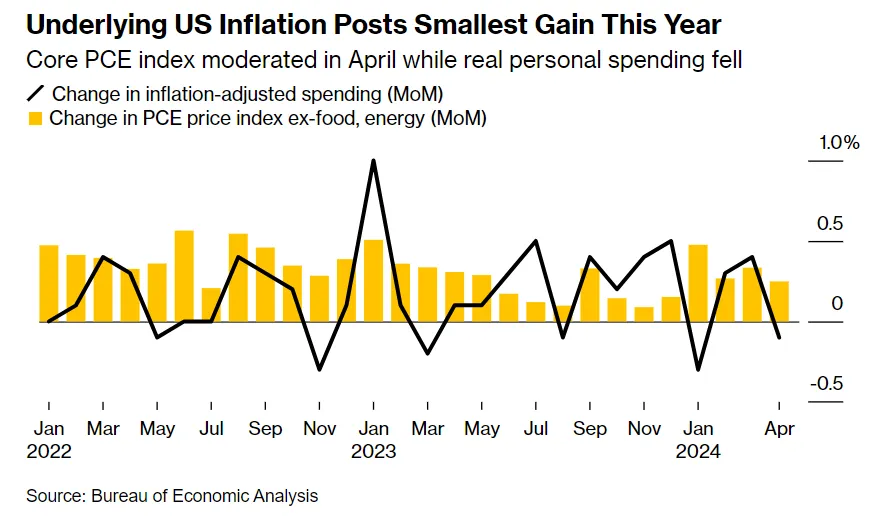
Signs of inflation in June were mixed, showing slow but steady relief. The U.S. core Personal Consumption Expenditures (PCE) index, excluding food and energy prices, rose only 0.2% this month, below expectations—the smallest monthly gain in a year. Both core and headline indices are approaching the 2.9% and 2.8% levels we saw in March last year, broadly in line with expectations.
Source: Bloomberg
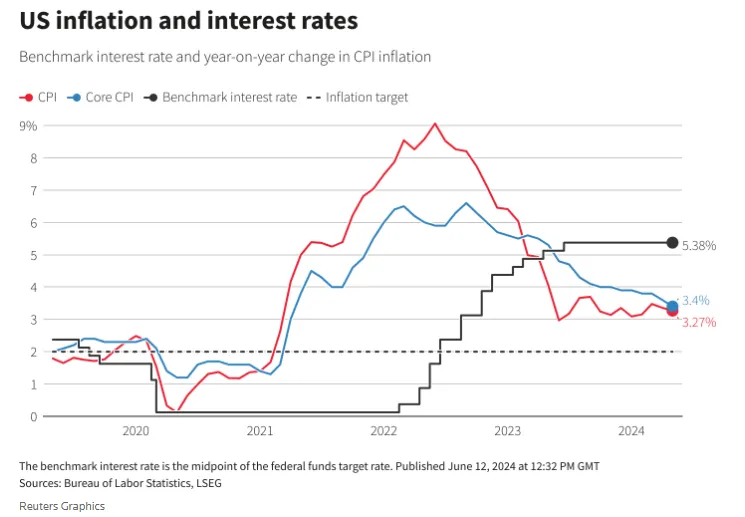
Inflation figures for May unexpectedly flatlined, showing no monthly increase compared to April’s 0.3%. This brought the annual inflation rate down to 3.3%, below forecasts. The decline was largely driven by falling energy prices, helping ease overall inflation. This unexpected result could positively affect consumer confidence and play an important role in future monetary policy decisions.
Source: Reuters
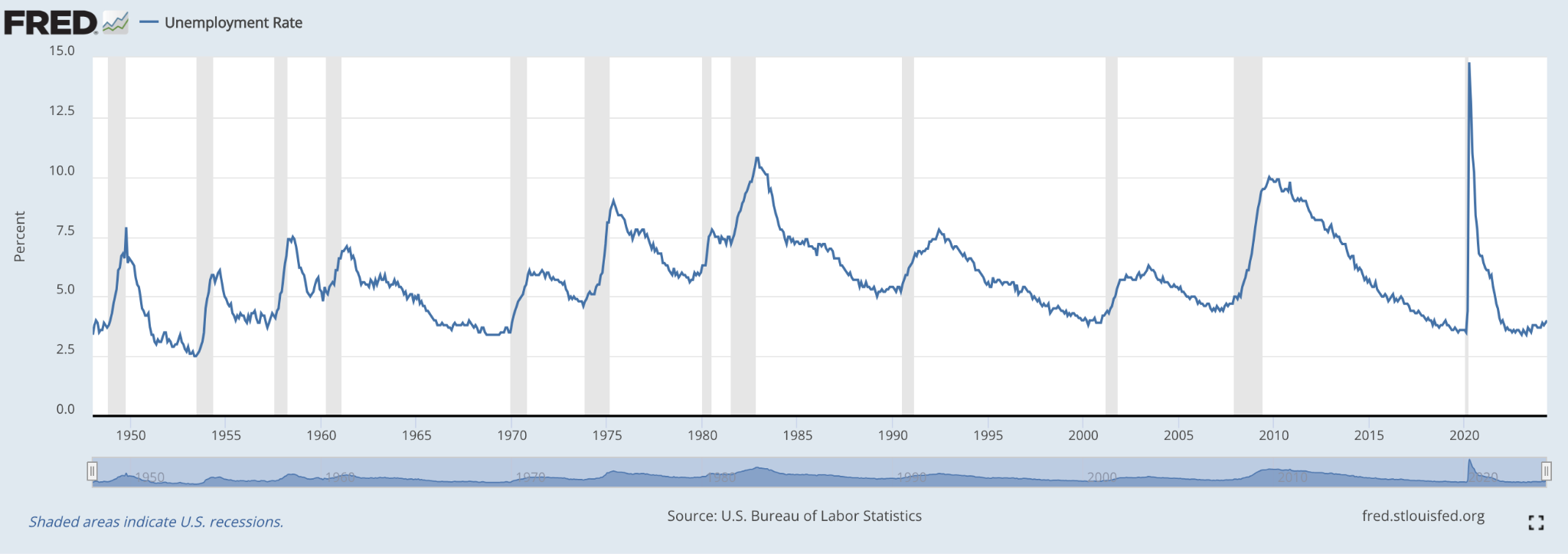
On the other hand, June’s employment data presented a complex picture: nonfarm payrolls surged by 272,000, exceeding expectations, but the unemployment rate also rose to 4.0%, the highest in over a year. This divergence stems from two different data sources—establishment surveys showed strong job growth, while household surveys indicated a decline in employment. This mixed data presents challenges for the Fed as it navigates between controlling inflation and supporting a stable labor market.
Source: St. Louis Fed
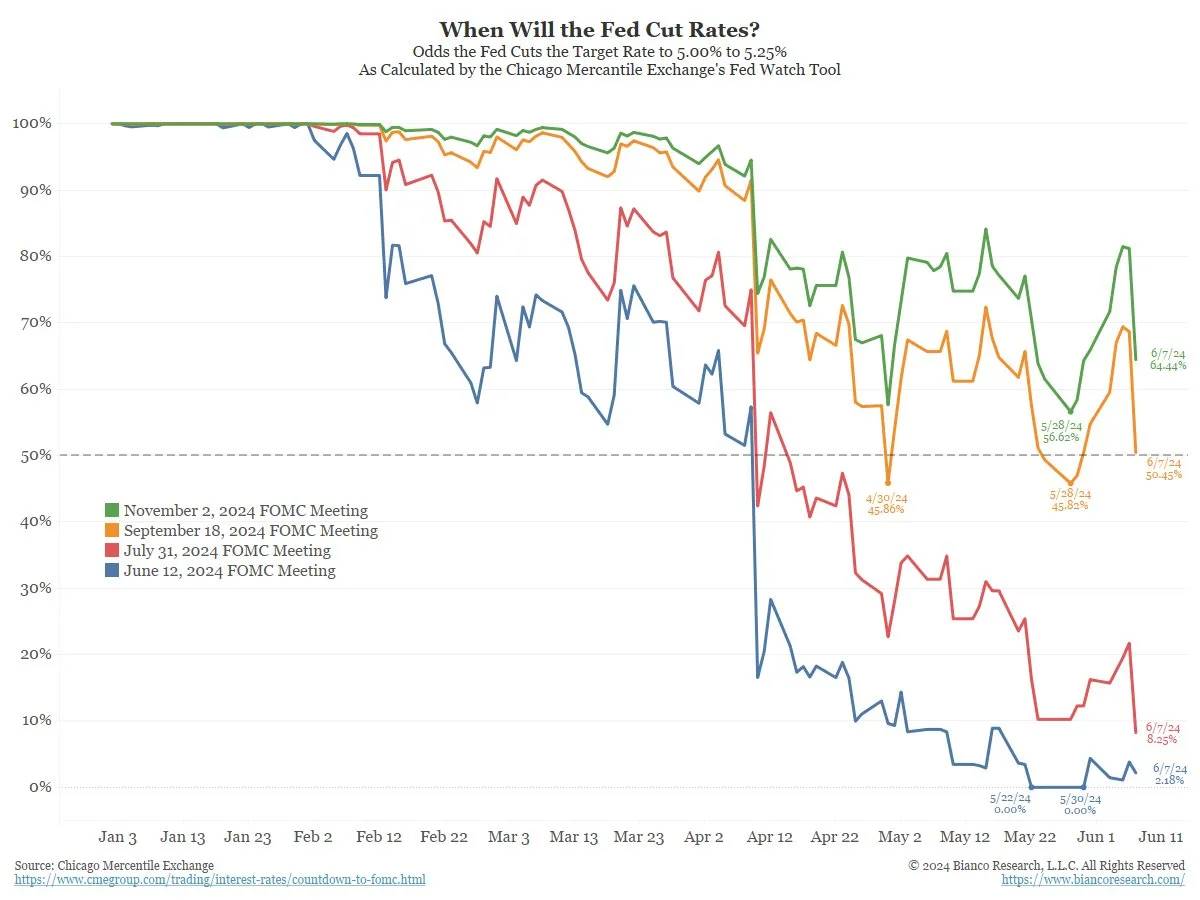
Major investment firms now expect the first rate cut to occur in the fall, with a 50/50 chance of a cut in September.
Source: Jim Bianco
Global Economic Context
Internationally, we’ve also seen some interesting moves. Eurozone inflation came in higher than expected (2.9% vs. previous and forecasted 2.7%), which could lead the European Central Bank to cut rates soon—a move that may signal similar actions in the U.S.
In commodities, oil prices initially dropped when OPEC+ announced earlier production cuts. However, the drop was short-lived, with Brent crude recovering due to skepticism about OPEC+’s commitment to these cuts and concerns about increased demand for air conditioning and travel during a hot summer.

Source: TradingView
Digital Economy Development
The rollout of retail central bank digital currencies (CBDCs) continues to face complex challenges such as legal and design issues, slowing adoption. Meanwhile, Paxos announced the launch of a new yield-bearing stablecoin—Lift Dollar (USDL)—choosing the UAE as its base due to more favorable regulatory conditions, highlighting ongoing adaptation in the digital currency market.
Recap and Outlook
This month’s economic indicators paint a complex picture. On one hand, easing inflation and strong employment numbers suggest a healthy economy. On the other, cautious consumer spending and declining goods expenditure may be early signs of economic slowdown. These factors will play a crucial role in the Fed’s upcoming decisions, especially as more data on employment and consumer prices becomes available.
Disclaimer
This report has been prepared by Greythorn Asset Management Pty Ltd (ABN 96 621 995 659) (Greythorn). The information in this report should be regarded as general information only and not as investment or financial advice. It is neither an advertisement nor a solicitation or offer to buy or sell any financial instrument or to engage in any particular trading strategy. In preparing this document, Greythorn did not take into account the investment objectives, financial situation, or particular needs of any recipient receiving or reading it. Recipients of this report should consider their own personal circumstances and seek professional advice from their accountant, lawyer, or other advisor before making any investment decision. This report contains statements, opinions, projections, forecasts, and other materials (forward-looking statements) based on various assumptions. Greythorn has no obligation to update this information. These assumptions may or may not prove correct. Greythorn and its officers, employees, agents, advisors, or any person mentioned in this report makes no representation or warranty regarding the accuracy or likelihood of realization of any forward-looking statement or its underlying assumptions. Greythorn and its officers, employees, agents, and advisors do not give any guarantee, representation, or warranty as to the accuracy, completeness, or reliability of the information contained in this report. To the extent permitted by law, Greythorn and its officers, employees, agents, and advisors accept no liability for any loss, claim, damage, cost, or expense arising from the information contained in this report. This report is the property of Greythorn. Recipients of this report agree to keep its contents confidential and agree not to copy, provide, disseminate, or disclose any information relating to its content without prior written consent.
Join TechFlow official community to stay tuned
Telegram:https://t.me/TechFlowDaily
X (Twitter):https://x.com/TechFlowPost
X (Twitter) EN:https://x.com/BlockFlow_News
 Greythorn











