Network Value of 85 Million? A Brief Analysis of Sentient, the AI Project with Massive Funding Led by Polygon Co-Founder
TechFlow Selected TechFlow Selected
Network Value of 85 Million? A Brief Analysis of Sentient, the AI Project with Massive Funding Led by Polygon Co-Founder
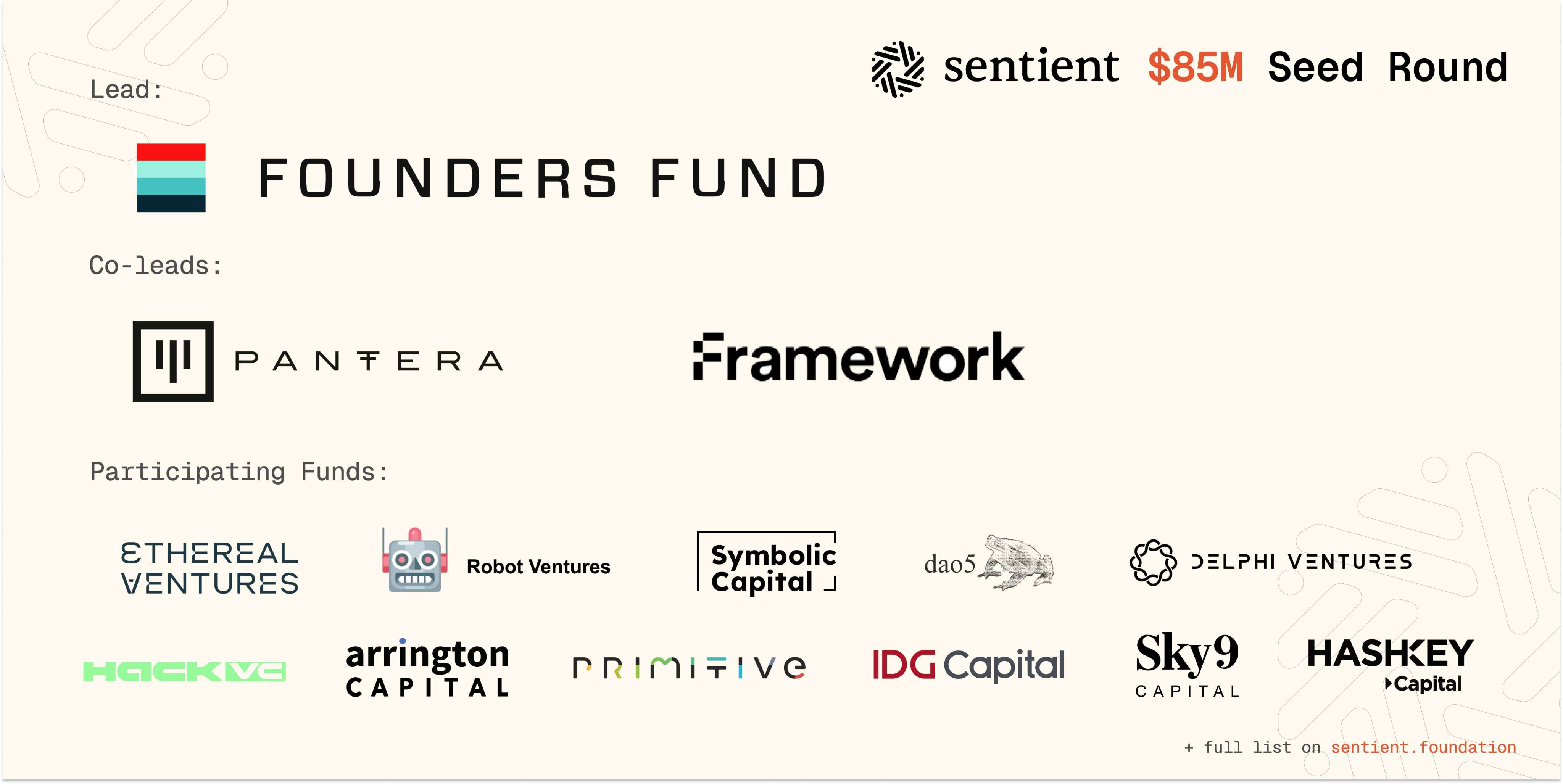
On July 2, open-source AI collaboration platform Sentient announced an $85 million funding round led by top-tier VCs including Founders Fund, Pantera Capital, and Framework Ventures.
 Navigating Web3 tides with focused insights
By TechFlow
The need for cryptography in AI remains debatable, but the crypto world seems inseparable from AI narratives.
"No AI, no crypto" has become a defining phenomenon of this cycle. And judging by current trends, the AI story keeps gaining believers.
On July 2, open-source AI collaboration platform Sentient announced an $85 million funding round led by top-tier VCs including Founders Fund, Pantera Capital, and Framework Ventures, with participation from Ethereal Ventures, Robot Ventures, Symbolic Capital, Delphi Ventures, and others—a massive injection of capital.
In this "atypical bull market," such a large seed round stands out remarkably. The last AI fundraising sensation was Bittensor—can Sentient follow that path?
Is Sentient truly promising, or just another hype-driven capital grab? Let's break it down.
A Sino-Indian Co-Produced AI "Trailer"?
According to Polygon co-founder Sandeep Nailwal, Sentient originated from a conversation he had with EigenLayer founder Sreeram Kannan about the future of crypto and AI. Sreeram later shared these ideas with Princeton University professor Pramod Viswanath (co-inventor of Flash OFDM, a foundational technology behind 4G wireless standards) and Indian Institute of Science professor Himanshu Tyagi. Their research aligned perfectly, sparking further discussion—and thus, Sentient was born.
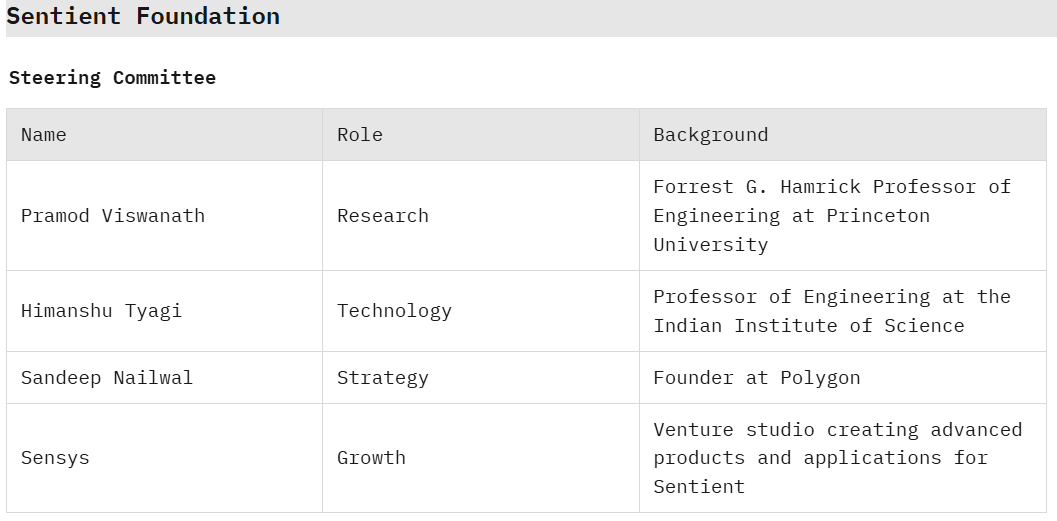
Interestingly, three of the project’s four core contributors are Indian, while several participating investors are institutions founded by Chinese entrepreneurs. Is this a joint Sino-Indian effort to make big moves?
With both capital and talent on board, what does this Sino-Indian AI venture aim to achieve in the current crypto-AI cycle?
After reviewing available materials, we can only say: the full movie hasn’t arrived yet—this is still just a trailer.
Making Open Source Sustainable
Currently, AI technology is monopolized by a few large corporations. Meanwhile, developers working on open-source AI lack sufficient incentives. As AI advances, open-source developers have no long-term economic model to sustain their work. Furthermore, achieving better results requires collaborative contributions across developers. Clearly, developing open-source AI is harder than imagined—let alone competing against powerful proprietary AI systems held by monopolistic entities.
Yes, AI should be open and free—but if staying open means going hungry, then "anti-monopoly" ideals must take a back seat.
Sentient describes itself as an "Open AGI Foundation," aiming to drive AI innovation through community-driven efforts.
To this end, Sentient plans to build an AI platform on Polygon AggLayer where developers can collaborate and monetize their contributions. This enables rapid collaboration while allowing contributors to earn revenue—providing incentives for sustainable development of Open AGI.
OML Model
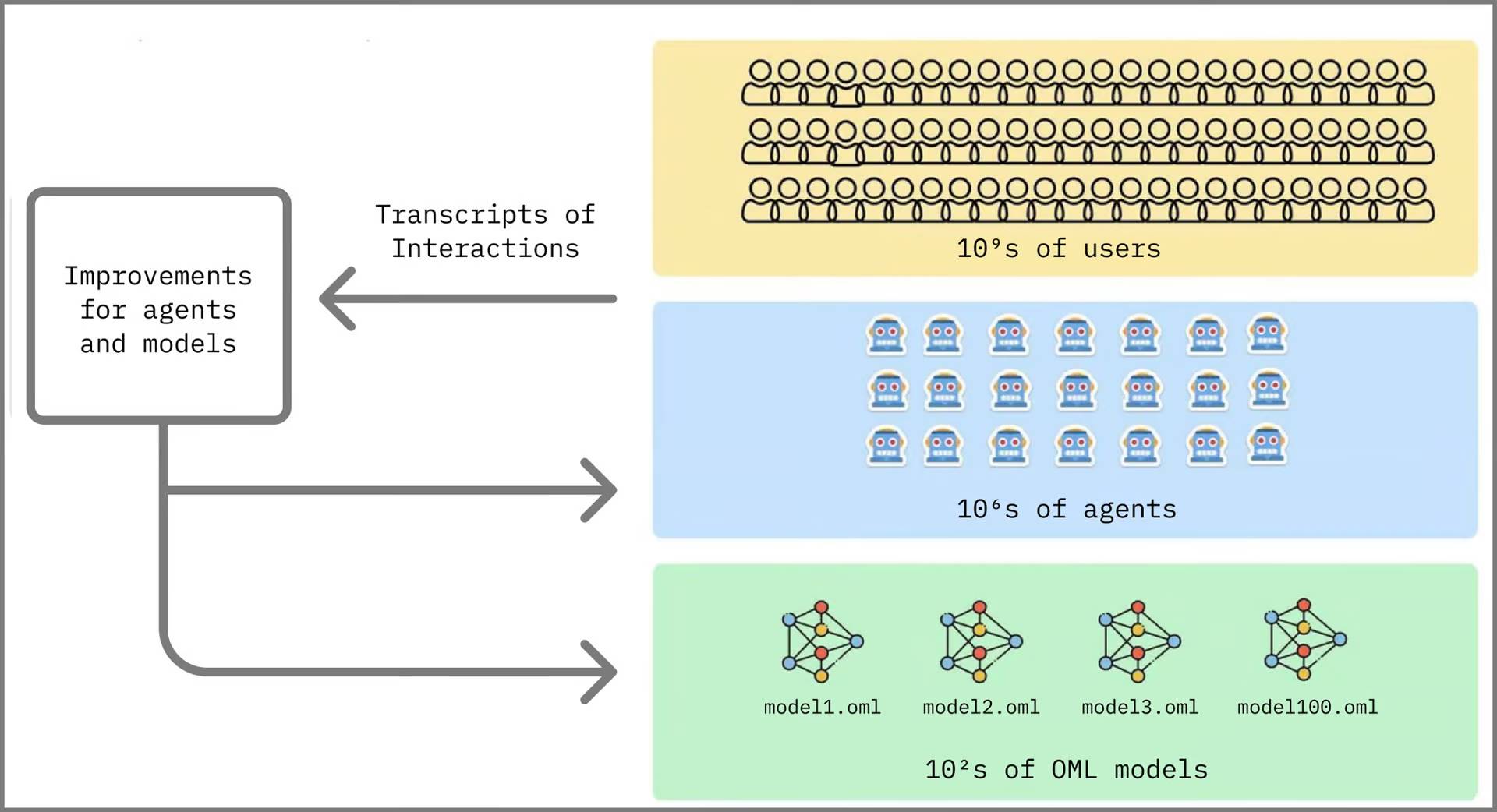
To realize its vision of empowering every developer, Sentient introduces a special custodial AI model framework called "OML"—standing for Open, Monetizable, and Loyal.
This framework ensures openness, monetization capability, and loyalty to the community throughout the development process.
Roadmap
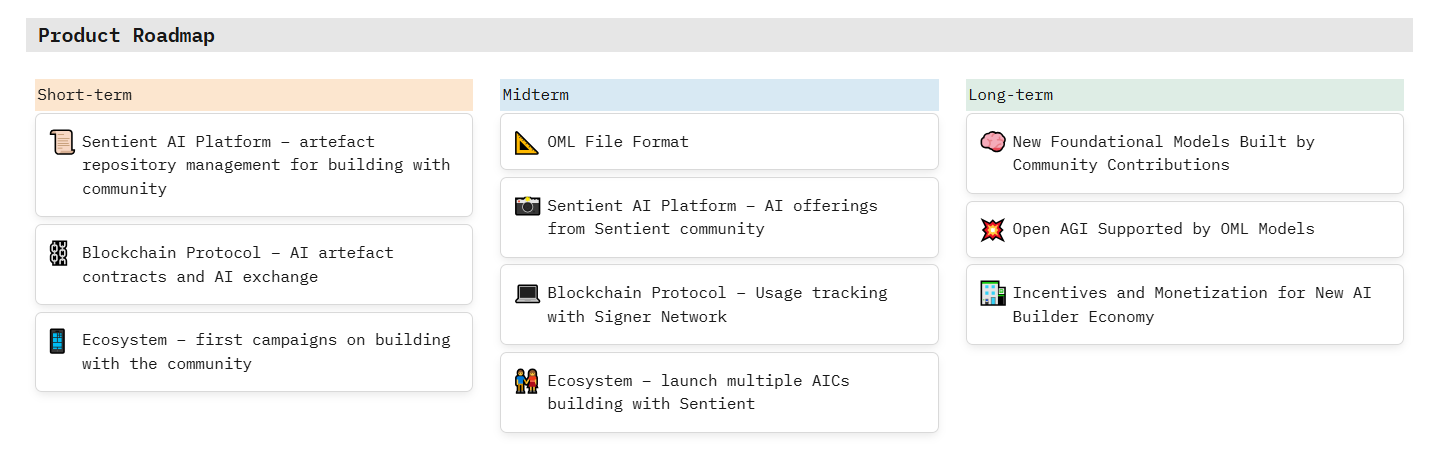
Sentient testnet will launch this quarter. According to official documentation, Sentient has outlined short-, medium-, and long-term goals. Near- and mid-term objectives include launching the Sentient AI platform, initiating community collaboration (starting with first community events), developing on-chain protocols, building the ecosystem, and establishing OML model standards. Long-term goals focus on community-built AI models, an open AGI future powered by OML, and innovative incentive mechanisms for AI developers.
Conclusion
Sentient has strong backing and solid ideas, but many Web3 AI projects already pursue similar goals around contribution incentives and ownership rights—Sentient isn't the first. Moreover, despite raising such a huge sum, prior public attention to the project was minimal. Currently, Sentient hasn't launched any product.
Why would so many institutions pour money into a project still at the whiteboard stage? Perhaps it's trust in "Sandeep leading the charge." In this atypical bull market, investors may prefer putting capital into ventures with compelling stories, talented teams, and strong pedigrees. After all, combining AI with Polygon gives investors a neat narrative to justify their bets. As the ecosystem grows larger, someone else will ultimately foot the bill for the feast—not the VCs themselves.
After multiple rounds of so-called "king-level" projects, one pattern becomes clearer: investing in crypto means betting on people; building projects means assembling the right team.
It's hard to judge whether this is simply replicating an upstream industry reality where "making money is as easy as breathing," or a bold and insightful bet on technological trends.
But in today's world, pumping equals justice and future; dropping equals scam and vaporware.

How far Sentient will go toward advancing sustainable AI development and improving contributor protections, whether it can truly differentiate itself from peers, and whether it can capture the attention of users with limited bandwidth—only time will tell. Let's stay tuned.
Join TechFlow official community to stay tuned
Telegram:https://t.me/TechFlowDaily
X (Twitter):https://x.com/TechFlowPost
X (Twitter) EN:https://x.com/BlockFlow_News
 深潮TechFlow