








Understanding Solana Blink: One-Click On-Chain Actions Embedded in Social Media — Is the Ultimate Goal of Going Mainstream Always Socialization?
TechFlow Selected TechFlow Selected
Understanding Solana Blink: One-Click On-Chain Actions Embedded in Social Media — Is the Ultimate Goal of Going Mainstream Always Socialization?
Solana Blink turns any on-chain action into a shareable link that can be embedded in any social media platform or website.
 Navigating Web3 tides with focused insights
Written by: TechFlow
How to describe Solana?
Reborn from the ruins of FTX, a haven for meme coins, cheap and user-friendly—these asset-adjacent labels clearly fall short of capturing Solana’s ambition.
It builds blockchains, makes phones, and now even aims to enter social media.
Yesterday, Solana officially announced another new product (or technical stack)—Solana Blink, which converts any on-chain action into a shareable link embeddable in any social media platform or website.
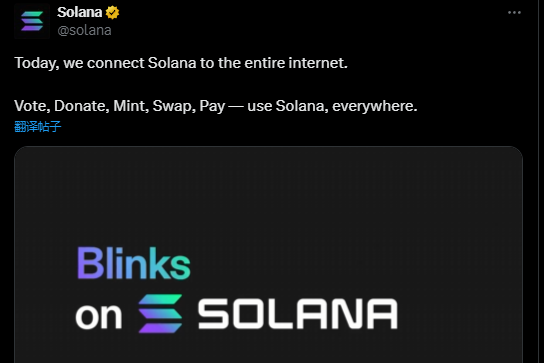
Judging by the name, "Blink" is actually an abbreviation of Blockchain Links—the very shared links described above. But abbreviating it as "Blink" (meaning “a blink of an eye”) is also a clever pun:
On-chain actions, available at a blink.
Embedding on-chain activities via just one link into social media—does that sound familiar, like something out of Farcaster?
Similar, but not exactly the same.
On-Chain Activity = One Link
From publicly available information, the biggest difference between Solana's Blink and Farcaster's Warpcast app lies in universal compatibility.
What does universal compatibility mean?
Simply put, Solana itself won't build a dApp. Instead, it offers a universal capability to turn on-chain actions into clickable links, embeddable into platforms like Twitter, Instagram, or any other website or app—no platform restrictions.
The official video clearly demonstrates the Blink user experience:
-
Somone posts on Twitter calling for donations, including a post with a Blink link
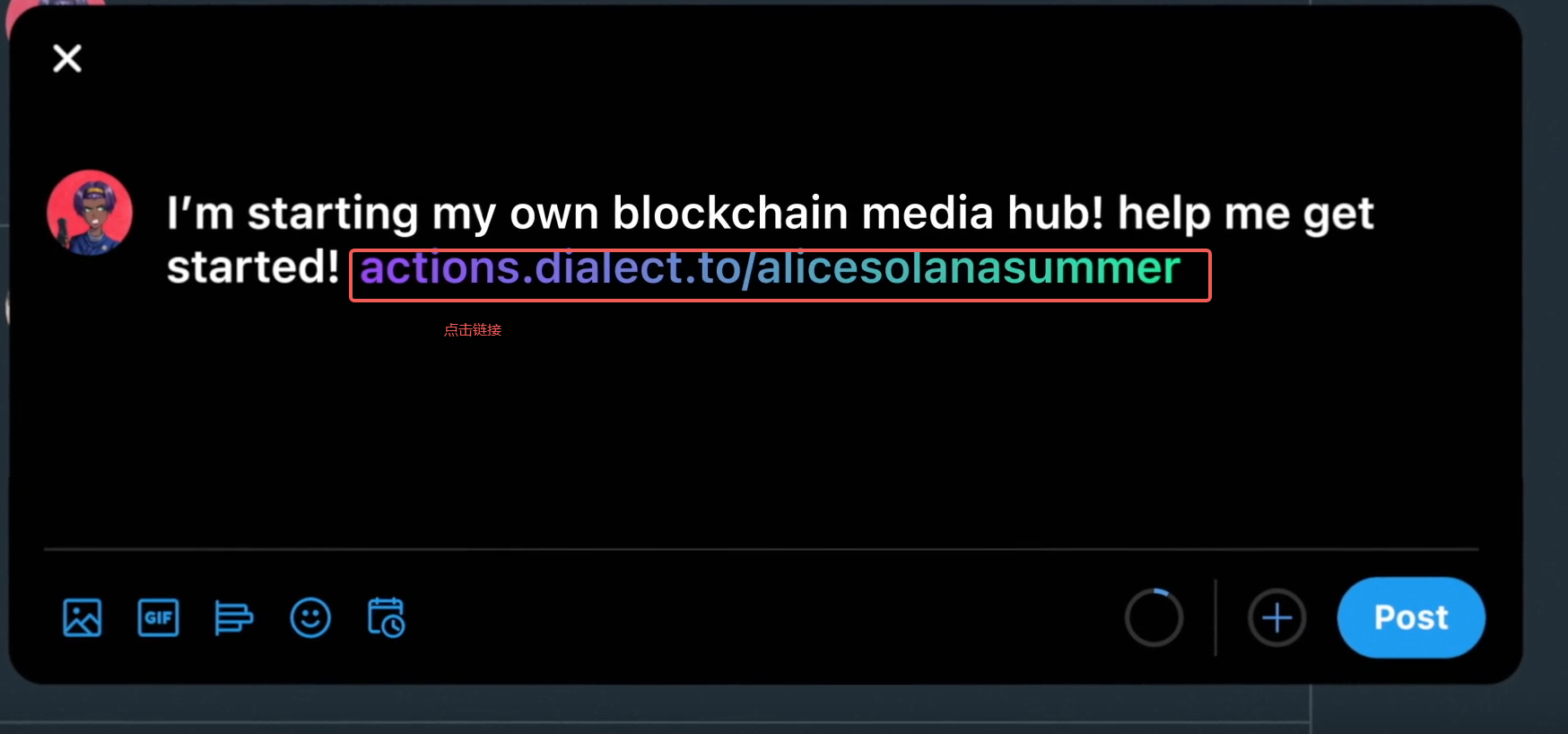
-
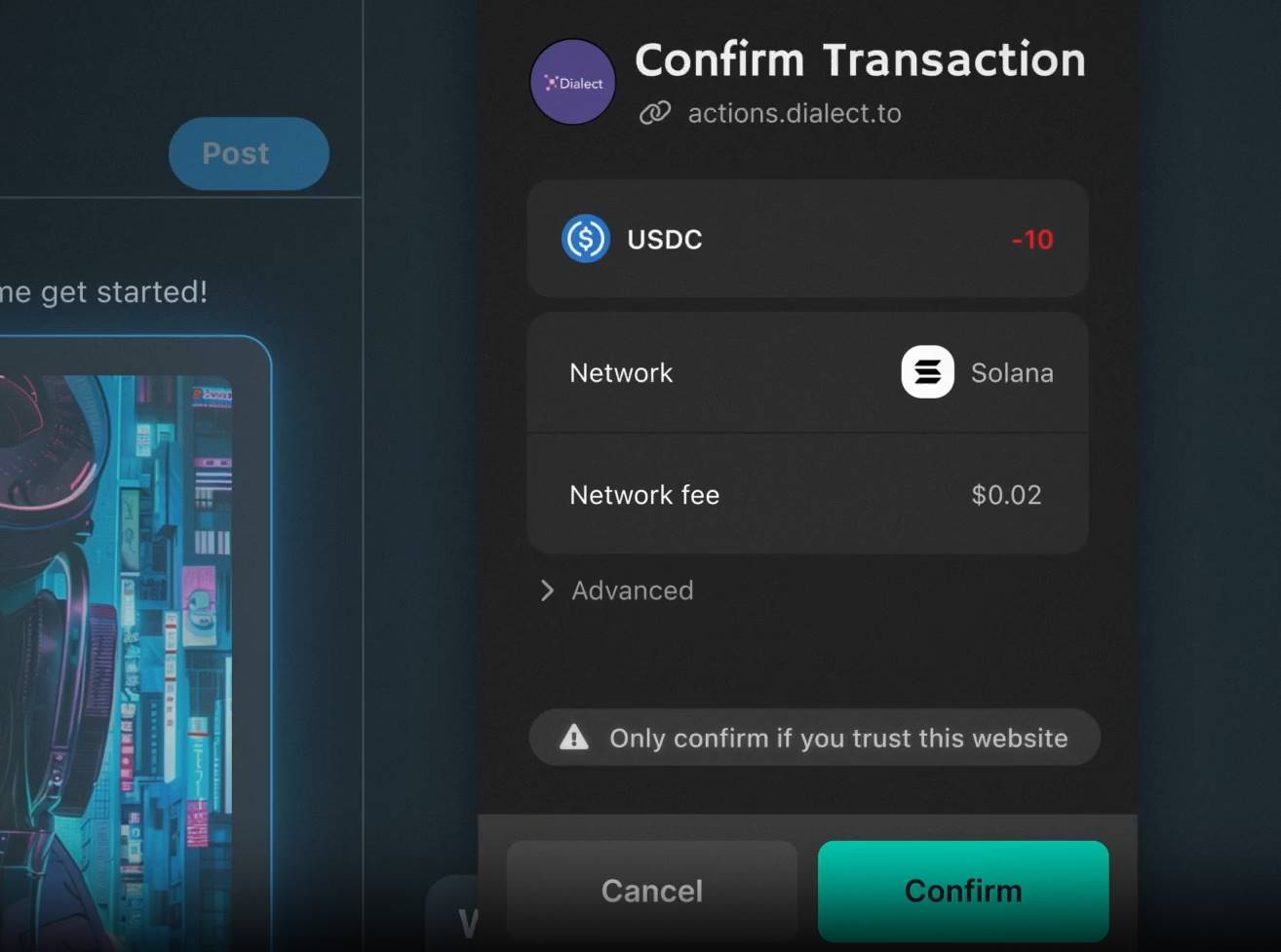
Others seeing the post will see the link transformed into a WYSIWYG donation page; users can directly click the button to donate;
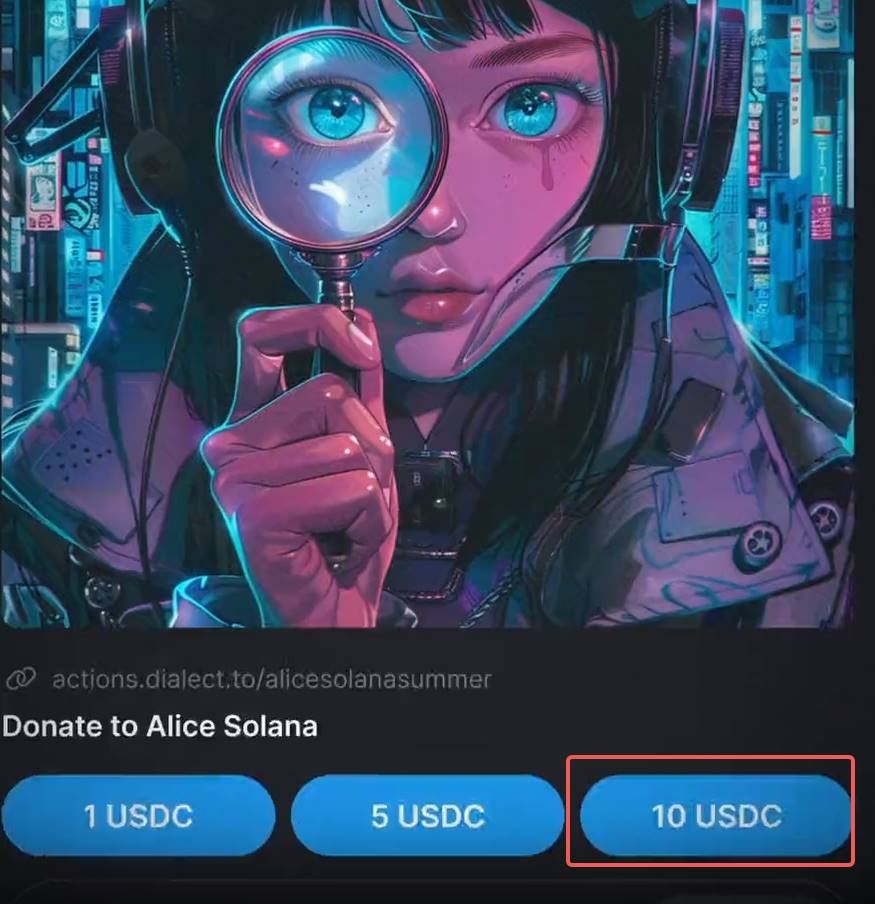
-
No need to jump to any DAO, DEX, or other dApp—users can directly click to donate within the Twitter interface (requires wallet integration).
-
The donation completes, the on-chain transaction takes effect—users don’t need to understand any blockchain backend details.
From this example, we can see that Blink effectively transforms any on-chain activity into a front-end-visible link. Users on any platform who click this link—or the associated page (e.g., donate, mint NFT, swap)—can complete on-chain operations without switching apps.
The underlying logic is encapsulated; all users see are intuitive, easy-to-understand interactions.
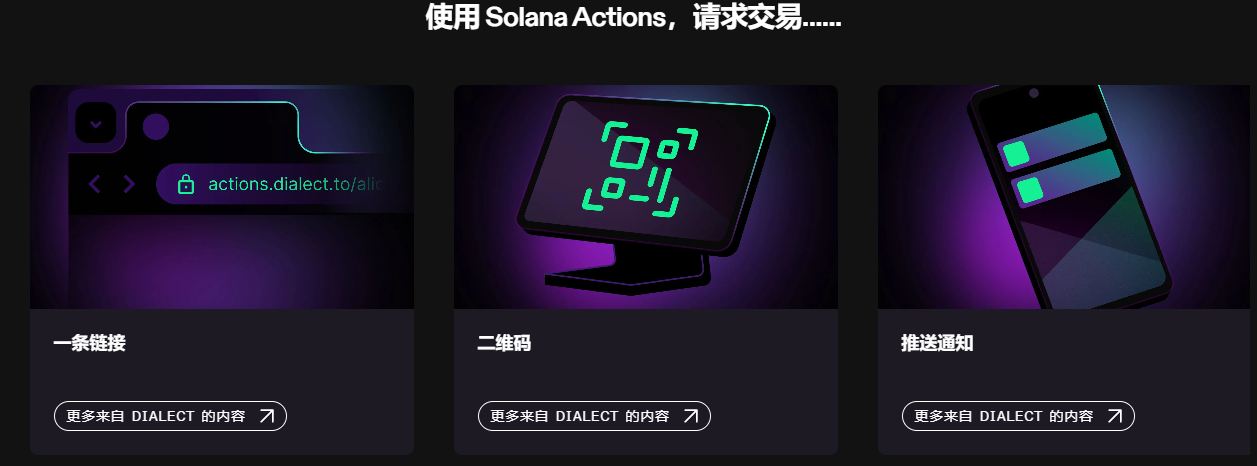
The technical stack enabling these Blink links is called Actions by Solana—an API that allows clients to browse, sign, and send transaction messages built using complex on-chain business logic. Native buttons, QR codes, or URLs on social media can trigger these Actions.
Therefore, Blink is essentially a type of URL. This means Solana’s method of enabling on-chain actions across different front-ends isn’t limited to just one form—there’s plenty more room for innovation.
Of course, Solana alone might not pull this off.
The Action and Blink technologies were developed in collaboration between Solana and Dialect (@saydialect). Meanwhile, functionalities like voting, buying NFTs, or swapping tokens may rely on projects within Solana’s own ecosystem.
For instance, donations could use Sphere, NFT purchases via Tensor, swaps through Jupiter. In short, while ecosystem projects provide the actual functionality, the user-facing experience can now be completed directly within social media.
You don’t need to know who powers what behind the scenes—everything is abstracted away.
Does Going Mainstream Always Lead to Socialization?
Returning to our opening question: Is this similar to Warpcast?
In outcome, yes—they both achieve seamless integration of on-chain actions into social media, keeping complexity behind the scenes and simplicity for users.
However, if you examine recent trends in crypto, you’ll notice everyone is trying to go mainstream—or at least make going mainstream a FOMO trigger—and they’re all converging on socialization.
But their starting points and paths differ.
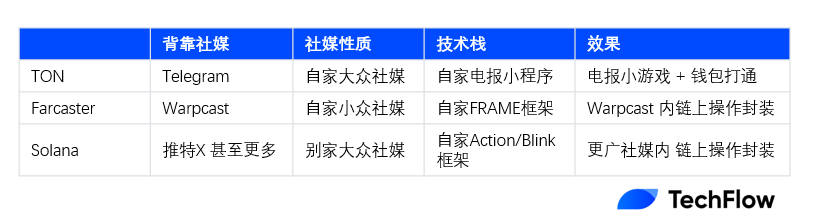
Farcaster goes its own way, building Warpcast as a decentralized social platform, leveraging the FRAME framework to embed various on-chain actions so users experience everything directly within Warpcast, no jumping required;
TON rides on existing momentum, backed by Telegram—a mature, powerful social platform—with built-in mini-apps that enable simple games and interactive experiences, enhanced further by integrated TON wallets;
By comparison, Solana plays the role of a connector. It doesn’t build its own social media. Instead, it enables elegant parasitic integration—any popular, mainstream, widely used social platform can embed Solana’s features via Blink. It doesn’t chase traffic; it leverages existing massive user bases.
After all, Twitter is more mainstream, and crypto-related tweets already have their dedicated audience. Starting there gives Solana a strategic advantage.
Who will come out on top? That remains to be seen—each has its strengths and target audiences. But one thing is certain:
They're all thinking alike—going mainstream ultimately requires social integration.
At a time when crypto user experience remains poor, expanding into new territories to attract more users is an essential step forward.
Smart reader, which spaceship will you board?
Join the official TechFlow community
Telegram subscription group:
Official Twitter account:
English Twitter account:
Join TechFlow official community to stay tuned
Telegram:https://t.me/TechFlowDaily
X (Twitter):https://x.com/TechFlowPost
X (Twitter) EN:https://x.com/BlockFlow_News
 深潮TechFlow


