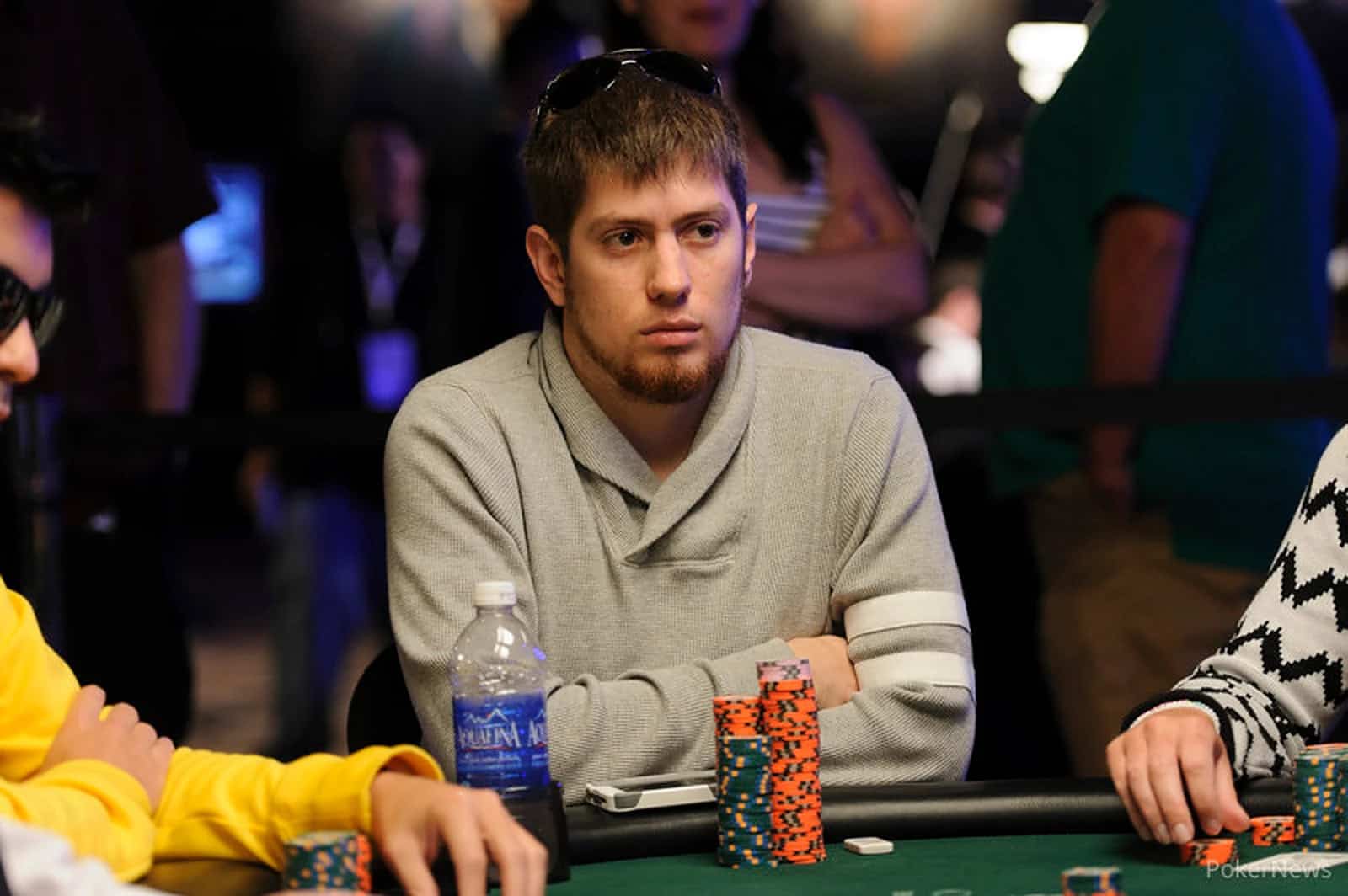
From Poker Prodigy to Witch Hunter: How the Founder of LayerZero Became a Master of Human Nature
TechFlow Selected TechFlow Selected
From Poker Prodigy to Witch Hunter: How the Founder of LayerZero Became a Master of Human Nature
"I've lived a free-spirited life, loving only challenges."
 Navigating Web3 tides with focused insights
By Azuma, Odaily Planet Daily
*Originally published on May 16, 2024
LayerZero's witch purge is underway with intense momentum.
Thanks to its highly flexible cleansing mechanism—featuring multiple designs such as "self-reporting," "screening," and "whistleblowing"—its massive scale (only 6.67%–13.33% of addresses expected to remain), and precise strategy (using behavioral patterns from already self-reported addresses to identify more witches), Bryan Pellegrino, LayerZero’s founder nicknamed the "Penguin" in the community, has earned a new moniker: “Master of Human Nature.”

Little known is that Bryan had already demonstrated extraordinary talent in human psychology long before founding LayerZero. Between 2009 and 2013, under the alias PrimordialAA, Bryan was considered one of the most promising rising stars in professional Texas Hold’em poker.
In 2009, Bryan made his debut at the 40th World Series of Poker (WSOP), finishing 8th in the $10,000 Buy-In Heads-Up Championship and earning $92,580. In 2012, he placed 2nd in a $1,500 Buy-In event at the 43rd WSOP, taking home $117,199.
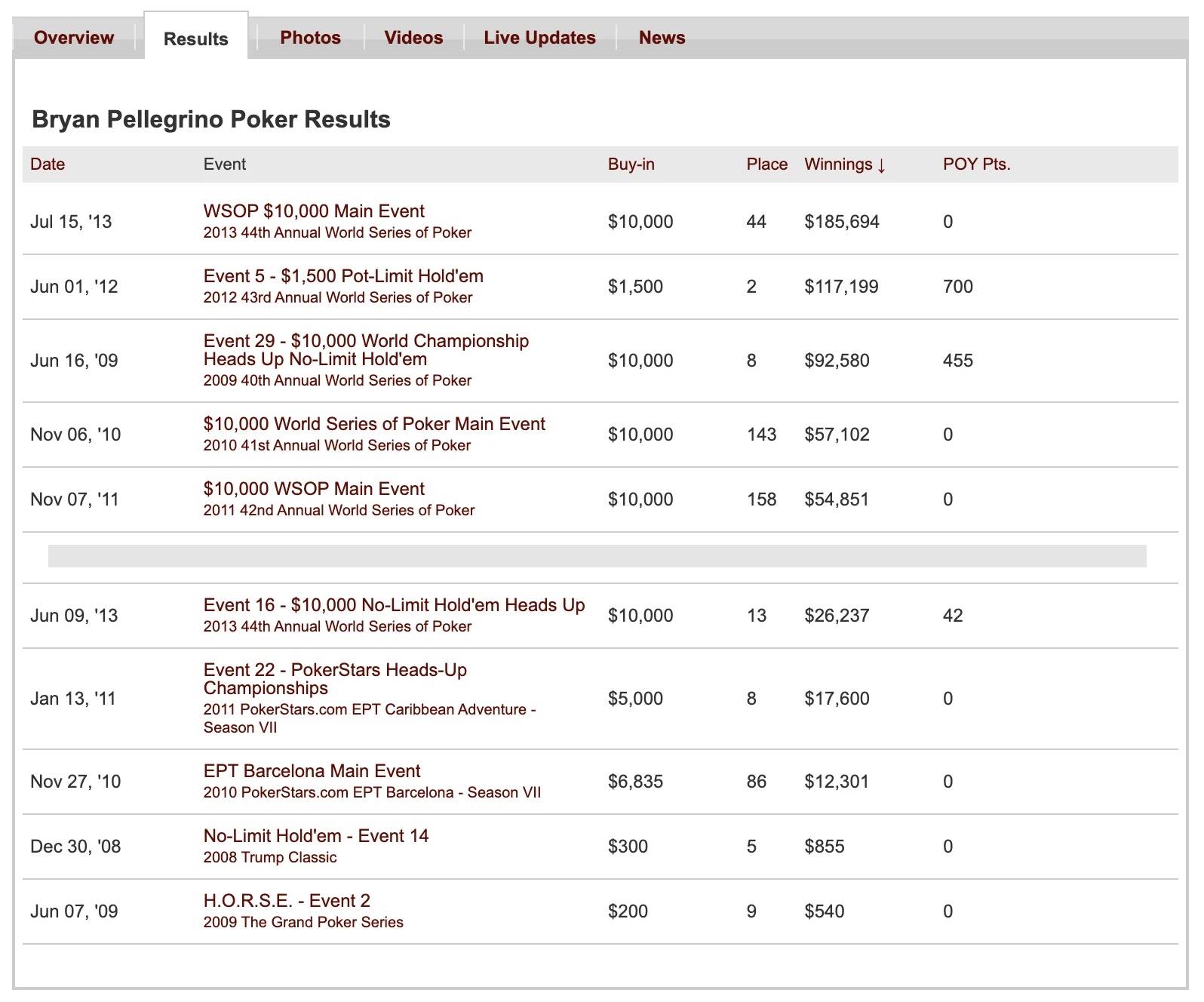
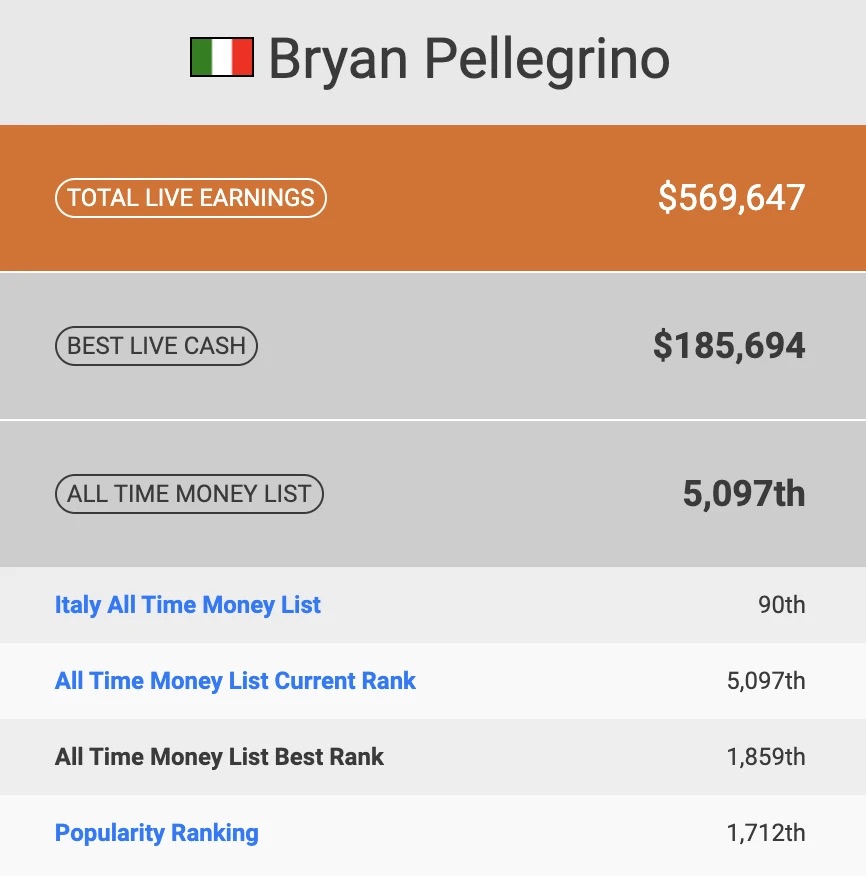
Although he eventually left professional poker early to pursue “a more interesting challenge,” Bryan’s impressive track record remains visible today in databases like Poker Hendon Mob—total live tournament winnings of $569,647, a peak ranking of 1,859, and a current standing of 5,097.
In 2013, poker media outlet Card Player conducted an in-depth interview with Bryan, during which he elaborated on his preferred heads-up strategies, explaining how he made decisions under various conditions—opponent behavior, hand ranges, stack depth, and calling pressure. Given his ability to adapt seamlessly at the dynamic poker table, it’s no surprise that Bryan now excels at precisely targeting witches while operating from the shadows.
A Gaming Prodigy from a Small Town
Bryan was born in Danbury, a small town in New Hampshire, USA, with a population of fewer than 1,000 at the time. As a child, Bryan felt surrounded only by relatives and expressed to his mother at age four his desire to someday live somewhere with more diverse social interactions.
Around age six, Bryan began showing clear mathematical aptitude. The Pellegrino family had four children: Deanna, Manie, Bryan, and Angela, in descending order. Friday and Saturday nights were family game nights, where they played Monopoly, Stratego, and similar games. Bryan loved these sessions—and almost always won.
In high school, Bryan was first introduced to Texas Hold’em. At a friend’s invitation, he used $20 of pocket money for his initial bet. His childhood gaming experience gave him a sharp sense of risk and strategy—the $20 grew to $60 that night. He used part of it to buy a Georgetown University sweatshirt and handed the rest to his father to help open an online account.
Though deeply immersed in poker throughout high school, Bryan maintained strong academic performance, graduating third in his class. Due to financial considerations, he chose to attend the University of New Hampshire, where he met two friends—Zarick and Banister—who would later become co-founders of LayerZero.
At age 19, encouraged by his brother-in-law, Bryan applied to a study-abroad program in Budapest, Hungary. There, he not only met his future wife Melanie but also earned a significant sum playing online poker, prompting thoughts of dropping out.
He then approached his family with a proposal: grant him six months to either become a professional player or return to studying computer science. His mother Audrey replied: “As long as you don’t do anything illegal and can stay safe, you can do whatever you want. If you go bankrupt, you’ll always have a home to come back to.”
From then until 2011, when the U.S. banned online poker, Bryan spent up to 70 hours per week playing poker at his computer—even bringing his full-sized desktop rig with him on international trips with Melanie. During this period, he became deeply obsessed with Texas Hold’em, continuously refining his skills to make rapid risk-versus-reward decisions within 0.3 seconds.
Based in Austin, Texas, Bryan was effectively rendered jobless after the U.S. online poker ban. He briefly joined sports betting site BuzzDraft, eventually becoming CEO when the company was acquired by another betting firm. Meanwhile, he traveled to Las Vegas, competing in official live poker tournaments and achieving notable success and earnings.
There was also a brief episode around 2013: as Bryan grew wealthier, he first encountered Bitcoin. He and his brothers bought dedicated computers for mining, but the investment ultimately failed due to the 2014 price crash and the collapse of the exchange he used (unnamed, though likely Mt. Gox).
Later, Bryan moved to Canada, where online poker remained legal, allowing him to continue playing. Yet gradually, he found himself growing emotionally flat and losing competitive drive—a critical juncture when his career should have been peaking. Bryan hesitated, later reflecting: “Unlike many other pro players, I’m not driven by money. I seek more competitive challenges.”
Seeking a “More Interesting” Challenge
Around 2015, having earned enough, Bryan briefly considered retirement. He and Melanie traveled with their infant son, visiting 12 countries in 12 months to find a suitable place to settle down. But during this journey, Bryan realized he didn’t truly want to retire.
One day, Bryan came across a YouTube video showcasing Agent 57, a DeepMind AI mastering various Atari games from scratch and eventually surpassing human performance. Inspired, and drawing from his prior experience with baseball analytics at BuzzDraft, Bryan decided to build a baseball data analysis tool powered by AI.
He ended the trip and settled back in Vancouver. Though years had passed since he last coded regularly, Bryan successfully developed an AI tool capable of predicting pitcher performance against different batters. In 2016, Billy Beane, a renowned executive of Major League Baseball’s Oakland Athletics, called Bryan and purchased the tool to enhance his team’s statistical analysis.
During this period, Bryan’s interest in cryptocurrency deepened. At the end of 2016, he reinvested personally in Bitcoin. Later, in 2018, he co-founded OpenToken with Daniel Chen, a developer formerly at a16z—an open-source platform designed to democratize cryptocurrency launches. The project has since been acquired by another team.
In 2020, Bryan achieved another major breakthrough in AI. Together with Zarick, Banister (the future LayerZero co-founders), and Noam Brown from Facebook AI, he co-authored a research paper introducing Supremus, an AI capable of defeating top-tier professional poker players. The paper was later cited by Google DeepMind’s own research on game theory and AI.
At the time, Bryan said: “I’ve always loved solving hard problems. Nothing excites me more than that.”
The Story of LayerZero
In the fall of 2020, the surge in Binance Smart Chain (BSC) caught Bryan’s attention.
Impressed by BSC’s high throughput and low transaction costs, Bryan teamed up with Zarick and Banister to develop an NFT-based gladiator-style game. The concept involved storing NFTs securely on Ethereum—offering better security and liquidity—while processing transactions on BSC.
However, during development, they discovered they had to manually transfer NFTs between chains. Existing cross-chain bridges either didn’t support NFTs or were prone to hacker exploits.
It became clear to Bryan and his team that what they needed wasn’t just another bridge, but a foundational code layer enabling seamless communication between blockchains—one that could power secure cross-chain applications and serve as the base for trustworthy bridges. Such a layer didn’t exist in crypto at the time.
This was an immense technical challenge—but one that increasingly excited Bryan. Finally, he had found a problem large enough to rival any high-stakes poker game.
The rest, as they say, is history.
In May 2021, LayerZero released its initial whitepaper.
In September 2021, LayerZero raised $6 million in a Series A round.
In April 2023, LayerZero closed a $120 million Series B round at a $3 billion valuation.
In May 2024, LayerZero officially announced the completion of its first snapshot phase, raising the axe against sybil accounts ahead of token distribution.
...
According to LayerZero’s disclosed timeline, tomorrow marks the end of the “self-reporting” phase in what may be the largest sybil purge in cryptocurrency history. Bryan, master of human nature, has already fired the first shot in this high-stakes game. What comes next? Stay tuned for the next round.
Join TechFlow official community to stay tuned
Telegram:https://t.me/TechFlowDaily
X (Twitter):https://x.com/TechFlowPost
X (Twitter) EN:https://x.com/BlockFlow_News
 Odaily