









7 Emerging Trends in the Crypto Market: Project Renaming, Gamified DeFi, Anti-High-FDV Tokens...
TechFlow Selected TechFlow Selected
7 Emerging Trends in the Crypto Market: Project Renaming, Gamified DeFi, Anti-High-FDV Tokens...
Even as cryptocurrency prices decline, the internal cryptocurrency machinery has not stopped running.
 Navigating Web3 tides with focused insights
Author: IGNAS | DEFI RESEARCH
Translation: TechFlow
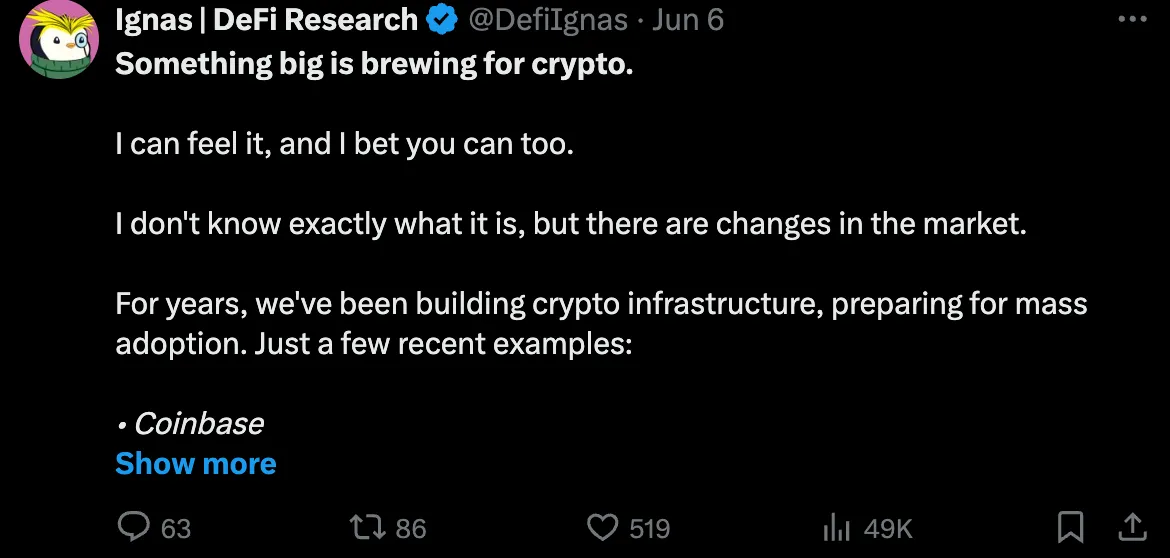
I have a sense that the cryptocurrency market is about to undergo significant transformation. I'm not sure exactly what will happen, but major changes are unfolding in the market. For example, interest rates are starting to decline, ETH ETFs have been approved, BTC ETF inflows are increasing, Stripe has launched stablecoin payments, and so on...
Just as armies deploy before a decisive battle, major crypto companies and traditional financial institutions (TradFi) are preparing for an upcoming bull run.
Here’s more on this “feeling”: link
Despite falling crypto prices, the internal crypto machinery hasn't stopped. Markets are always evolving—new narratives and trends emerge and grow to influence the market.
Just as MakerDAO was already live before the term "DeFi" was coined, there are new trends emerging in the market today—even though they aren’t yet strong enough to form a coherent story.
Here are 7 emerging trends that could significantly impact the market:
1. Rebranding
Old tokens are boring—speculators want something new.
Wouldn't it be more exciting if you changed the brand name, created a new token ticker, and started fresh with a new chart?
Fantom → Sonic
That's exactly what Fantom did with the Sonic upgrade.
Sonic is a new L1 featuring a native L2 bridge to Ethereum. It will have a new Sonic Foundation and Labs, along with a completely refreshed visual identity.
More importantly, the new $S token “ensures 1:1 compatibility and migration from $FTM to $S.”
This is a smart move—Sonic generates more market excitement than simply calling it “Fantom 2.0.” It allows Fantom to leave behind its Multichain bridge issues and start fresh.
Connext → Everclear
Similarly, Connext is rebranding to Everclear.
Rebranding isn't new in crypto, but the emerging trend here is repackaging major upgrades as entirely new products.
This sends a stronger signal to the market than just another v2 or v3 upgrade. People don’t get too excited about just another “v4” update.
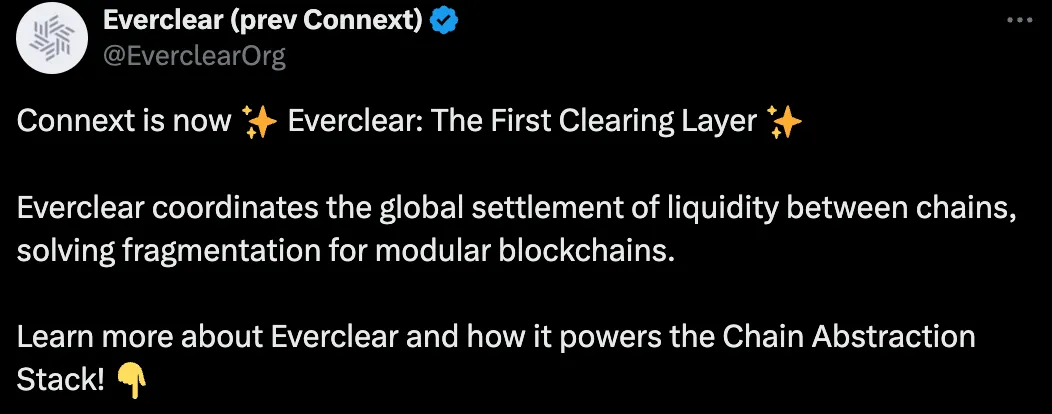
By switching from Connext to Everclear, the team signals this is not just a superficial rebrand—it represents substantial technological advancement.
Connext is transitioning from simple bridging infrastructure to becoming the first clearing layer. It functions like a chain itself, built as an Arbitrum Orbit rollup (via Gelato RaaS) and connected to other chains using Hyperlane and Eigenlayer ISM.
Connecting any chain, any asset—preparing for the future of modular crypto.
The NEXT token price rose approximately 38% after the announcement (though it failed to sustain). Fantom’s $FTM saw renewed interest, and their follower count on X increased.
I expect more protocols to rebrand to align with 2024 market trends and technical progress.
For example, IOTA is rebranding as an L2 for real-world assets.
Additionally, mergers may become more common—such as Fetch.ai, Ocean Protocol, and SingularityNet merging into a single $ASI token, creating a new chart for a super AI crypto project.
The key is to watch price performance of newly branded projects and new token tickers (if launched). While it's still early, initial price action for FTM and NEXT, as well as FET, AGIX, and OCEAN, has been positive. If the market starts rising again…
Are more rebrands/repackagings coming?
2. Pro-Crypto Regulation
Regulation has long been a major pain point, especially in the U.S., where the SEC has targeted key players like Coinbase, Kraken, and Uniswap. Despite victories by Ripple and Grayscale, and Bitcoin ETF approvals, the regulatory environment remains hostile—often targeting legitimate projects rather than outright scams.
But things are shifting: Trump has voiced support for crypto, forcing Democrats to adjust their anti-crypto stance. Biden now accepts crypto donations. And recently, the SEC dropped its lawsuit against Consensys, effectively acknowledging ETH as a commodity.
In the short term, crypto’s future hinges on elections. I like Felix’s (Hartmann Capital) analysis—here are the key takeaways:
If Gensler is removed or his power is checked by courts and Congress, we can expect a sharp >30% rally followed by a sustained bull market. If he remains in charge, expect prolonged stagnation—benefiting law firms while hurting crypto and taxpayers, with only Bitcoin and meme coins relatively unscathed.
Regulatory clarity could spark the biggest bull market ever, transforming digital asset markets in multiple ways:
-
From narrative to product-market fit: Crypto projects will focus on building value-driven products instead of hype, leading to higher-quality development.
-
Clearer success metrics: Valuations will rely more on actual product-market fit and revenue, reducing speculation and highlighting fundamentally strong tokens.
-
Easier fundraising: Stronger fundamentals will make it easier for digital assets to raise capital, reducing the cyclical volatility of altcoins.
-
Thriving M&A market: Well-funded projects can acquire valuable but underfunded DeFi protocols, driving innovation and tighter adoption. Some Layer 1 blockchains may acquire projects and turn them into public goods to increase network value.
(See Hartmann Capital Research article)
3. BTC Carry Trade: Spot BTC ETF + Short BTC Futures
Leverage always finds new ways into the system—whether it’s Grayson’s “widowmaker trade” or unsecured loans in CeFi (Celsius, BlockFi, etc.).
The mechanism differs each cycle. Where is leverage hiding now?
The obvious candidate is Ethena’s delta-neutral strategy. As long as funding rates stay positive, everything is fine—but what happens when/if funding turns negative and USDe positions need to be unwound?
Another is LRT restaking.
But another target is our beloved BTC ETF buyers.
Spot Bitcoin ETFs had 19 consecutive days of positive inflows, holding 5.2% of all circulating BTC (though this streak has since ended).
So why hasn’t BTC surged?
It turns out hedge funds are shorting Bitcoin via CME futures at record pace.
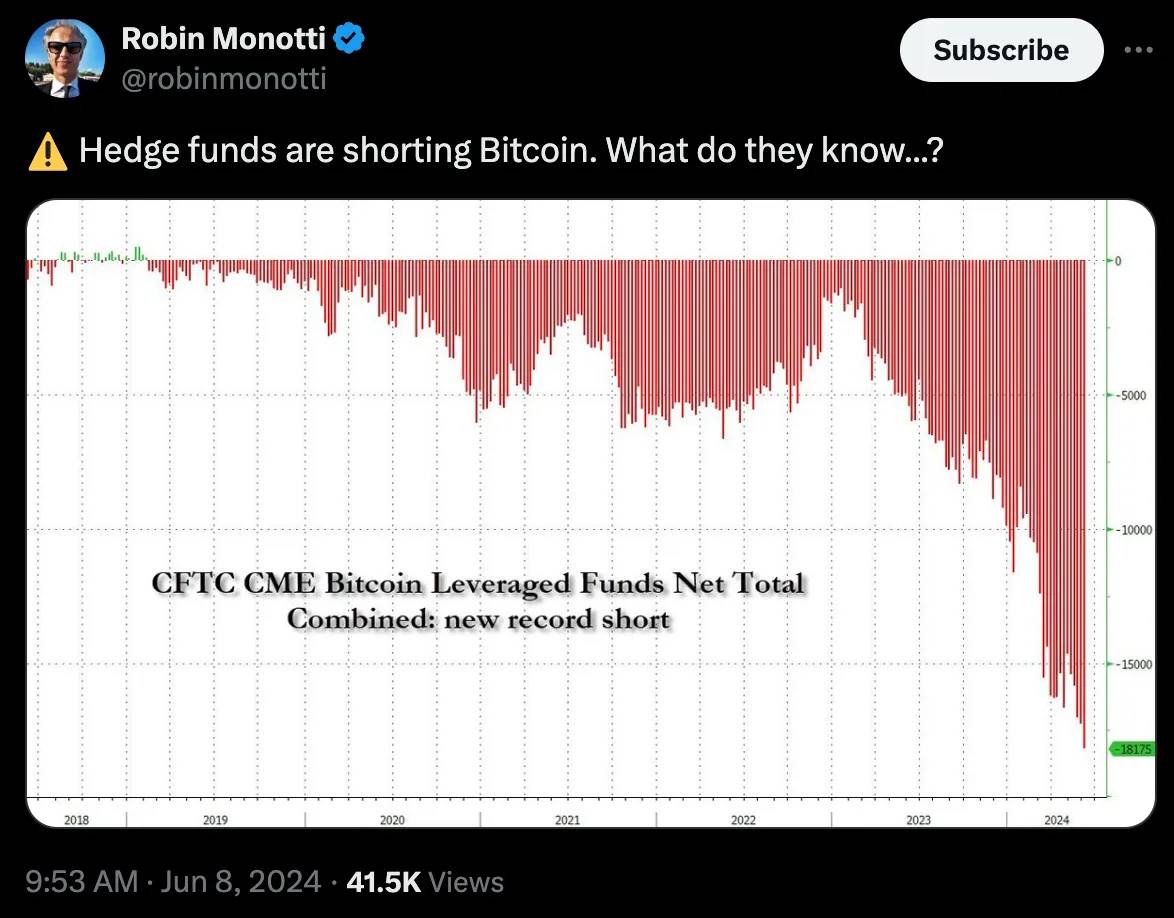
“If low-cost, high-leverage is the leverage of this cycle, then it already exists”—Kamikaz_ETH
One possible explanation: hedge funds are buying spot BTC and shorting futures, running ~15%-20% delta-neutral strategies.
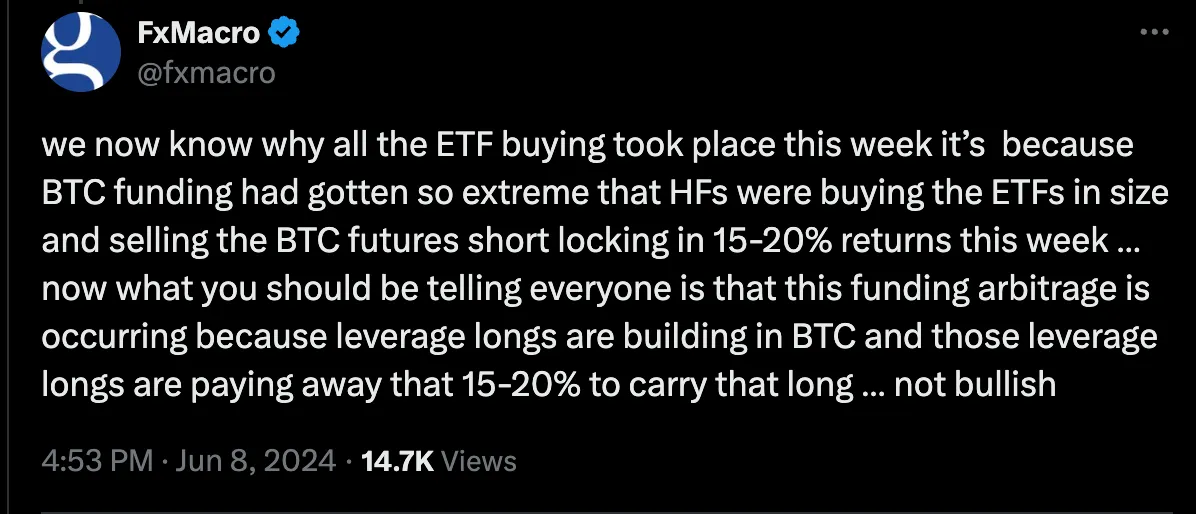
(See tweet)
Same strategy as Ethena. “If low-cost, high-leverage is the leverage of this cycle, then it already exists”—Kamikaz_ETH
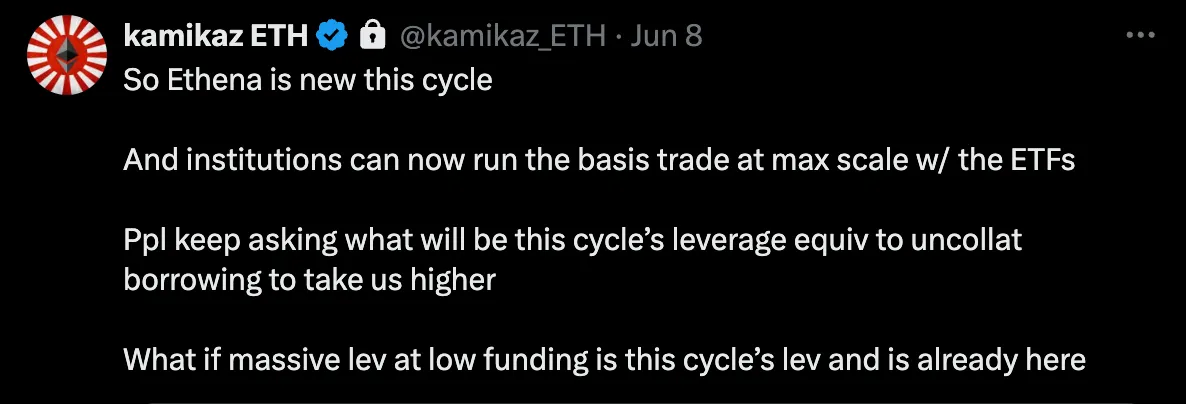
(See tweet)
What happens when funding rates turn negative (as speculators lose bullish sentiment and close longs)?
Could Ethena (retail-focused) and spot BTC + short CME futures (institutional-focused) trigger a major crash when forced to unwind?
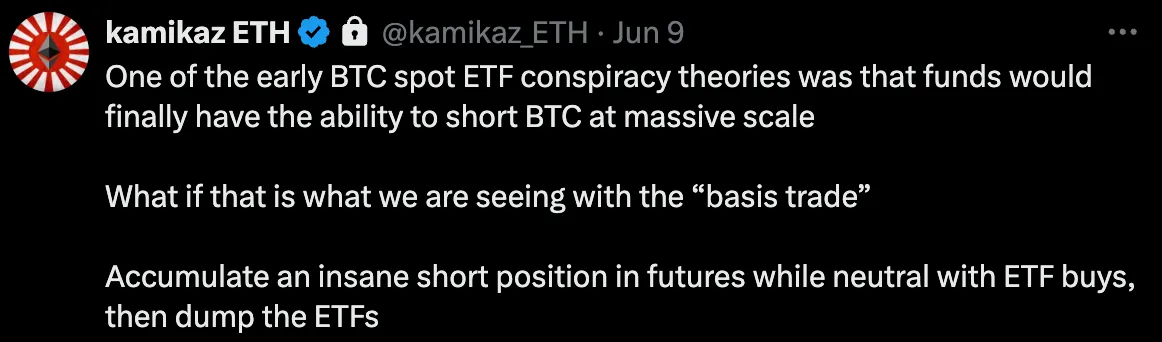
(See tweet)
Scary. But perhaps there's a simpler answer: institutions are arbitraging the positive basis between spot BTC and BTC futures (currently 2.3%).
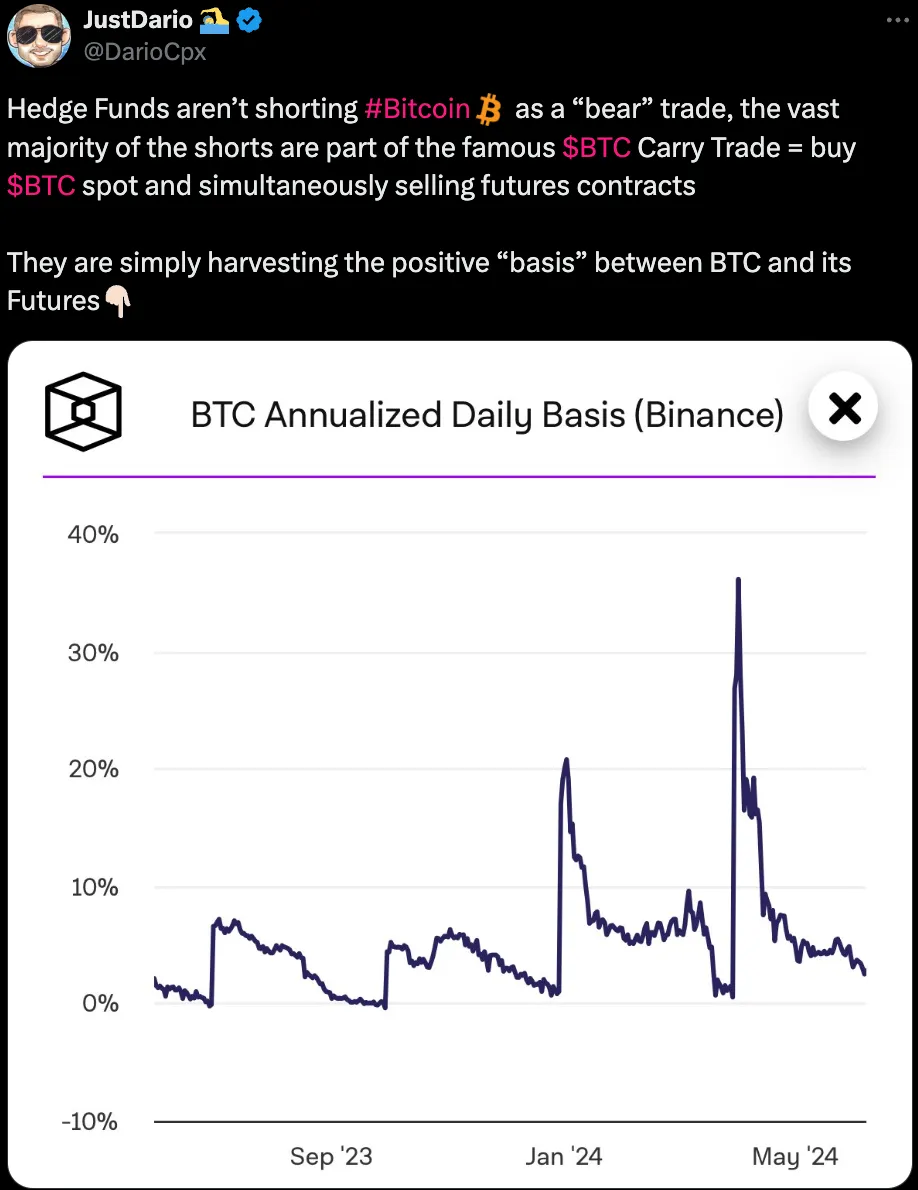
(See tweet)
Regardless, these new dynamics brought by spot ETFs need close watching—because “risk-free” arbitrage often turns out to be “riskier than expected.”
4. Gamification of Points Farming
Our addiction to points is growing worse, but we don’t know how to stop. Protocols need points to attract early users and boost adoption and valuation.
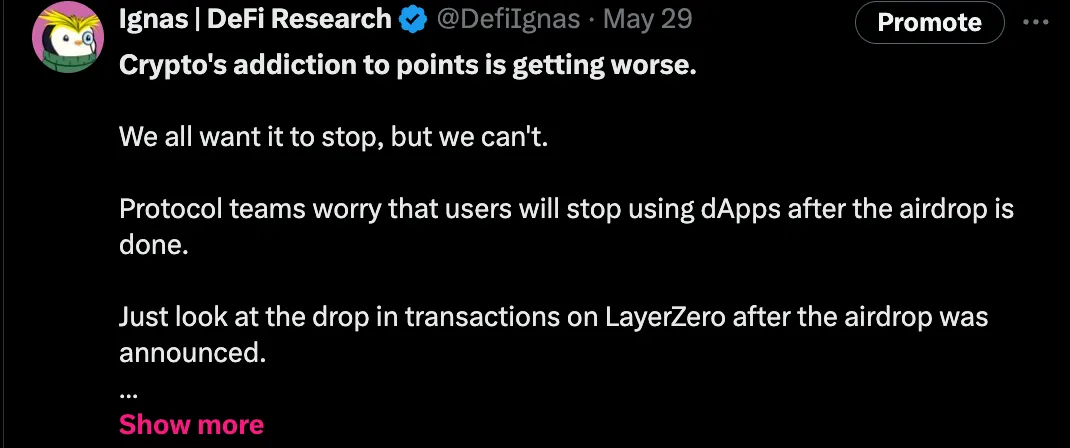
(See tweet)
We’re tired of points, but there’s no better alternative yet.
However, I’ve noticed a trend toward gamifying points—a way to add fun to otherwise dull farming mechanics.
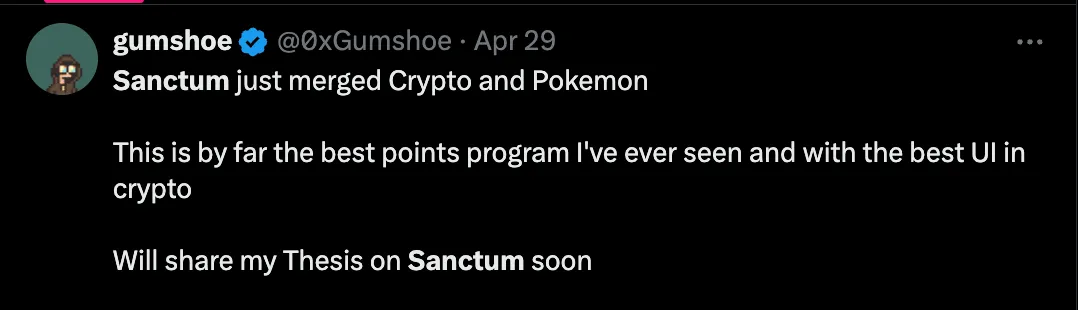
Sanctum launched Wonderland, where you collect pets and level them up by earning experience points (EXP). The community must work together to complete tasks.
It’s not much different from other point systems—your airdrop mainly depends on how much SOL you deposit—but… the community loves it!
(See tweet)
Sanctum ran Season 1 for just one month, but it boosted goodwill significantly.
I’d love to see 0-to-1 innovation in airdrops, but despite fatigue, our reliance on points remains strong.
Instead, I hope to see more gamification attempts—to bring some fun back into airdrops.
5. Counter-trend: Low Circulating Supply, High FDV Launches
Apart from VCs and teams, nobody likes low-circulation, high-FDV launches. Oh, and those farming airdrops—they benefit most financially.
But retail? No. Of the last 31 tokens listed on Binance, 26 are down.
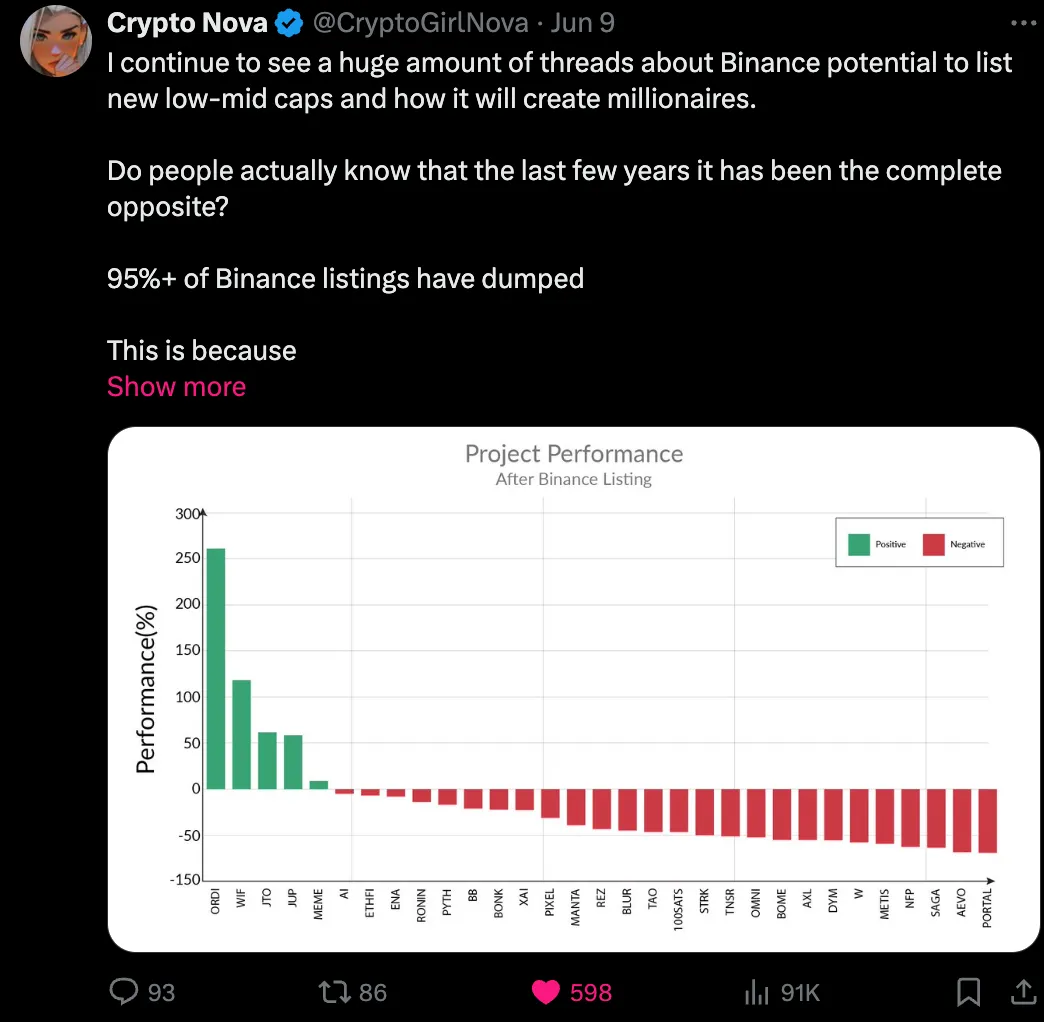
Binance used to be the place to buy hot new tokens—but not anymore. CEX listings have become “sell the news” and “cash-out” events.
Unsurprisingly, Binance recently announced it will prioritize community rewards over internal allocations and list tokens with moderate valuations.
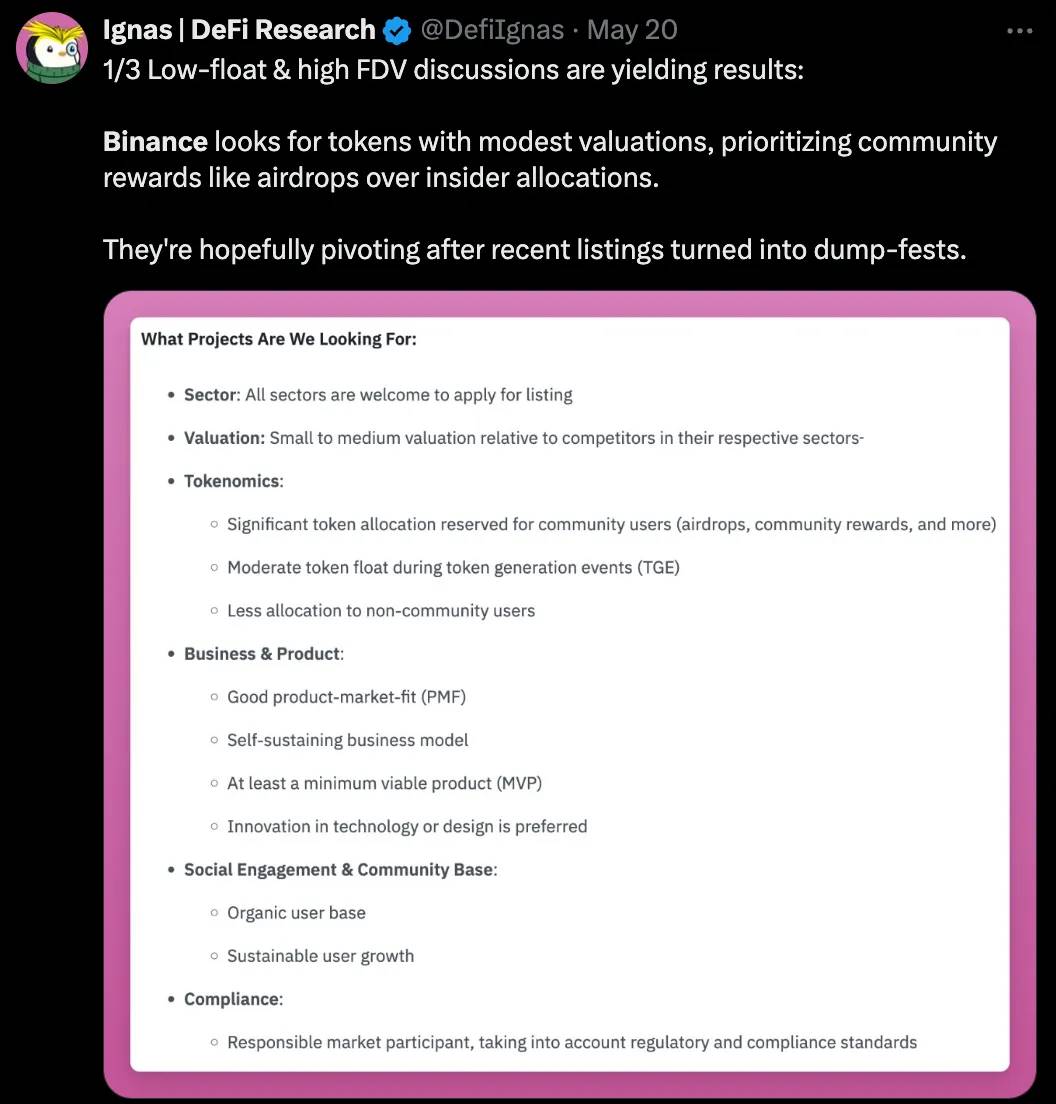
We’re still waiting to see this translate into action, but it would be a step in the right direction.
VCs are being blamed. Once seen as a positive signal, large VC investments are now viewed by the crypto community as value extraction. There’s concern that VCs will profit by dumping large allocations acquired at minimal cost.
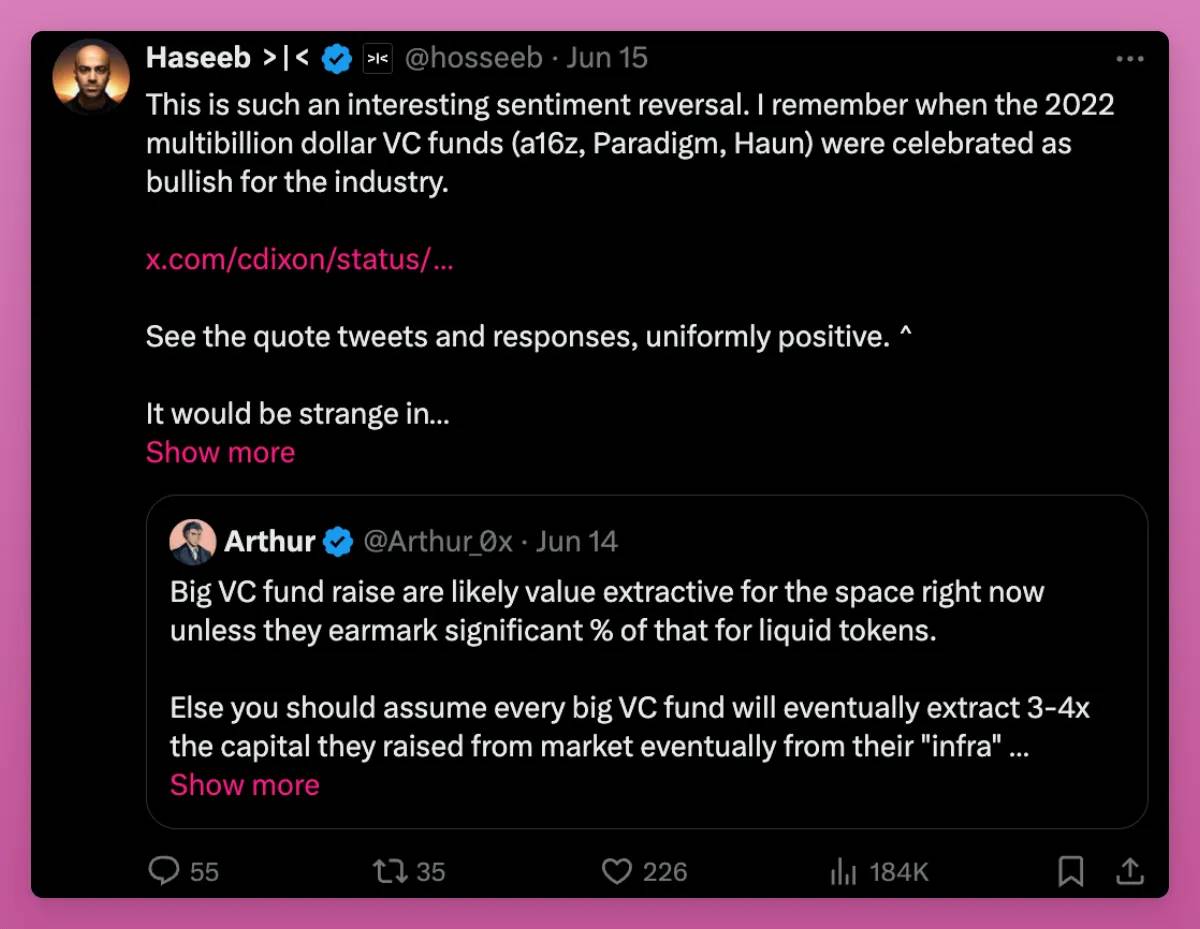
Project teams also need to act to avoid charts that only go down forever.
There’s also more experimentation on the protocol side. For example, Ekubo on Starknet allocated 1/3 of tokens to users, 1/3 to the team, and 1/3 to be sold off by the DAO over two months.
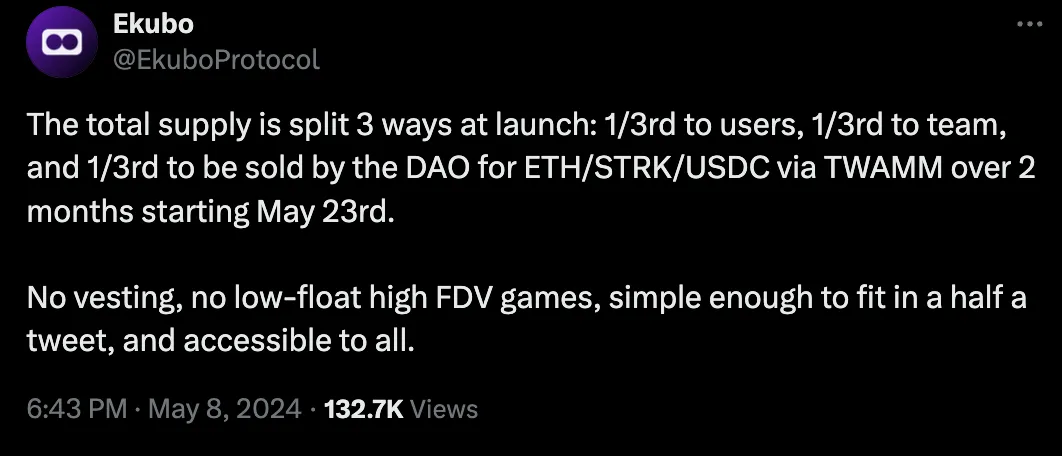
While not everyone likes a two-month sell-off, it’s reminiscent of past ICOs—selling tokens directly to the community.
Similarly, Nostra (also on Starknet) launched NSTR at 100% FDV, with 25% distributed via airdrop and 12% sold during liquidity bootstrapping events.
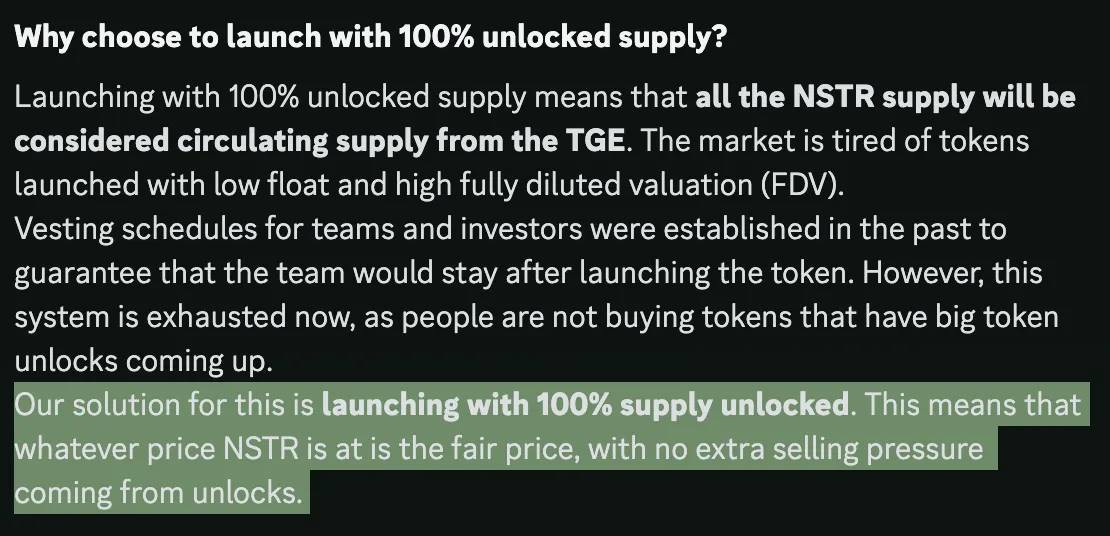
They call it the fairest DeFi launch, but it reintroduces the initial problem of low float tokens (early team and VC dumps). Nostra says team and VC tokens will be on-chain marked—if you see them selling, maybe you should too.
We’ve also seen Friendtech’s 100% airdrop experiment, and Bitcoin Runes mostly minted freely by the community (though Runes allow pre-mining).
Results? Unknown. But still hopeful.
6. McKinsey-Style Consulting Enters DeFi
DeFi enables self-sovereignty—allowing you to own and productively use your assets regardless of borders.
But DeFi has become extremely complex! With so many strategies available—and growing more intricate as we try to squeeze every last basis point of yield.
Moreover, governing these increasingly complex protocols requires specialized knowledge.
Thus, TradFi-style consulting firms are emerging to help protocols with security, governance, and optimization. The most famous example is Gauntlet, charging millions annually to clients.
Even more, DeFi protocols are adapting to allow these “McKinseys of DeFi” to manage user assets and/or outsource risk management.
Morpho Blue’s permissionless lending allows DeFi’s McKinseys to create markets with any asset and risk parameters—without relying on governance.
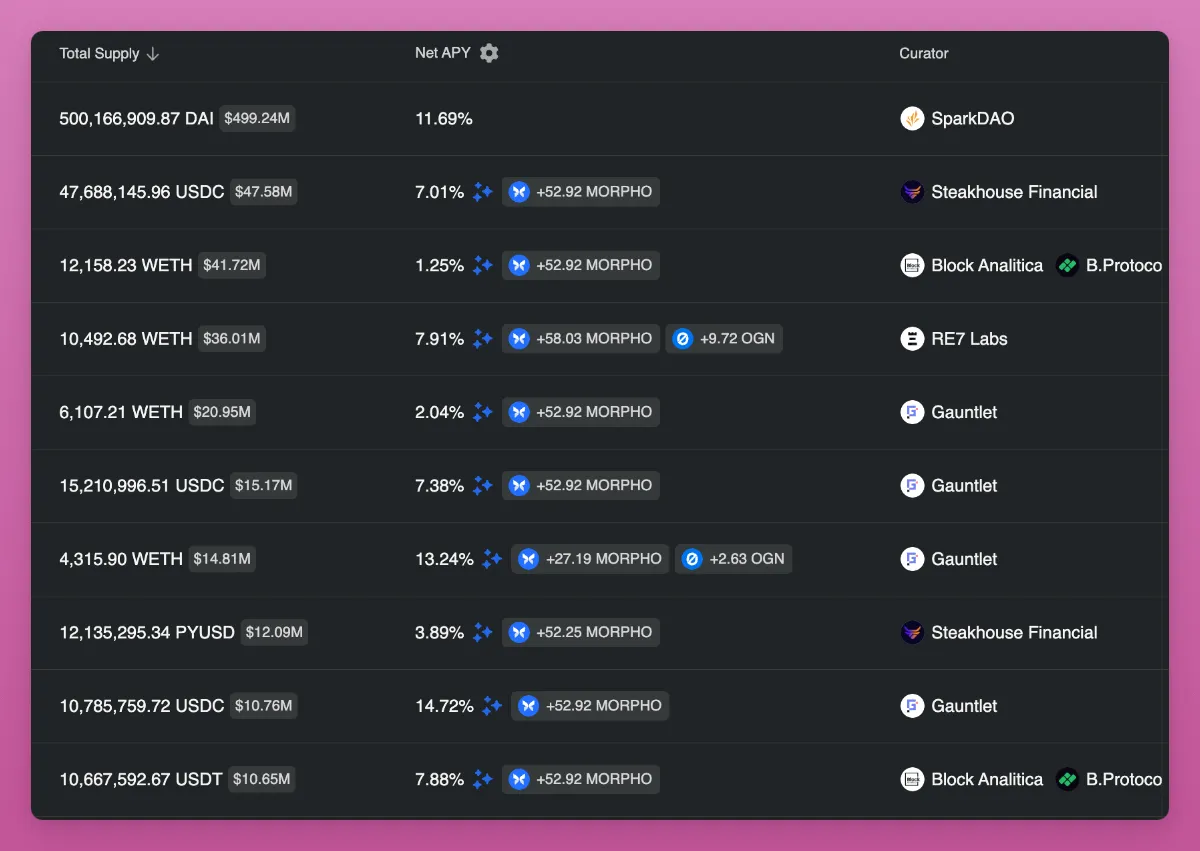
Top vaults are managed by Gauntlet, Steakhouse, RE7 Labs, etc.
Similarly, Mellow Protocol introduced curator-managed LRTs, allowing “depositors greater flexibility in choosing their desired level of risk exposure while still benefiting from liquid staked assets.”
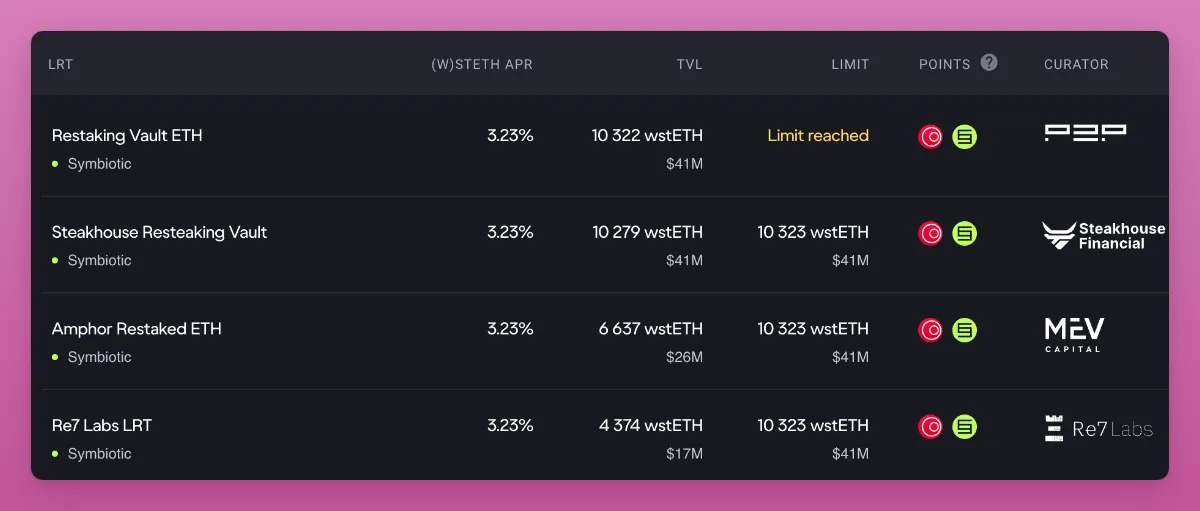
I believe this trend will grow as DeFi complexity increases, further pushing “DeFi” toward “on-chain finance.”
What could be the implications? One is a shift of power from token holders to professional firms. Will this make tokens less attractive—or more attractive, because these DeFi McKinseys professionally help protocols grow and generate revenue for DAOs? I’m not sure yet.
7. Web2-Style Onboarding into DeFi
This one I really like.
Although FriendTech had issues, it successfully popularized Privy, enabling wallet creation and management via Web2 accounts.
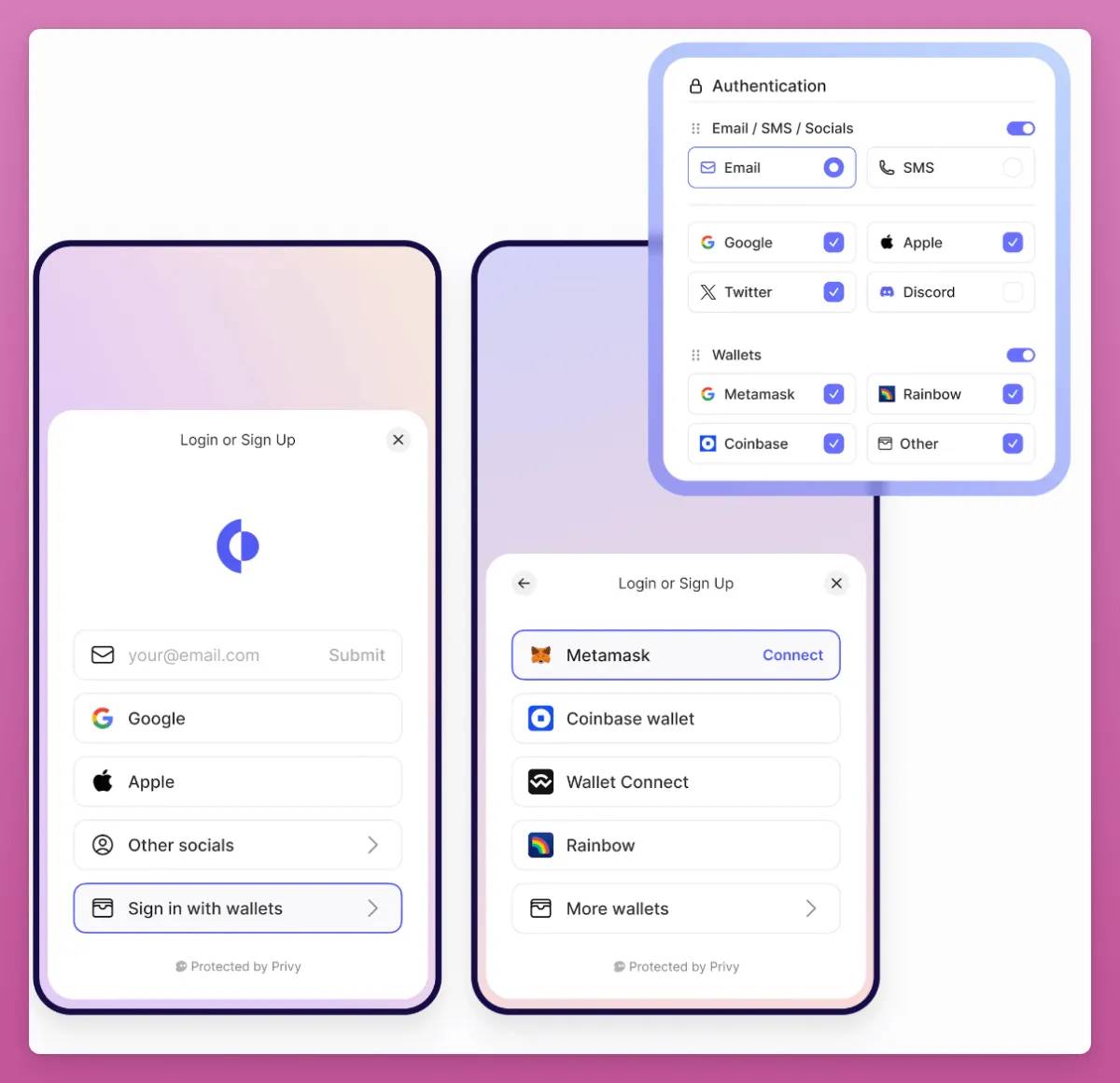
During the NFT craze, I helped friends buy NFTs on OpenSea. Teaching them how to use MetaMask was painfully difficult.
Now, you can create a wallet on OpenSea using just an email and 2FA code. Seriously, try it—it takes less than a minute.
Fantasy Top is leveraging Privy and other user-friendly apps. This trend goes beyond Privy.
Infinex, developed by Synthetix, allows wallet creation via Passkeys—so you manage your wallet using your password manager.
Coinbase launched smart wallets that pay gas fees on behalf of users, support batch transactions, and enable wallet creation using Web2 tools.
Now, complicated onboarding is no longer an excuse for lack of crypto adoption—we just need compelling consumer applications.
Join TechFlow official community to stay tuned
Telegram:https://t.me/TechFlowDaily
X (Twitter):https://x.com/TechFlowPost
X (Twitter) EN:https://x.com/BlockFlow_News
 Ignas | DeFi Research











