Banana, a click-to-earn sensation on Steam, has gone viral—proving the trend is finally breaking into the mainstream
TechFlow Selected TechFlow Selected
Banana, a click-to-earn sensation on Steam, has gone viral—proving the trend is finally breaking into the mainstream
Nobody would turn down easy money from just clicking.
 Navigating Web3 tides with focused insights
Author: TechFlow
"People come to crypto to make money—nobody's here to play games."
This shared sentiment among retail investors, when flipped, suggests that traditional gamers probably don't expect to earn money from playing.
But in reality, nobody dislikes free grinding.
In the crypto space, Notcoin and Hamster Kombat popularized the "tap-to-earn" free grind gaming model. Coincidentally, this trend of farming rewards has now reached Steam—the most popular platform in traditional gaming.
Over recent weeks, a tap-to-earn game called Banana suddenly went viral on Steam—so much so that its popularity became absurdly high.
According to official Steam data, at the time of writing, Banana had over 750,000 concurrent players, topping the chart for simultaneous gameplay on the entire Steam platform.
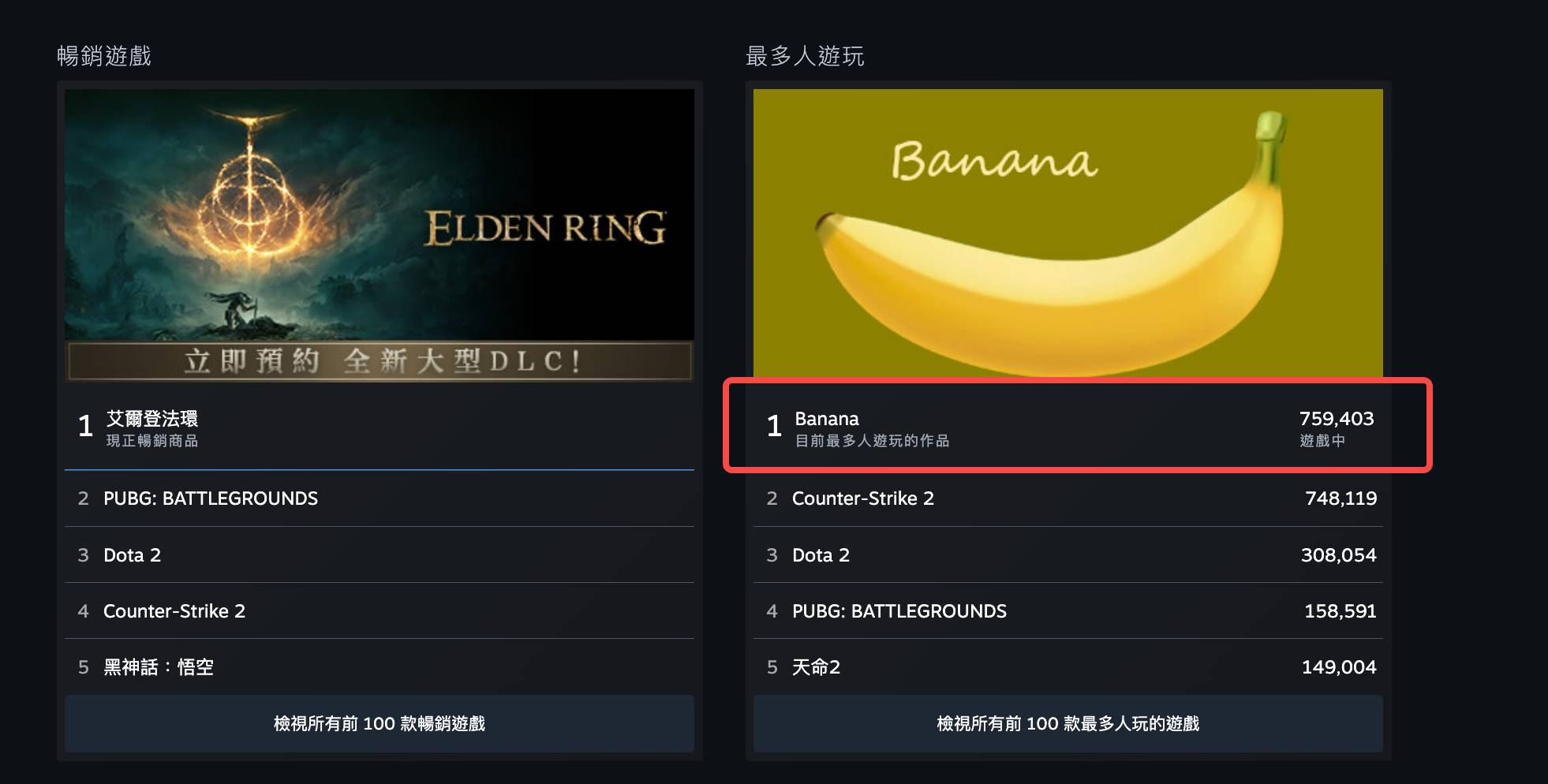
Games like CS2, DOTA, PlayerUnknown’s Battlegrounds, and Destiny 2—all classics known even to non-gamers, packed with deep gameplay and competitive mechanics—are now left trailing behind by Banana.
More interestingly, the Banana game is only 60MB in size—a true lightweight title.
So why are millions abandoning top-tier games just to click on a banana?
The Steam Version of Notcoin: Click and Earn
Different games, same human nature.
Banana is a classic free grind game—zero learning curve. Like Notcoin, all you do is tap repeatedly, and then the expectation of earning kicks in.
In terms of gameplay and interface, Banana is even simpler than Notcoin: you’re shown a picture of a banana and can click it with your mouse. With each click, a number above the banana increases—nothing more.
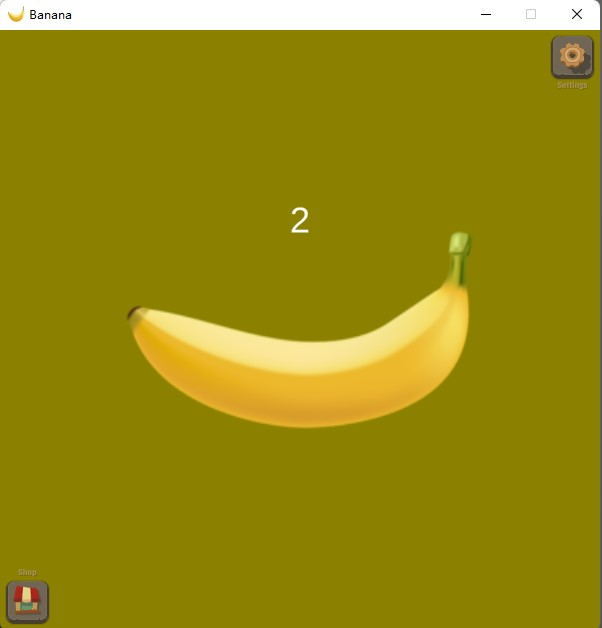
Through clicking, after three hours you’ll receive a common banana; after 18 hours, a special-quality banana. Thus, the core loop becomes: enter the game, click the banana, wait a while, collect your banana.
For readers unfamiliar with Steam: the platform features an “inventory” system where, upon playing a game, you may receive digital items related to that game. These could be badges or in-game props—essentially commemorative collectibles tied to the main game, designed to boost player engagement and retention.
But these dropped bananas carry far more financial allure than mere memorabilia.
Thanks to Steam’s built-in secondary market, you can directly list your earned bananas for sale. So, how much are different types of bananas actually worth?
Does this sound familiar? It’s reminiscent of NFT markets—pricing is entirely driven by supply and demand.
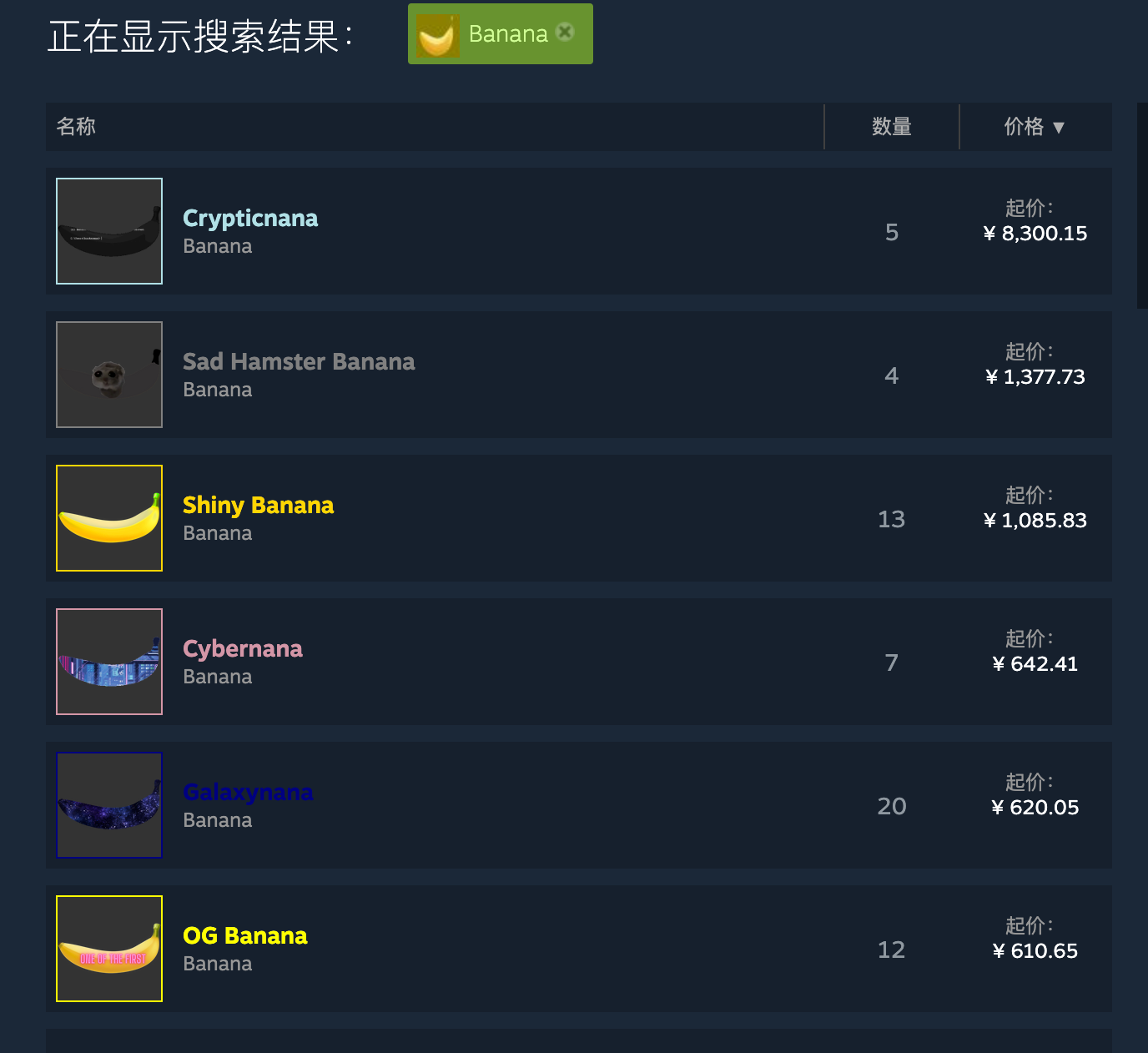
Currently, the most expensive banana is called Crypticnana—its name clearly echoing "crypto"—priced at 8,300 RMB (about $1,150). Considering the game is completely free-to-play, this price tag is incredibly tempting.
I suspect sharp traders have already caught wind of profit opportunities, likely engaging in early buying, flipping, and price manipulation.
Clicking, receiving items, selling them, and even spawning scalpers and market makers around those items—who says traditional gaming doesn’t involve speculation?
However, Steam imposes relatively high transaction fees. For virtual items priced above $10, the platform takes a cut exceeding 5%—similar to OpenSea’s 5% royalty fee.
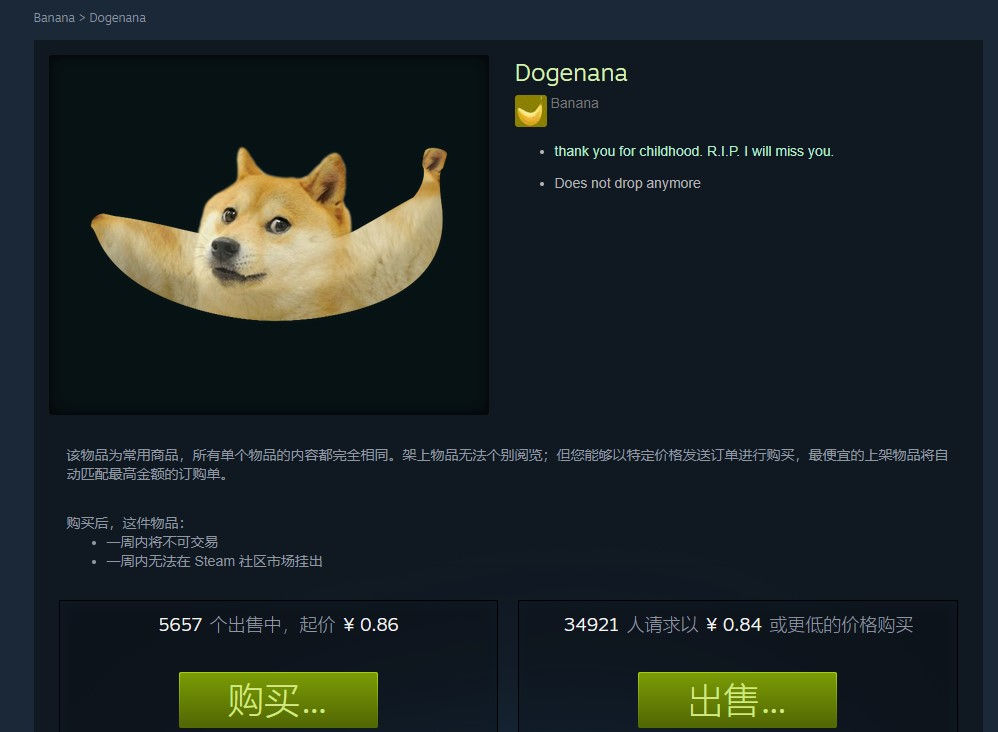
This tax naturally leads to lower trading volume and poor liquidity for high-priced bananas, whereas cheaper ones circulate faster. Additionally, certain rare bananas hold greater cultural value—for instance, the “Doggo Banana” shown below, whose symbolism is self-evident.
Speculation Is Human Nature
In crypto, similar images often come wrapped in technical narratives to strengthen belief—after all, they're NFTs, indivisible and immutable.
But these Steam bananas aren’t even NFTs—they’re just ordinary image drops. If the game shuts down or Steam’s servers fail, these items vanish instantly.
Yet despite this fragility, nothing can stop the surge of speculative enthusiasm.
As Marx wrote in *Das Kapital*, truthfully:
“If there is 10% profit, it is assured of being used everywhere; with 20% it becomes active; with 50% it is bold; with 100% it tramples all human laws; and with 300% there is not a crime it will not risk, even death.”
Who cares whether it’s an NFT or not? Speculation is in our species’ DNA.
Seemingly harmless, this banana game has in fact created an ideal interface for speculation, complete with a thriving marketplace—proving that virtual items can generate massive speculative value.
Thus, the stigmatization of crypto and Web3 as inherently speculative is inevitable—because they make speculation too easy.
Yet the Banana game on Steam proves something deeper: speculation isn't exclusive to crypto. Whenever conditions favor speculation, any platform can become its playground.
Nobody refuses the idea of earning money through clicks. On Steam—a broader, more mainstream platform—the banana game continues its wild run.
Web2 and Web3 were never opposed. Across different information architectures, one thing remains constant: both are flooded with speculators.
Join TechFlow official community to stay tuned
Telegram:https://t.me/TechFlowDaily
X (Twitter):https://x.com/TechFlowPost
X (Twitter) EN:https://x.com/BlockFlow_News
 深潮TechFlow