








RWA Empowers On-Chain, Lingo Is Reshaping Web3 Community Reward Models
TechFlow Selected TechFlow Selected
RWA Empowers On-Chain, Lingo Is Reshaping Web3 Community Reward Models
Through Web3 + RWA, Lingo aims to solve project community incentive issues and transform the way traditional loyalty programs operate.
 Navigating Web3 tides with focused insights
Written by: TechFlow
The market has witnessed wave after wave of projects emerging and then being eliminated. People have gradually realized that community strength is crucial for the healthy and sustainable development of a project.
An increasing number of Web3 projects are now focusing on building their communities and establishing various reward mechanisms to incentivize participation. Common models include transaction fee dividends and distributing new assets—such as NFTs or project tokens through airdrops.
Even so, most Web3 projects still fail to deliver long-term, effective returns to their communities, ultimately leading to collapse.
On one hand, many projects rely on Ponzi-like models where price support depends on continuous new user inflow; without it, token prices cannot be sustained. On the other hand, many projects generate revenue solely from transaction fees, lacking any underlying real-world value—akin to building castles in the air—which eventually leads them into a death spiral.
What kind of incentives are truly long-lasting and effective for a community? Lingo has developed a Web3 + RWA solution.
By combining Web3 with real-world assets (RWA), Lingo aims to solve the problem of community incentives, offering a sustainable reward mechanism and transforming how traditional loyalty programs operate.
What does Lingo do?
According to its official litepaper, Lingo wants to create a growing rewards ecosystem capable of generating real-world community rewards regardless of token or market fluctuations.
In plain terms, Lingo plans to use project revenues to purchase real-world assets, leveraging the ongoing income generated by these physical assets to sustain the stability of its on-chain project.
Breaking this down into concrete business steps:
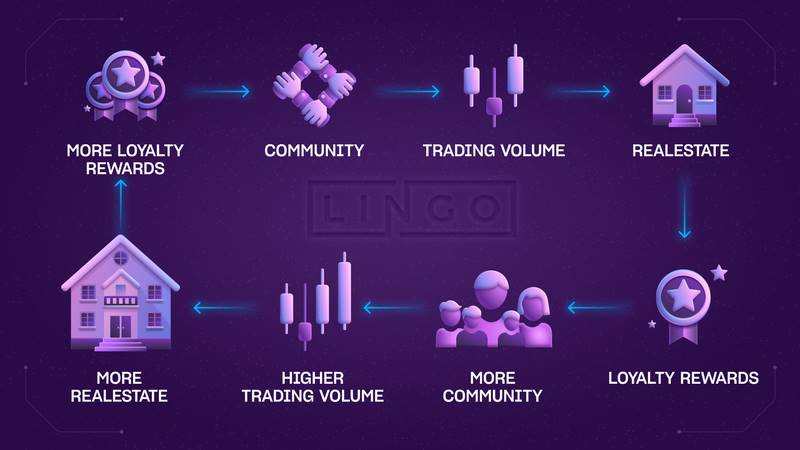
On-chain transaction fees → Purchase real-world assets (e.g., real estate) → Income from real assets funds community rewards and token buybacks → Community grows → Trading volume increases and token price rises → More real assets acquired.
Lingo imposes a 2.5% fee on every $LINGO transaction, which is used to acquire real estate in cities like London, Paris, Miami, and Dubai. These properties will generate rental income, and all net proceeds will fund the Lingo Loyalty Points Store and monthly token buybacks. Future property purchases will be decided via voting by the Lingo DAO.
Notably, Lingo will not tokenize the real estate it owns—it is not a real-world asset tokenization protocol. Instead, Lingo only tokenizes the *revenue* from RWAs. This means $LINGO’s value is relatively insulated from direct fluctuations in property prices and is primarily driven by rental income.
In selecting assets, Lingo focuses exclusively on top-tier global cities such as Paris, Dubai, and Miami, targeting long-term stable returns with an average yield goal of 6%. Additionally, Lingo leverages partner relationships to negotiate bulk orders and discounts, enabling higher rewards for community members.
This creates a virtuous cycle, giving the token value beyond mere price appreciation while ensuring sustained community incentives and driving Lingo’s long-term growth.
Experts in Loyalty Models
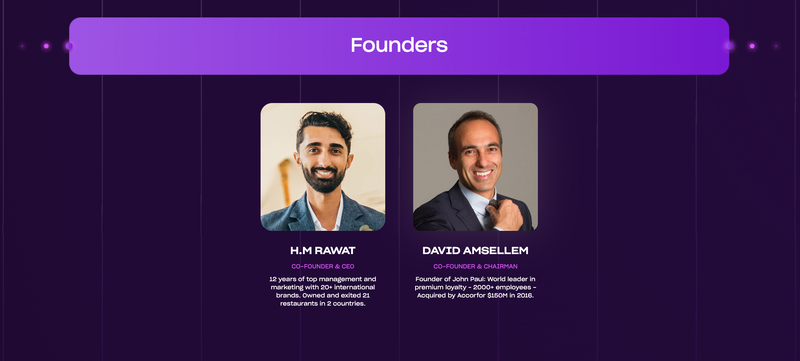
The Lingo team includes Web3 and internet experts from Binance, Consensys, Microsoft, and Booking.com, and has secured $5.5 million in private funding.
Founders HM Rawat and David Amsellem previously founded John Paul, a premium loyalty program company acquired by Accor Hotels for $150 million. When it comes to loyalty program design, the Lingo team is undeniably battle-tested.
By integrating John Paul’s expertise with blockchain and real-world assets, Lingo aims to reward users through its $LINGO token. Users earn loyalty points by holding the token, which can be redeemed for tangible, real-asset-backed rewards—no longer just "air" with floating value.
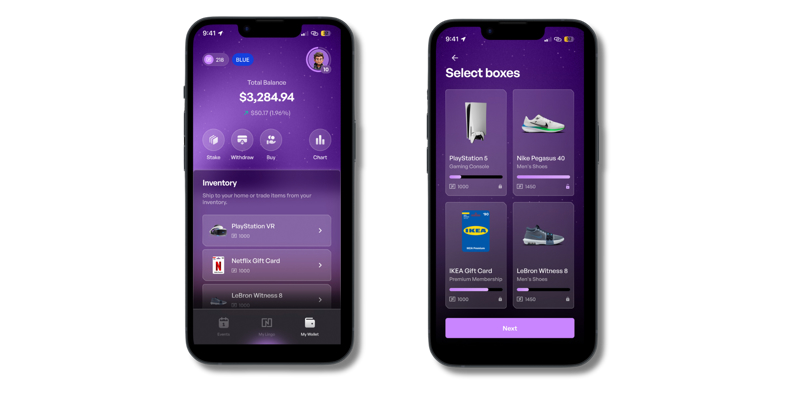
Rewards are backed by the RWA system, ensuring point distribution regardless of market conditions
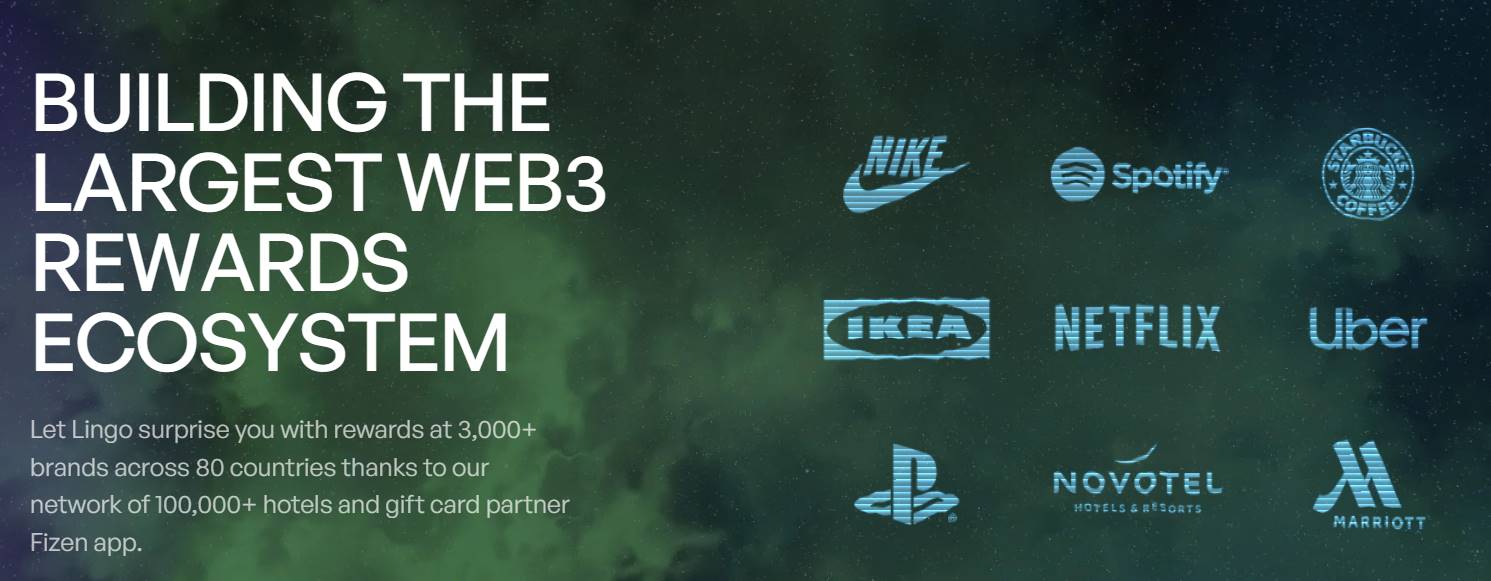
Lingo has established partnerships with over 3,000 real-world businesses worldwide, including Nike, Spotify, Starbucks, Netflix, and PlayStation, spanning apparel, entertainment, dining, and transportation sectors.
In the future, users will be able to redeem loyalty points for a wide variety of real goods and services. It's clear that Lingo is serious about delivering real, tangible incentives to its community.
Airdrop Campaign
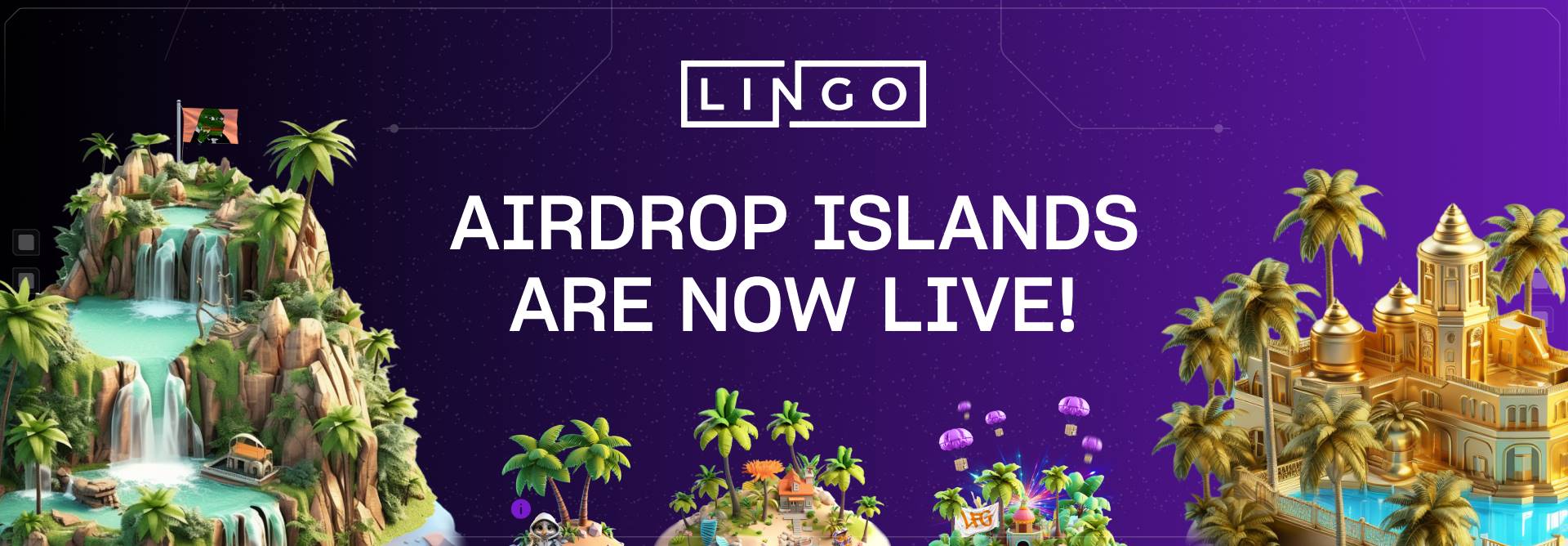
Currently, Lingo is running an airdrop campaign. Users can visit the event page and complete social media tasks or invite new users to unlock islands and claim free $LINGO tokens. Participants who unlock three islands will have the chance to share an exclusive additional 40% airdrop allocation.
Join TechFlow official community to stay tuned
Telegram:https://t.me/TechFlowDaily
X (Twitter):https://x.com/TechFlowPost
X (Twitter) EN:https://x.com/BlockFlow_News
 深潮TechFlow






