









Web3 Overseas Expansion: How Can Funds Be Compliantly Repatriated to China?
TechFlow Selected TechFlow Selected
Web3 Overseas Expansion: How Can Funds Be Compliantly Repatriated to China?
Web3 entrepreneurs can use Foreign Direct Investment (FDI) to legally repatriate overseas funds into foreign-invested companies in mainland China, to cover operating expenses for their local teams.
 Navigating Web3 tides with focused insights
Author: Jin Jianzhi, Senior Lawyer at Shanghai Manqin Law Firm
A common challenge for Web3 entrepreneurs is that most of their company's operating revenue is held by an overseas entity, or the funds raised can only be legally converted into fiat currency abroad. However, the core team operates on the mainland, and operational expenses are primarily incurred there. Under such circumstances, how can legally earned income and financing proceeds from overseas be repatriated to the mainland? One effective method is through Foreign Direct Investment (FDI).
01 What Is FDI?
According to relevant regulations such as the "Foreign Investment Law of the People's Republic of China," FDI refers to investment activities conducted directly within China by foreign individuals, enterprises, or other organizations (collectively referred to as "foreign investors") using foreign exchange, physical assets, technology, etc. Common forms of FDI include:
(1) Foreign investors establishing a foreign-invested enterprise in China individually or jointly with other investors;
(2) Foreign investors acquiring shares, equity, property interests, or other similar rights in enterprises located within China.
Currently, China implements a pre-establishment national treatment system combined with a negative list management regime for FDI. In simple terms, except for specific sectors subject to special administrative measures, foreign investors enjoy equal rights and obligations as domestic investors.
In the information transmission, software, and information technology services industries, only the following areas are restricted under the "Special Administrative Measures for Foreign Investment Access (Negative List) (2021 Edition)": Telecom companies — limited to telecom services opened under China’s WTO commitments, with foreign ownership capped at 50% for value-added telecom services (excluding e-commerce, domestic multi-party communications, store-and-forward services, and call centers), and basic telecom services must be Chinese-controlled; and Investments in internet news information services, online publishing services, online audio-visual program services, internet cultural operations (except music), and internet public information release services — excluding content already opened under China’s WTO commitments. For all other sectors, including typical Web3 entrepreneurial fields such as public blockchain development, cross-chain technologies, DApps, DID, and other on-chain infrastructure projects, FDI can be safely utilized.
In short, common Web3 startup areas such as public chain development, cross-chain technology, DApps, DID, or other on-chain infrastructure projects can confidently apply FDI mechanisms.
02 How to Conduct FDI?
Take the establishment of a foreign-invested enterprise as an example. Driven by policies promoting openness, since the implementation of the "Foreign Investment Law" on January 1, 2020, the previous approval and record-filing systems for setting up or modifying foreign-invested enterprises have been abolished. Now, only an information reporting requirement remains, making the establishment process significantly more convenient.
Similar to establishing a domestic company, after submitting required company registration documents to the market supervision authority (note: if shareholders include an overseas company, the shareholder’s legal status or identity proof must be notarized by a local notary public and authenticated by the Chinese embassy or consulate in that country), the registration of the foreign-invested enterprise can be completed. The subsequent steps generally follow this sequence: FDI foreign exchange registration → opening of capital account → capital remittance → account crediting registration → conversion for use → profit repatriation → cancellation registration. FDI foreign exchange registration, opening of capital accounts, and capital inflow procedures can all be handled directly at banks.
03 How Can the Funds Be Used?
Capital funds transferred from abroad cannot be used immediately upon receipt. Before utilization, international balance-of-payments reporting must be completed, followed by submission of the "Application Form for Registration of Domestic Direct Investment Capital Contribution" to the receiving bank to complete the monetary contribution registration. Only after obtaining the bank-issued "FDI Crediting Registration Certificate" can the capital funds be accessed.
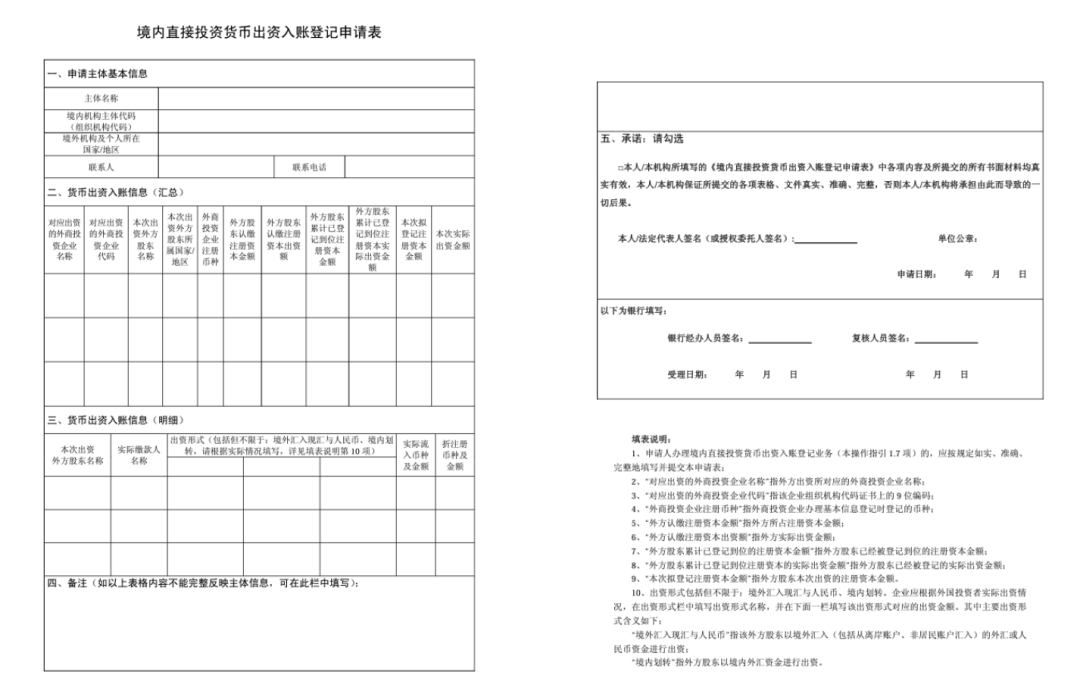
Once registered, capital funds may be freely used within the company’s approved business scope via either payment-based conversion or voluntary conversion. Two main conversion methods are available:
(1) Payment-based conversion: Convert foreign currency into RMB when actual domestic RMB payments are needed. The conversion amount must not exceed the payment amount.
(2) Voluntary conversion: Companies may choose to convert part or all of their capital funds into RMB upfront. The converted RMB is then deposited into a designated pending-payment account, from which funds are drawn as needed based on actual payment requirements. Typically, companies must submit authenticity documentation to the bank prior to each payment.
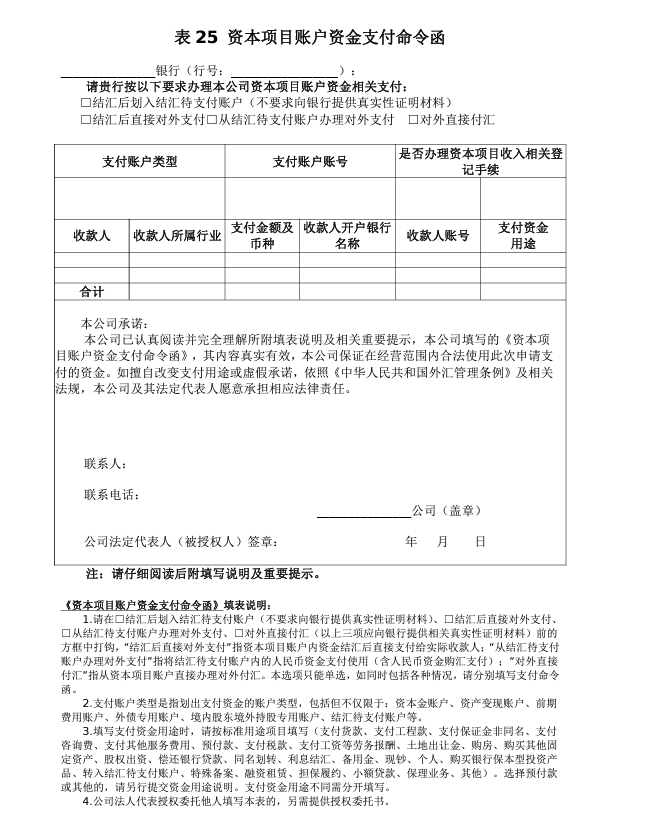
However, enterprises meeting the criteria for capital account foreign exchange income payment facilitation (non-financial enterprises, excluding real estate developers and government financing platforms, with no foreign exchange penalties in the past year, and classified as Category A in goods trade foreign exchange management if applicable) may benefit from streamlined procedures. Eligible enterprises can make domestic payments using capital account foreign exchange income and its converted RMB without submitting supporting documents to banks on a per-transaction basis. Instead, they retain all relevant documentation internally for five years for inspection purposes.
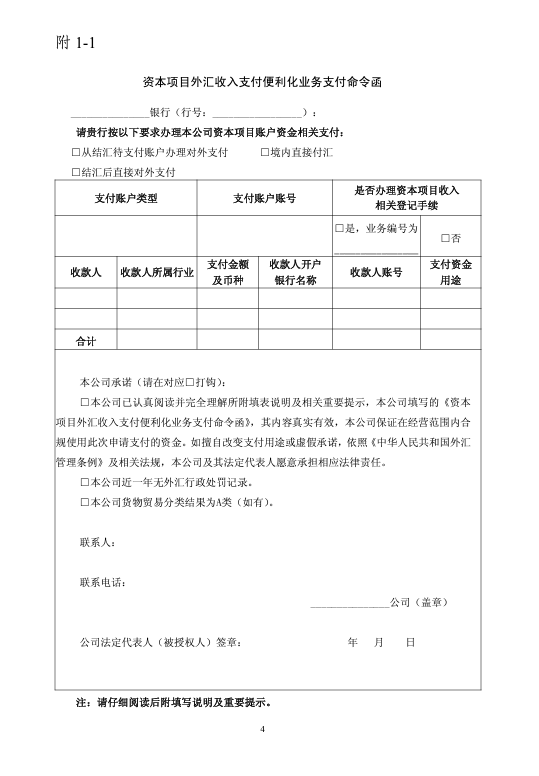
If the foreign-invested enterprise later decides to distribute undistributed profits as dividends, it can do so directly through a bank. After legally setting aside reserves, covering accumulated losses, and completing audits by an accounting firm along with internal corporate resolutions, foreign shareholders may repatriate profits overseas after fulfilling tax obligations.
04 Summary
In conclusion, Web3 entrepreneurs can utilize FDI to legally repatriate overseas funds into a foreign-invested enterprise on the mainland, enabling payment of operational expenses for domestic teams. If the foreign-invested enterprise subsequently distributes dividends, the funds can also be legally remitted back overseas—an arrangement offering both flexibility and reversibility. Of course, FDI is not the only compliant method for fund repatriation. Stay tuned for further articles from Manqin.
Join TechFlow official community to stay tuned
Telegram:https://t.me/TechFlowDaily
X (Twitter):https://x.com/TechFlowPost
X (Twitter) EN:https://x.com/BlockFlow_News












