How to view the customizable gas token of OP Stack?
TechFlow Selected TechFlow Selected
How to view the customizable gas token of OP Stack?
Gas Token is the key to supporting an independent Layer2 economy.
 Navigating Web3 tides with focused insights
Author: Haotian
There's been a lot of discussion lately about the future trends of layer2s. The broad direction has already been set by @VitalikButerin: a diversified ecosystem centered around layer2s (the subtext being: layer2 kids need to fight their own battles now—the Ethereum "daddy" can't carry you anymore). In this context, Gas Tokens are precisely what will support the independent economies of layer2s. Here’s my take:
1) Using ETH as the gas token on layer2 and relying on Ethereum’s mainnet for data availability (DA) were once seen as key indicators of a layer2’s “legitimacy.” Today, that exclusive DA territory has been breached, and the status of ETH as the default gas token is weakening. Layer2s are moving away from their original role as mere extensions of Ethereum’s mainnet toward becoming more autonomous, flexible, and increasingly resembling “independent blockchains.”
The decoupling from Ethereum’s DA stems from OP Stack enabling “one-click chain deployment,” allowing cost-sensitive developers to opt for alternative DA solutions beyond Ethereum. The shift away from ETH as the gas token reflects the stagnation in growth within the Ethereum layer2 economy, which now requires native tokens to provide foundational incentives.
2) @MetisL2 was the first to adopt a native layer2 token as its gas token. As an emerging Ethereum layer2 project, Metis has always taken unconventional paths—decentralized sequencers, hybrid rollups, using $METIS as the native gas token, etc. Looking back, these once-radical choices now appear increasingly mainstream.
In fact, judging from current metrics such as Metis’ mainnet TVL, transaction fees, and DApp deployments, the launch of decentralized sequencers, LSD staking mining mechanisms, and LRT restaking platforms has unleashed strong momentum for Metis’ native DeFi economy.
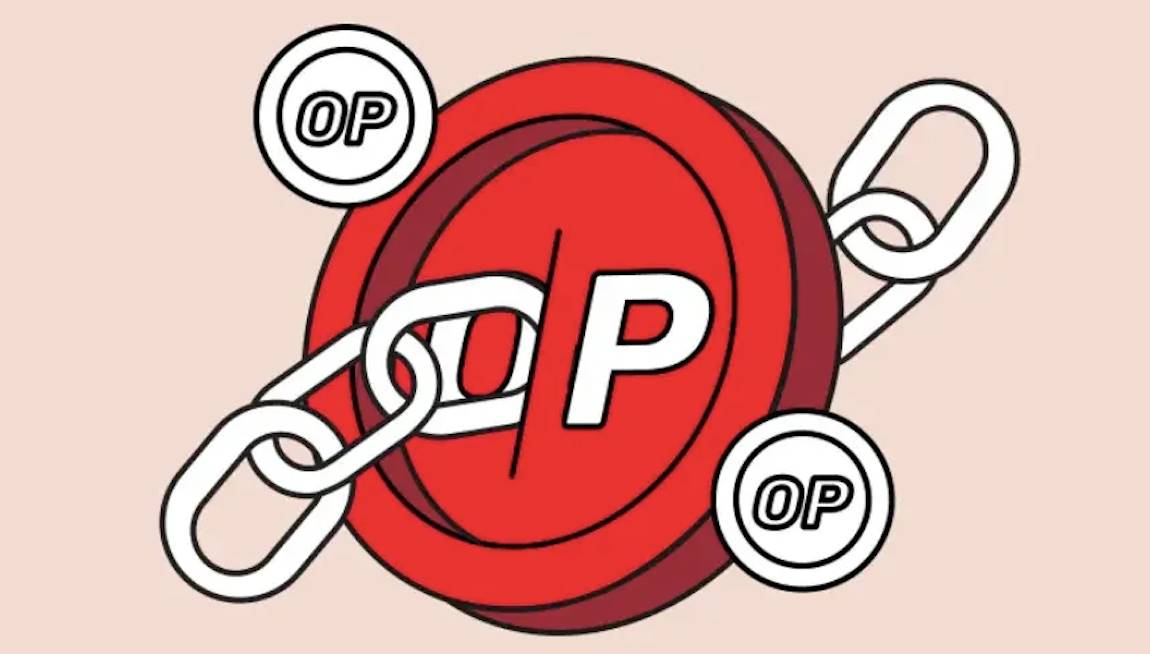
Clearly, OP Stack’s move to enable customizable gas tokens follows the same path pioneered by Metis—using native tokens to incentivize ecosystems. This includes subsidizing transaction and operational costs for platform applications, reducing user transaction fees, or funding grants to attract developer participation. These are all tangible benefits enabled by having an independent gas token.
3) Many worry that if every layer2 uses its own gas token, ETH will lose utility, and layer2s will contribute less value to Ethereum’s mainnet. However, such concerns are unwarranted.
As long as layer2s must batch transactions to the mainnet, they’ll still require ETH as the settlement asset. Only when a layer2’s internal economy is activated—generating substantial batch transactions and settlement activity—will Ethereum’s mainnet truly benefit. This is far more valuable than simply burning ETH as gas on layer2s. Growing user base and transaction volume, and driving organic ETH burn through real economic activity—isn’t that much more effective?
From another angle, bringing native ETH into layer2s requires cross-chain bridges, resulting in users holding only wrapped versions of ETH. This wrapped ETH struggles to serve as a credible underlying asset for DeFi protocols like lending on layer2s, due to the added trust assumptions in cross-chain security. Users clearly prefer conducting such DeFi interactions directly on the mainnet.
But if a layer2 uses its own native gas token as the primary medium of exchange—like Metis does—then it can incentivize decentralized sequencers, offer additional subsidies to DeFi projects, and create flywheel effects between sequencer mining and DeFi activity. No matter how you look at it, launching an independent gas token appears to be the inevitable choice for revitalizing a layer2’s ecosystem.
4) Since the Cancun upgrade, layer2 rollups have received all the support they’re likely to get from Ethereum’s mainnet “daddy.” On one hand, DA costs have significantly decreased post-upgrade, with blob space utilization and fees still well under control—and their full potential not yet realized. On the other hand, future Ethereum upgrades like sharding will bring minimal benefits to rollups, and longer-term technologies like ZK-SNARKs, Ethereum DAS, and light clients won’t directly benefit layer2s either.
Layer2s can no longer rely on expectations of mainnet upgrades to boost their own growth narratives. They’ve reached a turning point—fighting for survival and seizing every opportunity to develop independently, flexibly, and diversely.
In my view, this is exactly Vitalik’s intention behind advocating for a diversified layer2 ecosystem. Future Ethereum layer2s must differentiate themselves functionally and commercially, building self-sustaining growth models to remain relevant within Ethereum’s broader ecosystem. Relying solely on extracting value from the mainnet or short-term governance token incentives—without any intrinsic growth engine—is ultimately unsustainable.
Join TechFlow official community to stay tuned
Telegram:https://t.me/TechFlowDaily
X (Twitter):https://x.com/TechFlowPost
X (Twitter) EN:https://x.com/BlockFlow_News
 Haotian | CryptoInsight