AO Computer Empowers Arweave, Enabling Crypto + AI
TechFlow Selected TechFlow Selected
AO Computer Empowers Arweave, Enabling Crypto + AI
The launch of AO has elevated Arweave's status, positioning it as a key player in the AI field.
 Navigating Web3 tides with focused insights
By Greythorn
Market Insights
Web3, the next-generation internet, will be built on three foundational pillars: consensus, storage, and computation. Blockchain technology initiated the decentralization revolution, while Web3 expands this concept to decentralize the entire internet.
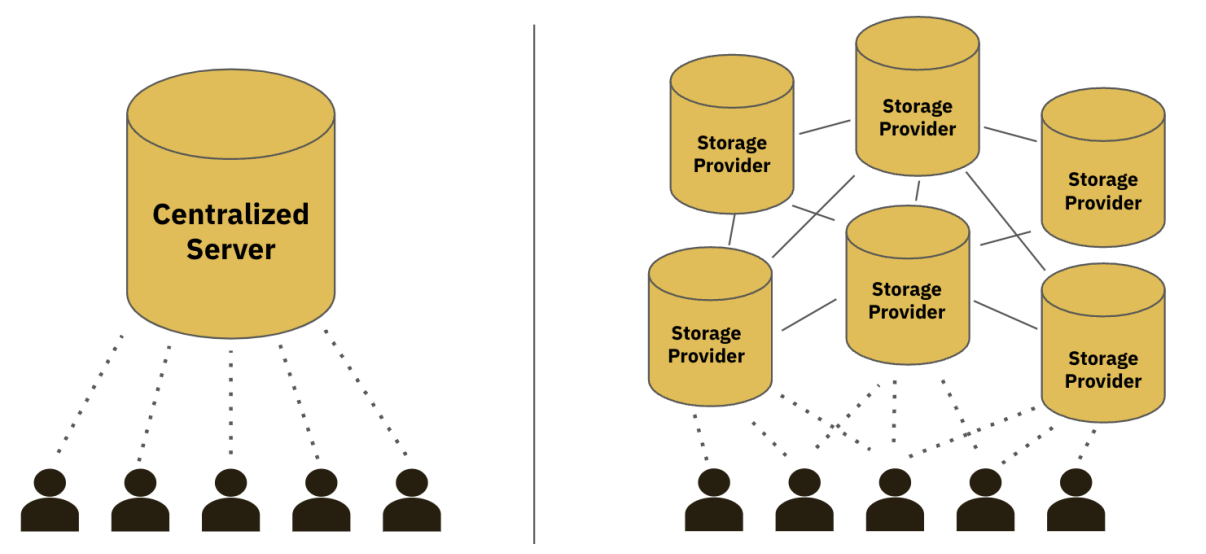
Decentralized storage, represented by peer-to-peer networks, creates a global, trustless, and immutable hard drive. Arweave, a leader in this field, offers cost-effective solutions that ensure permanence, immutability, and censorship resistance, meeting the growing demands of NFTs and dApps.
Source: Binance Research
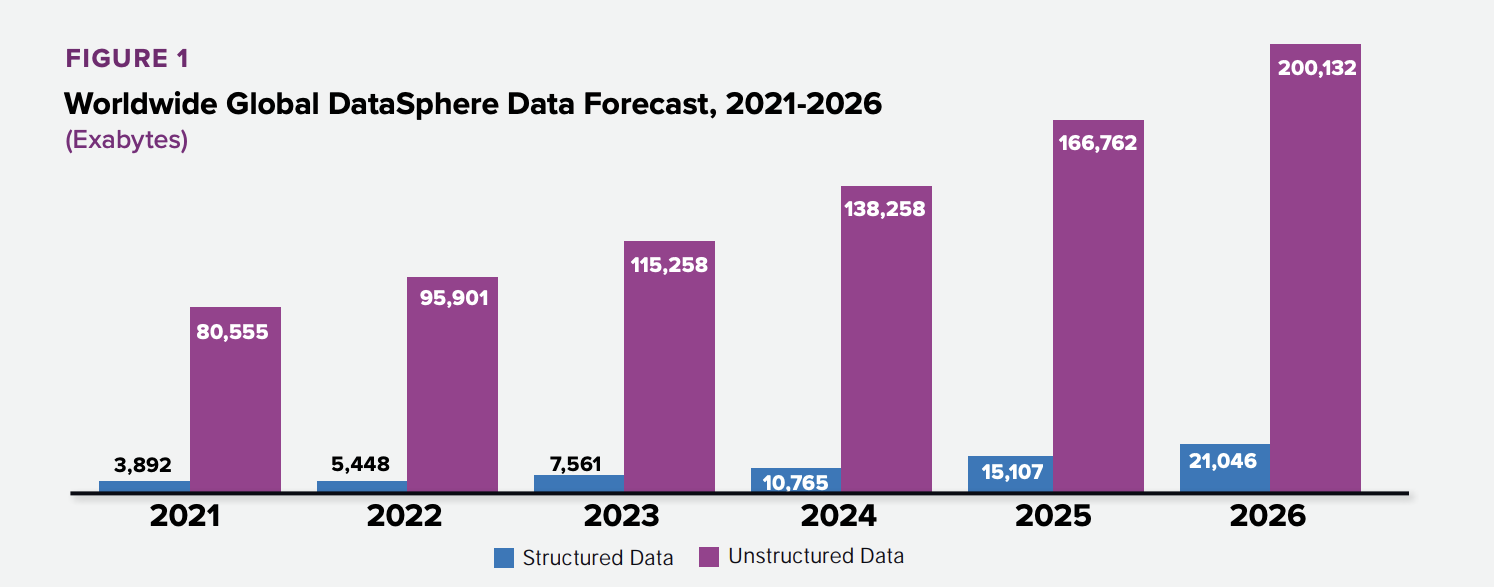
According to data from International Data Corporation (IDC), global data generation is projected to reach approximately 221,000 exabytes (EB) by 2026. To put this into perspective, 1 EB equals 1,048,576 TB, meaning the total global data volume will be around 23.17 billion TB by 2026. This massive data volume highlights the enormous market potential for decentralized storage protocols like Arweave.
Arweave is also advancing into decentralized computing with its AO Computer, a "hyper-parallel" computer designed to integrate large AI models with smart contracts. AO combines the speed of L1 blockchains like Solana with the verifiability required by decentralized projects.
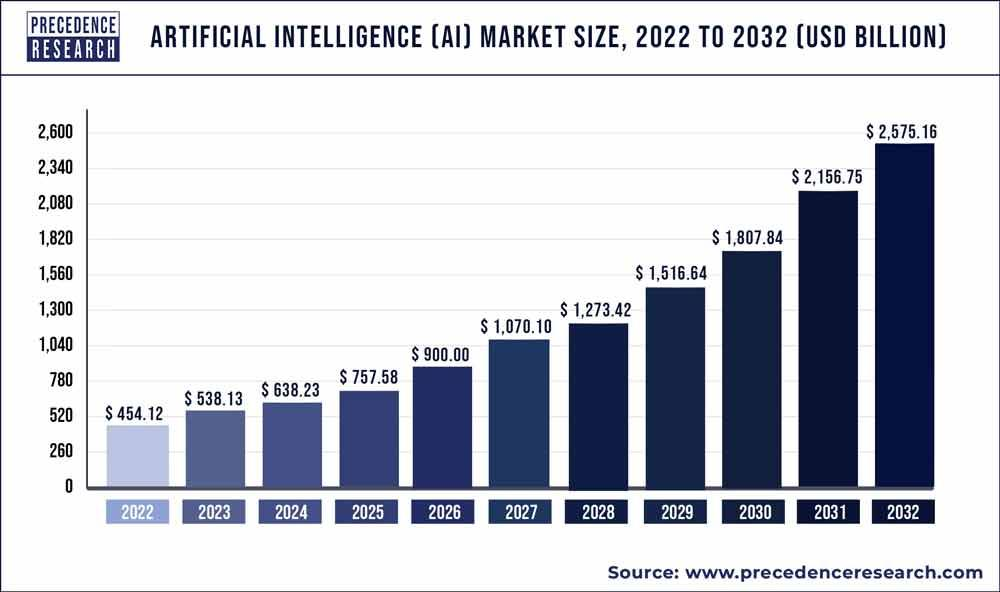
The global AI market is expected to grow to approximately $257.516 billion by 2032, with a compound annual growth rate of 19%. Decentralized AI addresses transparency and control issues in machine learning, fostering a fair and accessible AI environment that protects intellectual property and personal data. Arweave's advancements in decentralized storage and computing position it at the forefront of the Web3 movement, fulfilling critical needs and expanding its market potential.
Protocol
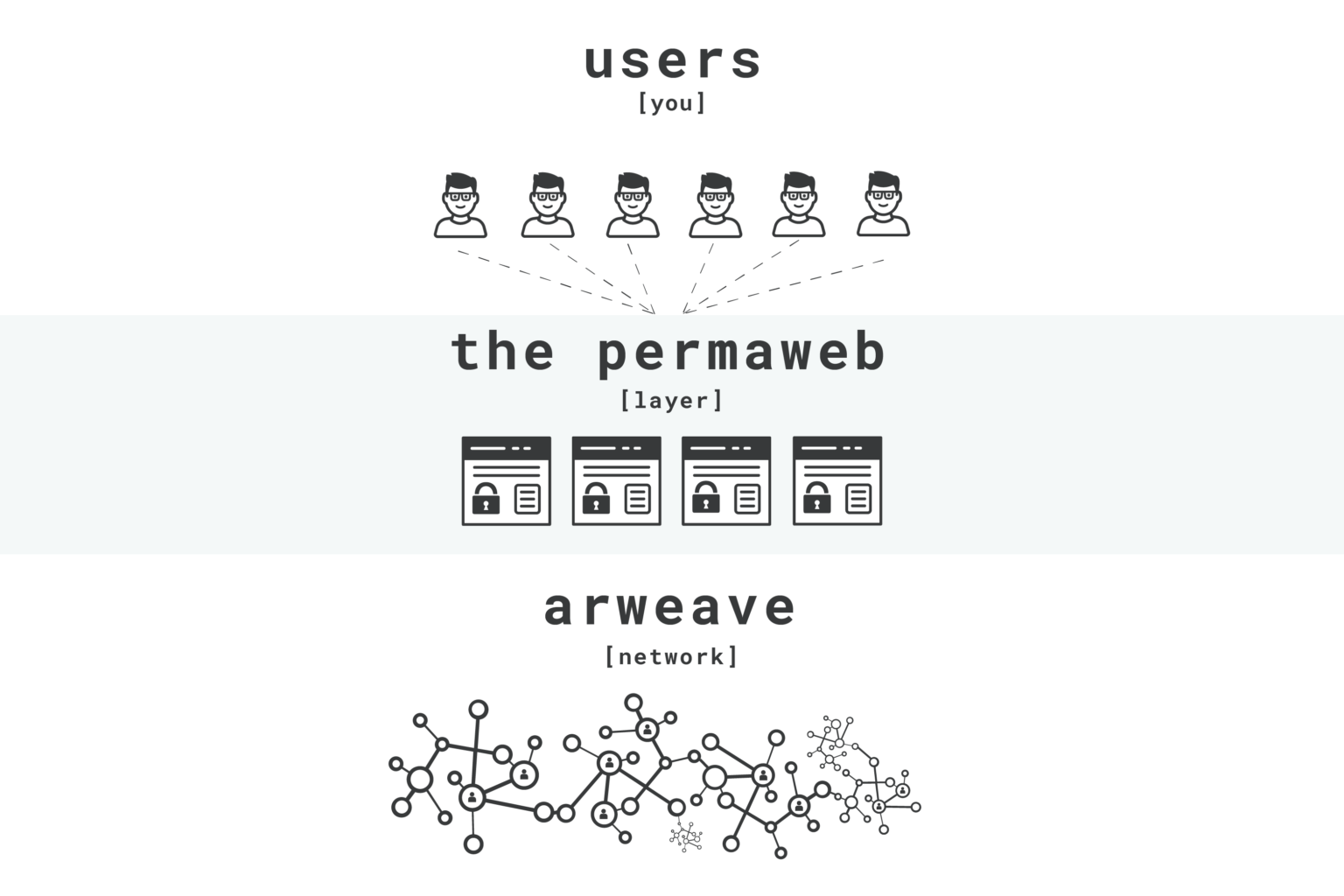
Arweave is a decentralized storage protocol designed to permanently store data through a one-time payment. It consists of two key components: blockweave and permaweb.
Blockweave, as Arweave’s storage layer, handles storage orders and replicates data. It employs a consensus mechanism known as Succinct Random Proofs of Access (SPoRA), which requires nodes to provide cryptographic proof of access to previously uploaded data before accepting new data.
Layered on top of blockweave is the permaweb, a human-readable layer modeled after the World Wide Web. Unlike traditional web data, content on the permaweb is immutable, ensuring that websites and dApps remain unchanged once uploaded.
Source: Arweave
Arweave supports smart contracts via its SmartWeave platform. Unlike traditional blockchain networks such as Ethereum, SmartWeave computes contract states only on the local machine requesting execution. This design enhances efficiency and scalability.
The native utility token of the Arweave network is AR. This token is used to pay into storage endowment funds, which compensate miners and ensure long-term coverage of storage and network capacity costs.
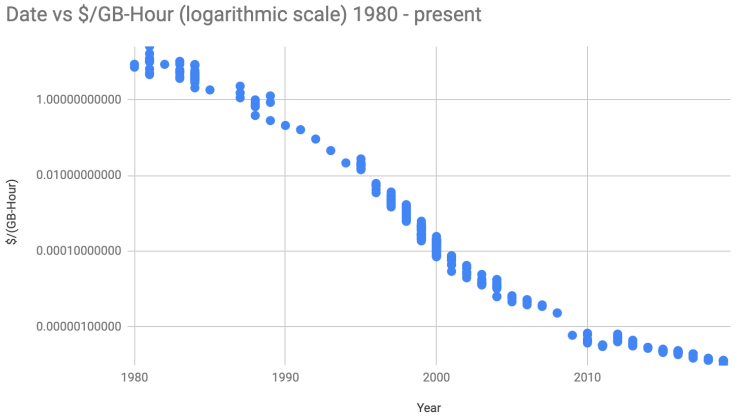
When storing files on Arweave, users make a one-time payment, most of which goes into a storage endowment fund. This fund is designed to indefinitely cover storage costs based on conservative assumptions about declining storage prices. Historically, storage costs have declined at an average annual rate of -30.57%, supporting the protocol’s long-term viability.
Source: Arweave
Miners on the Arweave network are rewarded through transaction fees, inflationary token issuance (gradually decreasing at a rate dependent on block weight), and endowment payouts.
Arweave’s tokenomics include an initial issuance of 55 million AR tokens, with an additional 11 million tokens issued inflationally. These emissions will continue to decline until the total circulating supply reaches 66 million AR tokens. The protocol does not implement a token burn mechanism, maintaining a fixed supply.
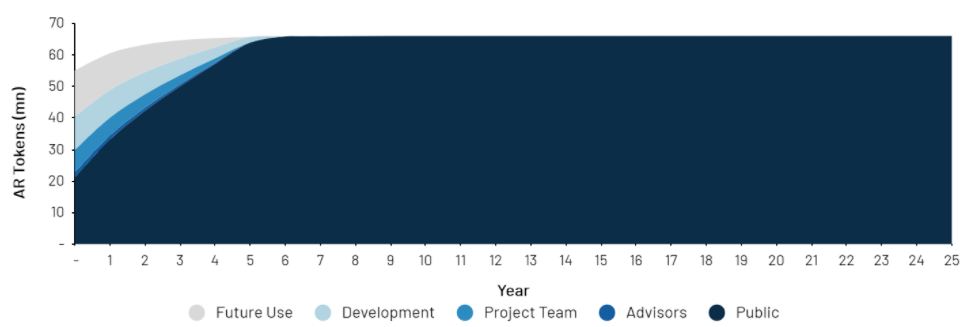
Source: Arweave
Arweave’s “Fork Event” and Recent Network Upgrade
On December 18, 2023, Arweave founder Sam stated on Twitter that Irys planned to fork Arweave, involving dataset deletion and token supply reset. This sparked strong community backlash. DataOS stopped using Irys, citing violations of Permaweb principles. Community Labs founder Tate supported Sam and urged Irys to properly execute the fork, while Decent Land Labs decided to halt integration with Irys. everVision pledged continued ecosystem support. On January 4, 2024, Irys founder Josh Benaron clarified there was a misunderstanding and no current plans for a fork. Sam welcomed Irys back into the Arweave community.
Meanwhile, the Arweave fork on March 26, 2024 introduced coordinated mining, enabling multiple nodes to collaborate, improving efficiency and hash power. It also added support for pooled mining, allowing miners to share resources. Protocol changes increased the difficulty of single-block solutions to encourage full data replication, introduced new pricing mechanisms, and reduced checkpoint depth to 18 blocks. Despite initial controversy, these updates have been accepted, and Arweave’s price has risen due to improved performance and stability.
Arweave’s AO Computer
The AO Computer combines blockchain security with the efficiency and scalability of platforms like Amazon EC2, forming a new computational paradigm. Leveraging Arweave’s robust foundation, AO addresses scalability and efficiency challenges in zero-knowledge machine learning (zkML). It provides a transparent, verifiable computing system backed by Arweave’s secure and permanent data storage.
AO employs parallel processing, simultaneously running multiple programs at scale—similar to multitasking on a computer but greatly amplified. This approach optimizes resource allocation by shifting resources from less active tasks to those requiring more, much like how busy websites distribute traffic to efficiently serve numerous users. Intelligent management enables smoother, faster operations, enhancing scalability and performance to meet growing demand.
The open data protocol underlying AO offers flexible and modular design, enabling easy upgrades and component replacements such as sequencers and virtual machines.
AOS System, AO’s decentralized operating system, allows developers to run command-line processes similar to smart contracts. It combines the familiarity of cloud server operations with the benefits of decentralized and trustless processing. Written in Lua—a programming language used in popular games like Roblox and Angry Birds—AOS supports the creation of blockchains compatible with various virtual machines, including EVM.
In AO, processes act as autonomous agents frequently interacting with Arweave for data storage, facilitating efficient data exchange for applications like tokenized gaming or AI chatbots. Unlike typical smart contract platforms reliant on user triggers, AO allows contracts to self-execute at scheduled times, paving the way for truly autonomous blockchain applications.
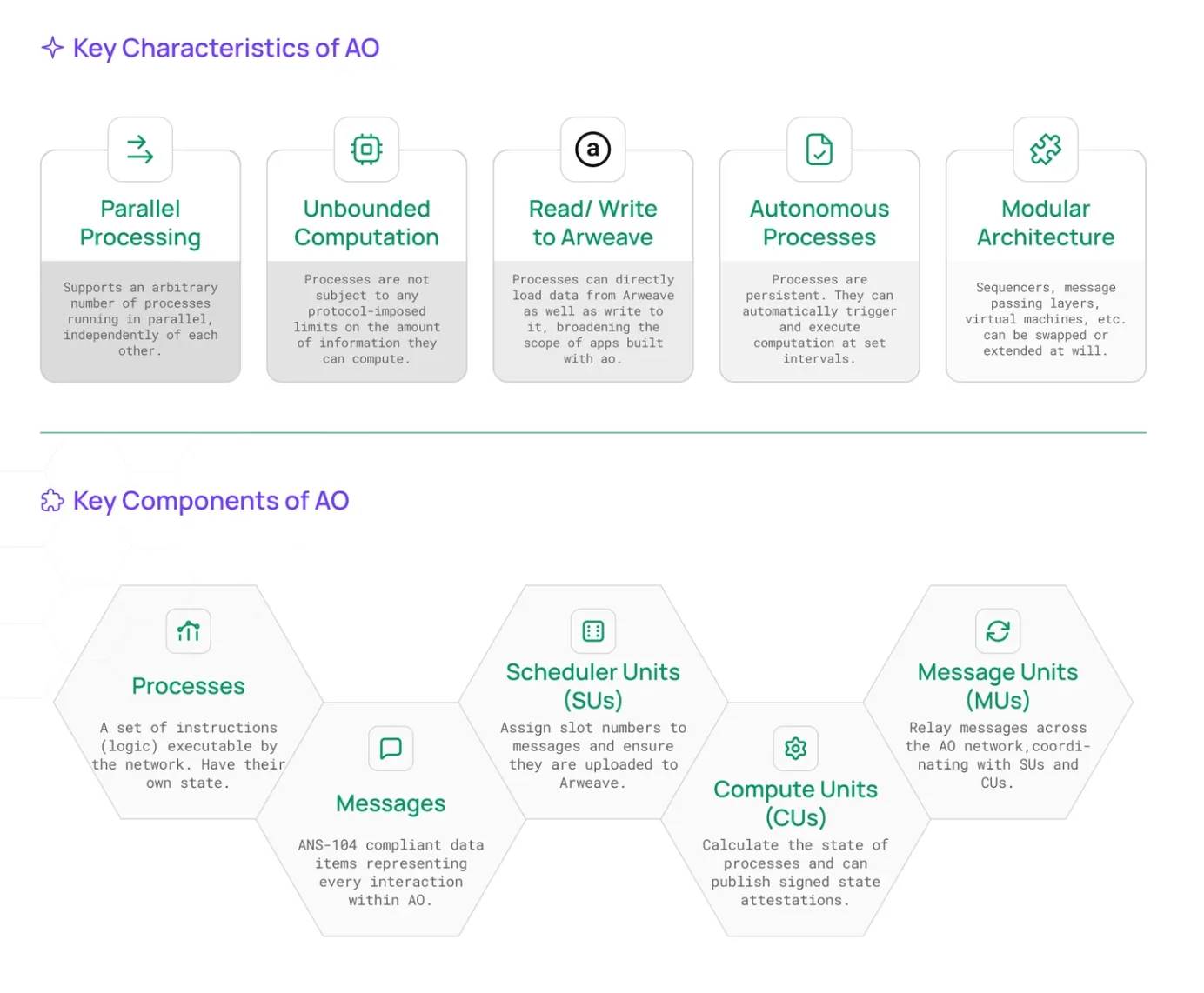
Source: Community Labs
Competitors
In the decentralized storage space, Filecoin is Arweave’s main competitor. The key difference lies in Arweave’s focus on long-term data storage, whereas Filecoin aims to disrupt the current storage market with low-cost temporary storage. Arweave is creating a new market for permanent storage, while Filecoin must compete on price to succeed in the cloud storage market dominated by tech giants like Amazon and Alibaba. How this competition unfolds over the coming years will be worth watching.
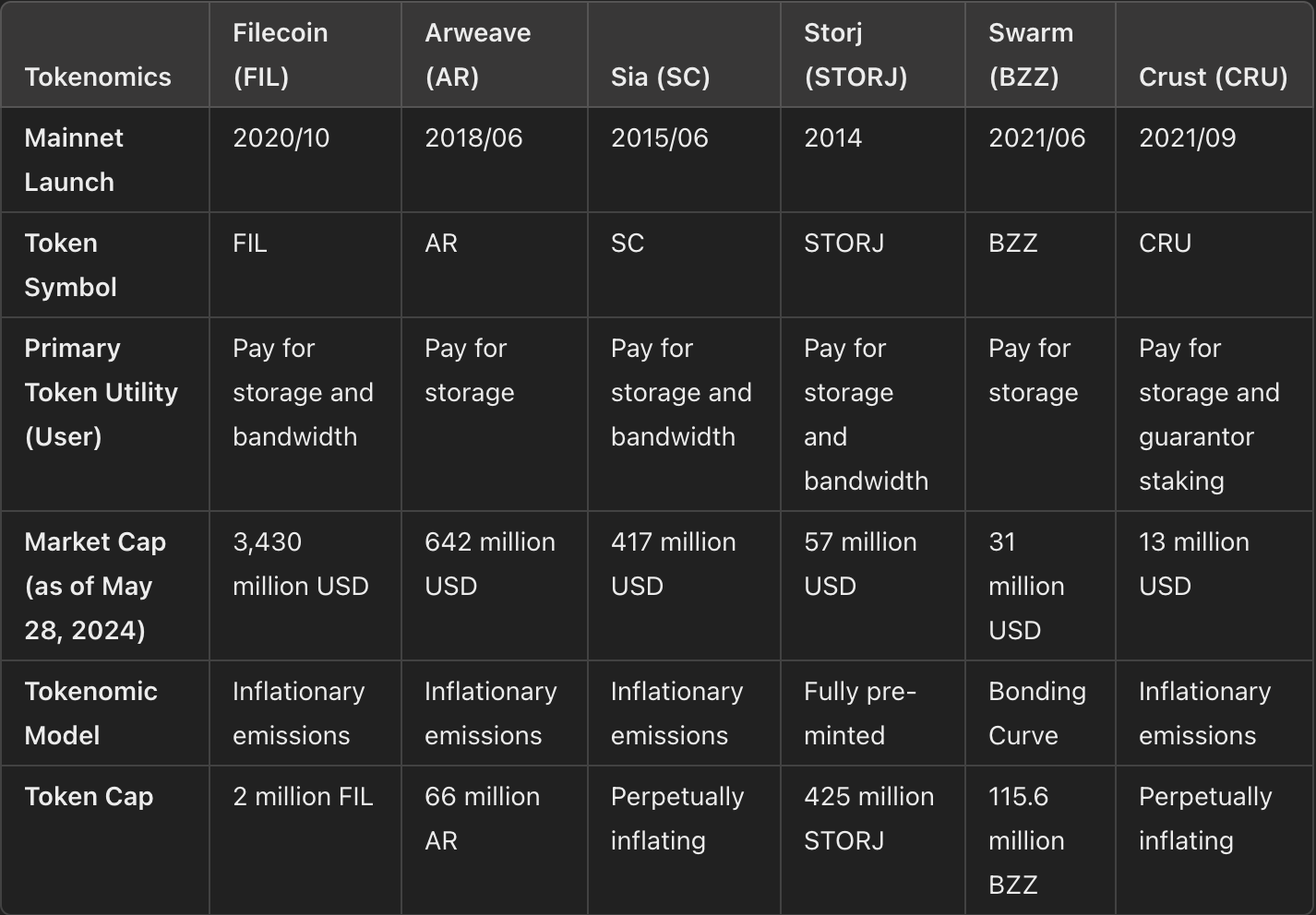
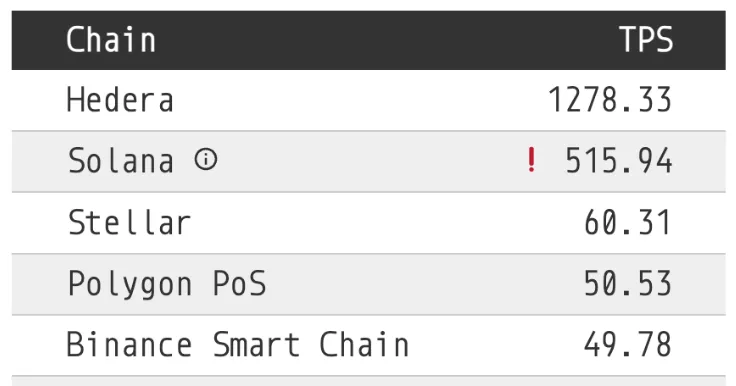
In terms of blockchain performance, by late February, Arweave achieved over 600 transactions per second, making it the highest-throughput permissionless blockchain. This achievement is particularly notable given that the AO computer is still in early stages, surpassing competitors like Solana and Polygon in TPS (transactions per second).
Below are some statistics from the AO testnet:
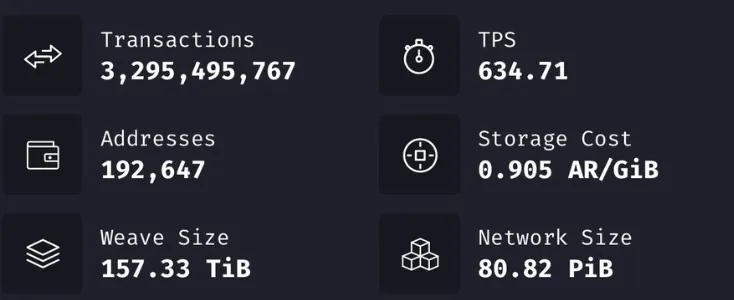
Source: Sam Arweave
Team, Funding, and Ecosystem
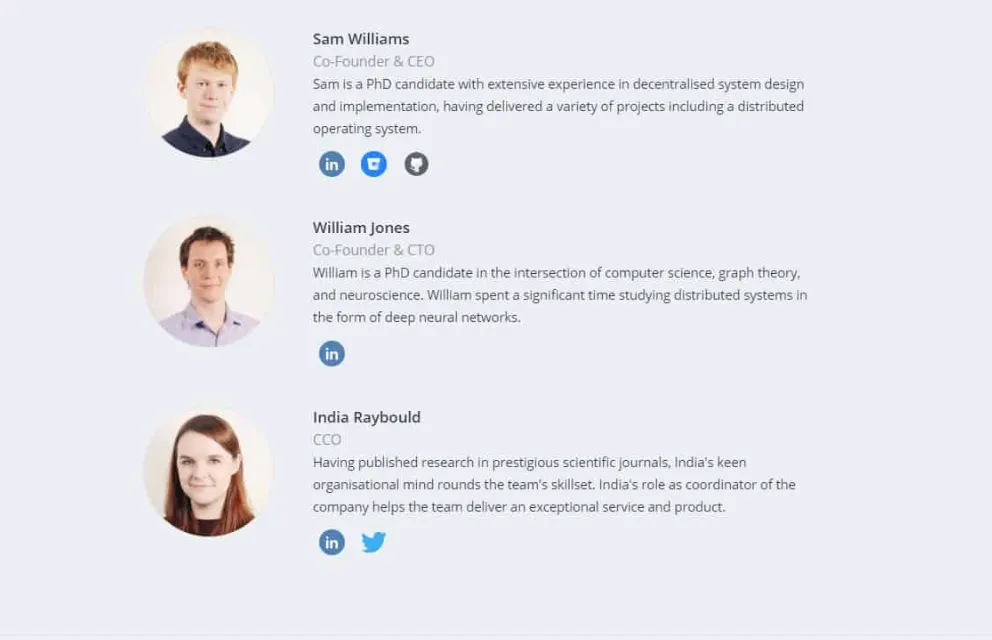
Arweave was founded by Sam Williams and William Jones during their doctoral studies at the University of Kent. Inspired by a walk in Scotland and Jones’ technical insights, their shared vision led to the creation of Arweave—an immutable, blockchain-based data storage platform.
Source: ICO Drops
Arweave successfully raised funds through multiple financing rounds:
● Pre-seed (October 2017): Raised $8.7 million.
● Seed round (December 2017): Raised $5 million.
● Community Token Sale Part 1 (March 2018): Raised $900,000 at $0.132 per token, achieving a 298x return on investment.
● Community Token Sale Part 2 (June 2018): Raised $675,000 at $0.132 per token, also achieving a 298x ROI.
● Private round (February 2020): Raised $8.3 million.
Notable investors include Coinbase Ventures and Andreessen Horowitz. The public token offering in 2020 further solidified Arweave’s financial foundation. The project is guided by a DAO, ensuring community-led decision-making and voting.
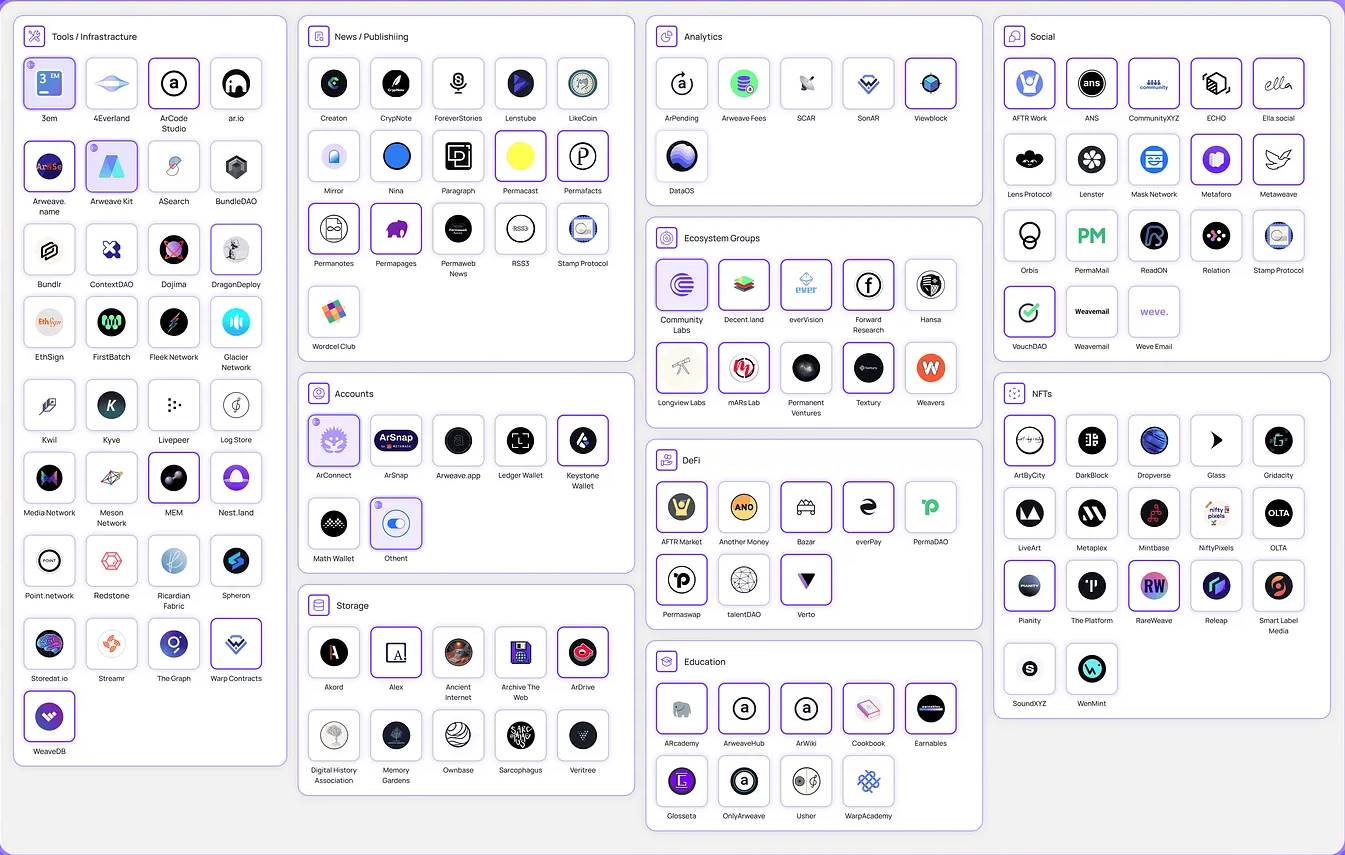
Arweave’s ecosystem is a vibrant part of Web3. As of Q3 2023, Community Labs’ ecosystem map featured over 130 Arweave-based projects. The network has surpassed one billion on-chain transactions, demonstrating increasing adoption and robust infrastructure.
Source: Community Labs
Bullish Fundamentals
● The launch of AO elevates Arweave’s status, positioning it as a key player in the AI space.
● AO enables decentralized applications to access and store data on Arweave, expanding possibilities for machine learning and AI integration.
● Its hyper-parallel architecture facilitates efficient training and deployment of AI models, while AO’s modular setup provides an ideal environment for developing DeFi applications.
● Speculation grows around potential airdrops for early Arweave adopters. The team is developing plans for an AO-native token intended to complement the existing AR token.
● The AO computer addresses scalability and efficiency challenges in zkML, introducing a transparent, verifiable computing system backed by Arweave’s secure, permanent data storage.
● In 2023, Arweave saw a significant increase in network transaction volume, processing roughly 100 million transactions per month—surpassing 2022 levels.
● Future growth: With rising TPS and increasing applications in AI and ML, Arweave’s transaction volume is expected to grow further in 2024 as AO transitions from testnet to full operation.
Bearish Fundamentals
● The AO testing phase may expose technical issues such as bugs and network access problems, potentially hindering progress.
● AO’s ability to effectively scale AI models on-chain remains unproven, raising questions about overall functionality.
● Integrating a new AO token with the existing AR token could prove challenging, introducing additional uncertainty.
● Despite recent advances, Arweave may face scalability challenges as demand for storage and computing power increases.
● The AO computer and its integration with Arweave are in early stages, potentially encountering unforeseen technical and operational hurdles.
● Speculation around potential airdrops and token burns could lead to significant volatility and unpredictability in AR token value.
Join TechFlow official community to stay tuned
Telegram:https://t.me/TechFlowDaily
X (Twitter):https://x.com/TechFlowPost
X (Twitter) EN:https://x.com/BlockFlow_News
 Greythorn