








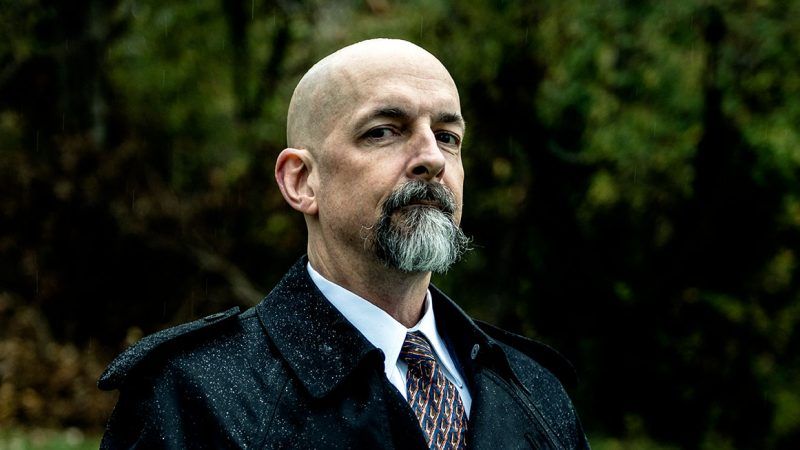
Exploring Neal Stephenson: From Sci-Fi Visionary to Web3 Pioneer
TechFlow Selected TechFlow Selected
Exploring Neal Stephenson: From Sci-Fi Visionary to Web3 Pioneer
By actively building Lamina1, Neal Stephenson not only continues his exploration of the metaverse introduced in Snow Crash, but also injects new momentum into the development of Web3.
 Navigating Web3 tides with focused insights
Preface
When New York Times bestselling author Neal Stephenson first coined the term "Metaverse" in his 1992 cyberpunk novel Snow Crash, he not only set an exceptionally high bar for future science fiction writers but also left a lasting impact on films like The Matrix. His immersive literary techniques and meticulous attention to detail—evident across works such as Seveneves, Anthem, Reamde, and Cryptonomicon—have shaped a world we are now actively building: the next-generation information era of Web3.
Yet his influence extends far beyond literature. With the rise of blockchain technology, Neal Stephenson has expanded his vision into the construction of the Metaverse itself, emerging as a pivotal figure in this domain.
This article explores the life, works, and connection to the Metaverse infrastructure Lamina1 of Neal Stephenson—widely known as the “Father of the Metaverse” (hereafter referred to as “Neal”). Through this deep dive, we can better understand his unique role as a thought leader in technological evolution and his inspirational guidance toward the future.
1. Prologue: The Life of Neal Stephenson
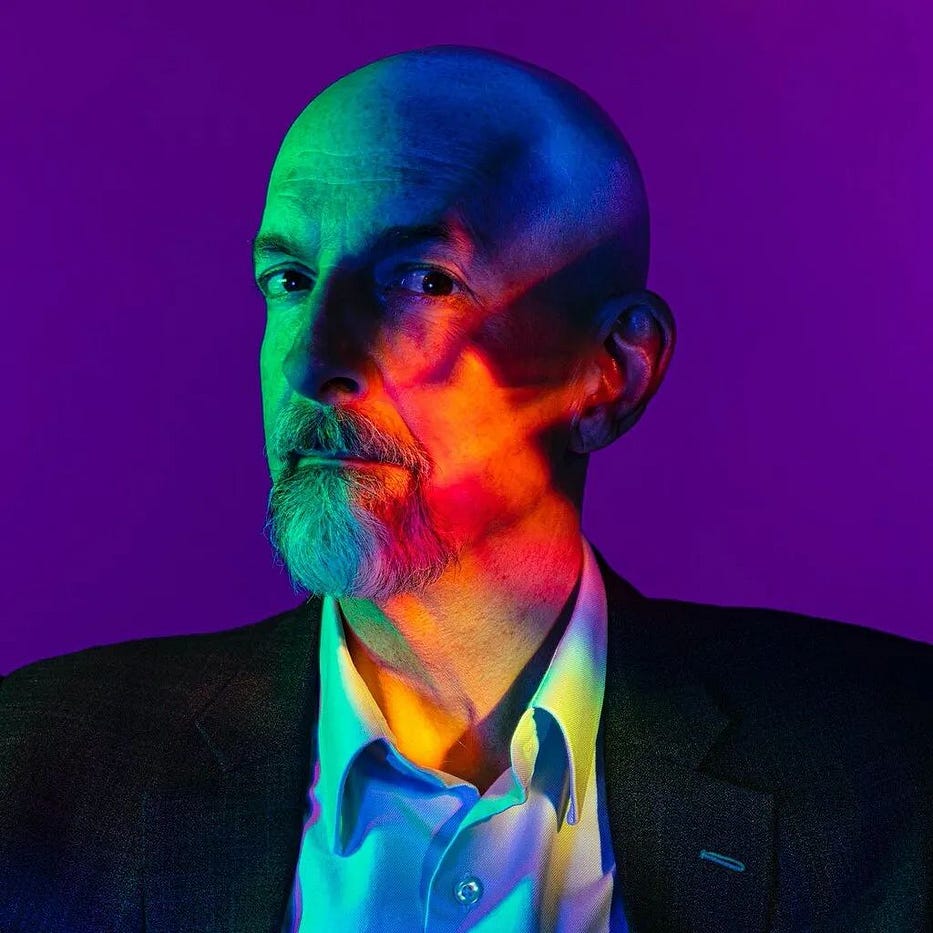
Neal was born into an academic family—his father a professor of engineering, his mother a biochemist. His grandfather, George M. Neal, was a renowned physicist, exposing Neal from an early age to the worlds of science and engineering and immersing him in a deeply scientific environment.
From childhood, Neal demonstrated a dual passion for literature and technology. In high school, he began reading extensively in science fiction and developed a strong interest in computer science. In 1981, he enrolled at Boston University to study physics, later switching to Earth and Planetary Sciences, where he ultimately earned his degree. During university, he also cultivated deep interests in history and linguistics—subjects that would later profoundly influence his writing.
After graduation, Neal began his professional career, yet his passion for literary creation never waned. He published his first novel, The Big U, in 1984. Four years later came Zodiac, a thriller centered on environmental activists battling corporate pollution. Then, in 1992, Neal achieved his breakthrough with Snow Crash—a cyberpunk novel famous for introducing the term "Metaverse." Now a million-selling New York Times bestseller, Snow Crash has become essential reading across business, technology, and among many leading thinkers. His subsequent novel, The Diamond Age, further explored the potential of distributed payment systems within global media networks and won both the Hugo and Locus Awards.
Beyond his literary achievements, Neal engaged in real-world tech projects early on. As a founding member of Jeff Bezos’s spaceflight company Blue Origin, which develops crewed suborbital launch systems, Neal made significant contributions in evaluating alternative methods for space travel and propulsion. After 2007, he joined Magic Leap—the global leader in spatial computing—as Chief Futurist, leading the development of revolutionary augmented reality technology.
After leaving Magic Leap in 2020, he received an Epic MegaGrant to fund a virtual production project based on The Rise and Fall of D.O.D.O., co-authored with Nicole Galland. In June 2021, Neal and several colleagues released New Found Land: The Long Haul—an Audible audio drama set in the world they developed at Magic Leap.
With the rise of blockchain technology, Neal’s interests once again turned to emerging fields. He became actively involved in Lamina1, a Metaverse infrastructure initiative aimed at addressing key challenges in today’s Metaverse landscape and advancing the development of Web3. Lamina1 is more than just a Metaverse innovation—it embodies his vision and exploration of the next information age.
2. Peak: A Review of Neal Stephenson’s Major Works
2.1 Snow Crash: The Birth of the Metaverse
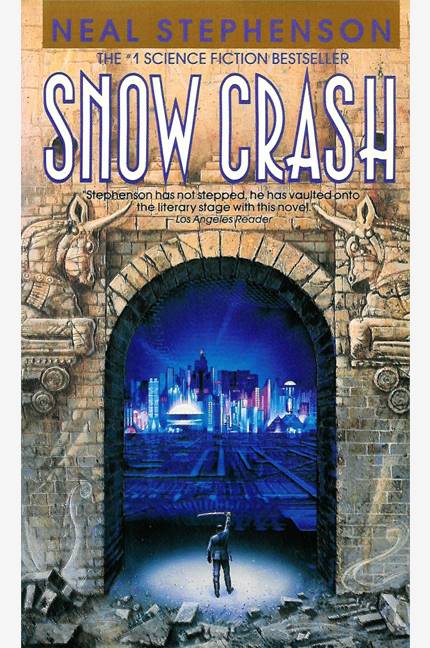
In 1992, Neal published his seminal work, Snow Crash. More than a milestone in cyberpunk literature, this novel introduced the concept of the “Metaverse”—a visionary precursor to virtual reality and digital worlds. The Metaverse depicted in the book is a user-generated, interactive virtual realm, a concept widely adopted later in films such as The Matrix. Through his portrayal of future society, technology, and culture, Neal redefined standards in science fiction and profoundly influenced generations of creators and technologists.
2.2 Cryptonomicon: Anticipating the Crypto Revolution
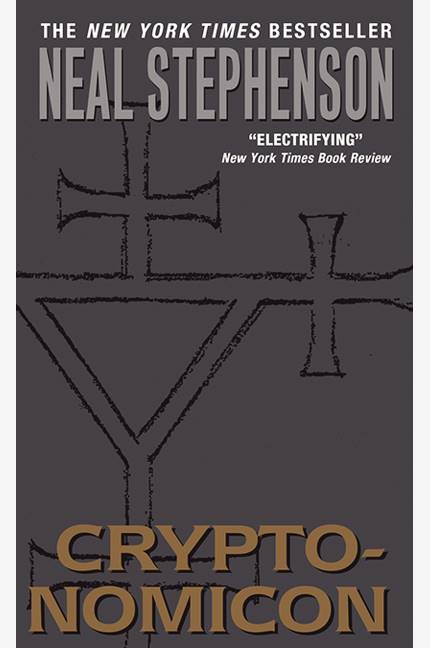
Published in 1999, Cryptonomicon is another cornerstone in Neal’s bibliography. Spanning two timelines—World War II and the modern era—the novel weaves together stories of cryptography, computer science, and finance, offering deep insights into the future of encryption. Many of its concepts—such as cryptocurrencies and blockchain technology—have since become realities. With this work, Neal not only demonstrated his profound understanding of technology and history but also foresaw the coming crypto revolution. The novel gained widespread acclaim and was awarded the Prometheus Hall of Fame Award 14 years after publication.
2.3 The Diamond Age: Exploring Nanotechnology
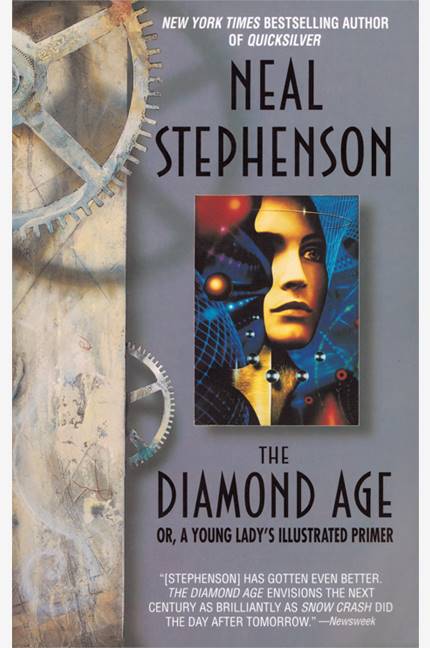
Published in 1995, The Diamond Age further showcases Neal’s deep foresight into future technologies. Centered around a device called the “interactive educational book,” the novel examines the applications of nanotechnology in education and society. More than just a compelling sci-fi narrative, The Diamond Age earned both the Hugo and Locus Awards through its intricate storytelling and incisive social critique, solidifying Neal’s standing in the science fiction canon.
2.4 The Baroque Cycle: A Symphony of History and Science
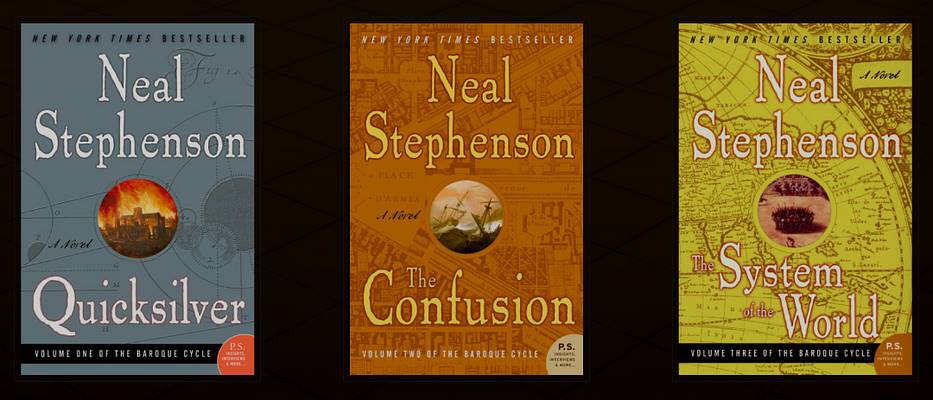
Beginning in 2003, Neal entered a peak creative period with the release of The Baroque Cycle—a grand trilogy set in the 17th and 18th centuries, serving in many ways as a prequel to Cryptonomicon. Comprising three volumes and eight books in total, including Quicksilver, The Confusion, and The System of the World, the series captivated readers with its blend of historical adventure and scientific intrigue. Cryptography and numismatics play central roles throughout. The System of the World won the Prometheus Award in 2005.
2.5 Reamde: Collision of Virtual and Real Worlds
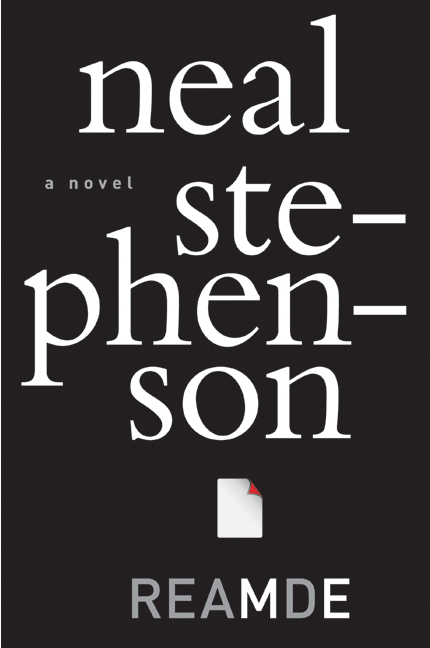
Reamde (2011) is an action-packed, suspenseful novel that unfolds across both virtual and physical realms. Characters navigate adventures in the real world while simultaneously engaging in fierce combat within a multiplayer online game. Through this narrative, Neal explores the profound impact of virtual worlds on real-life experiences, demonstrating his deep understanding of the interplay between technology and society.
2.6 Seveneves: Space Exploration and Humanity’s Future
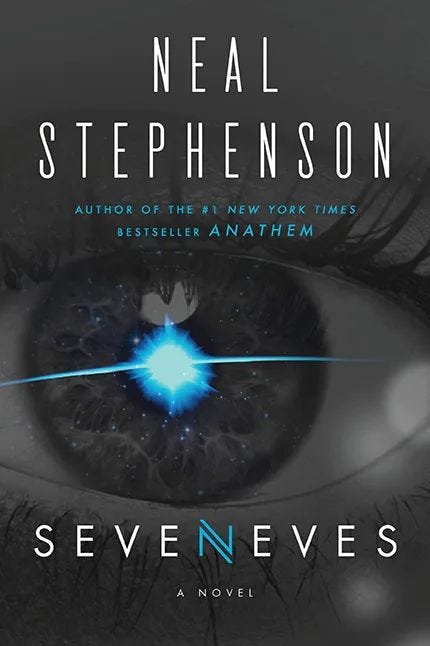
Seveneves (2015) represents Neal’s grand vision for space exploration and humanity’s long-term survival. The novel depicts how humans escape to space following a global catastrophe and eventually return to Earth thousands of years later. With precise scientific and technical detail, Neal demonstrates his deep fascination with and extensive knowledge of space travel. The book attracted major attention from the entertainment industry and is being adapted into a film slated for release in 2025.
As a science fiction writer, Neal’s works span genres including sci-fi, thriller, and mystery, earning numerous international awards. Renowned for their rich imagination and philosophical depth, his novels are intellectually rigorous and thematically diverse. His contributions have been celebrated by critics and readers alike and have drawn increasing interest from the film and television industries, resulting in multiple adaptations. Without exaggeration, Neal has cemented his status as a luminous star in contemporary literature.
3. Crossing Boundaries: Neal Stephenson’s Intersection with Web3
Neal has not only left a profound mark on science fiction but has also actively contributed to the development of the Metaverse. While he coined the term “Metaverse” in Snow Crash in 1992, three decades later, he is partnering with cryptocurrency expert Peter Vessenes to turn that vision into reality.
3.1 Foreseeing the Future: From Cryptonomicon to Web3
As early as 1999’s Cryptonomicon, Neal demonstrated a deep understanding of encryption and decentralized systems. The novel intricately details the application of cryptography and information security, foreshadowing the emergence of modern cryptocurrencies and blockchain technology.
The Vision of Web3: Fairness and Interoperability
The spirit of Web3 aims to break down “walled gardens” and data silos, empowering users to fully control their digital experiences and seamlessly transition between different virtual worlds. While most platforms are built on Ethereum, others are pursuing alternative strategies to leverage blockchain technology in service of their visions.
Neal envisions Web3 as an interoperable ecosystem that is fair to artists and creators and accessible to all. This expansive vision has positioned Lamina1 as a focal point of industry attention.
Redefining the Metaverse
Originally, the term “Metaverse” evoked a single unified space where users could log in and experience a powerful virtual world. But in practice—at least today—the Metaverse consists of multiple distinct spaces, both centralized and decentralized, each offering different experiences. These spaces remain isolated, lacking interoperability.
While virtual reality-based Metaverses are developing rapidly, most projects remain closed systems. As advocated by figures like Yat Siu, founder and CEO of Animoca Brands, or the anonymous NFT collector Punk6529, Web3 should aim to build an “open Metaverse”—an interoperable space spanning all or most platforms. That is precisely the mission of Lamina1.
3.2 Lamina1: Pioneering the Open Metaverse
Lamina1 is a Layer-1 blockchain ecosystem focused on providing developers with the foundational infrastructure to build an “open Metaverse.”
Founded in June 2022 by Neal Stephenson and Peter Vessenes—an early crypto pioneer and seasoned Web3 venture capitalist—Lamina1 has spent the past two years developing solutions to enhance content creation and development in the Metaverse. Today, Lamina1 has launched its betanet and Hub, enabling creators to design the building blocks of the future open Metaverse.
Lamina1 has made significant progress, with nearly 50,000 participants joining its Testnet and Betanet phases. These early stages laid the groundwork for key features such as distributed asset storage, user-friendly world-building tools, game engines and network SDKs, consumer-grade user experiences, and simple world servers for multiplayer experiences. Lamina1 also employs a unique subnet architecture to manage identity, assets, and creator experiences.
3.3 Key Technologies of Lamina1
Lamina1 is committed to solving core challenges in current Metaverse infrastructure—scalability, interoperability, and security:
Scalability
By improving consensus mechanisms and implementing sharding technology, Lamina1 significantly enhances blockchain transaction throughput, enabling support for large-scale users and applications. This advancement avoids the congestion and high fees common in traditional blockchains and provides a robust foundation for large-scale Metaverse applications.
Interoperability
Interoperability is key to realizing an open Metaverse. Lamina1 is dedicated to seamless connectivity between different blockchain networks, enabling free flow of data and assets across chains and fostering an interconnected blockchain ecosystem. This allows users to switch effortlessly between virtual worlds and gives developers greater room for innovation, accelerating collaborative growth across the entire ecosystem.
Security
Lamina1 employs advanced cryptographic techniques and security protocols to ensure network resilience against attacks and protect data privacy. Users’ assets and information are better safeguarded on Lamina1, creating a more secure and reliable environment for both users and developers, thereby enhancing trust and expanding blockchain adoption.
Metaverse-as-a-Service (MaaS)
Lamina1 offers Metaverse-as-a-Service (MaaS), supporting the creation and operation of virtual worlds. By providing a suite of decentralized services and tools, Lamina1 enables creators to easily build, manage, and monetize virtual worlds and facilitate asset trading and interactions.
4. The Vision of Lamina1
Lamina1 aims to create a true “open Metaverse” by providing robust technical infrastructure that enables seamless transitions between virtual worlds and delivers a consistent, continuous digital experience. Through a suite of tools and platforms, Neal and his team empower developers and enterprises to build innovative decentralized applications on Lamina1, laying a solid infrastructural foundation for the growth of the Web3 ecosystem.
As stated in the Lamina1 whitepaper: “To unlock the trillion-dollar economy of virtual worlds, we must first prioritize infrastructure, support, and usability. Lamina1 will host and drive economic and social transactions in the open Metaverse, removing technical barriers to accelerate adoption and unlock new capabilities.”
For Neal and Peter, an open Metaverse isn’t just about interoperability—it also embodies the Web3 ethos of digital ownership, ensures fair compensation for creators, and makes the Metaverse accessible to everyone—features that many existing projects have yet to prioritize.
5. Impact and Future Outlook
Through his active development of Lamina1, Neal Stephenson not only continues his exploration of the Metaverse begun in Snow Crash but also injects new momentum into the evolution of Web3. Lamina1’s mission is to build an open, interoperable Metaverse ecosystem that ensures fair rewards for creators and grants everyone easy access to and participation in this emerging digital world.
On May 28, Lamina1 officially launched its mainnet—a significant milestone in its journey. At the time of writing, over [1024] blocks have been generated on the Lamina1 mainnet. This marks stable and rapid network operation, providing a solid bridge for global users and developers to unlock infinite possibilities within the Metaverse. Lamina1 is more than just a Metaverse ecosystem—it is the tangible realization of Neal Stephenson and his team’s vision for the future of digital society and technology. Through innovative blockchain solutions and open infrastructure, amplified by growing global influence, Lamina1 is poised to become a benchmark and marvel in the Web3 and Metaverse landscapes. In the future, Lamina1 will serve as the foundational layer of the Metaverse, supporting an ecosystem of billions of users and countless applications, emerging as a core force driving Metaverse advancement and technological progress.
Join TechFlow official community to stay tuned
Telegram:https://t.me/TechFlowDaily
X (Twitter):https://x.com/TechFlowPost
X (Twitter) EN:https://x.com/BlockFlow_News












