








The Art of Naming Crypto Projects: How Far Will They Go to Be Remembered?
TechFlow Selected TechFlow Selected
The Art of Naming Crypto Projects: How Far Will They Go to Be Remembered?
Choosing a fitting name for various intentions is the first step to warding off forgetfulness.
 Navigating Web3 tides with focused insights
By TechFlow
"Nobody or legendary?"
This opening line from the classic game *Cyberpunk 2077* stirs every heart aspiring to make a name in the cyber world—and it applies just as well to the attention-starved crypto market.
In the江湖of blockchain, reputation comes first.
For a crypto project to succeed, it must first have a memorable name.
In the English-dominated crypto world, obscure and hard-to-pronounce project names are everywhere—most aiming for sophistication and prestige.
To be remembered, naming can get extremely creative.
If naming is a science, then the thousands of crypto projects out there can actually be grouped into distinct schools of thought.
The Astrophysics School
Want to sound sophisticated? Science is essential.
Some crypto projects love borrowing scientific terminology—especially concepts that sound profound yet elusive to the average person.
Thus, highbrow terms from astronomy, physics, and chemistry have become go-to sources for naming.

Hotspot: Cosmos Ecosystem
-
Cosmos: From the Greek "κόσμος" (kosmos), meaning "order" or "world," used in ancient Greek philosophy to describe the harmonious, ordered universe. Perfect for conveying wholeness and infinity—ideal for a project aiming to build a vast, interconnected network of blockchains.
-
Atom: From the Greek "ἄτομος" (atomos), meaning "indivisible." Originally referred to the most basic, indivisible particle of matter. The name emphasizes foundational importance, suggesting it's an indispensable building block of blockchain tech.
-
Osmosis: From the Greek "ὠσμός" (osmos), referring biologically to the natural movement of solute or water across a semi-permeable membrane. Fitting for describing data or asset flow and interoperability across blockchain networks.
Also included are other astronomical concepts with clearer connotations, such as Galaxy (now renamed Galxe), meaning "galaxy," emphasizing its massive scale capable of hosting numerous projects for marketing tasks.
The Norse Pantheon School
If the science-inspired names represent materialism, another category leans heavily into mysticism—drawing on ancient mythologies to convey depth and enigma.
Tracing the etymology of these names often leads back to two main sources: Greek and Norse mythology.
By now, nearly all major deities from both pantheons have made their appearances in the crypto space.
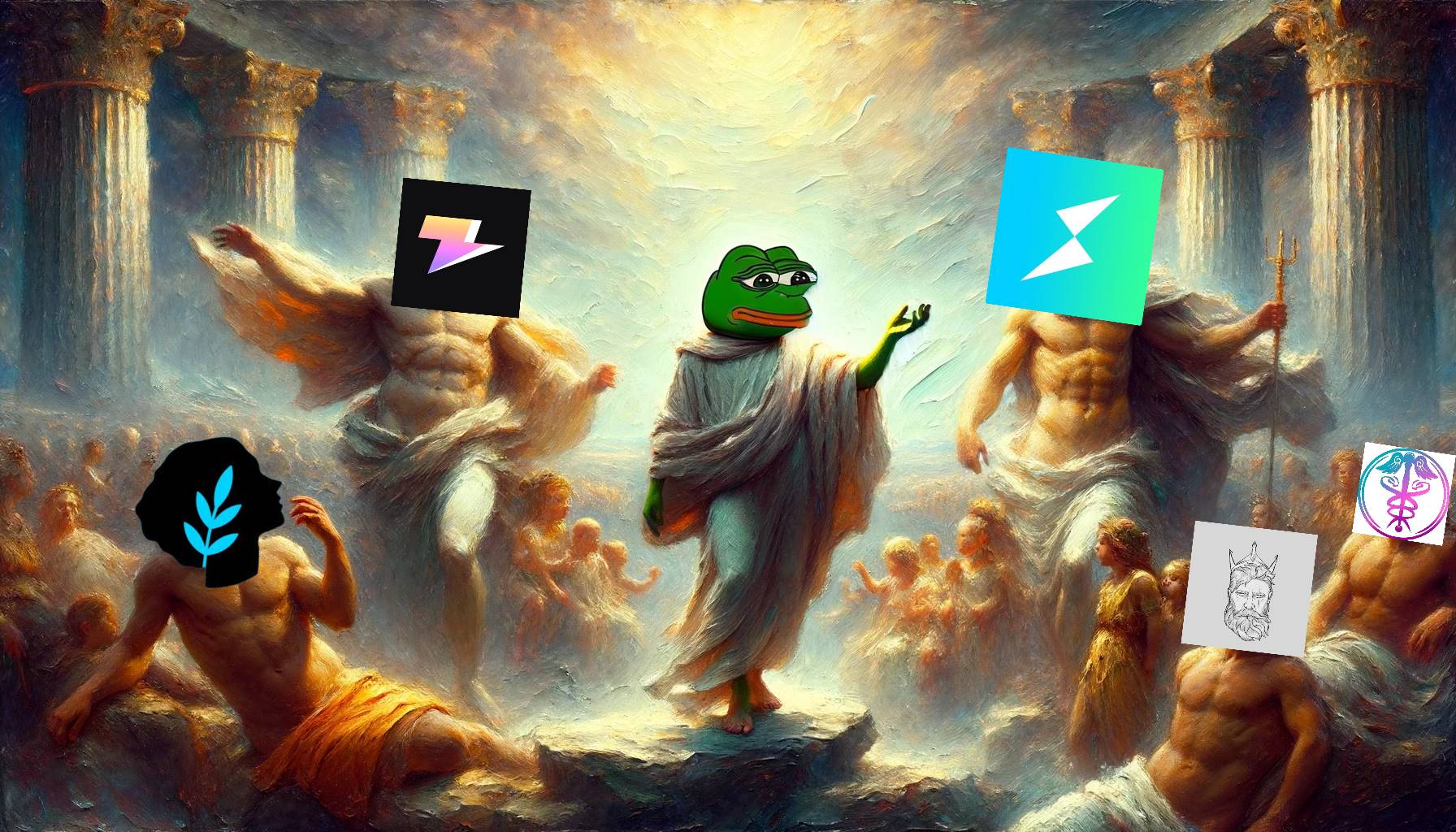
Hotspot: L1/L2, DeFi
-
Thorchain/swap: Named after Thor, the widely recognized Norse god of thunder, symbolizing strength and security. Thanks to his portrayal in the Avengers series, I now feel like I can almost see lightning whenever I interact with it.
-
Zeus Network: Zeus, king of the Greek gods—perhaps signaling leadership and authority within its domain.
-
Poseidon: God of the sea in Greek mythology. Quite fitting for a DeFi protocol emphasizing asset liquidity and flow.
-
Odyssey: Arbitrum once ran an ecosystem incentive campaign called Odyssey, inspired by Homer’s epic poem about the hero Odysseus' adventurous journey.
-
Metis: The L2 that surged recently, named after Metis, the Greek goddess of wisdom and Zeus’ first wife.
-
Hermes: Messenger and god of commerce and travel in Greek mythology. A perfect fit for naming a DEX—trading feels more natural this way.
The Affix School
Unlike the previous categories based on single words, some projects combine prefixes and suffixes to create compound terms—obscure-sounding yet impressively cryptic.
Perhaps their strangeness makes them harder to forget.
From observation, the more significant the infrastructure project, the more likely it follows this trend.
Hotspot: High-Valuation Infrastructure Projects
The “tia” group:
-
Celestia: Derived from the Latin root “celeste” (heavenly, celestial), with the suffix “-ia” added. Indeed, data availability floats in the heavens, ready for use.
-
Initia: Directly from Latin “initium,” meaning “beginning” or “origin.” Suggests a plug-and-play solution right from the start. See our other analysis: Decoding Initia: A Modular, Full-Stack Rollup Network Ready to Use Out of the Box.
The “Layer” group:
-
AltLayer: Literally “alternative layer,” subtly implying, “Why build your own appchain when you can use ours?”
-
EigenLayer: The famous project everyone knows—but “Eigen” is German for “own” or “inherent,” i.e., “a layer of one’s own.”
-
SmartLayer: More straightforward, suggesting intelligence or automation built atop existing layers.
The Delicious School
Don’t misunderstand—we’re not talking about custard pies.
Unlike lofty infrastructure projects, crypto applications tend to adopt more down-to-earth names—especially everyday foods like fruits and baked goods.
Hotspot: DeFi
First came Cake, then Bake—cakes and bread covered. Then global cuisines joined in: Sushi, Cherry, Burger, Gelato, Taco—you name it.
Your portfolio may bleed, but your stomach won’t.
The Parasite School
Another class of projects takes full advantage of trending names:
Rather than inventing a new name, they piggyback on already popular ones—achieving instant visibility through parasitic branding.
If this strategy seems unclear, recall the AI bull run’s breakout star, TAO. As TAO soared, countless ecosystem projects emerged overnight—each bearing the telltale signs of this parasitic approach.
Taopad, Taobank, Taodex, Taoevm… Prefix “TAO,” and the price rides up.
Another form of parasitism stems from certain words’ powerful psychological grip.
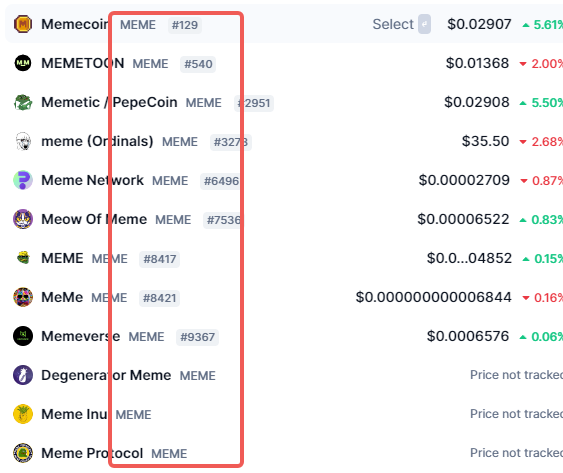
Take “Meme”—a word so inherently catchy and recognizable that countless projects scramble to claim MEME as their ticker.
Securing key associations means capturing traffic and capital.
A recent example is the dispute between PolyHedra and zkSync over the $ZK ticker. The former accused the latter of bullying by using ZK, while itself facing community ridicule.
Beyond the drama, we see how precious those two letters ZK truly are. A strong name can uniquely represent a concept in the simplest way—and whoever claims it first captures user mindshare.
Sometimes, a name is the meaning itself.
Can Being Unconventional Prevent Being Forgotten?
The battle among naming schools reveals one thing above all: crypto projects’ anxiety for attention.
The cruelest fate in crypto is being forgotten. Obscurity means no demand—effectively declaring a project’s soft death.
Thus, choosing a meaningful, resonant name is the first defense against oblivion.
But does being unconventional guarantee remembrance?
Unlike the pursuit of grandeur, Meme projects take a casual approach—cats with open mouths, dogs with hats, your bald head, my friend… Relatable, funny images flood in, and tales of overnight riches continue to emerge.
While Meme coins may have silly names and fade quickly, the successful ones spread faster.
Yet, the real deciding factor was never the name.
Bitcoin has the plainest name, yet holds eternal sovereignty. Challenger after challenger steps onto the stage with ever-grander titles, only to vanish during the tides of bull and bear markets.
The crypto arena will keep fighting. Who’s Li Kui, and who’s Li Gui? Only combat will tell.
Join TechFlow official community to stay tuned
Telegram:https://t.me/TechFlowDaily
X (Twitter):https://x.com/TechFlowPost
X (Twitter) EN:https://x.com/BlockFlow_News
 深潮TechFlow


