Forbes Exclusive Interview with Former CFTC Chair: Cryptocurrency Will Eventually Make a Comeback in the U.S.
TechFlow Selected TechFlow Selected
Forbes Exclusive Interview with Former CFTC Chair: Cryptocurrency Will Eventually Make a Comeback in the U.S.
Christopher Giancarlo believes the dam holding back U.S. resistance to cryptocurrency innovation is about to break.
 Navigating Web3 tides with focused insights
By Steven Ehrlich, Forbes
Translated by Luffy, Foresight News
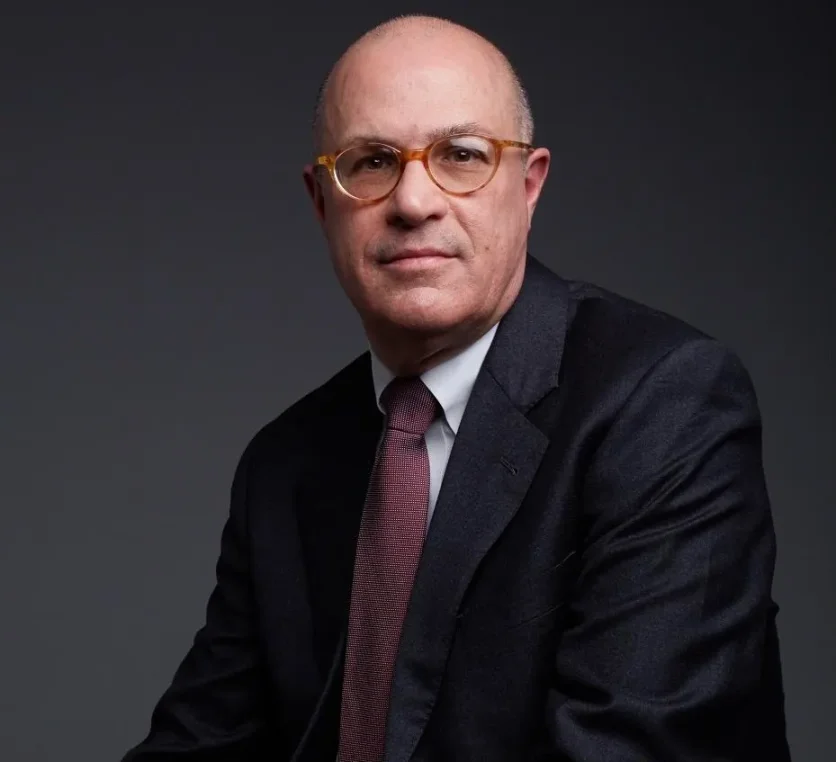
Former CFTC Chair Christopher Giancarlo is optimistic about the future of crypto in the United States.
Christopher Giancarlo served as the 13th chairman of the U.S. Commodity Futures Trading Commission (CFTC) and was a member of the Financial Stability Oversight Council, the President’s Working Group on Financial Markets, and the Executive Committee of the International Organization of Securities Commissions. He is also the author of “CryptoDad: The Fight for the Future of Money,” which discusses his views on the world’s first regulated bitcoin derivatives market and the coming digital transformation of financial services.
Forbes recently interviewed Christopher Giancarlo. In this interview, we discussed the current regulatory landscape for cryptocurrencies, the prospects for new cryptocurrency legislation, whether the U.S. is falling behind other countries, and how a Trump or Biden presidency might impact the crypto industry over the next four years.
Forbes: How would you assess the current state of the cryptocurrency industry?
Giancarlo: A lot has happened recently. This transformation isn’t just happening among startups and innovators—it’s happening with traditional institutions too. For example, the UK-based Fnaility is tokenizing central bank deposits, and China’s digital yuan already has 260 million wallet users. The Atlantic Council estimates that 138 countries—representing 98% of global GDP—are exploring central bank digital currencies (CBDCs). Private-sector stablecoins, especially dollar-denominated ones, are growing rapidly. If Congress achieves anything this year, it will likely be stablecoin legislation. I recently had dinner with Senator Tim Scott, who is optimistic about the passage of a stablecoin bill. So I believe stablecoins will continue to grow. I’ve just joined the board of Paxos, an infrastructure provider for stablecoin development. I’m very excited about these changes. Despite frauds like Sam Bankman-Fried and what appears to be a coordinated crackdown by the Biden administration, Bitcoin continues to thrive and gain adoption. Decentralized tokens and value systems are still expanding. The U.S.’s current hostile stance is an exception—an anomaly in global developments.
I think this is historically unusual for Americans, because the resistance doesn’t seem confined to one political party but rather to a small faction within the Democratic Party. And this situation is unsustainable. I believe if the November elections threaten this faction, the anti-crypto innovation policies of the past few years will be completely abandoned.
Forbes: It's believed that if Senator Sherrod Brown, chair of the Senate Banking Committee, is replaced by Tim Scott, it could pave the way for more crypto-friendly legislation. What might that look like?
Giancarlo: I think Tim Scott is genuinely enthusiastic about the potential of this innovation. He kindly showed me his copy of my book “CryptoDad,” with many pages marked and underlined, which flattered me. But it also told me he took the time to read and understand crypto. So I believe he can become a true leader in this field.
Forbes: Have you spoken with Trump about cryptocurrency?
Giancarlo: Earlier this month, I spoke at the Washington Blockchain Summit, where I said Trump could legitimately be called America’s first crypto president. Not because of anything he’s said or done in the past two weeks, but because of what happened during his first year in office—the launch of Bitcoin futures by the CFTC. Why do I say this? I explained carefully in my speech, but let me clarify: by approving Bitcoin futures through the CFTC, we ensured that the world’s first digital commodity would be priced in U.S. dollars. This matters because while the dollar has many advantages, one of its key strengths is that most industrial commodities—oil, gold, iron, soybeans, corn, and wheat—are priced in dollars. Therefore, the world needs to hold dollars to buy these critical minerals, agricultural goods, and natural resources. Commodity pricing doesn’t happen in spot markets; it happens in futures markets. Oil prices aren’t set at gas stations—they’re determined in trading venues like the Chicago Mercantile Exchange. By approving Bitcoin futures, we locked in the dollar as the pricing currency for the world’s first digital commodity. Did the White House say, “CFTC, go do this”? No. But did they stop us? No. Did they resist building a healthy, thriving, well-regulated market, as our current administration does? No. As I explain in “CryptoDad,” we were careful to keep Treasury Secretary Mnuchin informed: “Look, government policy isn’t about creating a healthy market or strict oversight regulations or principles.”
Presidents get blamed when things go wrong—sometimes unfairly—but they also get credit when things go right. I’m not saying the White House took a formal position, but I believe they can claim credit for this step. Are there other missteps? That debate belongs to others. But I believe the development of Bitcoin futures—by the way, without CFTC’s Bitcoin futures, we wouldn’t have Bitcoin ETFs today—will be seen historically as a crucial milestone. I don’t think Trump particularly cares about crypto. He has his own issues, which he’s clearly outlined—immigration, oil, energy use, and others. So I don’t think he’ll campaign on crypto, but I believe 20 years from now, history will recognize Bitcoin futures as a truly significant step.
Forbes: The total market cap of stablecoins is currently around $150 billion. Tether accounts for about 80%, followed by USDC and other stablecoins. Before BUSD was shut down, Paxos was a major player. I know they provided backend support for PayPal and their own stablecoin. Is there room for more private stablecoins? Do you think USDT’s dominance is unshakable?
Giancarlo: Global demand for the U.S. dollar remains extremely strong—from South America to Africa to Southeast Asia. As I’ve said before, unfortunately, in many countries, local currencies aren’t even worth the paper they’re printed on. The dollar remains a vital hard currency. The problem with the dollar is that it’s often difficult to access in many parts of the world. Therefore, I believe global demand for a digital version of the dollar will be enormous due to its utility and efficiency.
I think U.S. stablecoin legislation will enable well-run, compliant operators to meet this global demand. Once properly regulated U.S. players enter the market, the opportunity to take market share from Tether will be substantial. I’m excited. Circle has done a lot, and PayPal has a massive distribution network. So I believe licensed U.S. companies now have the chance—hopefully under legislation passed by Congress—to meet global demand. Ultimately, this benefits the United States.
Forbes: Where do you see the balance between yield-bearing and non-yield-bearing stablecoins? I know current legislation focuses on non-yield-bearing stablecoins, but eventually, won’t token holders grow tired of giving their money to Tether and making those people billionaires?
Giancarlo: I agree. Again, globally, if you're in a country like Argentina with historically high inflation, the demand for dollar-based yield instruments will be huge. I don’t think domestic demand is the driver—it’s overseas demand. The dollar is an export product.
Forbes: Do you think stablecoin legislation will pass into law this year?
Giancarlo: This is an election year, and we realistically only have three, four, or five weeks left. After July 4th, nothing happens legislatively—or historically, nothing happens in election years after July 4th—unless there’s a crisis or market collapse like in 2008. So, I’m not optimistic short-term, but I believe long-term stablecoin legislation will pass. I think both parties support it. One of the biggest drivers is increasing demand for U.S. Treasuries. Sadly, one main motivation is that we’re a nation living on credit cards—we need more people to buy our debt, and stablecoins will help deliver that.
Forbes: Although President Biden is likely to veto SAB 121, the first dedicated crypto legislation has passed both chambers of Congress. What’s your overall take? Does this reflect the current legislative climate for crypto?
Giancarlo: I think it shows that Elizabeth Warren’s faction is a shrinking iceberg. When Senate Majority Leader Chuck Schumer signed onto the resolution against SAB 121, that was a strong signal. Machiavelli might say he could sign it knowing the White House would veto it anyway, but I see it as a powerful statement—and banks must support this too. While certain parts of the banking system may resist digital asset innovation, forcing them to fully reserve all assets means banks can’t participate in this innovation. So the White House may veto this, but I think it will leave them on the wrong side of history.
It’s also a generational divide. Anti-crypto sentiment typically comes from people in their eighties. The next generation doesn’t need convincing about this innovation. One of my favorite writers, Doug Adams, author of “The Hitchhiker’s Guide to the Galaxy,” had a famous quote I’d like to adapt here: “Anything invented before you turn 35 is normal, exciting, and worth investing your life in. Anything invented after you turn 35 is dangerous and suspect, needing suppression.” For those raised in the traditional banking system, there’s deep-seated hostility toward crypto—they don’t understand it and view it as dangerous.
Forbes: What are your thoughts on the FIT 21 Act? Three years ago, when we interviewed you, you mentioned the CFTC traditionally didn’t regulate retail markets. Now the CFTC appears responsible under this bill. How will that work?
Giancarlo: My thinking on this has evolved. Years ago, when I worked at the CFTC, one thing stood out—and still does—is that the CFTC is unique and highly capable precisely because it primarily regulates wholesale, not retail, markets. It’s mainly a wholesale regulator because it oversees futures markets, which are dominated by professional traders. The CFTC doesn’t regulate spot markets with large numbers of retail traders. This bill gives the CFTC authority to regulate crypto spot markets, not just derivatives. So the CFTC would, to some extent, engage in retail regulation. My view has changed partly because the CFTC already oversees certain retail areas and has proven capable. Second, ultimately, as a nation, we need retail crypto markets regulated—and someone must do the job. The CFTC launched Bitcoin futures back in 2017, proving itself a competent crypto regulator. Today’s market is deep, liquid, transparent, and well-regulated. I’d even say the only part of Sam Bankman-Fried’s empire that didn’t collapse was the part under CFTC oversight. I believe the CFTC has succeeded here; I think it’s ready for this role. Congress will need to fund it appropriately. With proper resources, I believe the CFTC can do an excellent job.
I deeply respect the SEC, but they’ve consistently refused to establish clear regulatory standards for crypto. They say rules for stocks apply equally to crypto. That’s like saying the same rules apply to railroads and airplanes. Both are transportation, but entirely different technologies. The SEC has distinct rules for municipal bonds, debt, and equities—there’s no reason it couldn’t create tailored rules for crypto. But the SEC has been unwilling to do so.
Forbes: The Chicago Mercantile Exchange (CME) is evaluating offering spot trading for Bitcoin and Ethereum. What impact would such a tightly regulated market have on spot and derivatives markets? Did you discuss this when leading the CFTC?
Giancarlo: I won’t share internal discussions, but I’ll say CME is a serious player. They’re not just a trading platform—they’re a self-regulatory organization. They take compliance seriously. They’ve demonstrated the ability to build a successful Bitcoin futures market. Among those capable of entering the spot market and establishing a confident, successful operation, they’re certainly included. The U.S. has several strong market operators—Nasdaq, Intercontinental Exchange, NYSE, and others like the Chicago Board Options Exchange. But I believe CME is a strong candidate.
Forbes: An interesting counterpoint is that its rival, the Chicago Board Options Exchange (CBOE), recently shut down its spot market. What does that mean for CME’s prospects?
Giancarlo: Creating a new market is like bottling lightning—very difficult. The truth is, for every 10 new products launched, maybe one or two survive and gain traction. Exchanges constantly roll out new products—they’re a bit like venture capital funds. Out of 10, they hope one or two succeed. Sometimes it’s about timing and setting the right parameters. You hear announcements, then many quietly close after three or four months. They never gain attention. I haven’t reviewed CBOE’s product or spoken with anyone involved, so I don’t know why it failed to gain traction.
Forbes: I want to ask about Bluprynt, because disclosure is important—and there’s a view that the SEC is trying to force teams to submit disclosure and registration documents that clash with crypto’s nature. Any additional thoughts?
Giancarlo: That will be interesting. I’d like to follow Professor Chris Brummer’s principle of staying within bounds, not going beyond. As an investor, I shouldn’t comment on Bluprynt specifically.
Forbes: Just in general terms.
Giancarlo: Disclosure requirements will become part of digital assets’ future—not just in the U.S. We have our own approach, but other regions like Europe have already implemented MiCA (Markets in Crypto-Assets Regulation), which mandates disclosure. I don’t think the U.S. will lead in this area as it has in others. We’ve missed the chance to lead in setting global standards for crypto disclosure because we’ve been unwilling to define how crypto should be publicly traded. I believe Europe, having already passed laws, now has the opportunity to set global standards. I think Bluprynt’s potential extends beyond the U.S.
Forbes: Aside from Bitcoin and Bitcoin DeFi, one major theme this year has been Memecoins. What are your thoughts?
Giancarlo: I’m not a critic. Some say Memecoin investors are foolish and these tokens waste time and energy. But I believe they reflect the spirit of our times. By that, I mean America’s reckless money printing, making homeownership impossible for many young people. Add to that the massive promotion of gambling—not just by commercial actors like the NFL, but by states and governments through lotteries, complete with disclaimers: “You can bet as much as you want.” Yet somehow, we’re supposed to criticize young people for speculating on meme stocks, as if that’s irresponsible gambling, while betting on football games or state lotteries is responsible? I think meme stocks and memecoins are products of our era.
Forbes: Any final thoughts?
Giancarlo: I believe the dam holding back crypto innovation in the U.S. is about to break. Regardless of what happens in November, it will collapse. Once the dam breaks or even cracks open slightly, it will swing wide open. I believe this because I’ve traveled globally—from London to Tokyo, Dubai, Singapore, and Paris. Everywhere, people say: “Let’s nurture our own crypto seeds and make them take root.” All these smart, savvy regulators believe the U.S. will reverse course within 24 months, and people will flock back to Brooklyn, Silicon Valley, and Austin, Texas. They want to ensure durability in their jurisdictions. I think they’re right. They’ve seen America do this before. As Winston Churchill said, America always does the right thing—after exhausting every other alternative. I think we’ve been trying alternatives. These policies are unsustainable. America will come back. We’ve lost some opportunities—I mentioned global disclosure standards as one. But I believe ultimately, America will return—and return strongly.
Join TechFlow official community to stay tuned
Telegram:https://t.me/TechFlowDaily
X (Twitter):https://x.com/TechFlowPost
X (Twitter) EN:https://x.com/BlockFlow_News
 Forbes