








Architectural Physics: Practical Considerations in Virtual World Design
TechFlow Selected TechFlow Selected
Architectural Physics: Practical Considerations in Virtual World Design
Designing virtual worlds requires balancing the passage of time, forms of laws, and scope of applicability of digital physics to create environments that are both engaging and computationally efficient.
 Navigating Web3 tides with focused insights
Author: bytes
Translation: MetaCat
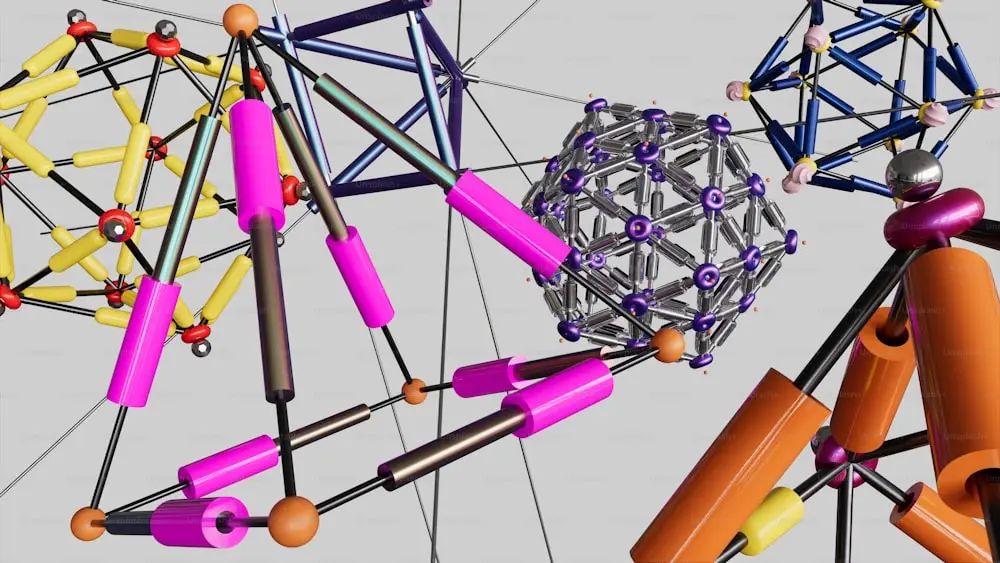
As creators of virtual worlds, our goal is to build immersive and engaging environments for users. This means striking a balance between designing digital physical laws that allow complex and emergent behaviors and ensuring the available infrastructure can support these behaviors. To achieve this, we must consider three key dimensions of digital physics: time, the form of its laws, and the scope over which these laws apply.
The passage of time in a virtual world refers to the iterative application of the world's physical laws upon itself. Each discrete application constitutes a "moment" in the flow of world time. One approach to designing world time is to let it advance continuously alongside external time. In blockchain-based virtual worlds, each block corresponds to a fixed number of elapsed moments within the world, regardless of the transactions contained in the block. This is known as "synchronized" time (synced time). This method increases user engagement by allowing them to observe the immediate consequences of their actions. It also enables continuous evolution of the world state, fostering the emergence of interesting behaviors.
However, this approach has drawbacks. Longer time spans typically require more computational resources, which can quickly exceed the capacity of a chain or server. Implementing such a system on conventional blockchains may also be difficult, since all on-chain changes must be triggered by transactions from external users.
An alternative to synchronized time is unsynchronized time. Under this scheme, time within the world does not necessarily progress with the passage of external time. Instead, time advances in response to certain events—typically user actions. Traditional board games without timers fall into a similar category. Unsynchronized time is easier to implement on-chain, as it aligns with the transaction-driven model supported by blockchain design. However, it sacrifices some features that could make the world more engaging.
World builders must also decide whether the mathematical laws governing the virtual world follow a closed-form or open-form structure. Closed-form expressions involve a fixed number of operations. In contrast, open-form (or recursive) expressions increase the number of operations based on given variables. Under open-form expressions, computing the future state of the world requires repeatedly applying the world’s laws to its current state. Complex real-time environments (such as Dwarf Fortress) typically fall into this category. On the other hand, closed-form expressions allow any future state to be computed in constant time based on a past state and the duration elapsed (assuming no future user actions alter the state), much like the falling tetrominoes in Tetris.
Open-form expressions can make virtual worlds more interesting, because, like the real world, they are finitely predictable. Predicting future states demands increasing amounts of time and computational resources. Moreover, unexpected macro-level behaviors can emerge from simple micro-level interactions. In a world governed by closed-form expressions, such emergent behaviors typically arise only externally—through user actions (which themselves act as open-form systems)—rather than from the internal physics of the world itself.
The trade-off between open and closed forms involves a balance similar to that of time. Closed-form expressions may reduce a world’s potential for interest but improve computational efficiency. Closed-form expressions can work with either synchronized or unsynchronized time. When implemented on blockchains, they have a significant advantage over open-form expressions when time is synchronized. Since the cost of simulating any duration is constant, the world can be designed so that the on-chain state updates only when a user sends a transaction—but is set to reflect the state after all time has passed since the last update.
In the real world, time passes simultaneously across a potentially infinite universe (with some relativistic complexities). But in virtual worlds, this isn't necessarily the case.
First, virtual worlds may be explicitly finite. As scale increases, the potential for interesting phenomena generally grows: more interesting things happen in a world of 2 billion galaxies than in one made of just two atoms—but so do computational costs. Both relationships are closely tied to the two earlier trade-offs: the passage of time and the form of physical laws.
Second, time in a virtual world need not be universal. To reduce computational load, the world can be divided into discrete regions where time progresses differently. For example, areas with user activity might use more complex and costly physics, while inactive regions use simpler rules. This approach has two main drawbacks: it can make the world feel inconsistent and less cohesive, limiting the design space for world laws, and places a burden on world builders to avoid confusing users; it also restricts how causality propagates across the world, since if one region is temporally frozen relative to another, actions in one cannot affect the other. The spatial scope over which physical laws apply is a major design consideration, influencing both the resource requirements of the world and the level of emergent interest it can achieve.
Creating an engaging and compelling virtual world requires carefully balancing computational efficiency with richness of experience. This includes choosing the type of time (synchronized or unsynchronized) and evaluating the form of the laws that will govern the world. The size of the region to which physical laws apply is another critical factor. By making these choices thoughtfully, world builders can achieve rich, engaging experiences while keeping computational demands manageable—and provide a deeply fertile foundation for future developers.
Join TechFlow official community to stay tuned
Telegram:https://t.me/TechFlowDaily
X (Twitter):https://x.com/TechFlowPost
X (Twitter) EN:https://x.com/BlockFlow_News
 @autonomousworld











