








Dialogue Taiko: What is the multi-proofs roadmap, and how does it relate to Ethereum's endgame?
TechFlow Selected TechFlow Selected
Dialogue Taiko: What is the multi-proofs roadmap, and how does it relate to Ethereum's endgame?
Unlike other Rollup projects, Taiko is developing a solution based on Based Rollup. Compared to other well-known ZK scaling projects, what makes Taiko unique? And how will its scaling approach impact the L2 ecosystem landscape?
 Navigating Web3 tides with focused insights
By LINDABELL
On May 23, Taiko released its first airdrop eligibility checker, sparking community debates over fairness. Despite responses from founder Daniel Wang, the community remains unconvinced.
Meanwhile, on May 25, Ethereum co-founder Vitalik Buterin acted as a block proposer and proposed the first block on Taiko’s mainnet, attaching a note stating: "I'm happy to see Taiko launching as a Based Rollup platform. Ethereum benefits from L2s adopting diverse approaches, and I appreciate that Taiko is among the first projects moving in this direction."
Following the Cancun upgrade, attention in the Ethereum ecosystem has once again turned to Layer 2 (L2) solutions. Unlike other Rollup projects, Taiko is developing a Based Rollup architecture and has attracted investment from prominent VCs including Sequoia China, Generative Ventures, Hashed, Lightspeed Faction, Token Bay Capital, and Flow Traders. This raises questions: What sets Taiko apart from other well-known ZK scaling projects? And how might its scaling approach reshape the L2 landscape?
To explore these questions, ChainFeeds sat down with the Taiko team to discuss the project’s origins, vision, and Ethereum scaling strategy.
Key Takeaways:
-
Taiko founder Daniel Wang aims to scale Ethereum without sacrificing decentralization, enabling both centralized and decentralized L2s to coexist so dApps can make informed choices between them.
-
Contestable Rollup is an abstraction of zkRollup and Optimistic Rollup. In the future, if zero-knowledge proofs become cheap enough, Contestable Rollup can be configured into a pure zkRollup.
-
During SGX proof development, the Taiko team gradually recognized the importance of stateless clients and firmly believes in the feasibility of generating zero-knowledge proofs by running stateless clients within zkVMs.
-
Taiko has launched on mainnet—block submission and proving are permissionless, though contracts still have an owner. The team plans to transfer contract ownership to the Taiko DAO approximately one year after mainnet launch, fully relinquishing control over the network.
Origins of Taiko: Scaling Ethereum Without Sacrificing Decentralization
Taiko founder Daniel Wang created Loopring in 2017—the first ZKRollup-based DEX protocol in the Ethereum ecosystem. However, Loopring's architecture did not align with Daniel’s long-term vision. He wanted to scale Ethereum without compromising decentralization, aiming for a future where both centralized and decentralized L2 networks coexist, allowing dApps to make more informed decisions. Yet Loopring could only be built as a non-programmable Layer 2 without a virtual machine, and its block production mechanism was centralized to reduce costs.
Before founding Taiko, Daniel Wang and like-minded developers held multiple discussions focused on two directions: building a decentralized social network or creating the infrastructure it would require—"permissionless Layer 2 networks." After careful consideration, they concluded that entering the decentralized social space carried high risks, whereas permissionless L2s offered greater potential for differentiation—thus, Taiko was born.
Taiko is a Type-1 zkEVM, offering identical opcodes and functionality to Ethereum, ensuring high compatibility with the existing Ethereum ecosystem. The team emphasizes that Taiko was designed from the start as a Based Rollup—relying on Ethereum validators to ultimately propose blocks on Taiko, achieving decentralized proposers. In March, Taiko completed a $15 million Series A round led by Lightspeed Faction, Hashed, Generative Ventures, and Token Bay Capital, bringing total funding to $37 million. Regarding strong VC support, the Taiko team notes strategic alignment with investors has been key. They also credit investor backing for helping Taiko grow into one of the largest Discord communities globally (over 1.07 million members) and attract hundreds of dApp deployments—thanks not only to its Type-1 design and fully decentralized architecture but also to early institutional support.
Exploring Rollup Design Frameworks: BCR and BBR
One key difference between Taiko and other Rollups lies in its adoption of the Based Rollup model, which eliminates reliance on centralized sequencers by instead using Ethereum validators to order transactions and blocks. Further, in late 2023, Taiko co-founder Daniel Wang introduced the concept of “Based Contestable Rollup (BCR).” This design incorporates a contestability mechanism because ZK-EVM code cannot be guaranteed bug-free forever—and given Taiko’s decentralized nature and low fault tolerance, a cautious approach is necessary.
The Taiko team outlined the primary motivations behind choosing a Contestable design:
-
First, Based Rollups are permissionless and must therefore introduce “higher-level proofs” to address potential software bugs. This avoids the need for centralized networks to halt operations for data correction. Of course, as the Taiko network matures over time, such error-correction mechanisms can be gradually phased out.
-
Second, while SGX proofs are thousands of times cheaper than zero-knowledge proofs, they are neither ideal nor maximally decentralized. The contestable design allows challenges to be raised when SGX proofs are questioned, requiring re-verification via higher-assurance methods—lowering costs while increasing verification trustworthiness.
-
Finally, Contestable Rollups offer flexibility and extensibility, serving as an abstraction of both zkRollup and Optimistic Rollup. For example, if zero-knowledge proofs become sufficiently affordable in the future, we could configure a Contestable Rollup into a pure zkRollup—or tailor it into a pure Optimistic Rollup based on application needs, adapting to various verification requirements.
Daniel Wang has provided a detailed overview of the Based Contestable Rollup architecture. BCR is a Rollup with dispute capabilities and Based sequencing. Under this design, anyone can challenge a state transition within a block by posting a dispute bond denominated in Taiko tokens, and resolving the dispute requires a higher-level proof to validate the block. If the challenger wins, they recover their bond and receive 1/4 of the original prover’s validity bond as a reward. The new prover also receives 1/4 of the original bond as a proving fee, while the remaining half is slashed. The reverse applies if the challenge fails. Notably, during the initial years, multi-sig signers collectively serve as the top tier of the proof hierarchy. When finality is achieved at this highest level, no further disputes are allowed.
Additionally, a core feature of Taiko’s BCR architecture is allowing each level to use its own proof system. The Taiko team explains that under the Contestable Rollup framework, multiple proof layers can be constructed—for instance, starting with the lowest-cost Optimistic proofs, followed by SGX proofs, then zkEVM or zkVM proofs. These different proof types embody the Contestable concept and can even be combined into hybrid multi-proof systems. For example, an “SGX + zkVM” combination could be considered more trustworthy than zkVM alone.
As a major milestone, Taiko plans to test the real-world operation of BCR on its Alpha-6 testnet Katla before rolling it out on mainnet. Following this, Taiko intends to either upgrade the protocol to Boosted Based Rollup (BBR) or launch a standalone BBR L2 as the second key milestone. Taiko states that BBR represents a sensible path toward native Ethereum scalability. By enabling L1 validators to propose new blocks for the entire network, Ethereum gains plug-and-play scalability. For developers, BBR enables sharding of transaction execution and storage. For users, experience improves as dApps become distributed across all L2s.
Narrative Upgrade: Shifting Toward ZKVM?
While zkEVM is widely known, the EVM was not originally designed for zero-knowledge circuits, leading to trade-offs in practice. In contrast, zkVM is a virtual machine implemented natively within zero-knowledge proof systems. Its advantages include: no need to learn cryptography or ZKP systems, ease of use; general-purpose capability, with Turing-complete ZK-VMs able to prove arbitrary computations; simplicity, as a small set of constraints can describe the entire VM; and support for recursion, where proof verification becomes just another program executed within the VM.
Taiko has begun transitioning from the zkEVM model to zkVM. After the shift, Taiko will modify and run a client capable of generating ZK proofs. To ensure robustness, Taiko is building a multi-proof system, contributing to multiple zkVMs (such as RISC Zero, SP1, Powdr), diversifying cryptographic assumptions, and leveraging SGX to enhance privacy and security without data exposure.
The Taiko team notes it was among the earliest contributors to the Ethereum Foundation’s PSE zkEVM development, making contributions and optimizations to critical circuits like Keccak and Mauve. However, they also recognized limitations in this development model—such as working primarily with low-level code that is difficult to test and verify, and unfriendly to newcomers. As the team progressed in SGX proof development, they increasingly appreciated the importance of stateless clients. Influenced by advances from the Risc0 team, they now firmly believe in the feasibility of generating zero-knowledge proofs by running stateless clients inside zkVMs. Currently, Taiko is collaborating with Risc0 and plans to work with SP1 and other zkVM teams in the future, aggregating diverse proof systems through Contestable Rollup while keeping Taiko’s L2 design fully decoupled from any individual zkVM.
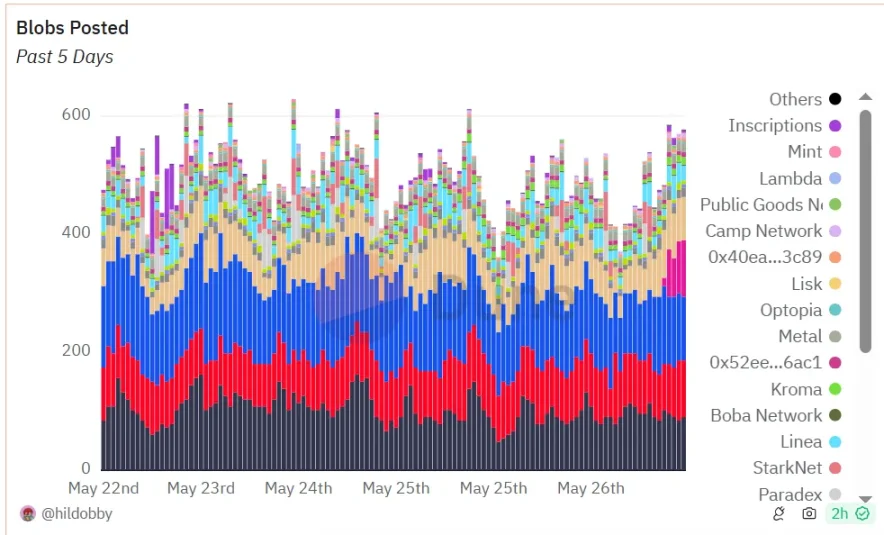
Moreover, Taiko officially launched on the Ethereum mainnet on the 27th and has already processed around 15% of Ethereum’s total data throughput. The team emphasizes that while block submission and proving are permissionless under Stage1 mainnet mode, contracts still have an owner. Ownership will be transferred to the Taiko DAO roughly one year after mainnet launch, at which point the team will fully relinquish control. The team also plans to invest more resources into research and development for Preconfirmation, MEV, and the Taiko BBR solution, aiming to deliver more surprises for ecosystem projects and community users in the future.
Airdrop Controversy: Can Taiko Regain Community Trust?
On May 23, Taiko unveiled its TKO tokenomics, announcing that 5% of the initial token supply would be allocated to a genesis airdrop. According to the official FAQ, over 50 million tokens will be claimable by 300,000 eligible addresses. While intended as a gesture of gratitude to the community, the announcement sparked controversy over whether the airdrop was truly fair. Some community members reported receiving fewer tokens than expected, while others claimed they participated in required tasks but received nothing.
In response to community dissatisfaction, Taiko co-founder Daniel Wang stated that while fairness was a goal, it was impossible to satisfy everyone, and apologized to users who did not receive tokens. However, the community did not accept this explanation. Daniel later responded again on Discord, clarifying that those who didn’t receive airdrops simply had lower scores compared to others. He added that transparency wouldn't resolve disagreements, as perceptions of “fairness” are highly subjective. These remarks reignited backlash, with some community members calling for a boycott of Taiko. That said, airdrop-related criticism is not uncommon—many recent projects have faced similar scrutiny. Especially as airdrop farming has evolved into an industry involving numerous professional teams who have become part of the ecosystem, community sentiment may also be influenced by these actors. Looking ahead, Taiko plans to conduct two additional airdrops.
Join TechFlow official community to stay tuned
Telegram:https://t.me/TechFlowDaily
X (Twitter):https://x.com/TechFlowPost
X (Twitter) EN:https://x.com/BlockFlow_News
 @ChainFeedsxyz






