








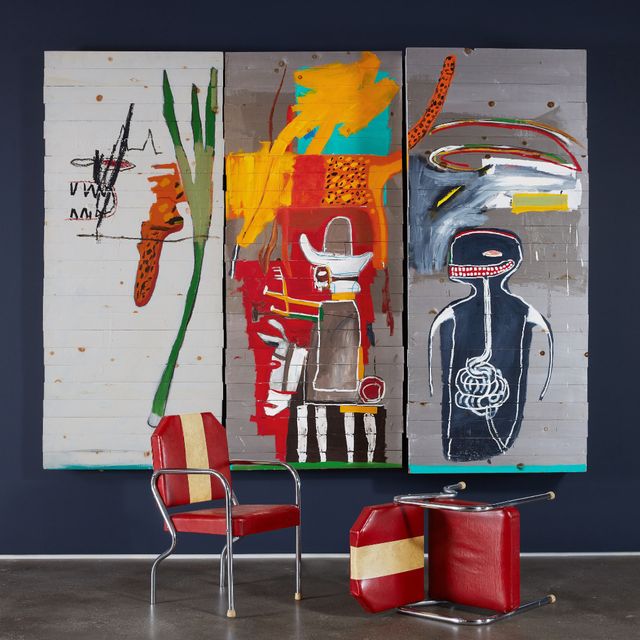
Sotheby's Turns into a Clown? CryptoPunks Seller Mocks New York's Elite and Socialites
TechFlow Selected TechFlow Selected
Sotheby's Turns into a Clown? CryptoPunks Seller Mocks New York's Elite and Socialites
NFT is a symptom of the unregulated art market.
 Navigating Web3 tides with focused insights
Source: The New York Times
Translation: BitpushNews an
An auction meant to serve as NFT's debut party in the art world instead exposed the core instability of the cryptocurrency realm.
This should have been an insult that would enrage all of New York’s Upper East Side—but instead, private equity heiress Holly Peterson could only laugh it off. Why had a Sotheby’s official dared to block her from bidding?
In February 2022, Ms. Peterson, a writer and art collector, found herself surrounded by a new wave of clients: crypto nouveaux riches who were temporarily making the art market their home. They bought through a trendy innovation—NFTs (non-fungible tokens), which register ownership of typically digital artworks on the blockchain. Collectors then leveraged these NFTs as rapidly appreciating investments to grow their crypto wealth.
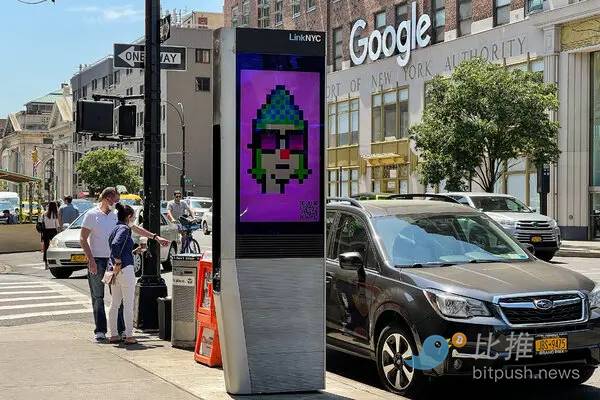
Young collectors in casual sweatpants greeted each other by their Twitter handles. This was supposed to be another night of revelry signaling the art market’s boom. In just a few years, NFTs had captured half of this $65 billion industry. The star attraction was a collection of 104 NFTs from CryptoPunks—a series of algorithmically generated pixelated portraits symbolizing the rise of blockchain collectibles. Estimated to sell for $20 million to $30 million, this marked Sotheby’s first major auction dedicated entirely to a single NFT series—an honor rarely bestowed even when Sotheby’s handled a $450 million Leonardo da Vinci masterpiece.
As a firm serving billionaires and their prized collections, the marketing campaign for that evening was grand. Sotheby’s dubbed the event “PUNKS!”, comparing it to “the most important and attention-grabbing contemporary and modern art auctions.”
But early signs suggested the NFT market appeared to be collapsing—a spectacular implosion that could become a focal point for government scrutiny over the failure to regulate the art market.
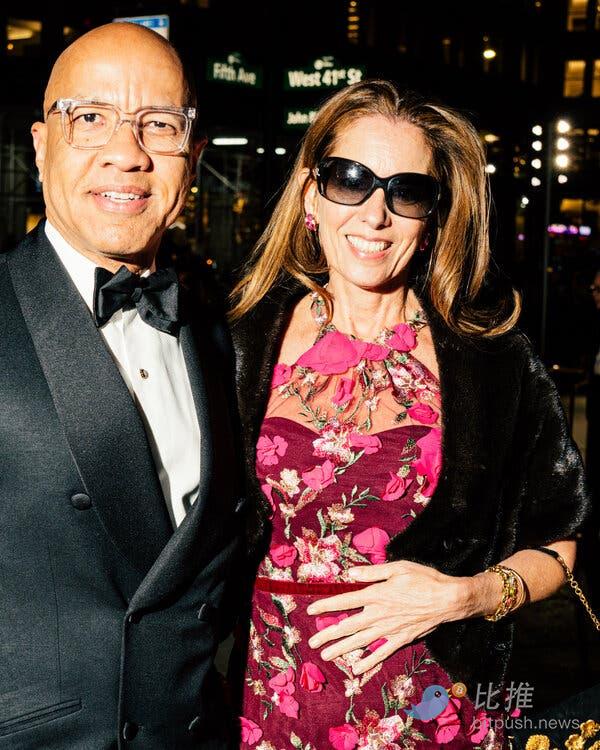
Ms. Peterson was one of many traditional collectors attending the auction, ready to buy her first NFT. Her father, Peter G. Peterson, was a billionaire in private equity, co-founder of Blackstone, and former board member of the Museum of Modern Art. Ms. Peterson herself had served on the board of the Harlem Studio Museum and was a member of acquisition committees at institutions including the Whitney Museum of American Art, Brooklyn Museum, and Centre Pompidou.
Yet, all this experience did not prepare her for the strange scene unfolding at Sotheby’s. Recalling the moment in an interview, she said she looked around at the new breed of collectors and felt bewildered. “What is going on?” she said. “I’m the Park Avenue woman collecting high-end art, and I feel like an outsider.”
At the auction, buyers could pay in cryptocurrency or regular U.S. dollars. During a roundtable discussion before the sale, Kenny Schachter, a columnist for Artnet News, positioned himself as a bridge between the crypto and traditional art worlds. (He also had his own NFT project to promote.) A strong advocate for the digital art movement, he once famously intercepted Max Hollein, director of the Metropolitan Museum of Art, in Central Park, recalling that Hollein admitted his curators were too afraid of new technology to engage with it.
Speaking to VIP guests at Sotheby’s, Mr. Schachter lavished praise on NFTs’ potential, calling them “art history changers, despite never intending to be art.”
That night, celebrities including rapper Ja Rule and Cordell Broadus, son of Snoop Dogg, applauded the glamorous event. But behind the scenes, staff scrambled to salvage what was meant to be a historic auction.
According to three insiders, problematic signals in Sotheby’s relationship with the seller emerged from the start—the seller operating under the username 0x650d. There was little public information about him; his digital identity existed primarily to promote his CryptoPunk collection, which he acquired in 2021 for around $7 million, claiming he obtained them because “I chose wealth.”
But he had also said he would never sell them—perhaps Sotheby’s first red flag.
Sotheby’s was actually the second choice for this collector to sell his CryptoPunks, as he initially failed to reach a deal with Christie’s. Unlike traditional collectors eager to acquire such novel artworks, crypto collectors showed less enthusiasm. These NFTs were known as “floor punks,” meaning they lacked certain attributes that made other CryptoPunks command higher prices in the market. Rarity was built into the algorithm generating the images—for example, only nine of the 10,000 punks were dressed as aliens, and 24 resembled apes. (In March 2024, one alien punk reportedly sold for $16 million.) 0x650d’s collection consisted only of some of the most basic and common NFTs, originally created by Canadian software developers Matt Hall and John Watkinson through Larva Labs.
Thus, serious NFT collectors had little incentive to purchase this batch—especially given that the floor price for a single CryptoPunk stood at approximately $150,000 at the time. Simple math revealed that Sotheby’s digital art expert Michael Bouhanna nearly doubled the actual value of the collection with his $30 million estimate—almost twice what online retail traders valued it. Online, a group of this size of CryptoPunks sold for roughly $15 million. Additionally, the timing of the auction was poor. With news of Russia’s war against Ukraine breaking, cryptocurrencies had just plummeted; rising interest rates made risk assets less attractive. While speculative appetite remained, it likely waned when everyone’s wallets suddenly shrank in value.
NFTs Are a Symptom of an Unregulated Art Market
The NFT craze coincided with the art market’s growing reputation as a “wild west” era, where paintings by artists like Marc Chagall and René Magritte became tools for sanctions evasion, money laundering, and fraud via shell companies.
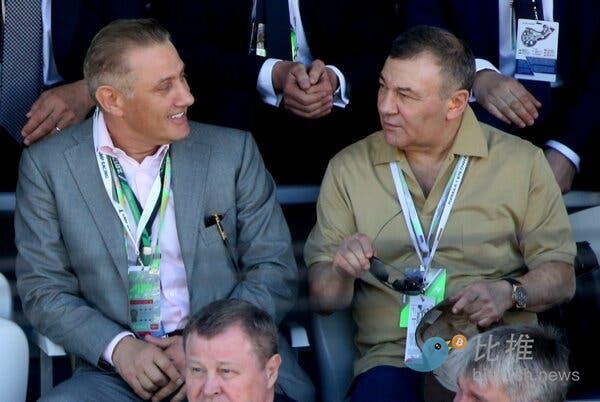
For instance, in 2020, Senate investigators found that auction houses and dealers allowed two sanctioned Russian oligarchs—Arkady and Boris Rotenberg—to buy and sell art through shell companies led by an art advisor. Their report concluded that intermediaries completed transactions despite failing to identify the true clients.
Despite congressional scrutiny, a new era of deregulation was emerging—one that coincided with NFTs completely disrupting the relationship between artistic and financial value.
The Sotheby’s auction occurred weeks after the federal government declined to enforce the Bank Secrecy Act on the art industry. Had it been enforced, it would have strengthened scrutiny of financial transactions and ended the use of shell companies to conceal the identities of buyers and sellers.
In 2021, Congress tasked the Treasury Department with writing a report addressing concerns that the art market had become a safe haven for financial crime. This responsibility fell to Scott Rembrandt, Deputy Assistant Secretary for Strategic Policy at the Treasury—though he was unfamiliar with the financial intricacies of the art world.
After regulators in the European Union and the UK banned blind buying (purchasing items on behalf of secret buyers) and other practices masking the real parties behind transactions, dealers braced for the worst.
Dealers’ anxiety persisted into the following year as the New York State Attorney General accused Sotheby’s of a tax fraud scheme. More than a dozen clients allegedly received falsified resale certificates, posing as dealers to avoid paying millions in taxes on purchases. A judge allowed the investigation to proceed, citing sufficient evidence that senior members of the auction house had “willfully ignored” the rules.
When profits were threatened, dealers stopped staying silent; over the past two years, galleries and auction houses spent nearly $1 million lobbying federal officials in Washington on regulatory issues.
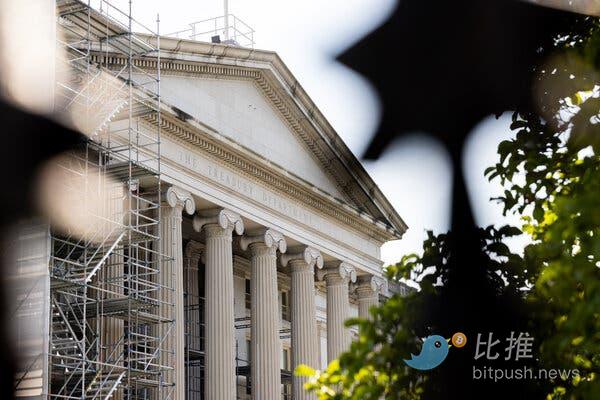
When the Treasury released its report in February 2022, despite clear evidence of criminal activity, it did not recommend immediate government intervention.
“We found that while certain aspects of the high-value art market are vulnerable to money laundering, usually larger underlying issues are at play, such as the abuse of shell companies or complicit professionals who may turn a blind eye,” Mr. Rembrandt said in an interview, suggesting that art-related crime was more a byproduct of a flawed financial system than a characteristic of the industry itself.
But the Treasury official relied on faulty statistics. Mr. Rembrandt claimed the annual amount of money laundering and other financial crimes flowing through the art market was only $3 billion—a dubious figure traceable to an unattributed claim made by British journalist Geraldine Norman in a 1990 Independent article about the antiques market. (The Treasury did not respond to requests for comment.)
The lack of depth in the Treasury’s report indicated the government’s failure to conduct thorough investigations into the art market.
In some ways, NFTs are a consequence of this lack of oversight. Due to their digital nature, NFTs are easier to exploit as tools for fraud compared to other forms of art. Sales occur in seconds, with no meddling customs officers or KYC procedures to stop criminals.
Although Mr. Rembrandt was reluctant to bring federal regulation into the art market, he specifically highlighted the growing risks of NFTs in his report, warning: “These types of contracts may incentivize markets where works are traded repeatedly within short periods.” He added, “Traditional industry participants, such as art auction houses or galleries, may lack the technical understanding of distributed ledger technology required to effectively identify and verify customers in this space.”
Events at Sotheby’s a few weeks later would prove Mr. Rembrandt’s concerns valid—and highlight the Treasury’s failure to establish new regulatory frameworks for the art market, frameworks that would have required auction houses to conduct greater due diligence on their clients.
A Memorable ‘Rug Pull’
Inside the auction hall, attendees eagerly watched an empty podium where the auctioneer should have started half an hour earlier. Instead, officials announced the consignor had withdrawn the lots; guests could still attend the after-party and enjoy DJ Seedphrase’s music. Young crypto investors sipped their final drops of champagne in shock, stepping out through the revolving doors onto York Avenue. It seemed 0x650d had assessed how much money he might make at auction and decided it was unlikely to meet his expectations.
“The whole night felt surreal,” said Ms. Peterson. “That auction definitely made me think something was wrong.”
For market heavyweights like Amy Cappellazzo—a former Sotheby’s executive—the incident carried deeper meaning. “It was an early sign that the crypto market was in trouble,” she said.
NFT collectors needed strong sales to maintain momentum. But a disastrous event like the Sotheby’s auction signaled that the golden age of the NFT industry was over. Traditional collectors like Ms. Peterson, who might otherwise have joined the digital art collecting frenzy, were now pulling back, while skeptics celebrated it as proof of blockchain’s futility.
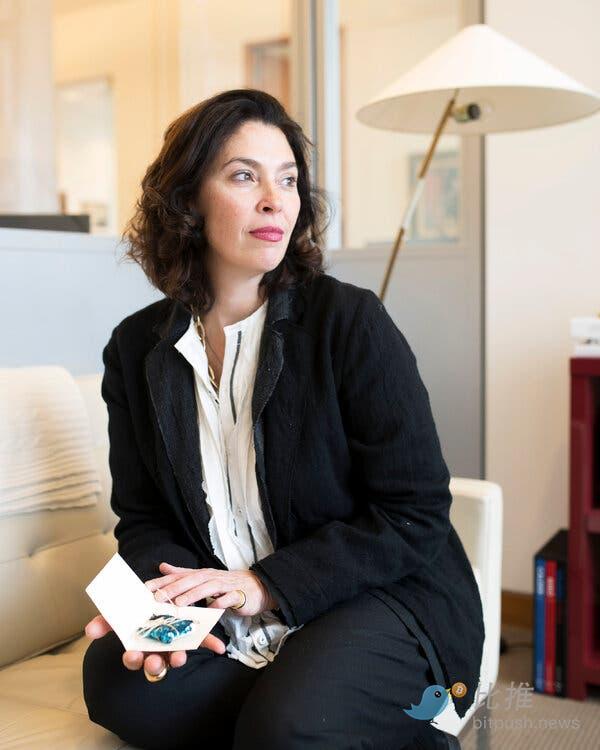
“Traditional collectors worry their market will be disrupted by these wild, eccentric forces,” said Ms. Cappellazzo. “Nothing feels more secure than owning a hard asset, like a painting on your wall. But anything that undermines the value of hard assets makes them uneasy.”
The anonymous consignor 0x650d tried to salvage his reputation. At 7:41 p.m., nearly an hour after withdrawing the lots, he tweeted his decision to “hodl”—crypto slang for holding onto digital assets. About an hour later, he shared a meme image of musician Drake, claiming he had “rugged” Sotheby’s by pushing CryptoPunks NFTs into the mainstream. “Rugging” refers to a rug pull—a scam in which crypto developers deliberately lure investors into a project, then vanish before delivering any product.
Among all NFT-market crypto scams, rug pulls are the most notorious and frequent because they turn goodwill into liability; at least four such scams imitating the NFT series “Bored Ape Yacht Club” have caused over $11 million in investor losses.
But the failure of the Sotheby’s auction was an unusual moment—marking the infiltration of crypto’s provocative behavior into the art market. For the consignor, publicly mocking one of the world’s largest auction houses offered almost no strategic benefit; his rug pull could only damage crypto’s reputation.
In the short term, 0x650d clearly believed he’d made a smart move. After the auction’s failure, his social media account went silent for nearly a month, until April 2022, when he announced his CryptoPunks collection would serve as collateral for an $8.32 million loan—giving him liquidity while preserving the NFTs’ appreciation potential. That loan amount was 40% of Sotheby’s low-end estimate for his collection, indicating 0x650d could leverage the auction house’s valuation to legitimize his NFTs’ worth. Thus, he retained ownership of his CryptoPunks, theoretically able to sell them later at a price higher than what Sotheby’s had projected, while using them as a source of liquid capital in the meantime.
But two years later, amid growing distrust of NFTs in the art world, the value of CryptoPunks has dropped sharply. 0x650d appears to still hold his collection, now worth approximately $12.3 million—significantly less than the $20 million he rejected at Sotheby’s.
Join TechFlow official community to stay tuned
Telegram:https://t.me/TechFlowDaily
X (Twitter):https://x.com/TechFlowPost
X (Twitter) EN:https://x.com/BlockFlow_News
 @nytimes











