The Future of Centralized AI: You Are the Product, Maximizing Shareholder Value
TechFlow Selected TechFlow Selected
The Future of Centralized AI: You Are the Product, Maximizing Shareholder Value
AI should be governed by democratic, open, and decentralized systems.
 Navigating Web3 tides with focused insights
Author: drnick
Translation: TechFlow
Without changing our current trajectory, artificial intelligence (AI) will become a tool of extreme centralization—that is the real risk. The development of AI spans longer than any individual human lifespan, yet we happen to live in an era where we're experiencing a "technological inflection point," at which AI progress accelerates exponentially. Many accelerationists welcome this with excitement, saying: "Let’s see what happens."
Here’s what will unfold on our current path:
Industrial-Scale Data Extraction
This is simply the continuation of what we’ve seen over the past two decades on the internet. It’s all about data—period. For AI, this is more true than ever before. Historically, extracting as much user data as possible was aimed at capturing attention through micro-targeted advertising. Now, the goal is to improve AI models.
Centralized AI is an arms race. The best model wins. At this stage, making money is merely a side benefit. Right now, it’s about technological advancement and capturing mindshare. This new driving force—“best model or bust”—will push us far beyond reason in prioritizing dominance. Win at all costs.
The Data Frontier (Post-LLMs)
The data frontier has already been exhausted. Major frontier models have scraped and mined nearly all of human language history available on the internet—almost everything.
With pre- and post-LLM eras, we’ve crossed a threshold in data quality. Now, data quality is collapsing. Indiscriminate scraping of the internet will only degrade your model from this point forward.
Why? Because the internet is now flooded with messy content generated by GPTs. That’s why Claude thinks it’s a GPT. That’s why you see “deep dive” everywhere. That’s why platforms like this are filled with endless bullet-point list posts stuck in the uncanny valley.
Your data is a problem for centralized AI companies living off “scraping public data.” This is why models grow dumber and may even suffer “model collapse,” because models end up trapped in a doom loop of self-regurgitation.
Now, the game is acquiring fresh human-generated data—and that’s exactly what AI assistants are chasing.
You Are the Product
Maybe you thought we had reached peak “you are the product”—think again.
By integrating these assistants into your daily life, every time you discuss future plans, to-do lists, mental health, bedtime stories for kids, shopping lists, local files, or health data, there’s an AI quietly training a digital twin of you in the background.
That digital twin exists to help you—or so you’ll be led to believe. Beneath the veil of convenience, your assistant is mining your data. Eventually, they’ll enable product placement. They’ll resell your data—not just raw data, but predictions about what you’ll buy, how you’ll act under certain circumstances. Predictions about how each of us will behave: if X, then Y, then Z. This will enable mass manipulation on a scale never before seen—and we’ve already seen plenty.
The New Oracle of Truth
As assistants become operating systems, they will serve as the new gateway to the information world. We’ll drift further from primary sources, even secondary ones—the new source will be the model. The new battleground for reality is the system prompt.
A handful of people in boardrooms will decide what you can read, how you should think, and how you should behave. They’ll define acceptable culture and tolerance thresholds. Boards will become the new fortress of moral frameworks.
Governments, lobbying groups, and Doge-funded think tanks will pressure these boards to restrict your freedom of expression—all in the name of “safety” and national security. Thought will become dangerous; memes could become illegal. Under arbitrarily narrowed diversity policies, factual accuracy will die.
Automation Is the Game
Don’t be mistaken—replacing jobs is the entire point. Automation is the game. In the coming years, hundreds of millions, even billions, of jobs worldwide will be replaced by automation technologies.
Where will these “cost savings” go?
They’ll flow through oligopolistic APIs—that’s why they’re at war. The stakes are high: our society and our future. The radical social transformation brought by automation waves is the real threat—not AI itself or paperclip maximizers. This is the greatest psyop of our age.
Regulatory Capture
The knowledge gap between policymakers and AI researchers will be exploited to sell sci-fi doomsday scenarios. Since we’re now in the post-LLM data era, everything can be stolen—and already has been. Now it’s time to pull up the drawbridge. Time to enforce copyright laws. Time to implement KYC for GPU access. Time to install compliance agencies that review all code before you’re allowed to publish it.
The higher the compliance cost, the harder it is for new market entrants, the deeper the moat for oligopolies.
Fear AI? Don’t look at big corporations exploiting humans for profit. But here comes another new model, ready to replace your job.
We first hear about new innovations through polished corporate videos—carefully AB-tested, designed with soft tones to make us feel safe and comfortable. We never see what’s coming, because it’s hidden behind NDAs.
New technologies explode out of black boxes with no preparation, no discussion of implications or consequences. New product launch—come join now. Closed-source AI serves their privacy, not yours.
Deepening Digital Divide
If you can afford it, you’ll get a $20/month limited model dependent on your prompts. They’ll get fast, private, unrestricted models—direct from the source—with premium digital advantages secretly sold to the highest bidder.
Perhaps you’re lucky enough to own GPUs and possess the technical knowledge to navigate the open-model frontier. But even then, you’ll likely be burdened by consumer-grade models you’re permitted to use—if you’re still allowed at all. Chances are, you’ve already been banned from one of the big three AIs for asking questions you shouldn’t have. Maybe because you dared use a VPN, or simply used it too much and caused them financial loss. It doesn’t matter. What matters is you’ve been punished for violating terms and conditions. Once locked out, good luck getting back in. For you, it’s over.
You don’t see how the “sausage” is made.
Behind the scenes, AI is far more human than most realize—because humans are in the loop. In fact, they’re often the cheapest labor on the planet, doing data labeling to power reinforcement learning from human feedback (RLHF). GPT likes to say “deep dive” because Nigerian workers earning less than $2/hour to filter toxic content also frequently use “deep dive.” Amazon recently shelved its “just walk out” AI checkout system in grocery stores because it relied too heavily on cheap Indian labor tagging shopper behavior from surveillance footage.
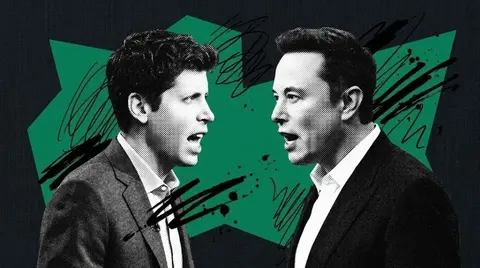
Sam’s Worldcoin physical devices will likely debut in the Global South first—because that’s where the cheapest labor lives. People scanned by iris devices will have value injected into low-circulation junk coins—like providing meat for sausage factories. The truth is, such AI work is essential for improving these systems, but big corporations will maximize shareholder value by exploiting modern slave labor.
Humans won’t win. Shareholders will.
This is the deepest problem with centralized AI. These entities have a legal obligation to maximize shareholder value by any means necessary. In anything that should be human-centered, that’s the core issue. If the future of an AI-mediated world is driven by shareholder value maximization, we’re in serious trouble.
Open, Private, and Decentralized
I know the situation is dire, but there is hope. Fortunately, over the past decade, we’ve been building the tools we now need. We can steer the course forward—and we can do it through truly open AI.
AI should not be controlled by centralized corporations. It should be governed by democratic, open, and decentralized systems.
AI is free and open-source—which is why open models already exist that can run privately and locally. And I firmly believe that, given enough time, these will surpass and defeat centralized systems.
AI might be the best thing that ever happens to us—a pathway to unlock massive collaboration through genuine collective awareness and wisdom, a way to solve problems we could never solve without it, including the biggest challenges of our time. This is the most important issue in the world today, and I hope we can work together to address it.
Join TechFlow official community to stay tuned
Telegram:https://t.me/TechFlowDaily
X (Twitter):https://x.com/TechFlowPost
X (Twitter) EN:https://x.com/BlockFlow_News
 @DrNickA