








Opinion: The harsh truth is that the surge of crypto youth into MEME coins stems from having no upward mobility.
TechFlow Selected TechFlow Selected
Opinion: The harsh truth is that the surge of crypto youth into MEME coins stems from having no upward mobility.
Phenomena once driven by greed are now increasingly driven by desperation.
 Navigating Web3 tides with focused insights
Author: Jason Choi
Translation: TechFlow
I've read some blog posts by VCs about memes. Some of them have interesting points, and I genuinely respect all the authors.
But personally, I think the existence of these articles is exactly why people trade memes. No, memes aren't cultural Trojan horses right now—and I don’t even believe they’re a particularly effective market entry strategy.
I understand the need to frame memes in this way to make partners feel comfortable—I’ve had partners too. But let’s be honest: you and I trade memes for one reason only: “Fuck it.”
Let me explain. This is simply an extension of a broader trend visible across developed nations worldwide: The future promised to previous generations is no longer attainable for younger ones. My parents’ generation dreamed of a stable good job, buying a house, raising two kids. When I was in college, the most common dream was becoming a billionaire tech founder.
Why?
Partly because everyone watched The Social Network and completely missed the point, idolizing Zuckerberg. (The same goes for The Wolf of Wall Street—but that’s another topic.)
But also possibly because since 1985, median home prices have risen 80% after inflation, and the household price-to-income ratio is more than twice what it was for our grandparents’ generation.
Possibly because today, 50% of people earn less at age 30 than their parents did, whereas in 1940, over 90% earned more.
Possibly because the world seems richer than ever, yet young people are inheriting less than half of what previous generations did.
Possibly because simply working hard and being a good employee no longer offers the same opportunities as it did for our parents.
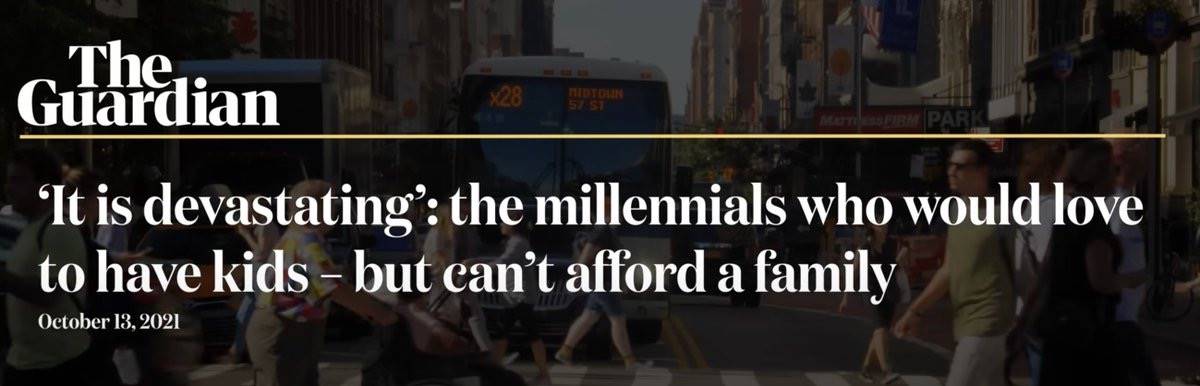
So, if upward mobility is impossible and the future looks barely survivable, why not take a shot at becoming the next dropout billionaire founder?
Then crypto comes along like an amplified version of that. Today, nearly two-thirds of young adults believe the stock market is a good way to build wealth. But 90% of young people are financially drained by rising living costs and can’t invest consistently to achieve the average 7% annual return.

Hence, due to crypto’s extreme volatility, you hear stories of people getting rich overnight. It appears as a high-stakes game—if you get in early enough, are smart enough, maybe a bit reckless, there’s a chance you could secure a decent life.
To outsiders, it looks far more respectable than gambling; to us clever boys and girls, it feels intellectually stimulating.
You might say, “Well, actually… humans have been drawn to ‘get-rich-quick’ speculation since Dutch tulip bulb traders in the 1600s! You should read Devil Takes the Hindmost.”
But my point is this: phenomena historically driven by greed are now increasingly fueled by desperation. Want to feel the mood? Talk to people in their 20s in Hong Kong, South Korea, or the United States.
Young people must make increasingly risky life decisions just to achieve basic comfort.
And they know, largely, this is due to financial decisions made by the previous generation.
Now, that same generation wants to regulate away the crypto game from them.
They shut down ICOs in the name of protecting you—so when those tokens finally list, you end up buying at 500x seed valuation.
They call it “rat poison,” while charging hefty fees on clients who buy crypto.
Oh, those clients? Yes, the very same cartel pumping billions into venture funds, trying to privatize more and more of the game.
That’s why people trade memes.
Yes, it’s greed. It’s “buying tokens without massive supply overhang.” It’s a gambling game designed for the ADHD generation whose brains were corroded by smartphones growing up.
But it’s also a “fuck it—nothing else works” mentality.
More importantly, it’s a “fuck it”—a backlash against the generation they believe has failed them.
More than anything, this “fuck it” is young people’s response to the generation they believe has let them down—a generation now attempting to strip away what little seems to offer them a path forward, through incomprehensible regulations and increasingly privatized opportunities.
Maybe I’m wrong.
Maybe memes really are the next great market entry strategy for startups.
Join TechFlow official community to stay tuned
Telegram:https://t.me/TechFlowDaily
X (Twitter):https://x.com/TechFlowPost
X (Twitter) EN:https://x.com/BlockFlow_News
 @mrjasonchoi









