A Comprehensive Comparison of the MEME Coin Battleground on Solana vs. Base: Who Has the Edge in Deployment Costs and Capital Flows?
TechFlow Selected TechFlow Selected
A Comprehensive Comparison of the MEME Coin Battleground on Solana vs. Base: Who Has the Edge in Deployment Costs and Capital Flows?
Solana and Base's meme journey seems like a descending god meeting an ascending pilgrim—one sees in the other a reflection of their former self, while the other embodies the hope of reaching that very destination.
 Navigating Web3 tides with focused insights
Author: Frank, PANews
Following Solana, Base has emerged as a hotbed for meme coins. On May 5, Base saw 2,821 new DEX trading pairs created within 24 hours, compared to Solana’s 1,508. This trend is not temporary—over the past month, Base has consistently generated more daily new trading pairs than Solana. Can we now say that Base has taken over the baton from Solana and become the new king of meme coins across public blockchains?
In this article, PANews conducts a comprehensive comparison between Base and Solana in the meme coin arena, analyzing their differences and similarities from angles such as user habits, code vulnerabilities, transaction speed, capital preferences, cultural characteristics, and deployment costs, while also exploring the underlying dynamics behind the shifting tides of meme coin popularity.
Cultural Traits and Origins of Meme Coins on Both Chains
Meme coins originate from internet meme culture. The term "meme" typically refers to fragments of cultural information—such as images, videos, text, or concepts—that spread rapidly online, often carrying humorous elements. While distinct from other types of projects, meme coins still require strong meme content as their core for virality. As such, widely recognized and broadly appealing meme material tends to achieve greater propagation.
Meme coins on Solana did not attract significant attention prior to this bull market. However, the rise of meme culture on Solana can be traced back to September 6, 2023, when Solana co-founder Anatoly entered the annual Solana Breakpoint conference dressed as a green dinosaur, referring to himself as a “silly dragon.” On November 8, Anatoly posted “year of the silly dragon” on social media, calling for the community to create a “silly dragon” meme. In response, the SILLY token was deployed amid community anticipation and distributed via airdrop by sharing wallet addresses on social platforms.
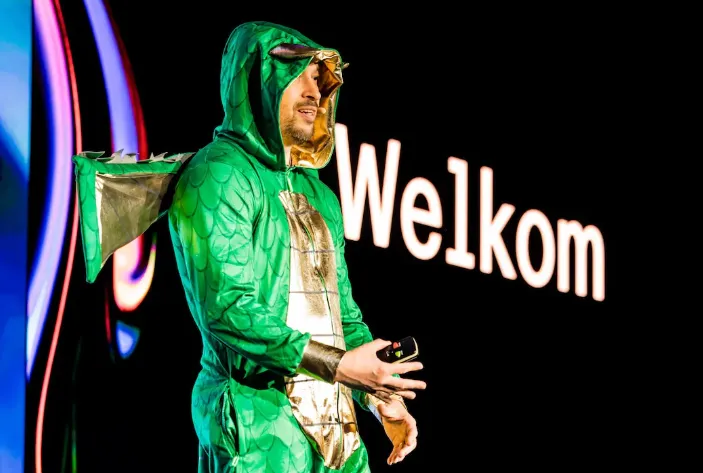
In fact, this launch process symbolizes the origin of Solana’s meme culture: initiated by its founder, reinforced through repeated official-community interaction, followed by contract deployment after viral momentum, and ultimately driving wealth effects that attract even more participants.
During the recent speculative frenzy, Solana experienced a peak in meme activity. This surge was primarily fueled by Solana’s large user base actively seeking high-potential meme assets, forming an organic pattern. In essence, Solana’s meme culture revolves around users mining existing meme content under the vision of wealth creation.
In contrast, Base, backed by Coinbase—the largest U.S. crypto exchange—exhibits a distinctly American cultural flavor closely tied to Coinbase. Among the top ten most-held meme coins on Base are Degen, Jogeco Dog (the dog of Coinbase’s founder), Ollie Dog (the dog of Coinbase’s lead independent director), ROCKY (the dog of MetaWin’s founder), Bento (a space dog), BASED USA (“Make America Great Again”), and Young Peezy (another Pepe character from the comic series “Boy’s Club”).
User Habits: Solana Builds a New Ecosystem, Base Leverages Ethereum’s Infrastructure
When examining user habits, key factors include wallets, DEXs (decentralized exchanges), trading bots, market dashboards, and project information. The ease of use of these tools directly impacts the barrier to entry for participating in meme coin speculation.
Wallets:
On Solana, wallets represent one of the initial barriers for users entering the meme scene. Unlike Ethereum, which uses Solidity, Solana is built with Rust or C, resulting in entirely different wallet architectures. Mainstream wallets like MetaMask do not support Solana tokens. However, the early bull run of SOL helped popularize Phantom and similar wallets among users, lowering adoption hurdles for Solana-based meme coins.
As an Ethereum L2, Base is fully EVM-compatible, allowing users to seamlessly use familiar tools like MetaMask. Additionally, Coinbase launched an AA wallet enabling regular users to create accounts using mobile devices, Touch ID, or Google accounts, and even link directly to their Coinbase account. This significantly lowers friction and lays the foundation for mass user and capital onboarding to Base.
DEXs:
The operation of DEX platforms on Solana is largely similar to those on Ethereum, but often offers advantages in speed and usability.
Most trading pairs on Base are built on established DEXs like Uniswap, ensuring full compatibility with Ethereum user behavior.
Trading Bots:
As the meme wave began, several alert bot developers quickly introduced trading bots for the Solana ecosystem, offering functionality comparable to Ethereum-based bots.
Base currently has fewer trading bots available, with only a few options like Sigma and Shuriken, though they do fill an important market gap.
Market Dashboards:
Tools like Birdeye and Dexscreener now support multi-chain market data and token information displays.
Overall, Solana has successfully developed an independent ecosystem readily embraced by meme traders, while Base benefits from leveraging the vast user bases of both Ethereum and Coinbase, significantly reducing infrastructure development costs.
Code Vulnerabilities: Solana’s Innate Edge vs. Base’s Adaptive Measures
For thriving meme ecosystems, a secure contract environment is essential. Previously dominant meme chains like Ethereum and BNB Chain have suffered from excessive exploit potential in smart contracts. According to earlier PANews research, about 98% of meme coins launched daily on Ethereum have problematic code.
Solana, using a completely different programming language and architecture, better mitigates contract vulnerabilities. Risks are generally limited to token supply and ownership issues.
Base shares Ethereum’s programming language and architecture, inheriting its vulnerability landscape. To counter this, Base implements a verified-contract labeling system to help users avoid risky contracts at the source. Nevertheless, according to a Cointelegraph report analyzing 1,000 new meme coins launched on Base between March 19 and 25, most contained security flaws that could lead to significant user losses, with nearly one-fifth being outright malicious.
Deployment Costs: Base’s Lower Fees May Attract More Developers
Deploying a token contract on Solana costs approximately 1 SOL (around $150).
On Base, deployment costs are around十几 dollars (approximately $10–20). This lower cost may explain the rapid increase in new trading pairs on Base each day.
Transaction Speed and Gas Fees: A Gap Exists but It’s Not Decisive
Base processes transactions at about 35 TPS, with gas fees averaging $0.11.
Solana handles around 1,300 TPS, with fees as low as $0.0029 per transaction.
While Solana maintains a clear advantage here, Base’s performance and fee levels remain user-friendly and are unlikely to be major deciding factors for most users.
Capital and Active Users: Base Needs a Breakout Meme to Close the Gap
TVL: Solana’s total value locked (TVL) stands at approximately $3.9 billion, compared to Base’s $1.5 billion.
24-hour trading volume: Solana averages around $1 billion, while Base sees about $400 million.
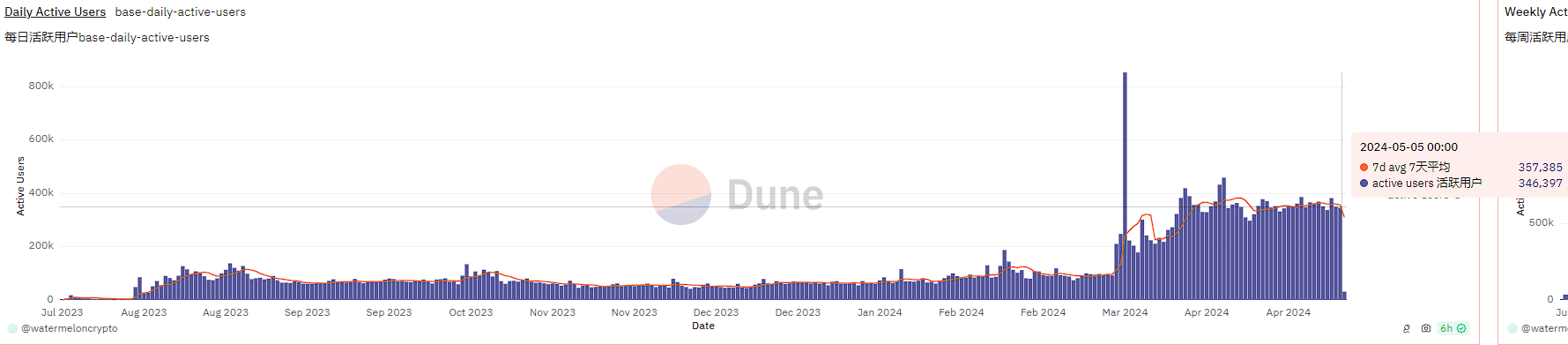
Base: As of May 4, Base had approximately 8.4 million total users and 350,000 daily active users.
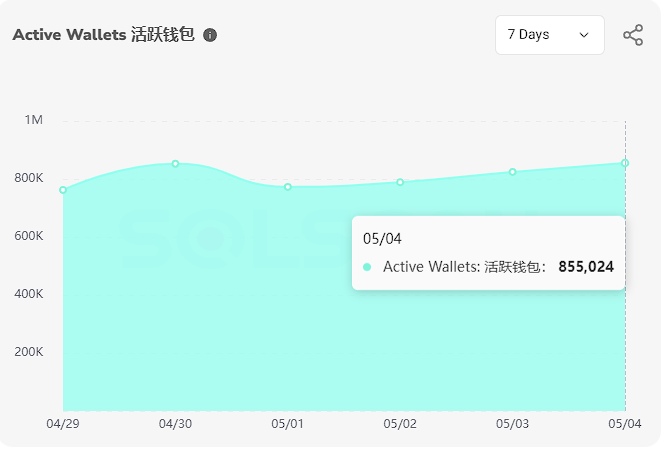
Solana has around 850,000 daily active users.
In terms of fund flows, there has been a net outflow of $1.77 million from Solana to Base. Overall, the gap between Base and Solana is no longer a matter of scale. It could narrow further with the emergence of a breakout meme product.
Official Stance: Solana Hopes Memes Cool Down, Base Embraces Meme Growth
Beyond technical factors, official support plays a crucial role in meme coin development. Solana’s meme boom was partly driven by encouragement from its co-founders and official events. Currently, however, Solana appears reluctant to be defined solely as a “meme chain.” In April, Solana co-founder Raj stated on X that meme coins are scaring away serious builders. Yet he added: “If you’re so fragile that you’re afraid of how young people choose to have fun on a permissionless system, then you’ll never succeed.” Earlier, after the “money-dumping” craze, co-founder Toly had also urged the community to stop presale pumping practices.
Base, in contrast, takes a different stance. Also in April, Jesse Pollak, Base’s ecosystem protocol lead, said: “Meme coins are an important part of the on-chain economy. We’re excited to see more meme-driven expansion helping bring the world on-chain. The vitality on Base is strong—we’ve noticed these meme coins are now bringing tens of thousands into this new economy. We’re seeing an exceptionally vibrant meme economy flourishing on Base.”
Overall, Solana and Base appear to be at opposite stages of the meme lifecycle—one descending from the peak, seeing reflections of its former self, the other ascending, aspiring toward what it hopes to become. Objectively, both possess fertile ground for meme culture, supported by large user bases and distinctive community identities. Subjectively, Solana, having benefited greatly from meme coins in this bull cycle, now senses their negative impact on other ecosystem projects and seeks to moderate the hype for balanced growth. Base, on the other hand, views memes as a gateway to boost ecosystem activity and continues its climb toward the summit of meme dominance.
Join TechFlow official community to stay tuned
Telegram:https://t.me/TechFlowDaily
X (Twitter):https://x.com/TechFlowPost
X (Twitter) EN:https://x.com/BlockFlow_News
 PANews