Interpreting friend.tech V2: New Opportunity or Old Trick?
TechFlow Selected TechFlow Selected
Interpreting friend.tech V2: New Opportunity or Old Trick?
The current FT V2 version seems to be missing some key features.
 Navigating Web3 tides with focused insights
Author: Francesco
Translation: TechFlow
Introduction to friend.tech

friend.tech (FT) is one of the most successful Web3 dApps in SocialFi, achieving the highest-ever revenue-to-net-deposit ratio. It generated over $2 million in revenue during its first month, with net deposits exceeding $33 million.
This was supposed to be a pivotal week for FT, as they launched their V2 product and platform token $FRIEND, introducing major changes aimed at enhancing protocol sustainability and appeal. Instead, it may have marked its downfall.
Previously, some were optimistic about these developments while others were skeptical, but after today’s events, everyone is left in disbelief.
In this article, we will dive deep into the new mechanisms of FT V2, $FRIEND, explore any vulnerabilities it has experienced or is still experiencing, and discuss whether this business model is sustainable.
Let us first examine the challenges faced by the earlier version of friend.tech.
On friend.tech V1
FT was the first decentralized social application to consistently generate revenue by aligning the interests of prominent crypto figures with those of retail users.
This alignment led FT to become one of the projects with the largest growth in user base, activity, and revenue among new projects during the bear market.
However, due to platform fees, this model was unsustainable.
While KOLs and FT earned substantial revenue, retail users lost money daily. With 0% tax on buy/sell transactions, they could only profit by selling keys at least 20% above their purchase price.
This was only feasible during periods of high platform activity and inflows, which explains the volatile behavior observed in the chart below.
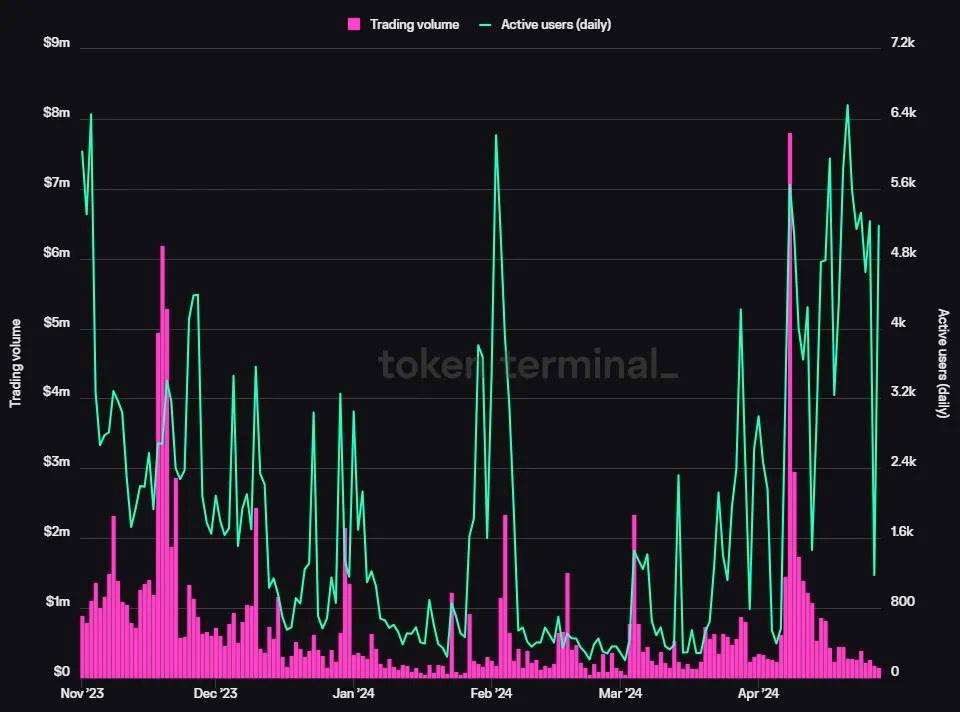
Ultimately, fees became a barrier for many entering the market, leaving many frustrated with FT V1.
Despite this, FT V1 achieved several milestone goals within six months—goals few protocols reach in their entire lifetimes:
-
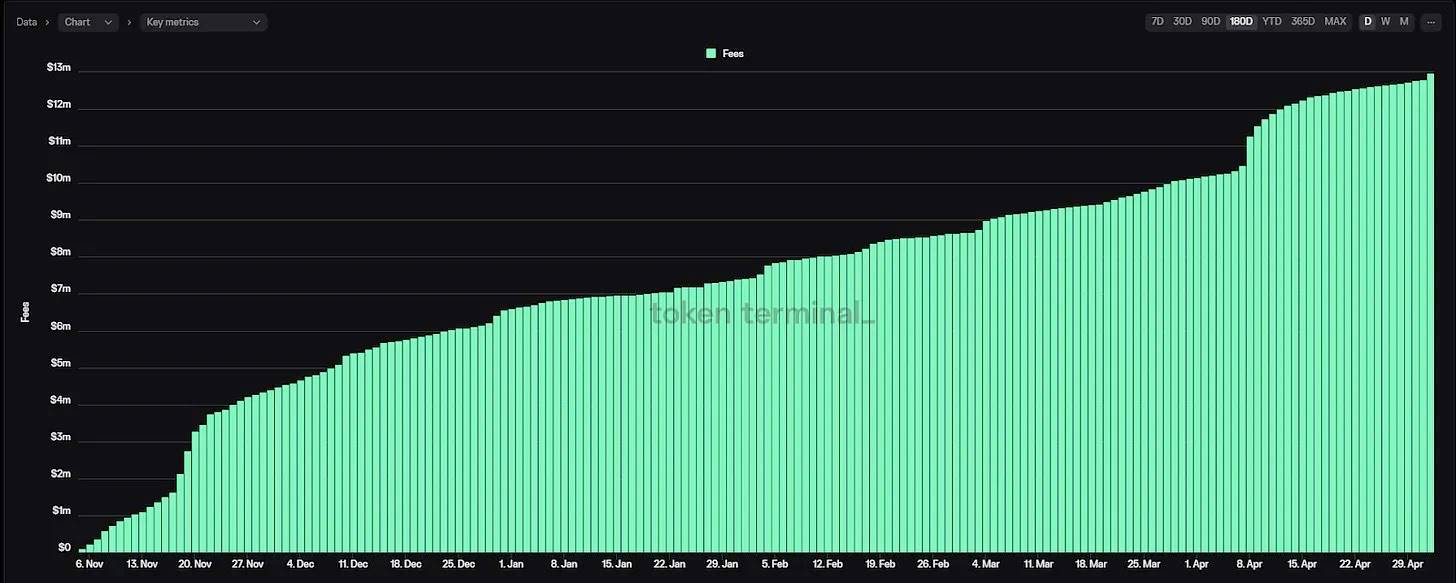
Generated approximately $13 million in fees:
-
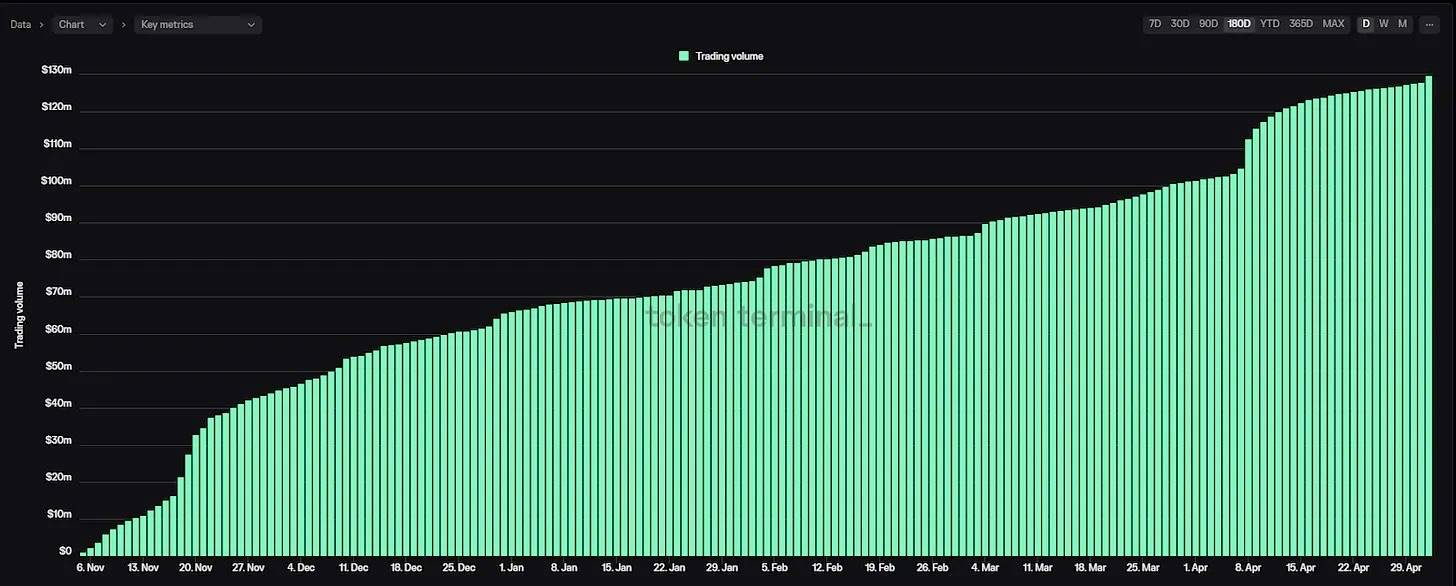
Reached $130M in trading volume (possibly the highest ever achieved by a SocialFi dApp):
-
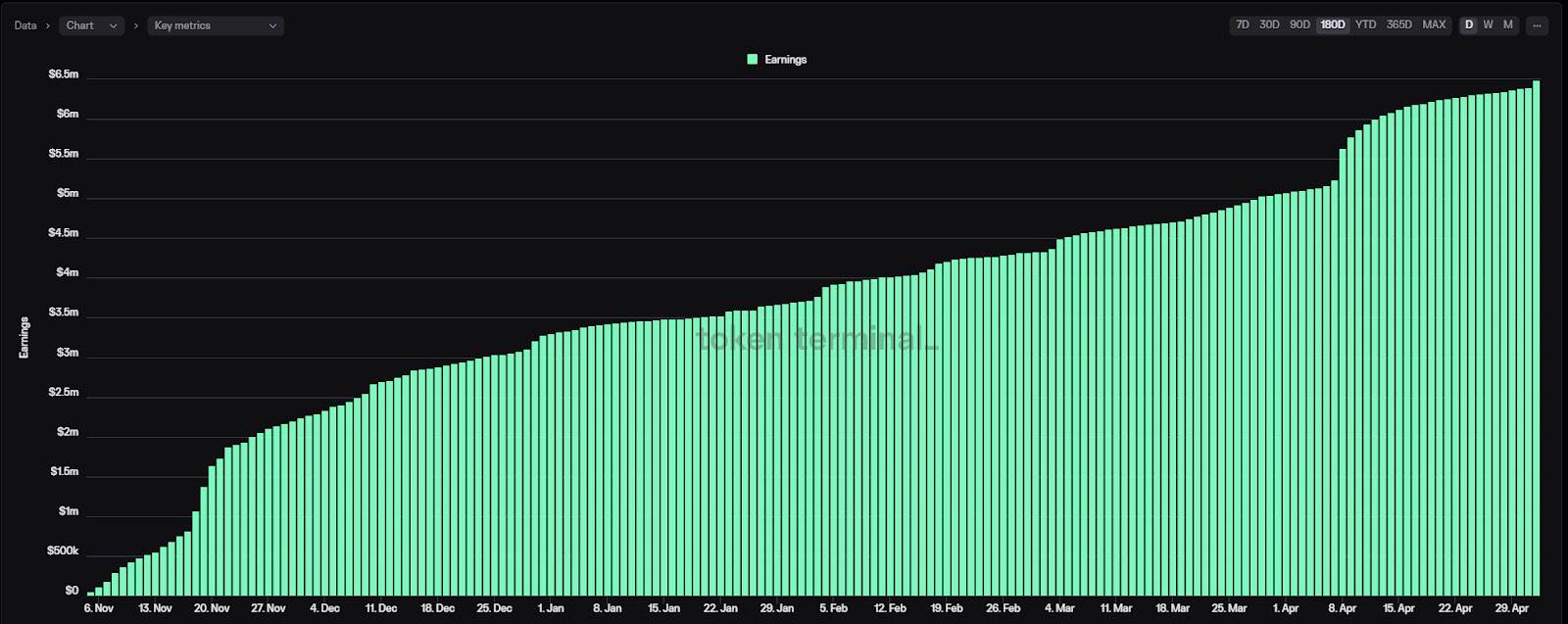
Distributed approximately $6 million in earnings to users:
On friend.tech V2
FT V2 launched on Friday, March 3, 2024.
As part of this long-awaited update, users could finally claim their $FRIEND tokens.
However, the launch seemed underwhelming, lacking sufficient information.
This was the only official Twitter announcement from FT since its launch.
Understandably, this left many confused about the airdrop claiming process.
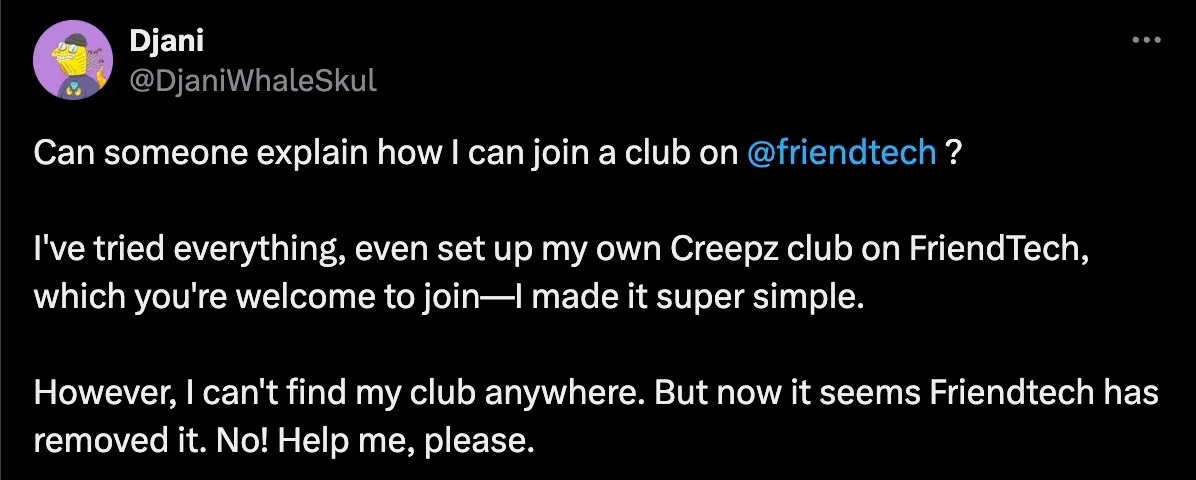
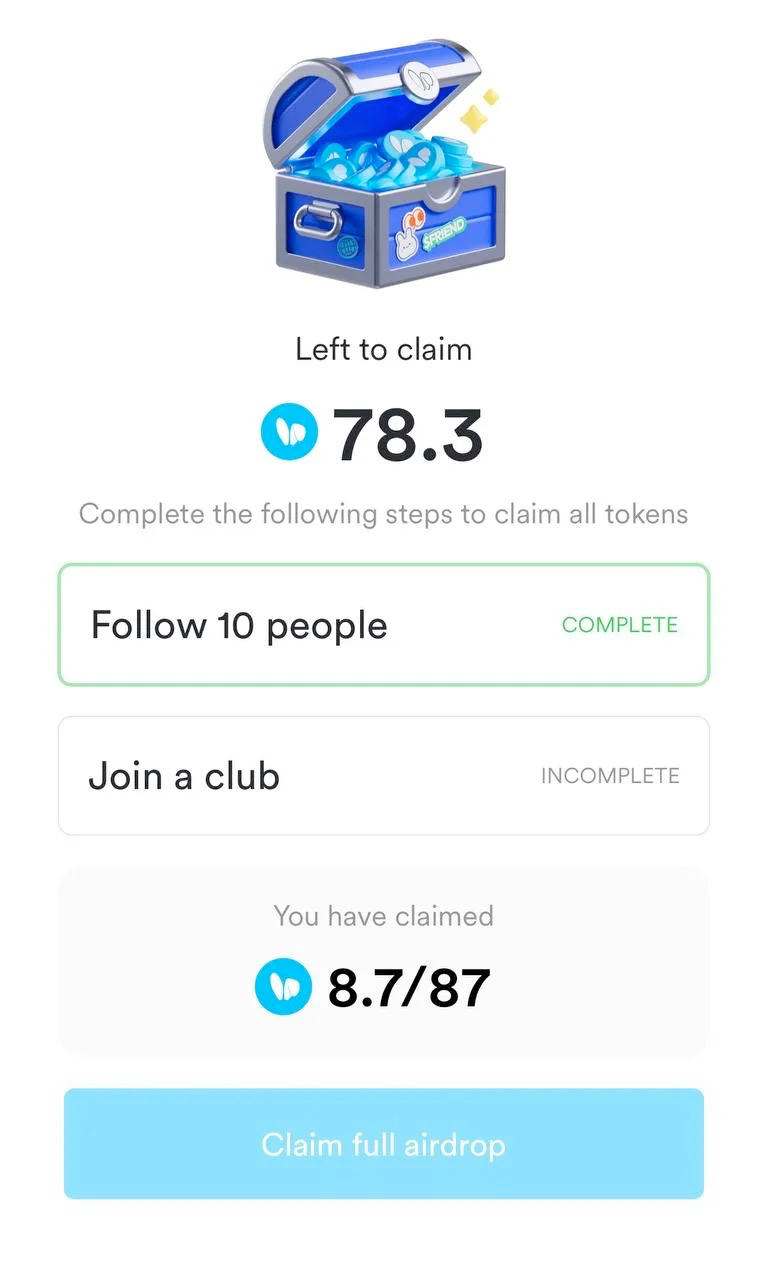
Users could claim only 10% of their airdrop (provided they followed at least 10 people), and needed to join a club to claim the remaining 90%.
However, these requirements were unclear, as there were no pop-ups or guidance within the app, and in many cases, even joining a club did not allow users to claim.
What are clubs?
Clubs are one of the main new features introduced in FT V2.
Anyone can create a new club. Clubs are defined as "group spaces" that are owned and managed by key holders; however, their future use remains unclear.
Here's how clubs work:
- Key holders vote for the club president
- The president manages the club and appoints moderators
- All club keys are traded using $FRIEND
- Each club transaction incurs a 1.5% fee, distributed to farmers and FT
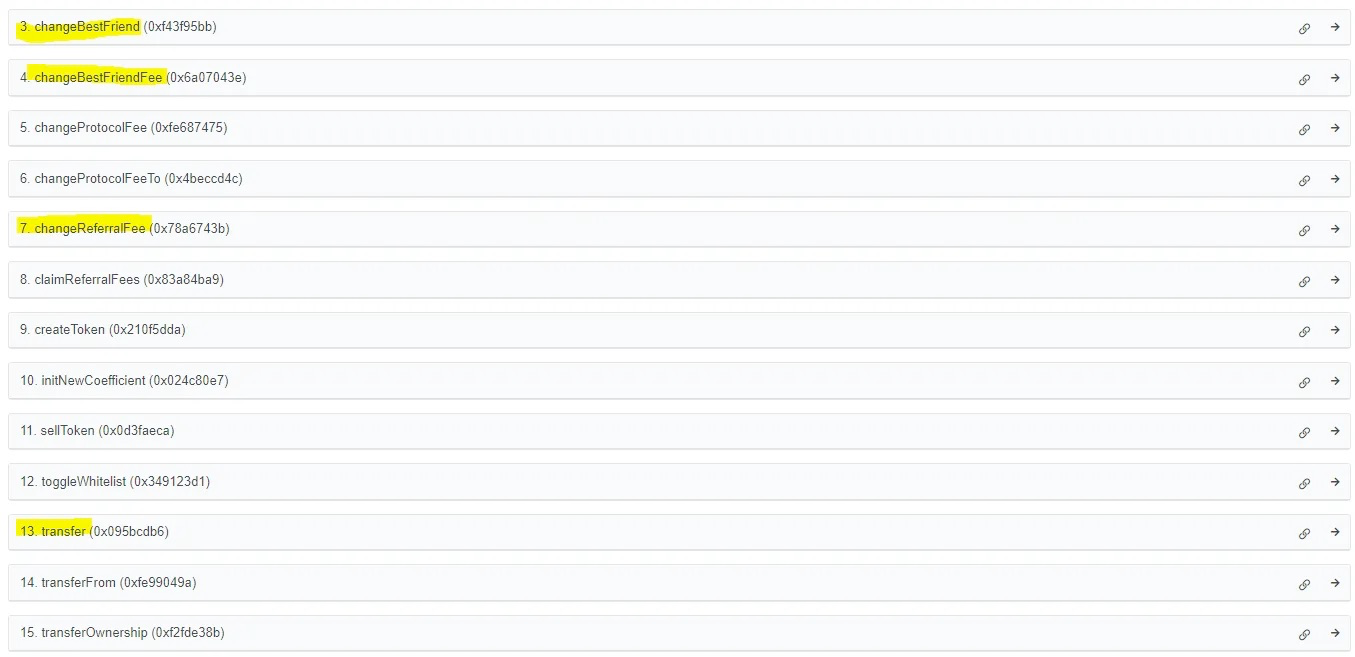
An interesting observation from the Base Scan contract interface is the change in changeBestFriend and changeBestFriendfee functions, suggesting that anyone might soon be able to add a best friend, potentially reducing or waiving transaction fees when trading keys.
We can also speculate that FT will soon introduce referral fees (point 7 in the image below). We also know that club keys are transferable (and possibly regular user keys too?).
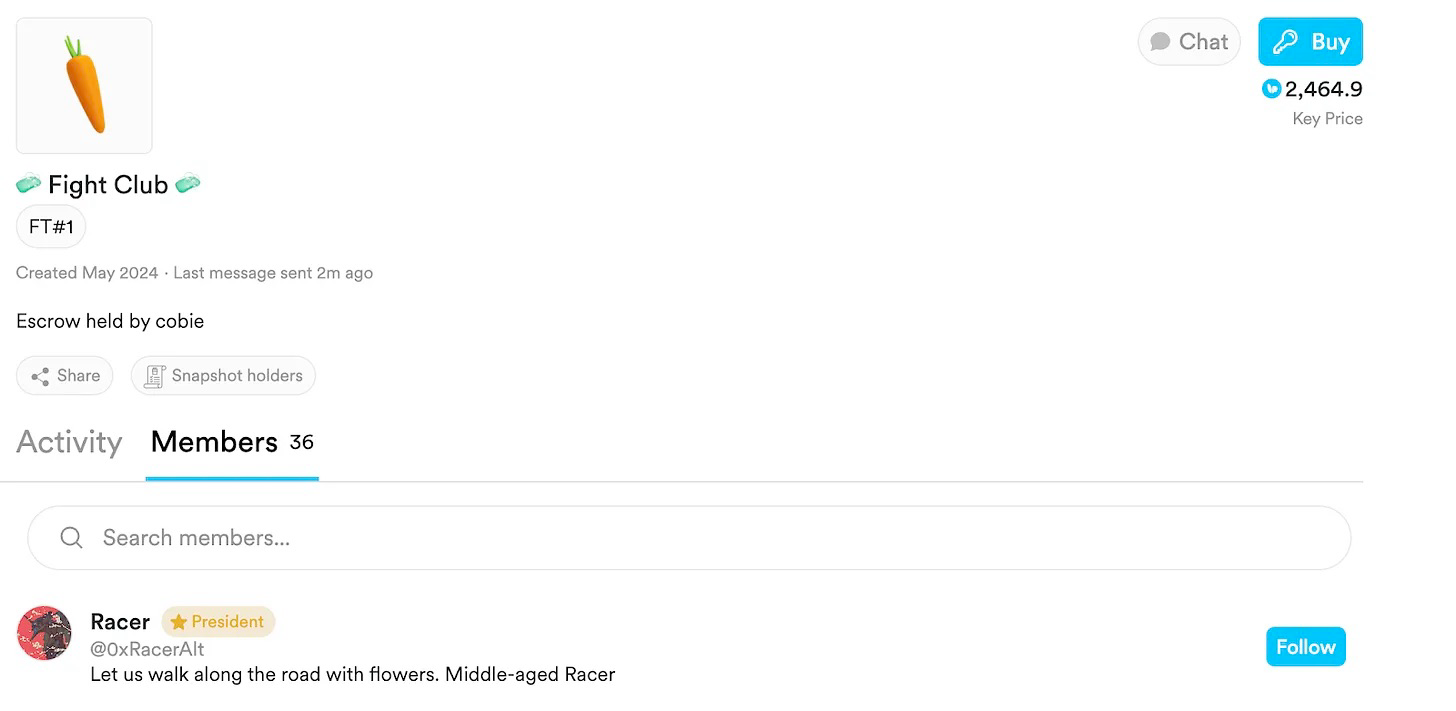
The club below (Fight Club) is the first club represented by FT#1, with Racer as its actual president, reflected in the key price.
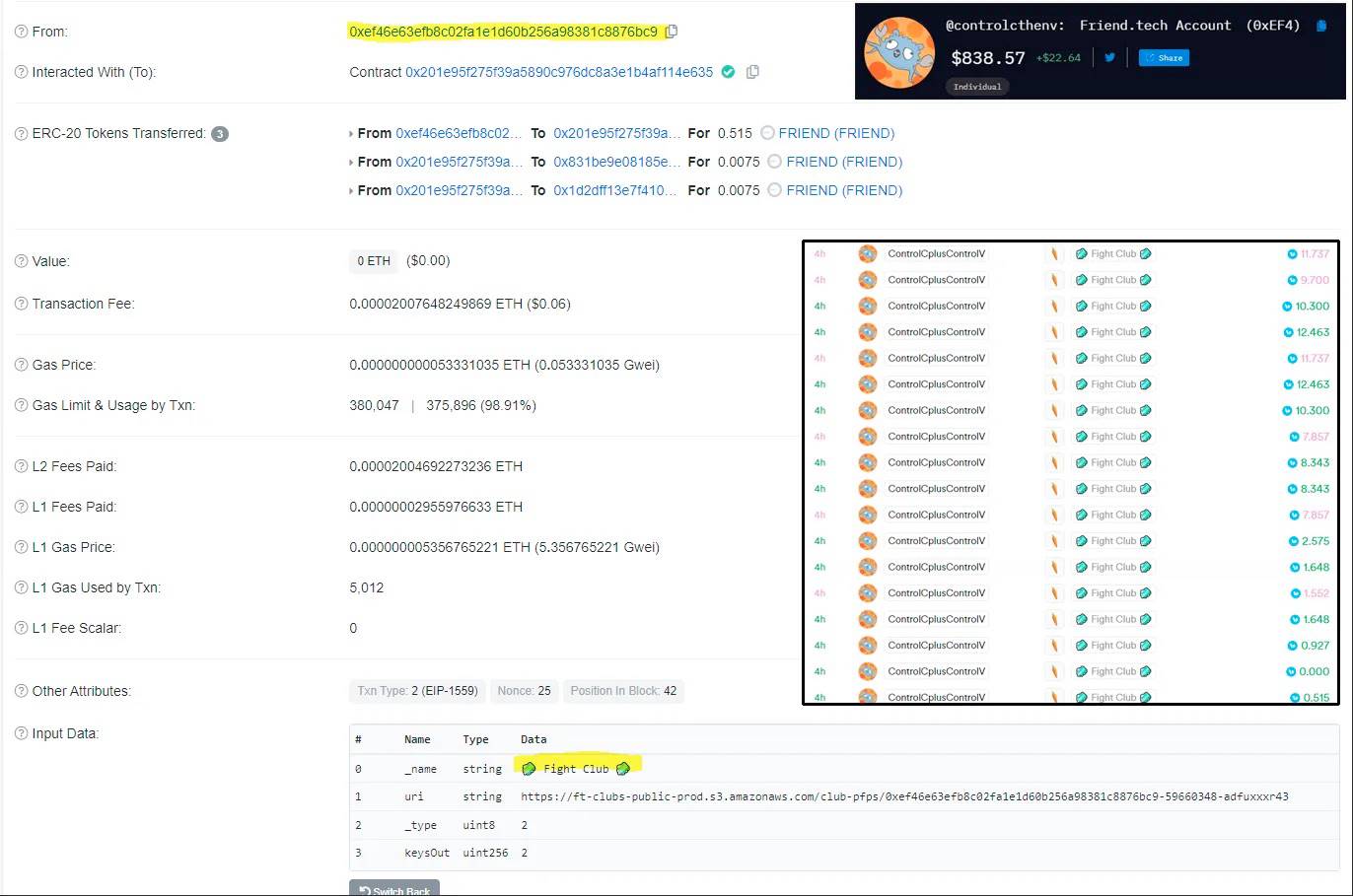
However, as shown in the image below, he did not create the club himself.
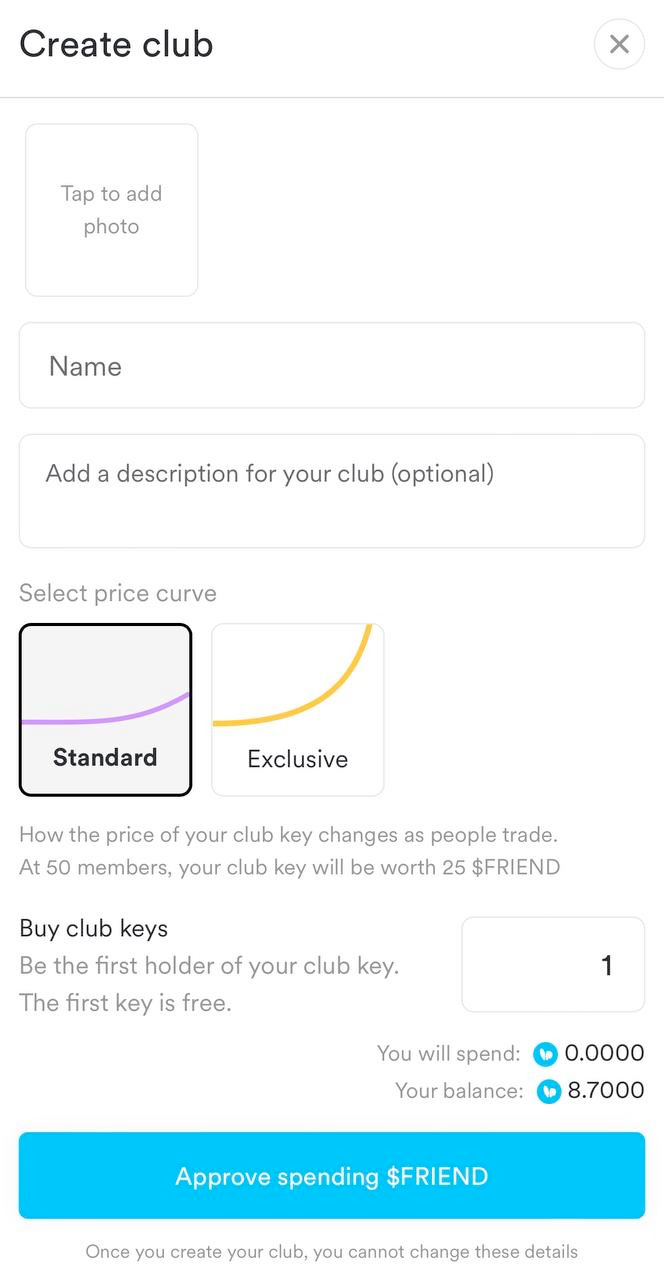
When creating a club, users can choose:
-
Name
-
Description
-
Price curve (standard or exclusive)
-
Number of keys to purchase
Nonetheless, it's worth noting that much of this remains speculative, as FT is expected to provide more information about clubs and their mechanics.
Users should also be cautious when interacting with clubs: anyone can transfer club ownership and appoint someone else as president.
Therefore, you must be very careful with well-known figures nominated as presidents—they may not even know they’ve been nominated.
For example, this morning we created a random club and invited Racer to join!
Note that clubs can have identical names, so always verify the club’s FT# to ensure you’re buying the correct one.
Beyond these changes, the homepage of the web app has also changed. New elements are now displayed, including “Farm” (LP), airdrop claims, and rewards.
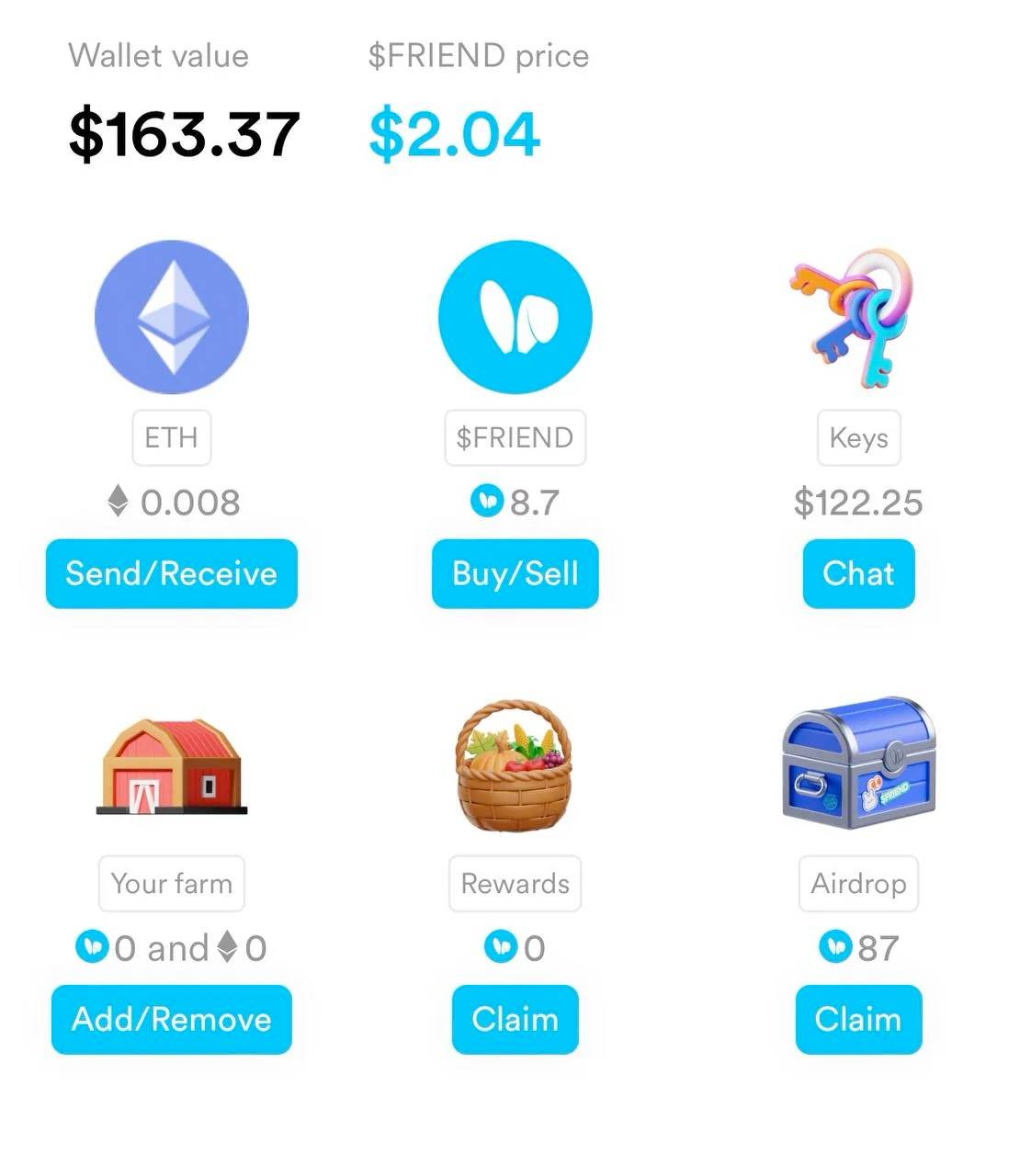
Currently, users can only claim their airdrops, create clubs, buy and sell tokens, and stake them in farms to earn rewards.
Additionally, many have pointed out that the role of keys hasn’t truly evolved, nor has their utility expanded. The anticipated social media elements that were supposed to redefine the platform appear missing or underwhelming.
Still, we don’t know if this is the final version or if new updates will follow shortly.
Last but not least, many had higher expectations for the $FRIEND token price.
Combined with the lack of new use cases for keys, this may determine whether the airdrop is worth it and whether many will simply dump their $FRIEND tokens.
All these factors make it difficult to envision the long-term sustainability and success of this model, regardless of whether this current design is final or not.
Another notable point is the delay between completing on-chain operations and their reflection on the FT interface.
We observed approximately a 3–4 hour delay.
Is the friend.tech model sustainable?
Many have questioned the sustainability of the FT model. Although initially dismissed due to the dApp’s incredible appeal, these concerns have grown louder as FT’s momentum fades.
With FT V2 moving away from the influencer-centric model of V1, the protocol aims to reduce dependency and become more sustainable.
In fact, reliance on influencers is a single point of failure: a social network’s value depends solely on its users. The absence of many key figures would drastically diminish FT’s appeal.
What value do Hsaka or Ansem bring if they rarely connect to the app, let alone share alpha there?
This may be a key reason why the team recently shifted toward a more community-centric (i.e., degen) approach.
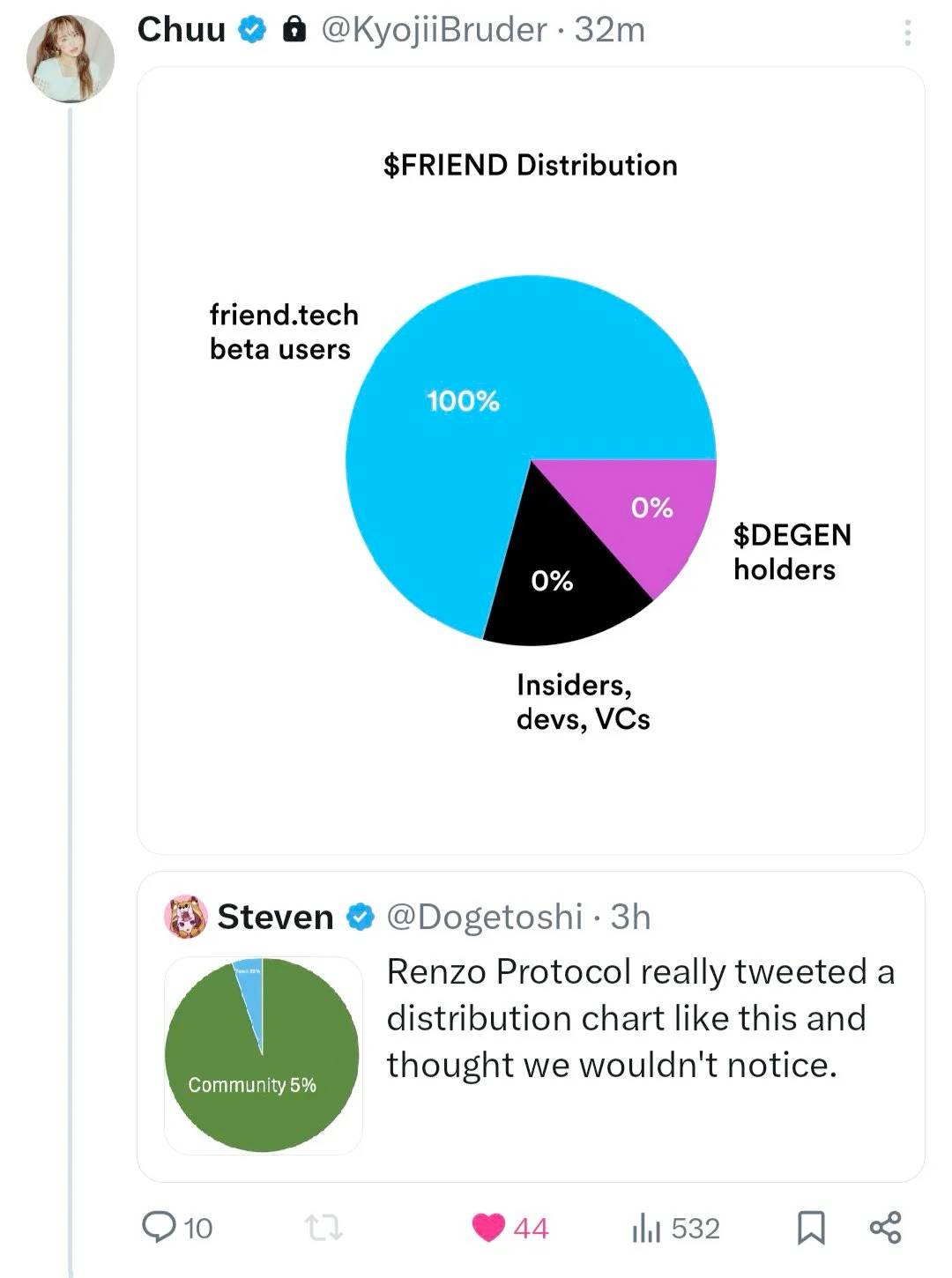
This is one of FT’s critical challenges: how can they ensure users are incentivized to prefer their app over alternatives like Twitter, Farcaster, Lens, etc.?
Despite the hype following the token launch, FT failed to attract attention at the same level as its previous two waves.
Many speculated that with the release of $FRIEND, the protocol would gradually gain increasing traction. However, current metrics fall far short of expectations.
Will this become another "sell the news" case?
Or will the long-awaited V2 transform friend.tech into a leading social app and attract a new user base?
The current version of FT V2 appears to be missing some key features that were removed from the app.
For these reasons, it’s plausible this isn’t the complete version of FT 2, and an upcoming update may follow.
We conclude with a reflection: Is this all FT has managed to build after eight months, despite immense funding, resources, and hype? Or is this another masterstroke by the team—gathering all negative feedback, iterating, and preparing to launch the final version of the app?
Based on current circumstances, the latter seems more likely. The current state of FriendTech V2 warrants serious contemplation.
Join TechFlow official community to stay tuned
Telegram:https://t.me/TechFlowDaily
X (Twitter):https://x.com/TechFlowPost
X (Twitter) EN:https://x.com/BlockFlow_News
 @francescoweb3