Analyzing the Cloud Computing Platform Aethir: GPU Sharing Could Radically Transform the Current Tech Landscape
TechFlow Selected TechFlow Selected
Analyzing the Cloud Computing Platform Aethir: GPU Sharing Could Radically Transform the Current Tech Landscape
Aethir stands out in the competitive decentralized computing market by focusing on the gaming sector, offering a unique competitive advantage.
 Navigating Web3 tides with focused insights
Author: Greythorn
● Introduction
According to a report by Precedence Research, as advanced technologies like artificial intelligence and machine learning are increasingly applied in cloud computing, the cloud computing market is expected to surpass the $1 trillion mark by 2028. Additionally, growing demand from specific industries for customized computing solutions is creating significant growth opportunities within the cloud computing sector. These solutions play a crucial role in storing, accessing, and managing critical data, further driving expansion in this field.
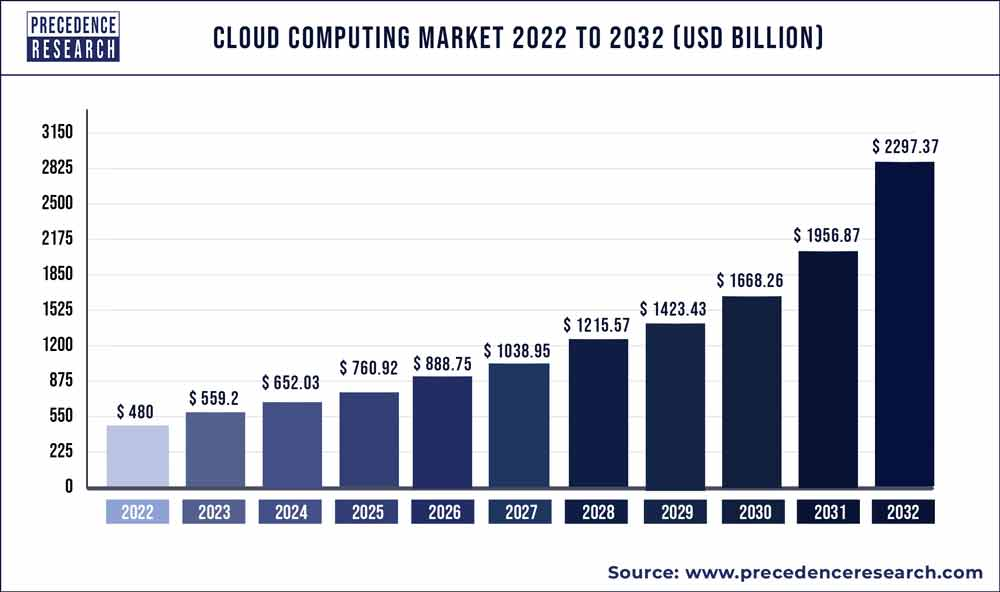
Source:Precedence Research
As we enter 2024, enterprises are facing rising cloud computing costs, prompting them to reevaluate their workload management strategies to reduce expenses. Economic analyses and vendor reports indicate that cloud service and storage costs are on an upward trend. For example, January’s Producer Price Index (PPI) showed that costs, including data processing services related to cloud computing, increased 0.6% month-over-month and 3.7% year-over-year. Furthermore, Eldar Tuvey, CEO of Vertice, anticipates a 10.6% inflation rate for cloud infrastructure-as-a-service (IaaS) at the beginning of 2024.
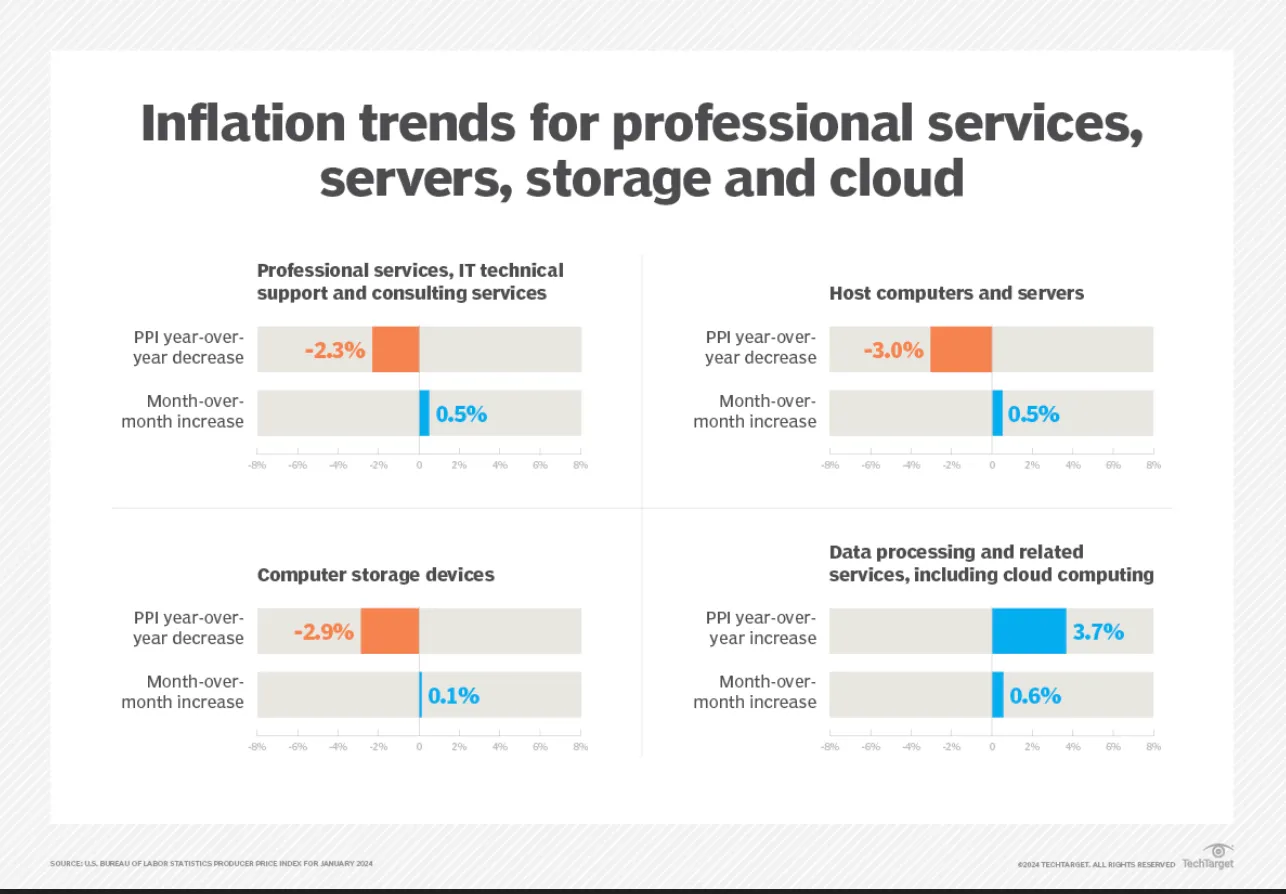
Source:Tech Target
In the Web3 space, Aethir is addressing conventional challenges of centralized cloud computing—such as high costs, GPU supply limitations, and latency issues—by offering a decentralized GPU cloud platform that delivers scalable solutions for rapidly growing markets like artificial intelligence and gaming.
Project Overview
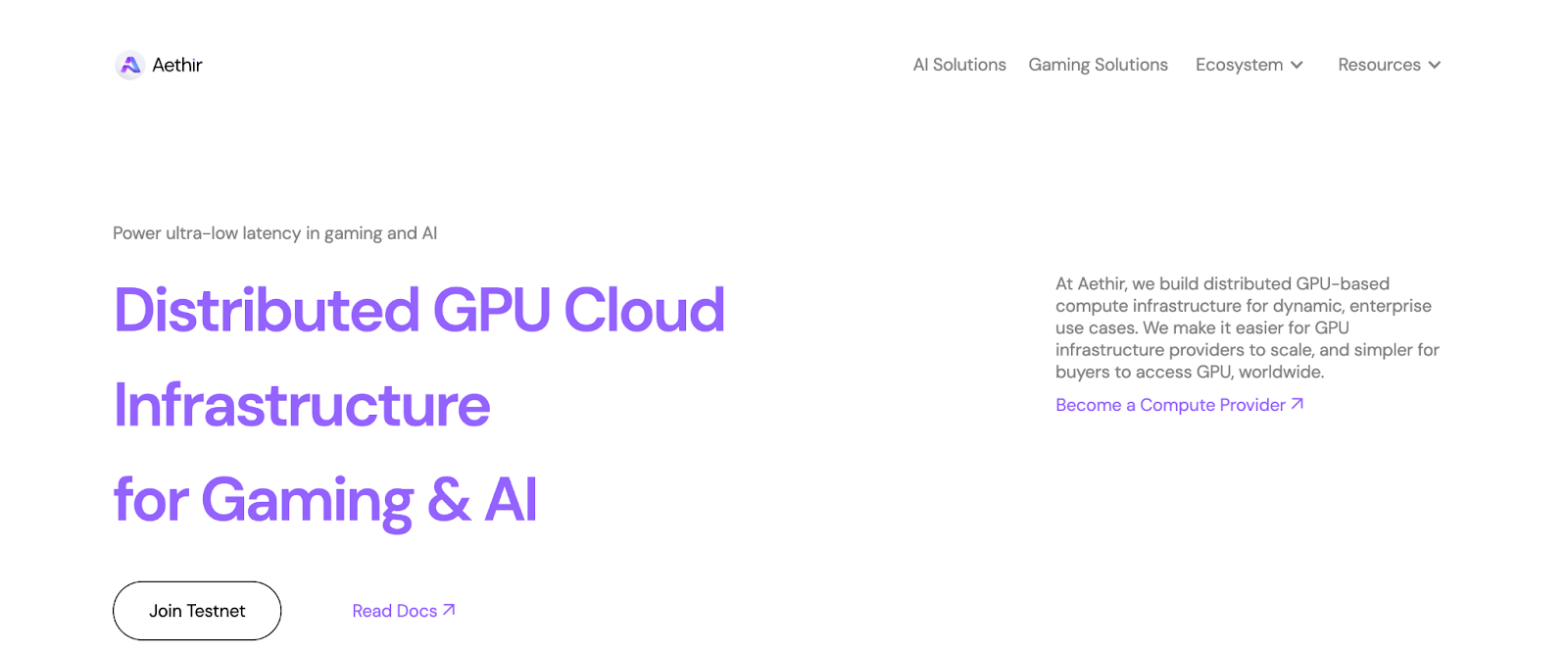
Source:Aethir
Aethir is a cloud computing platform that promises to transform the current technological landscape by enabling scalable and inclusive changes in how GPUs are shared, owned, and utilized. Targeting fields such as artificial intelligence, cloud gaming, and machine learning, Aethir allows businesses and individuals to contribute idle GPUs into a shared network, thereby optimizing resource utilization overall and providing broad user access to top-tier computing power.
The project offers a flexible solution to current issues of GPU shortages and underutilized resources by aggregating new and unused GPU capacity from diverse sources such as data centers and cryptocurrency mining operations. This strategy not only significantly increases global GPU availability but also democratizes access to computing resources, helping lower costs and foster innovation.
Aethir launched its testnet on Arbitrum at the end of 2023 and currently supports over 10 games on its Beta platform. The full live platform along with the Aethir (ATH) token are scheduled to launch later this year, although the exact date has not yet been announced.
Aethir Network
Aethir's design integrates an economic system combining on-chain assets, smart contracts, and decentralized rendering services into a unified framework operating on the Arbitrum network, centered around three key roles—Container, Indexer, and Checker—to optimize speed, scalability, and cost-efficiency in the blockchain environment.
Container
Provides computing power and network resources. Containers receive rewards for supplying standby resources and running services for users.
Checker
Regularly monitors resource availability, scores and reports on resources, and performs resource rating assessments.
Indexer
Catalogs resources by region and organizes them by service level. The Indexer also connects user requests with appropriate resources and generates data reports.
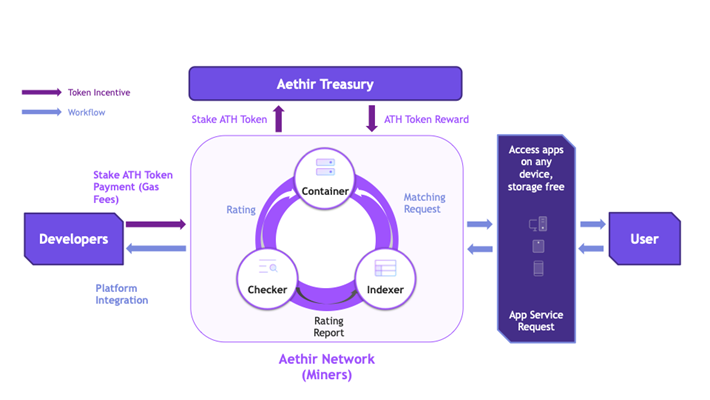
Source:Aethir
Aethir Network Workflow
The Aethir network distinguishes itself from typical blockchain systems through a unique operational approach where nodes perform dual critical roles:
● Proof of Rendering Capacity (PoRC): Nodes are periodically selected to validate transactions, ensuring correctness. Selection favors nodes with higher token stakes, better service quality, and fewer prior selections.
● Proof of Rendering Work (PoRW): The network closely monitors node performance to ensure premium service delivery, customizing resource allocation based on demand and geographic characteristics.
Session Dynamics
Each session lasts 15 minutes and functions as an independent service cycle, with fees fluctuating according to network activity.
Container Statuses
Containers serve as the core of the network and have various states reflecting their current activity or readiness, ranging from setup phase to active service mode.
Staking and Rewards
Staking in Aethir is akin to depositing funds for future benefits. Rewards are distributed based on container performance and workload processed, incentivizing optimal operation.
Service Modes
The network supports two operational modes to meet diverse needs:
● Wholesale Mode: Offers bulk services at predetermined rates to maximize efficiency.
● Retail Mode: Operates similarly to a bidding system, dynamically adjusting service fees based on current demand.
Service Fees
Developers pay containers for services rendered, with pricing varying according to demand and availability.
Slash Mechanism
To maintain integrity, penalties are imposed for inaccuracies, affecting unclaimed rewards. However, a portion of these penalties is reallocated to reward high-performing nodes, and early adopters are granted a grace period exempt from slashing.
Aethir’s Advancement in Gaming
Aethir is reshaping the gaming industry through its Distributed Cloud Infrastructure (DCI), which enables any device to run high-definition 3D games and stream gameplay in real time without relying on expensive hardware. By integrating blockchain technology with traditional gaming and emerging metaverse projects, Aethir overcomes common issues faced by other cloud services, such as latency and slow access speeds. With a focus on security and a user-friendly interface, Aethir empowers game developers to create immersive experiences using popular 3D engines, free from technical constraints.
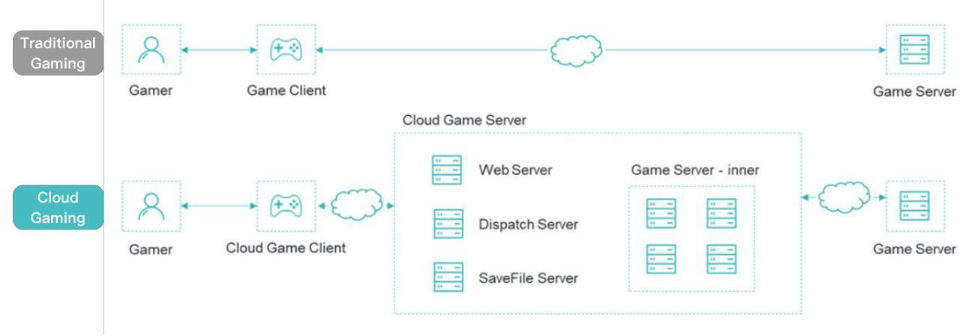
Source:Aethir
Developers can also benefit from Aethir’s flexible tools, such as its software development kit (SDK), which simplifies integration of features like in-game transactions and player authentication. Moreover, analytics tools provided by the Aethir platform enable businesses to track player engagement, manage budgets, analyze gaming trends, and visualize data—supporting strategic decision-making and problem-solving within the gaming industry.
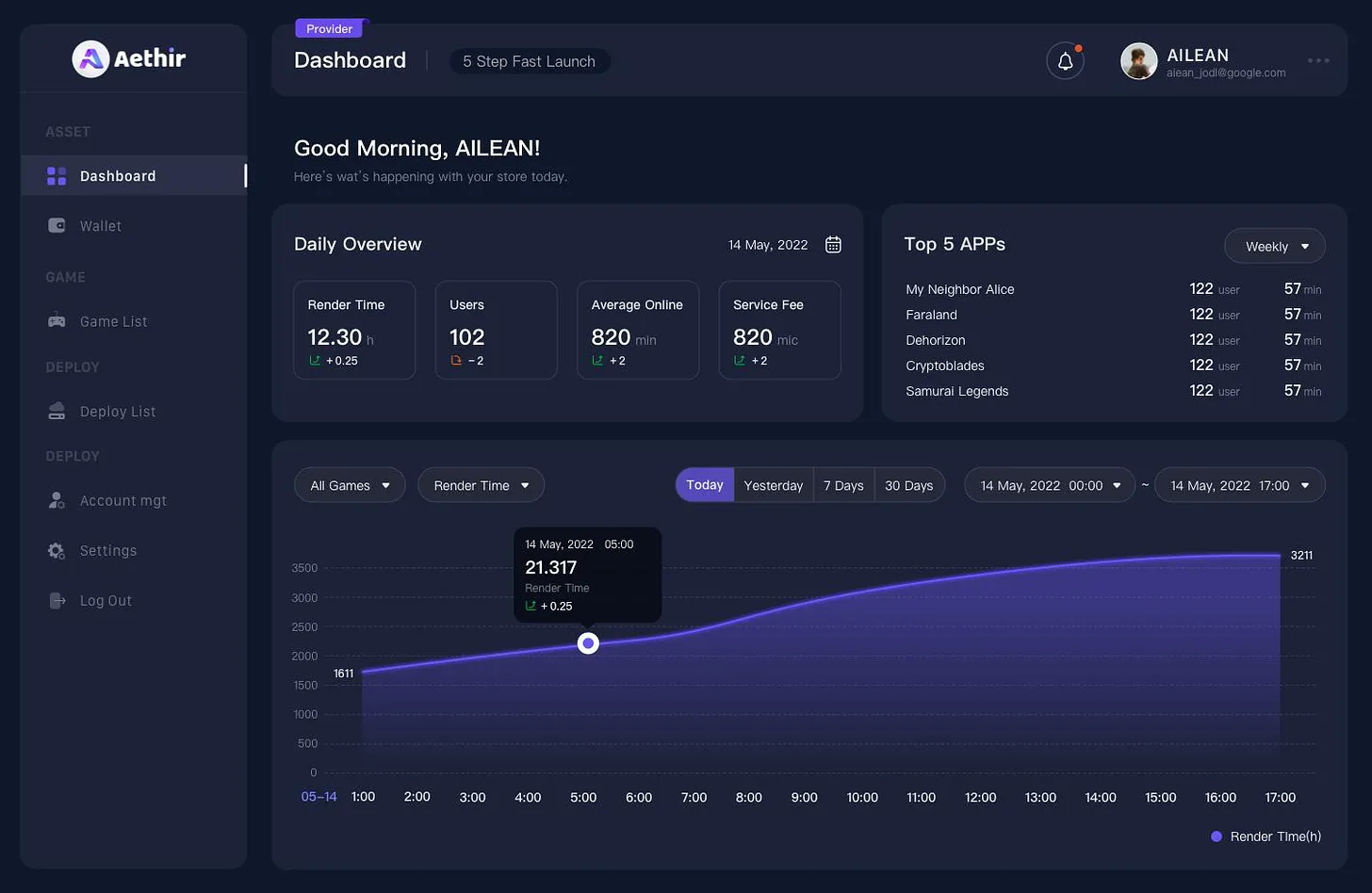
Source:Aethir
Team, Foundation Support, and Strategic Partnerships
Aethir was founded in 2022 by Mark Rydon and Daniel Wang. Under the joint leadership of CTO Kyle Okamoto and Chief Revenue Officer Paul Thind, the project has assembled a strong team proficient in both Web2 and Web3 technologies.
In mid-2023, Aethir completed its Pre-A funding round, raising over $9 million with a valuation reaching $150 million. The round attracted major investments from well-known entities such as Sanctor Capital, Hashkey, Merit Circle, and CitizenX, along with additional support from Arthur Hayes’ Maelstrom, Mirana Ventures, and Animoca Brands.
Aethir has recently established partnerships with several key players:
Its collaboration with Impossible Finance focuses on revolutionizing cloud infrastructure, making advanced computing widely accessible in Web3 and setting new standards for security, transparency, and efficiency.
The partnership with GAM3S.GG aims to redefine Web3 gaming, making blockchain games more globally accessible. Thanks to Aethir’s cloud infrastructure, players can enjoy seamless gaming experiences without complex installations or high-end hardware, with the goal of enhancing gameplay and fostering a more inclusive gaming community.
The collaboration with APhone will jointly launch a decentralized cloud smartphone, enhancing the usability of Web3 applications. Leveraging Aethir’s low-latency decentralized cloud technology, APhone aims to bypass restrictions imposed by centralized app stores, delivering a seamless and barrier-free mobile experience.
Competitors
Within the decentralized computing market, the space is segmented into key areas such as artificial intelligence, GPU services, cloud computing, and data storage. Aethir has carved out a unique position in this competitive landscape by focusing specifically on delivering specialized cloud computing resources for the gaming sector.
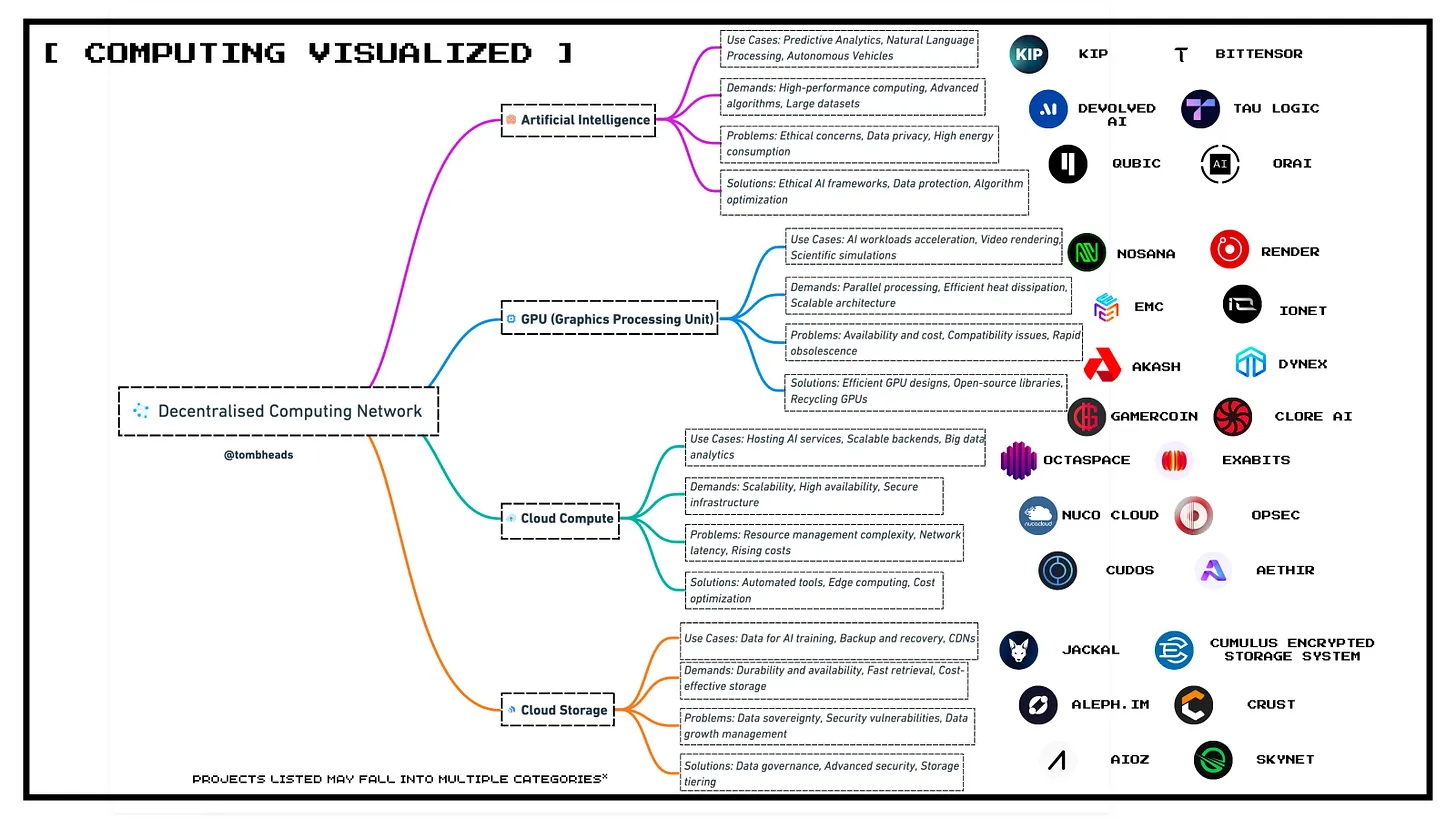
Source:Tomb Heads
Tokenomics
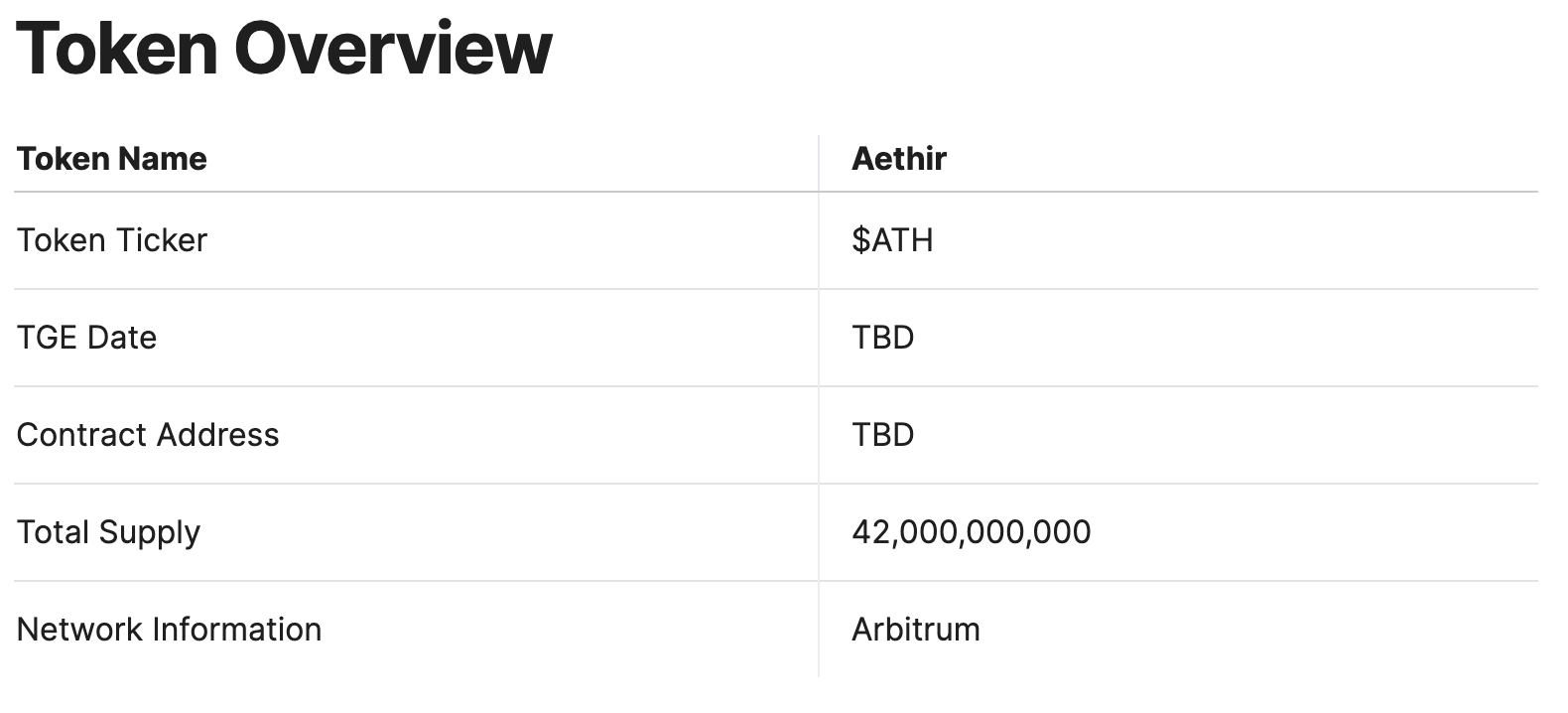
Currently, the Aethir (ATH) token has not yet launched, but its development has been confirmed. The Token Generation Event (TGE) is planned for later this year. The $ATH token will serve as the core of Aethir’s operations, fulfilling multiple functions:
Daily Transactions
$ATH is Aethir’s official currency, used to pay node operators for computational resources consumed by users.
Broad Utility
Beyond serving as a payment method, the use cases for $ATH are expanding, with future plans including merged mining and marketplace transactions.
Governance and Direction
As Aethir transitions toward decentralized governance, $ATH holders will soon be able to participate in proposing and voting on decisions that shape the platform’s future development.
Building Trust Through Staking
New operators are required to stake ATH tokens to demonstrate commitment and help secure the network.
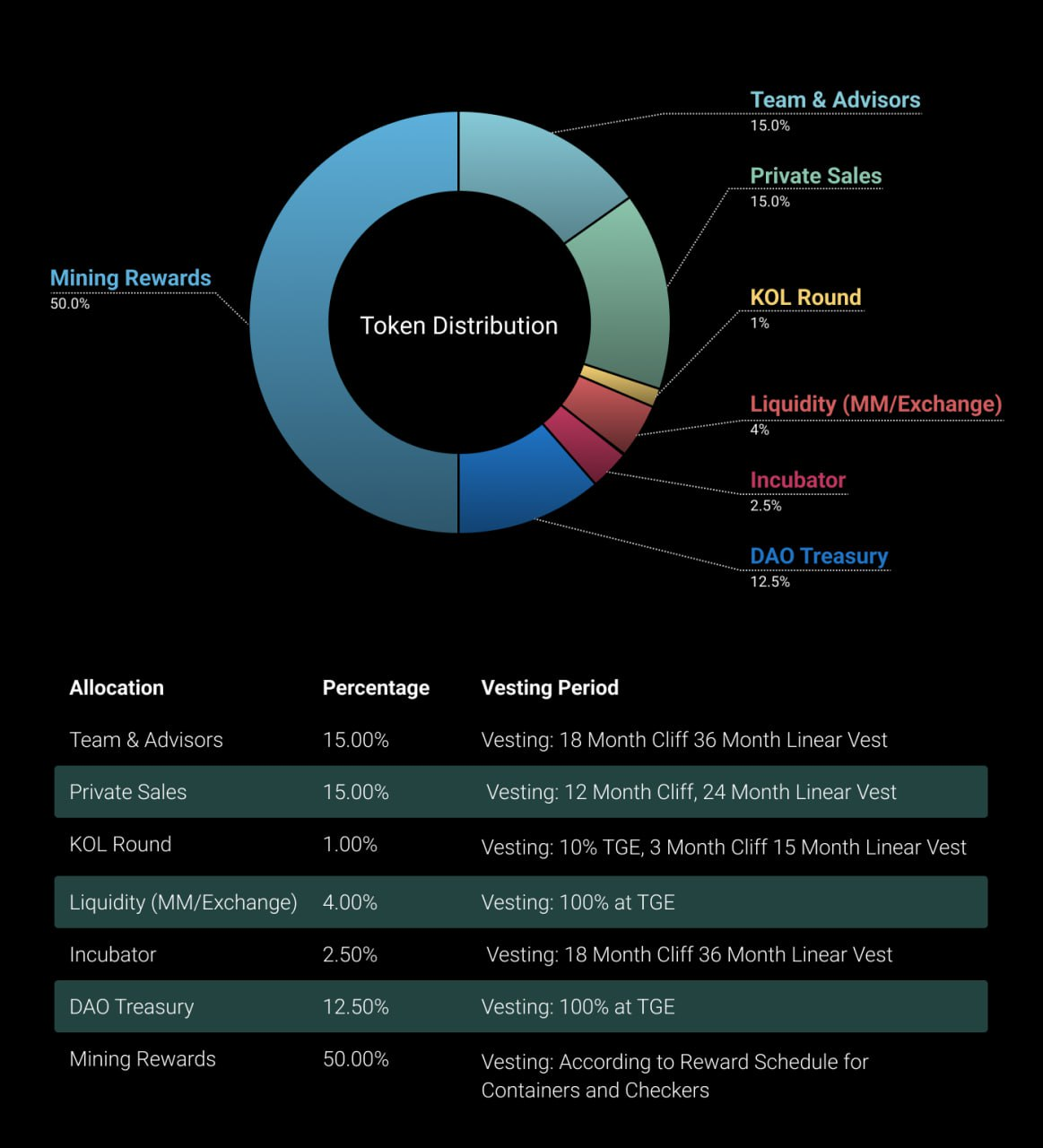
Mining rewards form a key component of the ATH token distribution mechanism, incentivizing node operators to maintain high-quality service. These rewards apply not only to active services but also to standby capacity, aiming to attract and retain service providers.
ATH mining rewards follow a planned emission schedule: initially offering generous incentives to drive participation, then gradually reducing them to ensure long-term ecosystem stability and sustainability.
Source:Aethir
Bullish Fundamental Factors
● The artificial intelligence and gaming markets are rapidly expanding, increasing demand for cloud solutions. Aethir is positioned to meet the needs of these two fast-growing sectors with its scalable offerings.
● The Aethir (ATH) token is scheduled to launch later this year, though the exact date remains unconfirmed. Continued market growth is expected to positively impact the token’s value.
● In the competitive decentralized computing market, Aethir stands out by focusing specifically on gaming, giving it a unique competitive advantage.
● By deploying its network across multiple locations, Aethir aims to reduce latency through edge computing, significantly improving gaming experiences.
● Aethir has signed a significant annual contract with one of the world’s largest telecom companies, projected to reach eight figures by Q2 2024. Additionally, it has already secured three cloud gaming contracts and expects to sign over ten more in Q1 2024—including a deal with a leading global gaming company boasting over 150 million monthly active users and a 22% conversion rate. For more details, see this link.
● As a key member of NVIDIA’s Innovation Program, Aethir receives support for H100 chips—a technology also used by major corporations like Meta (Facebook) in their high-value projects.
Bearish Fundamental Factors
● As part of the crypto market, inherent high volatility and the short attention spans of many participants pose risks to Aethir. Even without significant fundamental changes, the value of the Aethir token could experience sharp declines.
● Aethir is still in its early stages and must prove its performance. Scalability challenges associated with decentralized gaming remain unresolved, and how Aethir will address these issues remains to be seen.
● To date, high resource requirements have limited the adoption of decentralized cloud infrastructure, restricting it largely to large enterprises. Despite the promising nature of Aethir’s solution, widespread adoption may take years—similar to the slow start experienced by GameFi.
● Diverse regulatory approaches toward cryptocurrencies and digital assets across different countries create a complex legal landscape that could hinder investment, stifle innovation, and slow global adoption.
Conclusion
In closing, I’d like to remind everyone that what we share does not constitute financial advice. As professionals deeply immersed in this industry, we closely monitor emerging forces within the space. Sharing our research findings does not imply endorsement or opposition to any of the projects discussed.
We are a professional team, with members specializing in various aspects of markets and finance. This report should not be viewed as containing all information necessary for making investment decisions.
To learn more about us, please visit our website. For additional insights, feel free to follow us on LinkedIn.
Join TechFlow official community to stay tuned
Telegram:https://t.me/TechFlowDaily
X (Twitter):https://x.com/TechFlowPost
X (Twitter) EN:https://x.com/BlockFlow_News
 Greythorn