Aethir In-Depth Research Report: Aggregating Consumer-Grade GPUs, a Strong Contender in the Decentralized Computing Race
TechFlow Selected TechFlow Selected
Aethir In-Depth Research Report: Aggregating Consumer-Grade GPUs, a Strong Contender in the Decentralized Computing Race
Aethir Cloud is a decentralized platform that connects computing power service providers and consumers, aiming to become an aggregator of mass-market GPUs.
 Navigating Web3 tides with focused insights
Author: Impossible Finance
Translation: TechFlow
Decentralized Physical Infrastructure Networks (DePIN) represent a transformative approach to building and scaling infrastructure networks, divided into two main types: physical and digital networks. DePIN projects are unified by a core philosophy aiming to establish a more open, decentralized, and transparent infrastructure network across various domains. This method offers clear advantages over traditional Web2 models for several key reasons:
-
Resource Utilization and Cost Efficiency: DePIN projects gain this critical competitive advantage by leveraging two key facts: utilizing existing underutilized devices and reducing upfront costs and risks for new hardware investors through token incentives and pre-existing demand.
-
Localized Service Provision: Distributed resources within the DePIN framework excel at understanding and meeting the specific needs of local markets. For example, in a decentralized cloud gaming framework, identifying regional gaming preferences can deliver popular on-demand games, enhancing service flexibility and user satisfaction.
-
Reliability and Reduced Failure Risk: Decentralized networks inherently reduce single points of failure, thereby increasing the reliability and resilience of the services provided.
-
Accelerated Innovation: The decentralized and permissionless nature of DePIN networks fosters rapid innovation. Further alignment among multiple parties toward a common goal (and asset) incentivizes third-party development.
In 2023, the DePIN sector experienced explosive growth, with over 755 projects and a market capitalization exceeding $32 billion. This surge highlights strong demand for decentralized infrastructure and investor confidence in its potential. Notably, service demand within broad computational architectures has shown an upward trend, reaching 40–70% utilization over the past year. This makes the sub-sector the highest revenue generator within DePIN, achieving $27.5 million in annual revenue in 2023.
Additionally, it is worth noting that growth in GPU computing has surpassed even DePIN itself. Currently, demand for processing power exceeds available supply, driven primarily by emerging technology fields such as artificial intelligence (AI), telecommunications, and cloud gaming—areas requiring massive computational capacity. This issue is fueling global competition for GPU resources dominated by companies like Meta, OpenAI, and Alibaba, with particular focus on top-tier processors, especially Nvidia’s H100 GPU.
As a result, the North American GPU cloud market, leading this trend, is projected to grow rapidly from $3.2 billion in 2023 to $25.5 billion by 2030, representing a compound annual growth rate (CAGR) of 34.8%.
Project Overview
Aethir Cloud is a decentralized platform connecting computing service providers and consumers, focusing on compute-intensive applications relying on GPU hardware, aiming to become an aggregator of mass-market GPUs.
On the GPU computing supply side, Aethir Cloud consists of a network of enterprises, data centers, miners, and retail GPU providers. On the demand side, Aethir is targeting enterprise segments in the following verticals: AI training, AI inference, gaming, and virtual devices (primarily mobile phones).
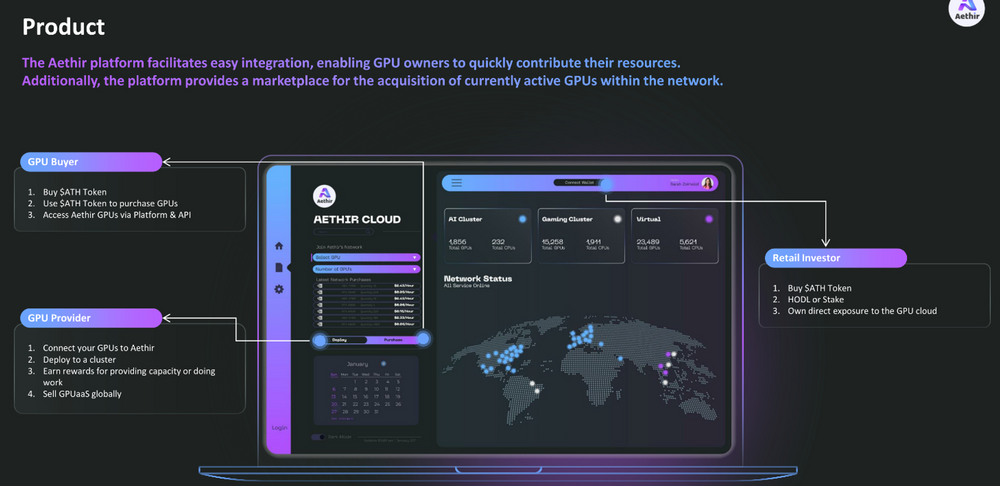
One key innovation enabling Aethir’s strategy to meet enterprise market demands is the resource pool, which aggregates distributed contributors under a unified interface to serve large global clients. A key implication of the resource pool is that GPU providers can freely connect or disconnect from the network, allowing data centers with idle hardware to participate during downtime. This flexibility leads to higher utilization rates for GPU providers while enabling Aethir to offer lower prices to its consumers.

Moreover, Aethir's alignment with Web3 principles and the introduction of the $ATH token will allow network participants to collectively own the platform and reduce financial risk for early-stage network participants. This enables Aethir to scale rapidly, particularly in its early lifecycle stages.
The core operations of the Aethir ecosystem run on three critical backend infrastructures essential to its operations:
-
Containers: Serving as the foundation of the Aethir network, containers are the actual sites of cloud usage. They act as virtual endpoints that execute and render applications (e.g., rendering games for players, executing inference tasks for AI consumers, powering virtual phones). The purpose of containers is to ensure a cloud experience that is instantaneous and responsive, delivering a "zero-latency" experience. This is achieved by shifting workloads from local devices to containers (e.g., transferring all game execution and command processing).
-
Inspectors: Inspectors ensure the integrity and performance of containers within the Aethir network. Validating the specifications of containers provided by container suppliers is crucial to maintaining the network’s quality of service.
-
Indexers: Acting as the core of the Aethir network, indexers match consumers with suitable containers, ensuring fast launch times for cloud applications and services. The goal is to deliver "second-level" service—the transition from consumer request to actual delivery (e.g., player request to game screen) should occur in the shortest possible time. This requires concise signaling and efficient scheduling.
These three foundational elements—containers, inspectors, and indexers—collectively ensure the smooth operation of the Aethir ecosystem. More information about these three key roles can be found in their GitBook.
Key Value Propositions for Aethir Ecosystem Participants
GPU Supply: Existing Infrastructure Providers
User Example: Telecommunications companies, hardware-intensive digital enterprises.
User Pain Point: Underutilized hardware.
Aethir’s Value Proposition:
-
Increase utilization by selling hardware capacity via the GPU-as-a-Service (GPUaaS) model.
-
Achieve economies of scale through enterprise-level contracts enabled by pooling resources globally across the Aethir network.
-
Offer flexible terms for hardware operators seeking to join the network.
-
Token incentives reduce capital expenditure risk.
GPU Supply: New Infrastructure Investors
User Example: Mining infrastructure investors.
Aethir’s Value Proposition:
-
Global access to enterprise customers.
-
Ecosystem support to simplify and assist operations.
-
Reduced capital expenditure risk:
-
Ability to make incremental investments.
-
High network utilization due to serving global demand and earning token rewards.
-
-
Higher returns: Earn service fees + token rewards.
GPU Supply: Retail Contributors
User Example: Retail users with idle hardware.
Aethir’s Value Proposition:
-
Earn rewards for contributing GPU processing power to the network.
-
Hold/stake $ATH to directly benefit from Aethir ecosystem growth.
-
Run inspector nodes and earn rewards for contributing to network decentralization and service quality.
GPU Consumers
User Types:
-
AI Training
-
AI Inference
-
Gaming
-
Virtual Computing
Aethir’s Value Proposition:
-
Improved Performance
-
Low-latency global service
-
Local computing options
-
High-performance platform and API integration
-
-
Competitive and dynamic pricing, further reduced as adoption and scale increase.
-
Global coverage with vast and dynamic supply.
Business Model
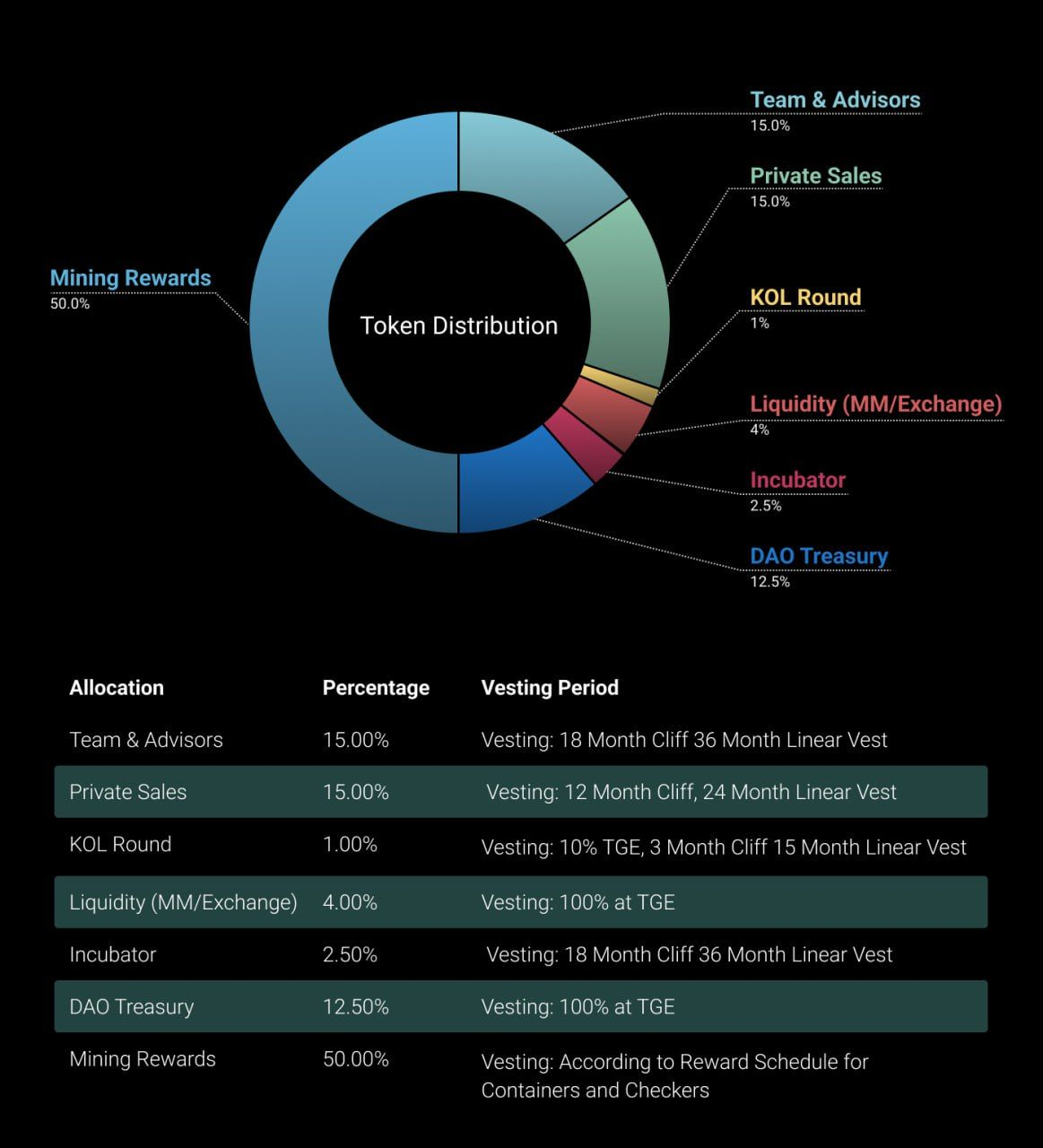
Aethir acts as a marketplace and aggregator, facilitating connections between supply-side participants (such as node operators and GPU providers) and users and organizations from compute-intensive industries like AI, virtual computing, cloud gaming, and cryptocurrency mining. By providing institutional and retail users with access to these computing resources, Aethir offers a cost-effective alternative to traditional Web2 counterparts and competitors. Revenue generation within the Aethir ecosystem follows a structured model where a 20% service fee, denominated in $ATH tokens, applies to payments made by customers to suppliers. Additionally, as part of its indexer grant and operational program, Aethir receives 5% of the total $ATH token issuance. To ensure fairness and competitiveness, Aethir allocates 50% of the total ATH supply to token incentives, benefiting node operators and supply-side entities, ensuring attractive annual percentage rates (APR) for those entering the emerging ecosystem, and overall long-term sustainability.
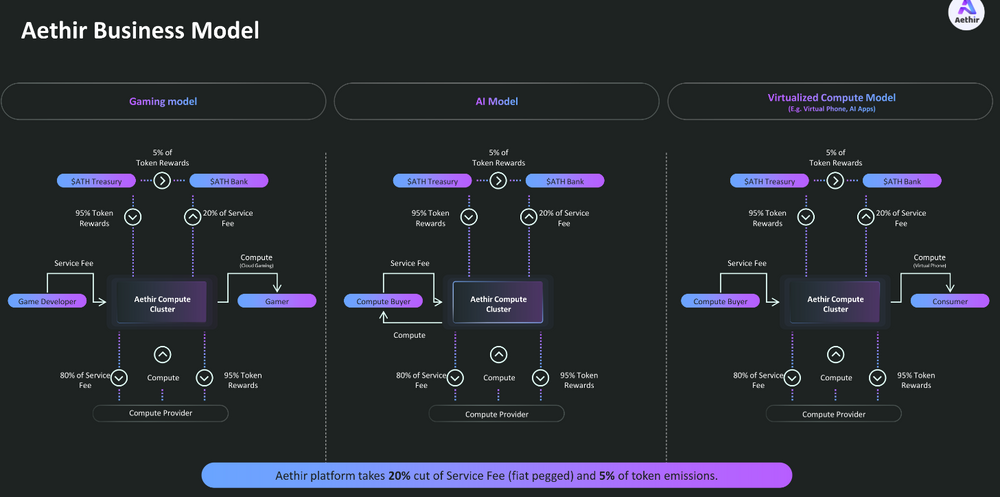
Node operators within the Aethir ecosystem have multiple revenue-generating pathways, categorized into three forms of rewards:
-
Service Fees: Compute buyers or demand-side entities pay service fees to purchase computing capacity. Payments are converted into ATH tokens, with 80% of the fee paid to node operators and Aethir retaining 20% as its platform share.
-
Proof of Render Work: As an additional reward, token incentives are offered to node operators who complete computational tasks within the ecosystem. This encourages supply-side entities to join Aethir’s ecosystem and contribute valuable processing and computation. Proof of Render Work is distributed only to containers upon completion of computational tasks.
-
Proof of Capacity: Compute providers earn Proof of Render Capacity by demonstrating readiness to provide computing services. Providers receive rewards even without active workloads, incentivizing participation and lowering entry risk.
Aethir operates within three primary areas, with the same business model applying across all three:
-
Cloud Gaming Model: Providing computing resources for the growing cloud gaming industry.
-
AI Model: Aethir’s platform provides dedicated infrastructure for AI applications, enabling users to leverage the computing power required to train and infer complex AI models.
-
Virtualized Computing Model: Focusing on virtualized computing, Aethir provides flexible and scalable computing resources suitable for a wide range of virtualized applications and workloads.
Attractiveness
GPU Demand
Aethir has validated enterprise-level GPUaaS customer demand in AI model training, virtual computing, and gaming, with three existing contracts projecting over $20 million in Annual Recurring Revenue (ARR) in Q1 2024.
Specifically, Aethir has achieved:
-
A contract with one of the world’s largest game studios, with ARR of $5–7 million, serving a player base of 150 million.
-
A contract with WellLink, the largest cloud gaming company with over 64 million monthly active users, with ARR of $5–7 million.
-
A contract with one of the world’s largest telecommunications companies, with ARR of $5 million (potentially rising to $13.9 million in the near future).
-
An additional 10 gaming contracts expected to close in Q1 2024.
GPU Supply
Aethir leverages its strong value proposition to unlock GPU capacity from existing infrastructure resources, while also attracting direct hardware investment commitments to become network participants.
Aethir’s cloud currently hosts equipment valued at $24 million, distributed across 25 locations and 13 countries. Additionally, Aethir has secured equipment equivalent to $10 million to expand its infrastructure in 2024.
Notably, Aethir has strategically focused on securing access to H100 devices. As AI gains significant traction in both Web2 and Web3, demand for H100 chips has grown exponentially. Aethir has already aggregated over 3,000 nodes connected to its network and is finalizing agreements to increase this number to 50,800 units within the next six months. This will position Aethir as the only decentralized provider capable of operating at this scale of hardware.
Below is a summary of the equipment currently owned by Aethir:
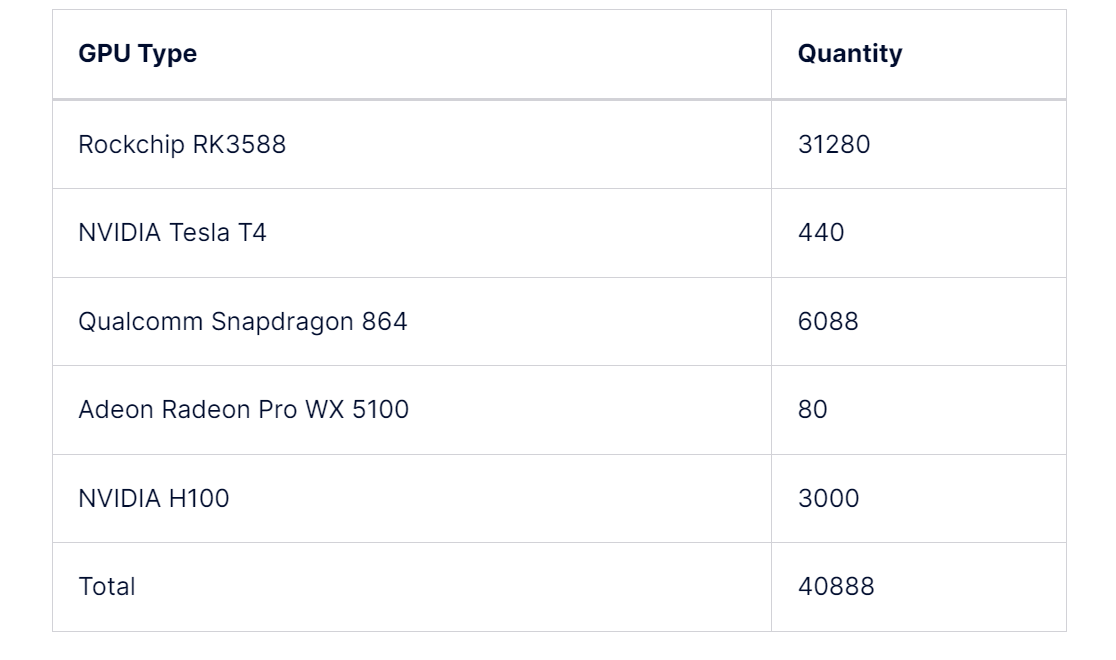
Left: GPU model, Right: Quantity
Social Appeal
Community support is a clear indicator of Aethir’s growing popularity, with over 170,000 followers across various social media platforms to date. Furthermore, with the continued growth of the Aethir platform and an increasing number of signed contracts, Aethir is expected to reach 10 million monthly active users (MAU) in 2024. This anticipated user growth underscores market enthusiasm for Aethir’s innovative cloud computing solutions.
Investors and Partners
In terms of funding, Aethir has successfully raised $9 million from a broad base of investors, including venture capitalists and family offices such as Animoca, Maelstrom Fund, IVC, Framework, Sanctor Capital, and Merit Circle. This investment reflects confidence in Aethir’s vision to transform the cloud computing landscape.
Additionally, Aethir has established strategic partnerships with key players in its industry:
-
Partnership with Nvidia through their Launch Program
-
Collaboration with Well Link, one of the world’s largest telecom companies, and other major players in the telecom sector (confidential under agreement)
-
Partnerships with top-tier game studios, including the world’s largest studio
-
Deployment on Arbitrum and collaboration with key Web3 players such as Gam3s.gg and Seedify.
Fundraising Activities
Seed Round (token round, early 2022), $60 million valuation
Pre-A Round (token round, early 2023), $150 million valuation
Technical Differentiation
Diverse Network Access: Aethir introduces a range of network access options for its container-based services. This includes peer-to-peer direct connections and server-assisted connections, suitable for various operational scenarios, offering a more adaptive solution compared to traditional cloud rendering approaches.
Transparent Evaluation Framework: Aethir has established a transparent and objective evaluation framework for assessing container specifications and service quality. This represents a shift toward a more dynamic evaluation methodology, with Aethir implementing a systematic approach to evaluate computing power specifications, standardized application benchmarks, and container assessment frameworks to ensure consistency across various use cases. Additionally, inspectors within the network ensure consistent quality delivery to users. Finally, a comprehensive Quality of Service (QoS) evaluation protocol covers the entire session from start to finish.
Enhanced Low-Latency Technology: Aethir has made significant progress in minimizing end-to-end latency, which is crucial for delivering real-time cloud rendering experiences. Key innovations include:
-
Utilizing predictive algorithms such as Kalman filtering to ensure stable input events, reducing latency by 7–15 milliseconds compared to competitors.
-
Implementing advanced video capture techniques directly from the GPU, minimizing VSync latency (reducing up to 16.6ms at 60fps).
-
Adopting Region of Interest (ROI) encoding strategies to optimize the video encoding process on the Aethir platform, achieving a more balanced bitrate and network transmission capability compared to competitors, improving user experience.
-
Applying terminal super-resolution techniques and integrating Google’s Oboe to enhance image and audio quality, further reducing latency for users under poor network conditions—especially noticeable in developing countries.
-
Custom-tuning video rendering and playback to adapt to various chips and operating systems, ensuring precise latency control.
-
Diverse Hardware Access: Aethir has broad hardware access, enabling it to go beyond many current supported hardware sources.
Hardware supported by Aethir includes:
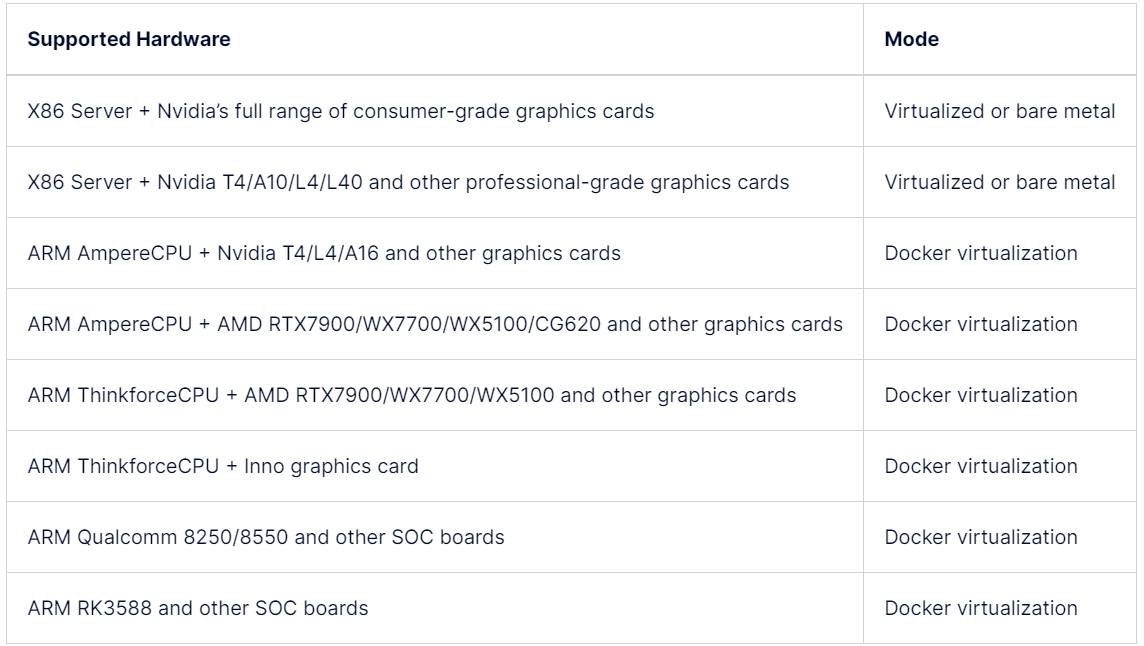
Left: Supported hardware, Right: Mode
This strategic approach enhances Aethir’s cloud rendering capabilities, improves platform compatibility with hardware, innovative network connectivity solutions, and a robust evaluation system, while ensuring high-quality user experience with low latency.
Roadmap
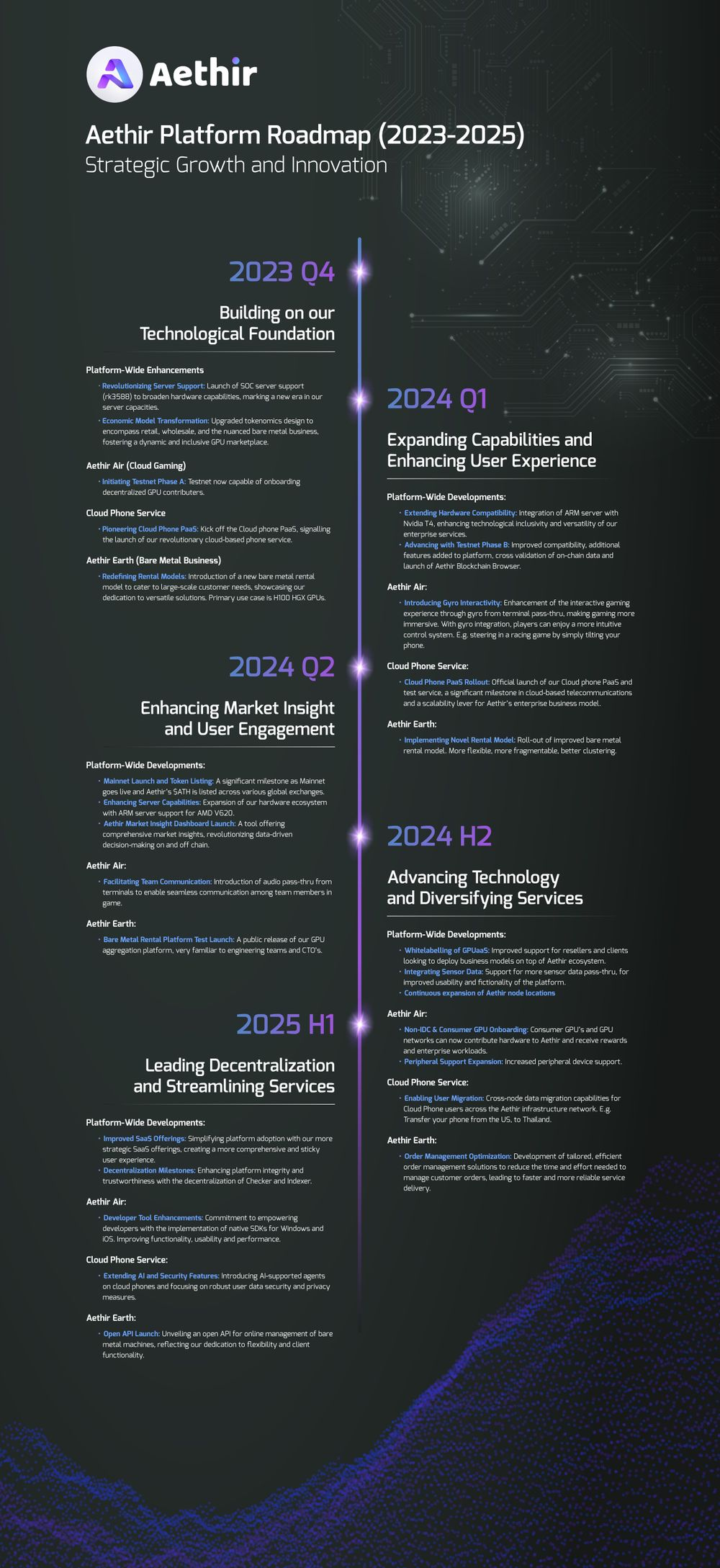
Aethir’s roadmap is strategically designed around rapid development across four key areas in the future:
-
Platform Development: Aethir will focus on continuous platform enhancement, with upcoming developments aimed at expanding hardware support and refining the platform’s tokenomics. The roadmap also outlines the decentralization of key roles (such as inspectors and indexers) and promoting GPU-as-a-Service (GPUaaS) alongside Software-as-a-Service (SaaS) applications, aiming to solidify the platform’s infrastructure and expand its use case scenarios.
-
Aethir Air: In the cloud gaming vertical, Aethir focuses on optimizing the gaming experience for users and developers. Innovations include integrating gyroscope controls from end devices into games, enhancing interactivity and providing players with a more immersive and intuitive gaming experience—for example, tilting the device to steer in racing games. Additional improvements target in-game communication, aiming to ensure seamless and uninterrupted audio exchanges between players.
-
Aethir Earth: Aethir Earth focuses on bare-metal operations, meeting large-scale customer demand for H100 GPUs. The roadmap envisions increased efficiency and flexibility in order management and resource allocation. Developing open API interfaces is a primary goal to streamline these processes, positioning Aethir as a versatile provider capable of serving diverse clients—from niche players to industry giants—with ongoing product development planned over the next two years.
-
Cloud Smartphone Services: Technological advancements in this area aim to build a borderless cloud smartphone Platform-as-a-Service (PaaS), emphasizing user security and privacy. Future developments include enhancing user migration capabilities, enabling seamless cross-node data transfer within the Aethir infrastructure network. For instance, users will be able to easily migrate their cloud phone service internationally, showcasing Aethir’s vision for global connectivity and user-centric cloud service experiences.
Competitive Landscape
As noted above, Aethir is building a distributed, GPU-based computing infrastructure for dynamic enterprise use cases spanning AI, gaming, and virtualized computing.
In this context, Aethir competes directly with both traditional and decentralized cloud GPU providers. The following image outlines the current situation among centralized providers.

Although this section focuses on the DePIN GPU space, we emphasize the following key challenges faced by centralized providers, which Aethir and DePIN competitors are addressing—challenges that may lead to sustained advantages in competition:
-
Pricing and Cost Structure: Centralized providers charge high prices with confusing pricing structures, especially for on-demand usage. Hidden costs include paying both the cloud provider and additional services (e.g., NVIDIA DGX Cloud) separately.
-
Service Availability: Incomplete availability of certain machine types makes it challenging to scale services to meet enterprise-grade or high-intensity computing needs.
-
Infrastructure and Integration Limitations: Some services require GPUs to be connected to specific standardized virtual machines from different providers, potentially causing inefficient setups. Restrictions on integration with other cloud services or internal systems.
-
Limited GPU Options and Specialization: Many providers are highly specialized and offer limited GPU models and configurations, making them unsuitable when flexibility is needed.
On the other hand, in the decentralized competitive landscape, it is worth highlighting the complementary roles of storage-focused and GPU-focused networks.
In the first group, projects like Arweave and Filecoin choose not to compete in the GPU cloud computing space but instead build synergies to complement the outputs of other participants in the field. At Filecoin Day 2023, the Filecoin Foundation stated that the AI focus for Filecoin would come from AI-generated data, and the growth of AI data benefits Filecoin. Fair Protocol, built on Arweave, is a decentralized AI model and computing marketplace that serves as a supplementary layer for unverified data in AI computing platforms—an approach mirrored within the Aethir ecosystem.
Regarding the latter, in this report, we will focus on analyzing direct competitors within the decentralized GPU network space, benchmarking against Render, Akash, Gensyn, and io.net.
Render
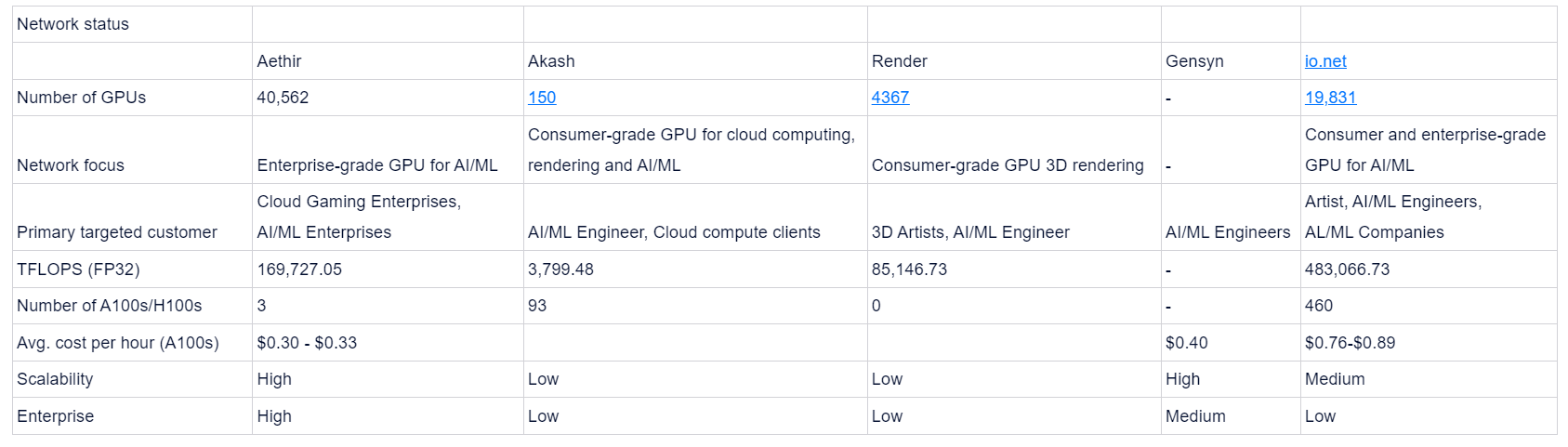
The Render Network primarily focuses on rendering services and currently connects 4,367 GPUs to the network, representing over 82k TFLOPS.
The recently approved Render Network Proposal 004 (RNP-004) indicates the project’s initial interest in utilizing Render Network nodes for AI/ML workloads. Recently approved RNP-007, RNP-008, and collaboration with io.net further demonstrate Render’s commitment to increasing network utilization by offering underutilized GPUs for additional computational tasks.
Akash
As of February 2024, according to Cloudmos and Akash Stats, Akash Network currently has a capacity of 150 GPUs, including nearly 100 A100 chips and several RTX 3000 and 4000 series, useful for consumer-grade AI/ML training and rendering tasks.
In Akash’s June 2023 announcement establishing its cloud GPU network, they stated:
“Akash GPU testnet has attracted interest from suppliers possessing NVIDIA H100, A100, and other leading data center and consumer GPU models.”
At the time of writing, H100 GPUs are not yet listed for rent on the Akash network platform.
Gensyn
Gensyn.ai is a decentralized GPU network focused on AI applications.
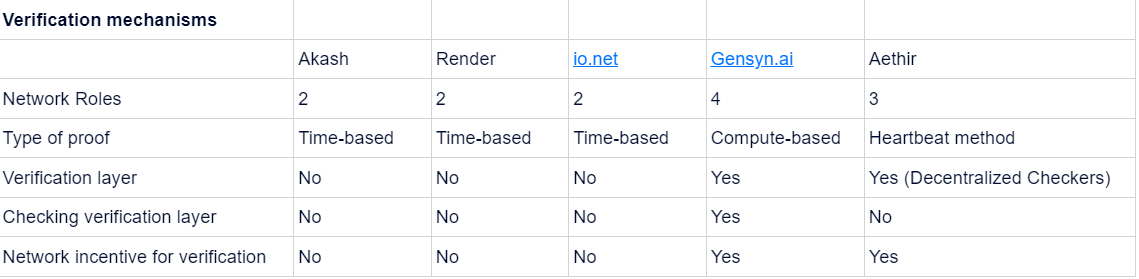
Gensyn operates on its own network, following a Layer-1 trustless protocol structure. Additionally, to verify and validate computational work, Gensyn employs a combination of probabilistic proof of learning, graph-based pinpointing protocols, and Truebit-style incentive games. Gensyn also utilizes staking and slashing mechanisms to ensure honest behavior from network participants.
The Gensyn network is currently in Devnet mode, with no publicly available statistics on its network scale.
IOnet
IOnet’s decentralized application is built on Solana, primarily focusing on consumer and enterprise-level AI/ML. Network validation uses a time-lock mechanism to ensure service quality from connected GPU suppliers.
According to publicly available information, the IOnet network has connected over 18k GPUs, representing over 483k TFLOPs. Notably, IOnet already has 460 H100 GPUs. IOnet currently targets AI/ML engineers and companies as its primary users.
Summary
The table below highlights the design trade-offs and current network status of Aethir, Gensyn, and IOnet.
It is worth emphasizing that Aethir specifically deploys enterprise-grade GPUs, resulting in a high barrier to network entry. Due to this strategy, Aethir has demonstrated the ability to secure service agreements with major enterprise clients and acquire H100 chips. On the other hand, IOnet’s approach positions them as leaders in raw GPU connection numbers.
Finally, the efficiency of Aethir’s approach allows them to offer the most competitive A100 rental rate at $0.33 per hour.
Performance parameters of networks like Akash and Render
Team
-
Mark Rydon: Co-founder and CEO. Mark has held key roles at NOTA Platform, Flux Capital, Gaas LTD, Kulture Athletics, Inc., and Bechtel Corporation.
-
Daniel Wang: Co-founder and Chief Business Officer. Previously served as Venture Partner at IVC, CIO at YGG SEA, Director of International Publishing Management at Riot Games, and Operations Director at Riot Games China.
-
Kyle Okamoto: Chief Technology Officer. Kyle previously served as CEO and General Manager of Ericsson IoT, Automotive, and Security Business, CEO of Edge Gravity, and Chief Network Officer at Verizon Media.
-
Paul Thind: Chief Commercial Officer. Paul currently serves as Aethir’s Chief Commercial Officer, co-founded and was CEO of Triggerspot Inc., and served as an advisor at Creadits and Trick Studio.
Tokenomics
Token Utility
The ATH token serves as the core of the Aethir ecosystem
-
Acts as the primary currency for internal transactions on Aethir, facilitating payments for AI applications, cloud gaming, and virtualized computing.
Governance Role
-
As Aethir progresses toward DAO governance, ATH enables token holders to propose, debate, and vote on changes, underscoring Aethir’s commitment to decentralization.
Node Operator Staking
-
New node operators stake ATH tokens to join the ecosystem, aligning economic interests with Aethir’s goals and signaling commitment to high-quality service.
Security and Quality Assurance
-
Staked ATH tokens serve as collateral against misconduct and may be slashed in case of misbehavior, ensuring users receive a high-quality, reliable cloud experience.
Token Distribution
Risk Assessment
Token Volatility
One of the inherent challenges in Decentralized Physical Infrastructure Networks (DePIN) is the significant impact of native token price movements and volatility on the supply of hardware and computing resources within the ecosystem, as well as on user demand. As supply-side participants are incentivized through token rewards, they face the reality that price volatility could greatly affect their profitability and returns. This variability also extends to the demand side, especially when services are paid for in native tokens. Therefore, Aethir addresses this challenge by allowing payments in fiat currencies while settling transactions in ATH tokens, ensuring that end users can still access computing resources and services at competitive prices relative to Web2 and Web3 competitors, despite ecosystem growth and ATH price fluctuations.
Network Readiness: Aethir’s Approach to GPU Integration
DePIN projects often encounter a growth bottleneck because GPU integration heavily depends on consumer contributions and bootstrapping consumer hardware, which tends to delay network maturity. This makes networks targeting only retail supply struggle to meet demand. Aethir overcomes this issue by partnering with institutional resource providers such as Internet Data Centers (IDCs), thus overcoming initial network setup challenges and ensuring continuous availability of online nodes. This strategic move not only accelerates network maturation but also maintains high service standards from the outset.
Furthermore, while many cloud computing competitors focus on leveraging retail consumer GPUs to boost computing capacity, Aethir navigates the potential risks associated with declining retail GPU demand and resulting low resource utilization. Considering that the majority of computing demand—especially for AI training—requires enterprise and institutional-grade GPUs, Aethir’s strategic alignment with its three core business models (cloud gaming, AI, and virtualized computing) effectively ensures optimal utilization of computing resources. Additionally, existing contracts with major players in gaming and mobile industries ensure sufficient balanced demand to match the supplied resources.
Aethir’s Commitment to Execution
Execution risk remains a significant concern, as Aethir continues to tackle multiple complex challenges within the industry while balancing across multiple business models including cloud gaming, AI, and virtualized computing. Although managing such broad operations may introduce potential complexities, Aethir has demonstrated effective execution and delivery capability, with over 40,000 nodes currently active in its ecosystem. Even with a proven track record of onboarding nodes, simultaneously conducting three distinct operations is a massive undertaking, and ensuring consistent delivery across all components remains challenging.
Summary Points
Global AI demand and Web3 solutions: Demand for AI services is surging, particularly for enterprise-grade GPUs like the H100, with AI investments reaching $68.7 billion in 2023. This trend, along with a potential $600 billion market, indicates a promising intersection into the Web3 AI space. Aethir stands out by bridging the gap between high-performance computing demand and Web3 AI technologies.
The Right Product at the Right Time: The current market environment reveals a clear unmet demand for processing power, and Aethir has demonstrated product-market fit to address this need.
Aethir’s Strategic Advantages: Aethir has successfully onboarded 3,000 H100s and expects to scale to 50,800 H100s by late 2024 through ongoing discussions. Partnerships with major telecom providers, game publishers, and WellLink grant Aethir access to a potential user base of 10 million monthly active users.
Aethir’s Flywheel: Partnerships drive Aethir’s projected Q1 2024 ARR over $20 million, with expected year-end ARR of $114 million. This figure is poised to grow as current contracts scale and new cloud computing contracts are announced. In contrast, the entire DePIN sector generated only $24 million in ARR. With the above partnerships, Aethir can increase node utilization, token demand, and attract more contracts and investors, creating a sustainable and self-reinforcing growth cycle.
Join TechFlow official community to stay tuned Telegram:https://t.me/TechFlowDaily X (Twitter):https://x.com/TechFlowPost X (Twitter) EN:https://x.com/BlockFlow_News
 @impossiblefi