








The infinite potential of cryptocurrency culture
TechFlow Selected TechFlow Selected
The infinite potential of cryptocurrency culture
The crypto industry is a multifaceted beast.
 Navigating Web3 tides with focused insights
Author: The Digital Buffets
Translated by: Block unicorn
When non-crypto acquaintances ask me about my fascination with cryptocurrency, I often pause to consider how best to explain it.
The crypto industry is a multifaceted beast. It has a deep technical core involving cryptography, computer science, and protocol development. It also presents a highly financialized exterior, most notably characterized by cycles of liquidity and the monetary value attached to such flows. But what fascinates me most—and is hardest to articulate—is its cultural potential.
The use of the word "potential" here is deliberate. We haven't arrived at that stage yet. Crypto culture remains in its infancy, prone to hysteria (mania), cult figures, charlatans, and outright criminals. Even at its mildest, the cultural scene here seems saturated with nonsense and empty rhetoric.
Yet, I believe all this is a feature, not a bug. Whether or not crypto exists, modern life is already full of bullshit—it permeates our pop culture and even our workplaces. Where money flows, all sorts of fraudsters follow. Therefore, crypto isn’t inherently more susceptible to scams or rogue behavior. Its openness and permissionless nature simply allow our basest and most mundane roles to operate freely and unapologetically.
The purpose of this article is to share my perspective on why, despite these flaws, I still believe there's much more to crypto’s cultural potential. I also aim to do so in a non-technical but thoughtful way, making it accessible to those unfamiliar with the field.
To that end, I want to offer an alternative framework for thinking about crypto—not as a place to be reviled or avoided at all costs, but as an open, free workshop equipped with tools anyone can use to cultivate more enduring and vibrant forms of digital culture.
My basic premise is this:
-
Cryptocurrency provides an improved toolkit for cultural production on the internet.
-
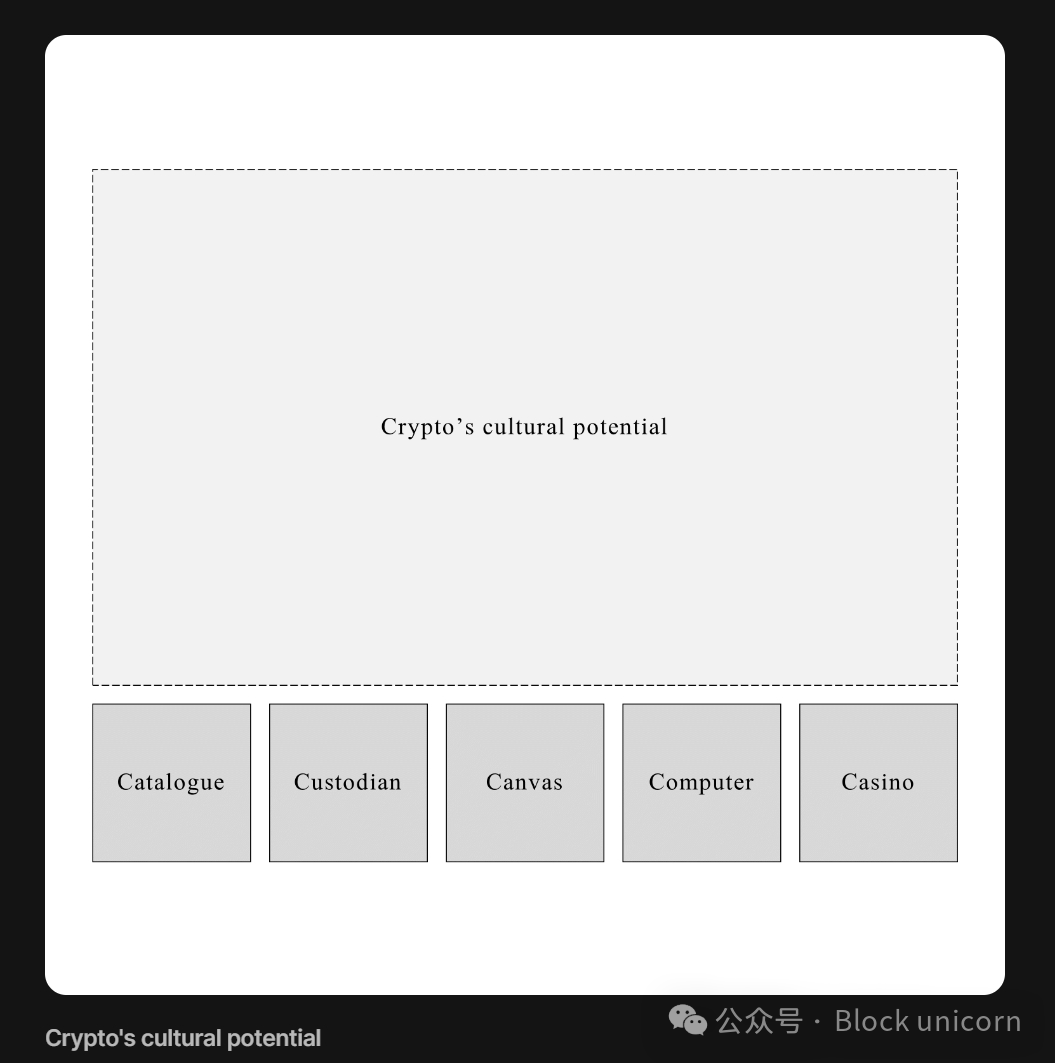
You can conceptualize these tools through five "C"s, representing blockchain functions as: (i) catalogue, (ii) custodian, (iii) canvas, (iv) computer, and (v) casino.
-
Anyone can freely use these tools to contribute to digital culture, ultimately creating meaningful things that can be passed down to future generations.
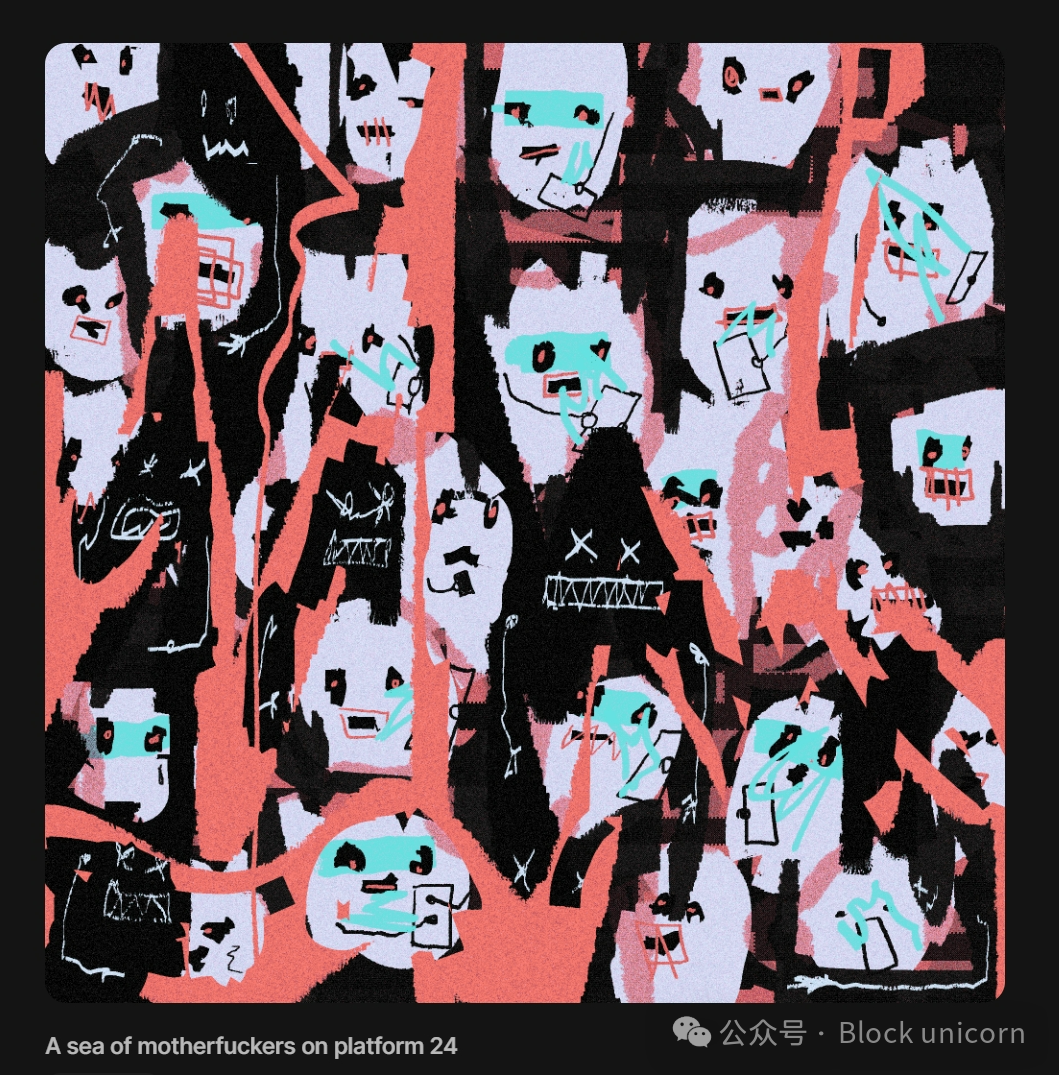
"A Sea of Motherfuckers on Platform 24" (2019) by XCOPY reflects the artist’s distinct glitch aesthetic—visually striking, thematically eerie, and unmistakably identifiable as XCOPY’s work.
This anonymous artist had been regularly posting animated works on Tumblr for nearly a decade before his first auction in 2018, building a devoted following that laid the groundwork for his explosive success in the crypto art space. Many of his pieces employ irreverent and witty titles that amplify their impact, often touching on core themes of contemporary culture, especially those related to cryptocurrency—see for example "All Time High in the City" (2018) and "Right-click and Save As guy" (2021).
What is Culture?
Sociologist John Scott defines culture in the Dictionary of Sociology as “everything transmitted socially rather than biologically within human societies.” I like this definition because it’s concise and focused. Culture, at its essence, is everything we transmit to others via non-biological means—whether material or immaterial, such as stories, art, music, and shared practices or rituals.
The process of cultural development takes time, and something typically only becomes “culture” after relevant objects, practices, or ideas have been passed down across generations. However, in the context of digital culture, this temporal dimension is greatly compressed. The consumer internet hasn’t existed for more than a single human lifetime. Due to the speed at which information moves online and the rapid evolution of the infrastructure and interfaces we use to interact with the internet, digital cultural artifacts or experiences are also more ephemeral.
Take, for instance, forum signatures or “siggies”—graphic banners users could attach below their posts on online forums. When I was a teenager, they were very popular in online gaming communities. I remember creating many such siggies and posting them in the forums I participated in to boost engagement. There were even contests where we could “duel” other users to see whose siggy received more votes. Unfortunately, over the years, as I switched computers, I lost my siggies, and those I uploaded to image hosting sites have long since vanished. Many of these gaming forums have also shut down, replaced by newer platforms that captured the attention of subsequent generations of teenagers.
Thus, the rise and fall of digital culture is very real. Many online artifacts or experiences simply cannot withstand the test of time, as the internet is highly vulnerable to bit rot at scale.
The Five C’s of Cryptocurrency
I emphasize the ephemerality and volatility of digital culture not because I think crypto can fully mitigate these structural conditions (it can’t), but because I believe it offers a good set of balancing tools that can help improve the process of cultural production on the internet, despite these constraints.
My mental model for the crypto toolkit for cultural production can be summarized by the five C’s, each representing an analogy for a blockchain function. I believe this provides a simple yet comprehensive framework for appreciating crypto’s potential as an enabler of digital culture.
(i) Blockchain as Catalogue
Conceptually, blockchains aren’t hard to understand. I like to describe them simply as databases with special properties. In short: data on blockchains is distributed across a network (decentralized), anyone can add data (permissionless), provided they follow the rules coded into the system, and the data is visible to everyone (transparent), yet tamper-proof except by the owner (censorship-resistant).
Open and Verifiable Records
These special properties make blockchains inherently suitable as records for online cultural artifacts:
-
Blockchain transparency allows anyone to view these records, aligning with the open nature of the internet. Listings in such records are not static; they automatically update as people transact with the listed items. Additionally, anyone can query the complete transaction history of each listed item on the blockchain, helping foster a more open market around online cultural artifacts.
-
The permissionless nature of blockchains also means anyone can contribute listings. The low barrier to adding entries onto such a record makes them less susceptible to gatekeeping, helping make digital culture more accessible and participatory.
-
Given the censorship resistance of blockchain data, users can also be more confident in the authenticity of listings. While blockchains cannot fully determine the provenance of off-chain digital objects—since some trust assumptions are still needed to link a blockchain address to a specific creator—they do provide a near-unforgeable relationship between a digital artifact on-chain and its blockchain address. This reduces the user’s verification burden—if we see a creator has published their blockchain address across multiple independent sources, such as social media, digital art galleries, or secondary markets, we can reasonably assume items listed from that address are authentic.
Such listings on blockchains work through standardized technical formats. For Ethereum and similar smart contract blockchains, this is achieved via tokenization. The ERC-721 token standard (or equivalents on other chains) enables digital information to be tokenized as non-fungible tokens (NFTs), with each NFT resembling an entry in a catalogue. For Bitcoin, Ordinals theory allows digital information to be inscribed onto individual satoshis (the smallest unit of Bitcoin). Each inscribed satoshi (also known as an Ordinal) functions similarly to a catalogue listing.
Interoperable Records
Because such listings are based on universal technical standards—NFTs or Ordinals—their associated records can achieve interoperability across multiple platforms on the same blockchain. You can browse and trade them using different applications, much like a JPEG file can be opened by various image viewing or editing software.
This interoperability is a powerful feature, as it allows distribution of cultural artifacts on blockchains to be decentralized across multiple platforms and markets—for example: OpenSea, Blur, Magic Eden. As creators and consumers of these artifacts, we can choose which platform or market to use based on our needs. We’re not locked into a single marketplace’s policies, nor catastrophically affected if a platform goes down.
In sum, as an open, verifiable, and interoperable directory of digital artifacts, cryptocurrency has the potential to become a kind of master map that helps participants navigate online culture. I believe this is profoundly empowering, giving us greater autonomy over how we produce and consume culture. That’s why I think we should begin more consciously building the foundations of on-chain culture.
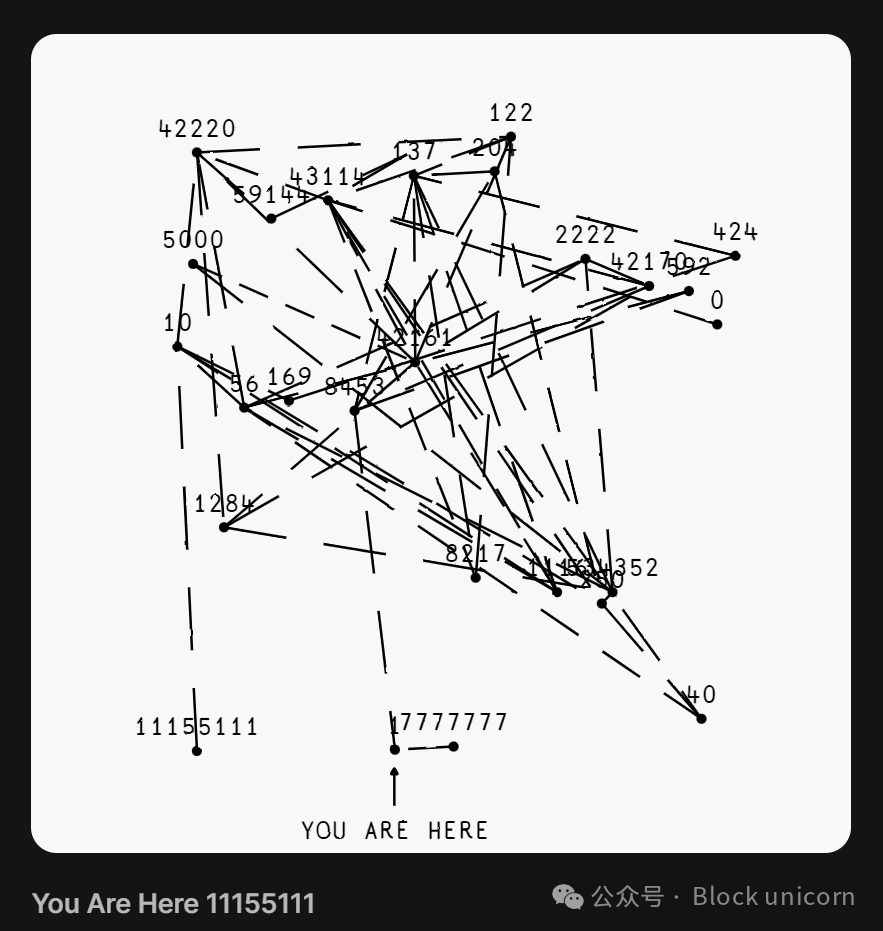
"You Are Here" (2024) by 0xfff is a conceptual art piece that explores interoperability across different blockchains. With the help of LayerZero—a protocol enabling cross-chain interoperability for apps and tokens—each token in the project can be bridged across several blockchains compatible with the Ethereum Virtual Machine (EVM). Every time a token is transferred via bridge, a record is left on it—an archive tracing its past crossings and boundaries. In the artwork shown above, "You Are Here 11155111" belongs to the artist. At the time of writing, it has been bridged the most times (66) among the project’s 34 tokens. Its intricate path resembles a well-worn trail on a map. Collectively, they suggest the vast creative space available to artists due to blockchain interoperability.
(ii) Blockchain as Custodian
Beyond being a catalogue, blockchain also acts as a custodian. They enable us to own digital artifacts.
Consider how paradoxical this sounds. Digital artifacts are inherently replicable—anyone can “right-click and save” a digital file, creating infinite copies across the internet. Thus, ownership of such online digital artifacts has always been fragile.
Digital Artifacts as Property
Blockchain helps separate ownership from usage of digital artifacts. You can think of an NFT or Ordinal as a tamper-proof certificate of ownership on the blockchain. Since only the person controlling the private key of a blockchain address can conduct transactions from that address, as long as you control the private key, you have absolute ownership over any NFT or Ordinal held at that address. No other blockchain address can hold the NFT or Ordinal you possess. Thus, digital artifacts linked to NFTs or Ordinals can be owned just like any physical property.
Indeed, Singaporean courts have recognized NFTs as property, paving the way for owners to enjoy legally enforceable property rights over their digital assets on-chain, both financial and cultural.
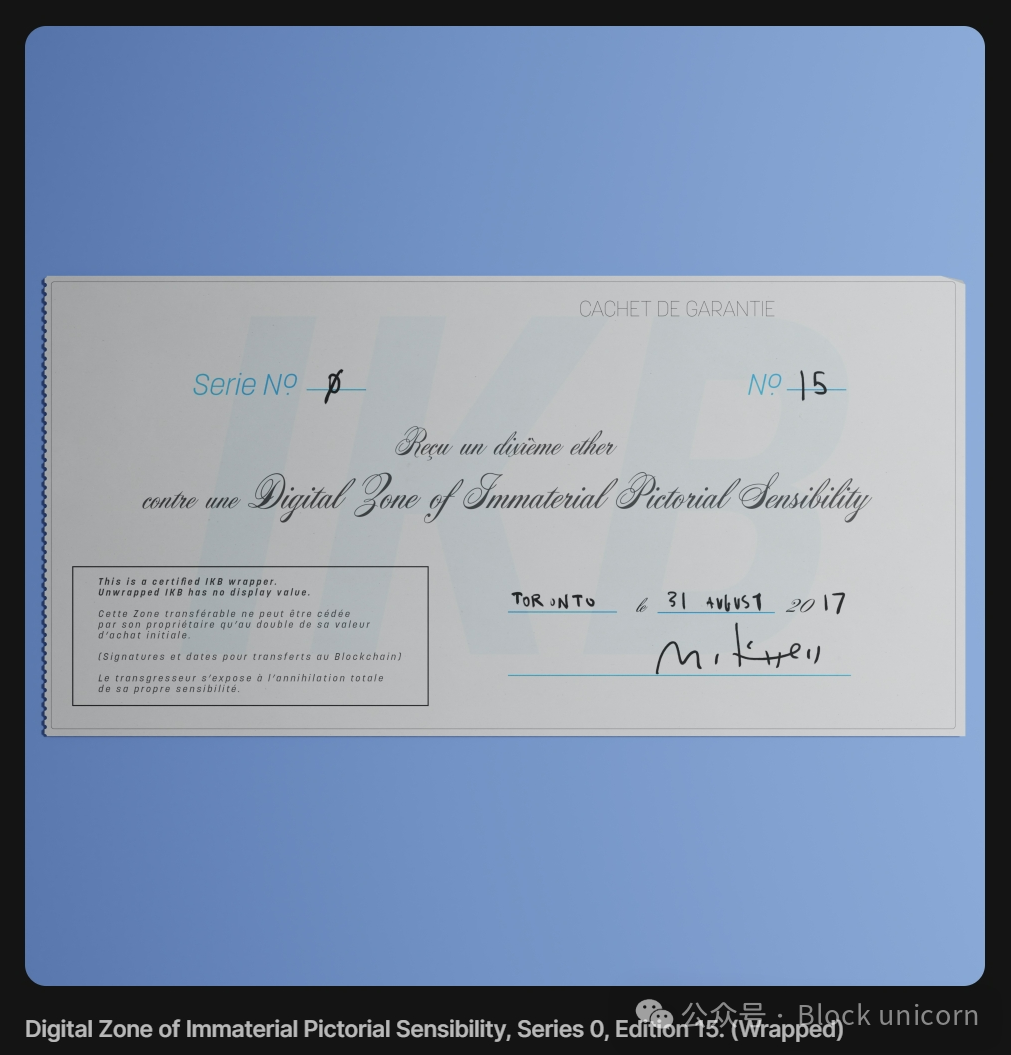
"Digital Zones of Immaterial Pictorial Sensibility" (2017) by Mitchell F Chan is a conceptual artwork modeled after Yves Klein’s "Zones of Immaterial Pictorial Sensibility" (1958–1961), raising profound questions about the nature of ownership.
Yves Klein created several “zones” composed purely of space, purchasable only with pure gold. After purchase, Klein issued a receipt to each collector, who then had two choices: (i) keep the receipt, or (ii) participate in a ceremony on the banks of the Seine in Paris, where the collector would burn the receipt while Klein threw half the gold into the river in front of witnesses. To Klein, true ownership of the artwork meant the work must be fully integrated with its owner, becoming absolutely theirs in essence. This implied that the physical record—the receipt—must be destroyed so the artwork couldn’t be resold or exist independently of its original owner.
For the “digital zones,” Mitchell F Chan created 101 artworks that appear as blank white screens when viewed online. Each could only be purchased via the artist’s smart contract on Ethereum using ETH, and in return, collectors receive a token. Similar to Klein’s ritual, collectors may choose to destroy their token via a ritual function on the artist’s smart contract, prompting Mitchell to send out the corresponding ETH.
Mitchell transforms Klein’s “zones” into a digital environment, highlighting the increasingly intangible nature of our contemporary culture, where virtual experiences are accepted as substitutes for physical ones. In this context, the piece invites us to reflect on how the separation between the commodity form and experiential form of art (both immaterial in different ways) affects collectors’ relationships with and valuation of the artworks they own. Indeed, one must ask: when we buy an NFT of an intangible digital artwork, what exactly do we truly own? (Note: Mitchell also published a 33-page essay accompanying the work, worth reading if you’re interested in deeper details about Klein’s “zones” and his piece.)
Tangible Ownership, Infinite Distribution
Even though cultural artifacts on blockchains can now be legally or practically owned, they retain the functional qualities allowed by their digital nature—replicability and distributability. In other words, on-chain cultural artifacts can be simultaneously abundant and scarce. They can be widely distributed and used, while each item can only be owned by one blockchain address at a time.
This unique combination of attributes overturns our traditional views of property value. In digital environments, tangible scarcity doesn’t necessarily equate to greater rarity or higher value. Instead, the more widely shared they are, the more valuable they might become. After all, not everything online goes viral.
Writer and cultural studies scholar McKenzie Wark wrote about this in the context of art collecting:
“More interesting is to consider how the inherent shareability of digital artifacts can be turned into an advantage, making them collectible. Paradoxically, the rarest items are those whose images are widely circulated, because few things achieve widespread circulation. This can be leveraged to create value for artworks that aren’t traditionally rare or unique. The future of collecting may lie not in owning what others don’t have, but in owning what everyone has.”
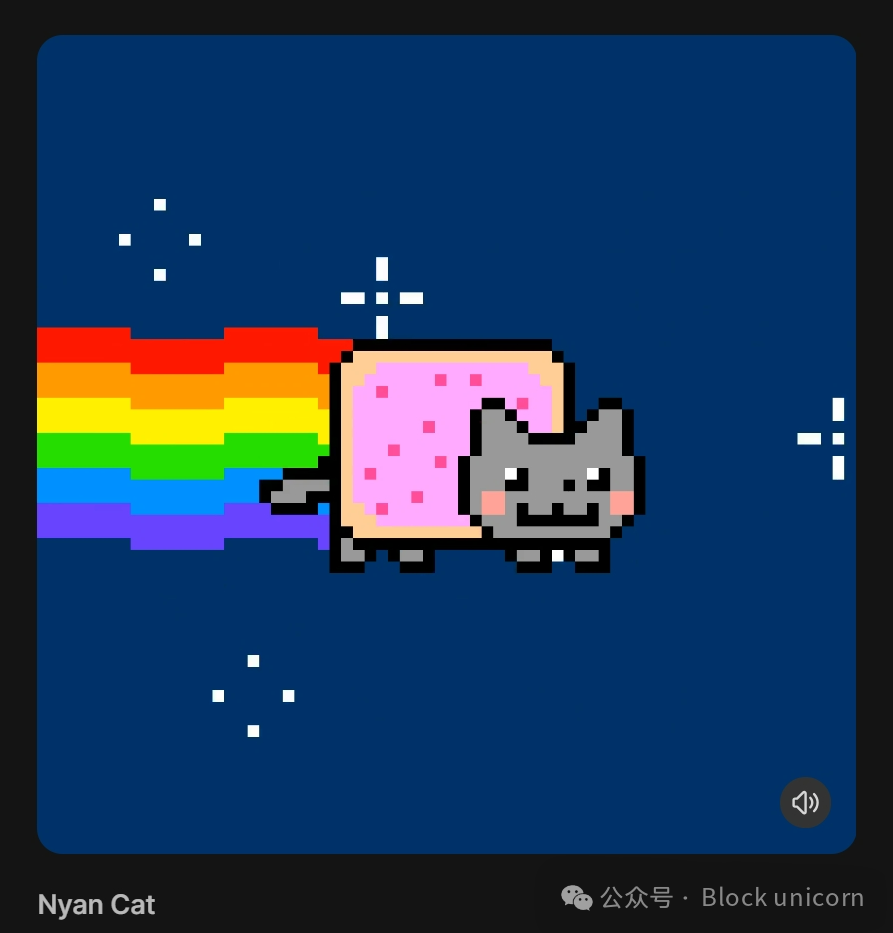
Nyan Cat is a popular internet meme featuring an animated cat with a cherry pie body flying through outer space trailed by a rainbow. On the tenth anniversary of Nyan Cat’s debut (April 2, 2011), its creator Chris Torres remastered the animation and auctioned it as an NFT. The winning bid was 300 ETH, demonstrating that popular internet memes can command significant value.
Custodians of Ownership, Managers of Value
By serving as custodians of the essential information required to prove ownership, blockchains not only make digital cultural artifacts easier to trade online, but also easier to accumulate value as digital-native property. Just as physical property underpins massive wealth accumulation in the real world, digital property in culture will likewise become the foundation upon which we grow, maintain, and distribute value on the internet.
When we can enjoy stronger, more secure ownership of our assets via blockchain custody, you can be sure we’ll go to great lengths to maximize the value on top of them. As blockchains become custodians of digital culture, the owners of its constituent cultural assets (at least those with long-term vision) will naturally be incentivized to become stewards.
It will be fascinating to see whether blockchain-based ownership can drive coordination between creators and consumers of cultural artifacts, creating a space where financial and cultural capital converge to unlock new forms of creativity and collective meaning-making. If this dynamic can sustain over the long term, I’m optimistic it could positively influence the development of digital culture.
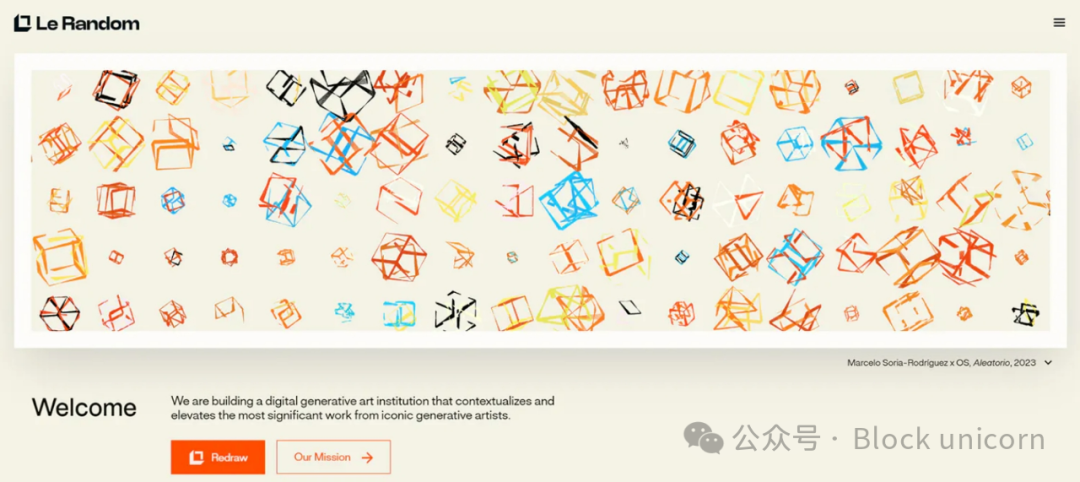 Screenshot of Le Random website homepage
Le Random, founded by anonymous digital art collectors thefunnyguys and Zack Taylor, positions itself as the “first digital generative art institution,” consisting of two parts: (i) a collection of generative artworks on blockchain conveying the depth and breadth of the generative art movement; (ii) an editorial platform aimed at contextualizing the movement’s place in art history and celebrating its cultural significance. The name “Le Random” pays homage to the late generative artist Vera Molnar, for whom randomness was a key component of her practice.
Le Random’s dedication to curating, contextualizing, and elevating generative art on blockchain is remarkable. Its impressive collection is meticulously catalogued and beautifully presented on its website. Peter Bauman, Le Random’s editor-in-chief, is developing a generative art timeline that offers a compelling gallery of generative art—from pre-modern origins to the current era where blockchain serves as an artistic medium. The editorial articles on Le Random’s site are also deep and timely, featuring nuanced commentary and insightful interviews with artists. Altogether, Le Random stands as one of the outstanding examples of blockchain-based digital art collectors—and passionate stewards of the field.
(iii) Blockchain as Canvas
Blockchain is more than just a platform for trading and owning cultural artifacts online—it should also be seen as a standalone creative medium. They are canvases where data—the building blocks of our digital culture—can be linked or directly inscribed.
In most cases, digital artifacts cannot be fully stored on the blockchain. Due to the high cost of uploading large datasets within the limited storage space of blockchains, the actual media files underlying NFTs are typically hosted off-chain, for example, on decentralized file storage platforms like IPFS or Arweave. If files on these external platforms become corrupted or disappear entirely, such NFTs become disconnected (pointing to nothingness).
Despite this risk (which can be mitigated to some extent for IPFS-based NFTs through pinning), I still believe blockchains can serve as captivating canvases for digital culture.
Dynamic Digital Artifacts
To me, the appeal of digital artifacts on blockchains goes beyond merely treating tokens as pointers to media (e.g., images, videos, or songs). What’s fascinating is that digital artifacts on blockchains can meaningfully become dynamic—even as the owner’s sovereignty over them remains unchanged.
The design space for such dynamic digital artifacts is broad. Creators can design them so the cultural information they embody transforms based on the owner’s inputs or responses to other on-chain events. This makes digital culture come alive for individual owners or consumers, giving them agency to shape digital experiences while connecting them to a larger shared reality.
Such dynamic digital artifacts have clear use cases in gaming, which already plays a major role in our digital culture.
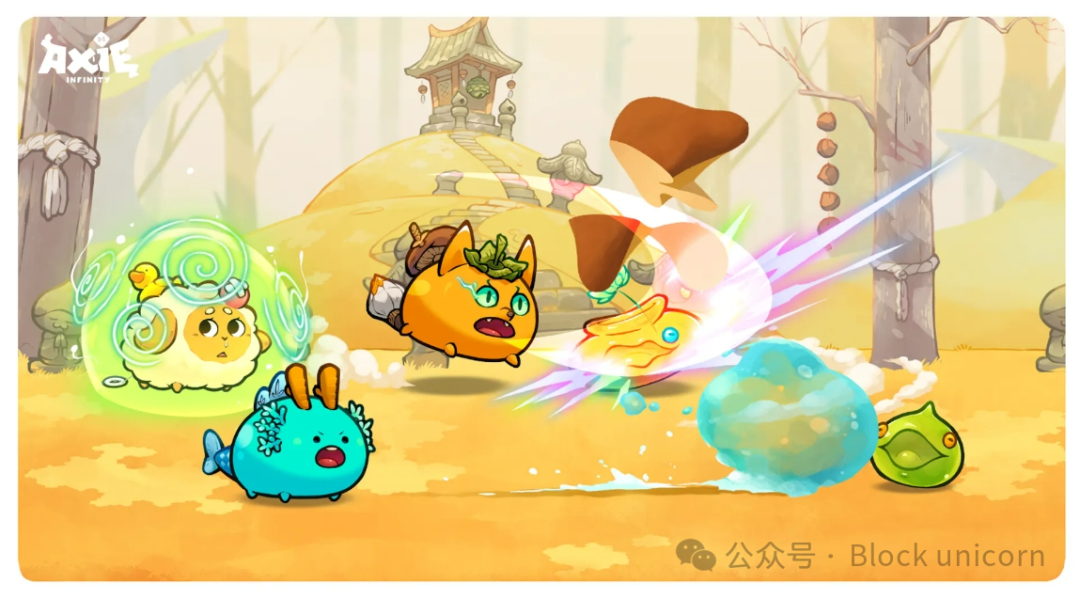 (Image credit: Sky Mavis Axie Infinity press kit)
Axie Infinity is a blockchain-based game centered on playable characters called Axies, who battle and breed to earn in-game resources and collectibles. Each Axie is represented by an NFT on the Ronin blockchain and can be upgraded using Axie Experience Points earned through gameplay. Higher-level Axies can upgrade more components, effectively making them dynamic NFTs that improve over time, effort, and skill.
Other use cases include collectibles that respond and interact within their digital environments; and in the art world, artists leveraging crypto-related mechanisms to comment on or critique blockchain as a creative medium and shared cultural space.
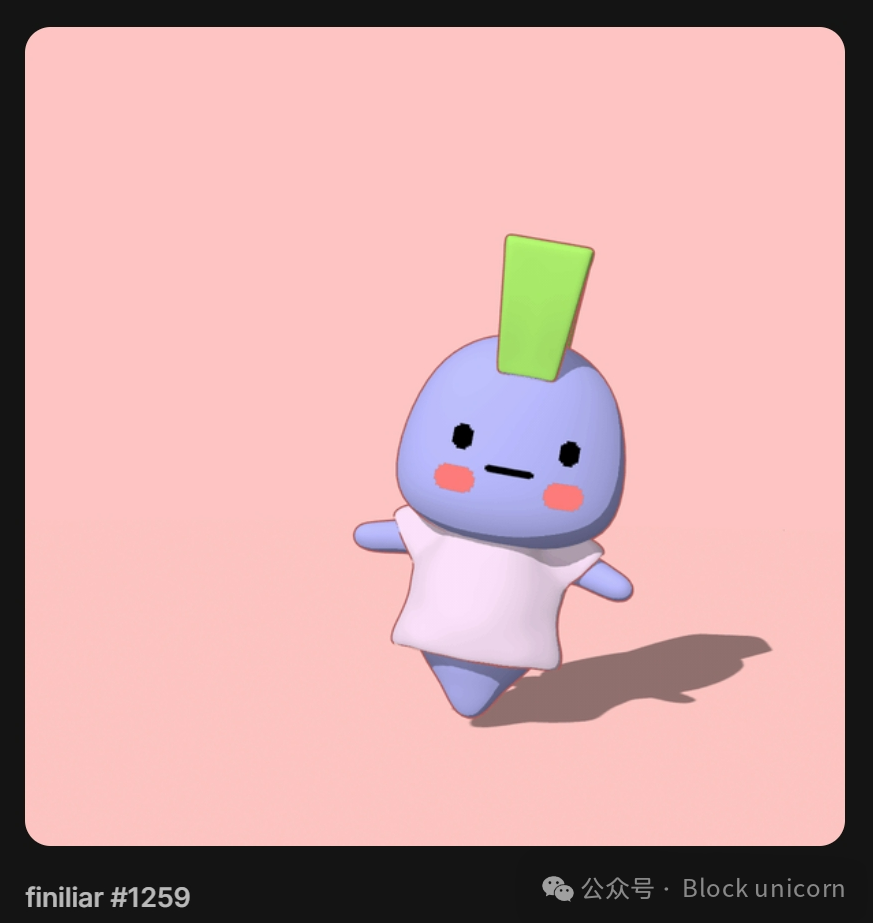
Finiliars (shortened to Finis) are a group of digital characters whose emotions and expressions change based on price movements of specific cryptocurrencies. Originally created and exhibited by artist Ed Fornieles in 2017, Finis were later updated, expanded, and launched as NFTs in 2021. Overall, Finis aim to visualize the abstract financial flows constituting global capital, particularly within the crypto space. Their cute appearance also entices us to form emotional connections with them, forcing us to reflect on the relationship between empathy and financial investment.
The Fini team has also collaborated with other crypto projects to release special edition Finis. For example, Zapper Finis (Frazel and Dazel) are open-edition NFTs released in collaboration with Zapper, a platform that helps users track the value of their crypto portfolios. Frazel and Dazel’s expressions and movements reference changes in their owner’s portfolio value.
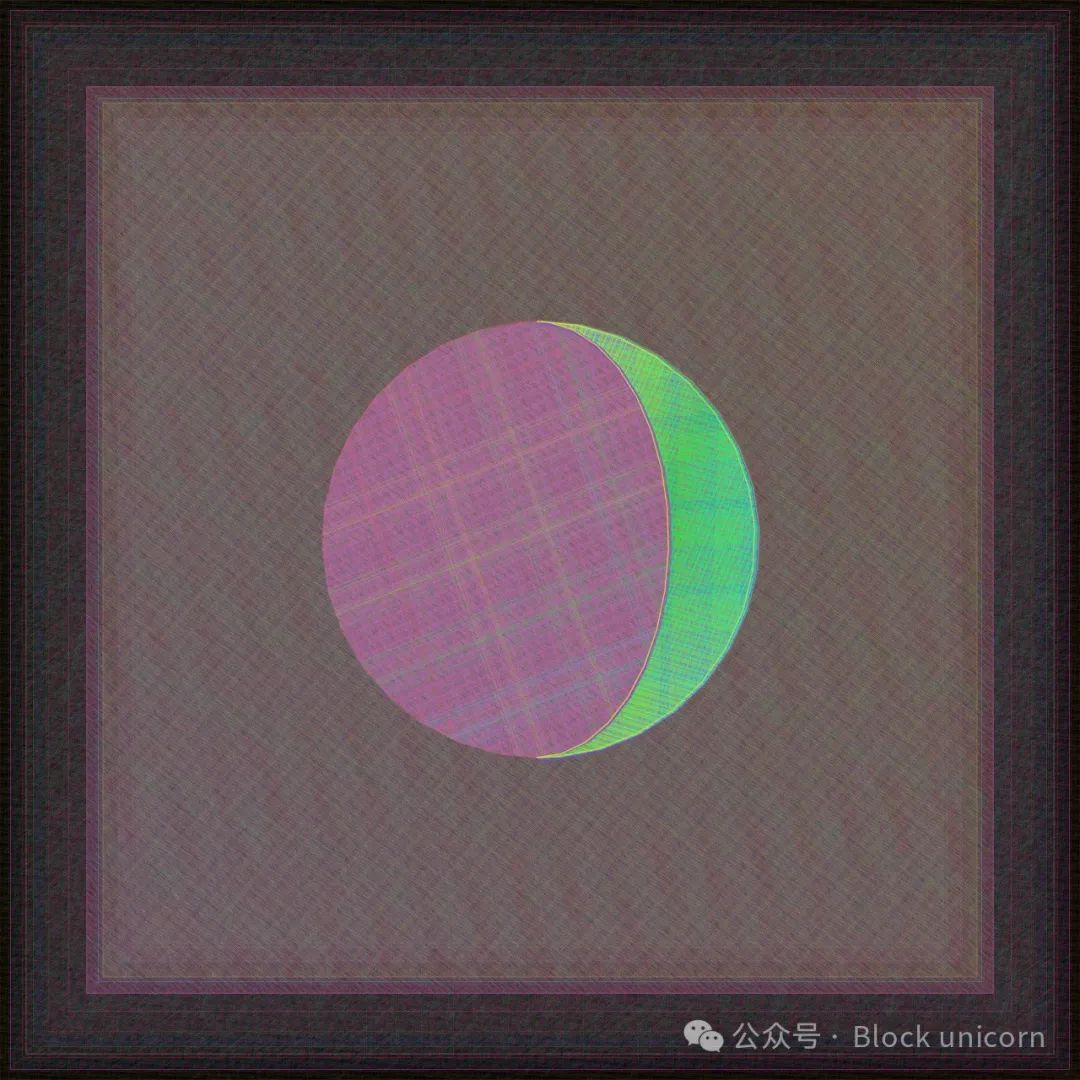
Gazers (2021) is a long-form generative art project by Matt Kane, comprising 1,000 code-based artworks released via Art Blocks on the Ethereum blockchain. Each artwork references a calendar, dynamically evolving with each passing day and lunar phase. Gazers draws on humanity’s longstanding connection with the moon as a time marker, emphasizing the fleeting and urgent nature of the present moment, while prompting us to look up and reflect on the future—to our own version of the moon.
Gazer #751, shown statically above, was recently acquired by anonymous digital art collector Kanbas. During the solar eclipse visible across North America on April 8, 2024, Kanbas posted a video showing Gazer #751 burning with a shimmering halo (see tweet below). It remains a stunning sight, showcasing how blockchain-based digital art can deliver dynamic experiences that delightfully connect our digital and physical realities.
Durable Digital Artifacts
On the other hand, there’s another interesting subset of digital artifacts on blockchains designed to be extremely durable—nearly eternal or immutable.
The defining trait of these durable digital artifacts is that they persist as long as their underlying blockchain remains operational. This is because the essential data required to render them is stored directly on the blockchain, giving them minimal external dependencies.
In some cases, such artifacts may still rely on widely distributed databases or developer tools—such as some generative art NFTs on Art Blocks. That said, overall, blockchains provide a comprehensive canvas where such artifacts can contain all necessary resources to realize their intended expression.
For on-chain NFTs on Ethereum and similar smart contract blockchains, they don’t point to off-chain or externally hosted media files, but instead link only to on-chain data, typically stored within a smart contract on the same blockchain. For Bitcoin, data behind Ordinals is recorded directly as metadata in the transaction of a specific satoshi. In this regard, all Ordinals are almost always immutable, unlike NFTs that depend on the data they point to.
Regardless, what conceptually intrigues me about such on-chain digital artifacts is the temporal dimension—how they force us to consider the longevity of our digital experiences, which are usually fleeting. Our most Lindy blockchains—like Bitcoin and Ethereum—seem likely to outlive everyone alive today. They may hibernate, but never die. Even if their owners lose private keys, they don’t vanish—just become immovable. *Block unicorn note: The Lindy Effect (or Lindy’s Law) is a theory stating that the longer something exists, the longer it is expected to continue existing.
With that in mind, I wonder what kind of meaning we’ll assign to on-chain digital cultural artifacts capable of outliving our individual lives. What memories will be preserved as they’re owned and traded on blockchains? How will the relationship between their on-chain persistence and off-chain cultural legacy evolve over time?
Selected pennies converted into Ordinals. (Image credit: sovrn.art)
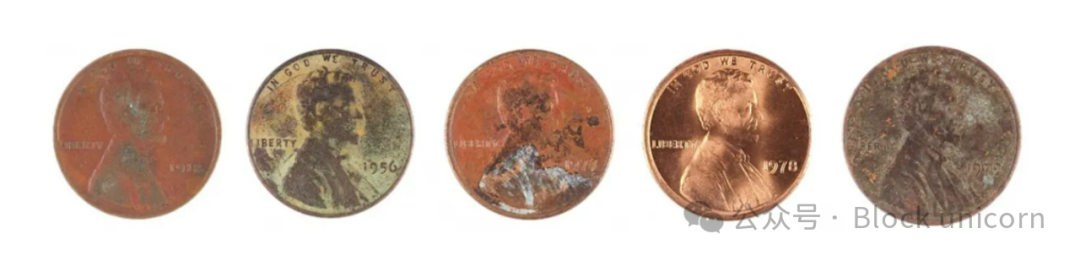
Artist Rutherford Chang’s “CENTS” (2024) centers on placing 10,000 cents onto 10,000 sats, using Ordinals as a medium to permanently link the smallest units of the US dollar and Bitcoin. Inspired by the value discrepancy between the metal content (now ~2.5 cents) and face value (~1 cent) of copper pennies minted in or before 1982, the artist selected 10,000 no-longer-circulating pennies and archived them. Their images were then immutably inscribed onto sats as Ordinals, while the physical coins were melted down and cast into a solid copper block.
Beyond commenting on perceptions of material and immaterial value in different contexts, “CENTS” is also a meditation on how time affects value. Rutherford Chang himself had spoken about penny collecting as early as 2017. More importantly, the historical weight conveyed by “CENTS” gives it great gravity. Though each penny was homogeneous when minted, each now bears unique traces of time passed through previous hands. Thus, “CENTS” can be seen as a generative artwork—as collector become.eth wrote on Twitter, “shaped by algorithms of wear from the world.”
Moreover, each penny’s story doesn’t end when it becomes a digital artifact, as it will gain a new history on the blockchain—with new digital and real-world owners and transactions. As enduring digital artifacts linking multiple temporal and economic contexts, “CENTS” undoubtedly has the potential to become a leading art collection on Bitcoin and be regarded in the future as a valuable store of value. “CENTS” was launched on sovrn.art in collaboration with Inscribing Atlantis and Gamma.
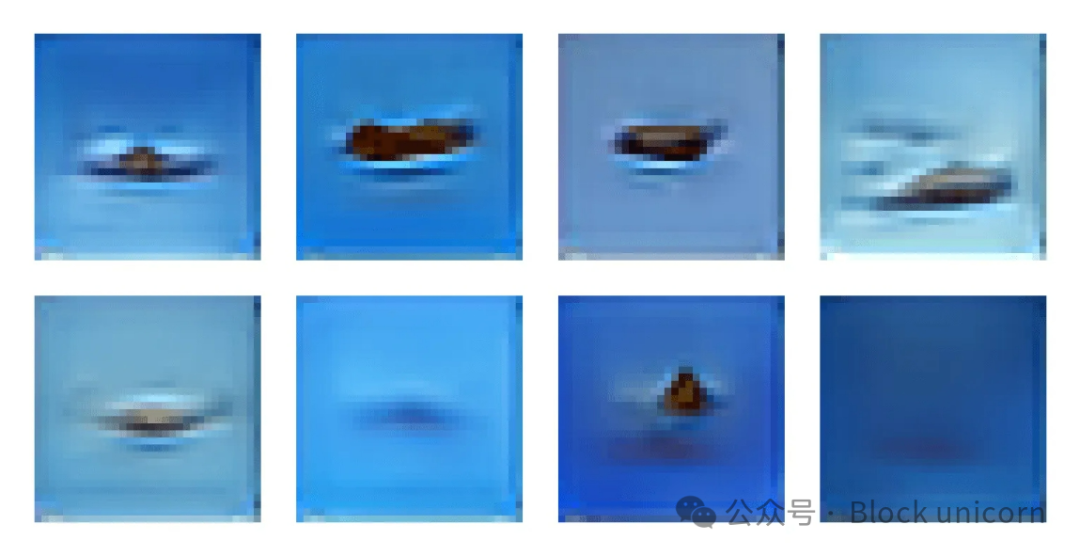 A set of 8 images generated using the alignDRAW model based on the prompt “a large commercial aircraft flying in a blue sky.” (Image credit: Fellowship)
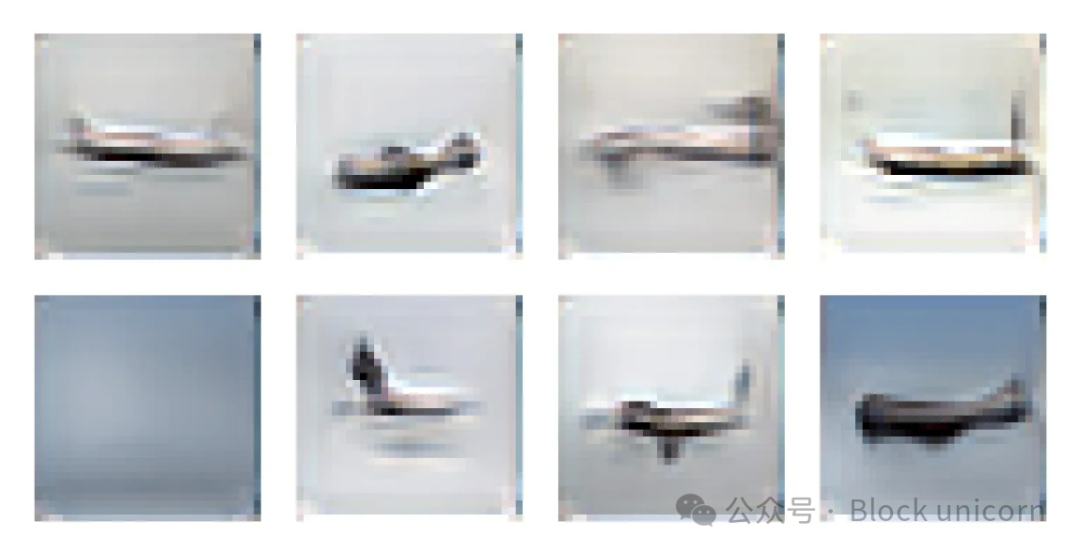 A set of 8 images generated using the alignDRAW model based on the prompt “a large commercial aircraft flying in rainy weather.” (Image credit: Fellowship)
alignDRAW is a text-to-image generative AI model created by Elman Mansimov and his development team in 2015, developed after Elman completed his undergraduate degree in computer science at the University of Toronto. Published in a 2016 conference paper, it is widely recognized as the first text-to-image model, laying the foundation for today’s widely accessible AI tools for image and video generation.
As these generative AI tools continue to reshape image creation and our visual culture, alignDRAW stands as a milestone marking the beginning of this paradigm shift. Given this, Fellowship partnered with Elman Mansimov in 2023 to mint all 2,709 images generated by the alignDRAW model as NFTs on the Ethereum blockchain. Of these, 168 images were generated from 21 unique text prompts (8 per prompt), as published in the 2016 paper. The remaining 2,541 images were generated from 21 text prompts (15 unique, 6 matching paper prompts), originally uploaded to the University of Toronto website in November 2015.
Fellowship designed a technical architecture allowing each image to be stored on-chain in its original byte format, without modification or enhancement. This was done incrementally, taking advantage of periods of lower gas prices on Ethereum. By permanently and immutably preserving alignDRAW images on the Ethereum blockchain, this approach affirms their historic role in pioneering a new era of human-machine collaboration at the intersection of science and art.
Another intriguing angle for perceiving such on-chain digital artifacts lies in how creators work within the technical constraints of blockchain data storage. The artistry behind these artifacts lies in optimizing data—using every byte as elegantly as possible to fulfill the creator’s vision.
As data scientist and on-chain artist Chainleft described in an article: On-chain art is “a tribute to belief in eternity, in the small we capture infinity.” Indeed, from mere droplets of blockspace, we may sow the seeds of broader, more enduring forms of digital culture.
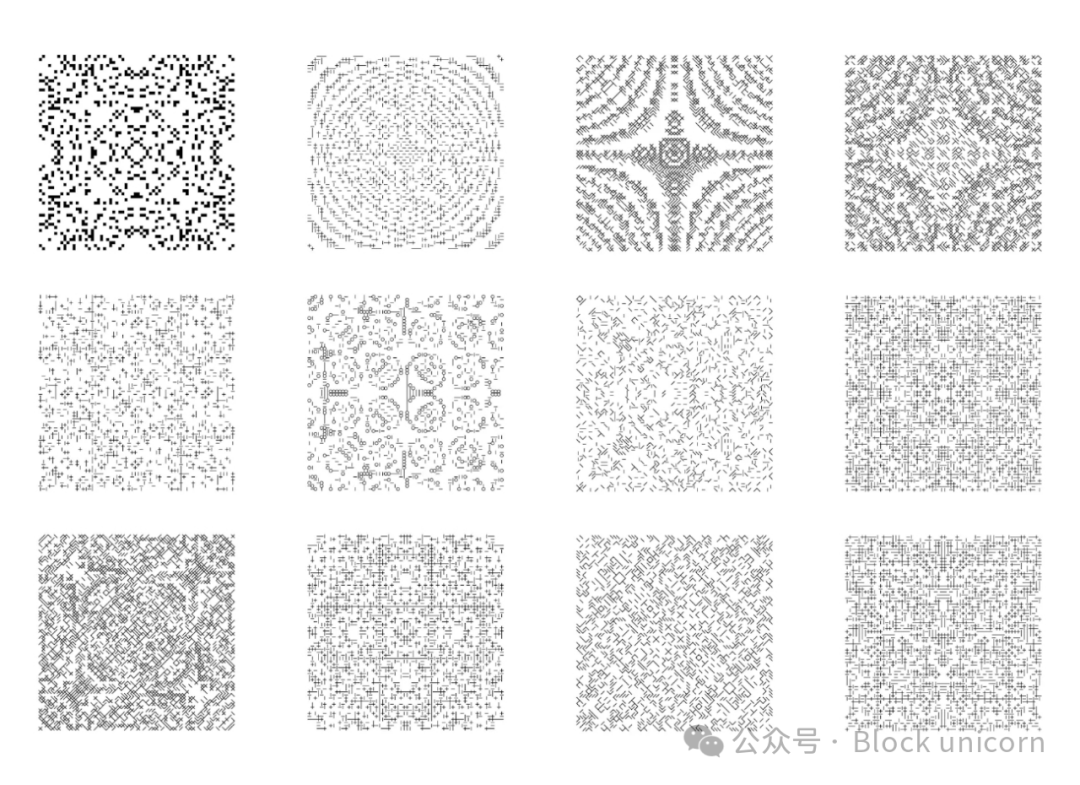 A selection of Autoglyphs. (Image credit: Curated)
Larva Labs’ Autoglyphs (2019) began as an exploration into creating “fully autonomous” artworks operable within the strict data storage limits of the Ethereum blockchain. The result was a highly optimized generative algorithm—existing entirely within a smart contract—that generates ASCII-formatted text patterns. These text patterns can then be individually transformed into images based on instructions encoded in the smart contract.
This approach pays homage to early generative artists like Michael Noll, Ken Knowlton, and Sol LeWitt, whose works offered a perspective of art as systems rather than representational pieces. In turn, Autoglyphs, as a native, self-contained system for creating, owning, and distributing digital art on blockchain, inspired many generative artists to push the boundaries of blockchain as an artistic medium. No wonder Autoglyphs have been compared to cave paintings on the blockchain.
Curated, a fund that collects crypto art, also published a concise editorial piece outlining the key features of Autoglyphs—a great starting point for understanding their visual output and collecting value.
(iv) Blockchain as Computer
Taking the canvas concept further, we can also view blockchain as a computer.
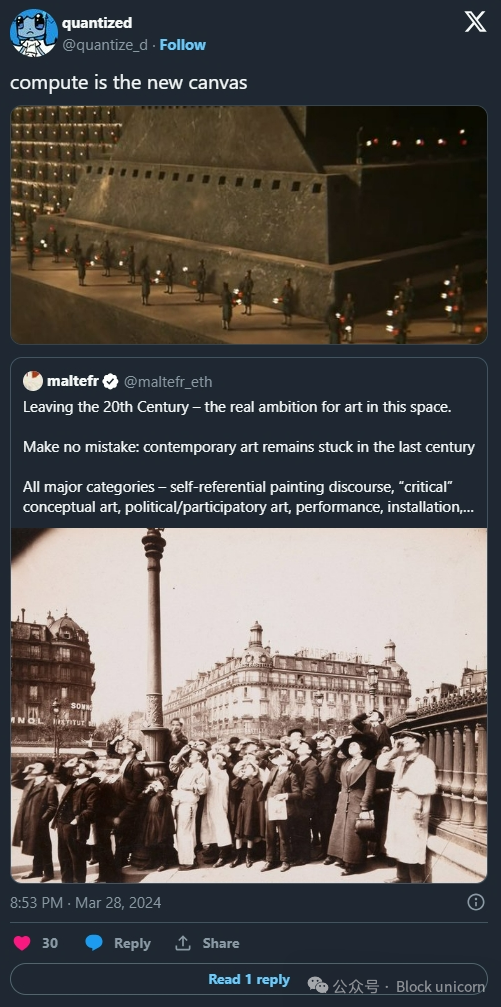
By computer, I don’t mean merely a processing device executing instructions within fixed parameters, but a broader concept traceable to computer scientist J. C. R. Licklider’s early vision of personal computing during his work at ARPA in the early 1960s:
“Computers are destined to become intellectual amplifiers for everyone on a global scale.”
Two key concepts deserve emphasis here:
-
First, computers are not just information processors, but intellectual amplifiers—a platform enabling more dynamic, analog-like modes of thought, precisely what computation enables.
-
Second, computers are communication devices, granting us the ability to coordinate with others within larger networks.
Let us analyze them in detail within the context of exploring how the computational possibilities offered by blockchains can shape digital culture.
Composable Digital Artifacts as Cultural Amplifiers
Ethereum has been described since its early days as a “world computer.” In this sense, Ethereum and similar blockchains can be understood as distributed computing platforms on which applications can be built and run globally. This is enabled by the ability to deploy smart contracts on these blockchains, which can execute complex functions beyond merely transferring tokens between accounts.
By providing a general-purpose computing engine—the Ethereum Virtual Machine (EVM) (or equivalents on other chains)—to run smart contracts, digital artifacts created and controlled by these contracts can be designed as composable. In other words, they can be combined or built upon in different ways to unlock new use cases, much like developers leverage application programming interfaces (APIs) to build more powerful software products.
Thus, digital artifacts on blockchains not only represent dynamic software but can also dynamically connect to other on-chain artifacts or applications. This composability makes on-chain digital artifacts greater than the sum of their parts—serving as building blocks that can generate broader, more engaging, and even unprecedented digital experiences.
After all, components of digital culture rarely exist in isolation—even outside crypto. A particular cultural artifact or concept gains staying power in digital spaces typically because it integrates easily with other elements or can be remixed into derivative works, further drawing attention back to the original. Indeed, TikTok’s rise as an entertainment platform stems from how its tools simplify the remixing process, effectively turning videos into composable media and fostering network effects of creativity.
Returning to crypto, I believe composable digital artifacts on blockchains can act as cultural amplifiers for digital culture. This parallels Licklider’s hypothesis that computers could become “intellectual amplifiers” by enabling new ways of thinking, such as computer scientist Alan Kay’s notion of “dynamic simulation.” In this light, on-chain composability can enhance the remixing processes of creators and consumers, catalyzing new methods of creating digital culture.
On one hand, blockchains allow stronger tracking of connections between digital artifacts on-chain, facilitating attribution and other licensing arrangements (e.g., Story Protocol and Overpass). This also supports monetization of derivatives, ensuring original creators and remixers receive proper compensation.
Beyond these practical benefits, on-chain composability can open new horizons for artworks or cultural experiences. While we’ve only seen preliminary efforts in this direction, I hope this characteristic of blockchains can become a creative flashpoint in digital culture.
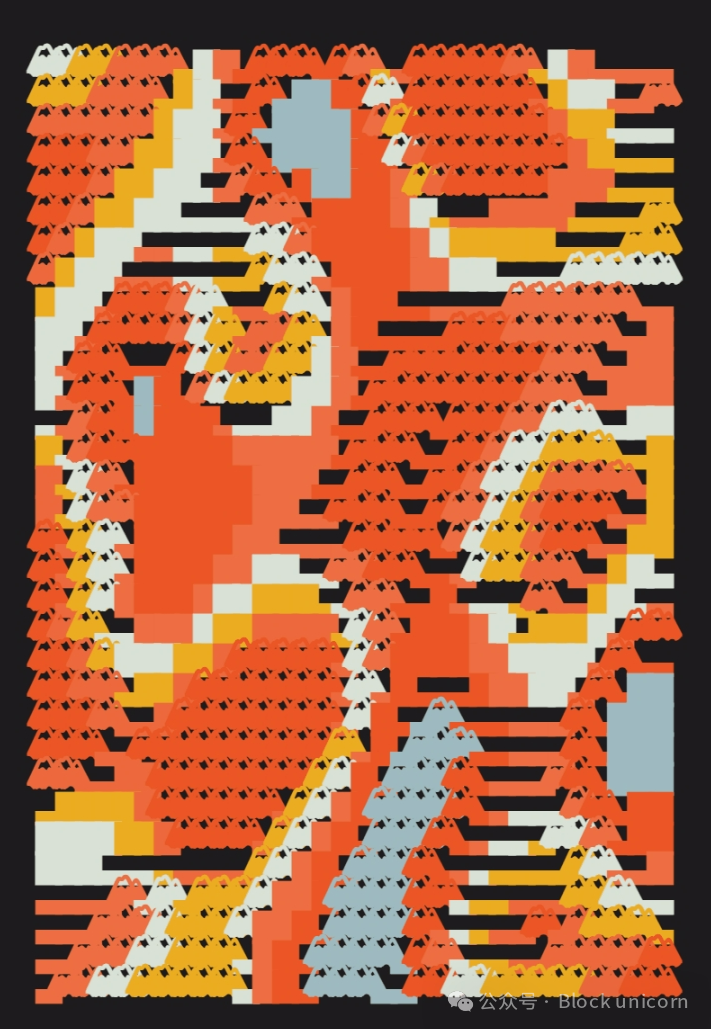
Level 13 at {17, 41} in “Arc”, biome 36
Terraforms (2021) is a Mathcastles on-chain art project aiming to leverage blockchain’s unique computational advantages to create artworks impossible elsewhere.
On the surface, Terraforms consists of nearly 10,000 on-chain animated land plots on the Ethereum blockchain, collectively forming a 3D world called “Hypercastle.” But its core artistic concept—distributed computing as an art form—is expressed through its underlying technical infrastructure. As software engineer Michael Yuan excellently articulated in an article on Terraforms, it comprises a set of smart contracts storing raw data for land plots, defining Hypercastle’s structural parameters, generating noise for natural rendering effects, and runtime generation of land plots.
This technical infrastructure supports composability at multiple levels. Raw data contracts can support other on-chain applications. Rendering contracts allow multiple independent versions of Hypercastle (multiverse!), while NFTs provide a canonical version for owners and the wider community to build tools around. The antenna mode introduced during the recent v2 upgrade will also allow land plots to receive “broadcasts” from other smart contracts (not yet released), offering another way for interested parties to continuously reshape Hypercastle’s terrain.
Join TechFlow official community to stay tuned
Telegram:https://t.me/TechFlowDaily
X (Twitter):https://x.com/TechFlowPost
X (Twitter) EN:https://x.com/BlockFlow_News
 @buffetlunches











