








Meme, Runestone, and UXLINK: Some Thoughts on Crypto-Asset-Driven Communities
TechFlow Selected TechFlow Selected
Meme, Runestone, and UXLINK: Some Thoughts on Crypto-Asset-Driven Communities
The three most important reasons for Runestone's explosive popularity: fairness, fairness, and damn fairness.
 Navigating Web3 tides with focused insights
Author: Joe@Go2Mars
The imagination of the crowd can transform everything, whether it is real or fictional.
—— Le Bon
The essence of decentralized communities lies in the deconstruction and innovation of asset distribution models.
Throughout the evolution of communities, the concept of assets has always held a pivotal role. In the real world, people often come together due to shared interests. As society evolves, the expression of these interests becomes increasingly diverse, manifesting as various forms of "assets." The acquisition, distribution, and value growth of community assets are fundamentally driven by "consensus."
In primitive societies, humans cooperated under a shared belief in tribal totems—hunting for food, defending against enemies, and protecting assets—to sustain tribal development. In the internet era, various media empower individuals to express themselves, leading to a collective consensus around traffic. Today, large followings and high traffic often signify authority and represent a form of monetizable virtual asset. Monetizing traffic assets has become increasingly seamless, forming the core mechanism behind traditional social media growth.
In Web3, community iteration moves even faster than in the Web2 era. Every day, new projects emerge as golden dogs on some blockchain headline, while just as many shitcoins quietly fade to zero. Amid this volatility, one pattern stands out: the foundation of any truly sustainable decentralized community is embedding a fair, incentive-driven, and sustainable asset distribution mechanism within its structure. Just as in primitive societies, where the totem served as a shared faith but still required fair management of collective resources to maintain trust and consensus, the principle of "you get what you work for" remains the most basic and universally understood model—and it applies equally in the crypto world.
Pioneers in crypto are reinventing how assets are distributed
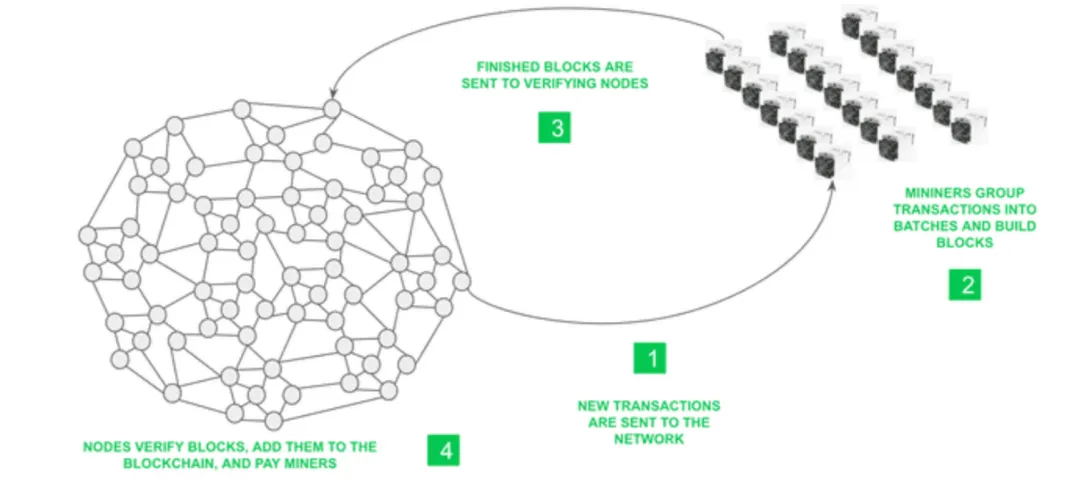
Focusing on Web3, community founders continuously innovate, experiment, and refine their approaches to achieve asset distribution in the most "decentralized" way possible. Bitcoin's Satoshi Consensus marked the first attempt. Under the Proof of Work (PoW) mechanism, miners compete for block-writing rights based on computational power and are rewarded with bitcoin. Mining is extremely difficult and resource-intensive—so how did the Bitcoin consensus break into the mainstream and attract massive capital investment from miners? The answer lies in Bitcoin’s soaring price and its built-in scarcity from the halving schedule every four years. This made the Satoshi Consensus reward system compelling enough to turn miners into loyal advocates, sustaining their enthusiasm and commitment.
How do intangible meme coins become beloved quality assets?
If Bitcoin is the cornerstone of the crypto world—the first and most fundamental realization of blockchain value—how have meme coins in recent years risen to become widely regarded as valuable assets? From early mascots like Dogecoin and Shiba Inu, to abstract illustrations like Pepe the Frog, sloths, and stick figures in this bull cycle.
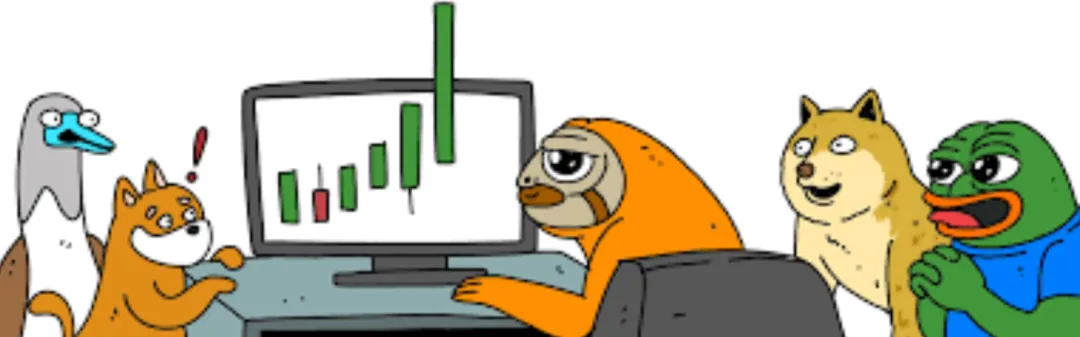
Originally created as jokes, these tokens gained popularity among Web3 users due to their trendy and entertaining nature—no technical knowledge required. This trend eventually attracted capital; Elon Musk’s endorsement propelled Dogecoin into the mainstream. Today, popular meme coins are organically developed into communities by project teams or users, evolving into recognizable IPs across the crypto space—driven fundamentally by collective认同 of this cultural movement. What was once ethereal becomes tangible through capital inflow and accumulation, forming a cultural consensus and breathing new life into the ecosystem.
Runestone’s origin story: An attempt to deepen and strengthen community assets
Having discussed Bitcoin and memes, today—right after the latest halving—it’s impossible not to mention Runestone, a recently viral IP reshaping asset innovation. A key reason for Runestone’s breakout success is that it set three records on the Bitcoin chain: the largest-ever Bitcoin block, the largest-ever Bitcoin transaction, and the largest Ordinals inscription. The auction of the famous 8 BTC, whose proceeds funded airdrop gas fees, further demonstrated the project team’s commitment to the community.
Of course, Runestone’s explosive rise boils down to three critical factors: fairness, fairness, and damn well fairness.
The narrative of “airdrop” + “fairness” + “Runes protocol” triggered FOMO in secondary markets, pushing prices up to nearly $6,000 at peak. Unlike earlier inscriptions dominated by Chinese-speaking communities (e.g., BRC-20), Runestone achieved global consensus across both Eastern and Western user bases. As founder Leonidas noted in a tweet, this achievement would not have been possible without collaboration between East and West—highlighting Runestone’s role in uniting the global community. Once again, the use of proceeds from the 8 BTC auction to cover airdrop gas fees underscores the team’s dedication to community-first principles.
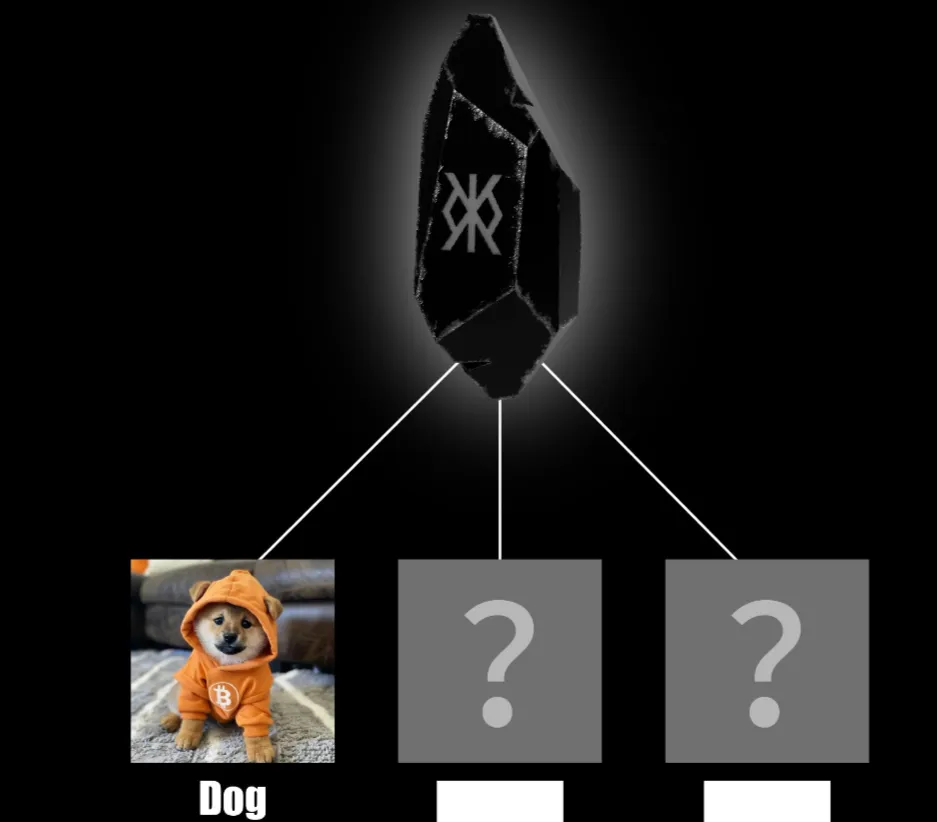
Although geopolitical tensions caused market panic and temporarily pulled Rune prices down over the past few weeks, with Bitcoin’s halving complete and the Rune protocol officially launched, combined with Leonidas aggressively promoting future Rune airdrop expectations on Twitter, confidence remains strong. With its continued commitment to absolutely fair, free airdrops—no risky presales, no whales, no insane gas wars—Runestone continues to attract other projects eager to piggyback on its momentum by offering free drops to holders. Leonidas has effectively turned Runestone into the golden shovel of the inscription ecosystem. In short, Runestone represents a bold step forward in strengthening and deepening community assets in crypto.
The secret to decentralized social: integrating community propagation with asset distribution
For Web3 social platforms, the dominant channels remain Twitter and Telegram—still falling short of true decentralization ideals. SocialFi projects aim to build genuinely decentralized infrastructures, aspiring to create decentralized alternatives at the scale of Facebook or Twitter. Therefore, while focusing on social functionality, they must also follow the principles outlined above: reinforcing asset characteristics and building diversified asset structures to drive community growth and enable product breakout.
A wolf in sheep’s clothing: Ponzi schemes disguised as social network tokenization
The previous generation of SocialFi products took a simplistic approach. Friend.Tech centered on monetizing social influence, using bonding curves to generate massive wealth effects for early adopters.
Through its economic model, FT established a pricing formula for its core asset, Key: Price = S² / 16000 (where S is the number of people entering a room), creating an extremely Ponzi-like SocialFi product. As shown in the chart, the steep yield curve was the root of FT’s virality, giving users the immediate impression: the earlier I join, the higher my returns.
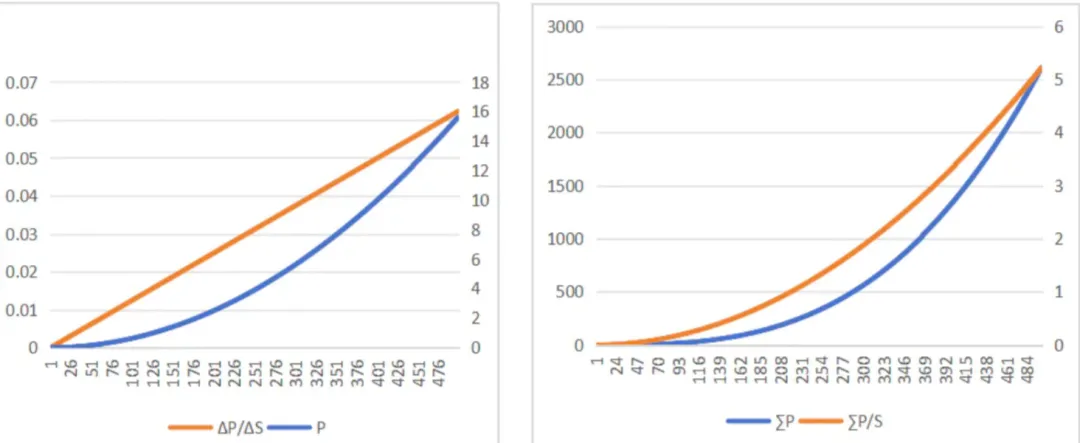
However, this model proved unsustainable amid rapid user growth. While each transaction incurs a 10% fee—5% to the protocol and 5% to the Key issuer—the actual trading slippage far exceeds 10%. Consequently, later entrants find their expected high returns unattainable, causing a widening gap between expected value (EV) and book value (BV). Latecomers’ assets are drained by the protocol and early Key issuers—revealing the true nature of this Ponzi scheme.
From a game theory perspective, FT aimed for a stable (3,3) equilibrium. However, because front-runners gain disproportionate benefits at others’ expense, players are incentivized to race ahead, breeding mutual suspicion. Once this chain of distrust forms, the only Nash equilibrium becomes (-3,-3). By this point, we’ve forgotten we’re discussing a SocialFi app rather than a DeFi product—and therein lies one of FT’s biggest flaws.
In short, FT overemphasizes financialization, becoming a DeFi Ponzi wrapped in a social veneer. Since user consensus stems primarily from anticipated returns rather than genuine community engagement, once users realize those returns are illusory, Friend.Tech cannot prevent mass exodus—leading inevitably to bubble collapse.
My name is Liu Cong Degen, circulating like money
One standout product of this new generation, Farcaster, offers a better alternative. By seamlessly blending traditional social features with thoughtful asset distribution, Farcaster has built a more authentically social SocialFi experience.
Farcaster invests heavily in encouraging user interaction and deep community involvement—introducing interactive posts, diverse community events, rewarding long-form quality content, and launching the $degen tipping feature. Notably, Farcaster’s tipping system sets a new benchmark for integrating decentralized communities with asset mechanics. It incentivizes meaningful participation, high-quality contributions, and organic community promotion.
As a result, the community token $degen circulates fluidly within the ecosystem—users can both "earn" and "spend" assets, completing a closed-loop asset structure. Additionally, Farcaster has released two official NFTs: OG NFT and Farcats. As native assets, they hold potential for future utility and empowerment within the platform.
Compared to Friend.Tech, Farcaster emphasizes user contribution to the ecosystem over speculative博弈. We might liken FT to a casino, where users bring capital to play against each other—a zero-sum game benefiting the house. In contrast, Farcaster creates a positive feedback loop where $degen’s price, platform DAU, and user rewards reinforce one another. In essence, asset circulation and community growth go hand in hand, fostering a sustainably expanding decentralized social ecosystem.
Toward the future: Connecting communities and assets through economic design
UXLINK, another top trending decentralized social product today, brings fresh thinking to integrating communities and assets. UXLINK’s path to community-asset integration unfolds across three dimensions: decentralized applications, community engagement, and a dual-token economic model.
Users can create their own DID, Web3 wallet, and Web3 social network via dApps, with interoperability to Web2 platforms. Integrating full-stack financial dApps encourages users to bring real assets to UXLINK—not just farming free tokens. These tools lower the barrier for asset-carrying users to engage in the ecosystem and interact socially, offering greater flexibility. For example, combining UX Wallet with a DEX allows users to swap tokens directly within UXLINK instead of switching wallets or exchanges, enhancing convenience and liquidity—and thus boosting willingness to participate in community growth.
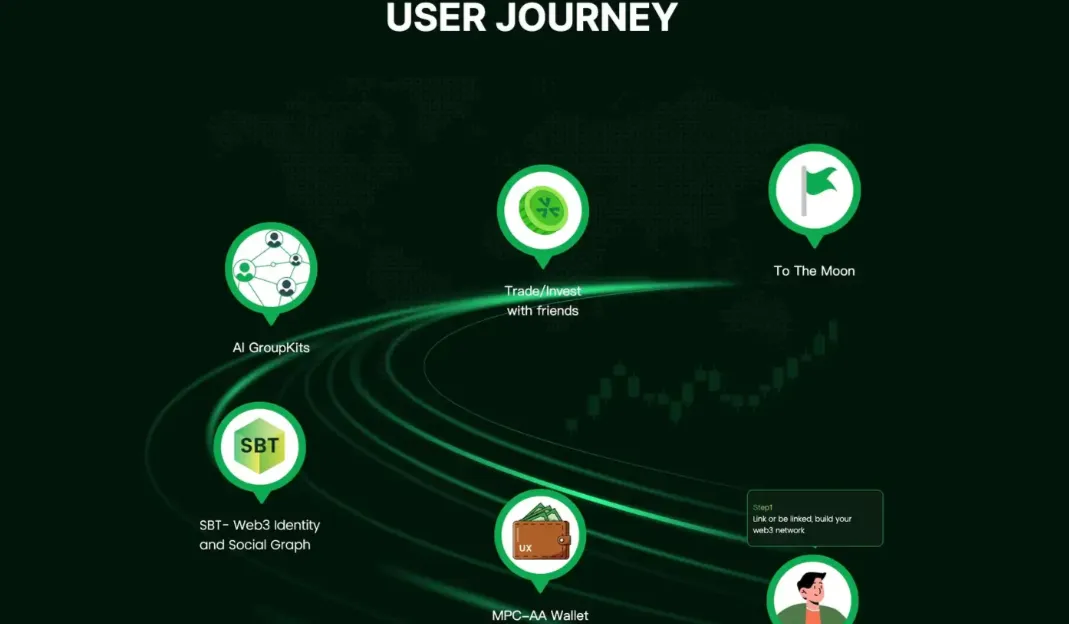
Like Farcaster, UXLINK places strong emphasis on community interaction. Users contribute traffic and leverage their networks to promote social games, product marketing, and dApp virality. Their traffic helps attract new audiences, and contributors are rewarded accordingly. Furthermore, UXLINK employs a dual-token economy, splitting its main community assets into two: utility token $UXUY and governance token $UXLINK. Aligned with the Ve(3,3) model philosophy, it aims to maximize fair returns for both the broader ecosystem and individual participants. This economic framework ensures community assets can capture intrinsic value—granting them lasting worth independent of mere liquidity.
Conclusion
Driven by crypto consensus, the relationship between communities and assets continues to evolve. From Bitcoin to memes to inscriptions, the driving force of consensus has shifted—from initial price incentives, to culture, and finally to abstract ideals like “fairness.” The future holds many possibilities. Imagine tribes spontaneously creating totems, with every decentralized community issuing its own meme as a native asset.
After all, in the end, interest remains the ultimate king.
Join TechFlow official community to stay tuned
Telegram:https://t.me/TechFlowDaily
X (Twitter):https://x.com/TechFlowPost
X (Twitter) EN:https://x.com/BlockFlow_News
 Go2Mars Capital











